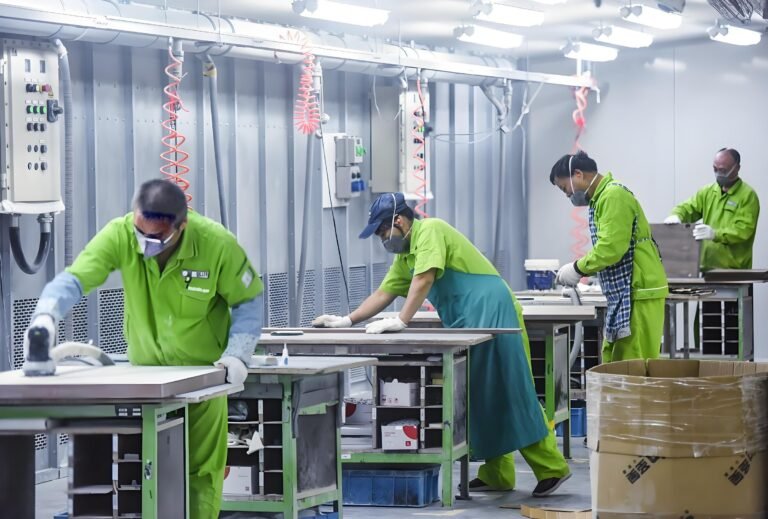








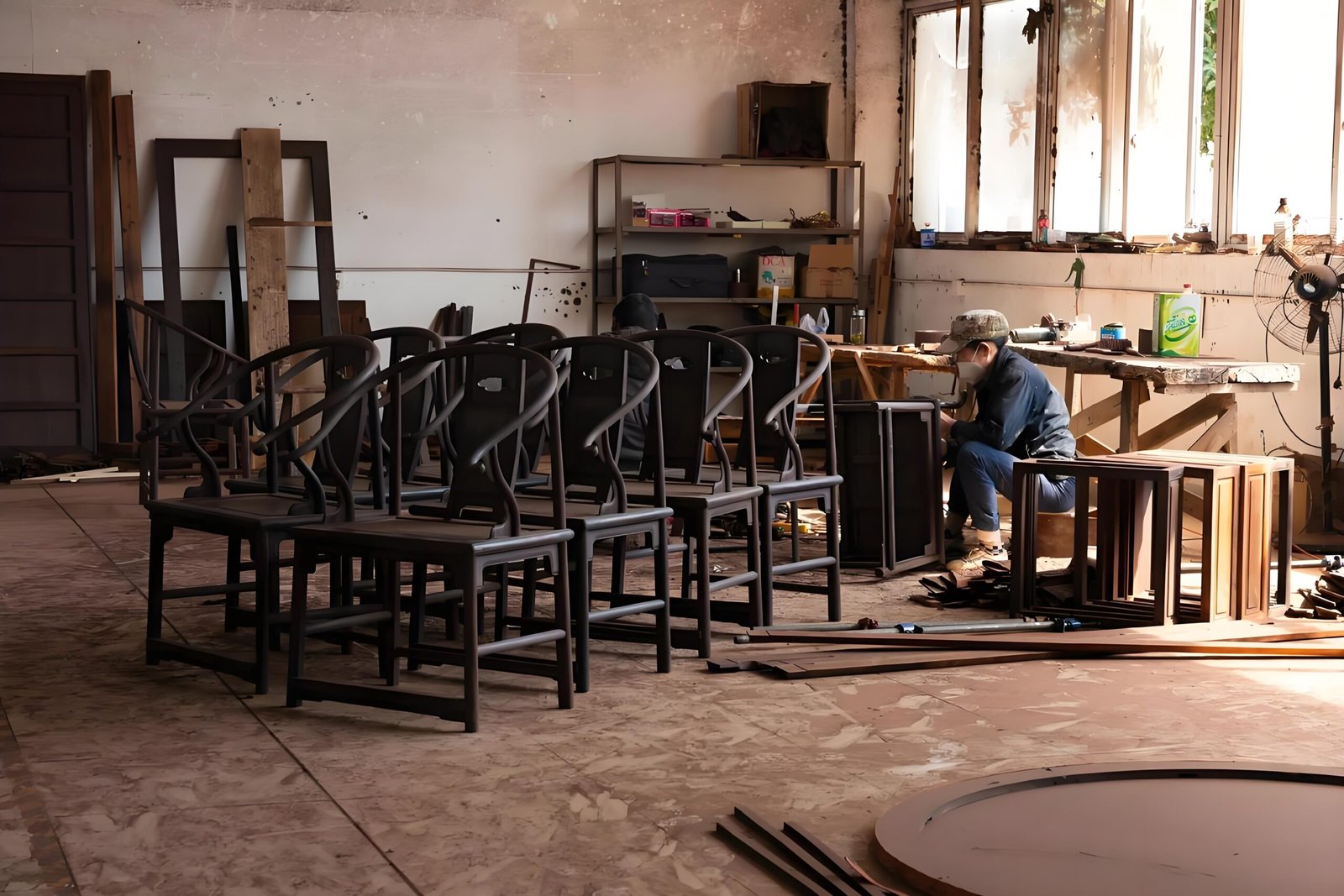
Most international buyers pour 80% of their energy into price comparison when evaluating Chinese furniture suppliers, then glance at the MOQ clause and figure it is “close enough.” The aftermath? Inventory pileups, frozen cash flow, and hidden costs that double the original estimate. After fifteen years and 400-plus procurement projects ranging from trial orders to bulk production, here is the hard truth: minimum order quantity traps frequently inflict greater total losses than whatever savings you squeezed out of unit-price negotiations. No fluff in this guide—just the seven most concealed MOQ traps in the Chinese furniture industry, each with the supplier’s real cost motivation, recognition signals, and directly actionable countermeasures.
The Nature of MOQ—Why Chinese Factories Set Minimum Order Quantities
Chinese furniture factories do not pull MOQ numbers out of thin air. Three cost lines intersect behind that threshold, and you need to understand all of them.
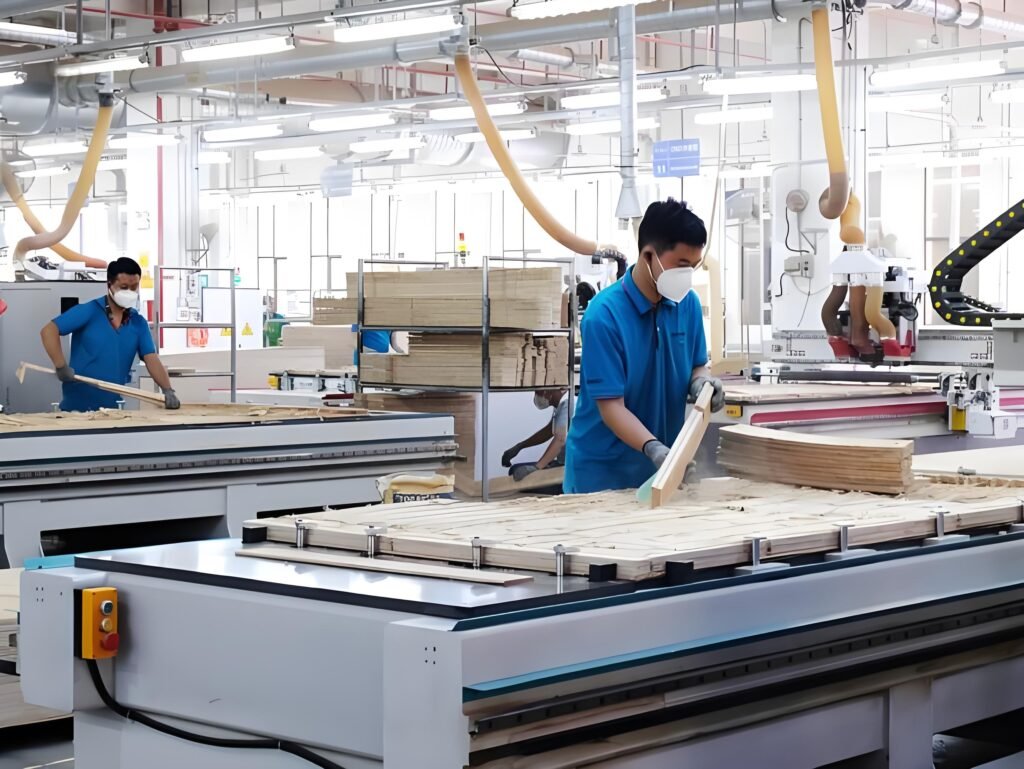
Production line changeover costs eat up 35% to 50% of the MOQ threshold. Switching a solid-wood line from dining tables to bookcases means reprogramming CNC routines, swapping cutting tools, and repositioning clamps—half a day of skilled labor down the drain. For upholstery, shifting from fabric to leather sofas means tearing down the cutting-table layout and rebuilding it from scratch, with first-article approvals often taking three rounds. These losses never show up on the quotation sheet, but the factory absolutely bakes them into the MOQ. Skip this step and the factory loses money on your order.
Raw material procurement costs account for 30% to 40%. Wood, fabric, and hardware all carry their own minimums. A mid-size upholstery factory in Foshan typically buys fabric in single-color lots of 500 to 800 meters. Order only 30 sofa sets and the factory either absorbs inventory risk or sources cut-yardage at 15% to 25% higher unit cost. Metal furniture factories face the same headache with steel tubing; mill orders are calculated in tons, so small batches force the factory to swallow higher raw-material prices and warehousing capital.
Management and coordination costs make up 15% to 20%. Order tracking, quality inspection, shipping, and after-sales service require roughly the same baseline effort whether the order is 50 pieces or 500. The management labor gap is under 20%, yet the per-unit management cost for the smaller order is ten times higher.
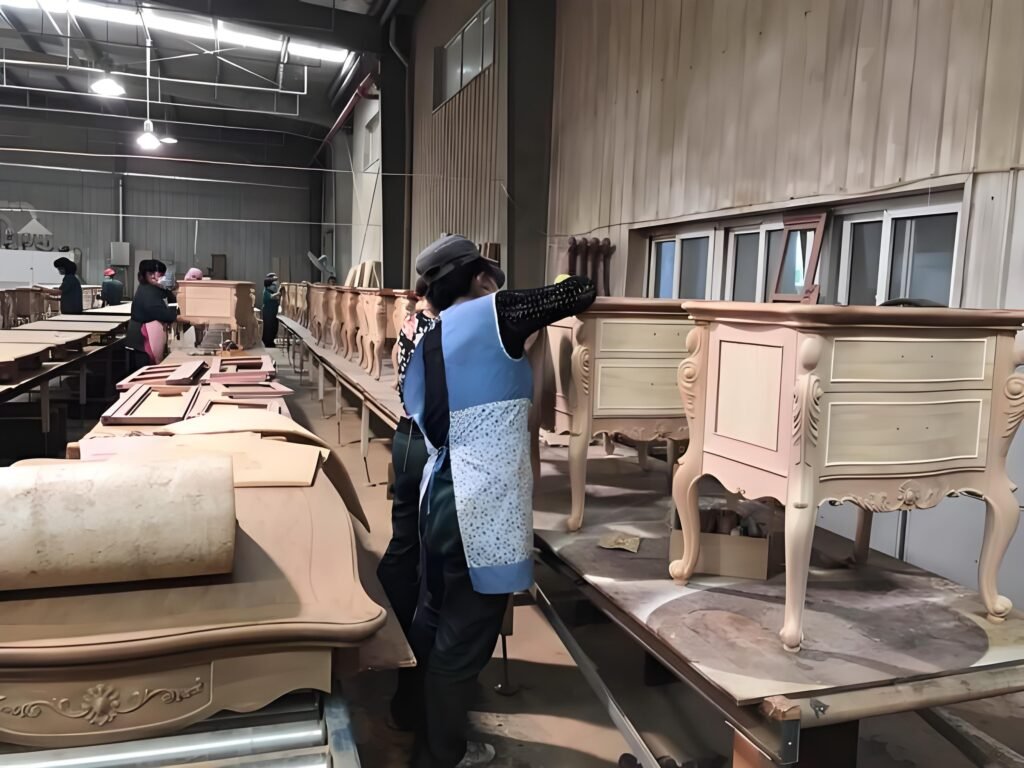
Grasp these three cost layers and you can spot every MOQ trap before it bites. Factories are not unwilling to accept small orders; the real cost of a small order simply runs far higher than the surface unit price. Many buyers walk in and slash the MOQ aggressively; the factory nods, then quietly figures out which cost line to recover from elsewhere. That is where the traps begin.
The Seven Deadly MOQ Traps Dissected
Trap 1: Unit-Price Bundling—The Hidden Cost of a Lower MOQ
The factory agrees to drop the MOQ from 100 pieces to 30, but raises the unit price by 20% to 35%. Buyers shrug: “Ordering less while paying a bit more—fair enough.” Fair? They never run the full numbers.
The factory uses the price hike to offset small-batch changeover and management costs. The sneakier move is reclaiming the bulk-discount margin, or even tacking on a risk premium. In plain terms, you think you are buying “flexible minimums,” but you are actually paying a premium to carry inventory risk.
Case in point: an American e-commerce seller ordered 50 Nordic-style solid-wood dining chairs; the factory’s standard MOQ was 100. After negotiation, the factory accepted 50 pieces but raised the unit price from $45 to $62. Upon arrival, ocean freight landed at $18 per piece by volume. Total landed cost: $80 per chair—higher than ordering 100 pieces from another factory and redistributing. The 50 chairs lasted six weeks in Amazon warehouses before stockouts. When the seller reordered, the factory cited “small-batch rescheduling” and raised prices again. The buyer was not purchasing chairs; he was purchasing the illusion of a low MOQ.
How to spot it: Demand a tiered MOQ quotation table—prices at 50, 100, 200, and 500 pieces. If the factory refuses, or the gap between 50 and 100 exceeds 20%, the trap probability is high.
How to avoid it: Never negotiate MOQ in isolation. Negotiate total procurement cost instead. Bundle unit price, freight, capital occupancy, and inventory risk into one calculation. If the small-batch price increase exceeds 15%, prioritize order consolidation or look for off-the-shelf open-mold suppliers. Remember: the real danger in furniture MOQ China is not the number itself, but the cost transfer hiding behind it.
Trap 2: Color/Style Mixing—Hidden Changeover Costs Under a Fixed Total
The factory says, “100 pieces total, mix five colors.” Sounds flexible? In reality, every color requires separate cutting, spraying, and inspection—changeover costs do not disappear, they just get buried under the “total quantity met” narrative.
By locking in the order this way, the factory shifts multi-SKU changeover costs to the buyer. The symptoms are delayed lead times, extra first-article approvals, and quietly loosened color-difference tolerance. By the time you notice, your project timeline is wrecked.
A Dutch interior designer ordered 80 lounge chairs in four colors, 20 each. The factory approved the 80-piece total. During production, each color change on the spray line required gun cleaning, paint remixing, and color-panel confirmation. Every switch delayed first-article approval by two days. The final lead time stretched from 45 to 72 days, and the third color batch showed a visible shift against the first. The factory’s explanation: “Different paint batches, within industry tolerance.” The designer’s project timeline collapsed, and the hotel client nearly terminated the contract.
How to spot it: Ask directly whether each SKU is independently scheduled and inspected under mixed-color terms. Vague answers or phrases like “we ship them together” mean changeover costs are being buried.
How to avoid it: Split mixed-color orders into single-color bulk lots when possible. If mixing is unavoidable, demand written confirmation of independent lead times and color-difference standards per color—verbal promises are worthless. For upholstery, fabric inventory turnover pressure far exceeds that of wood, giving roughly 40% more negotiation room than solid wood—an industry research mean.
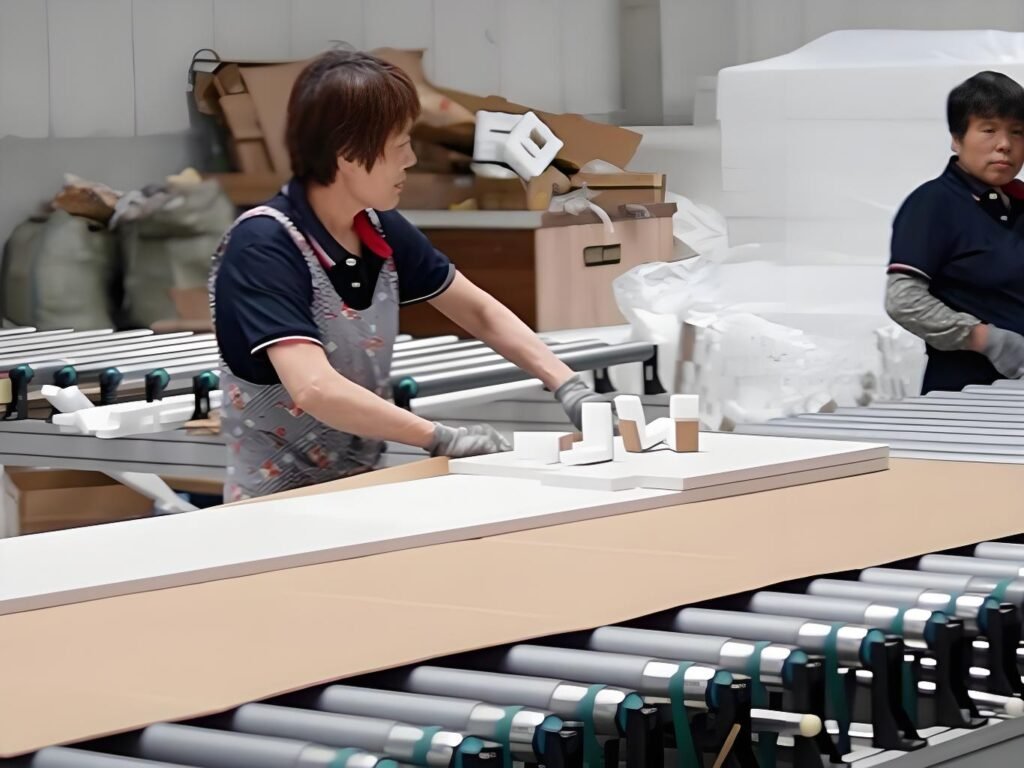
Trap 3: Mold-Fee Amortization—The Hidden Cost Black Hole in OEM Customization
The factory quotes the mold fee as “included in the MOQ,” or lists a negligible mold fee with an extremely high MOQ. Buyers think they saved on tooling. In reality, they are locked into a high-MOQ prison with no easy exit.
The factory embeds mold development costs into the unit price. The mold fee appears to be $0, yet the amortized tooling cost per piece is concealed inside the elevated MOQ. If the buyer never reorders, the factory loses nothing—the tooling is already paid for through the pieces—while the buyer is stuck with excess inventory that will not sell.
A Canadian brand developing a custom metal coffee table received two quotes: Factory A offered “$800 mold fee, MOQ 300 pieces”; Factory B offered “no mold fee, MOQ 500 pieces.” The brand chose B—saving $800 on paper. After the 500 pieces landed, market feedback called for minor design tweaks. The factory responded, “Mold modification requires new charges, and the MOQ stays the same.” The brand then realized the truth: $6,000 total tooling spread over 500 pieces meant a hidden mold cost of $12 per piece. Two hundred pieces of mismatched inventory had to be absorbed as dead stock.
How to spot it: Insist on separating mold fees from unit prices. Do the math: mold fee ÷ MOQ = per-piece tooling amortization. For metal furniture, mold fees typically range from $500 to $2,000; per-piece amortization exceeding $3 to $5 warrants caution.
How to avoid it: Maintain independent mold-fee payment with transparent unit pricing. Sign a mold-ownership agreement ensuring the tooling belongs to the buyer. That $800 mold fee buys you control over future factory switches and design changes. Do not fall for the “free mold” bait.
Trap 4: Packaging Standardization—Small Batches Forced into High-Volume Packaging, Doubling Freight
Small-batch orders rarely justify custom packaging, so the factory defaults to standard cartons or generic crates with only 60% to 70% volume utilization, inflating sea and air freight costs. Custom packaging demands design, sampling, and slotting—effort factories refuse to invest for small orders. Standard packaging is convenient for the factory; the buyer pays on the freight bill.
A British e-commerce seller ordered 60 folding chairs. The factory used standard cartons holding two chairs each, outer dimensions 80 × 40 × 100 cm. In reality, the folded chairs could compress to four per carton. Because packaging was not optimized, the shipment occupied 30 cubic meters instead of the optimized 15. At $800 per cubic meter for ocean freight, the seller paid an extra $12,000—equivalent to $200 more per chair, far exceeding the chair’s own profit margin. The buyer was not shipping chairs; he was shipping air.
How to spot it: During inquiry, request packaging schemes, carton dimensions, and volumetric weight. Calculate “net product volume ÷ total packaging volume” utilization. Anything below 75% should trigger a repackaging demand.
How to avoid it: Even for small batches, include packaging optimization clauses in the contract. Knock-down (KD) flat packaging is the key to volume reduction. For small batch sourcing hacks, packaging optimization often outperforms price haggling—many buyers fight for a $2 unit discount, then lose $200 on freight. Backwards.
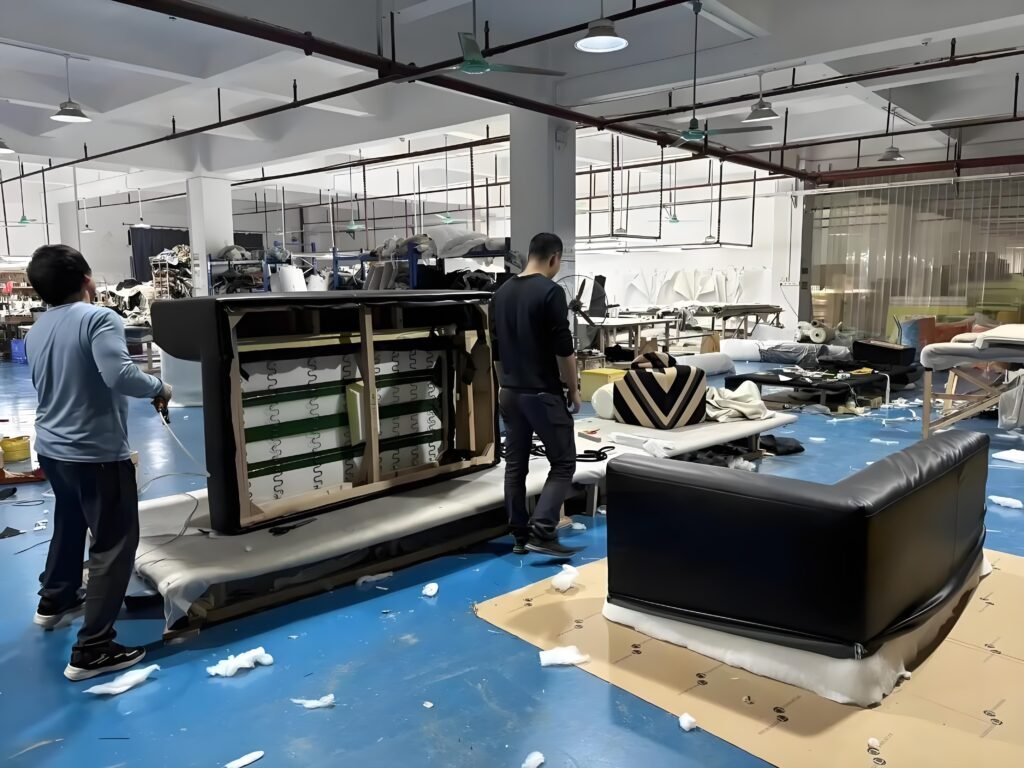
Trap 5: Raw Material Batch Trapping—Small Batches Fed from Inventory Remnants, Triggering Color Variation and Quality Fluctuation
Small-batch orders often draw wood, fabric, or leather from factory inventory remnants or mixed batches. Color shifts, texture mismatches, and unstable physical performance follow. Large orders can avoid this through unified procurement; small orders hit it constantly.
To cut material procurement costs on small orders, factories prioritize consuming leftover stock. A 1% to 2% moisture-content variance across wood batches is enough to elevate cracking risk in dry northern climates. Fabric from different batches can jump entire color shades.
An Australian hotel project ordered 40 solid-wood nightstands under a low MOQ. Upon delivery, the buyer found 20 pieces in grade-A ash and 20 pieces in grade-B factory inventory, with visible texture and color differences. More concealed was the elevated moisture content in the B-grade stock, which caused slight deformation three months after arrival in Sydney. The hotel rejected the goods; the factory refused replacement, citing “industry-acceptable color variation,” leaving the buyer with total loss. Those 40 nightstands became 40 headaches.
How to spot it: Demand raw-material batch certificates or material grade declarations. For solid wood, verify moisture-content reports—standard should be 8% to 12%. Do not trust verbal assurances.
How to avoid it: Specify material grade and batch consistency in the contract, and schedule raw-material spot checks during factory inspections. Small-batch orders carry higher raw-material risk than large orders because factories lack incentive for “dedicated material per order.” They patch together what they have.
Trap 6: Hidden Production Scheduling—Low-MOQ Orders Stuffed into Fragmented Time Slots, Destroying Lead-Time Control
The factory verbally promises a 45-day lead time, then slots the low-MOQ order into gaps between large orders or night shifts. Quality control and progress tracking? Basically a coin toss.
Factory capacity prioritizes stable large-client orders; small orders fill the cracks. The result is discontinuous production, absent inspectors, and unstable process parameters. None of this appears in the contract, but it shows up in delivery quality and timing.
A German retailer ordered 50 pieces of outdoor rattan furniture with a 45-day promise. In reality, the batch was squeezed into the “gap time” between two major production lines—a half-shift window from 4 p.m. to 9 p.m. daily. Rattan weaving demands continuous operation; half-shift work left weavers at mid-product status every day, forcing a fresh restart the next morning with inconsistent joint tension. The final lead time ballooned to 78 days, and 30% of the products showed loose rattan joints. The retailer missed the spring launch window, and the inventory became off-season dead stock.
How to spot it: Demand a production schedule table confirming whether the order occupies full production-line hours. Evasion of specific scheduling details or phrases like “flexible arrangement” signal high hidden-scheduling risk. If the factory will not show you the schedule, there is usually a reason.
How to avoid it: Include lead-time penalty clauses in the contract and require written confirmation of line allocation. Among buyers with annual purchase volumes below $500,000, 90% accept the factory’s “standard MOQ” at first quotation without ever attempting to negotiate scheduling terms—an exclusive observation from 400+ projects. You will not get it if you do not ask.
Trap 7: Certification and Testing Fee Trapping—Testing Costs Dumped onto Small Batches, Exploding Per-Unit Expenses
Export requirements such as FSC, CARB, REACH, and flammability testing are spread across each piece in small-batch orders, driving per-unit testing costs to $5–$15. Factories unwilling to absorb certification costs for small orders either demand full buyer payment or bury the fees inside the unit price. Some factories simply present expired test reports to small-batch buyers and hope nobody checks.
A French buyer ordered 30 pieces of children’s furniture requiring EN 71-3 heavy-metal migration testing. The factory stated, “Testing fee $800, already included in the unit price.” The buyer later calculated that $26.67 of testing cost was embedded in each piece, whereas normal bulk orders should amortize to under $2 per piece. Worse, the test report provided was six months old for the same product series, not a current-batch test. That $800 testing fee bought a worthless piece of paper.
How to spot it: Require an independent testing-fee breakdown and verify that the report matches the current order batch number. If testing fees exceed 10% of per-unit cost, renegotiation is mandatory.
How to avoid it: For multi-batch procurement, negotiate an “annual testing agreement”—the buyer pays for one comprehensive test, with subsequent small orders sharing the report. Alternatively, select factories with complete existing certifications to avoid repeated small-batch testing fees. Many low MOQ furniture suppliers profit specifically from this information gap.
Core MOQ Negotiation Tactics—Adjust Order Variables, Don’t Just Slash Numbers
The core of MOQ negotiation tactics is not cutting 100 pieces down to 50; it is helping the factory reduce the real cost of small orders. When the factory’s costs drop, the MOQ loosens naturally.
Consolidate SKUs to reduce changeover frequency. Merging five similar styles onto one production line allows shared raw materials and processes. As changeover costs drop, the MOQ threshold loosens—a win for both sides.
Promise reorders to secure trial-order space. Tell the factory, “Trial order of 50 pieces; confirm quality and we return with 300 pieces within three months.” Factories will trade low MOQ for long-term relationships. 70% of Chinese furniture factories have 30% to 50% downward room in their initial MOQ quotations, but only if you know how to adjust order variables—an exclusive conclusion based on field research across manufacturing clusters. Do not walk in empty-handed; bring leverage.
Accept longer lead times in exchange for lower MOQ. If the factory can slot a small order into the slow season (post-Chinese New Year or July–August), idle capacity costs drop and willingness rises significantly. Wait two extra weeks, let the factory lose less money, and the MOQ comes down.
Prepay partial mold or raw-material fees. Removing the factory’s cash-flow concern can buy MOQ concessions. Upholstery factories respond especially well to this—fabric procurement requires upfront payment, so easing that pressure makes the MOQ conversation much easier.
Leverage off-the-shelf open molds. Open-mold stock MOQ can drop as low as 5 to 20 pieces, ideal for rapid trial orders. Weaker differentiation? Yes. But risk is minimal, and many rigid custom furniture MOQ barriers can be bypassed this way.
| Furniture Category | Standard Custom MOQ (pcs/SKU) | Open-Mold Stock MOQ | Negotiation Room | Key Variables |
|---|---|---|---|---|
| Solid Wood | 50–100 | 10–20 | 20%–40% | Material grade, lead-time flexibility |
| Upholstery | 30–80 (sofas 10–30 sets/style/color) | 5–15 | 30%–50% | Fabric universality, reorder commitment |
| Metal | 100–200 | 20–30 | 15%–30% | Mold-fee allocation, coating universality |
| Outdoor | 50–150 | 10–25 | 20%–35% | Seasonal scheduling, material universality |
Practical Small-Batch Sourcing Hacks
Order consolidation. Combine orders with other buyers to share MOQ. Works for non-competing retailers or designers—strength in numbers beats going solo.
Target “small-batch-friendly” factories. Within the manufacturing clusters, factories dedicated to e-commerce supply chains (parts of Dongguan and Foshan) adapt better to small-batch quick response than traditional export giants. How to tell? Three signals: on-site stock showrooms, drop-shipping support, and high SKU refresh rates. Hit two out of three and the small-order threshold is usually lower.
Modular procurement. Source universal modules (legs, frames, cushions) and complete assembly and upholstery locally. This reduces cross-border shipping volume while splitting MOQ across multiple module suppliers. Highly effective against rigid China furniture MOQ barriers.
Tap inventory stock. China’s furniture belts generate massive volumes of overstock and closeout inventory every year, with extremely low MOQ, suitable for market testing. Risk: styles and colors are non-customizable. Best for channels with design flexibility.
Negotiate “tiered rebates” instead of “tiered discounts.” Commit to an annual volume, pull batches as needed, and let the factory rebate against the annual total rather than discounting each order. The factory’s price risk drops, and your inventory pressure drops—no need to warehouse massive quantities upfront.
Core Action Checklist
1.During inquiry, simultaneously request a tiered MOQ quotation table and packaging scheme. Reject vague promises.
2.Separate mold fees from unit prices and clarify mold ownership in writing—not verbally.
3.For mixed-color orders, demand written confirmation of independent lead times and color-difference standards. Do not accept “we ship them together.”
4.For small orders, prioritize off-season scheduling or reorder commitments, trading time variables for quantity space.
5.Independently verify all testing and certification costs, reject expired reports, and pursue annual testing agreements for multi-batch procurement.

FAQ
Q: What is the standard MOQ for Chinese furniture suppliers?
A: Standard custom furniture typically runs 50–200 pieces per SKU; open-mold stock can drop to 5–20 pieces, while high-end custom demands higher minimums. Upholstery sofas usually start at 10–30 sets per style per color; solid-wood dining chairs fall at 50–100 pieces; metal furniture at 100–200 pieces. Variations across manufacturing belts and factory sizes are significant; the above figures represent industry research means.
Q: Is MOQ negotiable? What is the success rate?
A: Yes. 70% of factories have 30% to 50% downward room in initial MOQ, but success depends on the order variables you offer (reorder commitment, lead-time flexibility, mold-fee prepayment). Upholstery negotiation success rates run 40% higher than solid wood because fabric inventory turnover pressure is greater—factories fear getting stuck with fabric more than wood.
Q: Does low MOQ always mean high risk?
A: Not necessarily. Risk hinges on how the factory offsets small-batch costs. If the factory balances through extended lead times, inventory remnants, and standard packaging, risk rises. If it balances through off-season scheduling and module sharing, risk stays controllable. The key is how you negotiate.
Q: How do you control quality on small-batch orders?
A: Require raw-material batch reports and first-article approvals. Small orders are more easily squeezed into fragmented production slots; insist on written production schedules and arrange third-party inspections. Do not skimp on inspection—rework costs on small orders often exceed those on large ones.
Q: Who should pay mold fees?
A: Usually the buyer, but mold ownership belongs to the buyer. Avoid “no mold fee but high MOQ” schemes, which hide tooling costs inside unit prices and lock in inventory risk. That $800 mold fee buys you control.
Q: How do you find factories willing to accept small orders?
A: Focus on three types: e-commerce supply-chain specialists (Dongguan, Foshan), mid-size factories with stock showrooms, and factories actively expanding into new markets. Traditional large export factories generally show low appetite for small batches—not because they cannot, but because they will not bother.
Recommended Resource
Interi Furniture specializes in custom furniture manufacturing for residential, hospitality, and commercial projects. Their experience in materials, craftsmanship, and project realization makes them a valuable resource for designers and buyers seeking tailored furniture solutions from China.