








Ninety percent of first-time visitors exhaust themselves after covering just two halls on Day One. They spend the remaining days drifting randomly, ultimately missing the majority of suppliers who actually match their procurement profile. This is not a stamina problem. It is a failure of route planning and information filtering.
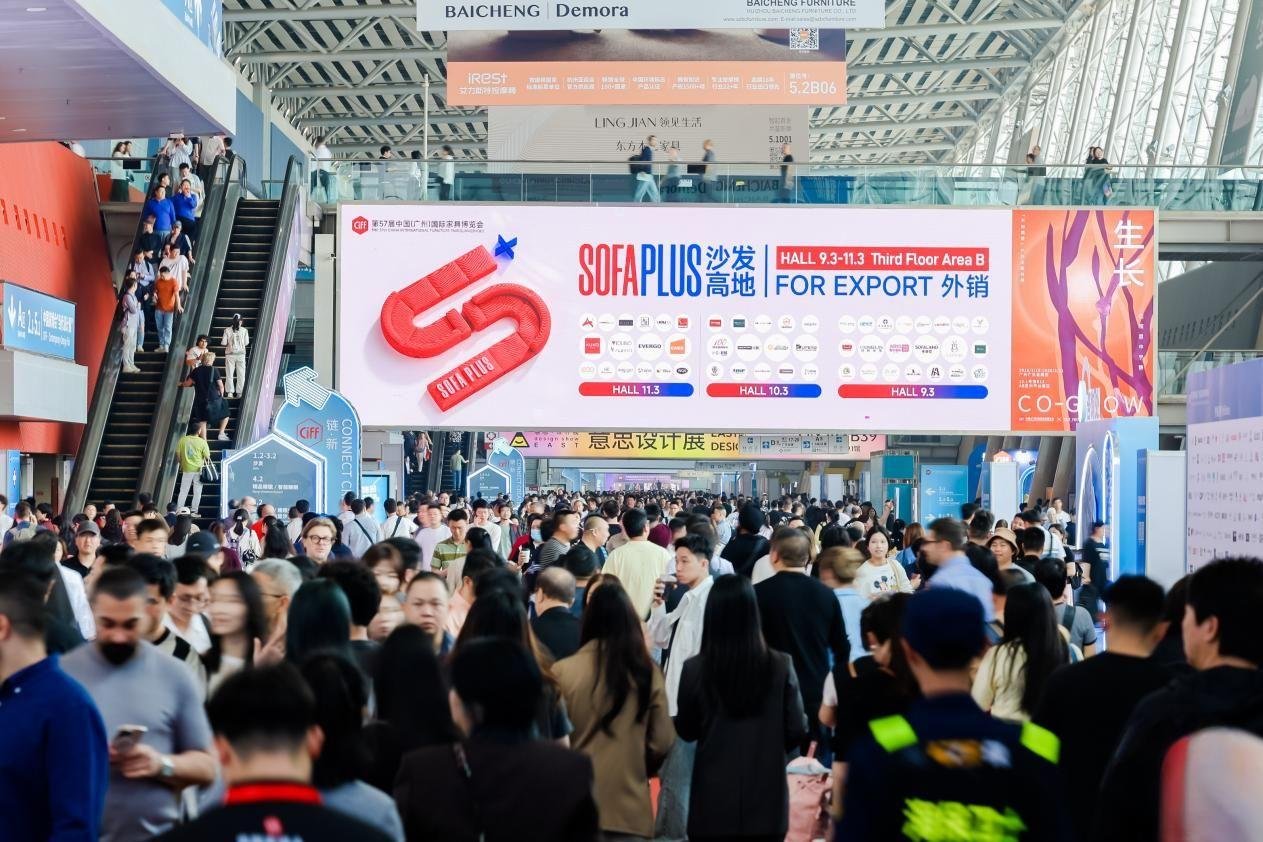
The Guangzhou furniture fair is not a single event. Each spring, CIFF Guangzhou (March, two phases) and Canton Fair Phase 2 (April) cluster around the Pazhou Complex, together covering more than 850,000 square meters across 90 halls and hosting over 5,100 brands. According to official post-show data released by the CIFF Organizing Committee, the 2026 edition welcomed 353,106 professional visitors from 185 countries and regions, including 64,291 overseas attendees—a year-over-year increase of 13.2% that set a new record.
For buyers flying in from overseas, every day burns budget. Every bad decision converts directly into downstream supply-chain loss. This guide does not offer recycled “trade show tips.” It dismantles a standardized, executable workflow for furniture sourcing China, grounded in fourteen consecutive years of floor tracking and field-level observation of Chinese exhibitors.
30 Days Before: The Invisible Battlefield That Determines Show Efficiency
Badge Registration and Hall Access Rules
CIFF and Canton Fair operate entirely separate registration systems. CIFF offers free online pre-registration for professional buyers, but overseas applicants must submit passport details and proof of procurement credentials; approval typically takes three to five business days. Canton Fair requires all foreign buyers to apply for an invitation code through its official platform. The spring badge application window opens roughly sixty days before the show, and popular time slots fill two weeks before the deadline.
A detail most guides ignore: Pazhou’s Zone A and Zone B are physically connected by sky bridges, yet their access control systems do not talk to each other. A buyer holding a Canton Fair Phase 2 badge cannot walk into a concurrent CIFF Phase 2 hall, and vice versa. Cross-show sourcing requires completing both registration flows independently.
Pre-Scheduled Appointments vs. Random Walk-Ins
Buyers who complete pre-show appointments consistently outperform those who walk the floor randomly. The logic is simple: a scheduled supplier prepares samples, price lists, and capacity schedules aligned to your product line. A random walk usually yields only generic catalogs. Based on the FURNITURE DISCOVER editorial team’s independent field research across multiple show cycles, pre-scheduled meetings tend to cover more actionable ground in a single sitting than unplanned booth visits.
Thirty days before departure, download the CIFF exhibitor directory, filter 50–80 targets by product category, and send appointment requests that include specific procurement parameters—product category, estimated annual volume, and target price range. Avoid vague phrases like “We are interested in your products.” Instead, attach SKU characteristics or reference image links. Chinese exhibitors respond to inquiries containing hard numbers at a noticeably higher rate than open-ended requests.
Pre-Defining Your Purchase List and Sample Standards
The information density on the show floor is lethal. Without a pre-defined purchase list, decision paralysis sets in fast. Complete the following matrix before departure:
| Evaluation Dimension | Pre-Defined Standard | On-Site Notes |
|---|---|---|
| Product Category | e.g., upholstered sofa, solid-wood dining chair, metal-frame coffee table | — |
| Target FOB Price Band | e.g., sofa \$280–\$350/unit | — |
| Material & Process Floor | e.g., fabric must pass CA 117 flame test | — |
| Supplier Qualification Threshold | e.g., FSC certification or BSCI audit report required | — |
| MOQ Ceiling | e.g., single SKU not exceeding 100 units | — |
| Sample Lead-Time Cap | e.g., sample ready within 25 days of confirmation | — |
Hall Navigation and Route Planning
The Real Map of CIFF and Canton Fair Furniture Zones
The core battleground splits across two time windows and three physical zones.
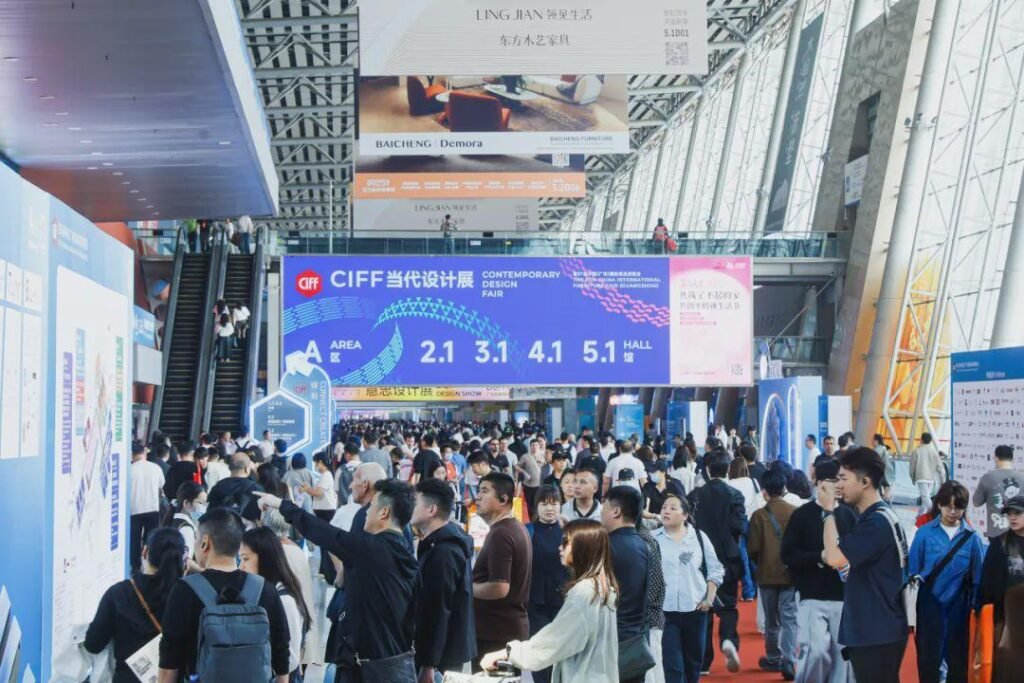
CIFF Guangzhou (March) runs in two phases:
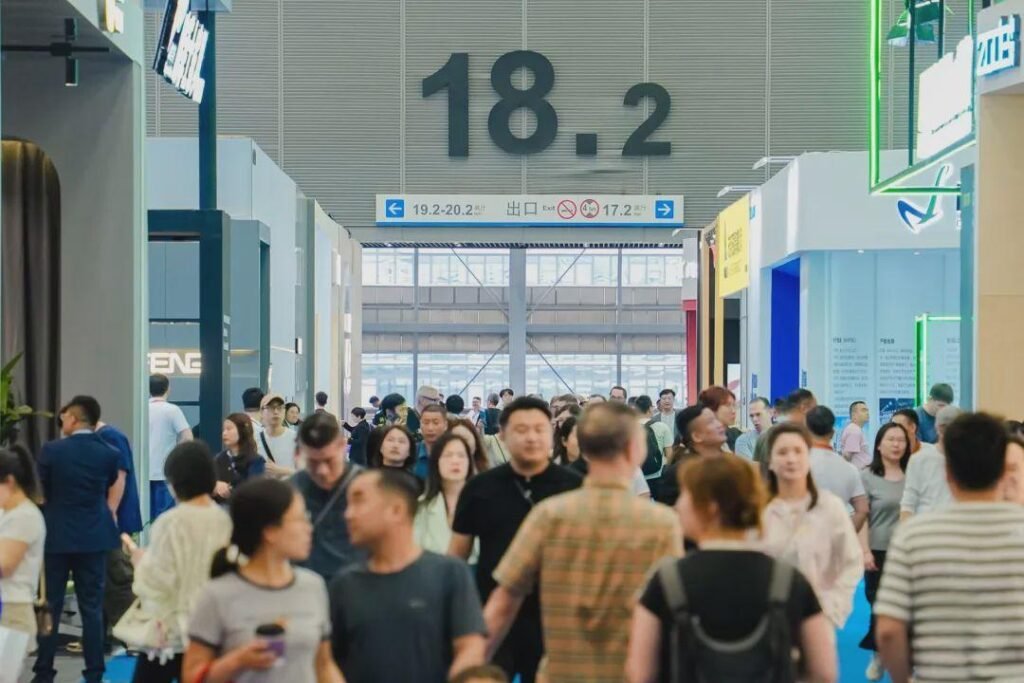
• Phase 1 (March 18–21): Consumer furniture dominates, covering Halls 1.1–5.1 in Zone A and Halls 9.1–13.1 in Zone B, totaling 430,000 sqm. Categories include upholstered furniture, bedroom suites, whole-home customization, home textiles, and outdoor furniture. The 2026 edition introduced new thematic zones—Healthy Aging (Hall 18.2, Area D, ~8,000 sqm, ~60 companies), Pet Home (Hall 19.2, Area D, ~2,000 sqm, ~40 companies), and Massage Chairs / Function Sofas (Hall 5.2, Area A, ~4,000 sqm)—reflecting emerging lifestyle demand.
• Phase 2 (March 28–31): Office, commercial, and hospitality furniture in Zone A Halls 1.2–8.2. Concurrently, CIFM/interzum Guangzhou (machinery and materials) occupies Zone C Halls 14.1–16.2, covering 170,000 sqm.
Canton Fair Phase 2 (April 23–27; October 23–27 in autumn): Furniture halls concentrate in Zone B Halls 9.3–11.3 and Zone C Halls 15.3–16.3. The exhibitor count is roughly 2,600, but average booth sizes are smaller than at CIFF.
The positioning gap is clear: CIFF emphasizes supply-chain completeness and design frontier; Canton Fair Phase 2 emphasizes export-oriented batch trading velocity.
Optimal 3-Day and 5-Day Routes
3-Day Compressed Route (for category-focused buyers)
| Day | Time Block | Target Halls | Core Mission |
|---|---|---|---|
| Day 1 | 09:30–12:30 | CIFF Phase 1, Zone A Halls 1.1–2.1 | Upholstered furniture sweep; initial screen of 15 suppliers |
| Day 1 | 14:00–17:30 | CIFF Phase 1, Zone B Halls 9.1–10.1 | Outdoor furniture and dining chairs; deep meetings with 5 pre-scheduled suppliers |
| Day 2 | 09:30–12:30 | CIFF Phase 1, Zone B Halls 11.1–13.1 | Whole-home customization and soft furnishings; collect fabric swatches |
| Day 2 | 14:00–17:30 | CIFF Phase 1, Zone A Halls 3.1–5.1 | Design brands and emerging themed zones (aging-in-place / pet furniture) |
| Day 3 | 09:30–16:00 | CIFF Phase 2, Zone A Halls 1.2–4.2 | If commercial or hospitality projects exist, backfill office and hotel furniture sources |
5-Day Deep Route (for full-category buyers or annual purchase volumes above $500K)
Add Day 4 at CIFM/interzum Guangzhou, Zone C Halls 14.1–16.2, to engage upstream suppliers of board, hardware, and fabric directly—locking material costs and lead times at the source. Day 5 goes to Canton Fair Phase 2, Zone B Halls 9.3–11.3, to compare the pricing architecture of export-oriented factories against CIFF exhibitors.
Effective dwell time per hall is roughly 2.5 hours. The daily ceiling for meaningful supplier visits is 8–10. Beyond that threshold, information absorption drops sharply.
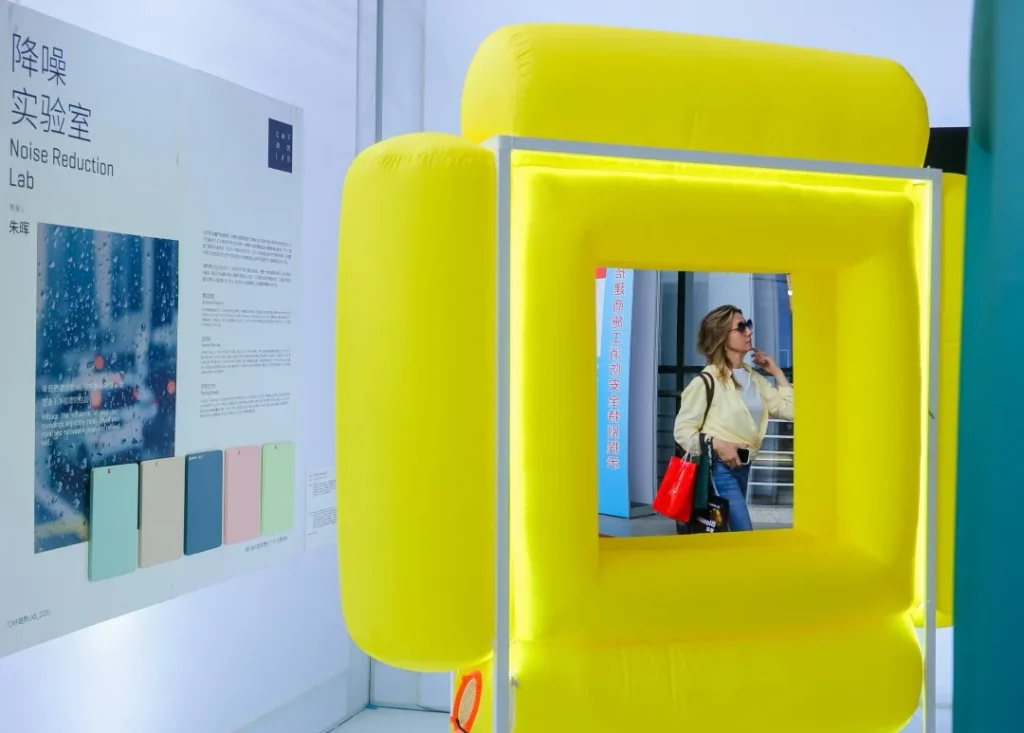
Show-Floor Ecology by Time Window
The four-day ecology follows a fixed rhythm. Understanding it cuts negotiation costs measurably.
• Day Zero (Setup Day): Some booths are not yet fully sealed in the late afternoon. Seasoned buyers arrive between 16:00 and 18:00 to read peripheral signals—truck sizes hauling samples, booth build quality, sample protection rigor. These are soft-power indicators that never appear in official data.
• Day One (Peak Traffic): 09:30–11:30 is consumed by opening ceremonies and media tours. Floors are crowded and sales principals are distracted. Avoid this window. Use the afternoon for broad reconnaissance of non-core categories to build market intuition.
• Day Two (Information Day): Sales teams hit their stride. Product explanations are most detailed. Ideal for deep technical conversations and sample teardowns.
Day Three Afternoon (The Golden Negotiation Window): Based on the FURNITURE DISCOVER editorial team’s field observation across fourteen years, the window between 14:00 and 17:00 on Day Three is consistently the most productive time for price and MOQ negotiation. By then, exhibitors have calibrated the quality of foot traffic and their own booking progress. Booths that have underperformed their internal targets show maximum flexibility on price and MOQ. Concurrently, hall traffic thins by a noticeable margin, creating a quieter environment for hard bargaining.
Day Four (Teardown Day): Morning is for finalizing details. After 14:00 most booths begin packing; only use this time to confirm follow-up arrangements with already-negotiated suppliers.
High-Efficiency Supplier Screening: From 5,100 to 20
Decoding Booth Location: The Value of Corner and End-Cap Spots
Booth placement is not random. It reflects the organizer’s grading logic and the factory’s exhibition strategy.
Island booths at major aisle intersections are usually occupied by headliners or high-budget exhibitors, carrying rental costs three to four times those of standard inline booths. These are excellent for spotting trends and new releases, but not necessarily for price negotiation—their quotes often bake in brand premiums.

An industry observation rarely covered in other guides: corner booths and end-cap spots at the far reaches of main aisles frequently hide strong factories. These positions cost less, yet the exhibitors behind them are not necessarily weaker. Common reasons for choosing such spots include first-time status (no priority pick rights), geographic distance from Guangdong (e.g., Jiangxi or Zhejiang factories running leaner budgets), or owner preference to invest in production rather than booth décor. Sales staff at these booths are often the factory owner or core partner, decision chains are extremely short, and pricing flexibility is unexpectedly high.
New Exhibitors at 31.8%: Opportunity and Risk
CIFF 2026 hosted 1,582 new exhibitors, representing 31.8% of the total—a historic high confirmed by the official post-show report. That means one in every three factories on the floor is making its debut.
Advantages: pricing strategies tend to be more aggressive; willingness to accept lower initial MOQs to crack international markets; product lines are usually more focused, yielding higher communication efficiency than sprawling legacy catalogs.

Risks are equally clear: production stability is unproven across multiple show cycles; export customs experience may be thin; after-sales response systems may still be immature.
Treat new exhibitors as an “observation list,” not a “primary list.” Cap first-time orders at a conservative share of total procurement budget, and insist on a bank credit certificate or third-party factory audit from the last three months.
On-Site Supplier Scorecard and the 5-Minute Rapid Assessment
The first five minutes in front of a booth determine whether a thirty-minute deep dive is justified. Use this rapid framework:
| Observation | Positive Signal | Negative Signal | Weight |
|---|---|---|---|
| Sample Craftsmanship | Even seams, concealed hardware, flawless fabric | Glue overflow, structural wobble, color variance | High |
| Sales Competence | Instant answers on material specs, MOQ, sampling lead time | Frequent reference flipping, vague replies, “We can customize anything” | High |
| Booth Management | Logical sample layout, business cards and literature within reach | Sample piles in chaos, missing literature, staff on phones | Medium |
| Peer Traffic | European / Middle Eastern buyers engaged in conversation | Sparse local visitors or empty aisles | Medium |
| Certification Display | Proactive display of audit documents or factory video | Evasive when certifications are asked | High |
On-Site Negotiation: Understanding the Chinese Exhibitor Mindset
The MOQ and Price Negotiation Window
Chinese exhibitors typically operate a three-tier quote structure: show-floor price, post-show return price, and annual contract price. The show-floor price is not the floor; it is a probe. Sales staff often embed negotiation headroom in Day One morning quotes to manufacture “concession drama” in later talks.
Effective price negotiation should not happen on Day One. Return on Day Two afternoon or Day Three morning with hard volume data (even estimates) for a second round. You will reach the real price band faster. Avoid blunt haggling. Instead, use conditional exchange: raise per-SKU MOQ to extract a unit price drop; commit to quarterly reorders to lock in exchange-rate risk; accept the factory’s suggested material alternative to reduce cost.
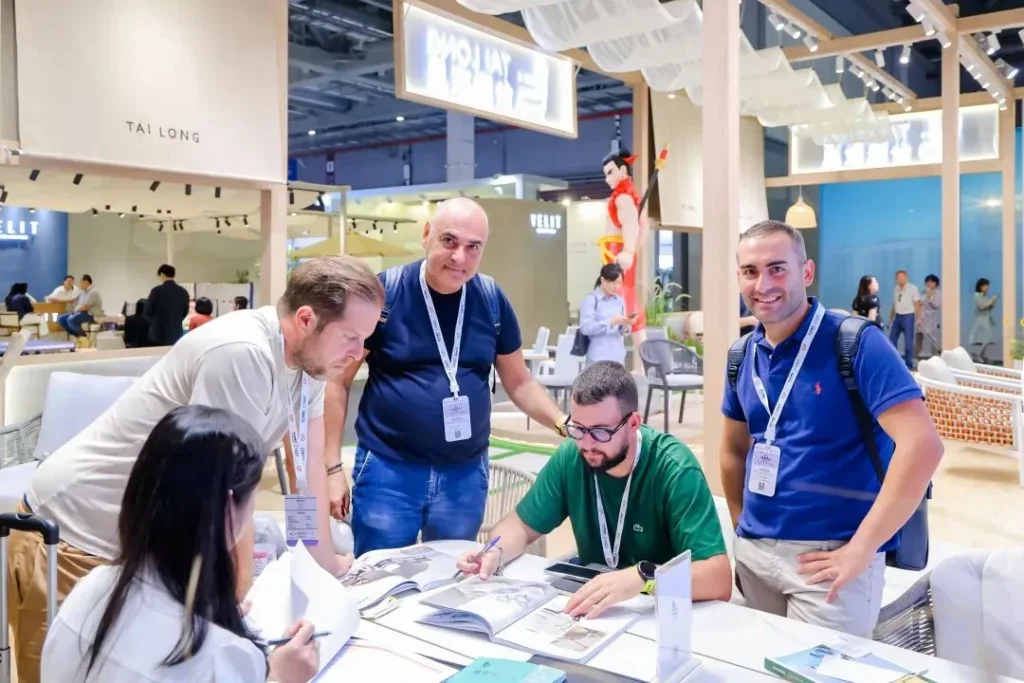
MOQ flexibility correlates directly with booth format. Standard booth exhibitors (9 sqm) often accept 50–100 units per SKU. Island-booth brands may insist on 300+. If your natural volume sits below the factory’s MOQ, ask directly whether they have clearance stock or end-of-run lots that can be merged. This tactic peaks in success rate on Day Three afternoon.
Sample Confirmation and Prototyping Lead-Time Lock
Sample management is where post-show discipline most often collapses. Three things must be completed on the floor:
• Physical Tagging: Place colored stickers on samples of interest (carry red/yellow/green labels). Red = “must prototype,” yellow = “backup,” green = “reference only.” Photograph the tagged placement to prevent post-show mix-ups.
• Prototype Spec Sheet: Ask the sales rep to handwrite the sampling lead time, required material swatches, and fees on the back of their business card. In Chinese business culture, handwritten notes carry more binding weight than printed collateral.
• Drawing Confirmation Window: If customization is involved, confirm on the spot whether the factory can deliver 3D renderings or engineering drawings within seven days. A factory unable to name a specific timeline usually lacks the R&D bandwidth for complex custom work.
[Image: Sample tagging and prototyping workflow example, ALT tag: furniture exhibition tips sample management]
Post-Show Golden Follow-Up: The 48-Hour Rule
Supplier Tiering and the 72-Hour Elimination Mechanism
The evening the show ends is your peak memory window. On the ride back to the hotel or during your flight, classify every contact into three tiers:
• Tier A: Product match, acceptable pricing, professional sales, complete qualifications. Enter the 48-hour priority follow-up queue.
• Tier B: Product match but carries a single risk factor (e.g., MOQ too high or sampling timeline fuzzy). Enter the one-week observation queue.
• Tier C: Clear mismatch or integrity concerns. Archive immediately and mark “do not pursue.”
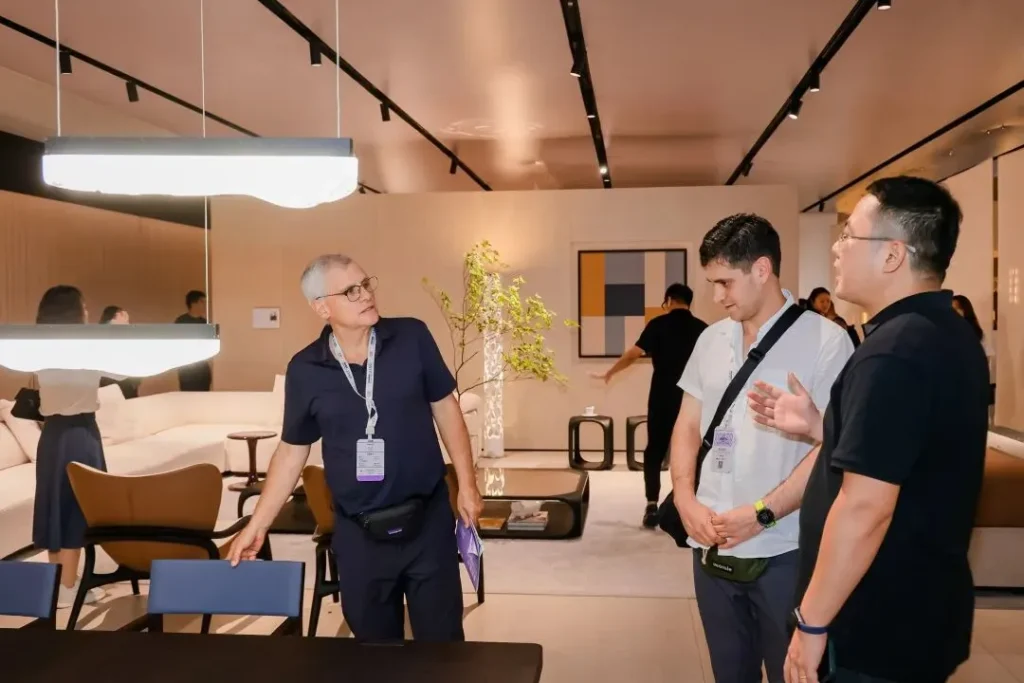
The 72-Hour Elimination Rule: If a Tier A supplier fails to send a proactive follow-up email or WeChat message within 72 hours of the show’s close, downgrade to Tier B. Proactivity is a hard indicator of service consciousness; a supplier that does not chase you after the show will be equally slow during bulk production.
Follow-up emails should go out within 48 hours. Include: meeting confirmation at the show, specific product inquiry list, requested quote validity (recommend 30 days), and next steps (video factory audit or sample order). Use the subject line: “Met at CIFF Guangzhou 2026 + [Your Company Name]”—open rates run noticeably higher than generic subjects.
Common Pitfalls
Verbal Traps Around Logistics and Packaging
Verbal promises you will hear on the floor: “We handle delivery to Shenzhen Port,” or “Don’t worry about packaging—we’ve been exporting for over a decade.” These rarely survive translation into contract language.
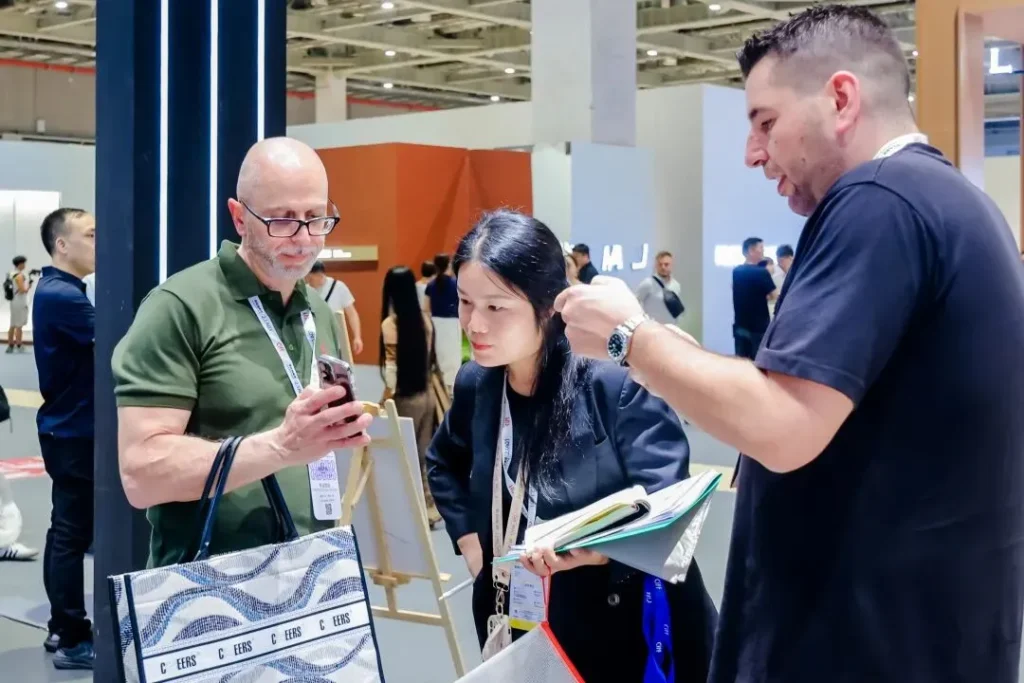
On the floor, insist that logistics and packaging terms be written into the quotation. Specify: export packaging standard (crate vs. plywood frame vs. carton corrugated grade), destination port, Incoterms version (prefer FOB or CIF), and damage liability boundaries. A factory that refuses to confirm packaging details in writing is broadcasting a clear warning signal.
Hidden Blind Spots in Contract Terms
Three recurring blind spots in Chinese furniture export contracts:
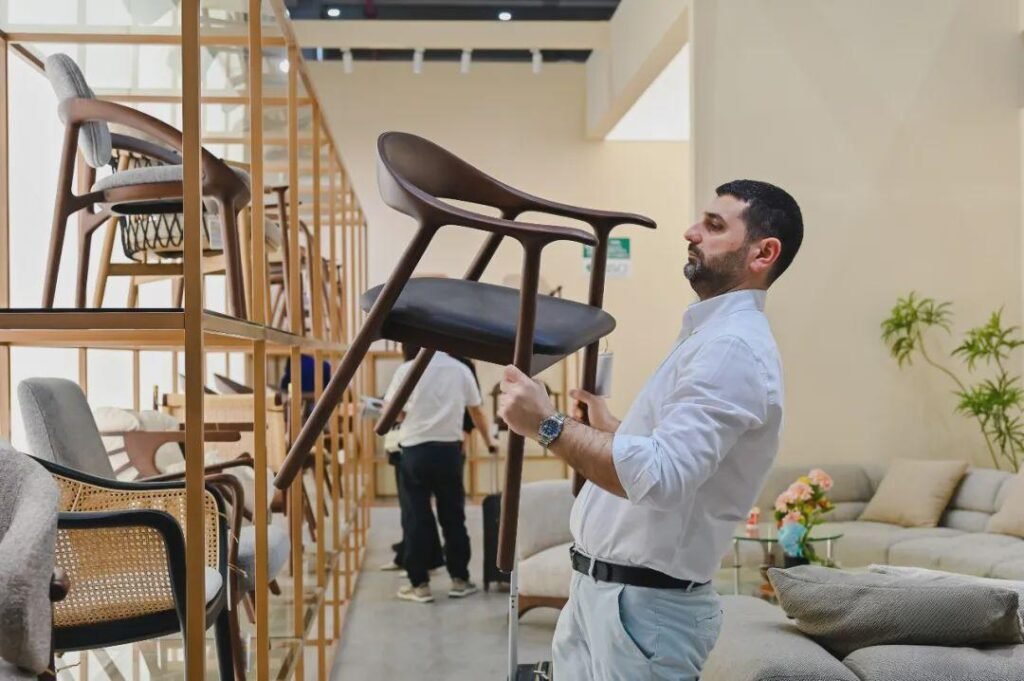
• Ambiguous Material Definitions: The term “solid wood” in Chinese usage can include veneer-core boards. The contract must specify the botanical species and moisture-content standard.
• Unspecified Color Tolerance: Batch-to-batch fabric or leather color variance is a leading cause of returns. Define Delta E ≤ 1.5 or require sealed sample approval.
• Missing Lead-Time Buffer: A factory’s verbal “45 days” usually means production time only, excluding queue wait and customs clearance. The contract lead time must be defined as “counting from deposit receipt and sample confirmation,” with tiered penalty clauses.
Core Action Checklist
• Complete 50 supplier appointments 30 days before the show. Carry a pre-defined purchase list and scorecard. Do not walk the floor randomly.2.Lock Day Three, 14:00–17:00 as your core negotiation window. Exploit the exhibitor’s psychological expectation gap to extract MOQ and price flexibility.
• Lock Day Three, 14:00–17:00 as your core negotiation window. Exploit the exhibitor’s psychological expectation gap to extract MOQ and price flexibility.
• Scan corner booths and end-cap spots for new exhibitors. These locations often hide factories with extremely short decision chains and unexpected pricing room.
• Complete on-site color tagging and handwritten prototype confirmation. Send tiered follow-up emails within 48 hours; downgrade any supplier that fails to respond within 72.
• Get logistics, packaging, and material terms in writing. Verbal commitments frequently face fulfillment gaps in post-show execution.

FAQ
Q: What is the difference between CIFF Guangzhou and Canton Fair furniture zones?
A: CIFF (March) is the world’s largest dedicated furniture fair, covering consumer, office, commercial, and upstream materials across 5,100+ exhibitors. Its core is supply-chain completeness and design frontier. Canton Fair Phase 2 (April / October) hosts roughly 2,600 furniture exhibitors, skewing toward export-oriented batch trading of standardized home goods and décor. If your procurement involves complex customization or upstream material sourcing, prioritize CIFF. If you are buying standard SKUs in volume, Canton Fair offers higher transaction velocity.
Q: How many days should a first-time buyer allocate?
A: For a single category (e.g., only upholstered sofas or only outdoor furniture), three days is sufficient to screen core suppliers. For multi-category sourcing or annual volumes above $500K, plan five days: four for deep CIFF coverage across both phases, plus one for Canton Fair cross-checking. The effective daily ceiling is 8–10 meaningful supplier visits; beyond that, decision quality degrades.
Q: Can show-floor quotes be used as direct procurement benchmarks?
A: No. Day One morning quotes are typically “probe prices” with embedded negotiation headroom. Treat floor quotes as market-positioning references only. Real procurement pricing locks in during the second or third post-show negotiation round, especially when you can present concrete volume or long-term partnership intent.
Q: How do you assess whether a new exhibitor is reliable?
A: With CIFF 2026 new exhibitors at 31.8%, opportunity and risk are paired. Request a bank credit certificate from the last three months, ask for verifiable domestic client references, and observe the consistency of sample craftsmanship. Keep first-time orders conservative, and prioritize factories that can transact through third-party guarantee platforms (e.g., Alibaba Trade Assurance).
Q: Why is Day Three afternoon called the “Golden Negotiation Window”?
A: Based on long-term field observation, by Day Three afternoon exhibitors have calibrated overall traffic quality and their own booking progress. Booths that have underperformed internal targets show maximum willingness to flex on price and MOQ. Hall traffic thins noticeably, creating a quieter environment for hard bargaining. Intent agreements reached during this window tend to convert to firm orders at a higher rate than those struck on Day One.
Q: What if samples never arrive after the show?
A: Three floor-level defenses: color-tag samples and photograph them, ask the sales rep to handwrite sampling lead time and cost, and obtain the direct contact of the factory’s merchandiser (not just the sales rep). Send written confirmation within 48 hours, cc’ing the factory principal. If no sample progress update arrives within 14 days, activate your backup supplier.
Recommended Resource
Interi Furniture specializes in custom furniture manufacturing for residential, hospitality, and commercial projects. Their experience in materials, craftsmanship, and project realization makes them a valuable resource for designers and buyers seeking tailored furniture solutions from China.