









You can order a container of chairs from Alibaba at 2 AM in your pajamas. So why are seasoned buyers still flying sixteen hours to Guangzhou every March?
We spent the full run of CIFF 2026—March 18 through 22—walking the Pazhou halls until our feet blistered. We talked to buyers who were ecstatic, buyers who were furious, and buyers who were simply exhausted. The angry ones had one thing in common: they treated the show like a shopping mall. The happy ones treated it like a military operation. That difference is what this piece is about.
If you are trying to decide whether CIFF Guangzhou 2027 is worth the jet lag, or if you are still arguing about China furniture fair vs online sourcing as if the two were mutually exclusive, here is what the floor actually looks like.

The Hall Is a Lie Detector
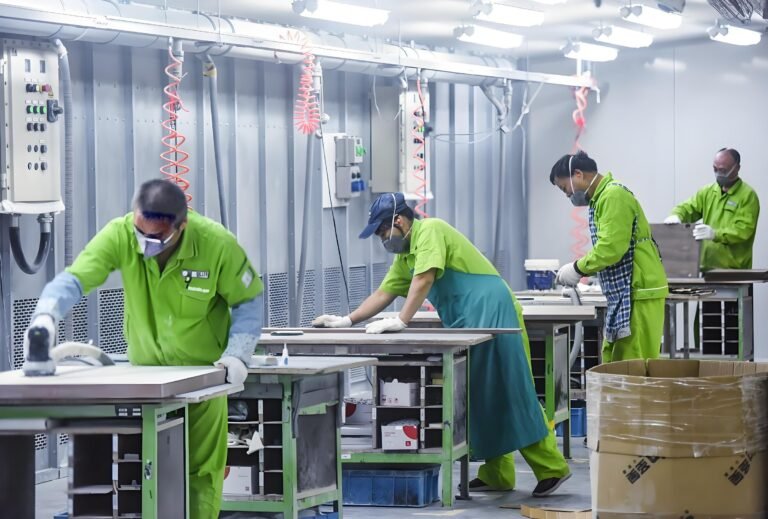
A Danish retailer told us something that stuck: “I can smell the solvent in the finishing room. No video call gives me that data.” He was standing in Hall 9.2, holding the underside of a dining table, asking the factory owner why the joinery used dowels instead of dominos. The owner hesitated. That hesitation—two seconds of eye contact—told the buyer more than a hundred ISO certificates ever could.
This is the first reason trade show ROI remains stubbornly high for experienced purchasers. Trust is not a document. It is a physical reaction. When you are staring at a sofa frame and the QC manager cannot explain why the corner block is glued rather than screwed, you know exactly what kind of factory you are dealing with. You cannot get that from a Zoom call where the camera is pointed at the one clean corner of the workshop.
We watched buyers who spent twenty minutes in a booth—flipping cushions, photographing the back of cabinets, asking about kiln temperatures—walk away with real confidence. We watched others grab a brochure and a WeChat QR code in three minutes. Guess which group placed orders?
The Stuff You Will Never Find Online
Here is an open secret: some of the best factories in China are terrible at the internet.
In Hall 9.2, we saw a solid wood dining collection using a thermal-modified ash process that we had never seen on Alibaba, Global Sources, or Made-in-China. The factory had no English website. No storefront. They had been making this line for two years and selling it exclusively through direct meetings at CIFF. Six buyers signed MOUs with them that week. One Melbourne designer later told us he built an entire award-winning collection around their panels.
This is not rare. It is systemic. The manufacturers who invest in CNC upgrades and dust collection systems often have no budget left for SEO. They rely on furniture trade shows 2027 and previous editions to put their products in front of people who actually understand joinery. If you are only sourcing through platforms, you are fishing in a pond where everyone else is already fishing.
The Price Conversation Happens in Real Time
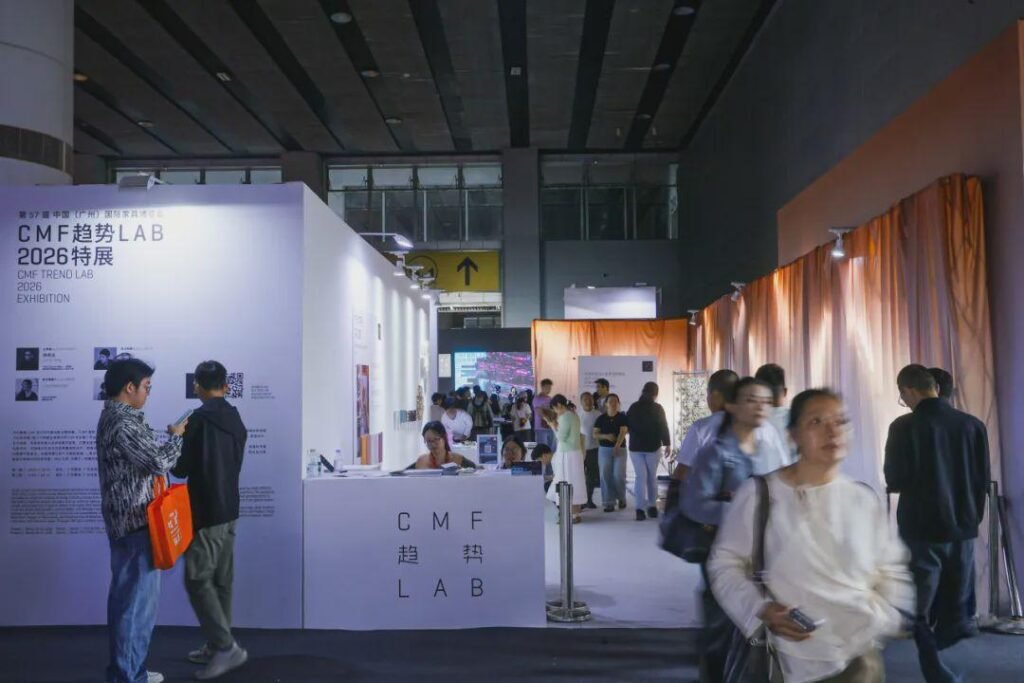
A German buyer we shadowed on the final day of CIFF 2026 walked into a booth in Hall 5.1 with quotes from two neighboring exhibitors. He sat down with the owner—not a sales rep, the owner—and pulled out his phone. Forty-five minutes later, he had knocked 8% off his dining chair price and shifted payment terms from 50/50 to 30/70. He had been emailing this factory for three years and never got that concession.
Why did it work in person? Because the owner could see the competitor’s booth from his chair. Because the buyer could point to the exact stitch pattern he wanted and say, “Your neighbor is doing this for less.” Because the deadline of the show—the fact that both parties would be on a plane in twelve hours—created pressure that no email thread can replicate.
Trade show ROI is not just about the discount. It is about the terms, the lead time, and the MOQ flexibility that only emerge when the decision-maker is sitting across from you with a calculator and a cup of tea.
When Things Go Wrong, the Hall Fixes Them
A US-based retailer showed up at CIFF 2026 with a duffel bag full of defective samples from his existing supplier. He walked into their booth, laid the pieces on the table, and asked what happened. The QC head—who had never replied to his emails—was standing right there. Within twenty minutes, they traced the problem to a subcontractor switch the buyer never knew about. A corrective plan, including third-party inspection, was signed before lunch.
Try doing that through a ticketing system. You will spend three weeks getting past the sales assistant.
The Three Ways Buyers Waste Their Trip (And Money)
Not everyone leaves CIFF happy. The ones who do not usually fall into one of three traps.
Trap One: The Tourist Mindset
An Australian e-commerce operator told us, with a straight face, that he had “just walked around” for seven days. He covered maybe 10% of the Pazhou complex. He collected 340 business cards. He followed up with zero. His trip cost $4,800. His return was $0 and a sore back.
The fix is boring but effective: map your halls before you fly. Identify 15 to 20 targets. Email them two weeks out. Block 30-minute slots. If you are not treating this like a business trip, you are burning airfare.
Trap Two: Judging the Booth, Not the Factory
A UK boutique brand owner signed a $12,000 order because the booth looked like a Milan showroom. Great lighting. Perfect English. She never visited the factory. Four weeks later, the samples arrived with veneer peeling at the edges. The booth had been displaying third-party samples. The actual production line was two hours away and used a completely different finishing subcontractor.
The fix: ask for the factory address during the meeting. Request a video walkthrough within 48 hours, or book a visit for the day after the show. If they hesitate, you have your answer.
Trap Three: Expecting to Close
Some buyers arrive expecting to finalize every SKU—quotes, samples, contracts, shipping schedules—in five days. When the samples take three weeks post-show, they call the trip a failure. They are wrong. CIFF is a filter, not a checkout line. Your goal is to narrow fifty potentials down to five. The closing happens in Guangzhou or Berlin or Sydney over the next month.

China Furniture Fair vs Online Sourcing: A Reality Check
Let us kill the myth that one is replacing the other. They serve different buyers at different stages.
If you are reordering forty SKUs of standardized metal frames and you already know your supplier, Alibaba is faster and cheaper. If you are vetting a new factory for custom upholstered pieces with mixed materials, you need the hall. The break-even point—where the $5,000 trip cost starts to pay for itself—usually sits around $80,000 to $100,000 in annual China spend. Below that, digital makes sense. Above that, skipping the show is a risk.
Here is how the two channels actually compare:
| What You Are Buying | Go to CIFF | Stay Online |
|---|---|---|
| Custom or mixed-material furniture | Yes | No |
| First-time supplier vetting | Yes | Risky |
| Reordering standard SKUs | No | Yes |
| Negotiating payment terms or MOQ | Yes | Rarely works |
| Spotting next year’s material trends | Yes | Too late |
Five Scenes from the Floor
The Designer Who Planned
Barcelona-based, $60,000 annual budget. She spent three weeks researching Hall 10.2 and Hall 11.2 before flying. Pre-booked fourteen meetings. Found three small-batch factories, placed a $52,000 order, and cut production time from 60 days to 45. Trip cost: $3,400. She was home by Thursday.
The Veteran Who Pushed Back
German retailer, same Zhejiang factory for three years. He brought competitive quotes from Hall 5.1 neighbors. Sat down with the owner. Walked out with an 8% price cut and better payment terms. Annual savings on one SKU: roughly $18,000.

The Material Find
Melbourne designer, thermally modified ash in Hall 9.2. No digital footprint. No website. He built a collection around it and won a regional award. The factory still does not have an Instagram account.
The Wanderer
Canadian buyer. No map. No appointments. No plan. Seven days, hundreds of cards, zero orders. Cost: $4,800. He is the reason people say trade shows are dead.
The Surface Trap
French hotel buyer. Beautiful booth in Hall 4.1. $12,000 order. Samples arrived with peeling veneer. The booth was a showroom; the factory was a different company two hours away.
What Is Changing for CIFF 2027
Based on organizer announcements and what we saw on the ground in 2026, here is what is likely coming for furniture trade shows 2027.
Digital tools are finally catching up. Expect virtual showrooms and online appointment scheduling for CIFF 2027, which should cut down on the chaos of unplanned booth visits. The smart furniture and custom zones are expanding—word is by roughly 30%—which means more relevant options for design-led buyers and fewer generic commodity booths.
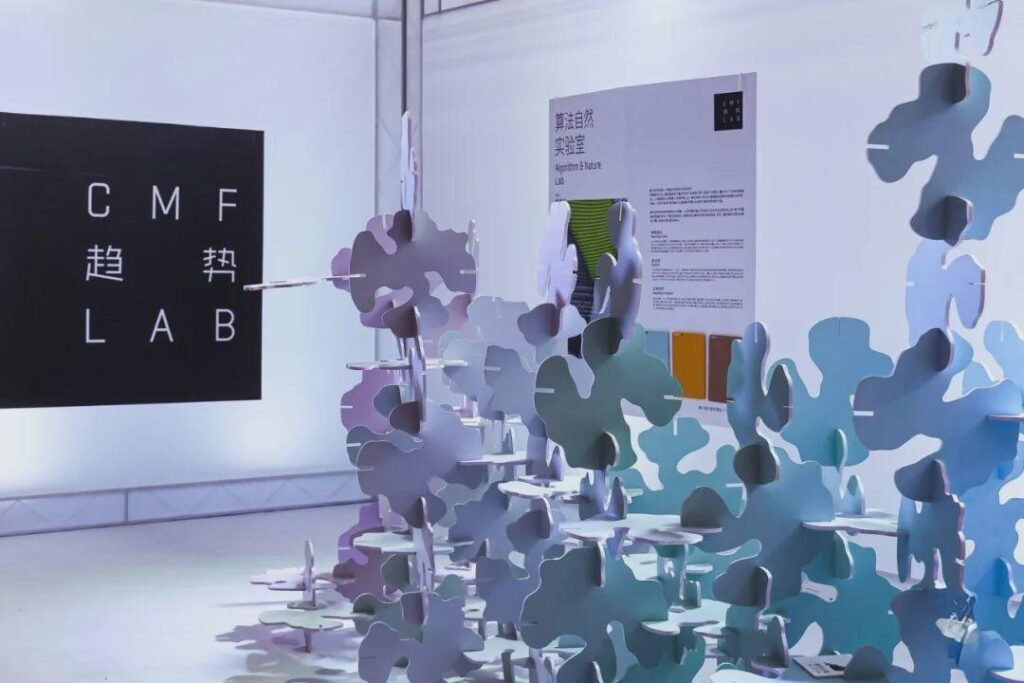
There is also talk of a dedicated supply chain services zone: logistics, QC, trade finance, compliance. For first-time buyers, that is a big deal. It turns the show from a product marketplace into a full ecosystem.
And critically, the organizers are tightening exhibitor qualifications. If they actually enforce it, the number of “shell company” booths—traders posing as factories—should drop. That alone would improve trade show ROI for everyone.
(Note: these projections are based on 2026 trends and public statements; final details await official confirmation from CIFF Guangzhou 2027 organizers.)
How to Actually Do This: A Field Guide
If you are going to CIFF 2027, do it like the buyers who win.
Start ninety days out. Define your categories, your price bands, your MOQ ceilings. Download the exhibitor list and figure out where your current suppliers are weak. Set a hard target: find three viable alternatives for your core SKU.
Three weeks before the show, email fifteen to twenty factories. Ask for a specific time slot. Send your RFQ template in advance so they can pull samples. If you show up and ask them to “just show me what you have,” you are wasting both your time.
Your RFQ should fit on one page: material, dimensions, finish, packaging, target EXW price, desired MOQ. Bring it printed. It cuts the back-and-forth by more than half.
Do not try to cover every hall. Pick two or three zones that match your products. Plan for four or five deep meetings per day, not twenty speed dates. A real meeting needs forty-five minutes. Walking between halls needs fifteen. Lunch needs thirty. Anything else is fantasy.

When you are in the booth, flip things over. Look at the back of the cabinet. Ask what adhesive they use, what grit sandpaper, what temperature the kiln hits. Photograph the construction, not the display face.
For any supplier you are seriously considering for an order over $10,000, book a factory visit for the day after the show. If you cannot travel, demand a live video walkthrough within 48 hours using your checklist, not theirs.
Finally—and this is the one everyone forgets—send your follow-up email before you get on the plane home. Summarize what you discussed, what samples you need, and when you will decide. Suppliers are drowning in contacts after the show. The first forty-eight hours determine whether you are a lead or a memory.
Who Needs to Be There?
Not everyone.
Large retailers with $500K+ annual budgets should treat CIFF as mandatory. Boutique brands and designers in the $100K–$500K range should go, but with a tight plan. Interior designers doing small-batch work can stretch it to every twelve or eighteen months. E-commerce operators running standard SKUs should probably manage reorders online and use the show only for vetting new lines. If you are a dropshipper under $30K, stay home. The math does not work.
The real divider is not budget. It is complexity. Forty standard metal frames from one province? Digital is fine. Eight custom upholstered SKUs with mixed materials? You need to smell the solvent.

Quick Answers to the Questions Everyone Asks
Q:Is CIFF 2027 worth it on a sub-$50K budget?
For standard stuff, probably not. For custom work, yes—because trust verification is not something you can buy with a credit card online.
Q: How does this compare to the Shanghai fair?
CIFF Guangzhou is bigger, more export-focused, stronger on upholstery and mass-market wood. Shanghai skews domestic and high-concept. Pick based on your market.
Q: What does the trip actually cost?
From Europe or North America, budget $4,200 to $6,800 per person for flights, five nights, visa, food, and transport. That is before booth costs (if you are exhibiting) or shipping samples home.
Q: Can I finish my sourcing at the show?
No. Think of it as a filter. You will be closing deals two to four weeks later.
Q: Where should first-timers focus?
Hall 9.2 for solid wood, Hall 10.2 for upholstery, Hall 11.2 for custom and bespoke. Do not wander without a zone plan. You will drown.
Recommended Resource
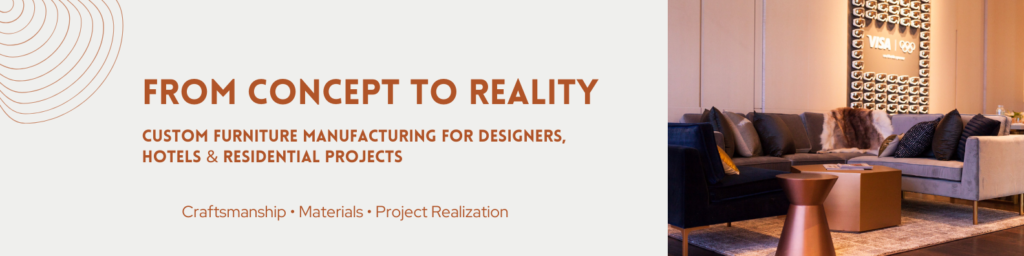
Interi Furniture specializes in custom furniture manufacturing for residential, hospitality, and commercial projects. Their experience in materials, craftsmanship, and project realization makes them a valuable resource for designers and buyers seeking tailored furniture solutions from China.