










The first step sourcing furniture China is not finding a factory. It is figuring out exactly what you are buying before you ask anyone for a price. That sounds obvious, yet Furniture Discover’s 2026 survey of 120 first-time importers found only 17% had completed a full procurement specification before contacting any supplier. The other 83%—the core audience of any serious beginner importer guide—sent inquiries while still unclear about their own product parameters. The result? An average cost overrun of 37.2% and a quality non-conformance rate of 62%. This article will not teach negotiation tactics or recommend factory names. It addresses one question only: the small task you must complete before hitting “send” on that inquiry email.
The Most Common Beginner Mistake: Treating “Factory Hunting” as the Starting Point
Last autumn, Furniture Discover tracked a real case at an upholstered furniture factory in Houjie, Dongguan. A Dutch buyer contacted eight factories through Alibaba with a single sentence: “Please quote your lowest price for this three-seater sofa.” The quotes ranged from $210 to $680—a spread of more than 300%. He spent three weeks comparing them, eventually selecting a factory at $320. Problems only surfaced after the goods arrived in Rotterdam: foam density was 25kg/m³, causing collapse after three months of use; fabric color fastness failed, resulting in severe fading after the first wash. When he reviewed his email history, he realized the factory had never committed to any specific parameters, and he had never asked for any.

This is not an isolated incident. In Furniture Discover‘s field research around Foshan, similar stories surface almost weekly. New buyers equate “finding a factory” with “starting procurement,” essentially using the factory’s responses to reverse-engineer their own requirements. The problem is that furniture manufacturing is highly non-standardized. A “modern sofa” at Factory A means high-density foam with technical fabric; at Factory B, it might mean low-density foam with basic polyester. An inquiry without unified specifications is an invitation for factories to guess your budget and your bottom line. Guess right, you get lucky. Guess wrong, you pay.
Why Factories Actually Prefer Vague Requests: An Industry Hidden Mechanism
Here is a fact rarely discussed in public: Chinese factories adjust quotations based on buyer professionalism, and the more vague the specification, the larger the inflated margin—typically between 15% and 25%. This is not factories trying to cheat you. It is a rational decision under information asymmetry.
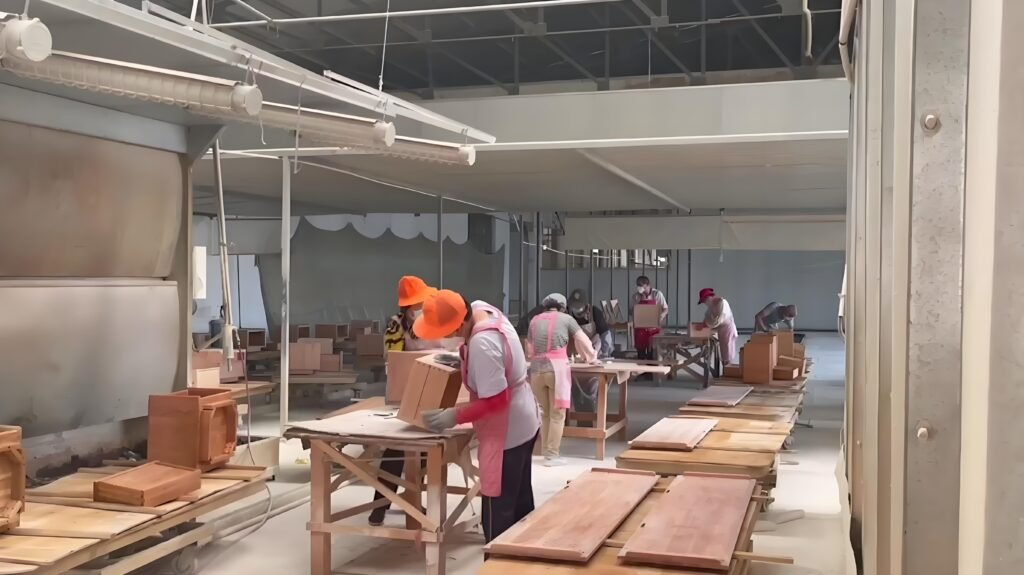
In the winter of 2025, Furniture Discover conducted anonymous interviews with 47 export-oriented factories in Dongguan. A merchandiser with twelve years of export experience stated bluntly: “When we get an inquiry with just one image and ‘what’s your lowest price,’ we hold an internal meeting to assess the buyer’s experience. If it’s a novice, we add about 20% to the quote. Not because we want to make more money, but because unclear requirements almost always lead to rework, material changes, and extra communication. Those costs have to be built in upfront.” A solid wood factory owner in Foshan added: “Professional buyers put BIFMA standard numbers, foam density, and wood moisture content directly in their inquiry. We don’t dare quote randomly on those because we know they’re comparing multiple suppliers simultaneously. Quote too high, and we’re out immediately.”
This mechanism explains why vague inquiries often end up more expensive. The factory is not punishing you; it is protecting itself. When you make your specification detailed enough, you are signaling: I know this industry, and I have alternatives. Only then does the quotation return to real cost.
The Real First Step: Five-Step Specification Framework
The core action of first step sourcing furniture China is translating “I want a nice sofa” into a language that factories can execute, inspectors can verify, and you can accept. Furniture Discover distilled the following five-step framework from the practices of 500+ international buyers. You do not need to be a materials expert, but you do need to be sufficiently precise.

Step 1: Lock Product Identity Before Discussing Price
Before opening Alibaba, answer three questions: Where will this be used? Who is the end customer? What is the approximate annual volume? These three questions determine the direction of all subsequent parameters. An outdoor commercial metal chair and an indoor residential upholstered dining chair follow completely different paths in material standards, surface treatment, and import compliance. In March 2026, Furniture Discover worked with an Australian buyer who initially wanted to procure “dining chairs” with an undefined target market. We helped him narrow it to “solid wood dining chairs for mid-to-high-end Australian apartment projects, requiring FSC certification and Australian biosecurity compliance, annual volume 800 units.” This single step nearly doubled the efficiency of subsequent factory screening.
Step 2: Translate “Good Materials” into Numbers
Terms like “quality foam,” “eco-friendly fabric,” and “solid wood frame” must be deleted from any specification sheet. Every material must correspond to a verifiable parameter. For upholstered furniture, foam density must be specified as ≥45kg/m³, fabric Martindale abrasion test ≥40,000 cycles, and flammability standards must explicitly cite California TB 117-2013. For solid wood furniture, main material moisture content should be controlled at 8%-12%, with joining methods specifying either mortise and tenon or hardware fittings with exact brand and model numbers. For metal furniture, tube wall thickness ≥1.2mm, powder coating surface treatment, and salt spray test ≥500 hours. These numbers are not meant to make things difficult for factories.; they protect you. When a factory knows you will inspect against these parameters, it cannot casually substitute materials during production.
Step 3: Dimensions, Packaging, QC—Leave Nothing to Verbal Agreement
Dimensions must include tolerance. A 1200mm tabletop needs to state ±2mm. Packaging requirements directly impact logistics costs and damage rates: Is a plywood crate required? Is the carton 5-ply corrugated or 3-ply? What is the gross weight limit per package? For quality control standards, Furniture Discover recommends AQL 2.5 as the baseline sampling level, but zero tolerance must be written into the contract for critical defects such as structural safety. In Q2 2025, a Nordic buyer failed to lock “paint VOC emissions compliant with EU REACH regulation” into his specification sheet. After arrival, testing showed non-compliance, and the entire batch was detained at port for 28 days, generating an additional $4,200 in demurrage charges.
Six Dominoes That Fall When You Skip Specification Definition
Skipping the specification step of first step sourcing furniture China does not cause immediate explosions. Instead, problems cascade through the procurement cycle like dominoes:
1.Quotations become a guessing game. Five factories quoting the same “modern sofa” can show price differentials of 300% because each assumes different foam density and fabric grades. You spend two weeks comparing prices that are not even for the same product.
2.Samples and bulk goods diverge. The sample used high-density foam; bulk production switched to low-density to cut costs because the specification never locked the parameter. You have no grounds for complaint.
3.Delivery dates are never reliable. Mid-production discovery that fabric color fastness was never agreed upon forces material reselection, causing an average delay of 23.5 days. During peak season, that month can cause you to miss the entire selling season.
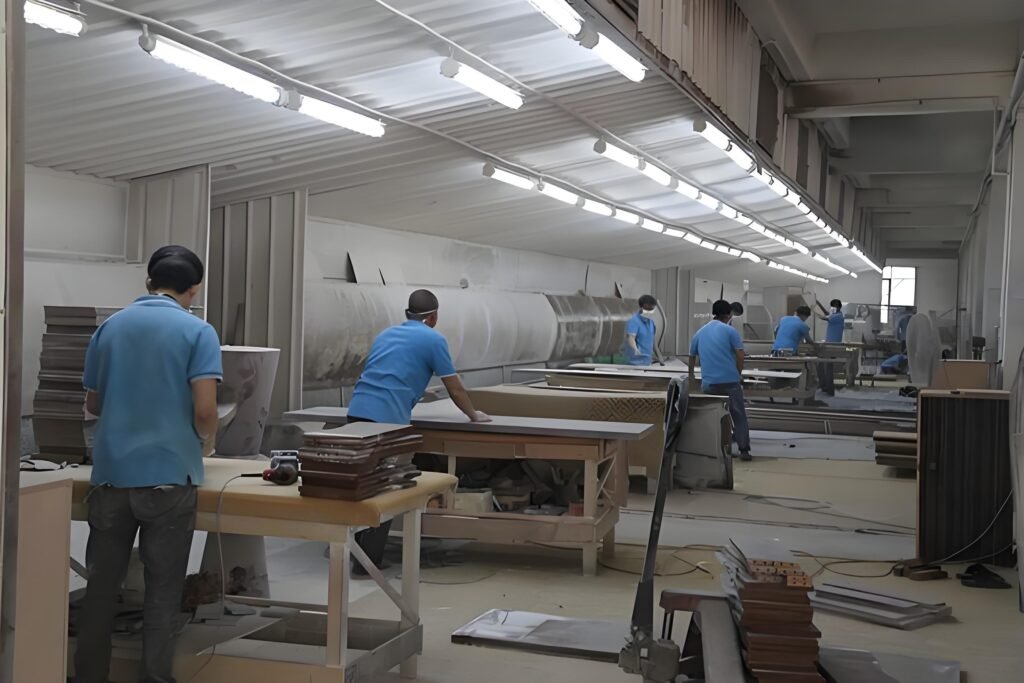
4.Inspection disputes arise. Goods arrive with paint surface defects. The factory claims “industry default allows slight color variation.” You want to return the goods, but the contract never specified ΔE≤1.5.
5.Containers load inefficiently. Non-standardized packaging with irregular shapes reduces container loading rate by 15%-20%, effectively increasing sea freight cost per unit.
6.Customer complaints cannot be traced. End buyers report structural instability. You turn to the factory, which responds: “You never required a load test report.” Indeed, your specification sheet never mentioned it.
Doing Step One Right vs. Skipping It: The Numbers Do Not Lie
Doing Step One Right vs. Skipping It: Procurement Outcome Comparison Table
| Evaluation Dimension | Specification Completed | Specification Skipped | Gap |
|---|---|---|---|
| First-Round Quotation Accuracy | Variance 8.5% | Variance 312.0% | 37x more chaotic |
| Sample Confirmation Cycle | 7.2 days to seal | 18.5 days of revision | 11.3 extra days |
| Bulk Quality Non-Conformance | 4.3% | 62.0% | 14x higher risk |
| Cost Overrun Probability | 6.8% | 73.5% | Nearly guaranteed overrun |
| Supplier Communication Rounds | 2.1 per inquiry | 6.8 per inquiry | 3x the effort |
| Container Loading Rate | 92.4% | 74.6% | Nearly 18% wasted space |
| End-Customer Complaint Rate | 1.2% | 34.7% | One in three orders fails |
Data source: Furniture Discover 2026 tracking survey of 50 first-time importers, covering North America, Europe, and Australia, categories include upholstered, solid wood, and metal furniture.
Furniture Discover Exclusive Insight: Why 83% Know They Should Do It, But Skip It Anyway
Misconception One: Treating Price Inquiry as Market Research
Many novices believe that sending multiple inquiries and observing how factories respond will help them figure out what they should buy. This approach might work for purchasing phones or computers, but it completely fails in furniture. Furniture is a highly non-standardized manufacturing industry. Factory response proposals are typically based on existing production capacity and inventory, not your true needs. Furniture Discover’s 2026 data shows that buyers adopting a “price-first, define-later” strategy had a 68.4% rate of product direction adjustment within three months, compared to only 11.2% for “define-first, price-later” buyers. You think the market is teaching you; in reality, the factory is training you to accept its convenience.
Misconception Two: Underestimating the Value of Your Own Time
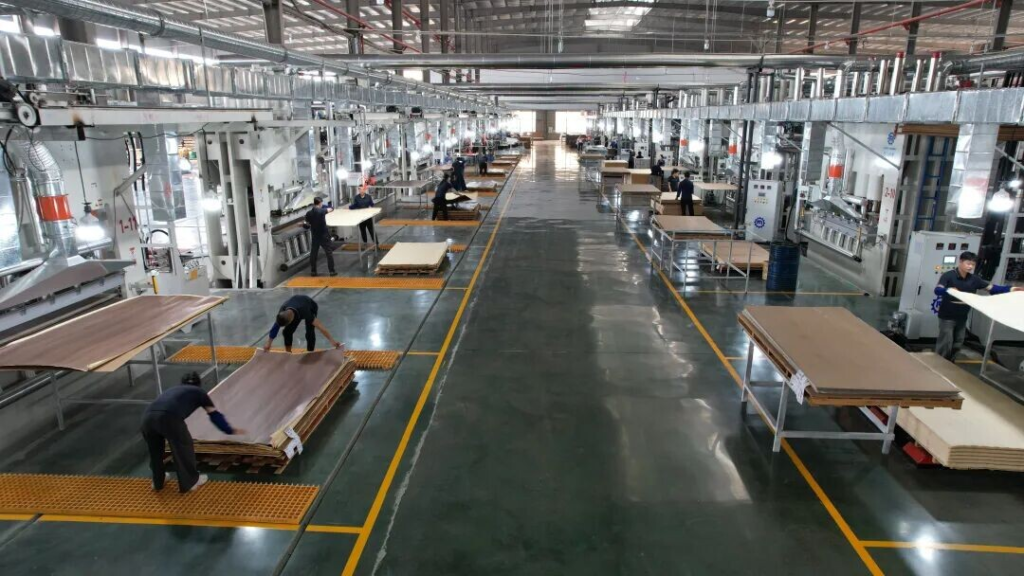
“Writing specifications is too much trouble. I’d rather spend that time contacting more factories.” This was the most common excuse Furniture Discover heard during research. The reality is that a basic specification sheet requires an average of 6-8 hours to complete, but it saves 18.5 days of subsequent communication loss. For projects with annual procurement exceeding $50,000, the ROI on those 6-8 hours exceeds 1:12. More importantly, the specification sheet is not a one-time document. You can establish a Product Family Specification Template for your entire product range. Products within the same family share base materials and process standards; individual SKUs only need supplemental dimensions, colors, and packaging differences. Invest time once, then copy and paste.
Misconception Three: Underestimating the Factory’s Ability to “Read” You
There is an unwritten rule in the furniture industry: within the first five minutes of receiving an inquiry, the factory is already assessing your professional level. Does the email subject contain a product code? Does the body include parameters? Are there drawings or specification drafts attached? These details determine whether you are filed under “professional buyer” or “novice buyer.” And the quotation strategies for these two folders differ by exactly that 15%-25% inflated margin. The 6-8 hours you save might be costing you several thousand dollars in another form.

Frequently Asked Questions (FAQ)
Q1: I know nothing about materials. How do I write professional parameters?
A: You do not need to understand materials. You need to understand your customer. Does your customer care about load-bearing? Then require the factory to provide a BIFMA X5.1 test report and specify minimum load requirements. Care about environmental compliance? Cite CARB P2 or EPA TSCA Title VI directly. Let the factory fill in the technical details; you set the standards.
Q2: After completing the specification sheet, will the price be locked?
A: No. The specification sheet locks “what to buy” and “by what standard to accept.” Pricing is the factory’s response based on your specification. The sequence is non-negotiable: define specifications first, then compare prices. Otherwise you are comparing incomparable items.
Q3: What if a factory refuses to cooperate on filling in parameters?
A: Non-cooperation itself is the answer. Factories willing to refine specifications with you usually have mature export teams and quality control processes. Those who cut corners will likely cut corners in production as well. Use the specification sheet as the first threshold for factory audit; it will filter out a large portion of unreliable suppliers.
Q4: I have too many products. Does each one need a full specification sheet?
A: Build templates. Products within the same family share base materials, processes, and QC standards. Individual SKUs only need supplemental dimensions, colors, and packaging. The first one takes 8 hours; each subsequent one might take 20 minutes.
Q5: After writing the specification, is sample confirmation still necessary?
A: Absolutely. The specification sheet is a written commitment; the sample is a physical benchmark. The specification must include the clause: “Bulk goods must match the signed sealed sample as the final acceptance standard.” Production must match the sealed sample, not merely the words on the specification sheet.
Q6: My target market is small-batch customization. Is a specification sheet overkill?
A: Small-batch carries higher risk. Factories lack economies of scale to absorb error costs. When problems occur, the loss per unit is greater. Even a one-page sheet focusing on material, dimensions, color, and delivery standards outperforms a verbal agreement.
Q7: Should the specification be written in Chinese or English?
A: Bilingual. Chinese for the factory’s technical department; English for contracts and legal. Key parameters in both versions must be fully consistent to avoid translation disputes. In 2025, Furniture Discover handled a dispute caused by the Chinese version specifying “橡胶木” while the factory translated the English version as “rubber wood (Hevea brasiliensis),” then substituted uncertified alternative material. Both parties spent two months arguing.
Q8: Should I include a target price in the specification sheet?
A: No. Including a target price limits the factory’s innovation space and may incentivize cutting corners to meet your number. Let factories quote freely based on your specifications, then use the specifications to inspect the goods. Price negotiation comes in the next step.
Practical Toolkit: Furniture Procurement Specification Checklist Template
The following template can be copied directly into Excel or Google Sheets. Before contacting any factory, independently complete the first eight fields, then send the checklist as an RFQ attachment, requiring the factory to confirm item by item or propose deviations.
| Field Category | Required Fields | Completion Instructions |
|---|---|---|
| Basic Information | Product name, HS Code, target market, estimated annual volume | Define product identity and positioning |
| Material Standards | Primary material, secondary material, filler, fabric, hardware | Specify exact model, grade, certification (e.g., FSC, OEKO-TEX) |
| Process Parameters | Structure type, joining method, surface treatment, environmental standard | Cite test standard numbers (TB 117, REACH, BIFMA) |
| Dimensional Specifications | Finished dimensions (L×W×H), tolerance range, packaging dimensions | Recommend tolerance within ±2mm |
| Color and Appearance | Primary color, secondary color, color code (Pantone or factory color board), gloss | Based on signed color board or physical sealed sample |
| Packaging Requirements | Inner packaging, outer packaging, filler, shipping mark, gross weight limit | Clarify whether plywood crate is required |
| Quality Control Standards | AQL level, critical defect definition, color difference range (ΔE), test reports | Recommend AQL 2.5, zero tolerance for critical defects |
| Compliance Certification | Target country regulations, required certifications (CE, FSC, CARB), testing lab | Clarify which party bears certification costs |
| Document Delivery | Invoice type, packing list, certificate of origin (CO), QC report | Ensure customs documents match physical goods |
The essence of first step sourcing furniture China is not about factories. It is about you. Before asking anyone else to quote, make sure you yourself are clear about what you are buying. Completing specification definition gives you the foundation for every subsequent step—price comparison, inspection, and accountability. For your next move, refer to “How to Write a Standard RFQ (Request for Quotation) with Template” and turn this checklist into an inquiry that no factory can afford to ignore.

Recommended Resource
Interi Furniture specializes in custom furniture manufacturing for residential, hospitality, and commercial projects. Their experience in materials, craftsmanship, and project realization makes them a valuable resource for designers and buyers seeking tailored furniture solutions from China.