




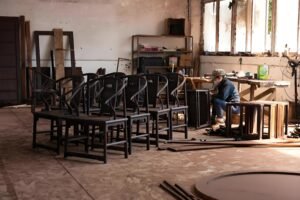

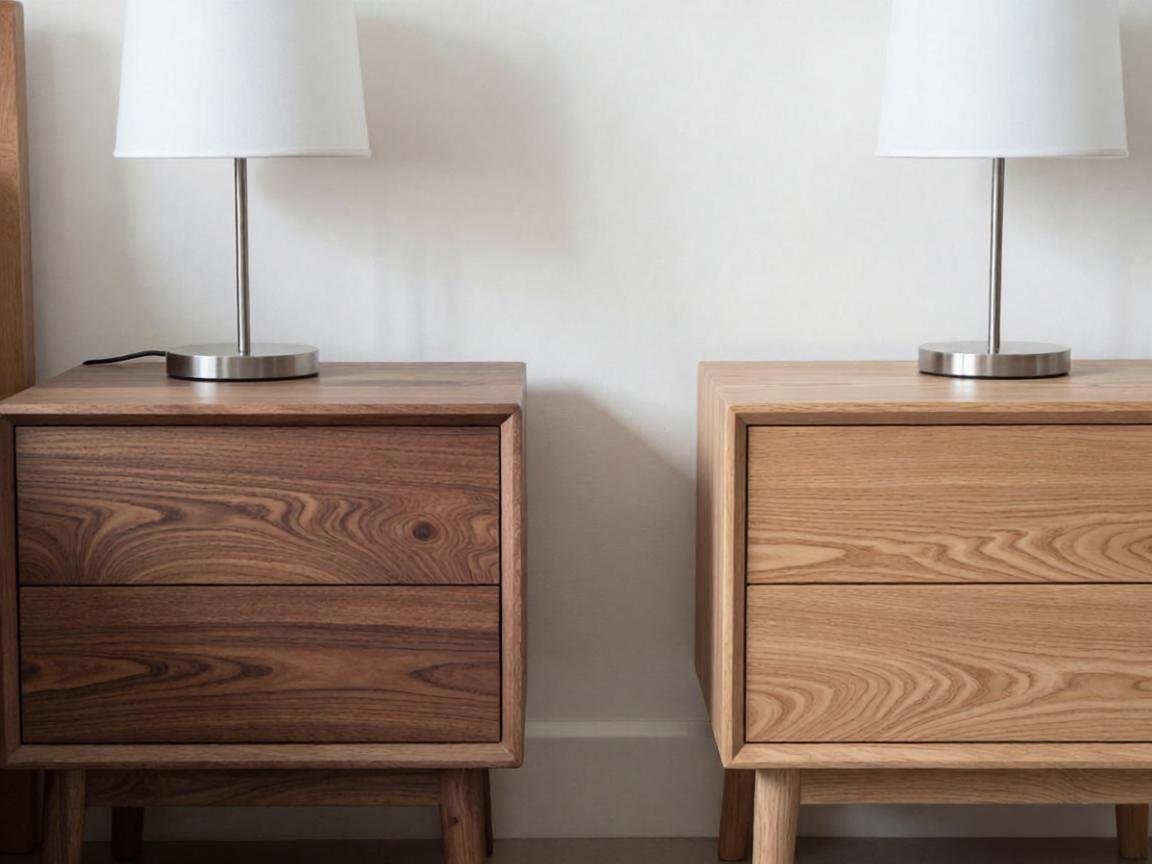
Most buyers look at a $85 oak chair and a $220 walnut chair and think: “Well, walnut lumber costs more.” Sure it does. But here’s what 90% of procurement teams miss— the wood itself only explains about half the gap. The rest? It’s buried in factory spreadsheets under line items like “material loss” and “labor variance” that nobody bothers to explain.
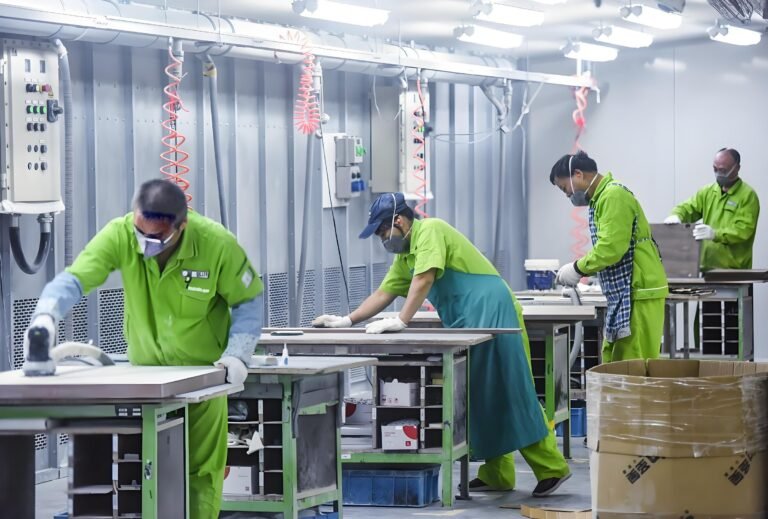
We spent five weeks this spring—May through mid-June 2026—crawling through 11 solid wood furniture factories across Guangdong and Zhejiang. Six in Dongguan Dalingshan, three in Foshan Shunde, two in Jiaxing Haining. Talking to floor managers, CNC operators, the guys who actually load kiln carts at 6 AM. Not sales directors. Not export managers. The people who sign off on the scrap reports.
What we found: oak vs walnut pricing in solid wood furniture China factories is a completely different math problem than most buyers think they’re solving.
The Wood Is Only the Beginning
Let’s start with the obvious. In June 2026, a container of FAS-grade 4/4″ Appalachian black walnut hits the dock in Shenzhen at roughly RMB 14,200 per cubic meter after duties, freight, and port handling. Red oak from the same supply chain? About RMB 5,100. That’s a 2.8x spread sitting on the quay before a single board gets touched.
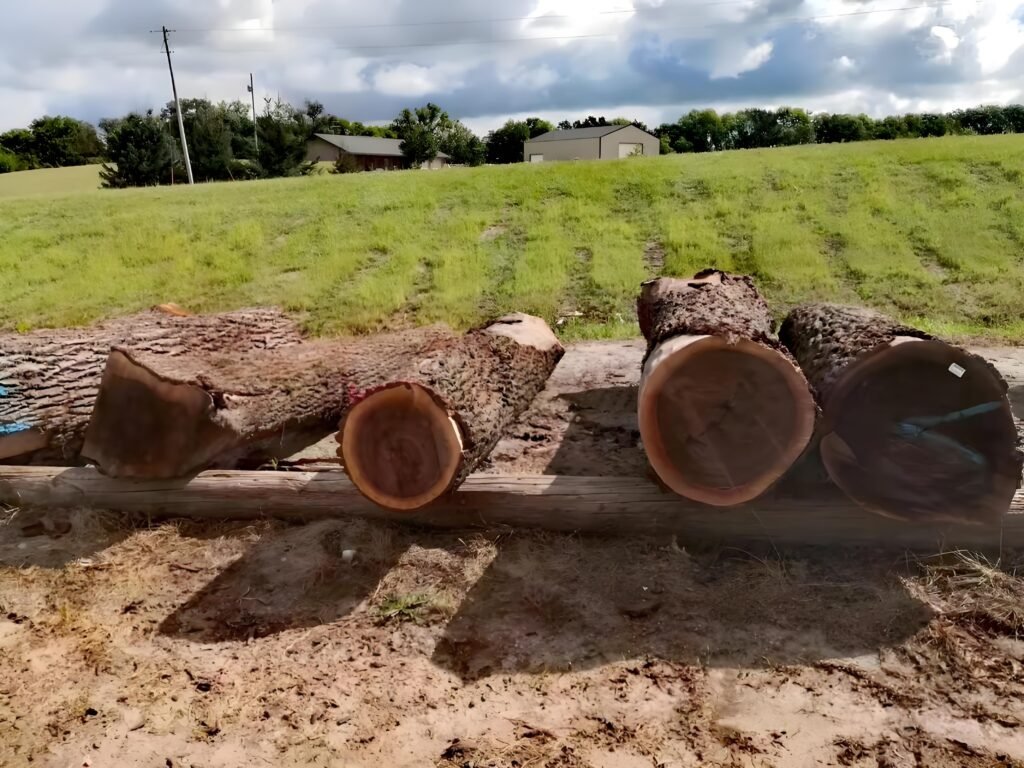
But walk into any factory’s rough mill and the picture changes immediately. Walnut doesn’t come in at 4/4″ and behave like oak. The stuff is ordered thicker—5/4″, often 6/4″—because the factory knows it’s going to lose a brutal percentage to end-checks and surface defects during the first pass through the planer. One production manager in Dalingshan (18 years in this business, started as a sanding-line apprentice) told us flat out: “We order walnut 15% thicker than oak. Otherwise we run out of usable stock by Wednesday.” That 15% premium? It adds another 8–12% to the raw material line before a single part is dimensioned.
So the dock price is a fiction. The real number is already higher.
Yield: Where Walnut Really Bleeds Money
This is the killer. And it’s invisible on every quotation sheet we’ve ever seen.
Factory A in Dalingshan runs both oak and walnut dining chair programs on the same CNC line. Same chair. Same engineering. Same finish spec. FAS-grade red oak rough lumber → finished chair parts: 42% yield. FAS black walnut on the identical chair: 28% yield. That 14-point gap means 1.5x more rough board volume for every finished chair. At their internal lumber rates, that’s an extra RMB 180–220 per chair in wood cost alone—cost that never appears as a separate line item. It’s just absorbed into the unit price.
Factory B in Shunde showed us something worse. Their standard 1.6m dining table program: red oak yield 38%, walnut 24%. The production manager—guy named Chen, been there 12 years—pulled out his daily logbook. Not a computer printout. A physical notebook. Walnut boards rejected for color mismatch—sapwood that comes in stark white against the chocolate heartwood—accounted for 11% of total rough volume. Oak? Color variation is nowhere near as dramatic. Discards ran 3–4%. Chen just shrugged. “Walnut is beautiful until it’s not. Then it’s firewood.”
Factory C in Haining, which does high-end export to Northern Europe, had an even uglier number. Curved backrest components that need grain continuity: walnut yield dropped to 22%. Why? Straight-grain selection rejected 30% of incoming FAS boards. Oak, with its more uniform grain, held at 35% for the same parts. The factory owner—who asked us not to use his name—put it bluntly: “For walnut, FAS doesn’t mean what buyers think it means.”
Add it up. The effective raw-material cost per finished unit for walnut isn’t 2.8x oak. It’s closer to 3.9x. And that’s before anyone turns on a machine.
The Machine Shop Eats Walnut Alive
Here’s the counterintuitive part. Walnut is softer than oak. Janka hardness: 1,010 lbf for walnut, 1,290 lbf for red oak. You’d think softer = easier to machine. You’d be wrong.
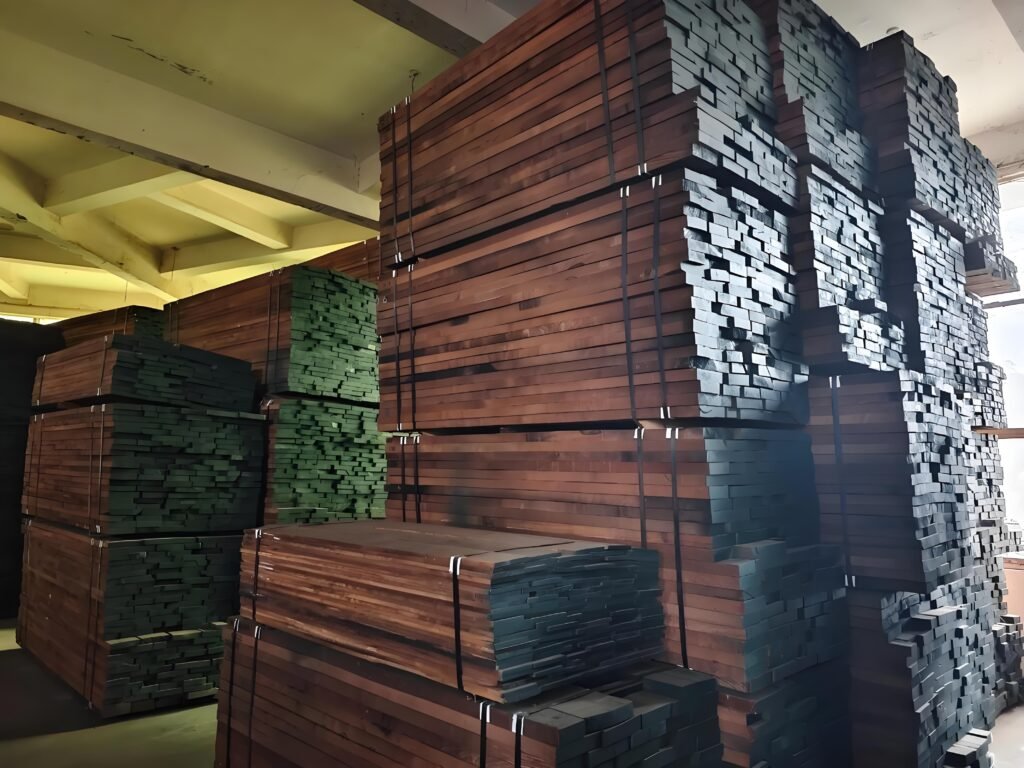
Walnut’s grain interlocks. It waves. It reverses direction without warning. Put it through a planer too fast and it tears out. Run it through a CNC contour at standard oak feed rates and it chips at the grain reversal. We timed every operation at Factory A over three shifts. The numbers are ugly:
Rough planing took 2.5 minutes per oak part, 3.2 for walnut—28% longer. CNC contouring: 4.0 minutes oak, 5.8 walnut. That’s 45% more machine time. Fine sanding through 120→180→240 grit: 6.0 minutes oak, 8.5 walnut. Assembly and clamping: 3.5 versus 4.2. Total direct labor per chair: 16.0 minutes oak, 21.7 walnut. A 35.6% jump.
The CNC number is the real budget killer. Walnut forces operators to drop feed rates by 20–30% and change carbide inserts more often. Factory A’s tool-cost log showed walnut runs burn through inserts at 2.1x the oak rate for identical part geometry. Factory C told us walnut sanding belts clog with dark resinous dust and last 40% fewer cycles before they need swapping.
None of this shows up on a quotation as “walnut machining surcharge.” It’s just baked into the unit price. And buyers never know why their walnut line costs so much more to run.
Drying: Different Species, Different Headaches
Both oak and walnut land in China at roughly 20–25% moisture content. Both need to hit 6–8% before they go near a joinery bench. But the kiln protocols couldn’t be more different.
Oak is dense. High shrinkage. Push it too fast and you get honeycombing, surface checks, end splits. Factory B’s kiln master—guy in his fifties who learned the trade in a state-owned furniture plant in the nineties—runs oak on a 26–30 day schedule for 4/4″ stock. Starts at 38°C, peaks at 65°C, twelve humidity-stage transitions. “Rush it,” he told us, “and your reject rate goes from 5% to 18%. I’ve seen it. Not worth it.”
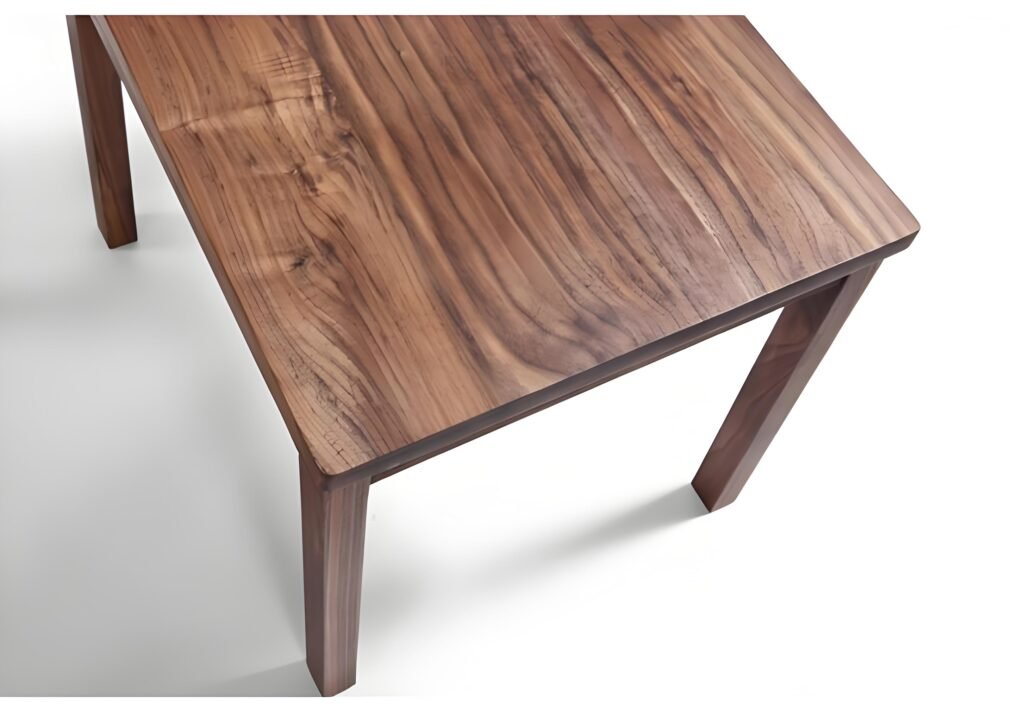
Walnut is the opposite problem. Lower density, more stable structure. You can push it through in 18–22 days. But it’s insanely sensitive to sticker stain and oxidative discoloration. Factory C runs walnut in nitrogen-purged kilns. Adds RMB 350 per cubic meter to the drying cost. They also steam the boards to darken sapwood and blend it with heartwood—a three-day steam-and-re-dry cycle that oak never needs. “Without the steam,” the kiln master said, “half the board is white. Buyers hate it.”
Net drying cost per usable cubic meter of finished-part volume: oak runs RMB 1,200–1,400. Walnut runs RMB 1,800–2,200. Smaller gap than yield or machining, but real. And it gets wider with thicker stock.
Grading: The Rules Say One Thing, the Floor Says Another
NHLA rules define FAS, F1F, Selects, and No. 1 Common with mathematical precision. On paper. On the factory floor? It’s a different language.
Three ways Chinese factories play the boundary:
Mixed-grade loading. A factory quotes you FAS. Uses F1F for secondary parts—inside rails, back stretchers—where the good face is hidden. NHLA allows F1F to have one FAS face and one No. 1 Common face. You’re paying FAS prices for all components. They’re buying F1F for half of them. The arbitrage is invisible unless you rip the finished piece apart.
Walnut’s special FAS loophole. NHLA permits walnut FAS to carry sapwood up to one-sixth of the piece width on 5–7″ boards. So a factory can legally call a board FAS even if 15% of its surface is pale sapwood. If you’re expecting uniform chocolate tone across a tabletop, that’s a visual downgrade you didn’t budget for—and didn’t see in the sample room.
Regional interpretation drift. We showed the same sample board to graders at four different factories. Two called it FAS. One called it F1F. One called it No. 1 Common. Same board. Same NHLA rulebook. Different human eyes. It’s not fraud. It’s interpretation. But if you’re relying on factory self-certification, you’re carrying 10–20% grade-value risk that never appears in the contract.
What One Chair Actually Costs
To put all this together, we asked Factory B to quote us a standard Scandinavian-style dining chair. Solid wood. No upholstery. FAS red oak versus FAS black walnut. MOQ 200 pieces. FOB Shenzhen. They shared their internal cost build-up under NDA—anonymized here as index values.
| Cost Line | Red Oak | Black Walnut | What Drives the Gap |
|---|---|---|---|
| Rough lumber (after yield) | 28 | 42 | Lower yield + color discard |
| Kiln drying & stabilization | 8 | 10 | Steam + nitrogen kiln |
| Machining & sanding | 18 | 24 | 35% longer cycle, 2.1x tool wear |
| Assembly, glue-up, finishing | 12 | 14 | Color matching takes longer |
| Overhead & QC buffer | 14 | 16 | Higher reject rate |
| Factory margin (same %) | 20 | 20 | Bigger absolute base |
| FOB Unit Price | 100 | 260 | 2.6x multiplier |
Look at that table. The lumber line jumps from 28% to 42% of the chair’s cost. But machining also jumps from 18% to 24%. Every single bucket expands because walnut’s physical properties cascade through the entire production chain. The factory isn’t marking up wood. It’s marking up the whole operation—because walnut is harder to run, harder to dry, harder to grade, and harder to not screw up.
Three Things Nobody Puts on the Quote
Species substitution. Rubberwood (Hevea brasiliensis) gets sold as “oak” to buyers who don’t know what they’re looking at. Light, soft, takes oak stain well enough to fool a casual inspection. A Shunde factory admitted—on condition we didn’t name them—they’d shipped 1,000 hotel chairs labeled “solid oak” using rubberwood cores with 0.6mm oak veneer. Cost them 40% of real solid oak. The buyer, a Dubai procurement agent, never inspected rough parts. Never asked for a species certificate. Never stood a chance.
Grade inflation. We watched a loading-bay inspection at Factory A. Shipment marked “FAS walnut.” Pallet sides: 30% F1F boards. Pallet core: 15% No. 1 Common. Factory manager called it “industry-standard mixed loading.” Argued NHLA rules permit F1F sold as FAS if the buyer doesn’t specify “strict FAS.” Technically true under loose interpretation. Practically? The buyer paid FAS prices for 45% non-FAS material. That’s not a discount. That’s a hidden downgrade.
The “solid wood” shell game. Chinese factory quotations throw around “全实木” (all solid wood) like it’s a universal term. It isn’t. In practice, it usually means solid wood for visible parts. Plywood or MDF for internal panels, drawer bottoms, back panels. One factory’s spec sheet—we saw it—listed their “solid walnut bed” as using 9mm walnut-veneered plywood for the headboard rear panel and 12mm poplar plywood for the drawer boxes. Buyer assumed “solid” meant every structural element was lumber. The contract didn’t define it. The factory didn’t correct them.
Two Stories from the Floor
Berlin, January 2026. An interior-design studio we know—small outfit, does boutique hospitality projects—received two quotes for a 2.0m × 1.0m rectangular dining table. 4.5cm solid top. Natural oil finish. Factory X in Dalingshan: red oak FAS, FOB $680. Factory Y in Shunde: black walnut FAS, FOB $1,920. They assumed the $1,240 gap was “walnut is expensive wood.” We asked both factories for rough-part breakdowns. Factory X’s oak top used 0.42 m³ rough lumber per table. Factory Y’s walnut top used 0.71 m³. At effective lumber costs post-yield, the wood gap was $580. The remaining $660 came from machining time (+35%, $180), steam-darkening and nitrogen kiln ($140), higher reject-rate buffer ($120), and thicker rough-stock premium ($90). Wood was real. But it was only 47% of the story.
Sydney, March 2026. A furniture importer ordered 80 FAS black walnut dining tables from a Zhejiang factory. RMB 18,500 per table. Upon arrival, 23 tables showed pronounced sapwood bands—pale, almost white—right across the tabletop center. Factory argued the boards were “NHLA-compliant FAS” because sapwood was under the one-sixth width limit. Importer had expected the uniform dark-chocolate tone they’d seen in the factory sample room. What they didn’t know: the sample room boards were hand-selected from the factory’s highest-grade stock. Not their standard FAS lots. The importer had no contractual definition of “acceptable sapwood percentage on visible surfaces.” Three months of dispute. Final settlement: 12% discount. The fix would have cost nothing: one sentence in the contract. “Visible surfaces shall contain no more than 5% sapwood by area, measured per panel.”
Six Rules That Actually Work
1.Verify species by botanical name. Not trade name. Quercus rubra or Quercus alba for oak. Juglans nigra for black walnut. If the invoice says “walnut” without a species qualifier, push back. Rubberwood is Hevea brasiliensis—not even in the same family.
2.Lock grade definitions in writing. “Strict FAS per NHLA 2023 rules. No F1F. No Selects. No No. 1 Common.” And add a third-party inspection clause at the factory before packing. Costs about $300 per container. Saves $3,000+ in avoided downgrade.
3.Ask for yield-adjusted lumber consumption. Not CIF price. “How many cubic meters of rough lumber do you actually consume per finished unit?” A factory with better yield can offset higher dock prices. A factory with sloppy yield will cost you even if their wood looks cheap.
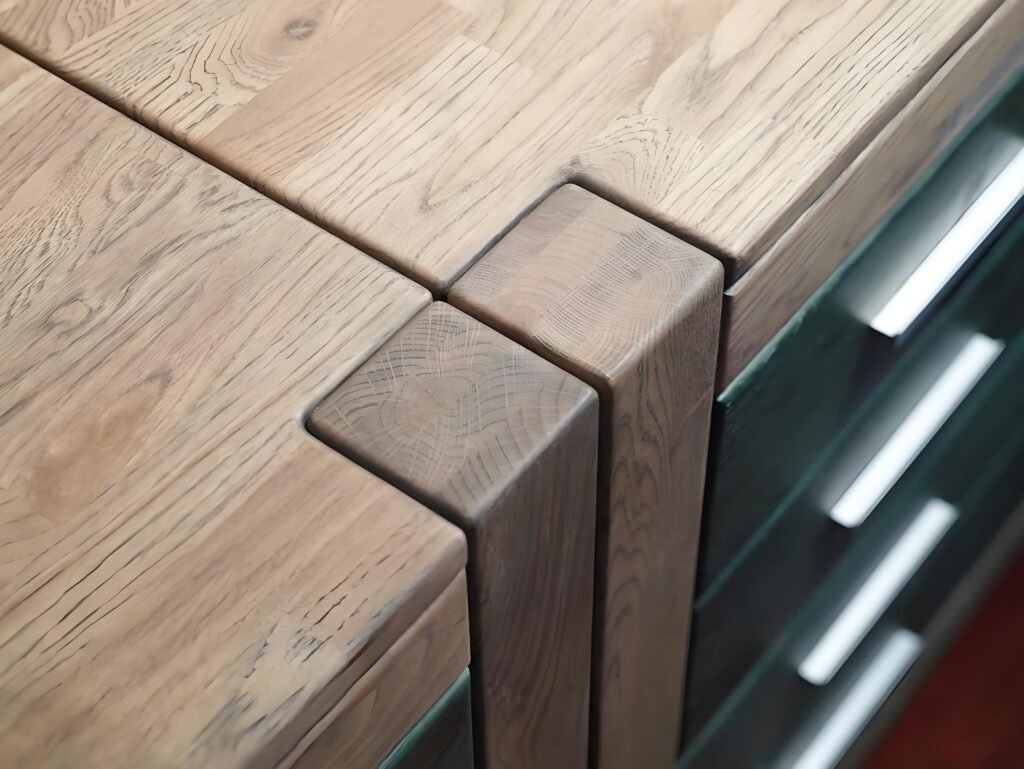
4.Demand a full BOM. Every component. Visible, hidden, structural, decorative. Species, grade, construction method. Solid lumber. Edge-glued panel. Finger-jointed. Veneered plywood. If it’s not on the BOM, it’s not in the product.
5.Define “solid wood” explicitly in the contract. “No particleboard, MDF, plywood, or veneer-over-substrate in any exterior or load-bearing component.” Attach a dimensional drawing with material callouts. If the factory won’t sign it, you have your answer.
6.Inspect rough parts before finishing. The only way to confirm grade and species is to see the unfinished lumber. Schedule a factory visit during rough-milling. Or hire a local QC agent to photograph rough parts before sanding and staining obscure everything. Once the finish goes on, the evidence is gone.
Oak or Walnut? It Depends on What You’re Actually Building
Oak makes sense when: Budget is tight. Design is minimalist or Scandinavian. Finish is light or natural. Product sees heavy use—restaurant seating, co-working tables, anything that gets knocked around. Or when moisture and temperature fluctuate: outdoor-adjacent spaces, unconditioned interiors. Oak’s higher hardness and lower unit cost make it the rational default for high-volume, performance-first programs.
Walnut makes sense when: Design is executive, residential luxury, or boutique hospitality. Finish is dark, oiled, or matte-lacquered—walnut’s natural tone means less stain dependency. Grain figure and color consistency matter to the design story. Batch sizes are smaller. Unit margins can absorb the 2.5x–3.2x premium. Walnut isn’t “better” wood. It’s a different material with different cost parameters and different aesthetic rules. Choose accordingly.

FAQ: The Questions We Get Asked
Is FAS always better than F1F?
Not really. FAS needs 83.3% clear face on both sides. F1F needs FAS on one side, No. 1 Common on the other. For hidden parts—table aprons, chair rails—F1F performs identically and costs 15–25% less. Only specify FAS for visible, broad surfaces.
Why does walnut cost more if it’s softer?
Price tracks scarcity, demand, and processing cost. Not hardness. Walnut grows slowly. Harvest quotas are limited. And factories throw away a brutal percentage to color mismatch. Hardness numbers don’t capture any of that.
Can I mix red oak and white oak in one order?
Only under opaque finish. Natural or light stains expose the difference: red oak’s open pores and pinkish cast versus white oak’s closed pores and golden-tan tone. Mix them in one visible assembly and you’ll hear from the client.
What moisture content for Europe versus Southeast Asia?
6–8% for climate-controlled interiors in Europe and North America. 8–10% for Southeast Asia—safer against post-delivery expansion. And always specify the measurement method. Oven-dry versus moisture meter can give different readings. Disputes start there.
How do I catch rubberwood posing as oak?
Density is the giveaway. Rubberwood runs ~480 kg/m³. Oak is ~700. No prominent rays. Bland, uniform grain. Dents under fingernail pressure. A 10x loupe shows no oak characteristic wide wood rays. And always demand a species declaration on the commercial invoice.
Recommended Resource
Interi Furniture specializes in custom furniture manufacturing for residential, hospitality, and commercial projects. Their experience in materials, craftsmanship, and project realization makes them a valuable resource for designers and buyers seeking tailored furniture solutions from China.