









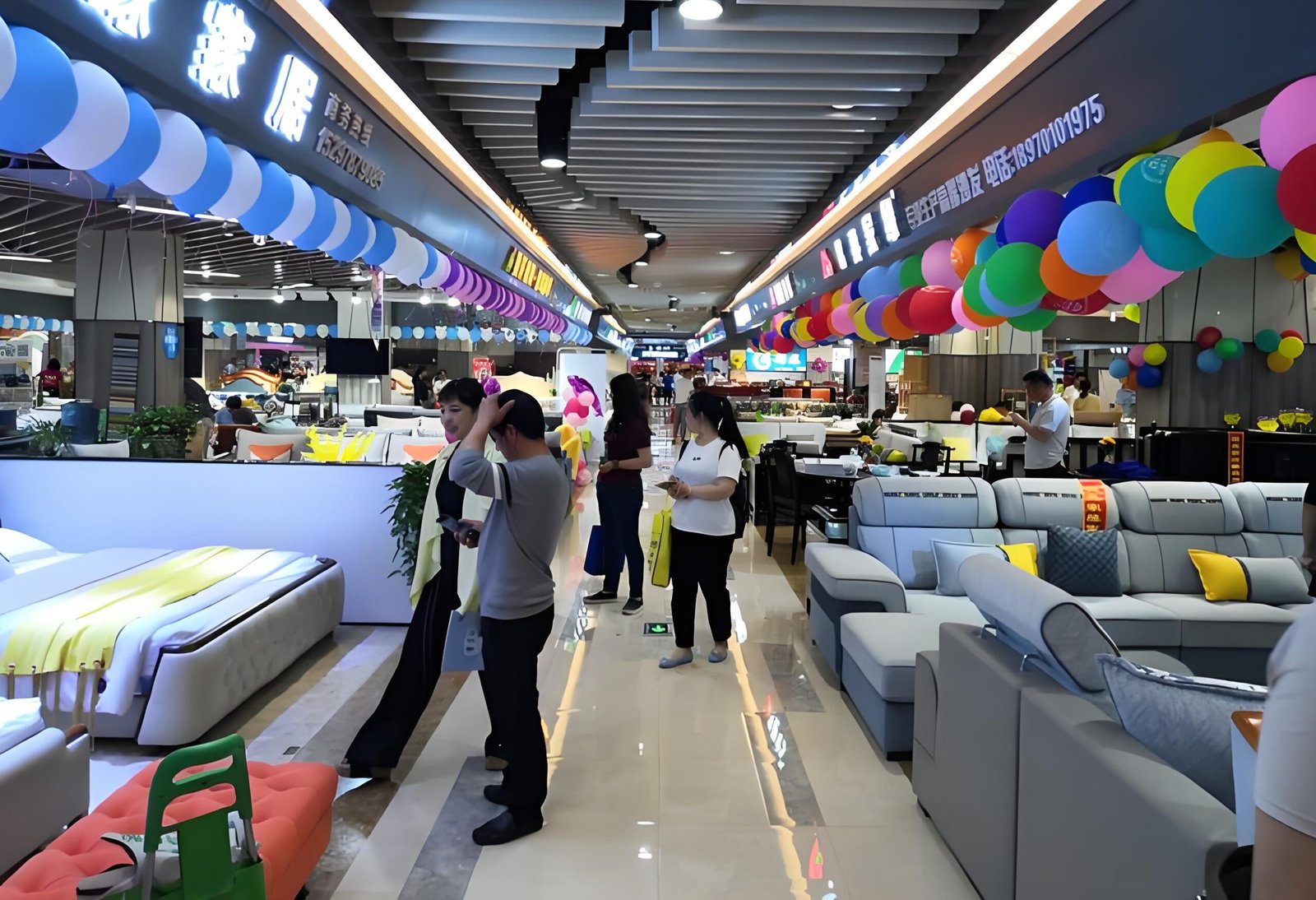
The question new furniture brand founders ask is never “which channel sells more”—it is “which channel leaves actual profit on the books.” The choice of furniture sales channels directly determines a brand’s survival horizon, yet the industry is haunted by a pervasive cognitive trap: equating gross margin with net profit.
DTC furniture often reports headline gross margins of 55%-65%, a figure that seduces startup founders. After stripping out digital acquisition, bulky fulfillment, return losses, and post-sale costs, net margins typically collapse to 3.2%-8.5%. According to Furniture Discover’s 2026 tracking study of 27 North American startup furniture brands, only 22% of pure DTC brands achieved positive cash flow in their first year. Wholesale margins appear conservative at 35%-45%, yet because of batch shipping and fixed-cost dilution, net margins stabilize at 12.5%-18.3%. Retail gross margins sit between 40%-50%, but inventory turnover days and terminal rent costs create a double squeeze. Bulky logistics and return costs can devour 15%-20% of DTC revenue—a category-specific reality that most generic e-commerce analyses completely ignore. This article penetrates the unit economics of all three furniture sales channels using furniture-specific benchmark data, delivering a quantifiable framework ready for immediate channel decisions.
Core Definitions and Pricing Power Across Three Channels
Furniture brand sales channels can be classified into three core models: DTC, Wholesale, and Retail. They differ fundamentally in pricing power, cost structure, and risk allocation.

DTC (Direct-to-Consumer): Brand-to-End-User
Under the DTC furniture model, brands reach consumers directly through owned websites or vertical marketplaces. Pricing power rests entirely with the brand, theoretically enabling the highest gross margin. Pricing freedom, however, does not equal profit freedom. One North American solid-wood dining table DTC brand, with an AOV of $1,299, recorded a CAC (Customer Acquisition Cost) of $287, a return rate of 11.3%, and a first-year net margin of -4.7%. This model demands simultaneous competence in content marketing, digital ad buying, customer service, and bulky logistics management—a rare combination for early-stage teams.
Wholesale: B2B Distribution Through Intermediaries
A furniture wholesale strategy means brands sell in bulk to retailers, boutiques, or e-commerce platforms at FOB or ex-factory markups. Brands surrender terminal pricing power in exchange for order certainty and upfront cash flow. One Foshan upholstery sofa factory supplying a mid-size North American furniture chain ships at $420 ex-factory; the retailer sells at $899, yielding the brand a 38.5% gross margin. Payment terms typically run 30-60 days, with partial after-sales spare-part costs borne by the brand. The core value of wholesale lies in batch capacity absorption and lower per-unit production costs.
Retail: Owned or Third-Party Terminal Sales
Retail includes brand-owned showrooms, pop-ups, or placement on major platforms such as Wayfair and Amazon. Owned retail gross margins can reach 48.2%, yet rent, sample depreciation, and sales staff costs drag net margins down to 5.8%-9.4%. Platform retail (e.g., Amazon Furniture) charges commission rates of 15%-22%, plus bulky FBA or self-fulfillment storage fees, severely compressing real profit space.
Full-Dimension Cost Breakdown for Furniture
Generic e-commerce profit templates cannot be transplanted into furniture. The category’s bulky nature, low repurchase rate, and high AOV dictate a cost structure with distinct species-specific characteristics.
CAC and Traffic Architecture
DTC furniture CAC in 2026 shows sharp platform divergence. Meta-family ad CPC (Cost Per Click) for furniture has risen to $1.85-$3.20, with conversion rates of only 0.8%-1.4%. Google Shopping furniture CPA (Cost Per Acquisition) ranges from $142 to $268. Content marketing (SEO + KOL) delivers a lower CAC of roughly $65-$95, but the payoff horizon stretches to 6-9 months. Wholesale acquisition cost is not zero: booth costs at High Point Market or CIFF, sample investment, and sales travel amortize to roughly $1,200-$3,500 per new client—yet client LTV (Life Time Value) far exceeds that of end consumers.
Fulfillment Costs: Bulky Logistics and Last Mile
Furniture DTC fulfillment is profit killer number one. A three-seat sofa incurs $85 warehouse outbound cost, $120 ocean freight head-haul, and $180-$240 U.S. domestic tail-haul (LTL, Less Than Truckload). Total fulfillment consumes 18.5%-24.3% of AOV. Wholesale, through FCL (Full Container Load) and batch port-to-warehouse transport, compresses per-unit logistics to $35-$48. Under retail platform models, Amazon bulky FBA runs $89-$125 per unit; Wayfair Castlegate storage costs $62-$78 per unit.
Returns and After-Sales: Furniture’s Hidden Profit Black Hole
Furniture return rates are brutal data that must be confronted head-on. DTC return rates average 8.5%-14.2%, with mattresses at 22.3% and sofas at 11.7%. Reverse logistics per return ($95-$150) plus residual value loss (typically liquidated at 30%-45% discount in secondary markets) erodes profit directly. Wholesale return rates are minimal, usually below 2.5%, with return liability largely falling on retailers. Platform retail return rates sit in between, at roughly 5.8%-8.3%.
Real Profit Comparison: The Gulf Between Gross and Net Margin
The truth of furniture sales channels profitability hides in the gap between gross and net margin. The data below draws on Furniture Discover’s 2026 financial benchmark study of 47 global furniture brands (annual revenue $5M-$30M range), cross-validated with publicly listed furniture company filings.
| Dimension | DTC Furniture | Furniture Wholesale | Furniture Retail |
|---|---|---|---|
| Average Gross Margin | 58.5% | 39.2% | 45.8% |
| Average Net Margin | 5.3% | 15.6% | 7.8% |
| Startup Capital Threshold | \$250K-\$800K | \$80K-\$250K | \$400K-\$1.5M |
| Inventory Pressure | High (deep 50+ SKU stock) | Low (make-to-order or batch ship) | Extreme (showroom/platform stock) |
| Average Profitability Horizon | 14-24 months | 3-8 months | 18-36 months |
| MOQ Requirement | Single-unit OK, but 50+ SKU depth | 20-50 pcs per SKU | 100-300 pcs per SKU (platform inbound) |
| Core Risk | CAC inflation, return loss, cash break | Key-account dependency, payment-term risk, price squeeze | Inventory pile-up, rent/platform fee hikes, low turnover |
| China Factory Fit | Medium (accepts small-batch, but premiums) | High (standard big orders, priority scheduling) | High (stable volume, but strict factory audits) |
Table Title: Full-Dimension Profit Comparison of Three Furniture Sales Channels (Based on Furniture Discover 2026 Industry Benchmark Data)
The data reveal a counter-intuitive fact: DTC furniture net margin is roughly one-third that of wholesale. DTC’s 58.5% gross margin, after subtracting 22.4% comprehensive operating costs (acquisition 8.7%, fulfillment 7.3%, after-sales 3.2%, platform/payment 2.2%) and 14.8% fixed overhead, leaves almost nothing. Wholesale’s 39.2% gross margin, while lower on paper, carries only 8.5% operating expense ratio (business development 3.2%, samples and shows 2.8%, after-sales and spares 2.5%) and 15.1% fixed-cost allocation, ultimately producing the healthiest net margin.
Fit Scenarios and Supply-Chain Requirements
Channel selection is not a matter of subjective preference; it is a function of startup capital, supply-chain capability, and market positioning.
Startup Capital and Cash-Flow Thresholds
DTC furniture requires upfront investment in website development ($8,000-$25,000), initial inventory ($80,000-$200,000), and ad test budgets ($15,000-$40,000/month), with total startup capital rarely below $250,000. Wholesale demands $5,000-$15,000 in first samples, with initial orders often structured at 30% deposit plus 70% before shipment, keeping startup capital under $80,000. The capital black hole of owned retail lies in showroom fit-out and rent deposits: a 200㎡ furniture showroom in a secondary North American city incurs first-year rent costs of $72,000-$120,000 alone.
MOQ and Lead-Time Constraints on Channel Choice
Chinese furniture factories maintain a hidden priority ranking by order type: large-batch standard wholesale > stable platform retail inbound > small-batch quick-turn DTC. A Dongguan upholstery factory with $8M annual capacity achieves optimal utilization from single-SKU 50+ piece wholesale orders, compressing lead time to 25-35 days. DTC small batches (10-20 pcs per SKU) typically stretch to 45-60 days, with factories demanding 15%-20% premiums. Platform retail orders (e.g., Wayfair suppliers) usually require 100+ pcs per SKU, plus factory audits and product certifications, creating high barriers to entry.
China Factory Channel Fit Analysis
From a supply-chain perspective, furniture wholesale strategy is the easiest lever for unlocking Chinese capacity. Factory quotes for wholesale clients are typically based on FOB Shenzhen/Ningbo terms, already including standard export packing (plywood crating). DTC brands requesting branded packaging, instruction manuals, and after-sales cards face extra charges of $2.5-$4.8 per set plus $800-$1,500 plate fees. Platform retail suppliers usually must carry Product Liability Insurance (annual premium $3,500-$8,000) and third-party QC reports ($400-$900 per batch)—hidden costs that must be pre-loaded into channel decision models.
Furniture Discover Exclusive Insight: Unit Economics and Channel Decision Matrix
Real Unit Economics Breakdown by Channel
Profit must be understood at the single-unit level to grasp each channel’s essence.
Take a fabric three-seat sofa with an AOV of $899:
● DTC furniture: Ex-factory $285, retail $899, gross profit $614 (68.3%). After CAC $142 (15.8%), fulfillment $198 (22.0%), return loss $52 (5.8%), payment fee $27 (3.0%), fixed allocation $78 (8.7%), net profit $117 (13.0%). This is the ideal state. In live operations, CAC can spike to $220-$280 during Meta algorithm volatility, and fulfillment in remote zones hits $260-$310, flipping net profit negative instantly.
● Wholesale: Ex-factory $285, wholesale $445, gross profit $160 (35.9%). After sales commission $22 (4.9%), show amortization $18 (4.0%), spare parts $12 (2.7%), fixed allocation $35 (7.9%), net profit $73 (16.4%). Order predictability makes cash-flow forecasting far more accurate.
● Retail (platform): Ex-factory $285, platform price $699, platform commission $125 (17.9%), FBA/storage $78 (11.2%), ads $45 (6.4%), returns $38 (5.4%), squeezing gross space to $128 (18.3%). After fixed costs, net profit is roughly $42 (6.0%).

Four-Tier Channel Decision Matrix
Based on startup capital and supply-chain capability, new brands can map to four strategic tiers:
Tier 1: Capital <$100K, No Supply-Chain Resources
Choose drop-shipping or light-asset wholesale brokerage. Hold no inventory; earn spread by matching Chinese factories with overseas small-B clients. Margins are thin (8%-12%), but risk is minimal. The core mission is accumulating client data and validating product direction.
Tier 2: Capital $100K-$500K, Basic Supply-Chain Access
Prioritize furniture wholesale strategy. Focus on 1-2 core categories, engage 1-2 Chinese factories at 30-50 pcs MOQ per SKU, and aim to secure 3-5 stable overseas B2B clients within 6 months. Net margin and cash flow are healthiest at this stage.
Tier 3: Capital $500K-$1.5M, Small-Batch Quick-Turn Supply Chain
Adopt a Wholesale + DTC hybrid. Use wholesale orders to maintain factory relationships and baseline cash flow; use DTC to test high-margin items and brand awareness. Cap DTC SKUs at 5-8 to avoid excessive inventory depth. The critical discipline is maintaining strictly separate inventory pools and cost-accounting systems for each channel.
Tier 4: Capital >$1.5M, Full-Stack Operations Capability
Attempt a DTC-primary, Retail-platform-secondary mix. But you must build owned overseas warehouses or 3PL partnerships, keeping fulfillment cost under 12% of AOV. You also need dedicated after-sales staff to handle bulky post-sale issues, suppressing return rates below 6.5%.
Optimal MOQ and Product Selection from a China Supply-Chain Perspective
Different channels demand distinctly different product forms. DTC furniture suits high-AOV (>$800), medium-volume (parcel or LTL shippable), visually differentiated products such as designer dining chairs, solid-wood bed frames, and modular sofas. Wholesale fits highly standardized, packing-compact, retailer-display-friendly products such as panel furniture, metal outdoor furniture, and upholstered dining chairs. Retail platforms suit market-validated bestsellers with rating-accumulation potential, and must pass platform bulky-logistics stress tests.
From an MOQ perspective, Chinese factories are gradually accepting DTC small batches, but premiums are unavoidable. Furniture Discover‘s 2026 survey shows that in Dongguan and Foshan, factories supporting 15-pcs single-SKU MOQ have risen from 31% in 2023 to 47%, yet unit prices are typically 18.5%-24.3% higher than standard MOQ (50 pcs) pricing. New brands should establish trust in Tier 2 (Wholesale) before negotiating better MOQ terms.

Frequently Asked Questions (FAQ)
Q1: DTC furniture shows the highest gross margin. Why is net margin actually the lowest?
Furniture DTC headline gross margin does lead, but acquisition, fulfillment, and returns combined can swallow 35%-42% of revenue. For generic FMCG DTC, these three items typically run 18%-25%; furniture’s bulky nature amplifies them significantly. Low repurchase rates prevent CAC amortization through LTV, further compressing net margin.
Q2: We have zero overseas client resources. How do we launch a furniture wholesale strategy?
Start through three paths: proactive LinkedIn outreach, sample display at industry shows (CIFF, High Point Market), and converting existing DTC client B2B inquiries. Accept lower margins (25%-30%) early to secure client endorsements and order stability. The first order is everything; build a referenceable case study from it.
Q3: Are retail platforms (Wayfair, Amazon) suitable as a launch channel for new brands?
Not unless the brand already has >$1M in capital and an experienced platform operations team. Platform bulky inbound thresholds, commission structures, ad auctions, and strict OTD (On-Time Delivery) compliance create multiple squeezes. The safer path is validate product through Wholesale first, then reverse into platforms.
Q4: How do Chinese factories prioritize clients by channel?
Factory resource allocation follows a hidden hierarchy: large-batch standard wholesale > stable long-term platform retail > small-batch quick-turn DTC. DTC orders, due to small volume, high customization, and high communication cost, are usually scheduled during capacity slack periods. Brands choosing DTC must accept longer lead times or pay capacity reservation fees.
Q5: Why is furniture DTC return rate so much higher than other categories? Can it be reduced?
High returns stem from “received-not-as-seen”—fabric color variance, seating-feel difference, dimensional misfit. Driving returns from 11% to below 6% requires investment in video-rich product pages (360° display + scene video), fabric swatch mail-out ($12-$18 per order), and precise dimension-fit tools. These investments are themselves costs and must be pre-loaded into profit models.
Q6: Which channel has the lowest startup capital requirement?
Wholesale demands the lowest startup capital ($80K-$250K) and the shortest cash-flow positivity horizon (3-8 months). DTC needs $250K-$800K; owned retail needs $400K-$1.5M. Capital-constrained brands should treat Wholesale as the default option.
Q7: Should we operate all three channels simultaneously to diversify risk?
No. New brands should not launch three channels at once. Each demands fundamentally different team capabilities, inventory logic, and cost structures. Multi-front warfare dilutes resources and creates inventory chaos. Furniture Discover’s recommendation: spend 6-12 months mastering one channel, proving unit economics, then consider expansion.
Q8: How do we calculate real profit for our brand under each channel?
Use Furniture Discover’s Furniture Brand Channel Profit Calculator. Input your ex-factory price, target selling price, estimated acquisition cost, logistics parameters, and return rate; the template auto-outputs gross margin, net margin, and cash-flow projections for all three channels. Detailed instructions follow in the “Practical Toolkit” section below.
Practical Toolkit
Furniture Brand Channel Profit Calculator (Excel)
The template contains three worksheets:
Worksheet 1: DTC Furniture Profit Calculation
Inputs: Ex-factory price (FOB), target retail price, estimated monthly ad budget, CPC/conversion rate, logistics mode (ocean + last mile), estimated return rate, payment processing fee.
Outputs: Unit gross profit, unit net profit, monthly break-even point, first-year cash-flow projection.
Worksheet 2: Furniture Wholesale Profit Calculation
Inputs: Ex-factory price, wholesale markup rate, client count, average order volume, show/sample investment, payment-term days, bad-debt estimate.
Outputs: Per-client contribution profit, annual net profit, accounts-receivable turnover days, cash-flow gap alert.
Worksheet 3: Furniture Retail Profit Calculation
Inputs: Ex-factory price, platform selling price, platform commission rate, storage/logistics plan (FBA/3PL/self-fulfillment), ad ACoS target, return rate, inventory turnover days.
Outputs: Platform unit net revenue, inventory carrying cost, monthly break-even point, inventory pile-up risk rating.
How to Use: Enter your brand’s actual parameters in yellow cells; green cells auto-calculate results. Run stress tests with conservative assumptions (e.g., CAC at industry upper bound, return rate at median), then run opportunity tests with optimistic assumptions. The band between them is your brand’s true profit bandwidth.
The choice of furniture sales channels is fundamentally a trade-off between profit retention and operational complexity. DTC furniture’s high gross margin is real, yet high gross margin does not equal high profit. The furniture wholesale strategy‘s lower headline margin conceals a more controllable unit-economic model and healthier cash flow. New brands should begin at Tier 2 (Wholesale-first), then evolve toward hybrid models as resources mature. No channel is absolutely superior; only the degree of fit with a brand’s current resource endowment matters.
Recommended Resource
Interi Furniture specializes in custom furniture manufacturing for residential, hospitality, and commercial projects. Their experience in materials, craftsmanship, and project realization makes them a valuable resource for designers and buyers seeking tailored furniture solutions from China.