






Nobody enjoys sitting on a sofa that traps heat against their back and thighs. Furniture manufacturers know this, which is why “cooling sofas” have flooded the market in recent years. But peel back the marketing, and roughly eight out of ten products are playing a surface-level game—cool-touch additives, ice-silk fibers. They feel cold for the first fifteen minutes, then you’re right back to sweating. That trick has nothing to do with real phase-change material (PCM). PCM works through latent heat storage, absorbing and releasing thermal energy within the 22–28°C human comfort band to flatten the temperature rise curve. This article digs into the physics, maps out the three ways PCM actually gets built into sofas, explains how long it really lasts, and flags which numbers in the Chinese supply chain are being inflated.
The Cooling Sofa Myth
The “cooling sofa” category is murky. Brands routinely blur the line between “contact coolness” and “sustained temperature regulation,” and buyers who don’t know the difference end up overpaying for underperformance.
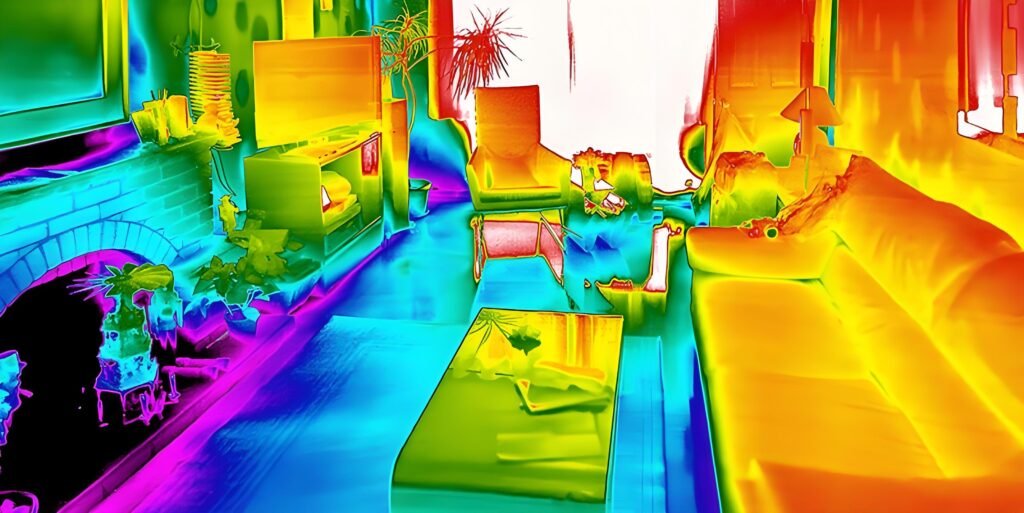
Contact coolness is measured by Q-max—the speed of heat transfer at the instant skin meets fabric. Ice-silk and cool-touch nylon have high thermal conductivity, so the initial sensation is sharp. But once body temperature and fabric temperature equilibrate, the coolness fades within ten minutes. The technology is cheap. Adding cool-touch treatment to a square meter of fabric costs maybe a couple of bucks, yet the sofa price jumps by hundreds.
Real temperature regulating furniture relies on latent heat storage. During solid-to-liquid transition, PCM absorbs large amounts of heat while its own temperature barely moves. That’s the engineering value of smart materials in furniture thermal management. After two years of tearing apart over two hundred sofas marketed as temperature-regulating across the Yangtze and Pearl River Delta regions, we found fewer than 15% actually contained PCM microcapsules or composite phase-change materials. The rest either used only cool-touch fabric or loaded PCM at levels so low the enthalpy was practically undetectable.
Here’s a telling industry quirk: brand brochures often use “coolness” and “temperature regulation” interchangeably. Consumers don’t know the difference, procurement teams rarely ask, and the markup gap gets exploited. Plenty of hospitality projects have paid premium prices for “climate-controlled” seating without seeing guest complaint rates budge. That’s why.
What Phase-Change Material Actually Is
At its core, PCM is a substance that melts to absorb heat and solidifies to release it, all at a nearly constant temperature. In a sofa, it doesn’t act like air conditioning. It passively buffers. Your body dumps heat into the cushion; the PCM melts and swallows that heat, slowing down how fast the contact surface warms up.
Whether PCM works in furniture boils down to three numbers:
Phase change temperature — must sit inside 22–28°C. Below 22°C, it stays dormant in normal air-conditioned rooms. Above 28°C, it doesn’t kick in until you’re already uncomfortable. Some cheap products use industrial paraffin with transition points at 32–35°C. In a living room, that’s basically decorative.
Latent heat enthalpy — textile-grade microcapsules hit 45–65 J/g at minimum (China National Textile and Apparel Council 2025 White Paper). Fill-grade composite PCM, where the carrier matrix takes up less volume, reaches 110–180 J/g. Drop below 30 J/g in a textile application, and the human body won’t feel a thing.
Cycling life — quality microcapsules survive 5,000–10,000 phase-change cycles. At eight hours of daily use and four to five transitions per day, that translates to roughly five to seven years of service. Products rated under 3,000 cycles show noticeable degradation within two years.
A lot of marketing pitches PCM as something that “cools.” It doesn’t cool. It slows warming. Set that expectation wrong, and disappointment is guaranteed.
Three PCM Application Routes in Sofas Compared
Furniture makers currently stuff PCM into sofas through three distinct routes. Performance, cost, and lifespan vary widely across them.
| Technical Route | Latent Heat Enthalpy | Effective Duration | Added Cost per Unit | Service Life | Best Fit |
|---|---|---|---|---|---|
| Fabric Microcapsule Coating | 45–65 J/g | 1.5–2.5 hours | 80–150 USD | 3–5 years | High-end residential, designer custom |
| Foam Composite Fill | 110–180 J/g | 3–5 hours | 200–400 USD | 5–8 years | Hotel lobbies, business clubs |
| Structural Layer Insert | 90–140 J/g | 2–4 hours | 150–280 USD | 4–6 years | Modular sofas, removable cushions |
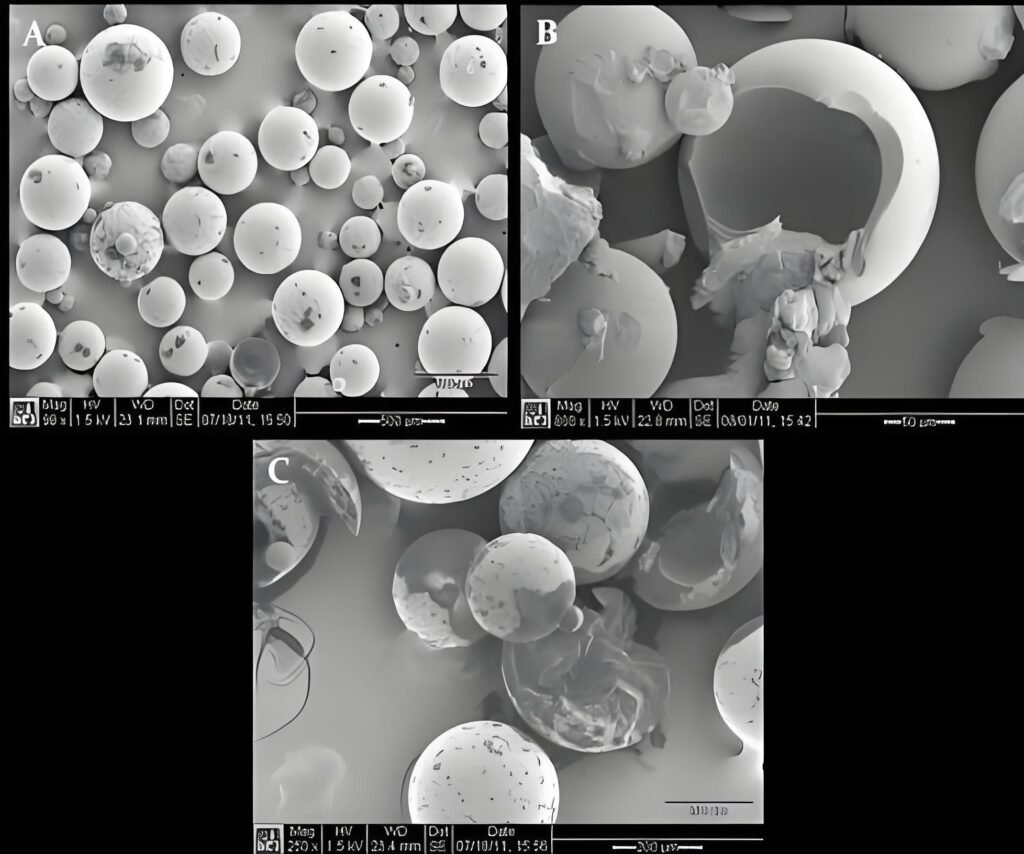
Fabric microcapsule coating traps PCM inside polymer shells measuring 1–10 microns, then applies them through finishing or coating processes. The upside is instant response—thermal exchange starts the moment you sit. The downside is limited storage capacity, and surface coatings wear down over time through friction and cleaning. This route works best for residential projects where immediate coolness and fabric design freedom matter.
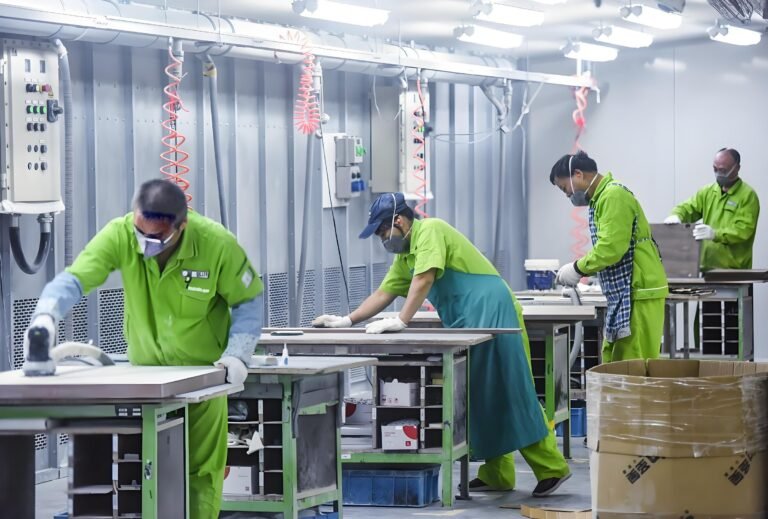
Foam composite fill blends PCM into open-cell polyurethane or memory foam during the foaming process. This path delivers the highest enthalpy and longest duration because the fill volume is large and can store substantial heat. But the process is finicky. Get the compatibility between PCM and foam substrate wrong, and microcapsules rupture. Paraffin leaks out, odors develop, and the fill layer clumps. Leading Chinese foam factories have locked down stable co-foaming protocols, but smaller shops turn out wildly inconsistent batches—enthalpy readings from the same production run can swing 20%.
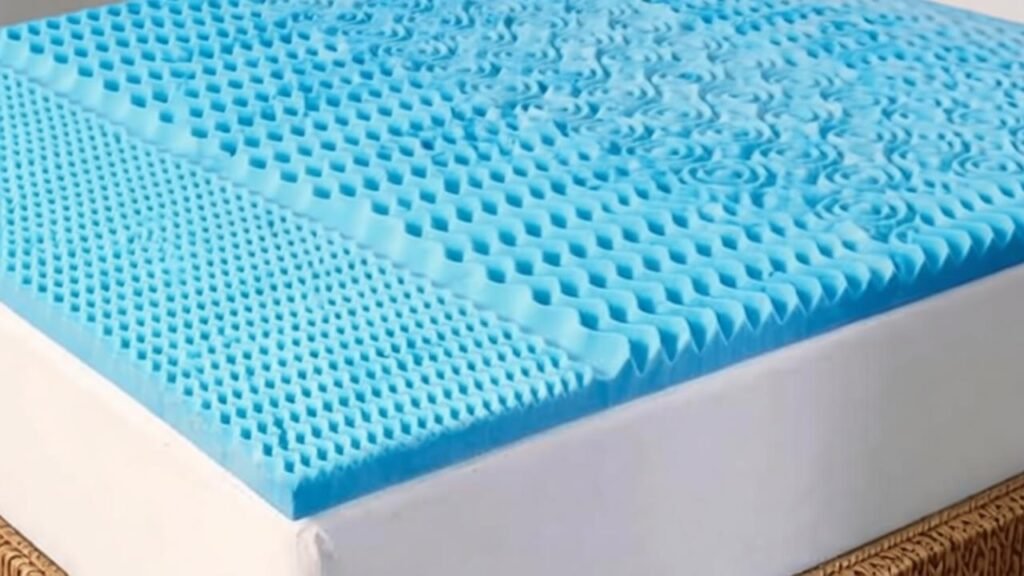
Structural layer insert adds a standalone PCM composite sheet inside the cushion, usually sandwiched between support foam and the fabric cover. When the PCM eventually degrades, you can swap the layer out. Project-specific PCM loading is also easier to adjust. The catch is added cushion thickness, which constrains overall sofa design.
Real-World Performance
The two favorite marketing phrases—”drops by X degrees” and “all-day constant temperature”—both need heavy qualification from an engineering standpoint.
How much does it actually drop? PCM doesn’t generate cold. It merely consumes some of the heat your body transfers into the cushion. Under standard test conditions—26°C ambient, 33°C skin surface, 4 kPa contact pressure—effective PCM coating slows the contact surface heating rate by 40–60% and lowers peak temperature by 1.5–3.2°C compared to conventional fabric. Fill-grade PCM performs better, delaying internal cushion heat buildup by 3–5 hours. But claims of “5–8°C temperature reduction” typically result from incorrectly converting PCM heat absorption into an equivalent temperature drop. The math doesn’t hold.
How long does it hold? This depends on total PCM storage capacity and thermal load. A standard three-seater sofa cushion using the fabric microcapsule route (PCM loading around 80–120 g/m²) delivers effective thermal buffering for roughly 2–4 hours under continuous single-user occupancy. Beyond that, the PCM is fully melted, storage is saturated, and performance becomes indistinguishable from a regular sofa. The promise of “all-day constant temperature” either requires PCM loading at commercially absurd levels or is simply false advertising.
Where does it actually help? Three scenarios stand out. First, energy-efficient buildings with air conditioning set at 26–28°C, where PCM buffers thermal discomfort at the body-furniture interface. Second, intermittent-use environments like hotel guest rooms, where occupants leave before PCM saturation and the material has time to re-solidify before the next guest arrives. Third, humid subtropical climates during the rainy season, where PCM alleviates “stuffiness” more effectively than it addresses extreme high temperatures.
China’s Supply Chain Reality
China is now the world’s largest manufacturing base for PCM applications, but the supply chain is deeply fragmented.
Technology localization: In 2020, domestic sourcing of furniture-grade PCM raw materials sat at just 12%. High-end microcapsules were almost entirely imported from Germany’s BASF and the United States’ Outlast. By 2024, that figure had climbed to 41%. Several material enterprises in Zhejiang and Jiangsu provinces cracked interfacial polymerization encapsulation for paraffin-based microcapsules. Domestic textile-grade PCM microcapsules now approach imported products in enthalpy performance while costing 30–50% less. The stability of domestic fill-grade composite PCM still trails, with the main bottleneck residing in paraffin-foam substrate compatibility modifiers.
Cost structure: In 2024, bulk procurement of domestic textile-grade PCM microcapsules ran about 120–180 RMB/kg, versus 280–400 RMB/kg for imported equivalents. That price gap has directly driven the scaled adoption of cooling sofa technology across China. For a standard three-seater sofa, comprehensive domestic PCM fabric-plus-fill integration adds roughly 600–1,200 RMB to BOM cost. An all-imported solution adds 1,500–2,500 RMB.
Industry irregularities: The acceleration of localization has been accompanied by parameter inflation. Some small and mid-sized fabric mills package ordinary cool-touch additives as “PCM phase-change fabric,” submitting certified samples that differ from mass production. More common is “concept dosing”—PCM loading levels below 20 g/m², far short of the 60 g/m² threshold needed for perceptible temperature regulation, yet marketed heavily under the “phase-change” banner. Buyers without materials testing capability have virtually no way to catch this during receipt inspection.
Design and Procurement Guidelines
A few practical recommendations for designers and procurement teams, drawn from factory visits and product testing:
Spotting the real thing: Ask suppliers for third-party DSC test reports. Focus on three data points—phase change temperature within 22–28°C, enthalpy meeting the minimum threshold for the relevant route (≥45 J/g for textile-grade, ≥110 J/g for fill-grade), and cycling life rated at ≥5,000 cycles. If the report doesn’t show up or the numbers are vague, walk away.
Keep expectations grounded: PCM is a thermal buffer, not an AC replacement. In unconditioned environments above 30°C, its storage capacity gets overwhelmed quickly. Its value is making you more comfortable, not making you significantly cooler.
Match the route to the project: For intermittent-use environments like hotel rooms and clubs, prioritize foam composite fill—high storage, long duration. For designer custom residential pieces, fabric microcapsule coating offers more flexibility without constraining fabric selection. For modular or highly serviceable projects, structural layer inserts make maintenance and replacement straightforward.
Verify the supply chain: Partner with finished goods factories that have in-house materials testing, or write PCM content acceptance criteria into purchase contracts (referencing GB/T or ISO test methods). If a supplier claims imported PCM raw materials, ask for traceability documentation. The performance gap between domestic and imported alternatives has narrowed enough that the price differential creates strong incentive for factories to mislabel.

Key Insights Summary
1.Roughly 80% of “cooling sofas” on the market deliver only contact coolness, yet are priced as if they provide sustained temperature regulation. The technical gap between the two is massive.
2.PCM effectiveness isn’t determined by marketing copy. It depends on whether the phase change temperature falls within 22–28°C and whether enthalpy hits threshold values. Miss either, and even premium material becomes ornamental.
3.Under normal use conditions, effective PCM thermal buffering lasts 2–4 hours. Intermittent-use environments are its natural habitat. “All-day constant temperature” is fiction.
4.China’s PCM supply chain localization has hit 41%, cutting costs by over 30%, but parameter inflation and concept dosing have risen in parallel. Buyers need to build verification capability.
5.No technical route is universal. Fabric microcapsules respond fast but store little. Foam composite fill stores plenty but demands process expertise. Structural inserts facilitate maintenance but consume design space. Matching the route to the scenario matters more than buying the most expensive material.

FAQ
Q: Does a PCM sofa need to be plugged in?
A: No. Phase-change materials operate through physical phase transitions, absorbing and releasing heat passively. Zero energy consumption.
Q: Can PCM regulation last an entire evening?
A: Under conventional loading, saturation hits after roughly 2–4 hours. To reset heat storage capacity, the material needs enough time away from the heat source to re-solidify. Intermittent use delivers the best results.
Q: How do I tell a real PCM sofa from a fake?
A: Request a DSC test report. Verify phase change temperature at 22–28°C and enthalpy ≥45 J/g (textile-grade) or ≥110 J/g (fill-grade). Products with only cool-touch Q-max reports do not provide sustained temperature regulation.
Q: Is PCM safe for human contact?
A: Furniture-grade PCM typically uses paraffin or fatty acid phase-change substances encapsulated in polymer shells. With intact microcapsules, no direct skin contact occurs. Confirm encapsulation integrity and compliance with REACH or CA Prop 65 standards.
Q: Does performance degrade after a few years?
A: Qualified products are rated for 5,000–10,000 phase-change cycles. At four to six cycles per day, effective service life spans roughly 3–7 years. Fabric microcapsule coatings typically degrade faster than foam composite fills.
Q: Why do brands market “coolness” instead of directly saying “phase-change material”?
A: Three reasons: high consumer education costs for PCM technology; low barrier to entry for cool-touch (Q-max) testing and marketing; and significantly higher certification costs for genuine PCM. Some brands deliberately blur the boundary to capture premium pricing.
Recommended Resource
Interi Furniture specializes in custom furniture manufacturing for residential, hospitality, and commercial projects. Their experience in materials, craftsmanship, and project realization makes them a valuable resource for designers and buyers seeking tailored furniture solutions from China.