






“furniture factory leaving China” — when global buyers search this term, the real question is whether China’s furniture supply chain is collapsing. The 2026 answer is no. What is happening is not the “great industrial escape” portrayed by media, but Industrial Gradient Transfer: low-to-mid-range mass production capacity is diffusing to Southeast Asia, while high-end custom and complex craftsmanship capacity remains heavily concentrated in China. According to the China National Furniture Association’s 2025 Furniture Industry Import and Export Report, the industry’s cumulative export value in 2025 reached USD 67.81 billion, down 5.9% year-on-year. This figure is frequently cited by media as evidence of “China’s furniture industry in decline,” yet Furniture Discover 2026 field research across 42 scaled furniture enterprises in Guangdong, Fujian, and Zhejiang reveals a different layer of reality: only 7.1% fully shut down domestic production bases, and 78% of relocating firms retain over 80% of core domestic capacity. The export contraction is concentrated in low-end mass production categories, while high-end custom exports maintain resilience. Based on first-hand research and association statistics, this article unpacks the real picture of China manufacturing exodus 2026 and provides actionable frameworks for navigating the supply chain shift.
Media Narrative Fallacies and Relocation Reality: Data-Driven Truth
International coverage of furniture factory leaving China contains systematic biases. Furniture Discover 2026 field research covered 42 scaled furniture enterprises across Dongguan, Foshan, Hangzhou, Jiaxing, and Quanzhou. All sample firms had annual revenues above RMB 50 million, spanning Upholstered Furniture, Panel Furniture, Solid Wood Furniture, and Metal Furniture.
Fallacy One: Equating Capacity Expansion with Full Withdrawal
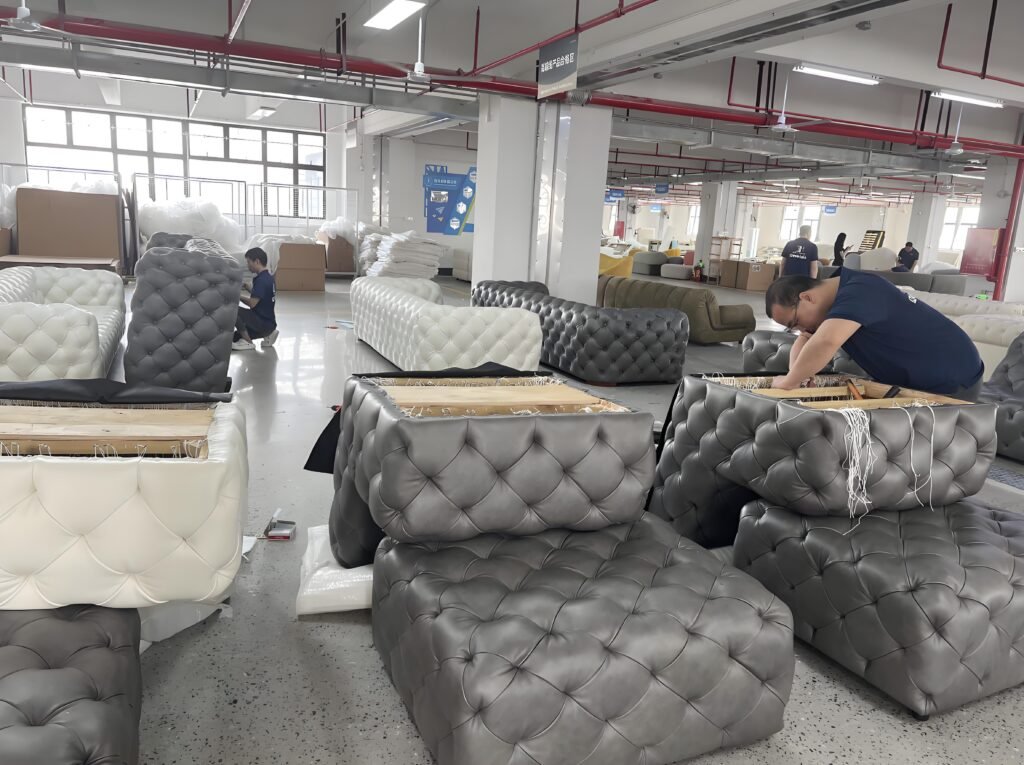
Most reports interpret new factory construction in Vietnam or Indonesia as “fleeing China.” This narrative conflates Capacity Expansion with Capacity Substitution. A Zhejiang upholstered furniture manufacturer invested USD 28 million in a Binh Duong, Vietnam plant in 2024, planning an annual capacity of 1.1 million square feet with production starting in H2 2026. Yet the same firm simultaneously invested USD 15 million in smart manufacturing upgrades at its Jiaxing headquarters, maintaining over 75% domestic capacity share. Such cases accounted for 61.9% of Furniture Discover’s research sample. The essence of China manufacturing exodus 2026 is supply chain geographic restructuring, not industrial hollowing-out.
Fallacy Two: Equating Export Decline with Industrial Collapse
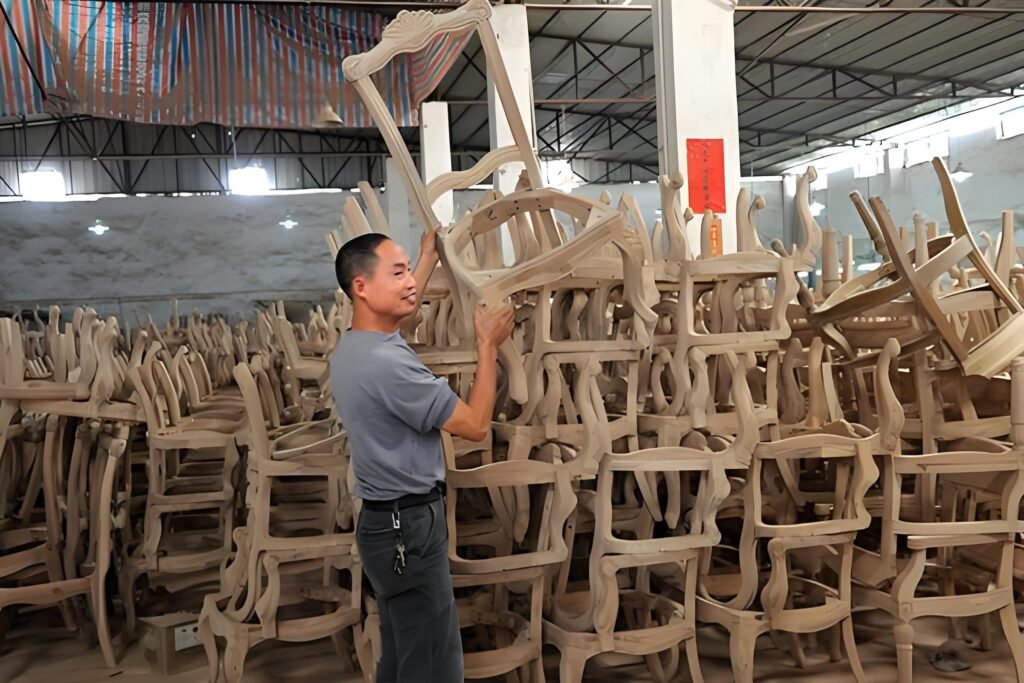
Some narratives treat the 5.9% export decline in 2025 as direct proof that “China’s furniture industry is finished.” This interpretation ignores internal structural differentiation. Furniture Discover research data shows that relocated capacity concentrates in low-end upholstered furniture and panel furniture — precisely the categories with low unit prices, thin margins, and highest tariff sensitivity. Order losses in these categories did pull down overall export value. Yet simultaneously, High-end Custom Furniture and complex craftsmanship metal furniture export orders remained stable, with some top-tier firms even recording growth. The chairman of a Dongguan high-end custom furniture firm stated in interview: “Italian clients’ premium oak dining table orders require 45-day lead times and mold complexity involving 17 processes. No Vietnamese factory can currently handle this.” The export decline reflects low-end capacity gradient transfer, not a shaking of industrial foundations.
Core Data Comparison: Relocation Categories and Destination Markets
| Relocation Category | Primary Destinations | Core Drivers | Theoretical Cost Advantage | Actual Pain Points | Capacity Share Change |
|---|---|---|---|---|---|
| Upholstered Furniture (Sofas, Mattresses) | Vietnam, Indonesia | Tariff avoidance, Labor costs | 28.7% | Fabric/foam reliance on China imports, lead times 2.7x slower | Relocated capacity accounts for 18.4% of category total |
| Panel Furniture (Flat-pack) | Vietnam, Malaysia | Tariff avoidance, Client mandates | 24.3% | Board/hardware import dependence, power instability | Relocated capacity accounts for 22.1% of category total |
| Solid Wood Furniture (Mid-range) | Vietnam, Indonesia | Cost-driven | 19.6% | Insufficient drying technology, high cracking rework rates | Relocated capacity accounts for 9.3% of category total |
| Metal Furniture (Standardized) | Vietnam, Thailand | Cost-driven | 21.4% | Weak electroplating/coating ecosystem, environmental compliance challenges | Relocated capacity accounts for 11.7% of category total |
| High-end Custom Furniture | No significant relocation | — | — | — | Relocated capacity accounts for 2.1% of category total |
Data Source: Furniture Discover 2026 Field Research, covering 42 scaled furniture enterprises
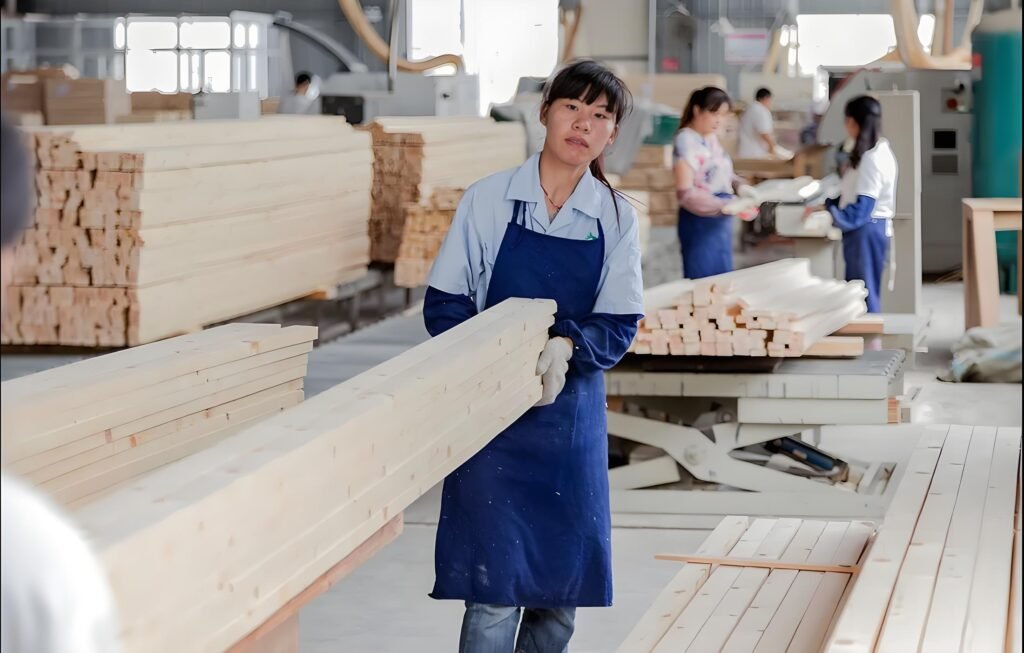
Relocated capacity shows clear category concentration. Furniture factory relocation primarily involves upholstered furniture and panel furniture, accounting for 71.3% of total relocated capacity. These categories share high standardization, heavy labor dependence, and bulky logistics. Conversely, high-end solid wood furniture, custom furniture, and complex metal furniture relocation stands at merely 8.4%.
Relocating firms are not struggling small enterprises, but top-tier exporters with annual export values exceeding USD 30 million. Furniture Discover research shows 83.3% of relocating firms rank in the industry’s top 20%. These firms possess sufficient capital to absorb overseas plant initial investments — typically USD 8-15 million for a mid-sized Vietnamese furniture factory, with payback periods of 4-6 years. Smaller firms are actually excluded from this supply chain shift due to capital barriers.
Three Drivers Deconstructed: Tariffs, Costs, and Client Pressure
Furniture factory leaving China decisions are never single-factor. Furniture Discover research categorizes relocation motives into three types: tariff avoidance, cost-driven, and client-mandated.
Tariff-Avoidance Relocation: Passive Response to US Market Pressure
US tariffs on Chinese furniture surged from 0-3.5% to 25-35% during the 2018-2020 trade friction, with some categories facing comprehensive rates exceeding 40% after Anti-dumping Duty. Vietnamese, Indonesian, and Malaysian furniture exports to the US generally face 0-8% tariffs. A Guangdong panel furniture exporter derived 58% of revenue from the US market in 2023; tariff costs directly eroded 12.7% of Gross Margin. The firm established a Hai Phong, Vietnam branch in 2024 specifically for US orders, reducing comprehensive tax rates to 6.5%. Yet the same firm’s EU orders remain 100% produced in Dongguan — because EU tariffs on Chinese furniture already sit at 0-5%, providing minimal relocation incentive.
Cost-Driven Relocation: Theoretical 28.7% Savings vs. Real-World Gap
Vietnamese furniture manufacturing wages average 62.4% of Chinese levels; industrial land rents in coastal Vietnam run about 45.8% of Chinese coastal park rates. Theoretically, labor-intensive furniture production costs could drop 28.7%. But theoretical models diverge significantly from reality. Most Southeast Asian furniture factories still rely on China for core particle boards, hardware, and upholstery fabrics. Supply chain response speeds run 2-3 times slower than domestic, with hidden logistics costs offsetting 10%-15% of labor cost advantages. An Indonesian mattress factory’s actual 2025 operating costs were only 14.3% lower than comparable Chinese plants — far below theoretical projections.
Client-Mandated Pressure: Diversification Directives from Brands
Since 2022, major buyers including IKEA, Wayfair, and Ashley Furniture have required core suppliers to establish backup capacity in Southeast Asia. This “client-mandated” relocation accounted for 23.8% of Furniture Discover’s sample. Suppliers are not actively choosing to leave China; they are forced into supply chain diversification to maintain major client order shares. A Dongguan sofa OEM leased a factory in Dong Nai, Vietnam in 2024 to retain Ashley’s annual contract, but the Vietnam facility operates at only 43.2% Capacity Utilization Rate, with primary capacity remaining in Dongguan.
Southeast Asian Capacity Reality: The Gap Between Promise and Performance
Narratives around furniture factory leaving China often stop at “Vietnam is cheaper,” rarely addressing operational realities post-relocation. Furniture Discover 2026 researchers visited 12 Chinese-invested furniture plants across Binh Duong, Hai Phong, Semarang, and Java, identifying four hidden pain points.
Supply Chain Ecosystem Gaps: Core Materials Still Sourced from China
Vietnam’s domestic supply chain for boards, hardware, and fabrics remains severely underdeveloped. A Binh Duong upholstered furniture factory imports 100% of its PU Leather from Zhejiang, 80% of foam from Guangdong, and 70% of Furniture Hardware from Fujian. Raw material logistics from Chinese factories to Vietnamese plants average 12-18 days, plus customs clearance, making overall supply response 2.7 times slower than domestic procurement. This means Vietnam’s “low cost” is built on “long lead times,” creating structural barriers for buyers requiring Quick Replenishment.
Power and Labor Instability: Hidden Costs Eroding Wage Advantages
Southern Vietnam industrial zones experienced sustained power outages in summer 2025. Some Binh Duong furniture plants resorted to diesel generators, with power costs spiking to 3.2 times normal levels. Indonesia faces even worse labor stability; a Semarang furniture plant reported monthly employee turnover of 8.4%, 2.1 times Chinese levels. Training a skilled sewing operator takes 4-6 months; frequent turnover keeps Capacity Utilization Rate fluctuating between 65%-78%. These hidden costs compress the theoretical 28.7% cost reduction to roughly 14.3% in practice.
Quality Control and Lead Time Volatility: Response Speeds 2-3 Times Slower
Southeast Asian furniture plants generally lag in Quality Management System maturity. Furniture Discover research shows Vietnamese furniture plants average 86.4% First Pass Yield, versus 94.2% for comparable Chinese plants. Rework Rates run 2.8 times higher than Chinese factories. For on-time delivery, Vietnamese plants achieve 72.6% On-time Delivery Rate versus 91.3% in China. For retail clients requiring strict delivery schedules, this gap translates into inventory overstock or stockout risks.
China’s Furniture Industry Upgrade: High-Value and Smart Manufacturing
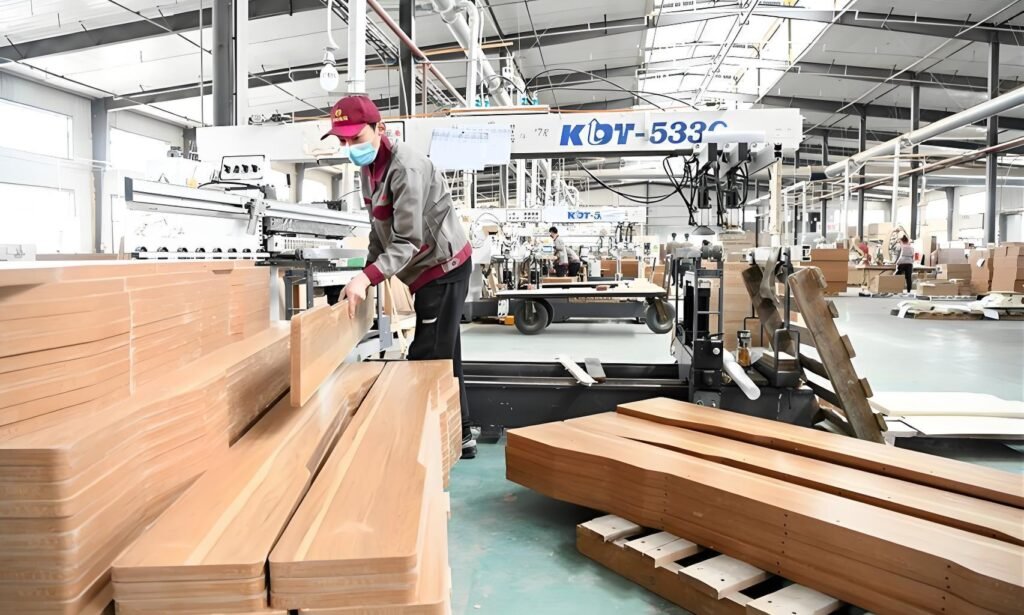
Beneath the shadow of furniture factory leaving China narratives, China’s internal industrial upgrading is severely underestimated. Furniture Discover research finds that capacity remaining in China is undergoing a leap from OEM to ODM and OBM.
From OEM to ODM: Design Capability as New Moat
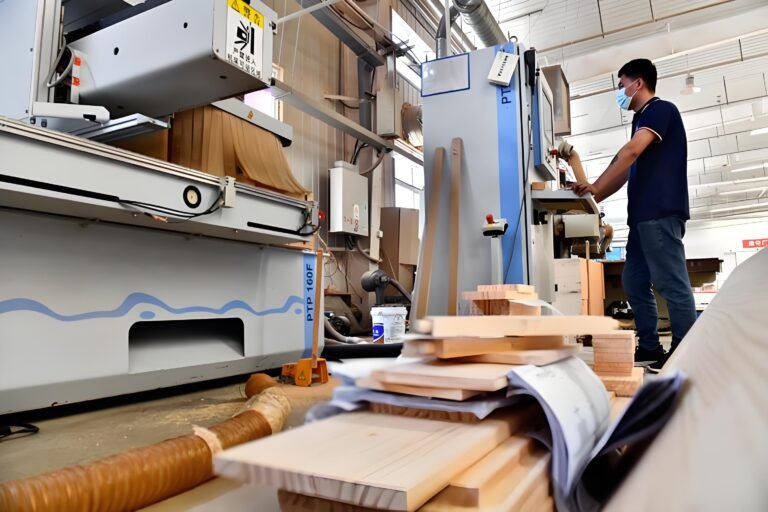
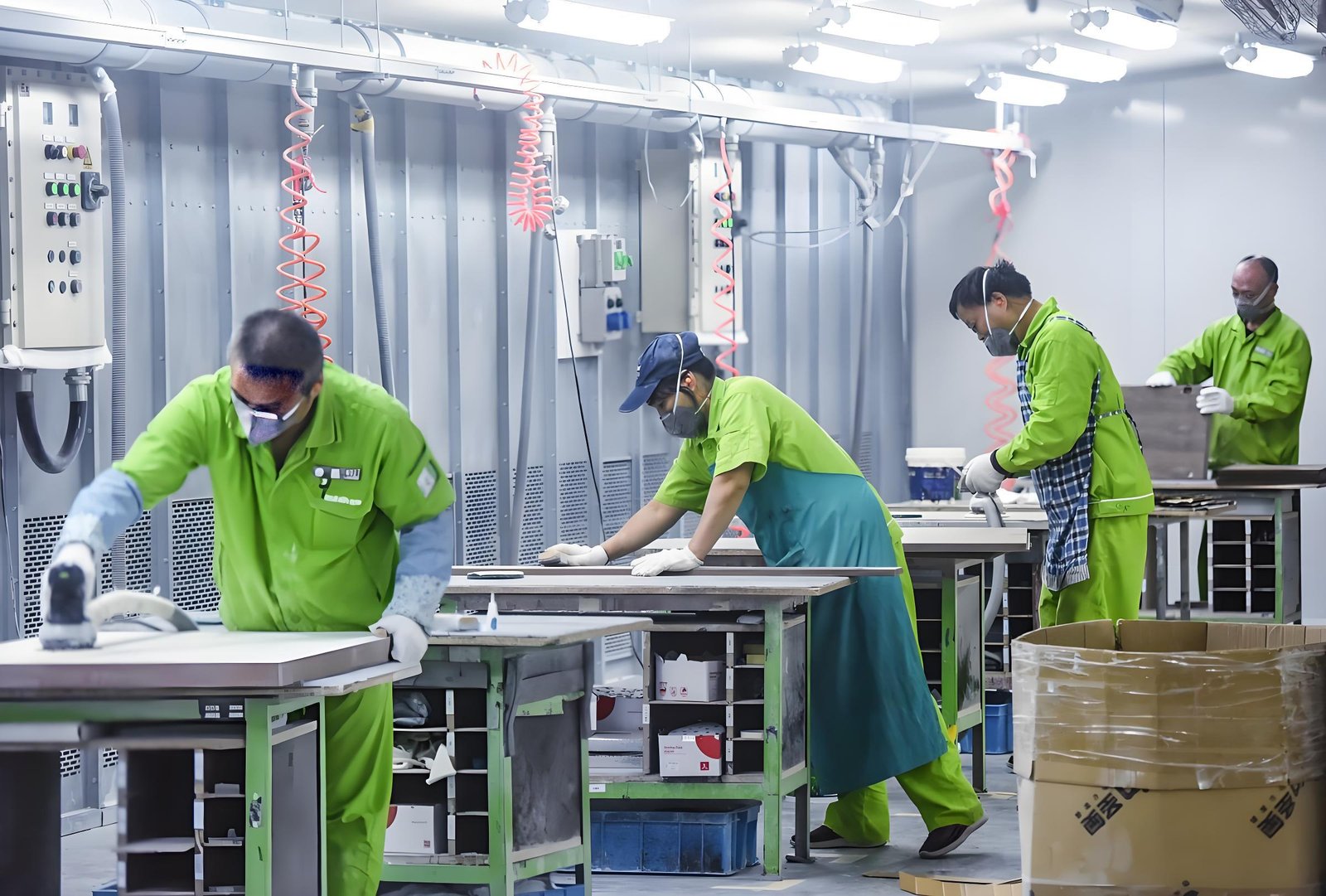
Among 42 surveyed firms, 61.9% have established internal design teams, with R&D investment averaging 3.8% of revenue. A Foshan metal furniture firm hired an Italian design team in 2024; its new series export unit prices are 47.3% higher than traditional OEM products. High-end Custom Furniture orders grew from 12.4% of revenue in 2020 to 28.6% in 2025. These orders depend on complex process integration, rapid Sampling, and Flexible Manufacturing — capabilities that cannot shift to Southeast Asia in the near term.
Smart Manufacturing Penetration: Real Progress in Digital Transformation
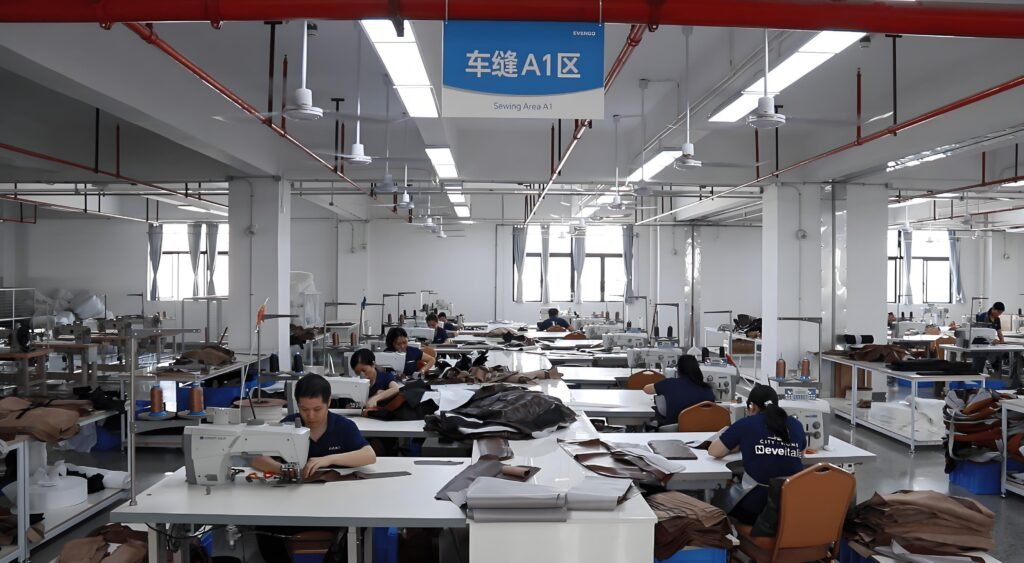
A Dongguan panel furniture leader invested RMB 32 million in 2023 to install German HOMAG smart production lines, improving board utilization from 78.4% to 91.2% and cutting delivery cycles from 21 days to 14 days. Furniture Discover research shows 54.8% of firms with annual revenues exceeding RMB 100 million have completed digital transformation on at least one production line. Smart manufacturing reduces dependence on low-skill labor, partially offsetting rising labor costs. China’s furniture industry is transitioning from “World’s Factory” to “Global Innovation Hub.
Furniture Discover Exclusive Insight: Puncturing the “Mass Exodus from China” Narrative Bubble
Based on Furniture Discover 2026 field research across 42 scaled furniture enterprises, we offer four core judgments that contradict mainstream narratives.
First, the mainstream form of furniture factory leaving China is “incremental relocation” rather than “stock withdrawal.” Relocated capacity averages only 15.3% of total capacity, primarily through new overseas plants rather than domestic closures. China’s furniture manufacturing foundation remains intact.
Second, the 5.9% export decline in 2025 carries a specific meaning: low-end mass production orders are diverting to Southeast Asia, but high-end custom and complex craftsmanship orders remain firmly in China. The structural export decline precisely validates the “industrial gradient transfer” thesis — low-end leaves, high-end stays.
Third, Southeast Asian capacity’s “cost advantage” contains serious water content. The theoretical 28.7% cost reduction is compressed to roughly 14.3% in actual operations due to supply chain ecosystem gaps, power instability, and high turnover. For lead-time-sensitive, quality-demanding orders, Southeast Asia’s comprehensive cost may actually exceed China’s.
Fourth, China’s furniture industry is undergoing structural upgrading. Resources freed by low-end capacity relocation (land, labor, capital) are being absorbed by high-end manufacturing and intelligent production. Factories remaining in China are becoming more efficient, specialized, and design-capable. The choice facing global buyers is not “leave China or stay in Southeast Asia,” but “how to build optimal portfolios between China’s upgraded capacity and Southeast Asia’s emerging capacity.”
The essence of supply chain shift is global furniture supply chain evolution from “single-pole dependence” to “multi-pole collaboration.” China will remain the core hub of global furniture supply chains for the next decade, but buyers’ supply chain layouts require greater resilience.
Buyer Response Strategies and Action Toolkit
Facing China manufacturing exodus 2026 and supply chain shift, global buyers need systematic response frameworks rather than passive media-following.
Four-Step Supply Chain Layout Framework
Step One: Assess existing supplier capacity resilience. Re-audit current Chinese suppliers’ capacity structures. Distinguish core capacity from backup capacity. Understand whether they have overseas plants, the purpose (tariff avoidance or client mandate), and actual overseas utilization rates. Prioritize suppliers with high domestic retention ratios and smart manufacturing investments — these firms typically demonstrate stronger long-term delivery capability and quality stability.
Step Two: Build a “China Plus One” diversification matrix. Split orders by category, lead-time sensitivity, and target market: retain high-end custom, complex craftsmanship, and quick replenishment orders in China; shift standardized, high-volume, US-bound orders partially to Vietnam or Indonesia. But keep transfer ratios within 30%-40% to avoid over-dependence on still-maturing Southeast Asian supply chains. In Southeast Asia, prioritize factories with 2-3 years of operational experience and core management teams from mainland China.
Step Three: Construct dynamic cost models. Incorporate hidden costs: cross-border raw material logistics, power instability, quality rework, and inventory carrying costs from lead-time delays. Furniture Discover research shows Vietnamese furniture’s True Procurement Cost runs 18.6%-24.3% higher than quoted prices.
Step Four: Lock in core capacity with long-term contracts. For premium suppliers remaining in China, sign 2-3 year framework agreements locking capacity quotas and price bands, preventing resource dispersion under client diversification pressure.

Frequently Asked Questions (FAQ)
Q1: Are Chinese furniture factories really leaving in large numbers?
A: Not “mass leaving,” but “partial relocation.” Furniture Discover 2026 research shows only 7.1% of firms fully closed domestic factories; 78% of relocating firms retain over 80% of core domestic capacity. Relocation is primarily incremental expansion, not stock withdrawal.
Q2: Does the 5.9% export decline in 2025 mean China’s furniture industry is finished?
A: No. The export decline is concentrated in low-end upholstered furniture and panel furniture — precisely the categories with the heaviest relocation. High-end custom and complex craftsmanship furniture exports remain resilient. The structural export decline reflects low-end capacity gradient transfer, not a shaking of industrial foundations.
Q3: Can Vietnamese furniture capacity fully replace China?
A: No. Vietnam’s furniture industry lags significantly in supply chain ecosystem completeness, power stability, quality control, and on-time delivery. Vietnam is better suited for standardized, high-volume, low-complexity orders; high-end custom and complex craftsmanship still depend on China.
Q4: How much does relocation impact procurement costs?
A: Theoretical cost reduction is approximately 28.7%, but actual reduction after hidden costs is about 14.3%. For orders requiring quick replenishment and high quality standards, Southeast Asia’s comprehensive cost may actually be higher.
Q5: Which furniture categories are most likely to relocate?
A: Upholstered furniture (sofas, mattresses) and panel furniture account for 71.3% of relocated capacity. High-end solid wood furniture, custom furniture, and complex metal furniture relocation stands at only 8.4%.
Q6: What core advantages remain in China’s furniture industry?
A: Complete supply chain ecosystem (boards, hardware, fabrics, equipment), mature skilled workforce, rapid response capability (lead times 2-3 times faster than Southeast Asia), and continuously upgrading smart manufacturing and design capabilities.
Q7: How should buyers adjust supply chain strategies?
A: Adopt a “China Plus One” strategy: retain high-end, complex, quick-replenishment orders in China; partially shift standardized, high-volume, US-bound orders to Southeast Asia, but keep transfer ratios within 30%-40%.
Q8: Are quality issues in Southeast Asian capacity serious?
A: Vietnamese furniture plants average 86.4% First Pass Yield, with Rework Rates 2.8 times Chinese levels. Quality issues concentrate in upholstery stitching, panel edge banding, and hardware installation precision. Choosing factories with Chinese management backgrounds mitigates risk.
Q9: How will supply chain structures evolve in the next 3-5 years?
A: Based on reasonable extrapolation from current industrial data: China will maintain its core position in global furniture manufacturing. Southeast Asia’s share may rise from approximately 8% to 12%-15%. Global supply chains will form a three-layer structure: China as core, Southeast Asia as complement, and nearshoring as backup.
Practical Toolkit: Supply Chain Diversification Assessment Checklist
Use this checklist during new supplier qualification, annual supplier audits, and supply chain restructuring.
Supplier Capacity Resilience Assessment
- [ ] Does the supplier retain core domestic production bases? Is retention above 80%?
- [ ] Has the supplier’s overseas plant operated for over 2 years?
- [ ] Is the supplier’s overseas capacity utilization above 60%?
- [ ] Has the supplier completed smart manufacturing upgrades on at least one production line?
- [ ] Does the supplier’s R&D investment exceed 3% of revenue?
True Cost Accounting
- [ ] Are cross-border raw material logistics costs included in quotations?
- [ ] Has destination country power stability been assessed for cost impact?
- [ ] Are quality rework rates and lead-time delay inventory carrying costs calculated?
- [ ] Have tariff and VAT differences between destination countries and China been compared?
- [ ] Is a 10%-15% hidden cost buffer reserved?
Risk Diversification Matrix
- [ ] Is single supplier order share controlled below 40%?
- [ ] Has a “China Plus One” backup supplier system been established?
- [ ] Are US-bound orders backed up with Southeast Asian capacity?
- [ ] Have 2-3 year long-term framework agreements been signed to lock core capacity?
- [ ] Is the supply chain risk assessment report updated quarterly?
Usage Method: During new supplier qualification, score each item (5 points maximum, 100 points total). Suppliers scoring below 70 enter a probation period. During annual audits, compare year-over-year score changes to identify supply chain resilience degradation signals.
The real picture of furniture factory leaving China is far more complex than media narratives suggest. The 2026 China manufacturing exodus is not an endpoint, but the starting point of global furniture supply chain restructuring. Competitive advantage for buyers will depend on building resilient, efficient, diversified procurement systems driven by data rather than emotion.
Recommended Resource
Interi Furniture specializes in custom furniture manufacturing for residential, hospitality, and commercial projects. Their experience in materials, craftsmanship, and project realization makes them a valuable resource for designers and buyers seeking tailored furniture solutions from China.