


Most global buyers still operate under a flawed assumption: that Southeast Asia has already taken over as the primary hub for outdoor furniture sourcing. Vietnam’s cheaper labor and Indonesia’s timber reserves seem to point toward an inevitable southward shift. But the trade data tells a different story. In 2024, Anji County’s furniture exports surged 40.9% year-over-year. Taizhou’s Linya Group alone ships 95% of its RMB 2.85 billion annual output to over 80 countries. These numbers reveal something most procurement teams miss—Zhejiang outdoor furniture has not lost ground. It has deepened its structural moat through supply-chain integration that no emerging cluster can replicate quickly.
This report is built on 15 years of fieldwork across Taizhou, Anji, Ningbo, and Hangzhou, layered with customs data and provincial trade-association intelligence. We are not here to celebrate factory scale. We are here to explain the underlying mechanics of why Zhejiang furniture factories remain the irreplaceable backbone of world outdoor furniture supply.
The Misread Migration: Why the “China+1” Narrative Falls Short in Outdoor Furniture
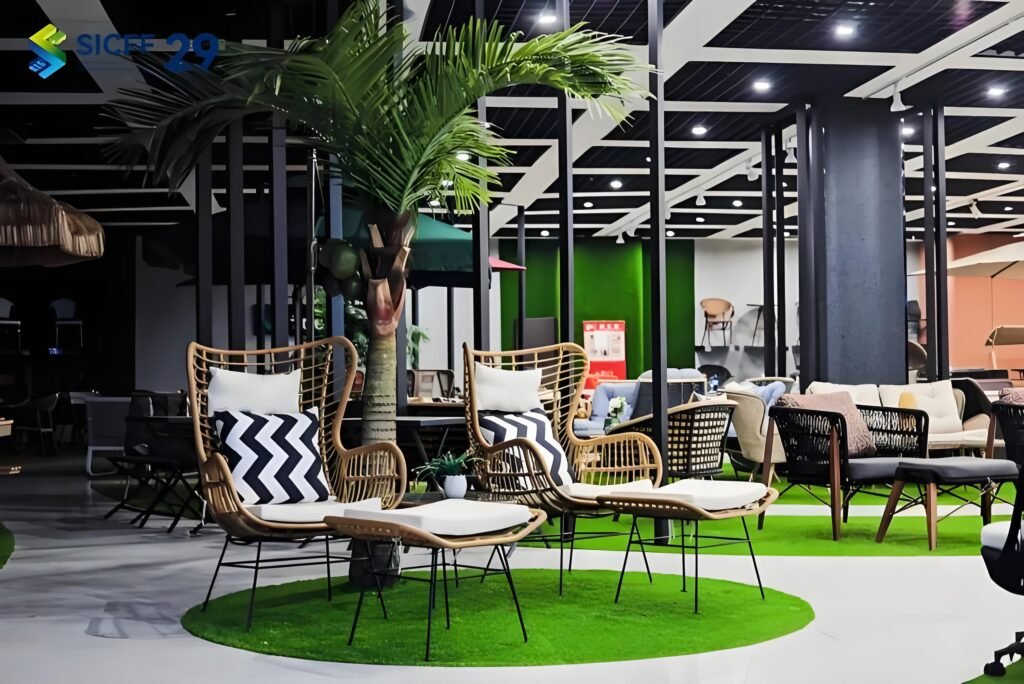
The industry has endured two waves of false certainty. Around 2018, buyers began shifting trial orders to Vietnam, convinced that labor-cost deltas would trigger a mass exodus. Then, from 2022 to 2023, supply-chain restructuring narratives hardened into conventional wisdom. The reality on the ground never matched the headlines.
China Customs data for January–July 2024 shows China outdoor manufacturing exports of furniture and parts reached RMB 284.69 billion, up 14.8%. The Zhejiang Furniture Industry Association reports H1 2024 export delivery value at RMB 24.415 billion, growing 7.4%. Anji alone exported RMB 3.13 billion in the first two months of 2024—a 40.9% jump that hardly suggests decline.
Vietnam’s 2024 furniture exports reached roughly $17.6 billion; Indonesia’s totaled about $2.22 billion. Vietnam is now Asia’s second-largest exporter, but look closer at the product mix. It is dominated by solid wood and indoor upholstery. When it comes to outdoor-specific categories—metal frames, PE rattan, functional shading systems—Vietnamese lines still feed off Chinese inputs. A typical Vietnamese patio furniture manufacturer runs 15–20 containers per month, comparable to a single large Taizhou complex, yet lacks the product depth and responsiveness that commercial buyers actually need.
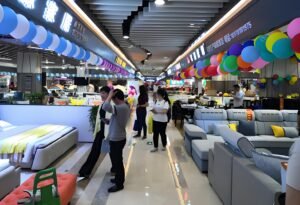
The market itself is splitting in two. High-end hospitality and resort projects demand delivery precision, deep customization, and full compliance certification. Mass retail channels demand scale, standardization, and cost control. Zhejiang outdoor furniture has built defensive positions at both ends. Southeast Asian clusters, meanwhile, usually compete at only one extreme.
The Geography of Dominance: Four Cities, One Ecosystem
Zhejiang’s outdoor furniture map follows a hard logic that has evolved over four decades. Raw-material endowment sets the starting point. Port proximity sets the export vector. Historical path dependence sets the technical trajectory. The result is a 200-kilometer corridor where four cities operate as a single, highly differentiated organism.
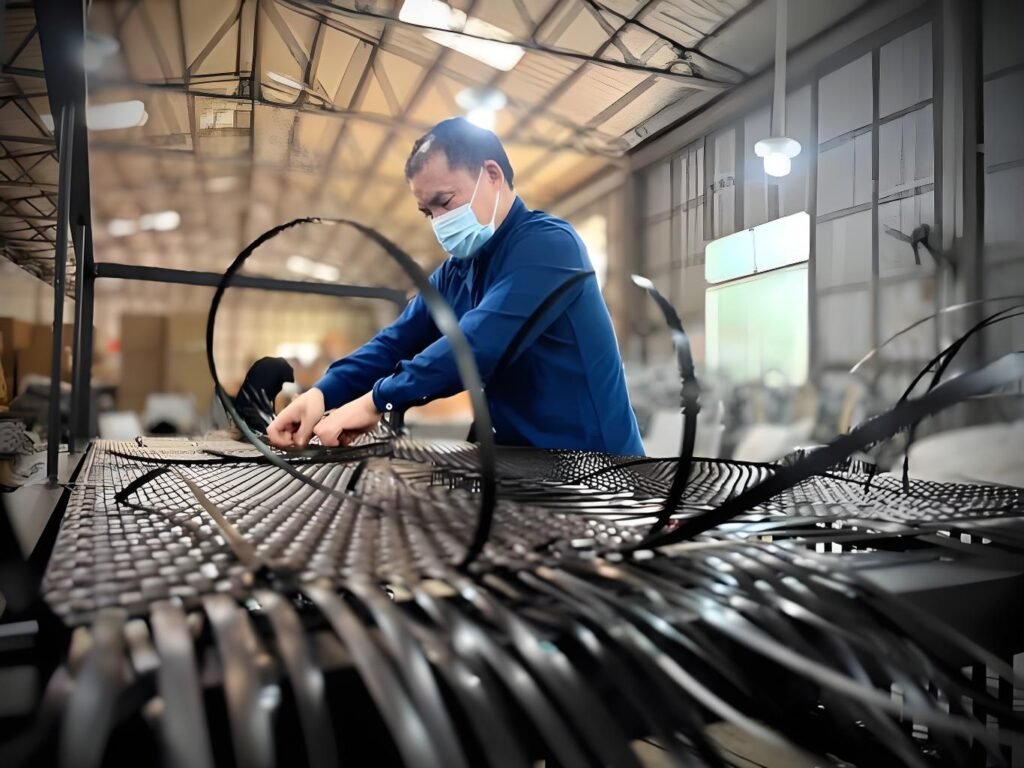
Taizhou: The Global Nerve Center for Rattan and Functional Outdoor Furniture
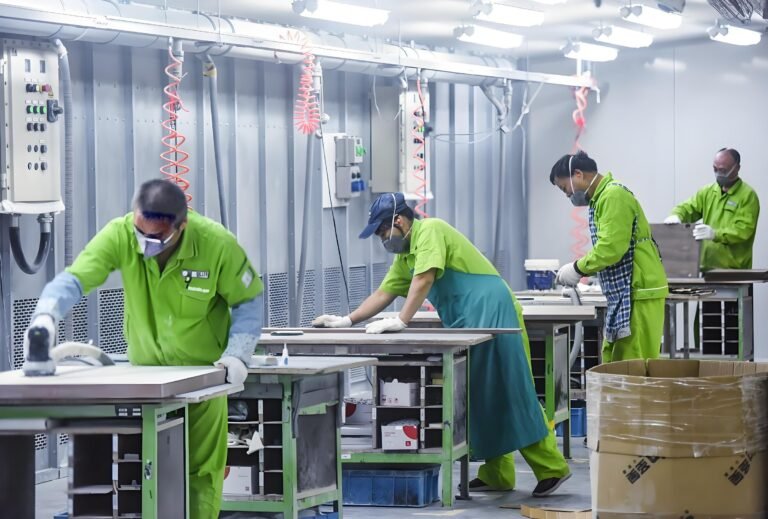
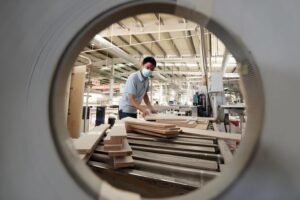
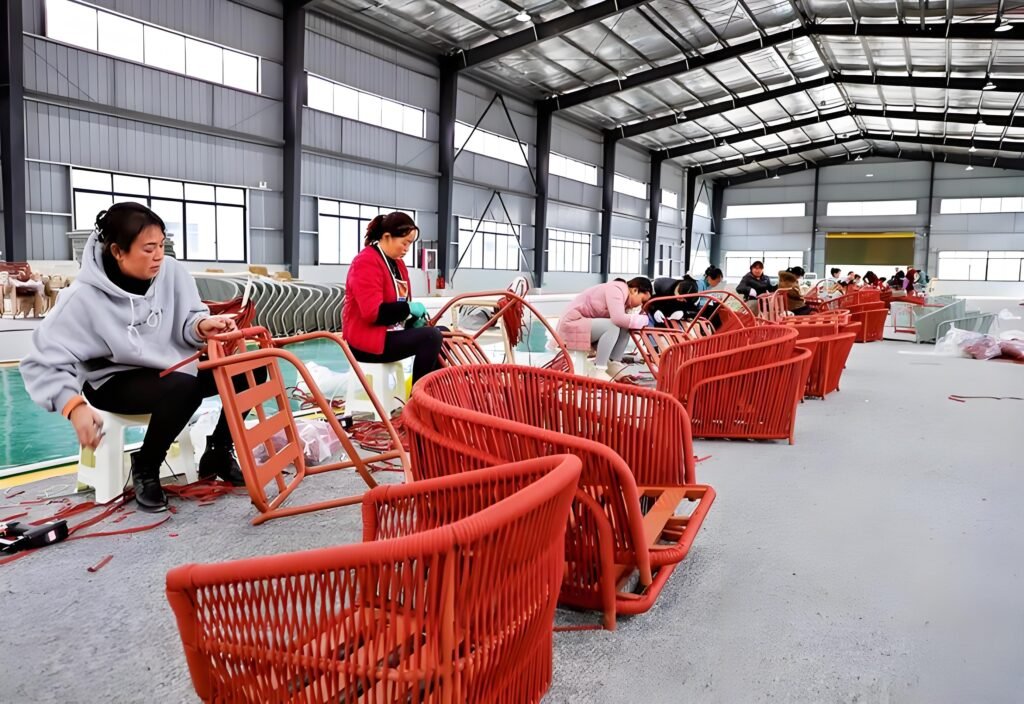
Linhai City remains the densest concentration of PE rattan outdoor furniture production on the planet. Linya Group operates over 400,000 square meters of modern facilities with roughly 3,650 employees, generating RMB 2.85 billion in 2025 output, with 95% exported to 80-plus nations. This is not an outlier; it is the Taizhou standard—vertically integrated supply chains, scaled OEM/ODM capability, and deep, long-term binding with international retail giants.
What makes Taizhou irreplaceable is the completeness of the rattan ecosystem. From PE extrusion and UV treatment to weave-mold development and final assembly, every stage fits within a 50-kilometer radius. A new weave texture can move from design to production sample in as little as 15 days. In Vietnam, that same cycle often stretches to 25–35 days because the raw material, the mold shop, and the weaving floor are rarely in the same province.
Anji: The Green Belt for Bamboo and Wood Outdoor Furniture
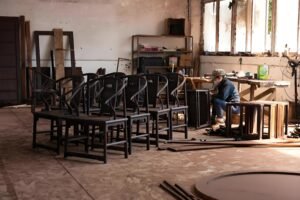
Anji sits on 1.08 million mu of bamboo forest and hosts roughly 1,000 bamboo enterprises, 40-plus at scale. According to the State Council Information Office (June 2025), approximately 70% of Anji’s bamboo products export to the US, Europe, Japan, and South Korea. The county’s chair industry hit RMB 39.4 billion in sales back in 2018, making it the world’s largest office-chair base. Its products have been used at the G20 Hangzhou Summit and the BRICS Summit.
Anji’s logic is fundamentally different from Taizhou’s. Local bamboo availability gives it unique authority in sustainable outdoor furniture. As global demand rises for FSC certification, carbon-footprint tracing, and bamboo-for-plastic substitution, Anji is quietly shifting from traditional OEM to green-standard exporter. Premium bamboo products from this region have already entered the global supply chains of MUJI and IKEA.
Ningbo: The Technical Highlands for Metal-Frame and Aluminum Outdoor Furniture
Ningbo leverages a deep metalworking heritage and direct port access to dominate aluminum and stainless-steel outdoor furniture. Its edge is precision manufacturing—powder coating, CNC aluminum-profile processing, and marine-grade anti-rust treatment—all at higher standardization levels than other domestic regions. Ningbo enterprises typically serve European commercial-project buyers who demand strict EN compliance and surface-durability performance that most Southeast Asian metal shops struggle to match.
Hangzhou: The Design and Digital Front End
Hangzhou is not a traditional production town, but it has become indispensable. As a core node for cross-border e-commerce, it hosts brand operations and design studios that sit between Western buyers and the factory floor. Many Taizhou and Anji manufacturers maintain front offices in Hangzhou to interface directly with DTC brands and small-batch custom orders. The “front end in Hangzhou, back end in the production zone” model compresses demand-feedback cycles from weeks to days.
The Three-Tier Supply Chain: Infrastructure Nobody Sees
Outsiders who tour Zhejiang tend to count finished-goods factories and miss the real architecture. The true competitive barrier is a three-tier supply chain that no government planner designed. It emerged organically through forty years of market trial and error.
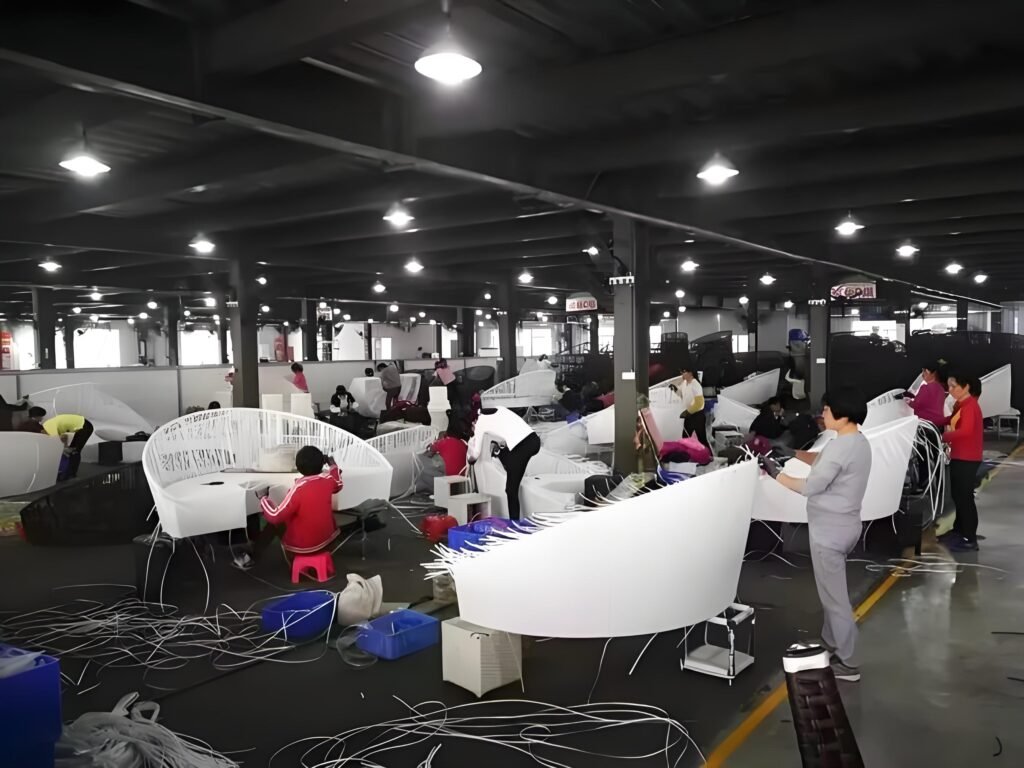
At the top sits Tier 1: the core manufacturers and brand operators. These are the enterprises with annual output exceeding RMB 100 million and the OEM/ODM factories that supply international retail brands directly. They hold the export licenses, the client relationships, and the core process patents. In Taizhou’s Linhai core, roughly 200–300 scaled enterprises generate over 80% of the region’s export value.
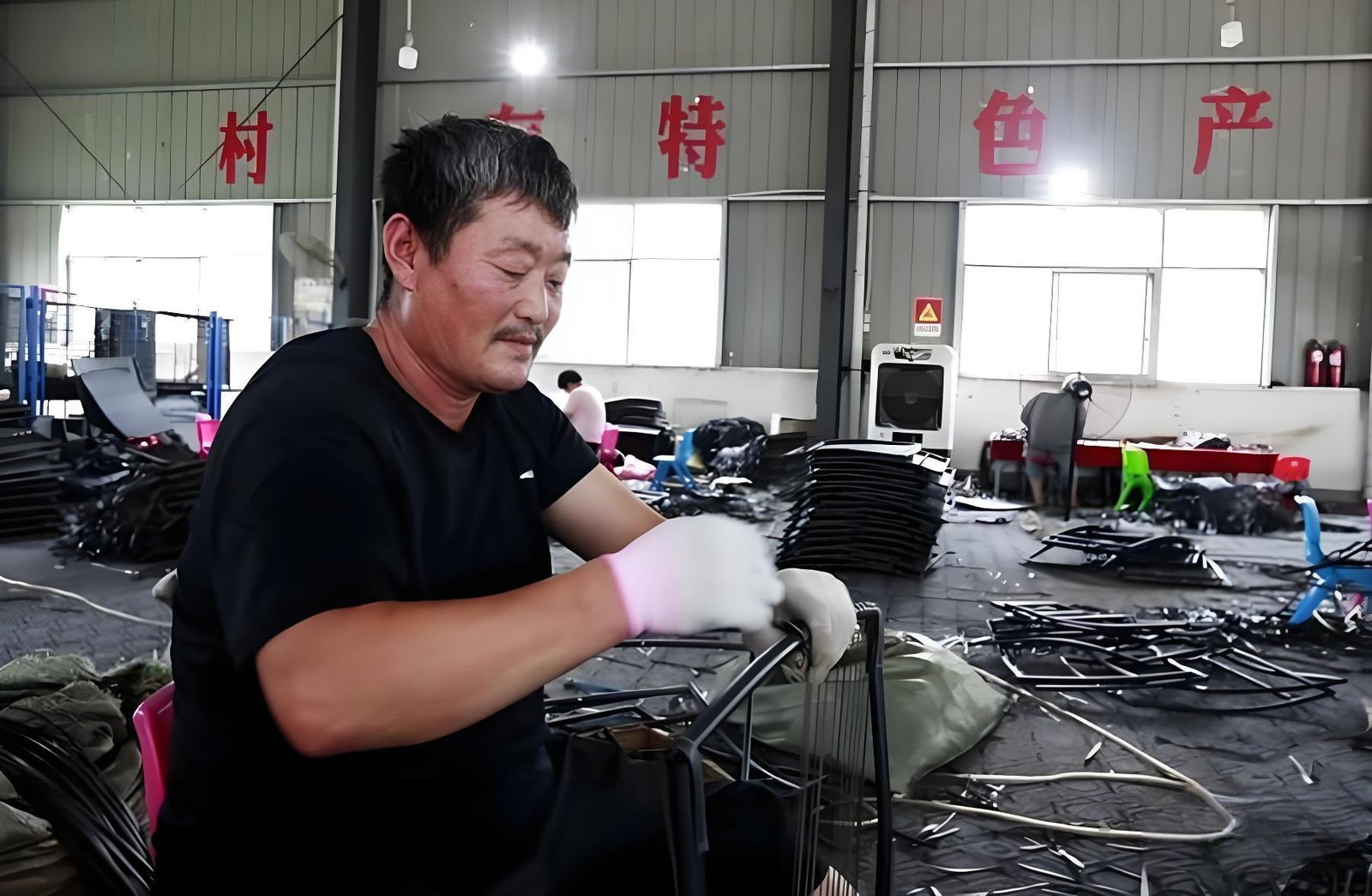
Beneath them is Tier 2: the specialized component suppliers that most buyers never meet. Surrounding Linhai, over 800 SMEs specialize in single components or single processes. There are chemical plants that do nothing but rattan UV modification. Hardware factories that produce only specific aluminum die-cast fittings. Textile mills that apply only waterproof coatings to outdoor fabrics. Most lack export licenses and survive entirely on Tier 1 orders.
Here is an insider detail that never appears in factory audits: a typical outdoor sofa may source its rattan frame, metal connectors, waterproof cushions, and sunshade fabric from four different Tier 2 suppliers, with final assembly and QC at the Tier 1 manufacturer. This division is not inefficiency. It is risk distribution. When one product line slows, the core manufacturer can shift procurement ratios without carrying the fixed costs of an idle workshop. Competition among Tier 2 suppliers also forces continuous refinement. Field research in Taizhou shows that a PE rattan modification enterprise typically iterates faster than a vertically integrated factory’s internal materials department because the former must serve multiple clients simultaneously to survive.
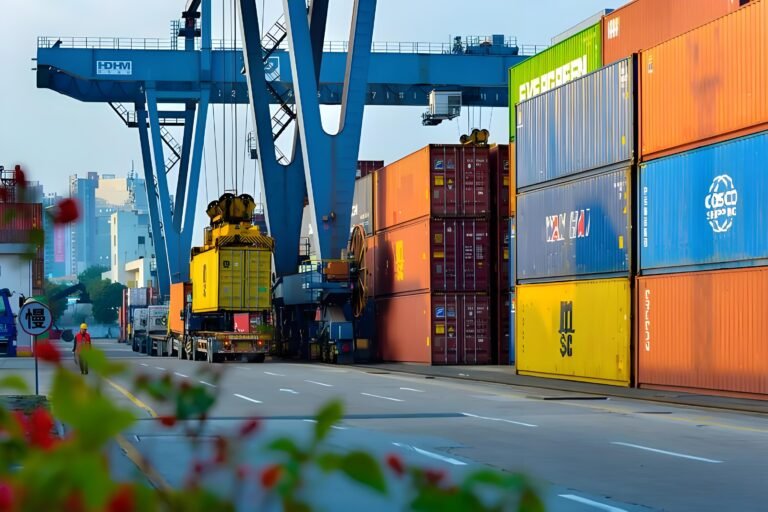
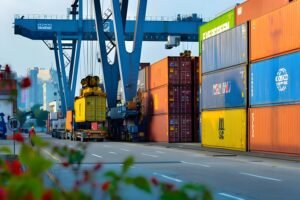
Tier 3 is the raw-material and logistics substrate: Ningbo and Shanghai port container scheduling, Yiwu small-commodities market hardware distribution, and Hangzhou Xiaoshan fabric spot markets. Ningbo Port averages 28–35 days to the US West Coast and 30–38 days to major European ports. Ho Chi Minh Port runs 30–38 days to the US West Coast and 35–45 days to Europe. That slight logistics edge, combined with shorter factory-side pre-production cycles, typically yields total delivery cycles 10–15 days faster than Vietnam. For seasonal retail launches, that gap is the difference between hitting shelf sets and missing them.
Why Southeast Asia Cannot Replicate This: Four Structural Gaps
Comparing Zhejiang outdoor furniture with Vietnam and Indonesia on simple unit-cost metrics is the most common sourcing mistake we see. The real competitive gaps are structural.
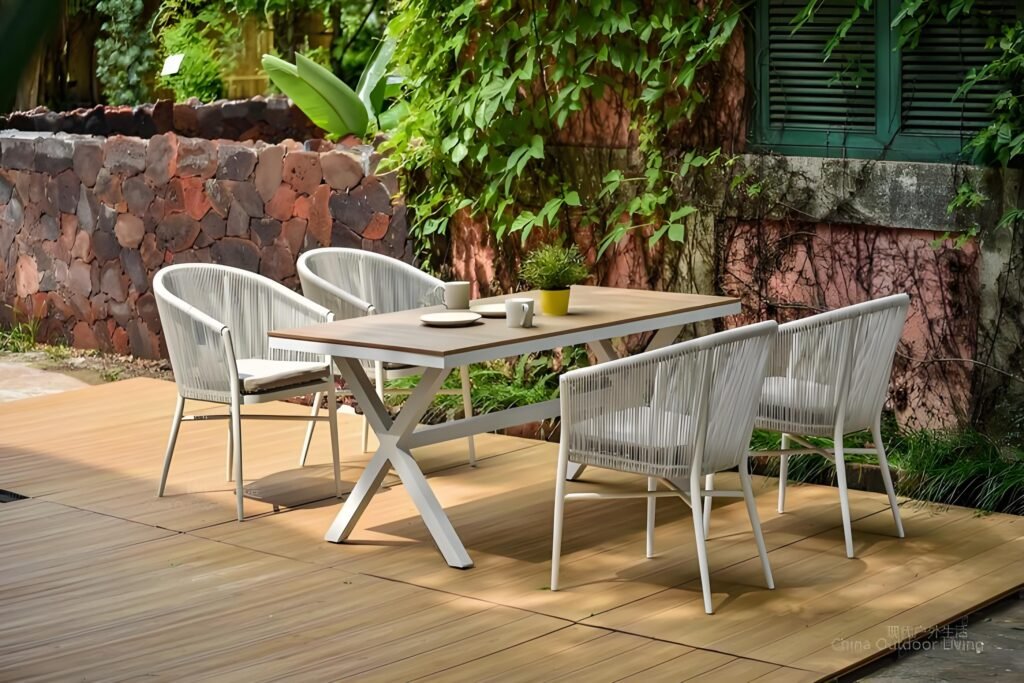
Process Depth
The advantage is not individual worker skill. It is ecosystem integrity. High-grade PE rattan requires UV8 resistance and a verified 5–8 year lifespan. Around Linhai, a complete technical circle spans chemical raw materials to extrusion-equipment maintenance. Any process anomaly can be diagnosed and resolved within 24 hours. Vietnamese and Indonesian factories mostly import PE rattan, which means higher material costs, longer debugging cycles, and limited ability to tweak formulations for specific climate zones.
Seasonal Capacity Flexibility
Outdoor furniture is brutally seasonal. Northern Hemisphere buyers concentrate orders from October through March; production peaks from April through August. Zhejiang has developed a seasonal capacity mechanism that outsiders rarely notice. Core manufacturers maintain a base crew in low season, outsourcing certain processes to Tier 2 suppliers. When peak season hits, they flex through temporary labor and Tier 2 expansion. Taizhou can boost capacity to 2.5× low-season levels. Vietnamese factories, constrained by lower labor mobility and less developed subcontracting networks, typically flex only to 1.5×.
More critical is the raw-material centralized procurement mechanism. From November through January, large enterprises in Taizhou and Anji jointly procure PE pellets, aluminum ingots, and outdoor fabrics, locking in 60–70% of annual material costs. This collective bargaining power smooths out price volatility. Southeast Asian factories mostly purchase per order, which means raw-material fluctuations flow straight to their margins.
Compliance Maturation
Western requirements are tightening: California Proposition 65 lead limits, EU REACH chemical registration, FSC timber traceability. Zhejiang’s leading enterprises began systematic compliance layout before 2010. They now hold certification matrices covering major export markets. Vietnamese and Indonesian factories can obtain similar certificates, but the breadth of categories covered and the speed of updates lag noticeably. For buyers who need one supplier to satisfy US, European, and Australian standards simultaneously, Zhejiang offers higher compliance certainty.
Organizational Learning
This is Zhejiang’s most underrated advantage. In an information-dense cluster, a coating-defect claim at one factory spreads technical lessons across the entire region within three months. The knowledge moves through supplier networks, industry association meetings, and worker mobility between shops. This rapid diffusion of negative experience systematically prevents similar failures at the cluster level. Southeast Asian clusters, with geographically dispersed enterprises and weaker information channels, learn at significantly slower rates.
Sourcing Truths and Cost Traps
After tracking 400-plus international procurement projects, we see the same three miscalculations repeatedly.
Myth 1: Vietnamese FOB Is Cheaper
Vietnamese FOB quotes typically run 5–15% below Zhejiang. But that gap collapses once hidden costs are factored in. Pre-production sample confirmation in Vietnam averages 7–10 days longer. First-batch defect rates for Vietnamese outdoor furniture typically run 3–5 percentage points higher than Zhejiang equivalents. Supply-chain coordination is more complex because Vietnamese lines often import metal fittings and fabrics from China anyway. For delivery-sensitive projects, Zhejiang’s on-time accuracy runs approximately 28% higher than comparable Vietnamese factories, which translates directly into fewer emergency air-freight shipments and fewer missed sales windows.
Myth 2: Splitting Orders Reduces Risk
Some buyers deliberately split volume between Zhejiang and Vietnam to avoid single-source exposure. Paradoxically, Zhejiang’s capacity concentration provides stronger risk resilience. If one factory faces force majeure, dozens of alternative suppliers within the same cluster can switch over rapidly because they share tooling standards, material specs, and logistics protocols. Vietnamese outdoor furniture capacity is concentrated in a handful of large factories. If one goes down, replacement options are limited and onboarding a new line takes months.
Myth 3: Small Batches Are Easier in Vietnam
For DTC brands and designer projects that need frequent new-product development and small-batch trials, Zhejiang is actually the lower-cost option. Taizhou and Anji host numerous mid-sized factories willing to accept 50–100 piece MOQs. Comparable Vietnamese factories typically set standard MOQs at 200-plus pieces. Indonesia offers better mixed-container flexibility, but lacks depth in metal and engineered-material outdoor furniture.
Future Trends: From Capacity Export to Rule Making
Zhejiang outdoor furniture is no longer just selling production capacity. It is moving toward standard setting. Three forces are driving this shift.
Green Trade Barriers
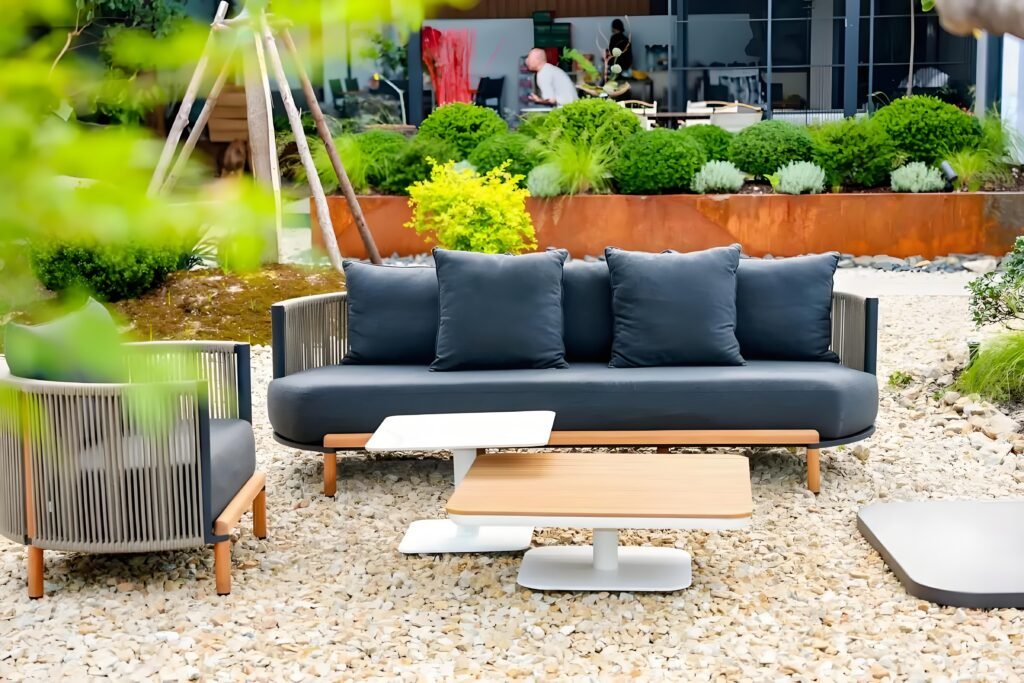
The EU Carbon Border Adjustment Mechanism (CBAM) and US Clean Competition Act are transforming carbon-footprint tracing from a voluntary marketing tool into a hard market-entry requirement. Anji’s bamboo belt is ahead of the curve. Bamboo sequesters 5–12 tons CO₂ per hectare annually, with a growth cycle of only 4–6 years versus 10–20 years for timber. Anji enterprises have already achieved full-chain carbon tracing from bamboo forest to finished export. Within three years, this capability will be a mandatory ticket for European market entry.
Digital Supply Chain Integration
Zhejiang’s digitalization runs ahead of national averages. Leading Taizhou enterprises have deployed AI-assisted cutting and production-scheduling optimization, improving fabric utilization by over 20%. The deeper impact is supply-chain visibility. Buyers can now track order progress through the three-tier system in real time via digital platforms. That level of transparency is currently unattainable in Southeast Asian clusters.
Smart Product Upgrades
Functional upgrades are creating new growth poles. Outdoor furniture integrating solar charging, environmental sensing, and intelligent dimming shows 18–25% annual growth in Zhejiang. The advantage is proximity to electronics suppliers. Hangzhou and Ningbo component vendors can deliver customized control modules and battery solutions within 72 hours. Vietnamese factories still import such components from China, adding both cost and delay.
Key Insights Summary
Zhejiang’s dominance is not a cost story. It is the systematic result of three-tier supply chains, process-ecosystem depth, and organizational learning capacity. Southeast Asian clusters will need 5–10 years to build anything close to this structure—if they ever do.
The Taizhou–Anji–Ningbo–Hangzhou corridor is the world’s densest differentiated outdoor-furniture capacity matrix. A single buyer can cover mass retail to high-end customization within a 200-kilometer radius.
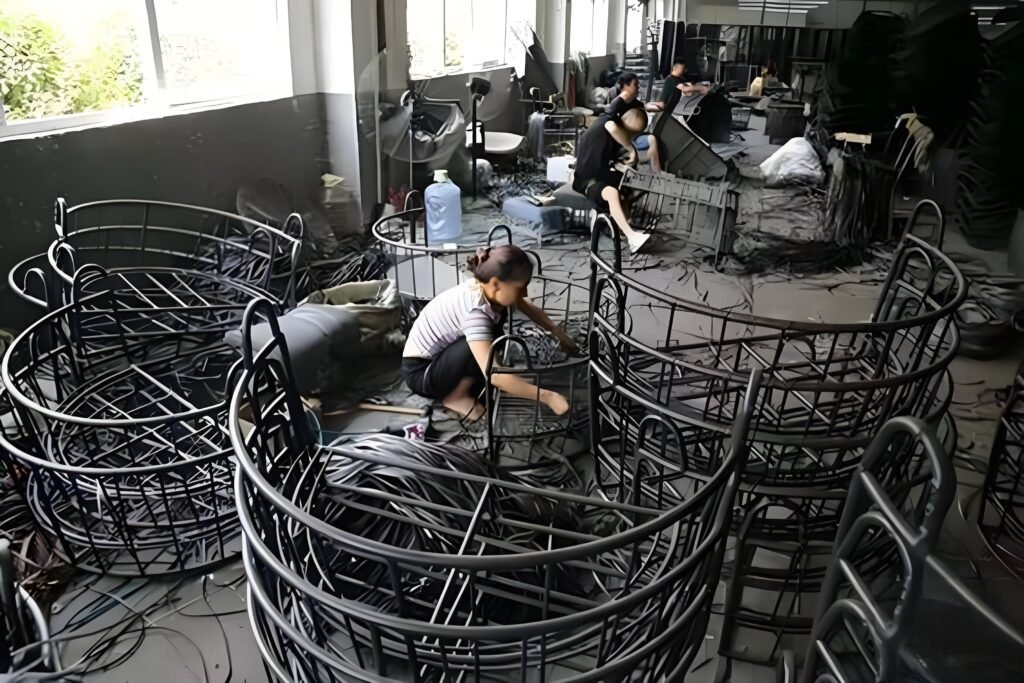
Seasonal capacity adjustment and raw-material centralized procurement are internal “hidden rules” that outsiders rarely see. They give Zhejiang furniture factories stronger anti-volatility capability and delivery certainty than quoted prices suggest.
For delivery-sensitive, compliance-demanding, frequently rotating projects, Zhejiang’s total cost of ownership (TCO) typically runs lower than Vietnam and Indonesia, despite 5–15% unit-price gaps at the quotation stage.
Green certification and carbon-footprint tracing are shifting from competitive advantage to market-entry threshold. Anji’s bamboo belt and Taizhou’s leading enterprises have already positioned ahead of this curve. The compliance gap with Southeast Asia will widen over the next 3–5 years.

FAQ
Q: What are the main export markets for Zhejiang outdoor furniture?
A: The US, Europe (Germany, UK, France, Spain), Japan, and Australia are core markets. Per China Customs 2025 data, the US remains China’s largest furniture export destination, accounting for approximately 14.7% of total export value. Anji exports roughly 70% of its bamboo products to the US, Europe, Japan, and South Korea.
Q: What is the core difference between Zhejiang and Vietnamese clusters?
A: The core difference lies in supply-chain completeness and process depth. Zhejiang maintains a complete three-tier supply chain from raw-material modification through component processing to finished assembly. Vietnam’s outdoor sector still relies on imported metal fittings and fabrics from China. Additionally, Zhejiang’s on-time delivery accuracy runs approximately 28% higher than Vietnam’s, with peak/low-season capacity flexibility at 2.5× versus Vietnam’s typical 1.5×.
Q: Are small buyers (annual purchase below $500,000) suitable for Zhejiang sourcing?
A: Yes. Zhejiang hosts numerous mid-sized factories accepting 50–100 piece MOQs with high mixed-container flexibility. Some Taizhou and Anji factories specialize in small-batch custom orders with pre-production sample cycles of 25–35 days. By comparison, Vietnamese factories typically set standard MOQs at 200-plus pieces.
Q: How is quality consistency ensured?
A: Large factories typically execute three-tier quality inspection: incoming raw-material inspection, in-process inspection at 30–50% completion, and AQL 2.5 sampling before shipment. Buyers are advised to engage independent third-party agencies (e.g., V-Trust, Bureau Veritas) for pre-production and pre-shipment inspections, at approximately $200–350 per inspection.
Q: What is the typical lead time from Zhejiang?
A: Standard products from order confirmation to FOB Ningbo Port: approximately 30–50 days; custom products (including pre-production sample approval): approximately 45–70 days. Ocean freight to US West Coast: 28–35 days; to Europe: 30–38 days. Total door-to-door cycle: approximately 65–100 days.
Q: What are the main risks facing Zhejiang’s industry?
A: Primary risks include: US tariff policy uncertainty (some categories currently face 25–50% tariff rates), continuous labor cost escalation (annual increases of approximately 5–8%), and environmental regulatory tightening forcing exit of some small and medium Tier 2 suppliers. Additionally, Zhejiang’s labor costs run approximately 15% above Vietnam’s, a gap likely to persist.
Q: How can buyers verify a factory’s real capacity and qualifications?
A: Verify through: export history (query US import records via platforms like ImportYeti), certification matrix (ISO 9001, BSCI, FSC, etc.), factory audits (focus on Tier 2 supply-chain stability rather than just the main workshop), and sample consistency (request three batches of samples produced at different times for comparison). Avoid relying solely on self-reported capacity data.
Recommended Resource
Interi Furniture specializes in custom furniture manufacturing for residential, hospitality, and commercial projects. Their experience in materials, craftsmanship, and project realization makes them a valuable resource for designers and buyers seeking tailored furniture solutions from China.