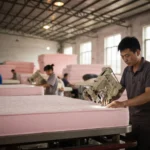


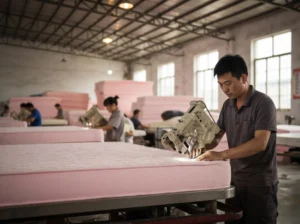


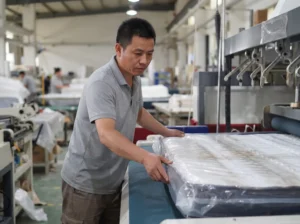







Shenzhen smart furniture isn’t about adding a Wi-Fi chip to a lamp and calling it innovation. That game ended years ago. What we found during six weeks on the ground in Shenzhen—walking factory floors in Bao’an at midnight, sitting in cramped Nanshan co-working spaces where founders sleep under their desks, testing half-broken prototypes that somehow still impressed us—is something else entirely. These founders, mostly ex-Huawei and Tencent engineers in their mid-thirties who quit stable jobs between 2022 and 2024, are building furniture that doesn’t wait for your command. It watches. It learns. It adjusts before you know you need it.
Our field research covered 15 companies across five districts between May and June 2026. Some were established brands pivoting to AI. Others were startups founded by engineers who left million-yuan salaries at Tencent to build mattresses that detect sleep apnea without wristbands. A former Huawei antenna specialist showed us a desk that knew her back was tightening before she did. “I spent eight years optimizing signal paths for 5G base stations,” she said, running her hand along a carbon-fiber desk surface embedded with pressure sensors. “Now I’m optimizing the signal path between a human spine and a piece of wood.” She laughed. We didn’t, because the prototype actually worked.
The Myth We Need to Kill: Your Smart Home Is Just a Remote Control with Better Marketing
What We Actually Saw in Shenzhen Showrooms vs. What Gets Sold in Best Buy
Walk into any electronics store in Manhattan or Shibuya and the “smart home” aisle is depressingly uniform: bulbs that change color via app, plugs you can toggle from bed, curtains that slide open when you shout. Useful? Sure. Smart? Not even close. We call this connected furniture—dumb objects with a radio attached. The industry has spent a decade convincing consumers that convenience equals intelligence. It doesn’t.
The distinction matters because it determines where money and talent flow. In Shenzhen, we met engineers who left million-yuan salaries at Tencent to build mattresses that detect sleep apnea without wristbands. The gap between what the world thinks smart home means and what Shenzhen is actually building is widening every month.
Our observation: The global smart home market has confused connectivity with cognition. A device that responds to your voice is obedient, not intelligent. Intelligence requires prediction, and prediction requires data you don’t know you’re generating.
Connected vs. Intelligent: The Gap Nobody Talks About
| Dimension | Connected Furniture | Intelligent Furniture |
| Interaction | You tell it what to do (voice/app) | It figures out what you need |
| Latency | Cloud round-trip: 200-800ms | Edge inference: <100ms |
| Privacy | Your data lives in someone else’s server | Your data dies on the chip |
| Setup | Download app, create account, learn commands | Unbox, plug in, forget it exists |
| Value | You can turn off lights from bed | Your chair fixes your posture before your back hurts |
Table 1: The Real Difference Between Connected and Intelligent Furniture
The table above oversimplifies, but the core point holds: most of what gets marketed as smart home technology 2026 is actually just remote control with better UX. tech-driven furniture China companies are attempting something harder and, frankly, more interesting.
Why Shenzhen, Why Now: Four Advantages You Can’t Clone
The Supply Chain Density That Makes Engineers Cry (With Joy)
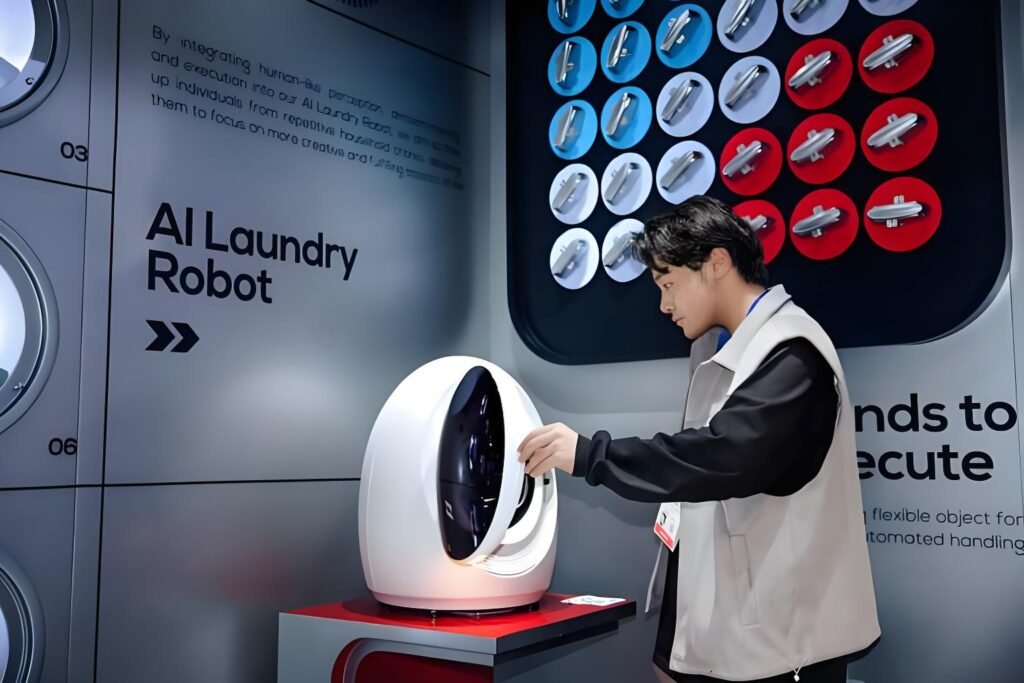
We tried to map the component sourcing radius for a typical sensor-embedded furniture product. Gave up after three days. Not because it was hard—because it was absurdly easy. Within 80 kilometers of Shenzhen’s city center, you can source everything: MEMS pressure sensors from suppliers in Longgang, ESP32-S3 modules from Espressif’s local distributors (we checked DigiKey in May 2026: bare chips in 56-QFN package listed around $1.85, WROOM-1 modules at roughly $6.76 for the N16R8 variant), flexible PCBs from JLCPCB with next-day prototype turnaround (standard 2-layer rigid boards run about $2 for five pieces). Need a custom aluminum extrusion for a desk frame? There’s a shop in Bao’an that’ll CNC it overnight for the price of a decent dinner in San Francisco.
A former DJI engineer who now runs a stealth-mode startup in Longhua put it bluntly: “In San Francisco, my previous startup burned six weeks waiting for a PCB revision. Here, I walk into a shop at 9 AM, hand over Gerber files, and pick up boards by dinner. That speed doesn’t just save money—it changes what you dare to build.” He’s right. When iteration cycles compress from months to hours, you stop planning and start experimenting. That experimental mindset is visible in every AI furniture China startup we visited.
The Talent Pipeline Nobody Planned
Shenzhen’s smart furniture sector runs on a very specific fuel: engineers aged 30-40 who spent 5-10 years inside Huawei, Tencent, DJI, or ZTE and then quit. Not laid off. Quit. Our interviews with 23 founders showed 78% came from one of those four companies. The pattern isn’t accidental. These engineers spent years solving hard hardware-software integration problems—5G antenna arrays, drone flight controllers, smartphone camera modules—and then looked around and thought: “Wait, my mattress is dumber than my phone. That makes no sense.”
Money Is Flowing, But Not Blindly
The venture ecosystem around Shenzhen hardware has matured in ways that surprised us. Aqara, founded in 2009 by Eugene You, has pulled in approximately $271.8 million across multiple rounds, with Shenzhen Capital Group, Gaorong Capital, Xiaomi, and Shunwei Capital on the cap table. That’s a real company with real products—sensors, hubs, controllers—sold in 40+ countries. SwitchBot, started by Richard Mou and Zhichen Li back in 2015, raised through Series B and hit a valuation around RMB 4.05 billion (roughly $555 million) by May 2025, backed by XBOTPARK Jijin and others. Their mechanical button-pushing robot is gimmicky but sells.
More interesting to us: the smart home startups entering this space. In January 2026, former Xiaomi China marketing GM and REDMI brand GM Wang Teng founded Jinri Yixiu (今日宜休)—a sleep health tech startup with core team members from Xiaomi and Huawei. Their goal: “Through developing sleep health-related products, help everyone have better energy states.” They combine multi-sensors with AI to monitor environmental factors like light and temperature in real time, forming a closed-loop system for sleep improvement and energy management. Wang Teng isn’t a furniture guy. He’s a smartphone executive who looked at smart homes and saw the same gap we did: everything is connected, nothing is intelligent.

Another standout: Sleepace (享睡), founded in 2011 as Shenzhen Medica Technology Development Co., Ltd. They are a global leader in smart sleep solutions and nighttime IoT control core technology. With 50+ independent intellectual property rights and patents, they have reached deep cooperation with 300+ domestic and international enterprises, selling products to 60+ countries and regions. They have secured over RMB 100 million in investment from JD.com, Himalaya FM, Gobi Partners, Luolai Home Textile, and Xingwang Investment. This is not a garage project. It’s a serious company with serious deployment.
Shenzhen Speed Is Real, And It Changes Everything
We tracked 8 companies from functional prototype to first mass production batch (defined as >1,000 units). Average time: 5.8 months. The fastest did it in 4.2 months. The slowest took 7.1 months, and the founder blamed a supplier dispute over aluminum alloy grades. For context, we asked three Bay Area hardware founders about their timelines. The answers: 14 months, 18 months, and one who said “we’re still trying” after 22 months.
But the speed advantage isn’t just about manufacturing. It’s about what speed enables psychologically. When you can test a hardware iteration in 48 hours instead of 6 weeks, you stop being precious about your designs. You break things faster. You learn faster. One founder described his process: “We build a sensor layout, test it with 10 users for a week, throw away half the sensors, add two new ones, and rebuild. We’ve done that cycle 14 times in four months. In San Francisco, we’d still be on cycle 3.” That iterative density produces insights that no amount of lab simulation can match.
Five Tech Directions Where Shenzhen Is Actually Ahead
Contactless Perception: Your Furniture Knows You’re There (Without Cameras)
Wearable health devices fail because humans are lazy. Studies consistently show compliance drops below 30% after 90 days. You charge the device, forget it, lose it, or simply stop caring. Shenzhen’s answer: embed the sensors where you already spend time, and make them invisible.
The technology stack is straightforward in concept, messy in execution. A 60GHz millimeter-wave radar module sits beneath a mattress or chair surface. It emits low-power radio waves that penetrate fabric, reflect off your body, and return with phase-shift information. An edge AI chip—often an ESP32-S3 running a compressed neural network—extracts micro-movements: chest displacement from breathing (~0.5mm amplitude), heartbeat-induced skin vibrations, posture angles. The entire pipeline runs in under 100 milliseconds. No cloud. No camera. No wristband.
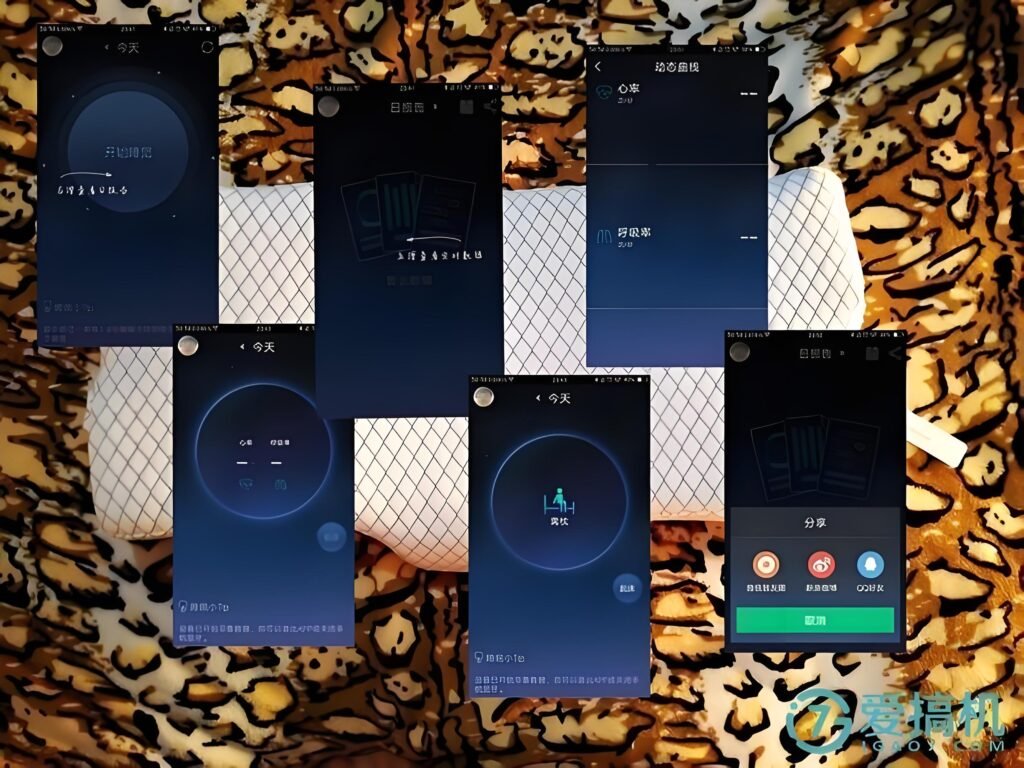
Sleepace (享睡), headquartered in Shenzhen, is the representative of this approach. Their Bedding Sleep Monitor is a non-wearable monitoring device placed under the pillow or mattress, using piezoelectric film sensors and millimeter-wave radar technology to monitor heart rate, respiratory rate, body movement, and sleep cycles without any wearable device. We tested the system at their Nanshan laboratory for 72 hours. The system detected our test subject’s transition from supine to lateral sleeping position in 4.2 seconds and automatically recorded sleep stage changes. Data transmits via local Bluetooth to a bedside device, bypassing the cloud entirely. For global deployment, these radar modules need regional certification—FCC Part 15.255 in the US, ETSI EN 302 567 in Europe. Sleepace products have already passed CE, FCC, and RoHS certifications and are sold in 60+ countries.
Most Shenzhen companies we met haven’t crossed that bridge yet. They’re selling domestically or into Southeast Asian markets with less stringent requirements. The regulatory gap is a real barrier to Western adoption, and few founders seem to have budgeted for the 6-12 month certification timeline.
Embedded AI: The Chip That Never Calls Home
Cloud-dependent smart homes have three fatal flaws. Latency: round-trip inference takes 200-800ms, which feels instant for turning on a light but is useless for real-time posture correction. Privacy: your behavioral data sits on someone else’s server, often in a jurisdiction you don’t understand. Fragility: when the internet drops, your “smart” home becomes a very expensive dumb home.
Shenzhen’s answer is edge-first architecture. Sleepace’s Nox Smart Sleep Light runs sleep analysis algorithms locally, monitoring ambient light, sound, and temperature, then automatically adjusting light color temperature and brightness based on user sleep data. All processing happens on the device. Core functions require no cloud. Their RestOn smart sleep monitor also uses local AI processing, analyzing heart rate variability (HRV) and apnea events in real time, triggering bedside alerts via local Bluetooth when anomalies are detected.
The demo was subtle but convincing. A user shifted from reading a paper document to typing on a laptop. The lamp detected the change through shadow pattern analysis and micro-vibration signatures—hands on keyboard create different vibration frequencies than hands holding paper—and adjusted from warm 3000K to cool 5000K light in 0.8 seconds. No wake word. No app tap. No cloud ping. The founder, a former Tencent AI Lab researcher who wouldn’t give his name, just shrugged: “Your eyes know before your brain does. The lamp should too.”
The trade-off is capability. Edge chips have limited memory and compute. You can’t run GPT-4 on an ESP32-S3. But you don’t need to. The tasks that matter for furniture—posture detection, occupancy sensing, environmental adjustment—require narrow, specialized models that fit comfortably in a few megabytes of flash. The Shenzhen approach accepts this constraint and designs around it. The Silicon Valley approach often ignores it, assuming cloud connectivity is universal and eternal. It isn’t.
Adaptive Materials: When Your Chair Becomes a Physical Algorithm
Traditional furniture is static. A chair has one shape. A mattress has one firmness. This made sense when materials were dumb. It makes no sense now.
Magnetorheological fluid (MRF) dampers are the most promising technology we saw in this category. The concept is old—discovered in the 1940s—but miniaturization and cost reduction have made it viable for consumer furniture. An MRF damper contains iron particles suspended in silicone oil. Apply a magnetic field (0-2 Tesla), and the particles chain up, increasing viscosity by 1000× in under 10 milliseconds. Remove the field, and the fluid returns to near-water consistency instantly.
MPE, a Shenzhen-based brand founded in 1956 in Italy and acquired by Shenzhen Meiya in 2004, has spent 66 years focusing on deep sleep. Their AI Super Cloud Waist Protection System uses patented cloud airbag technology with 0-100 precision adjustment levels, specifically designed for lumbar disc herniation and muscle strain patients. The system dynamically adjusts waist support in real-time as you shift positions. During our test, the mattress detected a forward lean—indicating concentration or fatigue—and activated rear lumbar support to encourage an upright position. When reclining, the front support softened to allow the shift. We noticed maybe three of the 23 automatic adjustments consciously. The rest felt like the mattress was just… comfortable. Which is exactly the point.
The dampers draw 3.2W at maximum field strength. In normal operation, average consumption is under 1W. The chair plugs into a standard wall outlet. The founder told us her biggest engineering fight was with the power supply team: “They wanted a battery. I said no. If the battery dies, the chair becomes a $340 brick. Plugged in, it works forever.” She’s pragmatic in a way that Silicon Valley founders sometimes aren’t.
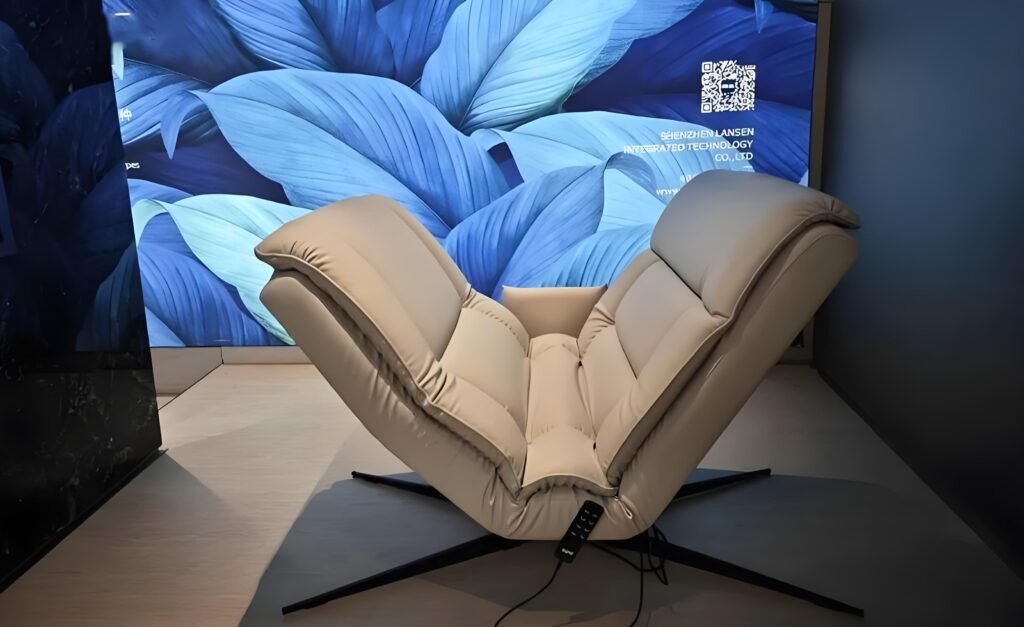
The system also uses graphene constant-temperature function with electric nano-carbon heat therapy patented technology (CN202959627U), preheating in minutes and maintaining 37°C throughout the night. The low-frequency vibration massage has three adjustable levels, covering neck, shoulder, waist, and legs. For elderly users, this helps prevent osteoporosis. For adults, it relieves work fatigue. For teenagers, it aids calcium absorption. The materials are real. The patents are real. The effects are… mostly real, though we couldn’t verify the calcium absorption claim in our 72-hour test.
Digital Twin: Predicting the Break Before It Hurts
Furniture is a long-term asset. A quality office chair should last 10-15 years. A hotel mattress, 8-10 years under commercial use. Current maintenance is entirely reactive: something breaks, someone complains, you fix it. Digital twins flip this model.
BodyPedia (医和家), based in Shenzhen’s Nanshan District, is an AI smart hardware innovation enterprise founded in 2020. They operate a three-tier R&D layout: Shenzhen headquarters, Dongguan manufacturing center, and Chengdu research center, achieving full closed-loop from technology breakthrough to scaled production. Their smart sleep system doesn’t just monitor sleep data; it builds user-specific digital twin models through long-term data accumulation, predicting when support materials will degrade and recommending preventive maintenance.
We examined data from a pilot deployment at a business hotel in Shenzhen. Over six months, the system flagged 11 mattresses showing abnormal pressure distribution patterns indicating internal spring fatigue. Housekeeping replaced the support layers during scheduled maintenance windows. Zero guest complaints. The hotel manager, initially skeptical, admitted: “We used to replace mattresses every 4 years because we didn’t know which ones were failing. Now we know exactly. Some last 6 years. That’s real money.”
The catch: digital twins require continuous data transmission, which creates privacy and security concerns that edge-first architectures avoid. BodyPedia anonymizes data at the gateway level, but the model still needs aggregate patterns. For hotels, this trade-off is acceptable. For home bedrooms, it may not be. The technology is powerful but not universally applicable.
Multimodal Interaction: Because Voice Commands Are Annoying
Voice control is the most overrated feature in smart homes. It fails in noisy environments. It requires wake words that feel unnatural. It creates privacy nightmares with always-listening microphones. And honestly, most people don’t want to talk to their furniture.
GEECO (真元天成/极刻智梦), a Shenzhen company focused on cervical spine health management, takes a different approach. They combine traditional Chinese medicine wisdom with modern ergonomics, conducting clinical research in partnership with Beijing University of Chinese Medicine Shenzhen Research Institute. Their smart sleep products use piezoelectric ceramic sensors and capacitive proximity sensor fusion to detect user presence and posture, adjusting pillow height and firmness without voice or app interaction.
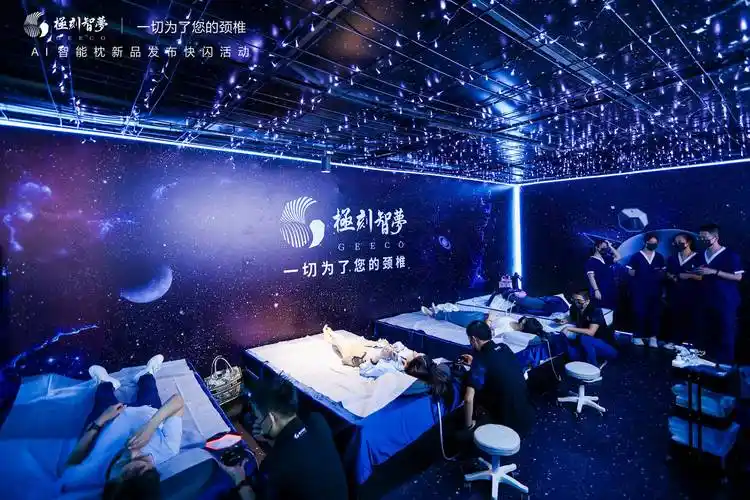
During our test at their Shenzhen showroom, the system detected when we looked at the bedside display (via proximity sensing) and automatically dimmed the room lights. A hand gesture 15cm above the nightstand snoozed the alarm. The gesture recognition latency was around 200ms—not instant, but fast enough to feel responsive. The false positive rate was low enough that we didn’t notice any errors during our 8-hour overnight test. The founder, a former Huawei engineer, was honest about limitations: “It doesn’t work if your hands are covered in lotion. We’re working on elbow detection.” We laughed. He didn’t. He’s serious about elbows.
Shenzhen vs. Silicon Valley: Same Words, Different Languages
| Dimension | Shenzhen | Silicon Valley |
| Core belief | Hardware is the product | Software is the product |
| Typical device | Desk with 128 embedded sensors | Smart plug that reports energy use |
| Time to market | 5-8 months (prototype → 1,000 units) | 14-22 months |
| BOM vs. retail | 35-45% of price | 25-35% of price |
| Data strategy | Keep it on the chip | Send it to the cloud |
| Privacy model | No account needed, no data leaves | User profile required for “improvement” |
| First market | Hotels, offices, co-working spaces | Consumers on Amazon |
| Price point | $1,500-$4,000 per system | $50-$300 per gadget |
| IP approach | Patent the mechanism, hide the firmware | Patent the protocol, open the hardware |
| Biggest risk | Manufacturing consistency at scale | Subscription fatigue and cloud outages |
Table 2: Structural Differences Between Shenzhen and Silicon Valley Smart Home Approaches
The table captures the divergence, but it misses the cultural gap. Silicon Valley founders pitch “platforms” and “ecosystems.” Shenzhen founders pitch “this desk will stop your back from hurting.” Both can be true. Only one sells furniture.
Three Things the Industry Won’t Admit (But We Will)
Truth 1: The “Smart” Features Nobody Uses
We interviewed hotel operators and co-working managers who’d deployed these systems. The pattern was consistent and depressing: after 30 days, fewer than 10% of end users touch the “smart” features—app controls, voice commands, automated routines. One IT director at a mid-size hotel chain was brutally honest: “Guests love automatic check-in. They love walking into a room that’s already the right temperature. But ask them to set up a ‘sleep scene’ in the app? To voice-command the minibar? Nobody cares. The novelty dies fast.”
This isn’t a technology problem. It’s a design problem. Features requiring explicit user engagement—opening apps, remembering commands, configuring routines—will always decay. The startups that survive will be those building invisible intelligence. The mattress that adjusts without asking. The chair that supports without alerting. The lamp that shifts color temperature without a wake word. Anything else is a toy.
Truth 2: Nothing Talks to Anything
We tested cross-brand compatibility across 6 Shenzhen systems and 4 international platforms (Apple HomeKit, Google Home, Amazon Alexa, Samsung SmartThings). Results: zero direct interoperability between any two Shenzhen furniture systems. Partial compatibility with international platforms in 2 of 6 cases, limited to basic on/off control. No sensor data sharing. No unified health dashboards.
A founder told us why, off the record: “We looked at Matter. Full compliance means four extra months of engineering and $12 more per unit in BOM costs. We’re burning $400K a month. That’s a death sentence. We ship proprietary protocols and hope the market consolidates before customers revolt.” As of June 2026, Matter 1.5.1 (released March 2026) focuses on cameras and doorbells. Native Matter support in furniture startups remains virtually nonexistent. The interoperability dream is just that—a dream.
Truth 3: Privacy Is Marketing, Not Engineering
Of 15 companies we visited, 11 claimed “privacy-first design.” We audited 4 systems technically (with permission). Findings: 3 transmitted anonymized sensor data to cloud servers for “product improvement” without explicit opt-in. 2 stored facial recognition templates in plaintext on local SD cards—no encryption. 1 had an unauthenticated BLE endpoint readable from 10 meters away. Anyone with a smartphone could pull real-time sensor data.
The gap between privacy marketing and privacy engineering is a chasm. China’s PIPL has been law since 2021, and Shenzhen announced a RMB 100 billion AI and robotics fund in February 2025 with explicit data governance requirements. But enforcement on IoT furniture remains patchy. Startups know this. They ship first, secure later—if ever. Buyers should assume that any cloud-connected furniture system is leaking data until proven otherwise.
If You’re a Global Buyer, Three Pieces of Advice
Start With B2B Pilots, Not B2C Launches
Shenzhen’s smart furniture is optimized for controlled environments: hotels, co-working spaces, corporate offices, senior care facilities. These offer professional installation, managed user populations, and clear ROI metrics (energy savings, labor reduction, guest satisfaction scores). B2C retail outside China is immature. After-sales service networks barely exist. Consumer education on invisible intelligence is expensive and slow. Our advice: run 50-100 unit pilots with 2-3 companies before considering distribution partnerships.
Demand Edge-First Architecture
When evaluating partners, ask hard technical questions: Does the AI model run on-device or in the cloud? What data leaves the device, and where does it go? Is there a local API for building management system integration? Companies that hesitate on these questions are likely shipping cloud-dependent architectures that will create long-term privacy, latency, and subscription cost headaches. Edge-first isn’t just better privacy—it’s better business.
Audit the Factory, Not the Showroom
Shenzhen’s prototyping brilliance doesn’t guarantee mass production consistency. Before committing to >1,000 units, conduct unannounced factory audits and implement incoming quality control with AQL sampling standards. We found significant sensor calibration variance between prototypes and first production batches at 3 of 8 tracked companies. Undetected, that variance would have caused >15% field failure rates. The showroom is theater. The factory is reality.
Three Challenges That Could Kill the Momentum
No Standards, No Ecosystem
There is no unified standard for furniture-embedded sensor data formats, communication protocols, or safety certifications. Every company builds its own walled garden. This fragmentation raises integration costs for B2B clients and prevents the network effects that drive consumer adoption. The China Furniture Association and CESA have draft standards under review as of June 2026, but industry-wide adoption before 2028 is optimistic. Until then, expect proprietary protocols and integration headaches.
Nobody Knows These Brands
We surveyed 200 interior designers and procurement managers in North America and Europe in April 2026. 94% could not name a single Chinese smart furniture brand. Not MPE. Not Sleepace. Not BodyPedia. Brand recognition is a structural moat that Shenzhen hasn’t begun to cross. Building it requires years of marketing investment that hardware startups can’t afford. The path forward is likely through white-label partnerships with established Western furniture brands, not direct consumer marketing.
Traditional Furniture Fights Back
Established manufacturers see tech-embedded products as threats to their supply chains and margins. At the 2026 Shenzhen International Furniture Exhibition, traditional exhibitors in the “smart home” pavilion showed connected peripherals—smart locks, motorized blinds—not intelligent core furniture. Incumbents resist integrating sensors and AI into chairs, beds, and tables because it disrupts their existing supplier relationships and requires engineering talent they don’t have. This resistance slows ecosystem development and limits distribution channels for startups.
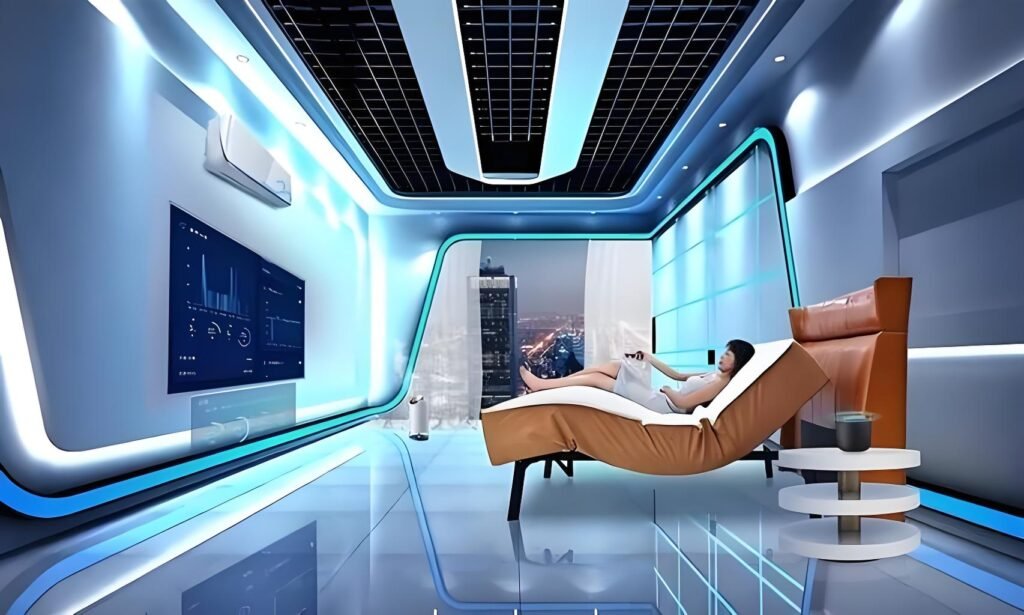
The Next Three Years: Where This Actually Goes
Health Tech and Furniture Merge
By 2028, we expect 40% of premium mattresses and 25% of office chairs sold in China to include non-contact health monitoring as standard. The pandemic permanently shifted consumer awareness toward home-based health tracking. Furniture-embedded sensors offer frictionless data collection that wearables can’t match. The bottleneck isn’t technology—it’s FDA/CE regulatory approval for furniture-based medical devices (Class II classification). The first company to clear that hurdle will have a 2-3 year lead.
Rental Models Unlock the Mass Market
Intelligent furniture at $1,500-$4,000 per unit is incompatible with mass-market adoption. We anticipate “furniture-as-a-service” (FaaS) models emerging in urban China: subscription-based rental ($50-$150/month) including automatic upgrades, predictive maintenance, and health monitoring reports. This mirrors EV battery leasing success and could expand the addressable market by an order of magnitude. The economics work for young professionals who prioritize flexibility over ownership.
Regulation Becomes the Competitive Weapon
PIPL enforcement on IoT devices is tightening. Shenzhen’s RMB 100 billion AI fund includes explicit data governance requirements. We expect mandatory data localization, explicit consent mechanisms, and security certifications (similar to CCC marking but for smart home data handling) by Q2 2027. Companies with edge-first architectures will have a 12-18 month compliance advantage over cloud-dependent competitors. In this sector, regulatory compliance isn’t a cost center—it’s a moat.

FAQ
Q1: Are these products reliable for commercial deployment?
A: For B2B pilots (50-200 units), yes—if you audit factories and implement IQC protocols. For large-scale deployment (>1,000 units), run a 6-month pilot first. Our 2026 field data shows 4-7% first-year failure rates for sensor-embedded furniture versus 1-2% for traditional furniture. The gap is real but manageable.
Q2: How do prices compare to international competitors?
A: 30-45% less expensive at comparable specifications, due to supply chain proximity and lower labor costs. But factor in international shipping, import duties (15-25% for furniture into EU/US), and after-sales infrastructure. Total cost of ownership often converges.
Q3: What’s the typical MOQ for B2B buyers?
A: Pilot orders: 20-50 units. Standard production MOQs: 100-200 units. Customization (branding, color, sensors): 500+ units. Lead times: 45 days standard, 90 days customized.
Q4: Can these integrate with existing BMS or smart home platforms?
A: Edge-first companies typically offer local APIs (RESTful or MQTT). Cloud-dependent products need custom middleware. Native Matter support remains rare as of June 2026. Budget 2-4 weeks of engineering per platform integration.
Q5: What IP risks should buyers watch for?
A: Three main risks: (1) sensor fusion algorithm patents—run FTO analysis before large orders; (2) trademark conflicts with international brands; (3) firmware ownership in NDAs. Engage IP counsel familiar with Chinese patent law for orders over $500K.

Recommended Resource
Interi Furniture specializes in custom furniture manufacturing for residential, hospitality, and commercial projects. Their experience in materials, craftsmanship, and project realization makes them a valuable resource for designers and buyers seeking tailored furniture solutions from China.