









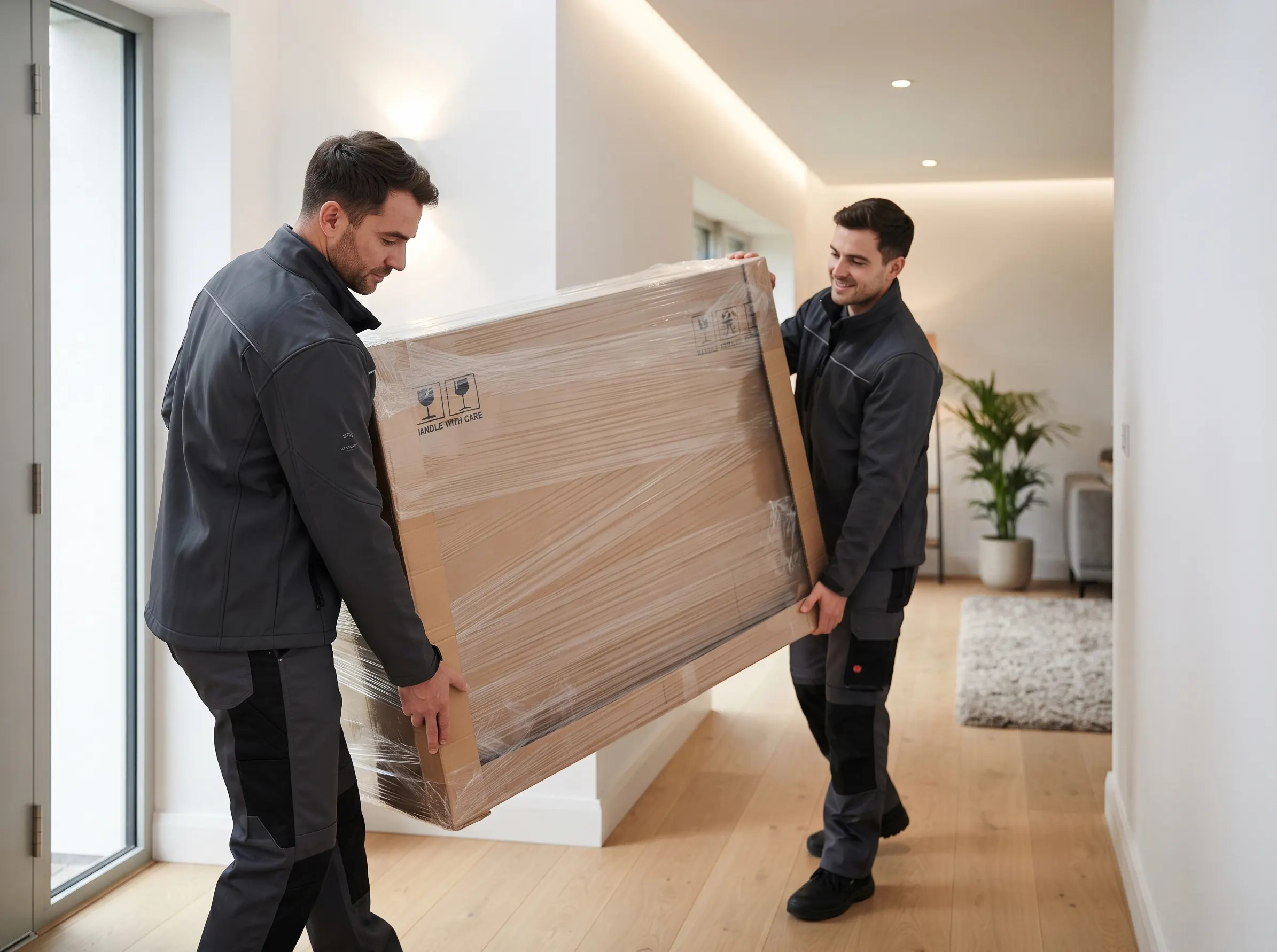
“Free shipping” on furniture is not a gift. It is a pricing maneuver that folds freight, handling, and margin recovery into the sticker price you see. In a category where logistics cost can swallow 15% to 30% of COGS, the banner promising zero delivery fees almost always means you are paying more, not less. We have walked factory floors in Foshan, sat in on freight negotiations in Yantian, and reviewed enough DTC P&Ls to know the truth: the cost does not vanish. It migrates—into higher unit prices, stripped-down packaging, or nonexistent return policies. This article breaks down exactly where that money goes, and how to calculate the real number before you click buy.
The Psychology of the Banner
You see the tag. Bright orange. All caps. Maybe next to a countdown timer. Your brain registers a win. Behavioral economists call this price anchoring with zero-risk framing—the removal of a separate line item creates the illusion of savings. But furniture is not a paperback book. A sectional sofa can weigh 300 pounds and occupy 80 cubic feet. The last-mile delivery alone—truck, driver, fuel, scheduling—runs $80 to $250 per piece in the continental US. White-glove service, which includes in-room placement and debris removal, tacks on another $50 to $150. Someone pays for that. The only question is whether you see the line item.
We have spoken with warehouse managers in North Carolina and 3PL operators in Los Angeles. Their consensus is blunt: freight absorption at the brand level is a fiction. The math gets buried in the SKU.
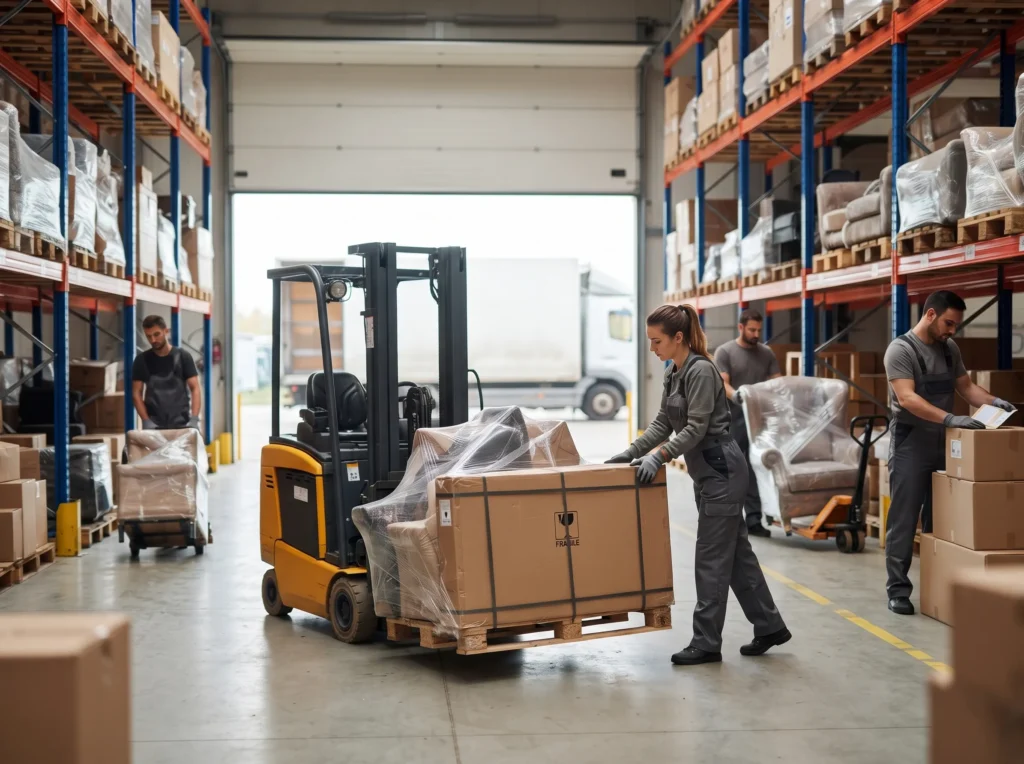
The Three Hidden Models of “Free Shipping” in Furniture E-Commerce
Brands do not all play the same shell game. There are three distinct models, each with its own cost passthrough mechanism.
| Model | How It Works | What You Actually Pay | Typical Markup Passthrough |
|---|---|---|---|
| Price Embedding | Freight, handling, and last-mile costs are baked into the list price before you reach checkout. | A higher base price—often 20% to 40% above the freight-separate equivalent. | Full; every buyer subsidizes the delivery infrastructure regardless of location. |
| Threshold Inducement | Free shipping unlocks only above a spending threshold, pushing you to add throw pillows, side tables, or lamps you do not need. | The marginal cost of unplanned items plus the embedded freight in the original cart. | Partial; high AOV covers logistics while creating deadweight inventory in your home. |
| Membership Subscription | Annual fee programs absorb per-order shipping costs across a subscriber base. | Upfront membership fee plus slightly inflated product prices to protect per-unit margin. | Diluted but locked-in; cancellation friction keeps you paying even when purchase frequency drops. |
For reference only, subject to official verification: Our industry conversations suggest that price-embedded Free shipping models in the mid-market furniture segment carry an average list-price premium of 22% to 38% compared to identical SKUs sold with freight quoted separately.
True Cost Comparison: Free Shipping vs. Paid Delivery vs. Pickup
The sticker price is only half the story. Here is how the total landed cost to your door actually stacks up.
| Cost Component | “Free Shipping” Order | Paid Delivery Order | Warehouse Pickup |
|---|---|---|---|
| Listed Product Price | $1,200 | $950 | $950 |
| Shipping Line Item | $0 | $180 | $0 |
| White-Glove / In-Room Fee | Often excluded; curbside only | Optional; $50–$150 | N/A |
| Tax Base | Higher ($1,200) | Lower ($950–$1,130) | Lowest ($950) |
| Estimated Total Out-of-Pocket | $1,200–$1,320 | $1,130–$1,310 | $950 + fuel/time |
| Return Shipping Liability | Frequently buyer-paid or denied | Usually buyer-paid | Usually buyer-paid |
| Delivery Speed | 7–14 days standard | 5–10 days; express available | Same day or scheduled |
The gap narrows faster than most shoppers expect. When white-glove is added to a paid delivery order, the total sometimes undershoots the “free” option—especially in states with high sales tax, where the inflated tax base of the embedded-price model compounds the damage.
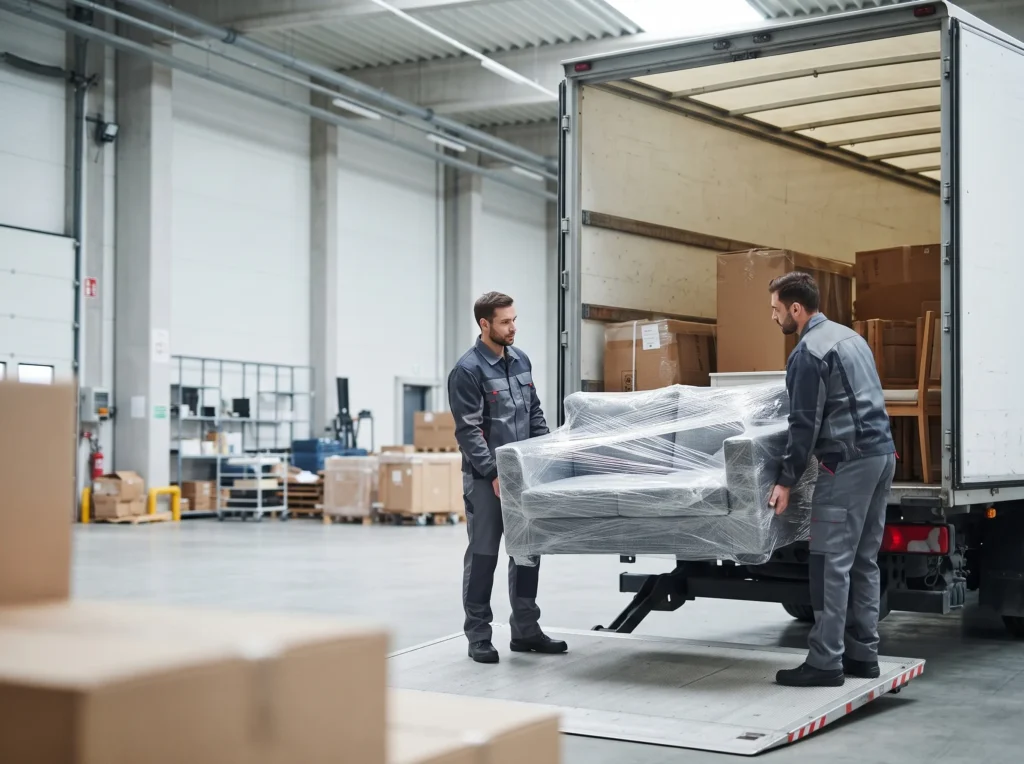
What Gets Cut to Cover “Free”: Product, Packaging, or Service
Here is where the story turns from pricing theory to physical reality. Logistics cost is a zero-sum equation. If the consumer does not see it on the invoice, the brand recovers it somewhere else.
| Cost-Cutting Vector | What We See on the Ground | Buyer Impact |
|---|---|---|
| Product Specs | Thinner plywood substrates, reduced foam density, shorter bolt lengths, elimination of corner blocking. | Structural integrity drops; warranty claims rise 12–18 months post-delivery. |
| Packaging | Single-wall cartons instead of double-wall; less corner protection; removal of inner foam molds; generic strapping. | Damage rate climbs. For reference only, subject to official verification: our field observations suggest curbside-delivery damage rates run 2× to 4× higher on price-embedded free-ship SKUs versus white-glove paid delivery. |
| QC & Assembly | Reduced pre-ship inspection cycles; flat-pack complexity shifted to the buyer; missing hardware kits. | Assembly time increases; defect discovery happens in your living room, not the factory. |
| Customer Service | Offshore chatbots replacing phone support; extended ticket response windows; elimination of post-delivery follow-up. | Resolution of freight damage or missing parts stretches from days to weeks. |
The pattern is consistent. Brands competing on the “free shipping” headline cut where the consumer cannot see—until the box arrives.
Return Economics: Why Free Shipping Orders Are Harder to Return
Returns are where the illusion collapses completely. Furniture is bulky. Reverse logistics—pickup, inspection, reboxing, and either restocking or liquidation—costs 1.5× to 3× the original outbound freight. Brands know this. Their response is predictable.
| Return Policy Feature | Free Shipping Order | Paid Delivery Order |
|---|---|---|
| Return Shipping Cost | Almost always charged to buyer; $150–$400 for large items | Usually charged to buyer; sometimes waived if damage is documented at delivery |
| Restocking Fee | 15%–25% common; “Final Sale” labels frequent | 10%–20%; negotiable if delivery was delayed |
| Damage Claim Window | 24–48 hours post-delivery; strict photo requirements | 48–72 hours; sometimes includes white-glove inspection report |
| Refund Timeline | 14–30 days after warehouse receipt | 7–14 days |
The most aggressive maneuver is the Final Sale pairing. A brand slaps “Free Shipping” and “Final Sale / No Return” on the same product page. You get the dopamine hit of the zero-dollar delivery line. They get the permanent transfer of all reverse-logistics risk. For reference only, subject to official verification: our discussions with US-based furniture fulfillment centers indicate that final-sale SKUs carry damage-claim denial rates roughly 40% higher than standard-return items, suggesting either lower packaging standards or stricter documentation requirements.
The Cross-Border Wrinkle
If you are buying direct from China—whether through a factory on Alibaba, a Taobao agent, or a dropshipper with a Shenzhen warehouse—the free-shipping promise carries additional hidden fees. The headline rate often covers only port-to-port or warehouse-to-warehouse movement. It rarely includes:
- Customs clearance and single-entry bond fees
- Last-mile residential delivery from a US port warehouse
- Liftgate service (essential for palletized furniture)
- Storage fees if you miss the delivery window
- Duties and MPF (Merchandise Processing Fee) that the seller “forgot” to mention
We have seen quotes where the “free shipping” line covers ocean freight to Long Beach, but the buyer gets hit with a $400 invoice from a US forwarder for residential delivery and liftgate. The product price looked competitive. The landed cost did not.
Risk Red Flags: When “Free” Becomes Expensive
Certain combinations on a product page should trigger immediate skepticism.
Free Shipping + Final Sale. This is not a deal. It is a risk transfer. You absorb all freight damage, color mismatch, and dimensional surprise.
Free Shipping + 4–6 Week Lead Time. Extended production windows often signal made-to-order inventory with no domestic stock. The brand is using your capital to fund production while offering “free” freight on a shipment that was never expedited.
Free Shipping + No White-Glove Option. A 200-pound dining table left curbside in a rainstorm is not a delivered product. It is a liability. Curbside-only free shipping shifts the labor, tool, and injury risk entirely to you.
Free Shipping + Vague Carrier Name. If the tracking link shows a generic “local courier” with no phone number, you are likely looking at a gig-economy last-mile handoff with zero furniture-handling training. Damage rates on these lanes are significantly higher than on dedicated furniture freight networks.
Audience-Specific Playbooks
For the Individual Homeowner
Do not compare sticker prices. Compare landed-to-room totals. Build a simple calculator: product price + shipping + tax + white-glove (if needed) + estimated return reserve (10% of product price if the policy is restrictive). Run this for both the “free shipping” SKU and its paid-delivery equivalent. The paid option wins more often than marketing departments want you to know.
For the Small Hospitality Operator
Your unit economics are volume-sensitive. A “free shipping” threshold may look attractive for a 20-room refresh, but calculate the deadweight cost of filler items purchased solely to clear the threshold. We have seen boutique hoteliers buy $800 in decorative accessories they did not need to unlock “free” delivery on a $3,200 furniture order. The accessories gathered dust. The freight was never free.
For the Interior Designer or Project Procurement Lead
Evaluate the supplier’s logistics policy as a core selection criterion, not an afterthought. Ask for the freight-allocation methodology in writing. If the brand cannot explain how shipping is priced into the SKU, assume it is priced in poorly—and that corners are being cut on QC or packaging to protect margin. Request a sample shipment with full white-glove documentation before committing to a full project order.

Frequently Asked Questions
Is free shipping really just the shipping cost hidden in the price?
In most cases, yes. Furniture is a low-margin, high-cube category. There is no pool of surplus margin to absorb $200 in last-mile delivery without recovery. The cost is either embedded in the SKU price, recovered through threshold-induced over-purchasing, or subsidized by a membership fee you paid upfront.
Why does my free shipping furniture arrive damaged more often?
Because packaging is one of the first places brands cut when freight costs are buried in the price. Double-wall cartons, corner protectors, and foam molds are expensive. A brand optimizing for a “free shipping” headline has an incentive to minimize packaging cost, which raises the probability of freight damage—especially on curbside deliveries without white-glove handling.
Can I return free shipping furniture if I do not like it?
Sometimes, but it is expensive. Most brands charge you for return freight on large items, which can run $150 to $400. Others mark the item “Final Sale,” which means no return at all. Always read the return policy before buying, and treat “Free Shipping + Final Sale” as a high-risk combination.
Is it cheaper to buy from China with free shipping?
Rarely. “Free shipping” from China usually covers only a portion of the journey—often to a US port or forwarder warehouse, not your door. The remaining last-mile fees, customs charges, and liftgate services frequently appear as separate invoices. Calculate the full door-to-door cost before comparing against a domestic supplier.
Does paying for delivery guarantee better service?
Not automatically, but it improves the odds. When shipping is a visible line item, brands have less incentive to hide logistics cost inside product quality. Paid delivery orders are more likely to include real-time tracking, dedicated furniture carriers, and accessible customer service. The correlation is not perfect, but it is strong enough to factor into your decision.
What Is Your Experience?
We have laid out the math and the mechanics. Now we want to hear from you. Have you been burned by a “free shipping” furniture order that arrived damaged, could not be returned, or ended up costing more than a paid-delivery alternative? Drop your story or a specific logistics scenario you are trying to navigate—we read every one, and we use them to sharpen our next investigation.
Recommended Resource
Interi Furniture specializes in custom furniture manufacturing for residential, hospitality, and commercial projects. Their experience in materials, craftsmanship, and project realization makes them a valuable resource for designers and buyers seeking tailored furniture solutions from China.