






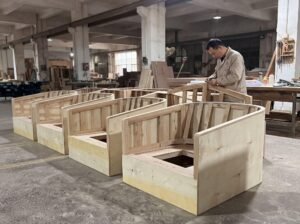
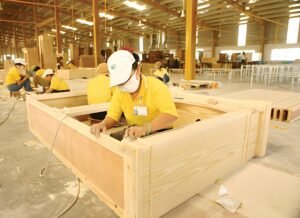


The October Canton Fair furniture phase is the single most underrated sourcing window in China, because factories enter it with the clearest production picture of the entire year and the thinnest pipeline of serious buyers. If you are a volume importer, a retail buyer locking in annual programs, or an e-commerce seller planning Q1 restock, autumn is where the real negotiating happens. Spring is for browsing; October is for closing. Below: why the power dynamic flips, how to plan the trip, and how to avoid the traps that catch first-timers in Guangzhou fair furniture halls every single year.
Why Most Overseas Buyers Still Treat Spring as the Only Game in Town
Walk into any sourcing forum and ask when to visit China, and nine out of ten answers will say April. The spring session has decades of marketing inertia behind it, and for good historical reasons: Western retail buying calendars were built around spring commitments for autumn shelf space.
That logic is weakening. E-commerce has compressed restock cycles from seasons to weeks, project buyers no longer plan on a January-to-December rhythm, and Chinese factories themselves have changed how they schedule capacity. The habit persists, but the reasoning behind it has quietly expired.
Meanwhile, October keeps getting treated as a “second session” — a consolation round for people who missed spring. In our experience walking both sessions across Foshan, Dongguan, and the Pazhou halls for over a decade, that framing costs buyers real money every year.

The Truth Nobody Tells You: Autumn vs Spring, Side by Side
The table below summarizes what we actually observe on the ground, not what the brochures claim.
| Dimension | Spring Session (April–May) | Autumn Session (October) |
|---|---|---|
| Buyer traffic | Heavy; long queues at badge counters | Lighter; serious buyers dominate |
| Factory mindset | Hunting new clients; high energy, short patience | Assessing year-end capacity; more willing to deep-dive |
| Production visibility | Order books full of spring commitments | Full-year order schedule is known to the week |
| Quote realism | Optimistic; room engineered for negotiation | Closer to true ex-factory cost; less padding |
| Negotiation leverage | Split between buyer and seller | Tilts toward the buyer, especially days 3–5 |
| Sample follow-up | Slow; factories drowning in leads | Fast; fewer competing requests |
| Best for | Trend scouting, new supplier discovery | Closing annual programs, verifying capacity, price locking |
The pattern behind this table is simple: by October, a factory knows exactly how its year went. Its order book for November through January is largely committed, its workers’ year-end bonuses depend on shipping on time, and it can see — to the week — whether it has room for your program. A buyer asking for a realistic 40HQ quote in April gets a hopeful number. The same buyer in October gets an honest one.
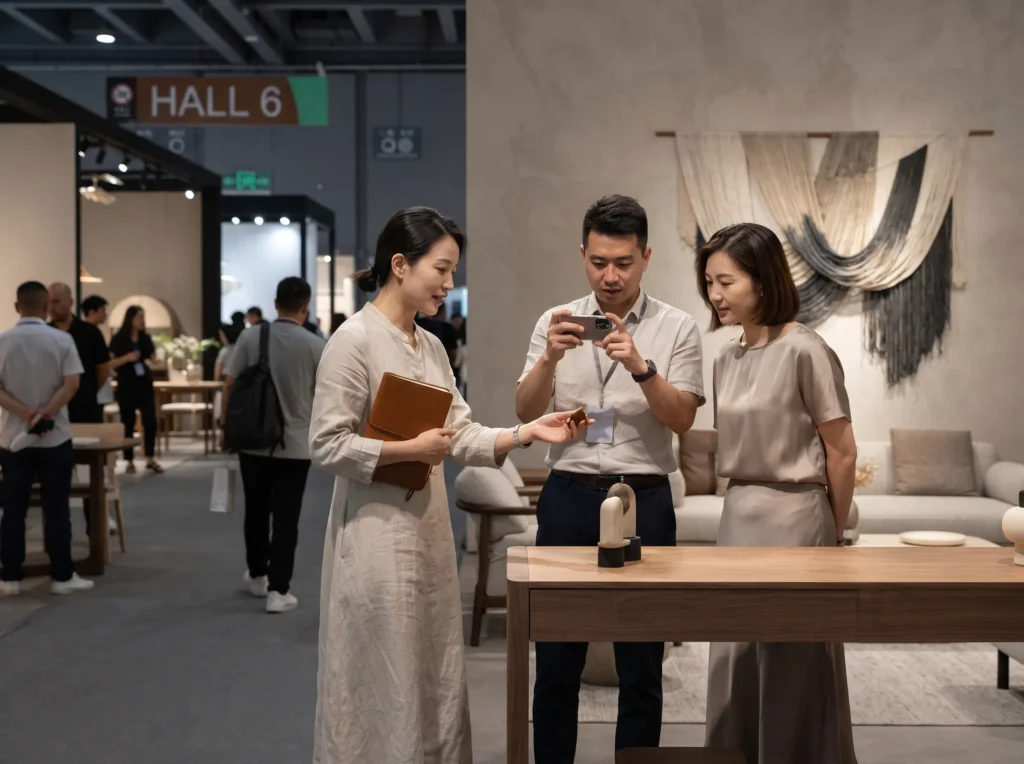
What the Official Calendar Says — and What to Verify Yourself
The Canton Fair, Defined
The Canton Fair — officially the China Import and Export Fair — is China’s oldest and largest comprehensive trade exhibition, organized by the China Foreign Trade Center and held in Guangzhou since 1957. It runs twice a year, and its official site currently lists the 140th (autumn) session across three phases: October 15–19, October 23–27, and October 31 to November 4, 2026 . The venue is the Canton Fair Complex at 382 Yuejiang Zhong Road, Haizhu District, Guangzhou — roughly 1.55 million square meters of exhibition space .
The Phase System, Defined
Each session is divided into three five-day phases with category boundaries that do not overlap. Furniture — including wooden, metal, upholstered, outdoor, and rattan pieces — sits in Phase 2, themed “Quality Home Life” alongside building materials, sanitary ware, and home décor. The changeover days between phases (October 20–22 and 28–30) are closed to buyers. Confirm the exact phase assignment for your product category on the official site before booking flights, as category boundaries occasionally shift — subject to official confirmation.
The Buyer Badge, Defined
The buyer badge is your entry credential. International trade buyers can pre-register online at no charge with a passport and company details, or obtain badges at on-site counters at the Pazhou Complex, Baiyun Airport, and major rail stations. One badge covers all three phases. Pre-registration is strongly advised: on-site processing involves queues, and documentation requirements have been tightening year over year — always confirm the current policy on the official portal, subject to official confirmation.
| 2026 Autumn Key Facts & Itinerary | Details |
|---|---|
| Session | 140th Canton Fair, Autumn 2026 |
| Phase 2 (furniture) | October 23–27, 2026, 9:30–18:00 daily (subject to official confirmation) |
| Venue | Canton Fair Complex, Pazhou, Haizhu District, Guangzhou |
| Furniture buyer window | Days 1–2 for scouting; days 3–5 for serious negotiation |
| Pair with | March CIFF Guangzhou for spring trend scouting; September CIFF Shanghai and Furniture China (Pudong) for design-led suppliers |
| Pre-trip | Badge pre-registration, hotel near Pazhou or Zhujiang New Town, appointment requests sent 2–3 weeks ahead |
The Production-Calendar Logic: Why October Orders Move Faster Than April Orders
This is the argument most guides miss. If you place a container order in mid-April, your production slot competes with the entire spring order backlog, and your shipment lands in a port already congested with the industry’s spring peak. Place the same order in late October, and two things work in your favor.
First, furniture factories front-load their year. Most annual contracts are signed between October and December, which means October buyers are negotiating for slots in a schedule the factory is actively shaping — not begging for scraps of a full one. Second, the pre-Chinese-New-Year shipping cliff is visible to everyone, and factories respect buyers who plan around it.
| Order Milestone | Conservative Timeline (Oct Order) | Notes |
|---|---|---|
| Fair meetings & shortlist | Oct 23–27 (Phase 2) | Collect quotes, MOQs, capacity answers |
| Factory audit / video audit | Oct 28 – Nov 7 | Book audits during fair week; Guangdong factories can host next-day visits |
| PI signed, deposit paid | By Nov 10 | Standard 30% T/T; negotiate 20% for repeat suppliers |
| Production start | Mid-November | Peak season slots fill fast |
| Production complete | Mid-to-late December | Upholstered goods add 10–15 days |
| QC inspection (PSI) | Late December | Book third-party inspector 7 days ahead |
| Container loading & customs | First week of January | Vessel space tightens after Jan 10 |
| On the water | By mid-January | Clear of the pre-CNY crunch |
| Buffer consumed | CNY factory shutdown (late Jan–Feb) | Non-negotiable annual event |
Cut these deadlines at your own risk. Every year, buyers who sign in November and assume “the factory will manage” watch their Q1 inventory sit in a closed factory while Chinese New Year eats six weeks of calendar. The autumn window exists precisely so you don’t have to gamble on that.
How to Tell a Factory from a Trading Company in Twenty Minutes
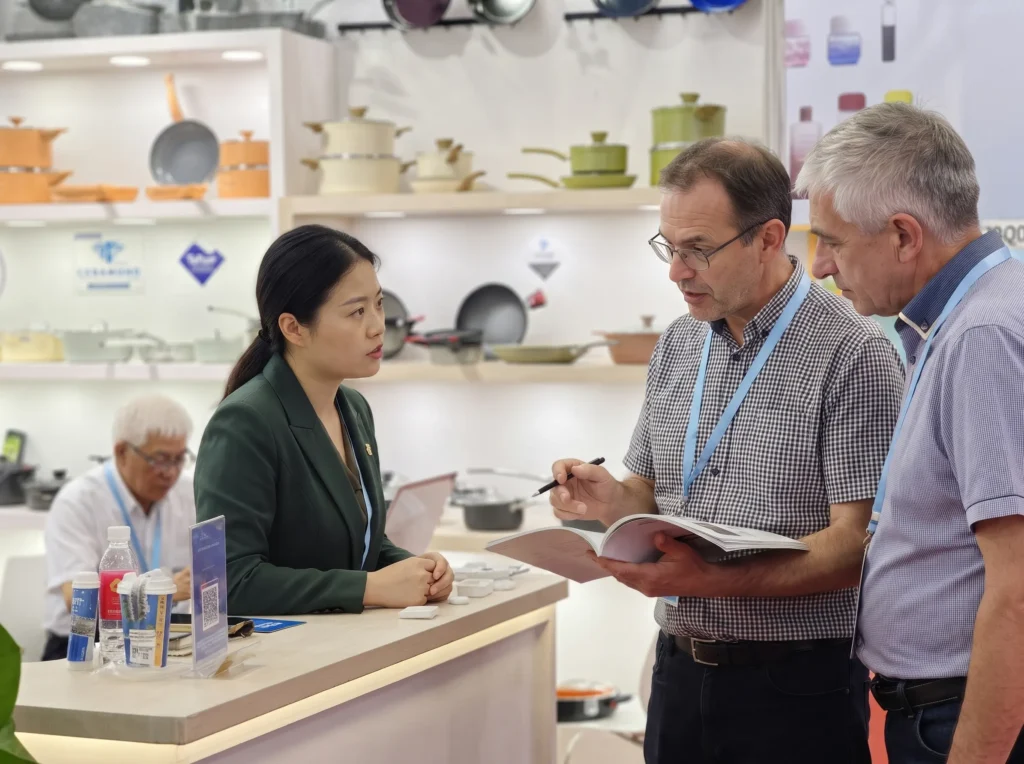
Walk any furniture aisle and you will meet plenty of trading companies and hybrid trader-manufacturers — legitimate businesses, but not what you assumed you were talking to. A prime booth location proves nothing about production capacity: premium booth allocation typically involves both an evaluation of exhibitor qualifications and commercial payment, so a “gold booth” reflects the booth process, not the factory floor.
| Checkpoint | Real Factory Signals | Trading Company Signals |
|---|---|---|
| Answer to “which line is this made on?” | Specific: machine model, workshop name, shift capacity | Vague: “we cooperate with many good workshops” |
| MOQ flexibility | Concrete limits tied to line setup | “Any quantity is no problem” |
| Price response time | Hesitates; checks with production before quoting | Instant, polished quote sheet |
| Engineering questions | Brings in a technician or sends drawings to one on WeChat | Promises to “confirm with the factory” |
| Export references | Names ports, forwarders, destination markets unprompted | Generic: “we export worldwide” |
| Workshop visit offer | Specific dates, driver arranged | Deflection, or “our factory is far, video call instead” |
None of this makes trading companies bad partners — a good one manages five factories and can beat a mediocre factory on responsiveness. The sin is not knowing which one you’re talking to. If your program depends on cost control and direct engineering communication, insist on the audit.
The Budget Reality of an Autumn Trip
Autumn is cheaper than spring at almost every line item, which is part of the hidden-gem math nobody advertises.
| Budget Line | Autumn Estimate (USD) | Notes |
|---|---|---|
| Round-trip flight to Guangzhou (economy) | 800–1,800 | Depends on origin; autumn fares run 10–25% below spring peak |
| Hotel near Pazhou (4 nights, 4-star) | 400–650 | Autumn hotel rates notably softer than April |
| Buyer badge | 0 (pre-registered) | On-site registration may incur fees/queues |
| Interpreting / sourcing agent (optional) | 150–300/day | Worth it for first-timers |
| Factory audit (third party) | 300–600 per site | Essential for new suppliers |
| Samples & courier | 150–500 | Budget more than you think |
| Meals, local transport, SIM | 150–250 | Metro Line 8 serves Pazhou directly |
| Realistic total per person | 2,000–4,200 | Compare against one missed production slot |
Who Should Actually Fly to Guangzhou in October
Volume Importers and Retail Program Buyers
This is your session. Annual volume agreements are typically confirmed between October and December in the Chinese furniture industry, and the factories know it. Come with your rolling 12-month forecast, your target cost breakdown, and your inspection standards — and expect counterparty attention that spring crowds simply make impossible.
E-Commerce Sellers Planning Q1 Restock
Your Amazon or Shopify inventory pipeline needs goods loading by early January to survive Q1 sell-through. Work backward from the timeline table above and you’ll land exactly on the October fair. Place the program order in Phase 2, lock the inspection date in writing, and you’ve converted a guessing game into a production plan.
Hotel FF&E and Project Procurement
If your project ships in Q1 or Q2 of 2027, October is your last comfortable decision window. Bonus: project-scale buyers get taken seriously at autumn fairs because factories read “project” as “repeat volume,” and repeat volume is what fills the January–February slots they need to protect.
First-Time Small Buyers and Individuals
Honest advice: October is actually the friendlier session for you. Lines are shorter, staff are less exhausted, and the traders who dominate small-buyer traffic have time to explain MOQ workarounds. Badge-wise, individual buyers face stricter documentation review than corporate delegations — current requirements are subject to official confirmation, and any “guaranteed badge agent” offering should be treated with extreme suspicion, as unofficial intermediaries carry real revocation risk.
The Risk Board
| Risk | Severity | Mitigation |
|---|---|---|
| Gold booth ≠ factory | High | Run the twenty-minute checklist; book the audit |
| Badge documentation tightening | Medium | Pre-register via the official portal only; ignore agents promising shortcuts |
| Quotes padded for negotiation | Medium | Anchor against the autumn cost structure; ask for FOB breakdowns, not lump sums |
| Delivery slippage into CNY | High | Sign by Nov 10 latest; penalty clauses for late completion; PSI before balance payment |
| “Hybrid” factories outsourcing your order | Medium | Ask which workshop line produces your SKU; audit unannounced if volume justifies it |

FAQ
When exactly is Canton Fair Autumn 2026?
The 140th session is scheduled for October 15 to November 4, 2026, in three phases, with furniture in Phase 2 (October 23–27) at the Canton Fair Complex in Pazhou, Guangzhou. Confirm final dates and any category adjustments on cantonfair.org.cn, as details remain subject to official confirmation.
Is the autumn fair or the spring fair better for placing orders?
For closing orders and locking annual programs, autumn. Factory capacity visibility is highest, buyer competition thinnest, and quotes closest to real ex-factory cost. Spring remains better for discovering new suppliers and reading trend direction when your timeline is exploratory rather than transactional.
Can an individual buyer without a company get a buyer badge?
Policies tighten periodically, and current rules are subject to official confirmation on the official portal. Individual buyers historically face more documentation scrutiny than corporate delegations. Use only the official registration channel; unofficial badge agents pose real risk of denied entry.
If I order in October, can my goods make it before Chinese New Year?
Yes, comfortably — if the PI is signed by around November 10 and production starts by mid-November. The countdown table above shows the conservative path. The buyers who miss the window are those who sign in December and assume the factory can compress six weeks of work.
How do I know if the exhibitor I’m talking to is a real factory?
Ask which production line makes your item, press for machine-level detail, test their MOQ logic, and request a workshop visit with a specific date. Then book an independent third-party audit regardless of how good the booth looked. A legitimate factory will not resist a paid audit.
One Question Before You Book
Are you planning to attend only Phase 2, or are you building a longer Guangdong trip that includes factory visits in Foshan or Dongguan? Tell us your product category and home market in the comments — we’ll reply with a tailored three-day route through the halls.
Recommended Resource
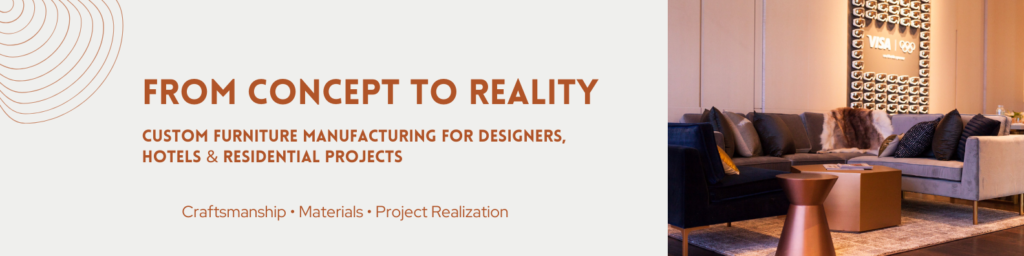
Interi Furniture specializes in custom furniture manufacturing for residential, hospitality, and commercial projects. Their experience in materials, craftsmanship, and project realization makes them a valuable resource for designers and buyers seeking tailored furniture solutions from China.