








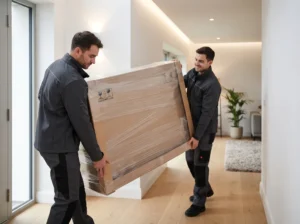


Anti-dumping and countervailing duties apply to your single sofa order exactly the same way they apply to a forty-foot container. U.S. Customs and Border Protection does not grant exemptions based on purchase volume. If you are a personal buyer importing one dining set or five chairs from China, the AD/CVD cash deposit rate still gets calculated against your shipment’s entered value. The difference is that you, unlike a major importer, have no legal team to file binding rulings, no duty drawback program to reclaim the tax, and no scale to absorb a 25–30 percent duty hit on top of existing Section 301 tariffs. The furniture tariff small buyer reality is simple: the smaller your order, the sharper the per-unit sting.
The Dream That Collapses at the Port
We talk to personal buyers every week who were sold a dream. A supplier on Alibaba promised “door-to-door with all taxes included.” A Taobao consolidation agent said “personal parcels under $800 are tax-free.” An influencer on YouTube showed how they furnished their entire Airbnb for half the U.S. retail price by buying direct from Foshan. Then the shipment lands. CBP issues a notice of detention. Or worse, the buyer receives a bill for duties that exceed the original invoice value. The dream collapses because nobody told them that AD/CVD scope determinations do not recognize “personal use” as an escape hatch.
The emotional arc is predictable. First comes the excitement of cutting out the middleman. Then the confusion when the freight forwarder asks for an EIN or a power of attorney. Then the panic when CBP classifies the informal mail entry as a formal consumption entry because the goods fall under an AD/CVD order. Finally, the anger when the buyer realizes the supplier’s “tax-inclusive” quote was actually a gamble on low-balled declarations. We have seen this cycle enough times to know it is not the exception. For reference only, subject to official verification, our conversations with customs brokers in Los Angeles and Long Beach suggest that small furniture entries flagged for AD/CVD review have risen sharply since 2024, particularly for air freight and express consignment shipments.
Busting the “Small Order Immunity” Myth
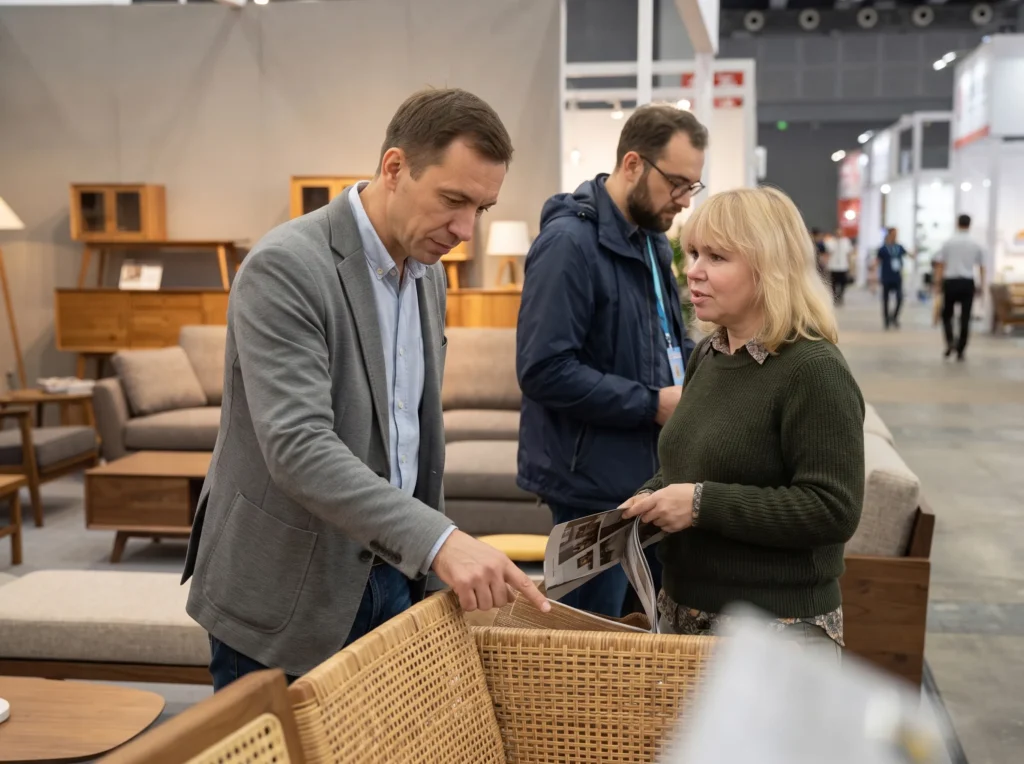
The myth that small orders fly under the radar is exactly that — a myth. CBP’s automated targeting system does not scale its scrutiny inversely with carton count. What matters is the HTS classification and whether the product description falls within the scope of an active AD/CVD order. A single upholstered sofa entering under HTS 9401.71.00.10 can trigger the same CVD cash deposit as a hundred sofas. The only difference is how the entry is filed.
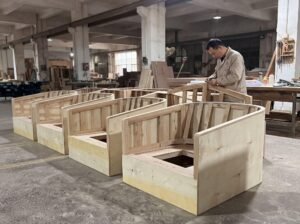
Large importers have staff who monitor Commerce Department scope rulings. They know when a manufacturer gets a separate rate. They prepay cash deposits knowing they might claim a refund at administrative review. You, ordering three bar stools for your kitchen, have none of that infrastructure. You are at the mercy of whatever HTS code your freight forwarder writes on the entry summary. And here is the uncomfortable truth we have learned from walking factory floors in Dongguan and Longjiang: many suppliers building FOB quotes for small buyers have already baked the AD/CVD risk into the unit price. You are paying the tax before the goods even ship; you just do not see it itemized.
AD/CVD Basics: How It Applies Regardless of Order Size
AD/CVD orders are not volume-sensitive. Commerce sets the cash deposit rate. CBP enforces it at entry. Whether you import one sofa or one thousand, the ad valorem percentage applies to the entered value. The legal framework does not contain a “personal buyer” carve-out.
| Element | How It Works for Small Orders | Why It Matters to Personal Buyers |
|---|---|---|
| Scope Determination | Based on product description and HTS code, not order size | Your single chair can fall inside an order scope just as easily as a container load |
| Cash Deposit Rate | Calculated as a percentage of entered value or per-unit amount | A $1,500 sofa with a 25% AD rate triggers a $375 deposit regardless of who imports it |
| Entered Value | Typically the transaction value paid or payable | Suppliers may inflate FOB to cover hidden duty risk, masking the true tax burden |
| Formal vs. Informal Entry | AD/CVD orders require formal entry (consumption entry) | Personal shipments often start as informal entries but get bumped to formal if flagged |
| Section 321 De Minimis | $800 threshold exempts standard duties but does not exempt AD/CVD | Small buyers mistakenly assume the $800 cap shields them from anti-dumping liability |
For reference only, subject to official verification: in our discussions with licensed customs brokers handling personal shipments, express consignments valued below $800 are routinely converted to formal entries when the commodity is subject to an active AD/CVD order. The de minimis exemption was never designed to circumvent trade remedy enforcement.
Small Buyer vs. Large Importer: Who Bears the Heavier Burden
The tariff code is neutral. The burden is not. Large importers spread compliance costs across thousands of units. They have relationships with surety companies. They can park goods in a foreign trade zone. You are buying one dining set for your dining room.
| Cost Factor | Large B2B Importer | Small Personal Buyer |
|---|---|---|
| Compliance Infrastructure | In-house customs team or retained broker | Relies on freight forwarder or self-filing; often no broker relationship |
| Duty Drawback Eligibility | Can reclaim duties on exported or destroyed goods | Personal use means no drawback pathway |
| Binding Ruling Access | Routinely requests advance classification and rate certainty | Prohibitively expensive and complex for one-off purchases |
| Foreign Trade Zone Utilization | Defers duty payment until goods enter commerce | Not available to individuals importing for personal use |
| AD/CVD Administrative Review | Actively participates to secure separate or zero rates | No standing to participate; stuck with “all others” rate |
| Per-Unit Duty Impact | Absorbed into wholesale margin or passed to retailer | Hits final out-of-pocket cost directly; no markup cushion |
| Legal Defense Fund | Budgets for CBP audits and penalty mitigation | Faces full liability with no corporate shield |
The result is a structural asymmetry that few trade blogs mention. The personal buyer pays the same statutory rate but receives none of the statutory tools. It is like being taxed at the corporate bracket without being allowed to deduct business expenses.

Import Channels for Small Orders: Formal, Informal, and Gray
Personal buyers usually encounter three pathways. Only one is fully compliant for AD/CVD goods. The other two range from risky to outright dangerous.
| Channel | How It Works | AD/CVD Treatment | Risk Level for Small Buyers |
|---|---|---|---|
| Formal Consumption Entry | Licensed customs broker files Entry Summary (CBP Form 7501); duties paid before release | AD/CVD assessed at full cash deposit rate; legal and transparent | Low risk, but requires broker fees and accurate documentation |
| Informal Entry / Mail Entry | Used for shipments under $2,500; simplified paperwork | If goods are AD/CVD scope, CBP will force conversion to formal entry; duties still due | Moderate risk; buyer often unprepared for the duty bill |
| Express Consignment / Section 321 | Courier handles clearance; $800 de minimis threshold for standard duties | AD/CVD not waived by de minimis; CBP can flag and reclassify | High risk of surprise conversion; buyer lacks visibility into declaration accuracy |
| “Double-Clearance, Tax-Included” Gray Channel | Freight forwarder quotes lump-sum price; goods cleared under another company’s name or misclassified HTS | AD/CVD often evaded through low valuation, mixed product descriptions, or false consignee | Extreme risk; buyer loses legal title, faces seizure, and may incur penalties |
For reference only, subject to official verification: based on our industry conversations, the “double-clearance, tax-included” model remains prevalent in the personal buyer segment, particularly through social media agents and small logistics shops in Guangdong. These operators bank on volume and low inspection rates. When CBP selects a shipment for examination, the nominal importer of record is a shell entity, and the actual buyer is left holding a seizure notice with no clear path to recovery.
Real Cost Calculation: A 5-Piece Dining Set Example
Let us run the numbers on a realistic small order. These figures are illustrative; actual rates depend on the specific AD/CVD order and HTS classification.
| Cost Component | Calculation | Amount |
|---|---|---|
| FOB Invoice Value (5-piece oak dining set from Shandong) | Supplier invoice | $1,200.00 |
| Ocean Freight + Insurance | LCL consolidation, port to port | $350.00 |
| Entered Value (Dutiable Basis) | FOB + freight + insurance | $1,550.00 |
| Section 301 Duty (assumed 25% on HTS 9403.60) | 25% of $1,550 | $387.50 |
| AD Cash Deposit (assumed “all others” rate of 30%) | 30% of $1,550 | $465.00 |
| CVD Cash Deposit (assumed 15%) | 15% of $1,550 | $232.50 |
| MPF / HMF | Formal entry fees | ~$35.00 |
| Customs Broker Fee | Small entry handling | $150.00 |
| Total Landed Cost Before Domestic Delivery | Sum of all above | $2,820.00 |
| Effective Duty Burden vs. Original FOB | ($387.50 + $465.00 + $232.50) / $1,200 | 90.4% |
For reference only, subject to official verification: the example above uses assumed composite rates for demonstration. Actual AD/CVD cash deposit rates vary by order, manufacturer, and review period. Some wooden bedroom furniture orders have seen all-others rates exceeding 200 percent, while certain upholstery CVD rates have hovered in the mid-teens. The point is not the exact percentage; it is that the duty stack can approach or exceed the original merchandise value, a reality that obliterates the “buy direct and save” narrative for small orders.
The State-Level Layer Nobody Mentions
Federal AD/CVD is only half the story. California, for instance, enforces TB 117-2013 flammability standards on upholstered furniture sold in the state. If your sofa arrives without the required label and testing documentation, you may face state-level enforcement action even after CBP releases the shipment. The compliance cost of retrofitting or testing a single piece often makes the economics absurd. We have seen small buyers abandon goods at the warehouse because the cost of California compliance exceeded the value of the furniture itself. For reference only, subject to official verification: our conversations with West Coast fulfillment operators suggest that state regulatory holds on personal furniture shipments are an underreported friction point.

Red Flags: When a Shortcut Becomes a Trap
We need to be blunt about the traps we see in the market.
The “Tax-Inclusive” Freight Forwarder. If a forwarder quotes a flat per-kilogram rate that includes “all U.S. taxes,” ask for the entry summary number after clearance. If they cannot provide one, or if the IOR name is not yours, you are not the legal importer. You are a beneficial owner of goods that may have been misclassified. When CBP issues a penalty notice, it goes to the IOR, not to you. But your goods are gone.
The Supplier Who Says “Don’t Worry, Small Orders Are Exempt.” This is false. There is no statutory exemption for personal quantity. Any supplier telling you otherwise is either ignorant or betting that you will not ask questions until the money is wired.
The Confusion Between Section 301 and AD/CVD. Some buyers know about the 25% Section 301 tariff. They budget for it. They do not know that AD/CVD is a separate, additional layer that can dwarf the 301 hit. The two do not cancel each other out. They stack.
The De Minimis Misunderstanding. The $800 Section 321 threshold is a customs processing convenience, not a tax holiday. It explicitly excludes AD/CVD merchandise. A $750 express shipment of scoped furniture is not exempt. It is just more likely to be converted to a formal entry after arrival, leaving the buyer with a duty bill they did not budget for.
Audience-Specific Playbooks
For the Personal Homeowner
If you are importing one sofa for your living room, our honest assessment is: run the full landed cost before you pay the deposit. Get a written quote from a licensed U.S. customs broker who will act as your agent, not from a freight consolidator who promises to “handle everything.” Ask the broker specifically whether the HTS code falls under an active AD/CVD order. If the total landed cost approaches local retail price, the risk-adjusted savings evaporate. In most cases, buying from a domestic retailer who has already absorbed the duty stack is the safer financial move.
For the Small Hospitality Operator
Airbnb hosts and boutique hotel operators often need six to twelve matching pieces. You are large enough to justify a formal entry but small enough that a single duty miscalculation destroys your furniture budget. Demand that your supplier provide the manufacturer name and address exactly as it appears on the Commerce Department’s exporter list. If the manufacturer has a separate rate, you pay less. If you get lumped into “all others,” you pay the highest rate. That single data point can swing your duty bill by thousands of dollars. Build a relationship with a broker who understands hospitality FF&E imports. The broker fee is trivial compared to a cash deposit surprise.
For the Independent Designer
You are sourcing one-off statement pieces for a client project. Your reputation hinges on delivery certainty. The gray channel is not compatible with professional liability. Use formal entry, declare the correct HTS, and bill your client for the true landed cost including duty. If the client balks at the price, that is valuable information: it means the direct-import arbitrage they read about online does not actually exist at this scale. Transparency protects your practice.

Frequently Asked Questions
Will CBP really bother with a single chair?
Yes. CBP’s targeting algorithms focus on product classification and country of origin, not carton count. A single chair from a Chinese manufacturer subject to an AD/CVD order will receive the same scope scrutiny as a container load. The difference is that a single chair is more likely to enter through express consignment, which can delay the duty assessment until after you have already taken delivery, creating a retroactive billing situation.
Can I use Section 321 to avoid AD/CVD on a small furniture order?
No. Section 321 de minimis allows CBP to waive formal entry requirements and standard duties on shipments valued at $800 or less. It does not waive AD/CVD. If CBP determines that your shipment contains merchandise subject to an AD/CVD order, the de minimis exemption does not apply. The entry will be converted to formal, and the cash deposit will be assessed against the entered value.
What happens if my freight forwarder promised “all-inclusive tax” but CBP audits the entry?
If your forwarder cleared the goods under their own importer of record account or misclassified the merchandise, CBP will issue a penalty or liquidated damages demand to the IOR. You, as the beneficial owner, may find your goods seized or held until the liability is resolved. Because you are not the IOR, you have limited standing to challenge the penalty. Your recourse is against the forwarder, who may be unresponsive or insolvent. We have seen buyers lose both the goods and the money.
Are AD/CVD rates the same for every Chinese furniture factory?
No. Commerce assigns separate rates to individual companies that cooperate with investigations. Non-cooperating or non-reviewed companies get the “all others” rate, which is often the highest. If you do not know which factory made your furniture or whether that factory has a separate rate, you default to the worst-case number. For small buyers, this information asymmetry is expensive.
Is there any legal way for a personal buyer to reduce the duty burden?
Legal options are extremely limited for non-commercial importers. Duty drawback requires exportation or destruction under customs supervision. Foreign trade zones require a corporate entity and continuous bond. Binding rulings require a sophisticated petition. None of these are accessible to a person buying a dining set for personal use. The only practical mitigation is to confirm whether the manufacturer qualifies for a separate rate and to ensure your broker applies it. For reference only, subject to official verification: in our experience, fewer than five percent of personal buyers successfully navigate this verification.
Do state-level regulations add more cost on top of federal duties?
Yes. California’s flammability standards for upholstered furniture are a prime example. Compliance requires labeling and testing documentation that many small Chinese suppliers do not provide by default. If you cannot produce the certificate, the goods may be barred from sale or use in the state. Other states have similar product safety overlays. Federal duty gets the goods through CBP. State law determines whether you can actually use them.
What Is Your Small-Order Story?
We have laid out the mechanics, the math, and the traps. Now we want to hear from you. Have you imported furniture from China as a personal buyer? Did the final duty bill match what you were quoted upfront, or did the numbers explode at the port? Drop your experience or your specific scenario in the comments — we read every one, and we use them to keep our guides honest.
Recommended Resource
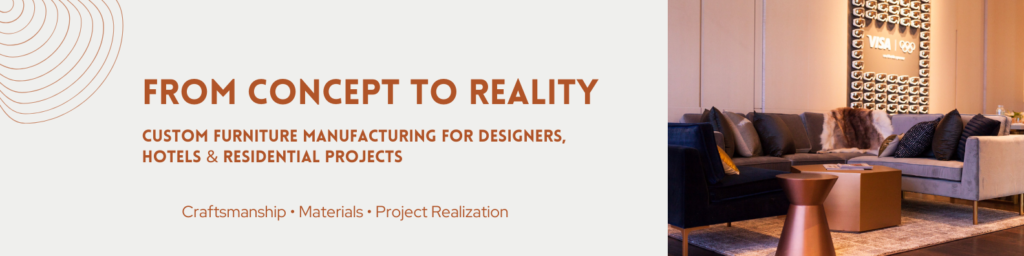
Interi Furniture specializes in custom furniture manufacturing for residential, hospitality, and commercial projects. Their experience in materials, craftsmanship, and project realization makes them a valuable resource for designers and buyers seeking tailored furniture solutions from China.