
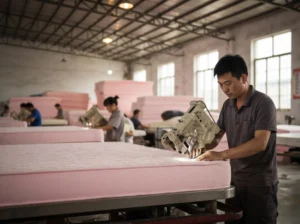


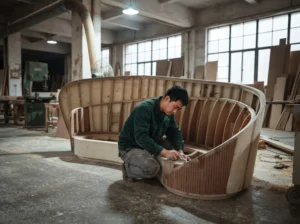






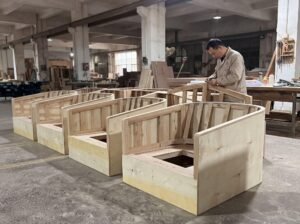
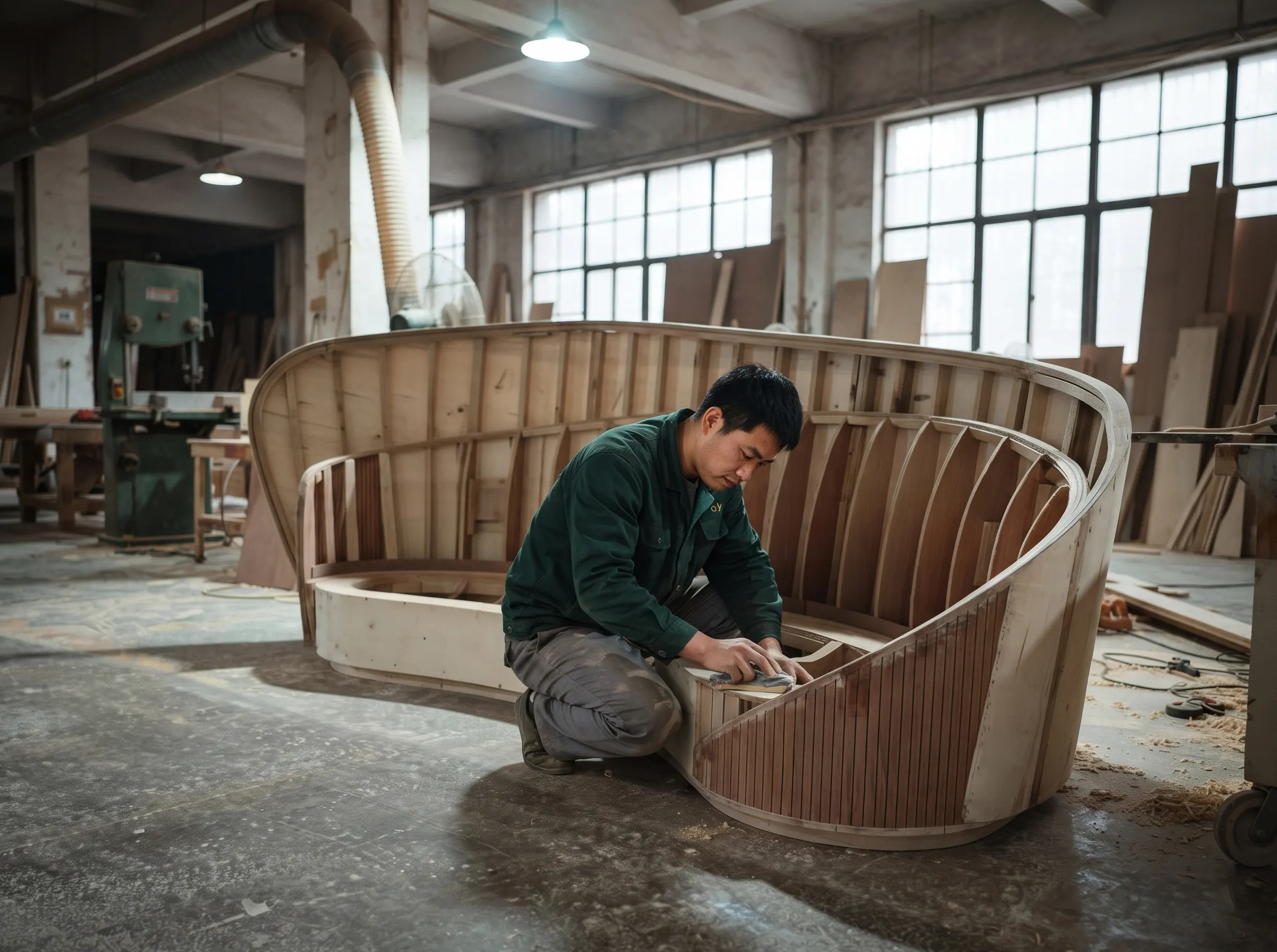
Your sofa is late because you ordered into one of three capacity black holes: the four to six weeks around Chinese New Year when factories are empty, the six to eight weeks after each Canton Fair when everyone places orders at the same time, and any month when a hotel or project order lands and shoves your batch behind it. None of these are fixable by “urging” the factory. All of them are avoidable by ordering against a calendar instead of against a sales rep’s optimism. Below is the calendar, the reasons, and the paperwork that actually protects your delivery slot.
Why Buyers Keep Blaming the Wrong Thing
Ask ten delayed buyers what went wrong and nine will say “the factory was slow.” After ten years walking sofa production lines in Foshan, Dongguan, and Ganzhou’s Nankang cluster, I can tell you that framing is almost always wrong.
Factories don’t get slow. Factories get full. A sofa plant running at 70% capacity ships your order on time with a smile. The same plant at 105% booked capacity — which is what it looks like every March and every post-fair autumn — ships in the order that protects the factory’s cash flow, not the order you placed first. Your sofa lead time isn’t a property of the factory. It’s a property of the calendar slot you bought into.
The Three Structural Culprits Behind Nearly Every Delay
| Culprit | When it hits | What it does to your order | Can “urging” fix it? |
|---|---|---|---|
| Chinese New Year shutdown | Roughly 4–6 weeks around late Jan–Feb (dates shift yearly) | Workers leave 2–3 weeks early; reopening is staggered; backlogs stack for weeks after | No — the factory is physically empty |
| Canton Fair order surge | 6–8 weeks after mid-April and late-October sessions | Everyone who “found a factory at the fair” orders simultaneously; fabric and foam suppliers saturate first | No — you’re one of 200 new POs in a queue |
| Hotel / project orders | Any month, worst before Q3 project deadlines | Full-container, multi-hundred-sofa contracts with penalty clauses get production priority over your LCL batch | No — their contract outranks your email |
This is the part no sales rep will tell you at a booth: Canton Fair production rush congestion is more dangerous than Chinese New Year, because everyone prepares for CNY and nobody prepares for the fair. CNY is on the calendar. The order surge after the fair is not.
The Full-Year Sofa Production Calendar
The rhythm below reflects what we consistently observe across major soft furniture clusters. Treat the weeks as convention, not promise — always confirm against current-year notices.
| Period | Factory state | Order risk | What a smart buyer does |
|---|---|---|---|
| Mid-Jan – late Feb | Winding down, shutdown, staggered reopening | Extreme | Nothing ships. Finalize specs, pay deposits, book post-holiday slots |
| March | Reopening, backlog burn-off, new workers training | High | Early-March POs land in the old backlog. Late-March is cleaner |
| April (pre-fair) | Normal to busy | Moderate | Decent window — factories want orders before fair season |
| Late April – June | Canton Fair production rush from spring session | Extreme | New quotes carry inflated promises. Lock terms in writing or wait |
| July – August | Surge fading, summer lull in some clusters | Low to moderate | One of the two best ordering windows of the year |
| September (pre-fair) | Factories rebuilding for autumn fair | Moderate | Good window if you confirm fabric stock early |
| October – December | Autumn fair surge, then year-end push | Extreme, then moderate | Post-fair POs queue up. Early December orders fight Q4 congestion |
| Mid-December | Year-end capacity scramble | High | Only order now if terms and dates are contractually pinned |
Blocker One: The Chinese New Year Capacity Cliff
Chinese New Year is the most predictable disaster in furniture sourcing, and buyers still walk into it every year. Here’s the mechanism. Migrant workers — the backbone of every sofa plant in Guangdong and Jiangxi — start leaving one to three weeks before the official holiday to secure train tickets. Production doesn’t stop on holiday day; it tapers from early January.
Reopening is the real killer. The factory may officially resume on a date the government announces, but skilled workers — the cutters, sewers, and assemblers who determine actual output — return over two to four weeks, and some never come back. So even after “reopening,” the plant runs at 50–70% for weeks while new hires are trained. Any rep quoting you “normal lead time, holiday already over” in February is quoting a fantasy. Verify actual line staffing, not the door-opening date.
The correct response to a Chinese New Year furniture delay risk isn’t hoping. It’s timing. If your delivery target falls in March or April, your production slot needed to be secured in October or November of the prior year, with deposit paid and materials pre-booked. A contract signed in January for spring delivery is a bet, not a plan.
Blocker Two: The Post-Fair Order Avalanche
Each Canton Fair session pours thousands of overseas buyers into Guangzhou, and a large share of them place first orders within two weeks of going home. The math is brutal. If a mid-size sofa factory normally books 15–25 new containers a month, a fair month can bring 60–80 inquiries converting to 40+ orders. The factory doesn’t hire 40% more sewers overnight. It queues.
The queue is not first-come-first-served, and this is where post-fair buyers get hurt worst. Orders are sequenced by deposit size, relationship depth, and penalty exposure — in that practical order. Your 20-sofa trial order with 30% down lands behind a returning client’s 200-sofa reorder with 50% down and a late-delivery clause. That isn’t corruption; it’s survival logic, and every factory does it.
There’s a second, less visible layer: your factory is only as fast as its weakest supplier. Foam plants and fabric mills absorb the same fair-driven surge, and they saturate first because they sit upstream. A factory that “promises 30 days” in late April may be telling the truth about its own sewing lines while its fabric supplier is 25 days behind. Always ask the fair-season question nobody asks: is the fabric in stock or being woven after my deposit?
Blocker Three: Hotel and Project Orders, the Silent Queue-Jumpers
“Hotel furniture order priority” isn’t a conspiracy; it’s contract architecture. A hotel FF&E contract for 400 sofas across three room types typically carries a written late-delivery penalty, staged payments tied to ship dates, and a buyer who visits the factory unannounced. Your wholesale order carries a polite email. When capacity tightens, the factory protects the order that can hurt it. Yours can only complain.
Project orders also consume a disproportionate share of line capacity per container because they involve more SKUs, more fabric variations, stricter inspection, and frequent buyer-ordered changes mid-production. One hotel project can occupy a line that would otherwise clear thirty scattered wholesale batches. If your rep suddenly goes quiet, shifts your confirmed date, or starts asking you to “accept a partial mix,” a project order has likely landed on top of you.
The Real Anatomy of a Sofa Lead Time
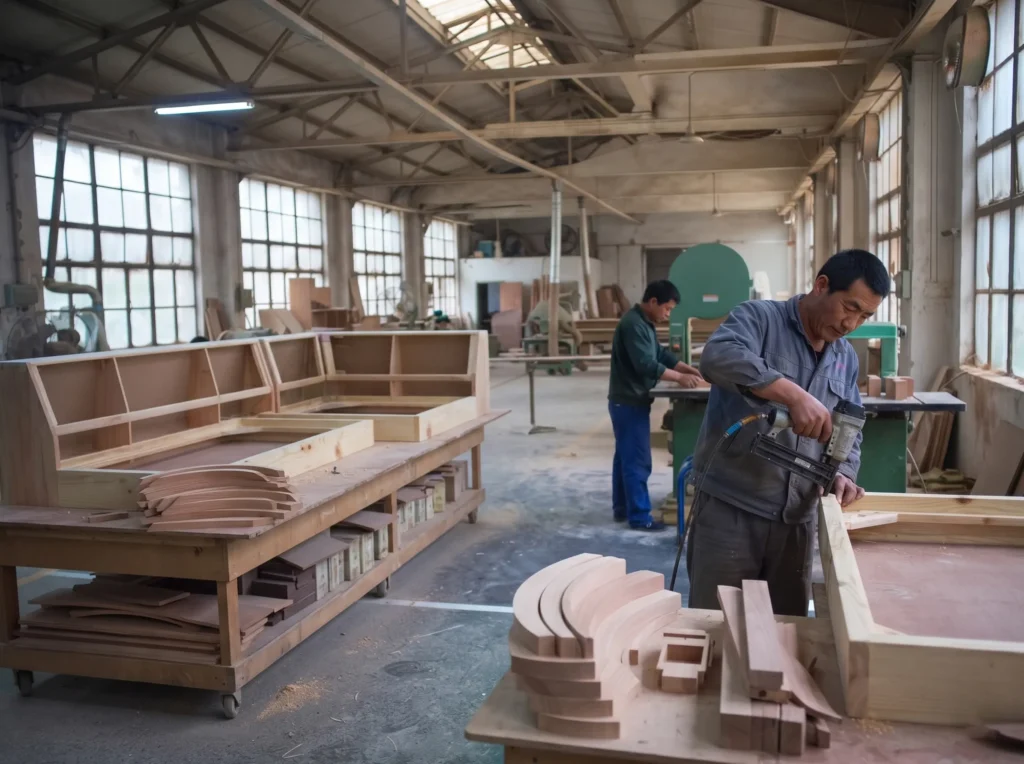
Buyers negotiate sofa lead time as if it were one number. It is five, chained in sequence. The total is only as strong as the weakest stage.
| Stage | Typical duration | Hidden dependency | Where it breaks |
|---|---|---|---|
| Fabric sourcing / weaving | 10–25 days | Mill queue length; custom colors double it | Fair season, CNY recovery |
| Frame cutting & joinery | 5–10 days | Kiln-dried lumber stock | Rarely the bottleneck |
| Foam molding & cutting | 5–12 days | Density spec availability | Surges hit foam plants hard |
| Sewing & upholstery | 10–20 days | Skilled sewer availability | CNY worker exodus |
| Assembly, QC, packing | 3–7 days | QC backlog before ship windows | Year-end congestion |
Add sea freight and customs on top, and a “30-day factory lead time” realistically means 60–75 days door to door on a good day. Anyone quoting under that in a fair season is quoting the theoretical minimum, not your order’s reality.
When to Place Your Order: The Decision Table
| Your delivery target | Order by (convention) | Deposit status that secures it | Risk if you wait |
|---|---|---|---|
| March – April | Prior October–November, pre-CNY | Paid before holiday with materials booked | You enter the CNY recovery backlog |
| June – July | February–March | Paid during reopening lull | Fair surge swallows April POs |
| September – October | April–May (pre-autumn-fair) | Locked before fair inquiries flood in | Post-fair queue |
| November – December | June–July (summer lull) | Paid; best negotiating leverage of the year | Year-end ship congestion |
| Post-CNY restock | June–July or Sept–Oct windows | Rolling PO with factory | Same mistakes, next cycle |
Locking Your Slot in Writing: What Actually Works
Verbal promises are priced for the moment you hear them, not the moment you need them. Protection is paperwork.
| Written term | What to demand | Why it works |
|---|---|---|
| Production slot date | Specific week, not “about 30 days” | Creates a reference point a queue-jump must visibly violate |
| Materials confirmation | Fabric and foam stock confirmed in writing before deposit | Kills the most common excuse delay |
| Late-delivery remedy | Discount, credit, or cancellation right past a defined date | Converts your email into contract exposure |
| Progress evidence | Weekly photos/video of your actual batch | Makes silent re-sequencing hard |
| Deposit staged | 30/70 or 20/80 tied to production milestones | Keeps your leverage alive mid-order |
Note the honest limitation: no clause makes a factory faster than physics. A penalty clause gets you compensated; a well-timed order gets you delivered. You want the second one and use the first as insurance.
Warning Signs You’re About to Get Bumped
If your contact stops sending line photos while still answering messages, if the “confirmed” date quietly becomes “estimated,” if you’re offered a substitute fabric “just as good, already in stock,” or if your order suddenly shares a ship date with a much larger batch — a bigger order has stepped in front of yours. Respond immediately and in writing, reference your production slot date, and request the late-delivery remedy you contracted. Calm, documented, fast. Emotional phone calls change nothing; contract references do.
Playbooks by Buyer Type
B2B wholesalers and importers should run a rolling twelve-month forecast and place two anchor orders per year, timed to the June–July and September windows, with deposits paid before the fairs rather than after. You are buying calendar position, and the cheapest time to buy it is when the factory is hungry.
Cross-border e-commerce sellers restocking for Q4 need production slots locked by June at the latest, and should split SKUs across two shipments so one delay can’t zero out your listing. E-commerce punishments for stockouts are algorithmic and instant — plan earlier than feels necessary.
Hotel FF&E buyers are on the other side of the queue-jumping dynamic but face the same calendar. Place project orders six to nine months ahead, tie payments to verified production milestones, and avoid scheduling installation dates inside the post-fair congestion window.
Individual and small buyers have the least protection and the most to lose relatively. Order in the summer lull, pay with methods that preserve recourse, treat any “in stock now” sofa claim with skepticism, and get every date in writing before sending a cent.

Frequently Asked Questions
How far ahead of Chinese New Year should I place a sofa order to be safe?
If you need delivery before May, your order and deposit should be in by October or November of the prior year, with materials pre-booked. Anything signed in December or January enters the shutdown and the multi-week skilled-labor recovery, and your lead time becomes an estimate. Exact holiday dates are subject to verification each year.
I found a great factory at the Canton Fair. When will my order actually arrive?
If you placed it within three weeks after the fair, assume the factory is absorbing dozens of simultaneous orders. Add the fair surcharge mentally: quoted 30 days often becomes 45–60, plus freight. Ask whether your fabric is in stock today, in writing, before paying the deposit.
Why do hotel orders always get priority over mine?
Because their contracts make delay expensive and yours makes it free. Late-delivery penalties, milestone payments, and factory visits turn a hotel PO into a risk the factory must manage. Your polite follow-up email is not risk; it’s noise. The fix is contractual, not emotional.
How do I lock a real delivery date instead of a verbal promise?
Get a week-specific production slot, written confirmation that fabric and foam are in stock before your deposit, weekly photo or video evidence of your batch, and a late-delivery remedy past a defined date. No paperwork, no date — regardless of how friendly the sales rep is.
My order is already delayed. What’s the most effective way to push?
In writing, immediately: cite your contracted production slot date, request a revised confirmed schedule with line evidence, and invoke the late-delivery remedy. Then decide whether to split the shipment. Pressure works when it’s contractual and fast; emotional chasing just moves you further down the mental list.
What’s your delivery war story?
Which of the three black holes has actually burned you — a CNY gamble, a post-fair queue, or a silent bump by a project order? Tell us in the comments: the more specific the story, the more the next buyer learns from it.
Recommended Resource
Interi Furniture specializes in custom furniture manufacturing for residential, hospitality, and commercial projects. Their experience in materials, craftsmanship, and project realization makes them a valuable resource for designers and buyers seeking tailored furniture solutions from China.