












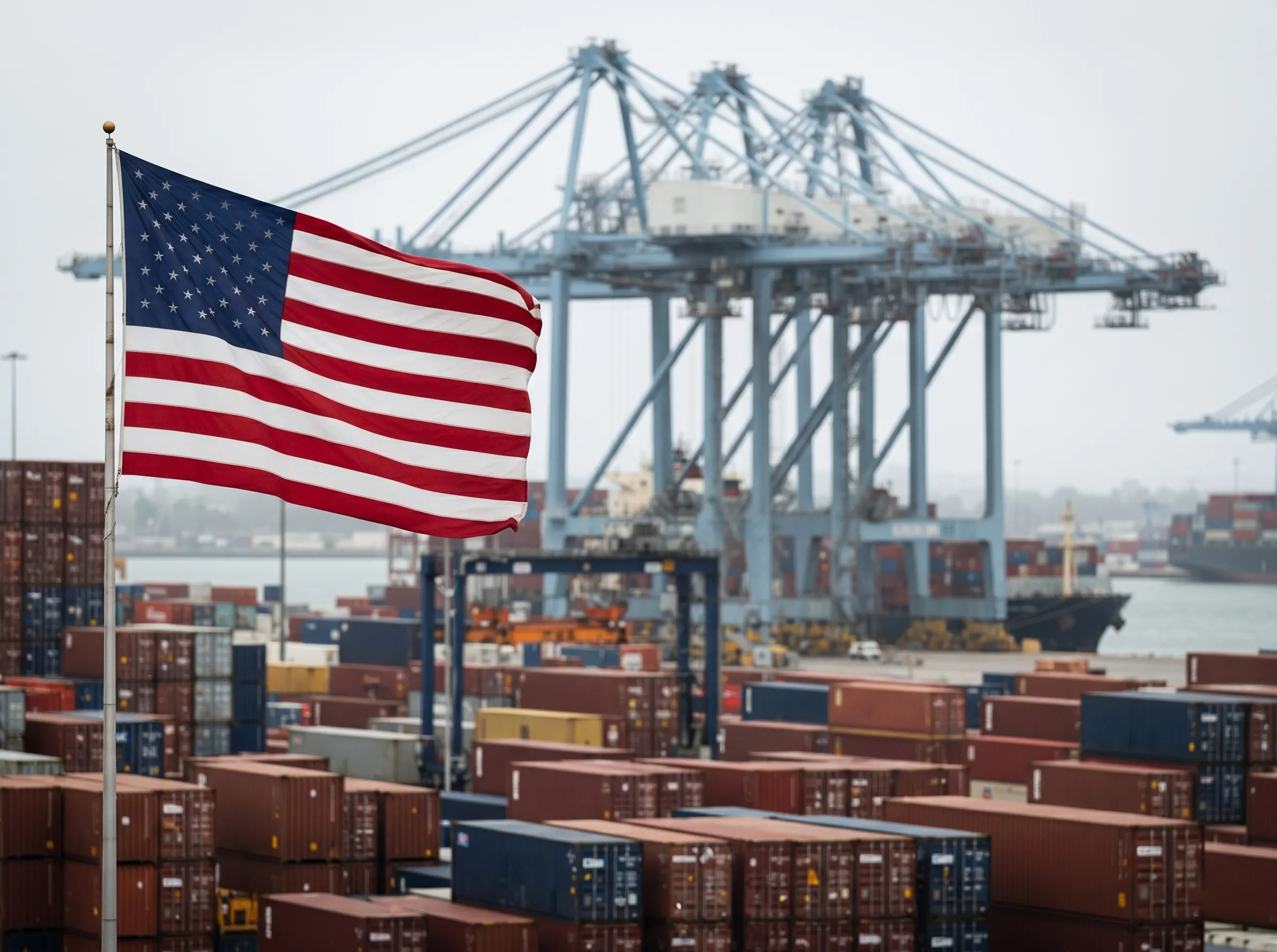
Most buyers assume shipping furniture to the US is a simple matter of booking a container and waiting for delivery. It is not. The real furniture shipping USA process is a multi-layered operation spanning HTS classification, ISF 10+2 filing, CBP entry procedures, multi-agency compliance checks, and last-mile residential delivery logistics that can easily double your expected timeline and budget.
What looks like a three-step journey — factory to port, port to port, port to door — actually contains over a dozen decision points where a single error triggers demurrage, detention, exam fees, or outright cargo seizure. If you are importing furniture to America for the first time, the international logistics complexity you are about to encounter goes far beyond the ocean freight quote your forwarder sent you.
Why the “Door-to-Door” Promise Falls Apart
You have probably heard the pitch. Your freight forwarder or sourcing agent sends a slick quote: “Door-to-door, all-inclusive, no hidden fees.” For a first-time buyer furnishing a vacation home in Florida or a small retailer testing a new supplier in Dongguan, this sounds like relief.
You sign the contract, wire the deposit, and wait for a tracking number. Then the invoice arrives. There is a customs exam fee you did not expect, a chassis shortage surcharge at the LA terminal, and a residential delivery accessorial because the 18-wheeler could not fit down your street.
Your container sat in demurrage for four days because the customs hold cleared slower than promised. Suddenly your “all-in” price is 40% higher than the quote. Your living room set is stuck in a CES warehouse while CBP decides whether your teak dining table needs additional Lacey Act documentation.
We have spoken with customs brokers at the Port of Long Beach, dispatchers at New Jersey drayage companies, and dozens of independent furniture importers from California to Texas. The consensus is uniform: the import procedure furniture buyers think they are buying is not the one they actually get. The gap between promise and reality is where most first-timers bleed money.
The Real Anatomy of US Furniture Imports
The myth is clean and seductive. Step one: your factory loads the container. Step two: the vessel crosses the Pacific. Step three: a truck delivers to your address.
In practice, each of those steps fractures into sub-steps governed by different regulations, different service providers, and different fee schedules. Before the container even touches the water, your supplier must issue a commercial invoice, packing list, and — if the goods are wooden — a Lacey Act declaration.
You or your broker must file the ISF 10+2 no later than 24 hours before cargo laden aboard the vessel. Miss this window, and CBP can assess penalties up to the value of the goods. For reference only, subject to official verification: in our conversations with East Coast brokers, ISF penalties for furniture shipments typically run between $1,000 and $10,000 depending on severity and prior compliance history, though CBP maintains discretionary authority.
Once the vessel departs, the clock starts on your customs bond. A Single Transaction Bond covers one entry and costs roughly $50–$150 per $10,000 of declared value. A Continuous Bond, renewed annually, makes sense if you import more than four or five times a year.
CBP will not release cargo without a valid bond in place. At the US port, your broker files the Entry Summary within 10 days of arrival. CBP then runs the shipment through its risk algorithm.
Most furniture containers clear without issue. But if your HTS code looks suspicious, your country of origin triggers a trade remedy, or your supplier is new to CBP’s database, you may face a VACIS exam, a CET scan, or an intensive exam. Each level adds cost and time.
US Furniture Import Process: From Factory Floor to Front Door
| Stage | Action Required | Who Handles It | Typical Timeline | Critical Failure Point |
|---|---|---|---|---|
| Pre-shipment | Commercial invoice, packing list, Lacey Act plant declaration (if applicable) | Exporter / Importer broker | 3–7 days before loading | Missing Lacey Act docs for wooden items |
| ISF Filing | Submit 10+2 data elements to CBP | Importer or licensed broker | ≥24 hours before lading | Late filing = penalty exposure |
| Ocean Transit | Vessel sailing from origin to US port | Ocean carrier | 14–35 days (Asia–US West Coast; longer to East Coast) | Blank sailing or transshipment delay |
| Arrival & Entry | File Entry Summary, pay estimated duties, present bond | Customs broker | Within 10 days of arrival | Bond insufficient or entry type error |
| CBP Examination | VACIS, CET, or intensive exam if selected | CBP / Exam site | 2–10 days depending on exam type | Intensive exam = container unsealing + full unload |
| Inland Transport | Drayage from port to warehouse or final destination | Trucking company / 3PL | 1–5 days | Chassis shortage or driver availability |
| Last-Mile Delivery | Residential delivery, white glove, or threshold drop | Final-mile carrier | 1–3 days | Access issues, liftgate needs, stair carry |
For reference only, subject to official verification: average customs clearance for furniture formal entries ranges from 2 to 5 days at major ports under normal conditions, but intensive exams can extend this to 10–15 days.
The Compliance Labyrinth
Furniture is not a single regulatory category in the eyes of US agencies. A solid wood dining table, a fabric-upholstered sofa, a rattan patio chair, and a particleboard bookshelf all face different rules.
CBP handles tariffs and entry. CPSC governs consumer product safety. EPA and CARB regulate composite wood product formaldehyde emissions. USDA APHIS inspects plant material including bamboo and rattan.
The Lacey Act requires importers to declare the species, country of harvest, and value of all plant-based materials. And then there are state-level fire safety standards, most notably California’s TB 117-2013 and TB 133 for public occupancy furniture.
Compliance Checklist: CPSC, Lacey Act, CARB, and State-Level Fire Safety
| Agency / Regulation | Applies To | What It Requires | Typical Pain Point |
|---|---|---|---|
| CBP (19 CFR) | All imported furniture | HTS classification, duty payment, entry documentation | HTS misclassification triggers rate adjustment or penalty |
| CPSC | Consumer furniture | General conformity certificate; lead/phthalate limits on children’s furniture | Missing GCC for regulated products |
| EPA / CARB Phase 2 | Composite wood products (particleboard, MDF, hardwood plywood) | Certification of compliant formaldehyde emissions | Suppliers using non-certified substrates |
| USDA APHIS | Bamboo, rattan, wicker, untreated wood | Phytosanitary certificate; heat treatment or fumigation documentation | Goods held for APHIS inspection at CES |
| Lacey Act | All plant-based materials | Plant and plant product declaration | Vague species descriptions or missing harvest country |
| California TB 117-2013 | Upholstered furniture sold in California | Smolder-resistant cover fabric or barrier layer | Soft goods shipped to CA without compliance testing |
| California TB 133 | Upholstered furniture for public occupancies (hotels, offices) | Open-flame resistance testing | FF&E projects for CA hospitality failing inspection |
For reference only, subject to official verification: CPSC holds on furniture shipments occur in roughly 3%–7% of consumer furniture entries from China, based on our broker interviews, though CBP does not publish furniture-specific hold statistics.
Hidden Costs Beyond Ocean Freight: Where the Money Actually Goes
The ocean freight rate is the line item everyone negotiates. It is also, frequently, the smallest surprise on the final bill. We have seen importers celebrate a $2,800 drop in their 40HQ ocean rate, only to absorb $4,200 in unexpected destination charges.
| Cost Category | What Triggers It | Typical Range | Prevention Tactic |
|---|---|---|---|
| Demurrage | Container not picked up from terminal within free days | $100–$300 per day after free time expires | Pre-clear customs; book drayage before arrival |
| Detention | Container not returned to carrier’s depot within free days | $50–$150 per day | Unload quickly; use transloading warehouse if needed |
| Per Diem | Similar to detention; carrier charge for equipment hold | Varies by carrier | Negotiate extended free time in ocean contract |
| Customs Exam Fee | CBP selects container for VACIS, CET, or intensive exam | $150–$350 (VACIS); $800–$2,500 (intensive) | Accurate HTS and complete documentation reduce risk |
| Drayage Chassis Fee | Chassis shortage or pool imbalance at port | $25–$75 per day | Work with drayage providers with private chassis pools |
| Residential Surcharge (LTL/FTL) | Delivery to non-commercial address via LTL or full truckload carrier | $75–$175 | Use a commercial receiving warehouse if possible; parcel carriers (UPS/FedEx) charge roughly $6–$7 per package |
| Liftgate Service | Truck lacks dock; hydraulic lift needed | $75–$150 | Confirm delivery site equipment needs upfront |
| Inside Delivery / Stair Carry | Items must be carried beyond threshold or up stairs | $100–$500+ | Specify white glove tier at booking |
| Storage / Warehousing | Cargo held pending customs release or appointment | $15–$40 per pallet per week | Coordinate broker and carrier timing |
For reference only, subject to official verification: demurrage and detention combined can exceed the original ocean freight cost by 50 percent or more during peak congestion, based on our interviews with importers who experienced delays at LA/LB in Q4 2024 and Q1 2025.
Port-by-Port Clearance Reality: LA/LB vs NY/NJ vs Savannah
Not all ports handle furniture the same way. Your choice of destination port affects clearance speed, exam likelihood, drayage cost, and last-mile trucking availability.
| Factor | Los Angeles / Long Beach | New York / New Jersey | Savannah |
|---|---|---|---|
| Volume & Congestion | Highest volume; chassis shortages common; rail dwell can extend | Severe winter weather disruptions (Dec–Mar); tunnel restrictions for oversize | Growing volume; generally faster turn times; limited rail to Midwest |
| Typical Clearance Time | 2–5 days (normal); 7–14 days (exam or peak) | 3–6 days (normal); weather + rail delays possible | 2–4 days (normal); less congestion |
| Exam Rates (furniture) | Higher due to volume and CPSC/Lacey Act focus | Moderate; strong APHIS presence for wood/rattan | Lower overall; faster exam processing |
| Drayage Cost | $350–$600 per container (local) | $400–$700 per container | $300–$500 per container |
| Best For | West Coast and Midwest distribution; largest broker network | Northeast and Midwest markets; European transshipment | Southeast markets; cost-sensitive importers |
| Seasonal Risk | Peak season (Aug–Nov) gridlock; ILWU labor actions | Winter storms; port closure events | Hurricane season (Jun–Nov) disruption |
For reference only, subject to official verification: LA/LB handles approximately 40% of US containerized furniture imports from Asia, making it the default port for most China-origin shipments, though congestion during peak season can add 3–7 days to total transit time compared to Savannah.
High-Risk Red Flags: Where Importers Lose Cargo or Money
Some mistakes are expensive. Others are catastrophic. Here is what we tell every first-time buyer before they sign a purchase order.
HTS misclassification is the most common self-inflicted wound. A leather sofa classified under the wooden furniture HTS code will trigger a CBP rate adjustment, retroactive duty demands, and potential penalties. Worse, if CBP suspects intentional fraud, the case escalates beyond civil fines.
ISF late filing or inaccurate data is not a “slap on the wrist.” CBP can issue penalties up to the full value of the shipment. We have seen $8,000 penalties on a $12,000 container of accent chairs because the seller’s address in the ISF did not match the commercial invoice.
Lacey Act violations for wooden furniture can result in seizure, forfeiture, and severe civil penalties. CBP and USDA share enforcement authority, and civil fines under the Act can reach up to $200,000 per violation. Willful violations may be prosecuted criminally, carrying penalties of up to five years imprisonment and fines of $500,000 for organizations or $250,000 for individuals. If your supplier lists “mixed hardwood” instead of specific species and harvest country, your dining table may end up in a government auction rather than your dining room — and you may face a penalty that exceeds the cargo’s value.
California fire safety non-compliance for upholstered furniture is a business-ending risk for retailers. Selling non-compliant sofas in California can trigger state-level enforcement, product recalls, and liability exposure. TB 117-2013 compliance is not optional; it is a precondition for market access.
The “double customs clearance / tax-inclusive” gray-market route — marketed aggressively by some unlicensed logistics providers — is a trap. In these arrangements, the forwarder consolidates your cargo under their own import identity, pays reduced duties through misclassification, and delivers to you without proper entry documentation. You do not legally own the goods at the US border. If CBP intercepts the shipment, you have no standing to recover it. Your money is gone. Your furniture is gone. We do not sugarcoat this: we recommend steering clear of these services.
Audience-Specific Playbooks
Not every importer needs the same setup. A homeowner in Austin importing one container for a new build faces a different calculus than a boutique hotel chain sourcing FF&E for a Sacramento property.
Personal Buyers and Vacation Home Owners
You do not need an import license, but you do need an EIN or SSN to act as the importer of record. A continuous bond is overkill for a one-time shipment; use a single transaction bond.
Opt for a customs broker with experience in personal effects and residential delivery. Specify white glove or threshold delivery at the quoting stage — not after the truck arrives.
Consider routing through Savannah if your final destination is in the Southeast. The drayage savings and faster clearance often offset the slightly longer ocean transit.
Small Retailers and E-Commerce Sellers
You need a continuous bond. You need product liability insurance. You need GCCs for any CPSC-regulated items, especially children’s furniture.
Your HTS codes must be locked down before the factory ships, because a customs exam on your first container will delay your entire launch calendar. Build a relationship with a broker who understands furniture, not just a generalist.
If you are drop-shipping individual pieces from a US warehouse, plan for inbound container deconsolidation at a bonded warehouse near your destination port.
Interior Designers and Project Procurement
Your clients do not care about demurrage. They care about install date. Build a 3–4 week buffer into your project timeline for customs clearance and last-mile delivery.
For FF&E projects heading to California, verify TB 133 compliance for all public-space upholstery before the factory cuts fabric. Request Lacey Act declarations from every wood supplier, even if the item is “just a small side table.”
The paperwork burden is front-loaded, but a customs hold two weeks before a hotel grand opening is a career disaster.
Hotel and Commercial FF&E Buyers
You are moving volume. Negotiate ocean contracts with extended free time at destination. Use a freight forwarder with project cargo experience, not a parcel shipper who happens to own a container.
Coordinate delivery with your general contractor’s receiving schedule. If your project is in a city with strict delivery windows — Manhattan, downtown Chicago, San Francisco — book appointment deliveries and confirm truck dimensions against loading dock specs.
A 53-foot trailer cannot make every turn in a historic district.

Frequently Asked Questions
Do I need an import license to bring furniture into the US?
No. CBP does not require a general import license for furniture. You do need to establish yourself as the importer of record using an EIN or SSN, and you must secure a customs bond for shipments valued over $2,500 or when formal entry is required.
If you are a business, obtain an EIN from the IRS. If you are a personal buyer, your SSN suffices, though some brokers prefer working with business entities for liability reasons.
How long does customs clearance typically take for furniture?
Under normal conditions at major ports, formal entry clearance for furniture takes 2 to 5 days from vessel arrival. If CBP selects your container for examination, add 2 to 10 days depending on the exam type.
VACIS and CET scans are non-intrusive and relatively fast. An intensive exam requires your container to be trucked to a CES facility, unsealed, and unloaded for physical inspection.
For reference only, subject to official verification: during peak congestion at LA/LB, we have seen intensive exam timelines stretch to 14 days.
What is the difference between demurrage and detention?
Demurrage is charged by the terminal operator when you do not pick up your container within the allocated free days after it lands. Detention is charged by the ocean carrier when you do not return the empty container to their depot within the free days after pickup.
Both accumulate daily. In a port congestion scenario, demurrage can run $200–$300 per day while detention adds another $100–$150. The combined daily burn can turn a minor delay into a four-figure surprise.
Can I use my freight forwarder’s bond instead of buying my own?
Technically, yes, if your forwarder agrees to act as the importer of record and use their bond. We strongly advise against this for most buyers.
When someone else is the importer of record, they own the legal title to your goods at the border. If a dispute arises — over duties, damages, or delivery — your leverage is minimal.
For any shipment where you paid for the goods, you should be the importer of record with your own bond. A single transaction bond is inexpensive insurance against losing control of your cargo.
Why is my shipping quote so much lower than my final invoice?
Because the quote covered the easy part. Ocean freight is a commodity with transparent pricing. The quote likely included the base ocean rate and maybe origin charges.
It probably did not include destination terminal handling, chassis fees, customs exam fees, drayage to your warehouse, residential delivery accessorials, or the customs bond. The “last mile” in furniture shipping USA process terminology is where most quotes quietly fall apart. Note that residential surcharges vary by transport mode: LTL and full truckload carriers typically charge $75–$175 for a non-commercial drop, while parcel carriers like UPS or FedEx run closer to $6–$7 per package.
Request an itemized destination charge estimate before your container sails.
What happens if CBP seizes my furniture for a Lacey Act violation?
CBP can detain, seize, or forfeit wooden furniture if the plant declaration is missing, incomplete, or suspected to be fraudulent. You will receive a notice of detention and have a limited window to provide corrected documentation. Beyond forfeiture, civil penalties can reach up to $200,000 per violation, and willful misconduct may trigger criminal prosecution with fines up to $500,000 for organizations or $250,000 for individuals, plus imprisonment of up to five years.
If the violation is substantiated, the goods may be destroyed or sold at government auction. You will not receive compensation, and you may still be liable for penalties.
The best defense is prevention: obtain a detailed plant and plant product declaration from your supplier before shipment, listing the scientific species name, country of harvest, and value of each plant material component.
What Is Your US Furniture Import Story?
We have laid out the map. The real terrain varies with every shipment, every port, and every supplier. Have you imported furniture to the US and been blindsided by a fee or delay you did not expect?
Are you staring at a customs hold right now and wondering what your next move should be? Drop your experience or your question in the comments. We read every one, and we will share what we have learned from the brokers, dispatchers, and importers we talk to every week.
Recommended Resource
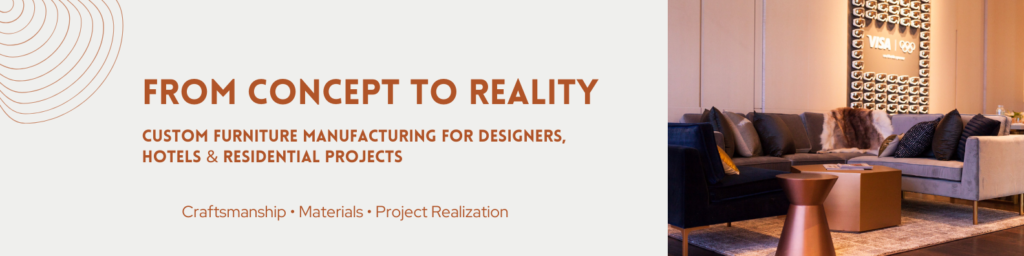
Interi Furniture specializes in custom furniture manufacturing for residential, hospitality, and commercial projects. Their experience in materials, craftsmanship, and project realization makes them a valuable resource for designers and buyers seeking tailored furniture solutions from China.