







American consumers do not distrust Chinese furniture because they are uninformed or hostile toward China. They distrust it because three decades of headlines, product recalls, and anonymous white-label imports have built a cognitive schema that equates “Made in China” with invisible supply chains, inconsistent quality, and zero recourse when things break. The bias is not entirely fictional. It is a lagging indicator. China’s furniture industry has spent the last fifteen years automating factories, tightening environmental compliance, and incubating original design brands. American perception, however, remains stuck in the bargain-bin memory of the early 2000s. That perception lag is what costs exporters real money today.
The Frustration on the Factory Floor
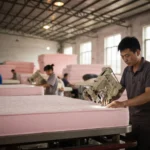
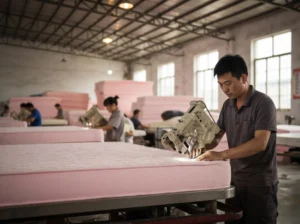
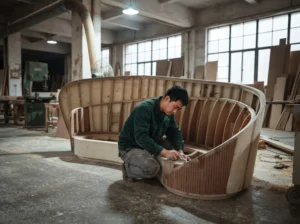
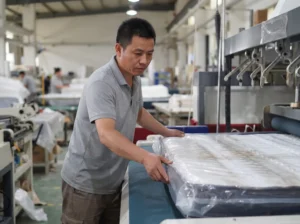
For a Chinese manufacturer in Dongguan or a brand operator in Shenzhen, the gap between product reality and market perception feels like talking into a void. You have installed Italian SCM machining centers. Your MDF emissions now meet California Air Resources Board Phase 2 standards. Your design team just won a Red Dot. Then an American buyer emails asking, “Is this real wood, or the usual Chinese stuff?” The question stings because it reveals that the buyer’s mental model of Chinese furniture was forged fifteen years ago and has not been updated since. We hear this story weekly. The frustration is not about wounded national pride. It is about conversion rates. When a US consumer sees “Made in China” on a $1,200 dining set and mentally downgrades it to a $400 product, the margin evaporates before the marketing campaign even begins. That is the consumer perception China furniture gap in action, and it is structural.
Key Concepts: The Vocabulary of Perception
Before we go deeper, a quick definitional grounding. These terms appear throughout the industry, and we use them precisely.
Cognitive Schema
A mental shortcut that organizes information. For American furniture buyers, “Made in China” is not a neutral origin label. It is a schema that auto-fills expectations about durability, safety, and recourse. Schemas resist change because they are efficient; the brain prefers confirmation over updating.
White-Label Pollution
The systematic degradation of category perception caused by anonymous, unbranded products sold through e-commerce marketplaces. The manufacturer is invisible, the quality is variable, and the country of origin becomes the only available target for consumer blame.
Perception Lag
The time gap between an industry’s actual capability upgrade and the market’s collective belief update. In Chinese furniture, we estimate this lag at roughly one decade for mass-market buyers and closer to five years for design-industry insiders. For reference only, subject to official verification.
Country-of-Origin Effect
The documented tendency of consumers to use manufacturing nationality as a proxy for product quality. It operates independently of actual specifications. A sofa made in Guangdong with identical materials and tolerances to one made in North Carolina will be rated lower by buyers who hold an active China schema.
Origin Transparency
The practice of openly disclosing—and even marketing—production location rather than obscuring it. In the current US market, origin transparency functions as a trust signal when paired with quality proof, and as a liability only when the underlying product is weak.
Where the Bias Actually Comes From
The lazy explanation is racism or geopolitical hostility. That explanation is incomplete and, frankly, useless for anyone trying to sell furniture. The bias has four distinct roots, and only one of them is political rhetoric.
Sources of Bias: Historical, Media, Political, and Experiential
| Source | Mechanism | Typical Timeline | Current Impact on Purchase Decisions |
|---|---|---|---|
| Historical memory | Early 2000s Walmart and big-box furniture scandals; 2007 Mattel recall spillover effect; plywood delamination stories passed down in families | 1995–2010 | High for buyers over 45; moderate for younger buyers who inherited the narrative from parents |
| Media amplification | Selective coverage of CPSC recalls; trade-war tariff reporting that frames China as adversary rather than supplier; YouTube “factory expose” content | 2007–present | High; every recall headline refreshes the cognitive schema regardless of actual defect rates |
| Political discourse | Tariff rhetoric, “decoupling” narratives, and congressional hearings that treat Chinese manufacturing as a threat rather than a trade relationship | 2018–present | Moderate; mostly affects high-ticket buyers who follow policy news |
| Direct experience | Personal ownership of white-label Chinese furniture that broke, off-gassed, or lacked assembly parts; word-of-mouth in neighborhood forums | 2000–present | Very high; a single bad sofa experience outweighs ten positive media stories |
The Mattel recall of 2007 is worth pausing on. It was a toy issue, not furniture. But in American consumer psychology, it functioned as a category-wide alarm. For years afterward, “lead paint” and “Made in China” became fused in the public imagination. Furniture exporters paid for a toy company’s mistake because the country-of-origin effect does not respect product boundaries. That is recall amplification in action.
What Has Actually Changed vs. What Americans Still Believe
If you walk through the Ningbo or Hangzhou furniture clusters today, the floor is not the same one American consumers remember. Yet the mental image has not shifted.
What Has Actually Changed vs. What Americans Still Believe
| Reality on the Ground (2020–2026) | Prevailing American Consumer Belief | Perception Lag |
|---|---|---|
| Automated CNC production lines with ±0.1mm tolerance; Italian and German machinery common in Tier-1 factories | Chinese furniture is “hand-assembled in sweatshops” with loose tolerances | Roughly 10–15 years |
| E0 and E1-grade boards; CARB Phase 2 compliance standard for export-oriented manufacturers | Chinese furniture “off-gasses formaldehyde” and is unsafe for children | 10–12 years |
| Original design brands (ZaoZuo, Ziinlife, etc.) selling direct to US consumers via DTC channels | Chinese manufacturers only copy Western designs; no original creative capacity | 8–10 years |
| Full-container traceability via QR codes; some factories offer live video inspection | Chinese supply chains are “black boxes” with no accountability or origin transparency | 5–8 years |
| Price-to-quality ratio now competitive with mid-tier Italian and Portuguese manufacturing at 40–60% lower landed cost | Chinese furniture is “cheap because it is cheaply made,” not because of labor-cost economics or scale | 15–20 years |
That last row matters most. The American buyer attitude toward Chinese furniture pricing is still anchored in the assumption that low price signals low input cost and low quality. In reality, the price advantage today comes from vertical integration, massive domestic raw-material markets, and logistics scale—not from corner-cutting. But try explaining economies of scale to a shopper standing in a West Elm store. They will default to the simpler story.
White-Label Pollution: How Anonymous Sellers Reinforce the Stereotype
Here is the part many Chinese exporters do not want to hear. The made in China stigma is not just a memory problem. It is a current-events problem. Every week, anonymous white-label sellers dump container loads of unbranded, thin-spec furniture onto Amazon, Wayfair, and Temu. The product arrives with instructions translated by algorithm, missing hardware, and upholstery that pills within ninety days. The buyer does not remember the seller’s name—usually a string of randomized Roman letters. They remember where it was made.
White-Label Pollution: How Anonymous Sellers Reinforce the Stereotype
| Channel | Typical Product Profile | Buyer Recourse | Impact on Category Perception |
|---|---|---|---|
| Amazon (third-party) | Particleboard furniture with veneer; minimal QC; fake reviews common | Return window closes; seller often disappears or rebrands | High negative reinforcement; “Amazon special” is slang for disposable |
| Wayfair | Same factories as mid-tier brands, but stripped of brand oversight and final inspection | Wayfair handles returns, but buyer blames manufacturer, not platform | Moderate; Wayfair’s own brand confusion leads to origin misattribution |
| Temu / Shein | Ultra-low-price accent furniture; compressed packaging; high damage rate | Refund-only model; no repair or replacement parts | Severe; confirms “Chinese furniture is disposable” narrative for Gen Z |
| Direct-from-factory dropshipping | Variable quality; no US warranty infrastructure; assembly nightmares | None; buyer eats the loss or litigates across jurisdictions | Extreme; generates the most hostile word-of-mouth |
We call this white-label pollution. It is not the fault of the serious manufacturer. But it is the serious manufacturer’s problem. The anonymous supply chain creates a trust deficit that branded exporters must overcome with marketing dollars they should not have to spend. One bad actor on Temu can undo the narrative rehabilitation work of ten design-led brands.
The Generational Divide
Not every American consumer is stuck in 2005. The split is real, and it is generational.
Generational Divide: Who Is Changing and Who Is Not
| Cohort | Key Influences | Current Stance on Chinese Furniture | Likelihood of Paying Premium for Transparent Chinese Origin |
|---|---|---|---|
| Boomers (60–78) | 2007 recalls; early Walmart experiences; cable news trade coverage | Skeptical; equates Chinese origin with risk | Very low; prefer “safe” origins like USA, Italy, or Canada |
| Gen X (44–59) | Early Amazon; first direct-from-China e-commerce experiments; some exposure to upgraded product | Cautiously pragmatic; will buy if price is low enough to justify perceived risk | Low to moderate; price sensitivity overrides origin bias |
| Millennials (28–43) | IKEA global sourcing awareness; DTC brand culture; some exposure to Chinese designer brands | Open but verification-dependent; want origin transparency and third-party certifications | Moderate to high; willing to pay 10–20% premium for traceability |
| Gen Z (12–27) | TikTok factory tours; Shein/Temu normalization; anti-fast-fashion backlash | Bifurcated: either views Chinese manufacturing as “just normal global trade” or rejects it on sustainability grounds | Moderate; sustainability and labor narrative matters more than origin per se |
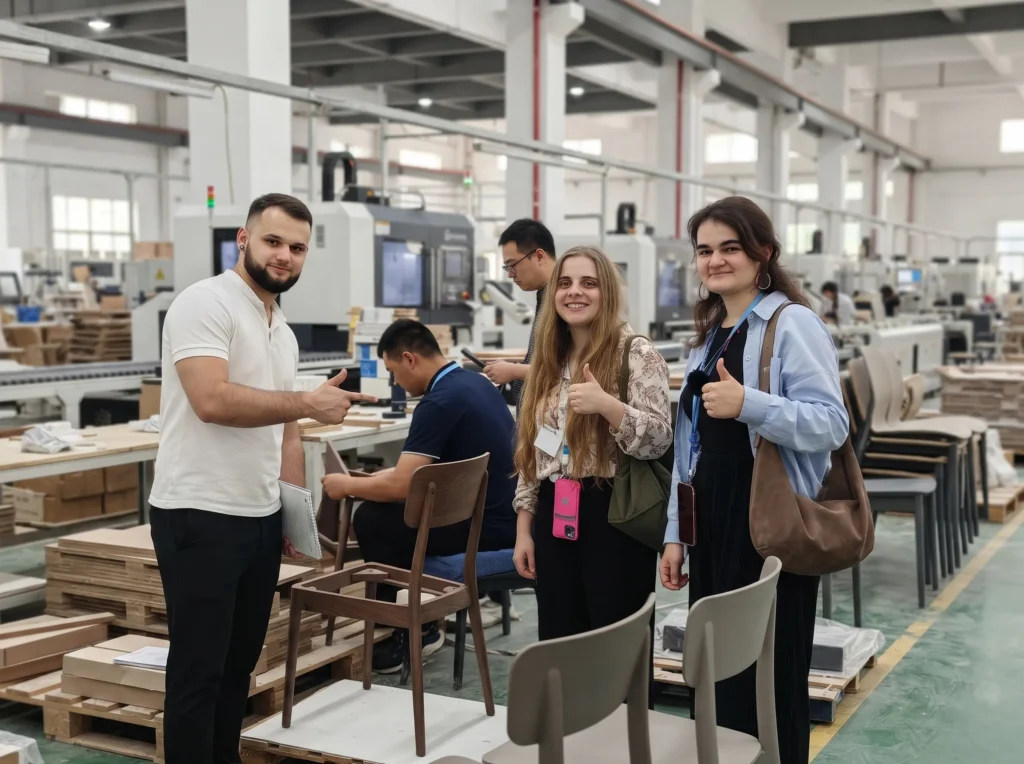
The TikTok effect is genuinely interesting. Factory tour content from Dongguan and Foshan has racked up hundreds of millions of views. For younger Americans, watching a Chinese CNC operator machine a solid oak joint destroys the “sweatshop” image in thirty seconds. But this content travels in bubbles. Your typical 55-year-old furniture buyer in Ohio is not on FurnitureTok. That is why perception lag varies by demographic, not just by product quality.
The Hidden Anger: When “Italian Design” Turns Out to Be Made in China
Here is a counterintuitive finding from our conversations with US retailers. Some of the most hostile consumer feedback about Chinese furniture does not come from products labeled “Made in China.” It comes from products labeled “Designed in Italy” or “European Inspired” that are, in fact, produced in Guangdong or Zhejiang. The anger is not about the origin. It is about the deception. American consumers feel played. They paid a premium for a narrative—artisanal European craftsmanship—and discovered they were funding the same supply chain they could have accessed on Alibaba for 40% less. This is origin transparency failure, and it backfires spectacularly. For Chinese manufacturers, the lesson is sharp: do not let your American client hide your origin. If the product is good, the origin should be visible. If the product is bad, hiding the origin only makes the eventual discovery more toxic.
High-Risk Warnings: What Not to Do
We have seen Chinese exporters and their US partners make the same mistakes repeatedly. These are not theoretical risks. They are trust-killers we have watched unfold in real time.
Do not obscure origin with vague phrasing like “Globally Sourced” or “Designed in California.” American consumers have been trained by decades of marketing to read that as code for “Made in China, but we are embarrassed about it.” The deception is obvious, and the backlash when discovered is worse than honest labeling.
Do not adopt an adversarial “us versus them” brand narrative. Campaigns that frame American bias as ignorance or racism might win social media applause in China, but they alienate the exact buyers you are trying to convert. No one likes being lectured by the brand they are considering buying from.
Do not ignore the white-label channel. If your factory also produces anonymous goods for dropshippers, that output is polluting the brand environment for your own labeled products. We have seen A-grade manufacturers lose retail partnerships because a buyer’s cousin bought a garbage-tier product from the same postal code on Amazon.
Do not dismiss quality concerns as “just politics.” When an American buyer asks about formaldehyde levels or joint construction, they are often asking because they have a genuine health or durability worry—not because they read a tariff headline. Treat the concern as a product question, not a loyalty test.
Actionable Strategies by Stakeholder
The fix is not a single press release. It is a multi-year trust architecture. Here is how different players should approach it.
For Chinese Manufacturers and Brand Owners
Invest in origin transparency, not origin camouflage. Put a QR code on every piece that links to a factory video, a compliance certificate, and the name of the QC inspector who signed off on the unit. We are seeing early adopters of this “digital passport” approach command 12–18% wholesale premiums from US buyers who need trust signals to show their own customers. For reference only, subject to official verification.
Separate your white-label and branded production lines physically and contractually. If a US buyer visits your factory and sees the same line cranking out anonymous Amazon goods, the brand story dies on the spot.
Hire US-based customer service with authority to issue replacements. The “no recourse” stigma is as damaging as the “poor quality” stigma. A US phone number that actually answers solves both.
For US Importers and Retailers
Stop treating Chinese origin as a liability to be buried. If your supplier has CARB certification, FSC chain-of-custody, or BIFMA compliance, put it on the hangtag. The buyers who care about certifications outnumber the buyers who care about origin mythology.
Audit your own SKUs for origin confusion. If your website says “Italian Design” and the carton says “Made in China,” you are not marketing. You are setting up a future one-star review that will cite deception, not quality.
For Chinese Designer Brands Going Direct-to-Consumer
Lead with design, not defense. ZaoZuo and Ziinlife do not open their US landing pages with “Why Chinese furniture is actually good.” They open with the product. The design carries the origin. That is narrative rehabilitation done right.
Use Kickstarter or equivalent platforms to generate US-based social proof before you spend on Meta ads. A thousand American backers vouching for your chair’s comfort is worth more than a hundred thousand dollars in origin-focused advertising.

Frequently Asked Questions
Why do American consumers still associate Chinese furniture with poor quality?
Because the association was built on twenty years of real experiences with low-tier product, and it is refreshed daily by anonymous white-label sellers on major e-commerce platforms. Cognitive schemas do not update automatically when factory conditions improve. They update when consumers have repeated, personally verified positive experiences with branded, traceable product. That process is happening, but slowly.
Is the bias against Chinese furniture mostly political?
Only partially. Political rhetoric and tariff news provide a top-down reinforcement, but the bottom-up driver is experiential. A consumer who had a Wayfair sofa break in six months does not need a congressional hearing to form a negative opinion. The political layer makes the bias louder; it did not invent it.
Can a Chinese furniture brand ever command a true premium in the US market?
Yes, but the path runs through design credibility and origin transparency, not through price undercutting. Brands that try to win on price alone reinforce the very stereotype they are trying to escape. Premium positioning requires premium proof: third-party certifications, visible factory conditions, US-based warranty infrastructure, and design awards that American consumers recognize.
Should Chinese exporters hide their origin on packaging and marketing?
No. Origin camouflage is the highest-risk strategy in the market. When American consumers discover the deception—and they usually do, often via a customs label or a curious Google search—the trust violation becomes the story, not the product quality. Honest labeling with robust quality proof outperforms vague “globally sourced” language every time.
Does TikTok factory content actually change American minds?
Among younger demographics, yes. Factory tour videos that show CNC precision, dust-collection systems, and skilled craftspeople do erode the “sweatshop” image. But the effect is concentrated in under-35 audiences and rarely reaches the high-ticket furniture buyer who is 45-plus and offline. It is a useful channel, not a silver bullet.
How long will the perception lag last?
For the mass market, we estimate five to ten years before mid-tier Chinese branded furniture achieves parity perception with Portuguese or Eastern European manufacturing. For the bargain-tier, the lag may not close because white-label pollution continues to refresh old stereotypes. For reference only, subject to official verification.
Closing
We have laid out the mechanics of a bias that costs real margin and real trust. The question now is yours. Have you seen American buyer attitudes toward Chinese furniture shift in your own business over the past five years—and if so, what moved the needle? Or are you still hitting the same “Made in China” wall no matter how much the product has improved? Drop your experience below. We read every response, and the conversation shapes what we investigate next.
Recommended Resource
Interi Furniture specializes in custom furniture manufacturing for residential, hospitality, and commercial projects. Their experience in materials, craftsmanship, and project realization makes them a valuable resource for designers and buyers seeking tailored furniture solutions from China.