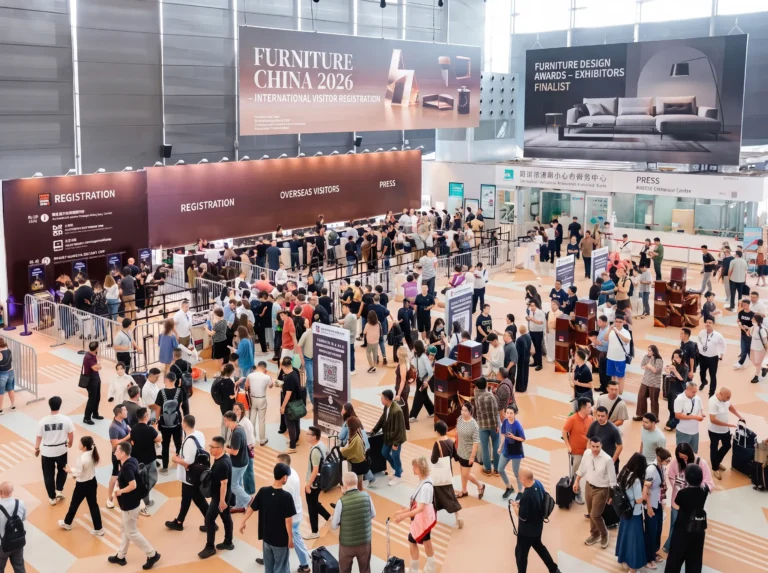



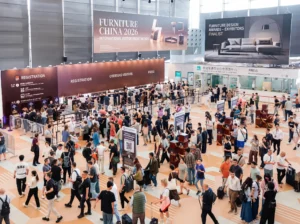





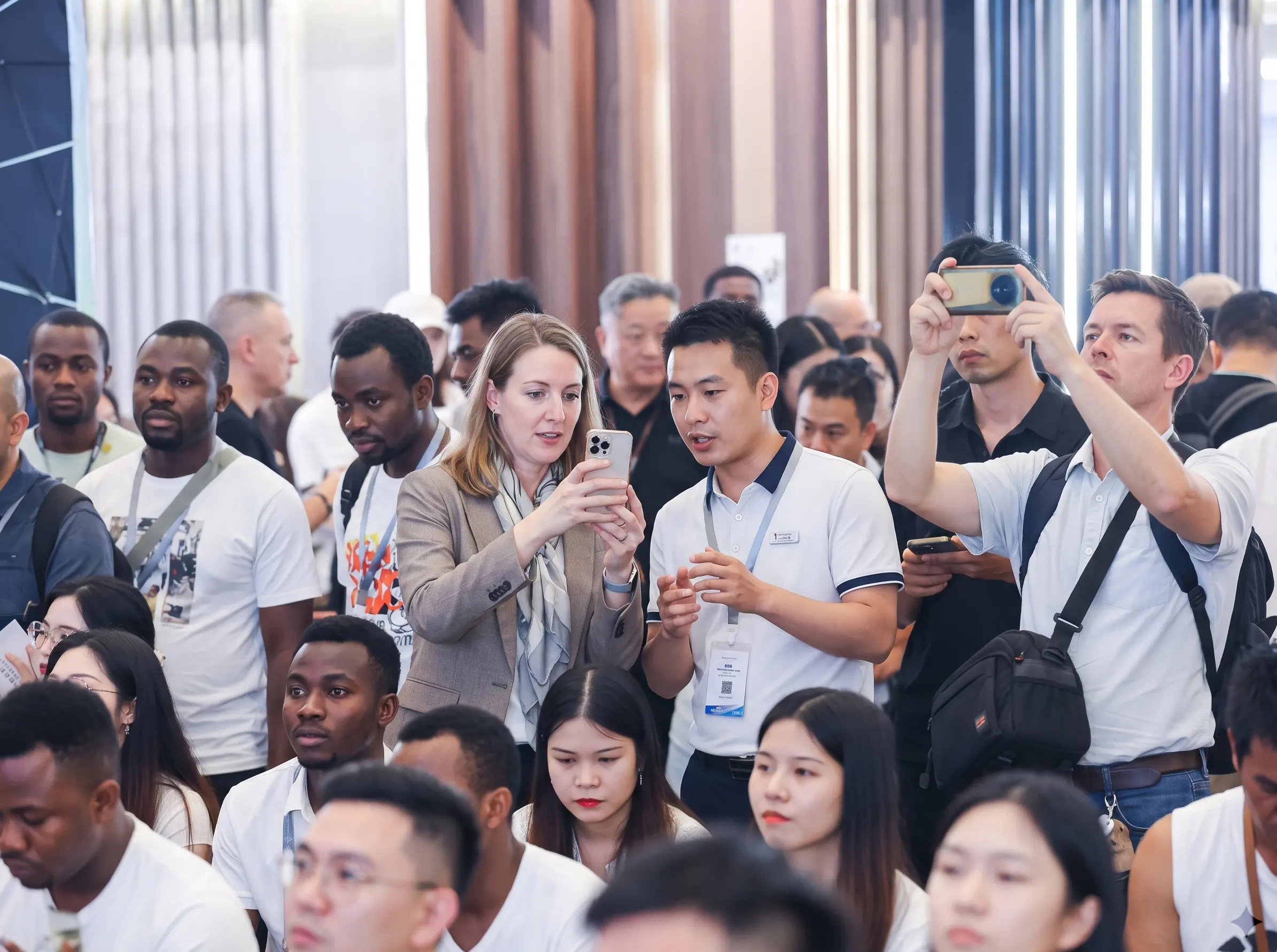
Furniture China 2026 opens September 8 at Shanghai New International Expo Centre (SNIEC, Pudong) — the day CIFF Shanghai closes at NECC Hongqiao. With 3,200+ exhibitors across 350,000 sqm and an expected 200,000 professional visitors, this is not a design spectacle. It is a trade execution machine built for export. The E1 International Brand Hall hosts exhibitors from 25 countries including HTL, Ashley, and Amini. For serious importers, the question is not whether to attend. It is why they would waste time anywhere else.
Why Furniture China (Not CIFF) Is the Importer’s Fair
The SNIEC Advantage — Pudong vs. Hongqiao
Furniture China 2026 runs September 8–11 at SNIEC (No. 2345 Longyang Road, Pudong), and the venue is engineered for international arrivals. The Maglev train and Metro Line 2 connect Pudong International Airport directly to the exhibition area — no cross-city transfer, no hour-long taxi rides through Shanghai traffic.
The timing creates a natural “relay race” with CIFF Shanghai (September 5–8, NECC Hongqiao). When CIFF closes its doors on September 8, Furniture China opens its on the same day. For importers flying in internationally, the practical route is simple: land at Pudong Airport, take the Maglev or Metro Line 2 straight to the venue, and start sourcing.
Export DNA — The “Dual Circulation” Reality
The official positioning of Furniture China is “dual circulation” — serving both export and domestic markets. But look at the floor plan and the reality is clear: the E1 International Brand Hall and the export-oriented supplier base are the core draw. This is where suppliers come specifically to talk to buyers with containers to fill.
The difference versus CIFF Shanghai matters. CIFF leans toward the domestic market and design showcase; Furniture China leans toward B2B export trade and supply-chain matching. Running concurrently, Maison Shanghai (September 7–10, SWEECC) adds the design and lifestyle dimension — creating a “sourcing + design” dual-fair ecosystem that no other Chinese furniture week replicates.
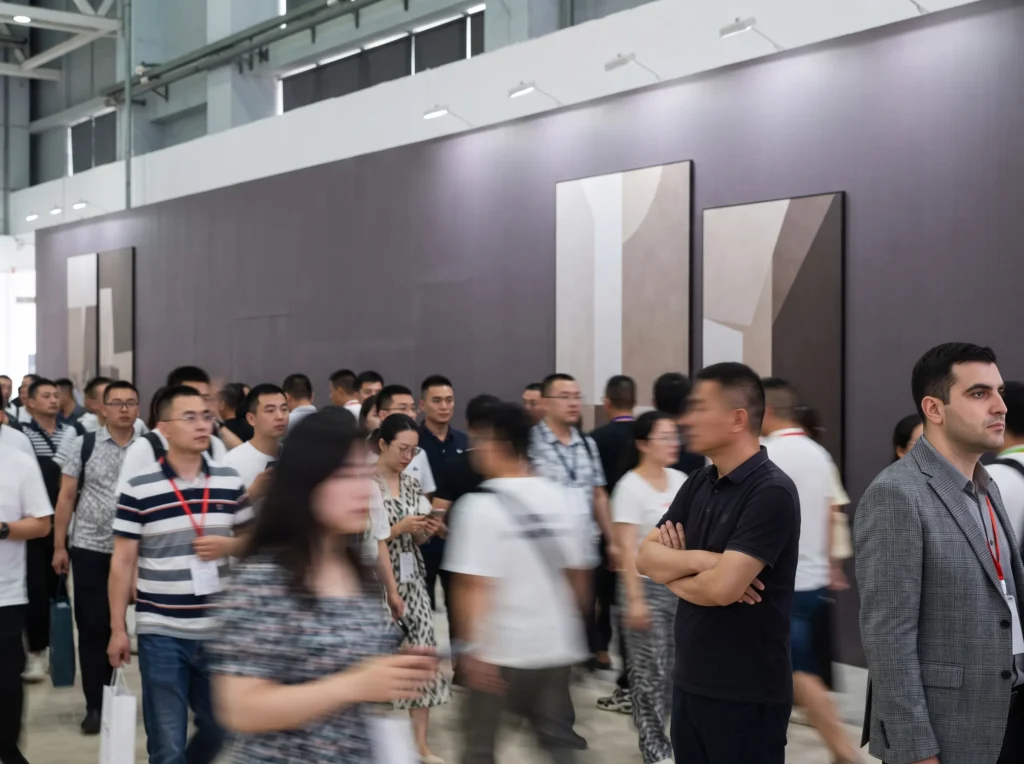
Furniture China vs. CIFF Shanghai 2026 — Importer’s Comparison
| Dimension | Furniture China (Sept 8–11, SNIEC) | CIFF Shanghai (Sept 5–8, NECC) |
|---|---|---|
| Core Identity | Export-oriented B2B trade platform | Domestic market + design showcase |
| International Buyer Focus | E1 Hall: 25-country brands, concentrated export suppliers | Dispersed across halls, domestic dealers dominate |
| Venue Accessibility | Pudong Airport → Maglev/Metro Line 2 direct | Hongqiao Rail/Airport friendly; international flights require cross-city transfer |
| Concurrent Ecosystem | Maison Shanghai design fair (Sept 7–10, SWEECC) | WMF woodworking machinery show (Sept 5–8, NECC) |
| Best For | Importers, distributors, project buyers seeking export-ready suppliers | Retailers, designers, domestic channel builders |
The 2026 Hall Structure — Where Exporters Actually Live
E1 International Brand Hall — The Exporter’s Front Door
The E1 International Brand Hall brings together exhibitors from 25 countries, with international names including HTL, Ashley, and Amini returning. But the structural significance of the four international halls goes beyond brand display: this is where export compliance standards — UL, CE, CARB — get validated in one concentrated zone. If a supplier is in E1, they have already paid the price of entry for serious export business.
Category Upgrades That Matter for 2026
Several hall-level changes for 2026 directly affect importers:
E4 Outdoor Furniture Hall upgraded — responding to rising global demand for outdoor living, garden, and resort furniture. If your market is patio, hospitality, or contract outdoor, this is now a priority stop, not an afterthought.
N2 Dining Plus — new hall — dining tables and chairs presented through complete restaurant scenarios and spatial solutions. This is how you assess whether a supplier understands how their product actually performs in a commercial setting.
E5 Commercial Furniture Hall (renamed) — refocused on office, contract, and commercial furniture applications. Project buyers and contract specifiers should build this into their route.
FMC supply-chain zone — 800+ supply-chain enterprises covering motion systems, smart components, fabrics, leathers, and surface materials. Importers building private-label or component-level programs can skip the finished-goods floor entirely and go straight here.

The 48-Hour Importer’s Sprint
Day 1 (Sept 8) — Hall E1 + International Pavilions
Goal: lock in 5–8 core suppliers with verified export capability.
Your verification checklist for every serious conversation: export certification documents (CE, UL, CARB), specific past project cases, and FOB price benchmarks. Ask for the certificate numbers, not just the logos.
Day 2 (Sept 9) — Category Deep Dives (E4 Outdoor, N2 Dining, E5 Commercial)
Goal: vertical category price comparison with BOM consistency.
Key actions: request production samples — not booth prototypes, which are often hand-finished one-offs — and confirm MOQ flexibility and lead-time elasticity. If a supplier quotes you on a booth prototype, you are not buying what you saw.
Day 3 (Sept 10) — Maison Shanghai Crossover
The last day of Maison Shanghai (September 7–10, SWEECC). Goal: design-trend intelligence and high-end soft-furnishing supplementation — and, critically, to validate whether your short-listed Furniture China suppliers can actually translate design trends into production.
Day 4 (Sept 11) — Factory Audits & Contract Lock
Goal: post-show factory verification. Suppliers in the Pudong vicinity can be audited same-day; for the furniture manufacturing belt, fly to Foshan/Dongguan the next morning.
Key actions: sample confirmation, contract term lock-in, deposit payment intent. Do not leave Shanghai with “we’ll send you the quote” — leave with a signed term sheet.

The “Dual-Show” Strategy — Furniture China + Maison Shanghai
Why the Combination Matters
The two fairs split the buying brain cleanly:
Furniture China (Sept 8–11, SNIEC) = supply chain, manufacturing, trade execution
Maison Shanghai (Sept 7–10, SWEECC) = design, lifestyle, market intelligence
Maison Shanghai’s four core themes — Eastern culture and materials, future living and technology, original design and creativity, and cross-boundary design lifestyles — give importers a read on where end-consumer markets are heading. The practical value for an importer: use Maison Shanghai trend signals to reverse-validate your Furniture China suppliers’ design follow-through capability. A factory that can absorb a trend from Maison Shanghai in September and have samples ready by November is a factory worth a container.
Single Fair vs. Dual-Show Strategy
| Strategy | Time Investment | Best For | Risk |
|---|---|---|---|
| Furniture China Only | 3 days | Cost-focused importers, standardized SKU buyers | Missing design trend signals |
| Maison Shanghai Only | 2 days | Design-led retailers, boutique buyers | Missing manufacturing/supplier access |
| Dual-Show (Recommended) | 4–5 days | Serious importers building seasonal assortments | Logistical complexity (SNIEC ↔ SWEECC) |
Red Flags — When an “Export-Ready” Supplier Is Not
A booth in E1 is a signal, not a guarantee. Watch for these five high-risk signals:
1.E1 booth but no specific destination-market certifications — cannot produce US CARB, EU CE, or UK UKCA documentation on request.
2.Claims of serving major US/EU clients but no specifics — no project names, no buyer contact they can reference.
3.Quotes in RMB FOB instead of USD/EUR — suggests a domestically focused operation with thin export experience.
4.Blank stare at Incoterms — no working knowledge of sea-freight furniture surcharges or destination-port clearance.
5.“Factory direct” but a trading-company business card — business scope without “manufacturing,” or an address that is an office tower, not a plant.

FAQ
Should I attend CIFF Shanghai, Furniture China, or both?
If your schedule and budget allow only one fair, Furniture China is the more focused choice for export-oriented importers. If you can do both, the CIFF (Sept 5–8) → Furniture China (Sept 8–11) relay is viable — but note the pressure: day one of Furniture China overlaps day four of CIFF, and the NECC Hongqiao to SNIEC Pudong transfer on September 8 is a real logistical cost. Plan the crossover deliberately, not optimistically.
Is Furniture China only for big importers?
No. With 3,200+ exhibitors, the fair spans everything from OEM giants to mid-size custom factories, and MOQ flexibility is generally higher than at CIFF. That said, the brands in the E1 International Hall typically carry higher minimum-order thresholds — budget accordingly if your program targets those suppliers.
How does Maison Shanghai add value if I am only sourcing finished furniture?
Maison Shanghai’s H2 hall “New Channel Selection” presents curated products from vetted Chinese manufacturers — a useful secondary validation source alongside your Furniture China shortlist. Beyond that, its four theme zones give you the market-intelligence layer that a pure trade floor cannot.
What is the realistic MOQ and lead time at Furniture China?
For standard finished goods, FOB MOQs typically run one 40HQ container or a mixed-container arrangement; custom MOQs depend on tooling complexity. Standard lead time is 45–60 days — but in the post-show peak (one to two months after the fair), expect stretch-out to 75–90 days. Price your seasonal calendar backwards from that reality.
Do I need a visa invitation letter from the organizer?
Complete your online pre-registration two to three weeks in advance. Furniture China and Maison Shanghai are operated by the same organizer (CNFA + IM Sinoexpo), and their registration systems are interconnected — one registration flow covers both fairs.
Recommended Resource
Interi Furniture specializes in custom furniture manufacturing for residential, hospitality, and commercial projects. Their experience in materials, craftsmanship, and project realization makes them a valuable resource for designers and buyers seeking tailored furniture solutions from China.