








If you can attend only one furniture-focused event, choose CIFF Guangzhou. If your job is trend forecasting, design direction, or premium branding, add Shenzhen Design Week first. If you need broad export-ready suppliers and can stay into late April, add Canton Fair Phase 2—the furniture phase—not Phase 1. The strongest buying sequence is Shenzhen, CIFF home furniture, Foshan factory audits, then CIFF commercial or office week and Canton Fair Phase 2 if your category justifies the extra days. This Spring trade show guide gives the order, budget, and supplier-screening method.
Industry calendars currently list Shenzhen Home Design Week and the Shenzhen International Furniture Fair for March 15–17, 2027 , CIFF Guangzhou for March 18–21 and March 28–31, 2027 , and the 141st Canton Fair for its usual April cycle . Every 2027 date, phase, hall, and badge rule in this article is subject to official confirmation. Do not buy non-refundable travel until the organizers publish the final notices.
Why Buyers Feel Spring 2027 Is a Scheduling Trap
In the furniture fair China calendar, March and April are not three versions of the same event. They form a supply-chain relay with different exhibitor mixes, buyer qualifications, price behavior, and decision speeds.
The trap is treating a long itinerary as a shopping marathon. Guangzhou’s Pazhou complex alone can consume a careless buyer for days. Shenzhen rewards visual literacy more than procurement discipline. Canton Fair adds enormous breadth, but its furniture suppliers sit in Phase 2 rather than Phase 1—a detail that has ruined more than a few flight schedules. Current planning guidance places the expected 141st Canton Fair phases on April 15–19, April 23–27, and May 1–5, 2027, with furniture in the second block; all are subject to official confirmation .
More booths do not automatically mean better suppliers. Buyers lose money when they arrive without a supplier hypothesis, accept a polished display as proof of factory capability, and learn after the fair that the real production partner was never at the show.
What Each Event Is Actually For
CIFF Guangzhou
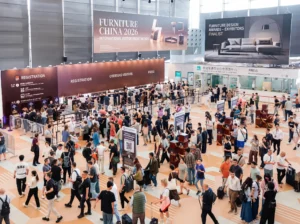
CIFF, or the China International Furniture Fair, is the specialist event. Its Guangzhou edition is divided by product mission: home furniture and decoration first, followed by office, commercial, hotel, healthcare, machinery, components, and materials. Official 2026 buyer guidance uses the same March 18–21 and March 28–31 split, so the published 2027 pattern is credible but still subject to official confirmation .
For most volume buyers, CIFF is the core China furniture show 2027 because factory participation is unusually dense. That does not mean every exhibitor is a factory. It means the show gives you the best probability of standing across a table from the production team, seeing a broader collection, and arranging a next-day factory audit.
CIFF’s weakness is specialization. If you need general merchandise, gifts, packaging, and home textiles in the same basket, it will not cover everything. Strong visitors arrive with target booths and factory appointments already mapped.
Shenzhen Design Week and Shenzhen International Furniture Fair
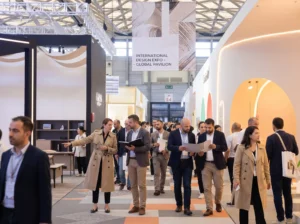
Shenzhen is where design language, smart-home integration, whole-house customization, and brand positioning tend to surface earlier. Industry listings place the 2027 event at the Shenzhen Convention & Exhibition Center in Futian on March 15–17, 2027, subject to official confirmation .
This is the least suitable venue for a buyer whose only objective is an immediate order. Booth conversations often center on concept, finish, custom systems, lighting, and brand story. Many premier displays are built for design influence rather than same-week procurement.
Go to Shenzhen when you need to know what your market may want in 2028, when differentiation depends on finish and design, or when you are qualifying an OEM partner for a premium collection. Skip it if your business needs containers of proven SKUs at the lowest workable landed cost.
Canton Fair
The Canton Fair is China’s broadest export marketplace. Furniture belongs in Phase 2, together with building and decorative materials, household items, kitchenware, ceramics, gifts, and home decoration. The commonly repeated “Canton Fair Phase 1 for furniture” advice is wrong for most finished-furniture buyers. Phase 1 is primarily electronics, machinery, lighting, hardware, tools, and industrial categories; all 2027 phase assignments remain subject to official confirmation .
Canton Fair has more trading companies and export intermediaries than CIFF. That is not automatically bad: a professional exporter may handle mixed SKUs, documentation, and consolidation better than a small workshop. The mistake is paying factory-direct prices without verifying who controls production.
The Three-Show Comparison
| Decision point | Shenzhen Design Week | CIFF Guangzhou | Canton Fair Phase 2 |
|---|---|---|---|
| Primary job | Trends, design, smart home, premium positioning | Furniture sourcing and supplier qualification | Broad export sourcing and category comparison |
| Listed 2027 window | March 15–17, subject to official confirmation | March 18–21 and March 28–31, subject to official confirmation | April 23–27, subject to official confirmation |
| Best for | Designers, brand teams, product developers, premium OEM buyers | Importers, wholesalers, retailers, FF&E buyers, e-commerce sellers | Mixed-category importers and buyers comparing export packages |
| Factory density | Medium | Highest for specialist furniture | Mixed; exporter presence is stronger |
| Immediate ordering | Limited | Strong after verification | Possible, but verify who controls production |
| Trend value | Highest | High | Moderate |
| Main weakness | Weak for straightforward order placement | Too large without a route plan | Furniture is only one part of a broad fair |
| Badge priority | Complete event registration early | Pre-register and upload company credentials | Register through the official Buyer Service System |
The buyer badge is not a minor detail. Canton Fair guidance for overseas buyers normally involves a named Overseas Buyer Badge rather than a public ticket, while current guidance says badge application, replacement, and renewal are free; the 2027 fee and document policy must still be checked when the session notice opens .
The Route That Makes One Trip Worth It
The efficient sequence is Shenzhen first, CIFF home furniture immediately afterward, then factory audits after the booths close.
| Date | Location | Action | Why it matters |
|---|---|---|---|
| March 14, 2027, subject to official confirmation | Shenzhen | Arrive and collect badge | Avoid using the first morning for administration |
| March 15–17, 2027, subject to official confirmation | Shenzhen | Design Week and furniture fair | Identify trend direction and premium OEM candidates |
| March 18–21, 2027, subject to official confirmation | Guangzhou | CIFF home-furniture phase | Compare factories, collections, MOQs, and finishes |
| March 22–27, 2027, subject to official confirmation | Foshan, Shunde, Longjiang, Dongguan | Factory audits and showroom checks | Separate exhibition performance from production reality |
| March 28–31, 2027, subject to official confirmation | Guangzhou | CIFF office, commercial, hotel, machinery, and materials phase | Useful for FF&E, workplace, hospitality, and sourcing teams |
| April 23–27, 2027, subject to official confirmation | Guangzhou | Canton Fair Phase 2 | Compare export-ready suppliers and broaden the category basket |
If you cannot spare three weeks, compress rather than dilute. A seven-day procurement trip can cover Shenzhen, CIFF home week, and two factory days. A ten-day B2B trip can add CIFF commercial week. Keep Canton Fair only if Phase 2 categories outside furniture are genuinely important or if your first two stops did not produce enough verified suppliers.
Shenzhen to Guangzhou is a practical rail movement, and Pazhou connects efficiently with the Foshan factory belt. A hotel far from your morning hall can quietly cost ninety minutes a day.

Registration, Documents, and Badge Discipline
CIFF’s 2026 buyer checklist asks visitors to register online, upload business credentials, and review the exhibitor directory before arrival .
Carry the original passport used for registration, company registration extract, matching business cards, and a bilingual buying brief covering category, materials, price band, annual volume, market, certifications, and OEM or ODM needs.
For Canton Fair, use only the official buyer registration channel. Do not buy a “guaranteed badge” from an unofficial agent. Third-party invitation letters and expedited badge services may appear to work, but they create avoidable identity, payment, and entry risk. Visa processing is separate from fair registration; an invitation can support a business visa application without guaranteeing either the visa or badge approval.
Budget: Plan for Productive Days, Not Just Entry Tickets
The following ranges are working budgets for one overseas buyer in March-April 2027. They are planning estimates rather than organizer prices and exclude international airfare.
| Budget item | Lean trip | Comfortable B2B trip | What changes the price |
|---|---|---|---|
| Shenzhen hotel, three nights | USD 240–420 | USD 450–750 | Distance to Futian and cancellation flexibility |
| Guangzhou hotel, five nights | USD 400–700 | USD 800–1,400 | Pazhou proximity and fair-period compression |
| CIFF commercial-week hotel, four nights | USD 320–560 | USD 650–1,100 | Booking date and access to the exhibition district |
| Canton Fair hotel, five nights | USD 450–800 | USD 900–1,600 | Late April demand and mixed-category buyer traffic |
| Local transport | USD 120–250 | USD 350–700 | Factory car, interpreter, and cross-city rail |
| Food and incidentals | USD 180–300 | USD 400–650 | Client meals and business hospitality |
| Interpreter or sourcing support | USD 0–400 | USD 800–2,000 | Language, factory-audit scope, and negotiation support |
| Samples and couriers | USD 100–400 | USD 500–1,500 | Fragile pieces, split shipments, and custom finishes |
| Total planning range | USD 1,810–3,830 | USD 4,850–9,600 | Scope, service level, and booking timing |
Tie the budget to order value. Spending USD 6,000 to protect a USD 80,000 container program can be rational; spending it to collect catalogs for an undecided idea is not.
How to Tell a Factory From a Trading Company at the Booth
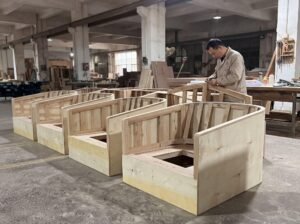
Ask questions that expose process control. A factory can normally explain line capacity, material sourcing, curing or drying time, upholstery workflow, testing, rework, and outsourced operations. A trading company often pivots to catalog breadth and flexible sourcing.
| On-site signal | More likely factory | More likely trading company or brand intermediary |
|---|---|---|
| Company name vs booth display | Legal manufacturer name appears consistently | Several brand labels or an unrelated export-company name |
| Technical answer | Explains machinery, materials, tolerances, and bottlenecks | Focuses on assortment, low MOQ, and one-stop service |
| Facility response | Invites an audit with address, contact, and production window | Avoids direct factory visit or routes it through an unnamed partner |
| Sample ownership | Can show prototype iteration and production drawings | Shows polished samples with limited construction detail |
| Price behavior | Separates material, labor, tooling, packaging, and margin logic | Quotes quickly but cannot reconcile spec changes |
| Export control | May focus on production and rely on an export arm | Strong on documentation, consolidation, and mixed-SKU orders |
| Certificate check | Can connect test reports to exact models and materials | Provides generic certificates that do not match the displayed SKU |
A trading company is not a defect. The defect is misrepresentation. Some of the best export partners combine factory relationships, quality control, and logistics better than a single workshop. Pay for verified value, not for a label.
Prices, Samples, and the “New Product” Filter
Treat exhibition quotes as opening positions. Booth costs, sample transport, staffing, and customer acquisition can push show prices above later ex-factory quotes, especially after volume, packaging, finish, or Incoterm changes.
Ask every shortlisted supplier for the same written specification: model reference, dimensions, materials, foam density or wood species where relevant, finish, hardware, upholstery, carton size, loading quantity, MOQ, production lead time, warranty, Incoterm, payment term, and valid quotation date. Without that common sheet, you are comparing booth performances rather than products.
Filter the spring “new product” claim. Many launches are proven frames with revised proportions, fabric, color, or hardware. That is acceptable when construction is proven; it becomes a problem when a restyled old model is priced like a new engineering platform.
Samples should answer a manufacturing question. Order a production pilot when dimensions, finish, packaging, or assembly matter. For upholstery, check seam consistency, frame stability, foam recovery, odor, and fabric alignment before approval.

High-Risk Behaviors and How to Control Them
| Risk | What it looks like at the fair | Control method |
|---|---|---|
| Badge and invitation abuse | Paid “fast badges,” borrowed identities, unofficial invitation channels | Use organizer portals and keep registration consistent with passport and company records |
| Factory impersonation | Factory photos without address, machinery, or production evidence | Match business license, utility or lease evidence where appropriate, and audit before deposit |
| Quote inflation | A single attractive fair price with vague specifications | Requote against one written BOM and one Incoterm after volume is confirmed |
| Design-week ordering trap | Committing to a concept before engineering, MOQ, or lead time is proven | Treat Shenzhen as screening, then move qualified projects into CIFF or factory review |
| Phase mismatch | Arriving at Canton Fair during the wrong product phase | Verify the 2027 category matrix when released; furniture normally belongs in Phase 2 |
| Sample substitution | Approved sample differs from bulk goods | Lock golden samples, inspection criteria, tolerance limits, and photo evidence in the purchase contract |
| Trader overpayment | Factory-direct promise without process control | Pay for real services, but compare direct and intermediary landed costs |
| Pressure deposits | “Today-only” booth pricing or refusal to document terms | Walk away; legitimate suppliers can hold a quotation long enough for due diligence |
Use the gap between CIFF and Canton Fair for factory visits, sample revisions, credit checks, and reference calls. A supplier that cannot survive ordinary verification is not ready for a container order.
Which Buyers Should Choose Which Route
| Buyer type | Recommended route | Reason |
|---|---|---|
| Furniture importer or wholesaler | CIFF home week, factory audits, CIFF commercial week if relevant | Highest density of comparable specialist suppliers |
| Amazon, Wayfair, or Shopify seller | Shenzhen if differentiation matters, then CIFF and factory days | Trend screening plus production reality and margin control |
| Retail buyer with fixed SKUs | CIFF first, Canton Fair Phase 2 only for backup suppliers | Faster comparison of proven collections |
| Hotel, office, or FF&E project buyer | CIFF commercial and office phase, factory audits, targeted Canton visit | Project capacity and installation support matter more than novelty |
| Interior designer or trend researcher | Shenzhen Design Week, then selected CIFF design halls | Stronger signal on direction than immediate procurement |
| First-time small B buyer | CIFF home week plus supervised Lecong or factory visit | Lower complexity and better supplier education |
| Mixed-category importer | CIFF for furniture depth, Canton Fair Phase 2 for adjacent categories | Combines specialist depth with export breadth |
First-time buyers should not try to see everything. Choose one product family, shortlist suppliers before travel, and leave two afternoons for follow-up. Verified notes beat a photo archive of five hundred booths.

Frequently Asked Questions
When will CIFF Guangzhou 2027 confirm its official spring dates?
Current industry listings show March 18–21, 2027, and March 28–31, 2027, but the dates remain subject to official confirmation. Check the official CIFF Guangzhou notice and exhibitor-service channel before purchasing non-refundable flights or hotels.
If I can attend only one show, which one should I choose?
Choose CIFF Guangzhou if your objective is furniture sourcing. Add Shenzhen only when design direction materially affects your buying decision. Add Canton Fair Phase 2 when you need adjacent categories, backup suppliers, or a broader export comparison.
Can I visit Canton Fair without a registered company?
Canton Fair is a trade event, and overseas buyers normally apply through the official Buyer Service System with identity and business information. Requirements can change by session, so a sole proprietor or very small business should check the 141st-session rules rather than assume consumer entry or informal badge access.
Is Shenzhen Design Week worth attending for a serious buyer?
Yes for designers, brand teams, premium OEM development, and trend-led product planning. It is usually poor value for a buyer who only wants to place a straightforward order quickly. If your time is limited and margin-driven sourcing is the goal, prioritize CIFF and factory audits.
Can I trust the price quoted on the exhibition floor?
Use it as a negotiating reference, not as the final landed cost. Requote after confirming quantity, specification, packaging, Incoterm, payment term, and production timeline. The fair price may include show costs or assume a different configuration from the one you actually need.
Make Your 2027 Trip Decision Before the Market Decides It for You
Which show belongs in your itinerary: Shenzhen for direction, CIFF for sourcing depth, or Canton Fair for export breadth? Tell us your product category, target market, and trip length, and we will map the route we would personally take.
Recommended Resource
Interi Furniture specializes in custom furniture manufacturing for residential, hospitality, and commercial projects. Their experience in materials, craftsmanship, and project realization makes them a valuable resource for designers and buyers seeking tailored furniture solutions from China.