



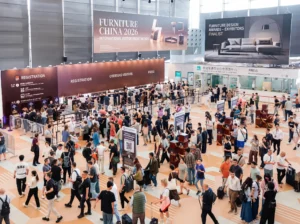






Treat every 2027 date in this Autumn trade show guide as provisional until CIFF, Furniture China and Canton Fair publish session notices. The 2026 reference pattern was CIFF Shanghai on September 5–8 and Furniture China on September 8–11, with CIFF Shanghai 2027 still listed as TBD by event directories and Furniture China expected in early to mid-September. The autumn Canton Fair ran October 15–November 4 in 2026; furniture is normally a Phase 2 category, not the main Phase 1 story. All 2027 dates, halls, badge rules and session layouts are subject to official confirmation.
Book Shanghai first, split CIFF Shanghai and Furniture China by objective, then treat Canton Fair autumn as a verification, comparison and supplementary orders stop. If you can attend only one Shanghai show, choose Furniture China for export-order factories; choose CIFF Shanghai for broader brand, office, hotel, machinery and supply-chain coverage. Autumn is not a quiet season. It is the last practical window to confirm 2027 orders, reserve capacity and still hit pre-holiday shipping. The working sequence is Shanghai in early-to-mid September, factory visits within 72 hours, written production slots before departure, then Guangzhou in October only if you need broader market checks, furniture-specific Phase 2 exposure or factory audit support. Search behavior calls it 2027 China furniture show Autumn; procurement reality calls it the last order-confirmation window.
The real problem: your fair calendar is not your delivery calendar
By September, the anxiety is no longer “Which sofa will sell?” It is “Can this factory actually ship before Golden Week, Christmas stock-up and Chinese New Year?” A fair booth can show beautiful product, but it cannot cut plywood, hire sewing lines, book containers or guarantee a vessel space.
The buyers who get hurt in autumn usually make one mistake. They collect new series, compare design language and leave without written production slots. Six weeks later, the same factory is full, the quote changes, the carton mark is wrong and the forwarder is quoting peak-season surcharges.
Autumn shows reward discipline. Come with a short product brief, target landed cost, inspection standard and a maximum acceptable ship date. Leave with fewer suppliers, not more.

What the three shows are actually for
The overlap between CIFF Shanghai and Furniture China makes buyers think the choice is random. It is not. The two Shanghai shows can look similar on a floor plan, but the commercial gravity is different.
| Show | 2027 planning window | Venue pattern | Real function | Best buyer fit | Main risk |
|---|---|---|---|---|---|
| CIFF Shanghai | Early September expected; 2026 ran Sep 5–8 | National Exhibition and Convention Center, Hongqiao | Broad industry platform: home, outdoor, office, hotel, machinery, materials, brands and domestic/export mix | Buyers who need category breadth, brand stories, commercial space or East China supply-chain context | Wider does not always mean more export-ready; some booths are better at presentation than repeat production |
| Furniture China | Early-to-mid September expected; 2026 ran Sep 8–11 | Shanghai New International Expo Centre, Pudong pattern | Export-oriented finished furniture, OEM/ODM, upholstery, tables and chairs, outdoor and manufacturing resources | Importers, wholesalers, private-label buyers and e-commerce sellers comparing repeatable suppliers | A polished export booth can still hide a trading company or outsourced key processes |
| Canton Fair, autumn | October 15–November 4 pattern expected; furniture normally Phase 2 | China Import and Export Fair Complex, Pazhou | Broad foreign-trade ecosystem, category comparison, supplier verification,supplementary orders and market temperature | Buyers already shortlisting suppliers, checking claims, adding adjacent categories or auditing after Shanghai | Attending Phase 1 for furniture is usually the wrong door; use the phase map before booking |
CIFF Shanghai: definition and buyer logic
CIFF Shanghai is the Shanghai edition of the China International Furniture Fair system, historically staged around Hongqiao’s National Exhibition and Convention Center. Its strength is coverage: home furniture, outdoor living, soft furnishings, office and commercial furniture, hotel-related products, machinery and materials under one roof. For overseas buyers, the value is context. You can see what Chinese brands want to become, which materials are moving, and how domestic retail pressure is pushing factories toward faster design cycles. For pure export order confirmation, it is powerful only if you pre-filter exhibitors and go in with a sourcing brief.
Furniture China: definition and buyer logic
Furniture China is Shanghai’s more internationally trade-facing furniture platform, traditionally associated with Pudong’s SNIEC pattern and a strong export supplier base. The useful mindset is not “design fair” but “order desk.” Many exhibitors are comfortable discussing Incoterms, OEM packaging, container loading, overseas compliance and repeat production. That does not make every booth a factory. It means the conversation can move faster from catalog to quotation, sample, capacity and inspection if you ask operational questions early.
Canton Fair: definition and buyer logic
Canton Fair is China’s broad import-export marketplace, held in Guangzhou with a three-phase structure. For furniture buyers, the critical point is phase selection: recent schedules place furniture with building materials, sanitary ware, household items, garden products and related consumer categories in Phase 2, while Phase 1 is heavier on electronics, machinery, lighting, hardware, vehicles and industrial supply. If your autumn goal is furniture supplier comparison, verification or supplementary orders, plan around the correct phase and use the gap days for factory visits, not extra hall wandering.
CIFF Shanghai 2027 dates and buyer guide: how to split the Shanghai double-booking
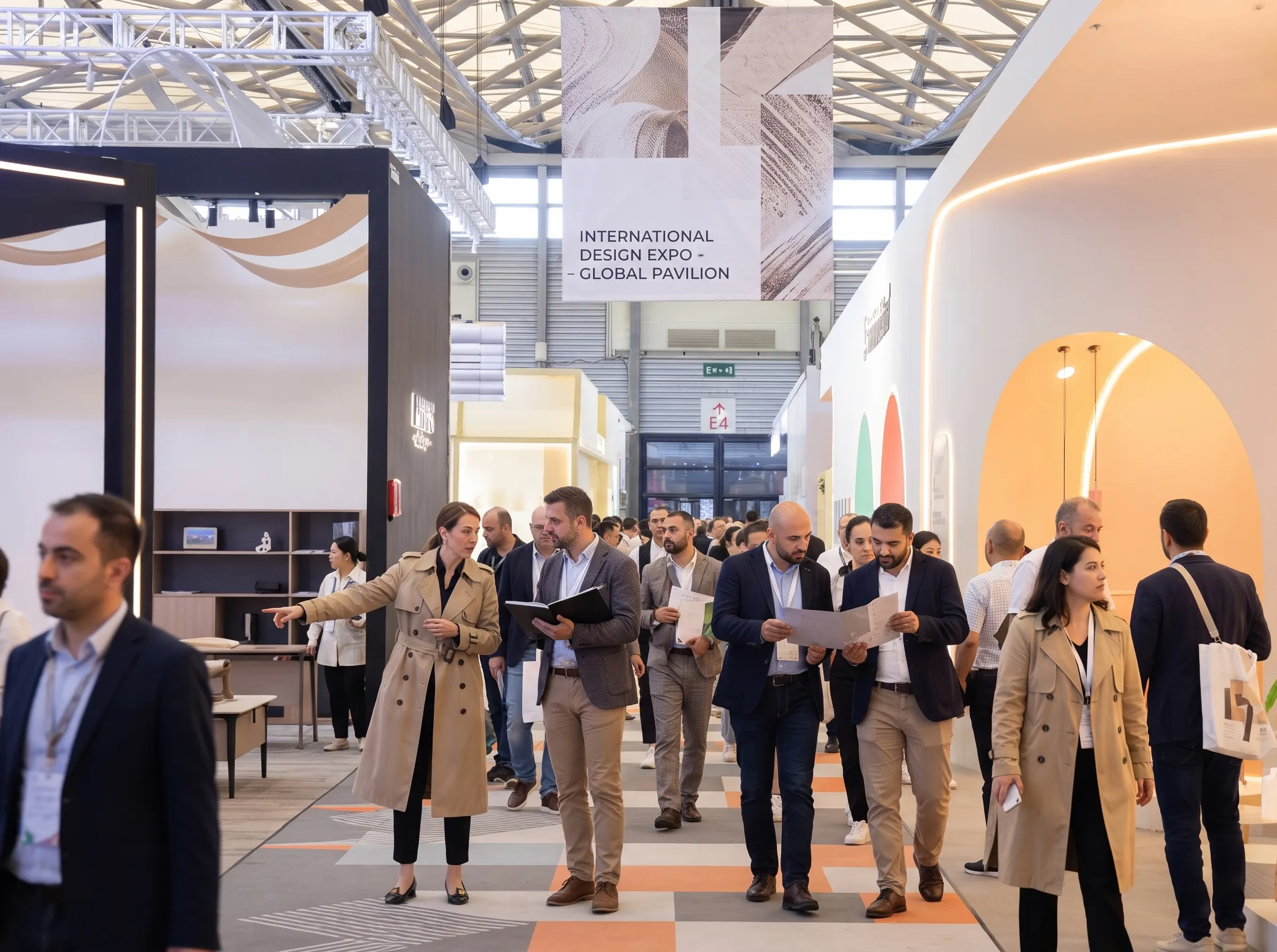
If both Shanghai shows overlap in September, do not try to “cover both” without a rule. Use a product-lane rule and a decision deadline. Spend your first half-day on mapping, then commit.
| If your priority is | Attend first | Spend limited time at | Leave Shanghai with |
|---|---|---|---|
| Export-ready sofas, beds, dining sets, OEM cases | Furniture China | CIFF Shanghai targeted halls only | Shortlist with quoted MOQ, fabric options, lead time and production site |
| Office, hotel, commercial space, machinery or materials | CIFF Shanghai | Furniture China only if residential overlap matters | Supplier map plus technical specs and factory location |
| Brand direction, domestic retail signals, design context | CIFF Shanghai | Furniture China for export execution | Trend notes plus a separate operational shortlist |
| First China trip, limited Chinese support, tight calendar | Furniture China | CIFF Shanghai by appointment only | Fewer suppliers, but cleaner order files |
The blunt trade-off is this. Furniture China is often easier for turning conversations into purchase orders. CIFF Shanghai is often better for reading the industry and covering non-residential categories. If you are a retail buyer with a fixed container plan, choose the show that gets you to factory terms faster. If you are sourcing FF&E, office or mixed categories, CIFF Shanghai can earn its keep.
A practical split is two days for your primary show, one targeted half-day for the secondary show, then at least two factory days in Jiangsu, Zhejiang, Foshan, Dongguan or Guangzhou depending on the category. Shanghai is not the factory. It is the meeting room.

September-October route: connect the fairs without losing the point
The best route is not the most ambitious route. It is the route that leaves enough time for paperwork and production follow-up.
| Trip block | Planning window subject to official confirmation | Use it for | Do not waste it on |
|---|---|---|---|
| Shanghai arrival and badge prep | 1–2 days before your first show | Registration check, hotel-to-venue test, meeting confirmations, product brief review | Last-minute catalog browsing without specs |
| Primary Shanghai show | 2 days | Targeted halls, quotation capture, factory identity questions | Collecting every brochure |
| Secondary Shanghai show or targeted revisit | 0.5–1 day | Fill category gaps only | Repeating the same product conversations |
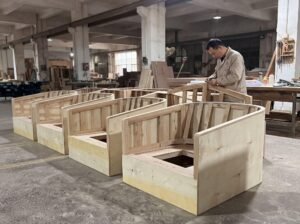
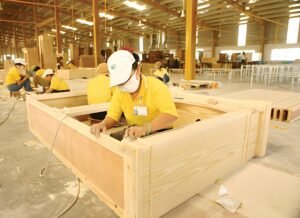
| East China factory visits | 1–3 days after Shanghai | Verify production site, lines, QC process, packing and subcontracting | Accepting a sales-office tour as a factory audit |
| Canton Fair, correct phase | October window expected | Compare shortlisted suppliers, check market pricing, meet back-up factories, arrange supplementary orders | Assuming Phase 1 is the main furniture phase |
| Pearl River Delta verification | After Canton Fair or between phases | Audit urgent suppliers, resolve sample issues, confirm inspection access | Adding new suppliers without verification capacity |
High-speed rail between Shanghai and the Pearl River Delta is workable, but flights can be more predictable when schedules are tight. The bigger issue is not transport; it is leaving enough unbooked hours for factory visits. Buyers who fill every hour with booths usually return home with contacts and no production truth.
The deadline math: fair order to pre-holiday shipping
Your landed-date risk starts the moment you say “we like it.” Use a backward plan from your retail or project date, then add buffer for autumn congestion.
| Control point | Target timing after supplier confirmation | What must be written down | Failure mode if skipped |
|---|---|---|---|
| Purchase order and deposit | Same week as fair decision | Exact SKU, spec, fabric or veneer code, carton mark, Incoterm, penalty and communication owner | Verbal order gets reprioritized when a bigger buyer appears |
| Material locking | Within 3–7 days | Foam, fabric, leather, board, hardware, finish and approved alternates | Factory substitutes material “temporarily” and asks forgiveness later |
| Sample or pre-production proof | Before mass production | Golden sample standard, measurement tolerance, color reference, packaging artwork | Mass goods drift from booth sample |
| Production slot | Before leaving China or within 7 days | Start date, QC hold points, partial shipment permission, overtime plan if any | Oral capacity promise collapses in peak season |
| Mid-production inspection | Around 30–50 percent completion for new suppliers | AQL standard, defect list, who pays reinspection, photo evidence | Small defect becomes container-level dispute |
| Final inspection and booking | Before balance payment trigger | Inspection release, vessel booking, forwarder details, cutoff and VGM timing | Goods pass inspection but miss the sailing window |
| Delivery buffer | 1–2 weeks minimum for autumn peak risk | Alternate routing, partial air option only for critical SKU, documented delay responsibility | One missed feeder vessel consumes the Christmas margin |
A simple rule: if you need stable delivery for Christmas retail, final inspection and booking should be treated as a September-October task, not a November afterthought. If Chinese New Year is the real constraint, confirm material availability and line schedule before the holiday rush compresses everything.
Budget: plan for verification, not just attendance
A fall trip becomes expensive when you add interpreters, private cars, factory audits and re-inspection. Build those into the budget before you compare booth quotes.
| Budget line | Lean solo buyer | Serious importer or project buyer | Notes |
|---|---|---|---|
| Visa, badge, invitations and document prep | $80–$250 | $150–$500 | Use official channels; keep receipts for reimbursement files |
| Shanghai hotel, 4–6 nights | $500–$1,100 | $900–$1,800 | Hongqiao and Pudong pricing differ; book near your primary venue first |
| Guangzhou hotel, 4–6 nights | $400–$900 | $800–$1,600 | Pazhou convenience saves more than a cheap distant room |
| Intercity transport | $80–$220 | $150–$350 | Rail is often efficient; flights can protect tight factory days |
| Local transport | $100–$250 | $250–$600 | Factory cars and cross-city moves cost more than metro commuting |
| Interpreter or sourcing support | $0 if self-managed | $400–$1,200+ | Define confidentiality and whether commission is accepted |
| Inspection, audit and QC reserve | $150–$400 | $500–$1,500+ | New suppliers justify higher verification spend |
| Sample consolidation and shipping | $150–$600 | $500–$1,500+ | Carton size, battery items and upholstery samples change cost fast |
| Contingency for rebooking, overtime or supplier changes | $200–$500 | $700–$1,500 | Autumn has a way of creating one expensive surprise |
The cheapest trip is often the most expensive outcome. A low hotel budget is fine. A low verification budget is not.
Spot the real factory before you negotiate
Autumn pressure makes identity questions more important, not less. Some exhibitors own factories, some coordinate several plants, and some are excellent export agents with no production asset. None is automatically bad. The risk is paying for uncertainty.
| Field signal | More likely factory | More likely trader or brand coordinator | Ask on the spot |
|---|---|---|---|
| Company name versus production address | Business license, factory name and address align | Sales office, brand name or unrelated address appears | Which legal entity signs the PI and receives payment? |
| Process ownership | Cutting, sewing, frame making, finishing or assembly happen on site | Key steps are “partner factories” | Which processes are in-house for my SKU? |
| Equipment and WIP | Machines, materials, work-in-progress and labor match the quote | Showroom is stronger than shop floor | Can I see the line that will run my order? |
| Engineering response | Tolerances, BOM changes and packaging fixes answered technically | Answers stay at sales level | Who approves a spec change and how fast? |
| Export paperwork | Familiar with your market docs but can show production control | Strong catalog, weaker operational detail | Can I visit before deposit and again during production? |
| Quotation behavior | Asks about quantity, material, inspection and ship window first | Pushes fast discount and broad category supply | What changes the price if volume rises or ship date moves earlier? |
A trading company can be a strong partner if it controls quality and disclosure. A factory can still fail you if it subcontracts quietly. The point is not to worship the word “factory.” The point is to know who carries risk when something goes wrong.

High-risk warnings for autumn orders
Autumn is when friendly booth promises meet production capacity. The risk is manageable, but only if you convert optimism into documents.
| Risk | Why it spikes in autumn | Red flag | Control that actually works |
|---|---|---|---|
| Oral capacity promises | Factories are balancing Christmas orders, domestic promotions and Chinese New Year material buying | “No problem, we can move you ahead” without line evidence | Written slot, material lock date, named production owner and delay consequence |
| Show quote inflation | Booth cost, samples and peak logistics get baked into first quotes | Price drops only after you threaten to leave | Ask for itemized EXW/FOB breakdown and what is excluded |
| Trader posing as factory | Good design and English can hide outsourced production | Evasive answers about address, equipment and WIP | License check, site visit before deposit and production-stage access |
| Inspection disputes | Damage, color drift, short shipment and packaging issues surface under time pressure | “Final inspection not necessary because we know the buyer” | AQL standard, pre-shipment inspection and clear reinspection cost owner |
| Delivery loss after payment balance | Buyers release balance before booking confirmation | Factory says goods ready but forwarder shows no space | Link balance to inspection release plus booking evidence |
| Badge and registration friction | Session rules, invitation letters and document checks can tighten | Agent promises a badge without transparent eligibility | Register through official systems and keep your own account access |
The hardest sentence to say at a booth is: “I like the product, but I need the production evidence before I discuss price.” Say it early. It saves money later.
Segment playbooks: same fairs, different jobs
| Buyer type | Show priority | Order tactic | Shipping guardrail |
|---|---|---|---|
| B2B importer or retail chain buyer | Furniture China first; CIFF Shanghai for category gaps | Negotiate program SKUs, repeatability, packaging and QC file before design admiration | Lock vessel plan and inspection release before peak surcharges |
| Cross-border e-commerce seller | Furniture China for fast-turn suppliers; Canton Fair for back-up and adjacent categories | Focus on carton size, drop-test reality, assembly instructions and replenishment MOQ | Avoid mixed-SKU cartons that explode freight cost |
| Hotel or FF&E project buyer | CIFF Shanghai for commercial and hotel categories | Confirm project references, finish durability, site delivery sequencing and spare-parts policy | Tie production milestones to interior installation dates |
| First-time small buyer or personal project | One Shanghai show only, chosen by category | Use fewer meetings, take photos of labels, request written quotes and do not prepay large deposits | Buy samples first and treat production as a second decision |
If you are a small buyer, your advantage is focus. You do not need the whole fair. You need one supplier whose risk you can understand and one backup whose risk you have at least begun to verify.

FAQ
If CIFF Shanghai and Furniture China overlap, which one should I choose?
Choose by job, not by size. For export-order conversations and OEM repeatability, start with Furniture China. For broader category coverage, office, hotel, commercial, machinery or brand direction, start with CIFF Shanghai. If time is tight, attend one show deeply and use the second only for a pre-mapped shortlist.
How is an autumn visit different from a spring visit?
Spring is often better for discovery, range and early program planning. Autumn is more operational: confirm what can ship, lock capacity, close specs and prevent pre-holiday failure. The mistake is bringing a spring browsing mindset into an autumn execution window.
Are the 2027 CIFF Shanghai and Furniture China dates official?
Not fully for planning purposes as of September 11, 2026. Event directories still show CIFF Shanghai 2027 as TBD and describe Furniture China 2027 as expected in September. Treat every date, hall and session rule as subject to official confirmation before non-refundable bookings.
When will the autumn 2027 Canton Fair dates be safe to book?
Use the stable October-November pattern only for flexible planning. The 2027 calendar had not been finally published in the sources checked close to this update, and the 2026 autumn session ran October 15–November 4. Confirm the official session notice before paying non-refundable flights, hotels or booth-related services.
Can an order placed in September still arrive before Christmas or Chinese New Year?
Often yes, but only if the order is simple, materials are available, the factory slot is written, inspection is scheduled early and ocean space is booked before peak congestion. Complex upholstery, custom finishes, new molds or multi-supplier consolidation can consume the margin fast. Do not confuse fair excitement with shipping certainty.
What should I do immediately after signing a fair order?
Send a written recap within 24 hours covering SKU, specs, materials, packaging, price term, deposit, production slot, inspection rights and delay responsibility. Then confirm the production owner, material lock date and inspection window before the booth friendship cools.
Recommended Resource
Interi Furniture specializes in custom furniture manufacturing for residential, hospitality, and commercial projects. Their experience in materials, craftsmanship, and project realization makes them a valuable resource for designers and buyers seeking tailored furniture solutions from China.