






Timeliness note: Based on the 140th Canton Fair — Phase 2 runs October 23–27, 2026. The official map lists Furniture in Area B Halls 9.3, 10.2, 10.3 and 11.3. Hall 9.2 is Art Ceramics, so don’t go looking for sofas there. Layouts change between sessions; everything below is subject to official confirmation. Verify against the current map and exhibitor directory before you book anything.
A few years back I watched a buyer from Rotterdam sit down at a Pazhou hotel bar, order a beer he didn’t drink, and explain to his colleague how he’d just saved 4% on a container of sofas. Three days of negotiation. He was proud. I didn’t have the heart to tell him what I’d seen that same morning in Hall 10.3 — same frame design, same fabric family, comparable spec sheet, opening price already below his “victory” number. He hadn’t saved anything. He’d spent two days confirming a number that was high.
That story repeats at every session. And after a decade of walking these halls — Foshan factories, Shunde workshops, more Canton Fairs than I can count — I’m convinced the gap between buyers who do well and buyers who don’t has almost nothing to do with negotiation talent. Canton Fair sofa sourcing comes down to preparation, and preparation is mostly boring. Find the right exhibitors before you arrive. Compare quotes that actually line up. Know who’s behind the booth. Read the paperwork. That’s the whole game.
Start With the Map, Because the Map Confuses People
Phase 2. October 23–27. That’s your window, and everything in this guide assumes it.
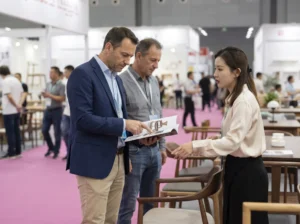
Here’s where buyers trip on day one: they hear “sofa hall” from someone — a contact, an old blog post, a forum — and go hunting for it. There isn’t one. The official exhibition map for the 140th session spreads Furniture across Area B Halls 9.3, 10.2, 10.3 and 11.3, and 9.2 is ceramics. The fix is simple once you accept it. Open the official exhibitor and product search system, type in what you actually want — “fabric sofa,” “modular sofa,” whatever fits your line — and let the directory tell you who’s where.
Hunting sofa suppliers at Canton Fair by foot is a lottery. The directory is a list. I know which one I’d choose with jet lag.
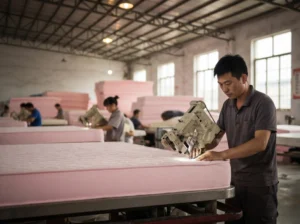
One more thing about halls: where a booth sits tells you nothing about who’s inside it. I’ve watched a one-desk trading company hold a position two rows from a 400-worker factory with its own upholstery shop. Booth location is real estate, not reputation.
The Shortlist Trick That Saves Your Week
Do this on the plane, not at the fair. Search the directory, and for every candidate write down four things.
Booth number and hall — so you can group visits and stop zigzagging. Product scope from the listing — “living room furniture” might mean sofas or might mean TV cabinets, and the difference matters. Export markets listed — a supplier who’s already shipping to your destination understands your compliance headaches without a tutorial. And a contact, because a company that answers email in October tends to answer problems in March.
Ten names, sorted by hall. That’s it. Thirty minutes of this beats a full day of wandering, and I say that as someone who enjoys wandering.
Comparing Quotes Without Lying to Yourself
Rotterdam’s mistake wasn’t laziness. It was comparing two numbers that were never the same product. Happens constantly.
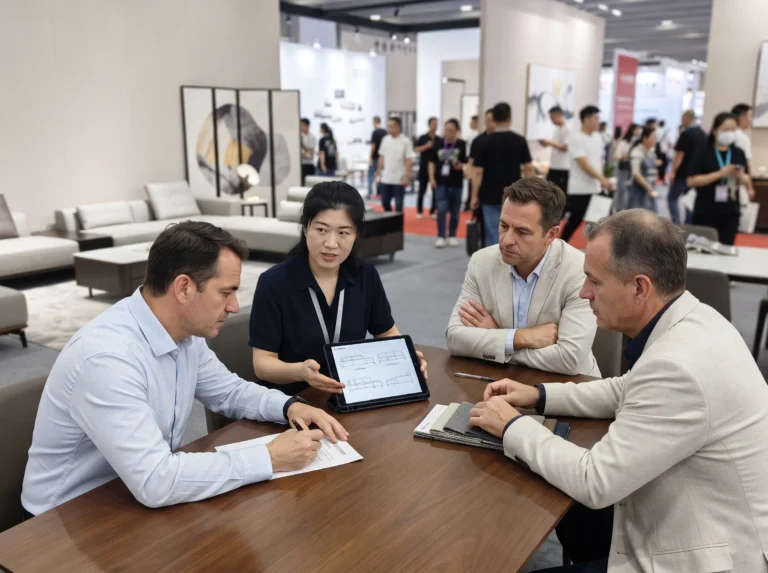
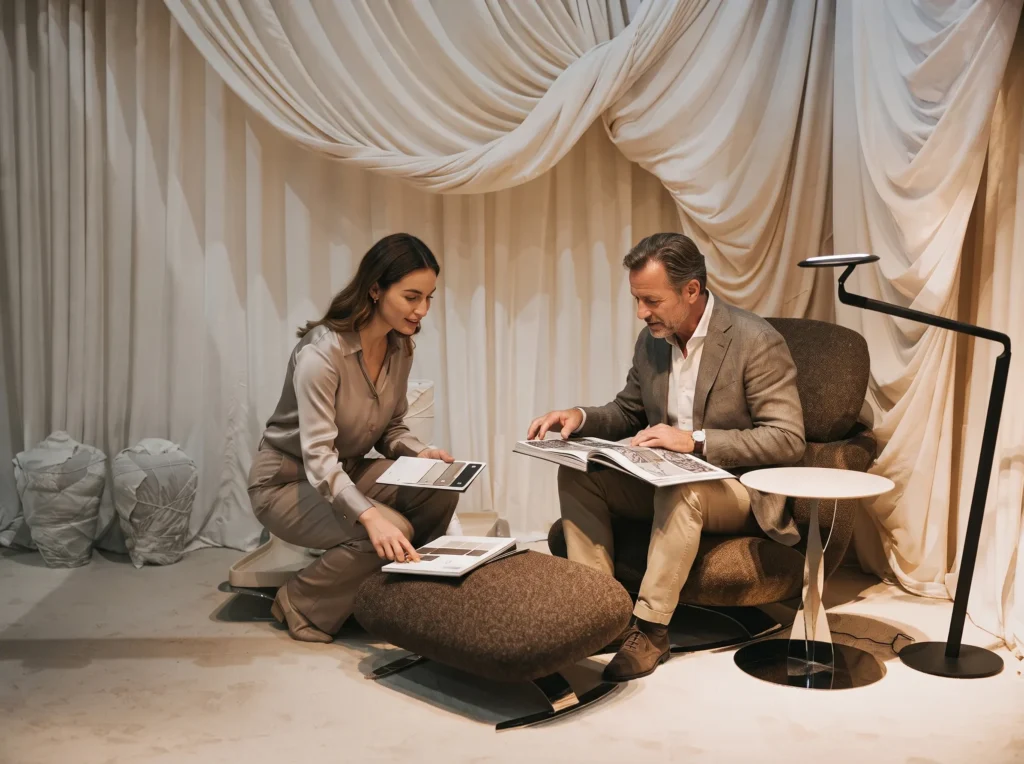
The fix is almost embarrassingly mechanical. Every quotation you collect needs the same fields, or the comparison is fiction. Dimensions. Frame material. Foam density and firmness together — one without the other means nothing. Upholstery composition and abrasion resistance, with the test method named. Then the commercial side: currency, FOB named port, MOQ, whether mixed containers are even possible, payment terms. Then the part people skip and regret: sample fees, packaging, spare parts, inspection costs. And the capability block — who’s the actual manufacturing entity, what’s the QC process, lead time, capacity.
Ask one question out loud at every booth: why is this the price? Suppliers who can answer it in specifics are telling you something. Suppliers who smile and say “good quality” are also telling you something.
Who’s Really Behind the Booth
Can you spot a factory from the carpet? No. Nobody can. I’ve seen trading companies with custom builds that cost more than my first car, and manufacturers running a banner and a folding table. Booth design proves one thing — that someone paid for booth design.
For anyone building a serious sofa manufacturer sourcing China pipeline, verification is a process with steps, not a feeling. Pull the business license and read the registered address against the claimed factory location — mismatches aren’t automatic disqualifiers, but they need explaining. Ask for the workshop. Real factories handle a video call or a pointed machinery question without visible discomfort. Check whose name sits on the test reports. And on the pro forma invoice, name the manufacturing entity, in writing.
And to be fair — because this gets lost in the factory-worship — good trading companies exist. They earn their margin in communication, consolidation, and chasing QC. The error isn’t using one. It’s paying factory price for a trader and learning which one you hired after the deposit clears.
MOQ: Ask the Boring Questions Early
Minimum orders live and die by each supplier’s own economics. They have nothing to do with hall numbers, whatever the aisle gossip says. The questions that matter:
Per-model MOQ, and per color where it applies. Whether they’ll mix models in a container — matters enormously if you want to test a range without committing a whole SKU. Trial orders, LCL, the small-quantity door that some suppliers leave open but never advertise. Sample fees, and whether they credit back against bulk. Lead time, which goes straight into your cash-flow math.
Get it in writing. Early. Verbal MOQ at a booth has a strange habit of changing shape by the time the PI arrives.
One more thing, because it wastes afternoons: pricing authority differs by company. Some reps can move on price where they stand. Others genuinely need internal sign-off, and that’s not theater — it’s wiring. Plan for it instead of mistaking it for a tactic.
What Your Hands Can Tell You That the Showroom Can’t
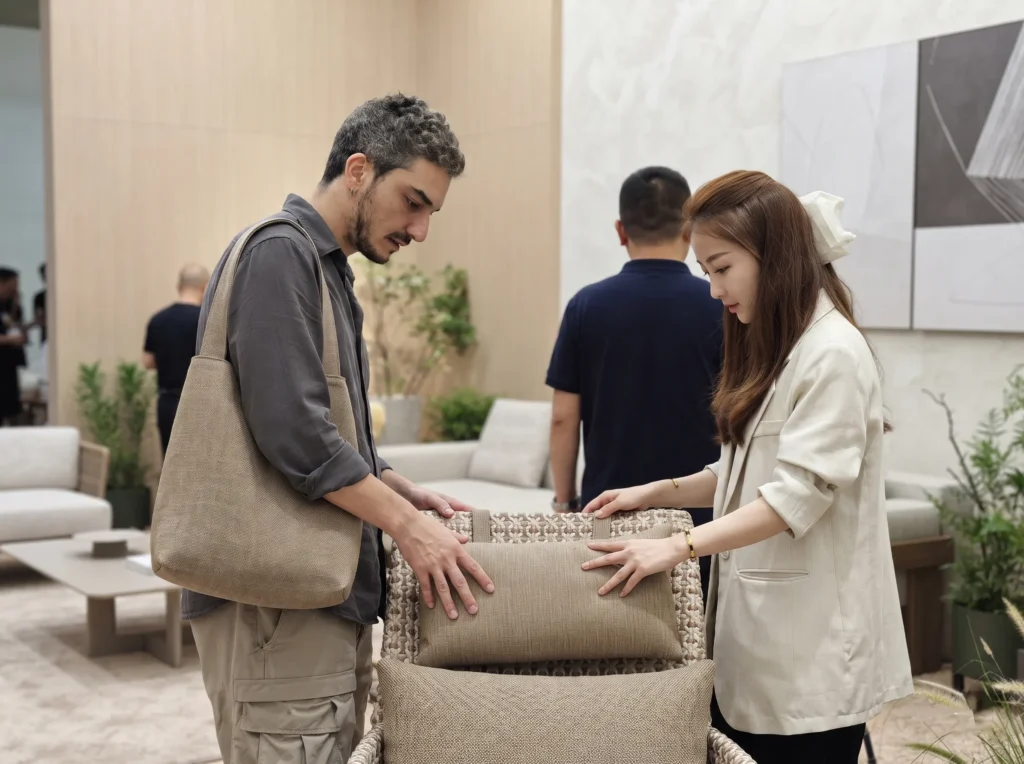
Showrooms are for screening. The real assessment is tactile. Pull the cushions. Ask to flip a sample over. A serious supplier doesn’t flinch at this; the ones who do, note it.
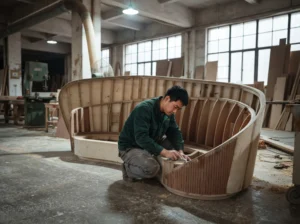
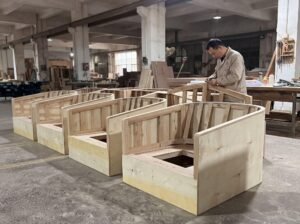
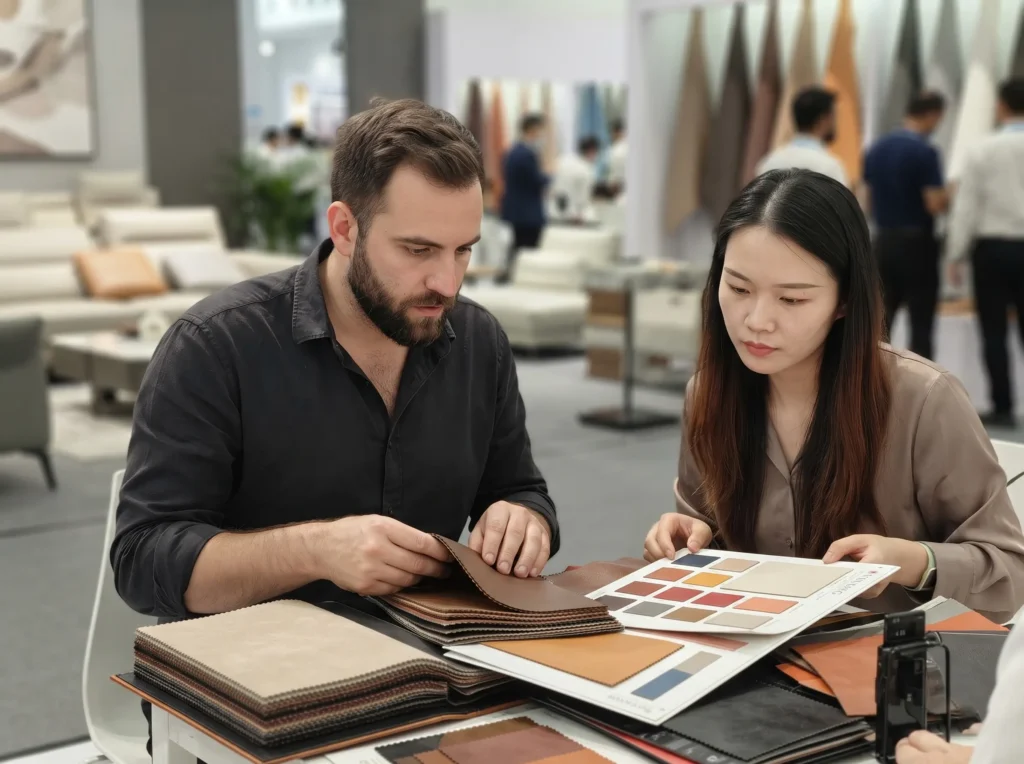
Frames: joint construction, timber moisture, the suspension setup. “Kiln-dried hardwood” on a brochure is a claim. A corner block you can see, tap, and ask about is evidence. Foam: density and firmness as a pair, plus durability results if they’ve got them. Density alone won’t tell you how the sofa sits in year three — resilience and fatigue are separate numbers, and they live on the spec sheet, not in the cushion. Fabric: composition, weight, abrasion resistance with the method named. Polyester isn’t a slur and linen isn’t a halo. Yarn, weave, finishing, and what your market will actually put that sofa through — those decide.
Before you leave the booth, get one line in writing: production units match the approved sample. Obvious. Skipped constantly. Expensive.
The Paperwork Lies Politely
Compliance documents get read by logo instead of by content, every year, without fail. Slow down here.
California TB 117-2013 — it’s a smolder-resistance test method for upholstery materials. Not a quality seal, not a brand endorsement, not proof the sofa is “safe” in some general sense. BS 5852 is a UK flammability test whose requirements shift with the product and material combination. EN 12520 covers safety, strength and durability for domestic seating — it has nothing to do with fire — and if you’re sourcing in 2026, check whether reports cite the updated EN 12520:2024 version, because older paperwork is still doing the rounds.
Four checks on any report. Who holds it. What exactly was tested. Which method. When. A 2019 report issued to a related company proves the related company passed something in 2019. Hotel and contract buyers, double everything I’ve just said — a domestic seating report doesn’t automatically bless commercial use. Match documents to the project spec.
The Checklist on My Phone
This sofa supplier comparison checklist lives on my phone screen. Photograph it, steal it, argue with it.
- Confirmed in the official directory this session; booth verified
- Written quotation, full specs and commercial terms
- Like-for-like comparison done — dimensions, materials, quantities, terms
- Manufacturing entity verified, not assumed
- Test reports checked: holder, product, method, date, scope
- MOQ, mixed-container and trial terms in writing
- Sample approved before bulk commitment
- QC stage, standard and responsibility agreed in writing
Eight lines. Nearly every sourcing disaster I’ve ever heard about broke one of them. Which is, now that I think about it, why there are only eight.

Frequently Asked Questions
How do I actually find sofa suppliers at the Canton Fair?
Directory first, feet second. Search the official system by product keyword, shortlist against your price band and range, confirm booths on the current session’s map, group by hall. Walking the aisles hoping to bump into the right factory works — for about one buyer in fifty.
Two quotes never seem to match up. Now what?
Force the match or walk away from the comparison. Same dimensions, materials, quantities and terms, or you’re pricing two different sofas and calling it research.
What should I check before trusting a sofa manufacturer?
Frame and timber condition, suspension, foam specs as a pair, fabric test data, packaging. Then the paper — reports with holder and scope verified, written confirmation production matches sample. On a first order, pay for third-party inspection. It’s the cheapest insurance in this business.
Manufacturer or trading company — how can I tell?
License, registered address versus claimed factory, workshop evidence, name on technical documents, entity named on the PI. No single one is conclusive. Together they’re hard to fake. Both models can be legitimate. Verify first, decide after.
What should I ask about MOQ and samples, exactly?
Per-model and per-color minimums, mixed-container flexibility, trial or LCL options, sample fees and whether they credit back, lead time. In writing, early. That’s the whole list, and it fits on an index card.
Which standards apply to my market?
US-bound upholstered furniture typically runs through California TB 117-2013 smolder testing. UK uses BS 5852. European domestic seating falls under EN 12520, 2024 version current. Confirm what applies to your exact products, then verify the reports actually cover them — cover them, not just mention them.
Over to You
Got a price-gap story? Two “identical” sofas, wildly different numbers, and a spec sheet that explained everything? Put it in the comments — someone’s expensive lesson is always someone else’s free shortcut.
Recommended Resource
Interi Furniture specializes in custom furniture manufacturing for residential, hospitality, and commercial projects. Their experience in materials, craftsmanship, and project realization makes them a valuable resource for designers and buyers seeking tailored furniture solutions from China.