








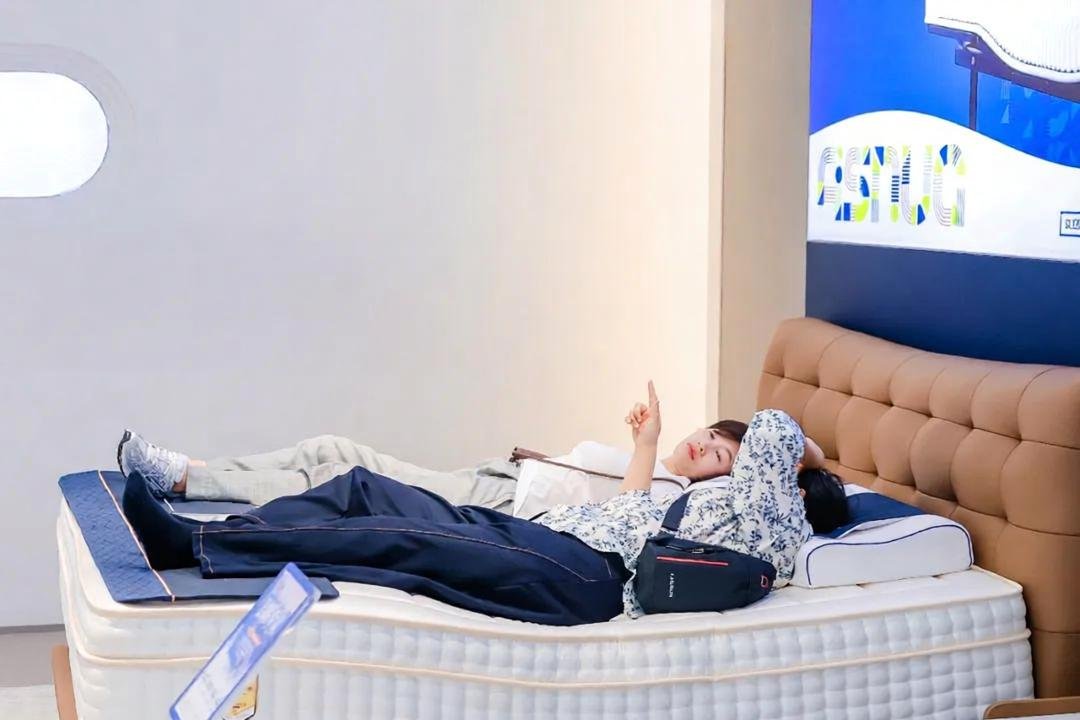
The short answer is: upholstered seating still holds the crown for total export volume, but spring mattresses and metal office furniture are the real growth engines in 2026. If you’re a buyer or seller deciding where to allocate your sourcing budget, the smartest move isn’t to chase the biggest category—it’s to understand which segments are expanding fastest, where the hidden risks sit, and how market shifts are reshaping the competitive landscape.
The Real Problem: Picking Winners in a Fragmented Market
China’s furniture exports staged a dramatic comeback in early 2026. General Administration of Customs data shows furniture and parts exports hit RMB 87.61 billion in January–February, up 22.1% year-on-year—a sharp reversal from 2025’s full-year decline of 5.9%. Seating, residential furniture, office/commercial furniture, and mattresses collectively surged 22.3%.
But here’s the catch: aggregate numbers mask massive divergence at the category level. Some segments are riding tailwinds from RCEP tariff cuts and post-pandemic lifestyle shifts. Others are buckling under anti-dumping duties, port inspection spikes, and shifting consumer preferences. For procurement teams and DTC brand operators, the difference between backing a rising category and a sinking one can mean the margin between profit and loss.
The Reality Check: What’s Actually Happening in 2026
The narrative that “soft furniture dominates Chinese exports” is technically true but dangerously incomplete. Yes, upholstered seating (HS 9401) remains the single largest export category by value. According to China Customs data for the first three quarters of 2025, upholstered seating exports reached RMB 71.41 billion (approximately $9.8 billion), up 9.7% year-on-year—making it the largest single category by export volume. But the growth story is more nuanced.
China’s furniture export market is splitting into two tracks: volume leaders that are mature, competitive, and increasingly tariff-sensitive; and momentum categories that are smaller in absolute terms but expanding faster with healthier margins. The buyers who understand this bifurcation are the ones capturing alpha in 2026.
Key macro drivers reshaping the landscape:
● RCEP tariff liberalization is boosting ASEAN-bound exports, with tariff reductions on eligible furniture reaching up to 9.2 percentage points. Exports to Malaysia surged 65.3% in early 2026.
● Cross-border e-commerce now accounts for an estimated 21% of furniture exports (based on industry analysis by Dolbymaster), with DTC models expanding rapidly on Wayfair, Amazon, and TikTok Shop.
● U.S. customs scrutiny has intensified dramatically—inspection rates at LA/Long Beach jumped from the usual 10% to 30–50% since March 2026, forcing many SME exporters to pause shipments.
● Smart furniture penetration is expected to reach 14.8% in 2026, up from 12.6% in 2025—but still a niche, not a mainstream driver.
Category Deep Dive: The Numbers Behind the Narrative
| Category | Export Scale | YoY Growth | Anti-Dumping Risk | Core Markets | Key Insight |
|---|---|---|---|---|---|
| Upholstered Seating | RMB 71.41B / ~$9.8B (2025 Q1-Q3) | +9.7% | High — 25% Section 232 tariff | USA, UK, Germany, Netherlands | Volume king but margin pressure rising; price wars in Foshan |
| Spring Mattresses | RMB 7.49B / ~$1.03B (2025 Q1-Q3) | +17.5% | Medium — anti-dumping reviews ongoing | USA, ASEAN, Middle East | Fastest-growing major category; compression packaging driving demand |
| Wooden Bedroom Furniture | ~$2.65B (2024) | +22.88% (2024) | Extreme — 216.01% China-wide AD rate | USA (25%), UK (8%) | Effectively blocked from US market for unrated factories |
| Metal Office Furniture | RMB 57.86B / ~$7.96B (2025 Q1-Q3, non-office metal) | -4.3% (2025 Q1-Q3) | Low — minimal trade remedy exposure | ASEAN, Europe, Middle East | Rebounding in 2026; RCEP tariff cuts favoring metal over wood |
| Outdoor Furniture | ~$2.8B (estimated, based on industry research) | +25% (RCEP markets, estimated) | Low-Medium | USA, Germany, UK, ASEAN | Weather-resistant and portable segments seeing blue-ocean demand |
| Sintered Stone Dining | ~$1.2B (estimated niche, based on Foshan cluster research) | +40% (3-year demand, estimated) | Low | Europe, Middle East, Australia | Premium niche replacing marble; Foshan cluster leading |
Data notes: Upholstered seating and spring mattress figures sourced from China Customs Q1-Q3 2025. Metal furniture data from China Customs non-office metal category. Outdoor furniture, sintered stone, and e-commerce penetration figures based on industry research and cluster analysis—non-official statistics.
Upholstered Seating: The Volume Leader Under Pressure
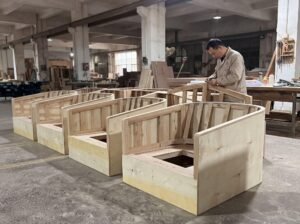
Foshan Longjiang and Huizhou remain the global epicenters for sofa production. A single facility in Huizhou can exceed 1.3 million motion sofa sets annually. But the category is facing a profitability squeeze: 25% Section 232 tariffs on upholstered furniture into the US, combined with rising fabric and foam costs, have compressed margins for OEM factories.
The smart money is shifting toward modular and multi-functional upholstered pieces—storage ottomans, convertible sectionals, and pet-friendly fabrics. These command 15–30% price premiums over commodity sofas.
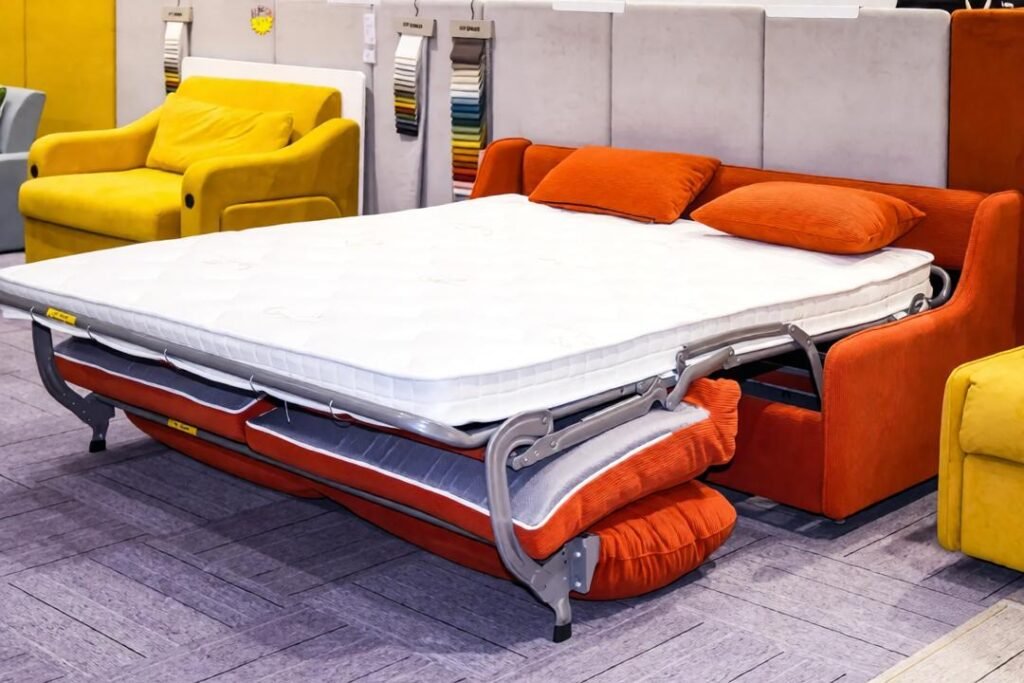
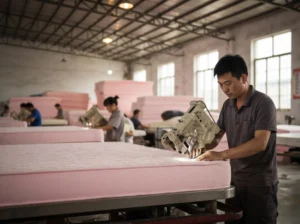
Spring Mattresses: The Quiet Growth Engine
Here’s the counter-intuitive finding: spring mattress exports grew 17.5% in the first three quarters of 2025—the fastest among all major furniture categories—despite the mattress category being a fraction of seating’s size. What’s driving this?
● Compression packaging innovation has reduced shipping costs by 60–70%, making cross-border e-commerce viable for mattresses.
● “Vacuum-compressed mattress” searches on Alibaba.com surged 18.95% month-over-month in early 2026.
● Asian and Middle Eastern markets are absorbing capacity as US buyers face anti-dumping uncertainty.
Foshan produces an estimated 33% of China’s mattress exports, with daily shipping capacity exceeding 60 containers from port. The category is small but structurally advantaged.
Wooden Bedroom Furniture: The 216% Problem
This is where the export story gets ugly. The US Department of Commerce’s anti-dumping order on wooden bedroom furniture (AD order A-570-890) imposes a 216.01% dumping margin on any Chinese exporter without a separate rate. In April 2026, the Commerce Department maintained this rate in its preliminary findings for the 2024 review period.
Translation: unless a factory has individually negotiated a lower rate through administrative review, importing wooden bedroom furniture into the US is economically unviable for most business models. This has pushed orders toward Vietnam, Mexico, and Malaysia—but Chinese factories with separate rates still capture premium share.
Metal Office Furniture: The RCEP Winner
Office furniture exports are rebounding in 2026, with high-end intelligent products accounting for over 45% of exports in early 2026. The real story is market bifurcation: European and US buyers want ergonomic chairs and smart height-adjustable desks; Southeast Asian buyers want cost-effective modular workstations.
Anji, Zhejiang produces an estimated 60% of the world’s office and gaming chairs (based on World Furniture Online and industry cluster data), shipping over 200 million chairs annually. The RCEP tariff advantage is particularly pronounced here—metal office furniture exports to ASEAN are expected to grow over 20% in H1 2026.
Sintered Stone Dining: The Premium Niche
Foshan’s sintered stone dining table segment has seen strong demand growth over the past three years (based on Foshan cluster industry research). The material’s Mohs hardness of 7–9, heat resistance, and food-safe properties make it a natural replacement for marble in commercial and high-end residential projects.
This is a classic “small pond, big fish” category. Average wholesale slab prices range from $22–70 per sqm, with finished dining tables commanding $400–1,200 FOB depending on size and frame complexity.
Red Flag: Hidden Risks in High-Growth Categories
Spring Mattresses: Anti-dumping reviews are ongoing. The US initiated its annual administrative review in March 2026, with final results expected January 2027. Any factory without a separate rate faces potential duty exposure.
Upholstered Seating: US tariff increases to 30% were delayed until at least 2027—but the threat hasn’t disappeared. Buyers pre-shipping inventory ahead of potential hikes are creating artificial demand spikes that could reverse.
Wooden Furniture (All Types): New phytosanitary requirements in 2026 require fumigation and IPPC certificates at origin, not at port. This adds 3–5 days to lead times and $200–400 per container in compliance costs.
Outdoor Furniture: The “waterproof outdoor furniture set” niche is booming (92.5% business opportunity rate on Alibaba.com), but quality variance is extreme. Buyers without factory audit protocols face 15–25% defect rates on PE rattan and powder-coated frames.
Cross-Border E-Commerce: While an estimated 21% of furniture exports now flow through e-commerce channels (based on Dolbymaster industry analysis), return rates for online furniture purchases average 12–18% in Western markets—eating into margins for DTC brands without robust reverse logistics.
Action Step: Three Moves Buyers Should Make Now
1. Shift sourcing mix toward RCEP-advantaged categories
Metal office furniture, spring mattresses, and outdoor furniture are benefiting from tariff reductions up to 9.2 percentage points. If your current portfolio is 70% wooden bedroom + upholstered seating, consider rebalancing toward metal and mattress categories for ASEAN-bound volume.
2. Verify anti-dumping status before committing to wooden furniture
For any wooden bedroom furniture supplier, the first question must be: “Do you have a separate AD rate for the US market?” If the answer is no, the 216.01% China-wide rate makes US sourcing unviable. Redirect to dining furniture, office furniture, or non-wooden categories instead.
3. Test sintered stone and compressed mattress niches for DTC
These categories have lower competition, higher margins, and structural tailwinds from packaging innovation and material substitution trends. Start with 100–200 unit pilot orders from Foshan or Anji factories.

FAQ
Q: What is the fastest-growing furniture export category from China in 2026?
A: Spring mattresses grew 17.5% in the first three quarters of 2025 and maintained momentum into 2026, driven by compression packaging innovation and Southeast Asian demand. Metal office furniture is also rebounding strongly with RCEP tariff advantages.
Q: Which furniture categories face the highest tariff risk for US buyers?
A: Wooden bedroom furniture carries the most extreme risk at 216.01% anti-dumping duty for unrated factories. Upholstered seating faces 25% Section 232 tariffs (with potential increases to 30% delayed until 2027).
Q: What is the safest category for cross-border e-commerce sellers?
A: Metal office furniture and outdoor furniture offer the best risk-adjusted profiles—lower trade remedy exposure, RCEP tariff benefits, and strong e-commerce demand. Avoid wooden bedroom furniture for US-bound DTC unless you have confirmed separate-rate suppliers.
Q: How much of China’s furniture exports go through e-commerce channels?
A: Cross-border e-commerce accounted for an estimated 21% of furniture exports in early 2026 (based on Dolbymaster industry analysis), with DTC models expanding on Amazon, Wayfair, and TikTok Shop.
Q: Which Chinese production clusters should buyers prioritize?
A: Foshan (Guangdong) for upholstered and sintered stone furniture; Anji (Zhejiang) for office chairs; Nankang (Jiangxi) for budget solid wood; Huizhou (Guangdong) for motion sofas.
Recommended Resource
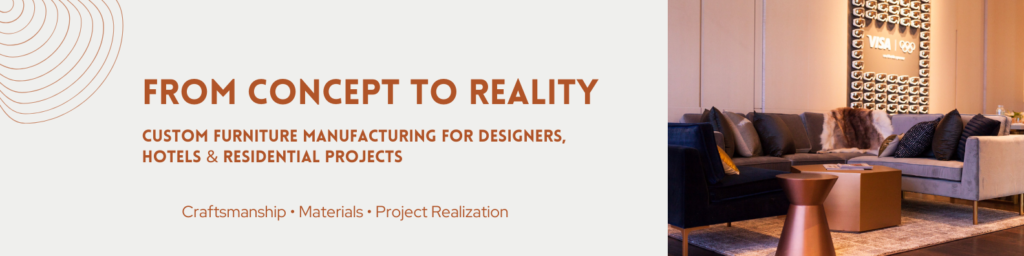
Interi Furniture specializes in custom furniture manufacturing for residential, hospitality, and commercial projects. Their experience in materials, craftsmanship, and project realization makes them a valuable resource for designers and buyers seeking tailored furniture solutions from China.