







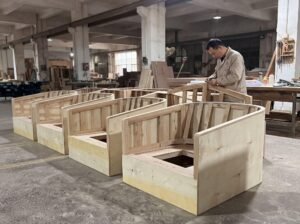
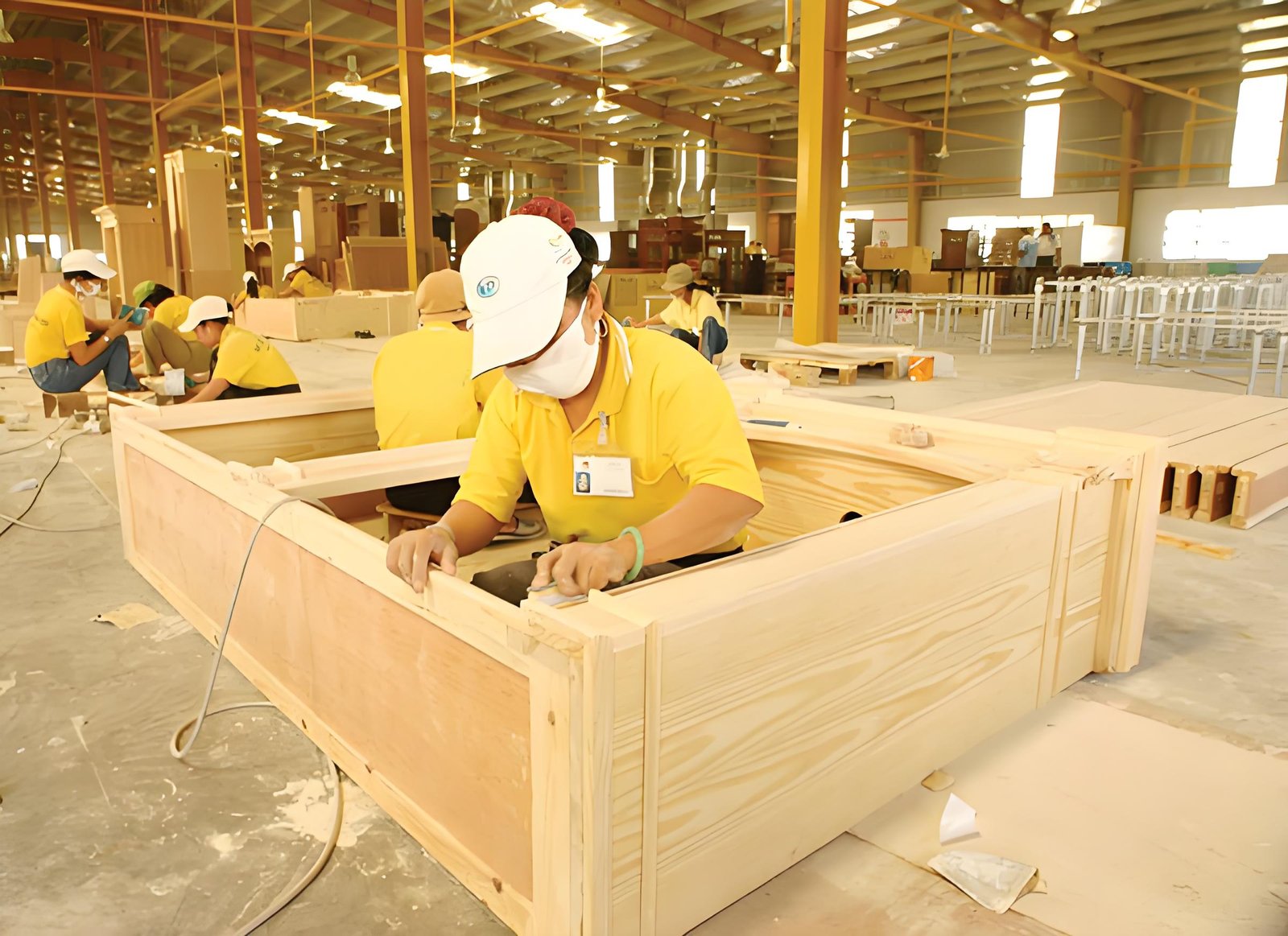
If you asked any furniture exporter serving the US market over the past two years whether “Vietnam is replacing China,” you’d likely get a hesitant nod. They nod because Vietnamese orders are indeed climbing. They hesitate because deep down, they know it’s not that simple.
In 2025, Vietnam’s HS9403 furniture exports are estimated in the $8.0-9.0 billion range, with wood and forest product exports surpassing $18 billion, propelling Vietnam to the world’s second-largest furniture exporter. Impressive numbers. But on the other side, China’s home furnishing industry (broad category including furniture and parts, home decor, lighting, etc.) reached approximately $64 billion in total exports in 2025, with furniture and parts alone accounting for roughly $63.7 billion, capturing 30.8% of global share. In the first two months of 2026, export value hit 87.61 billion RMB, surging 22.1% year-on-year. That’s not the trajectory of a country being “replaced.”
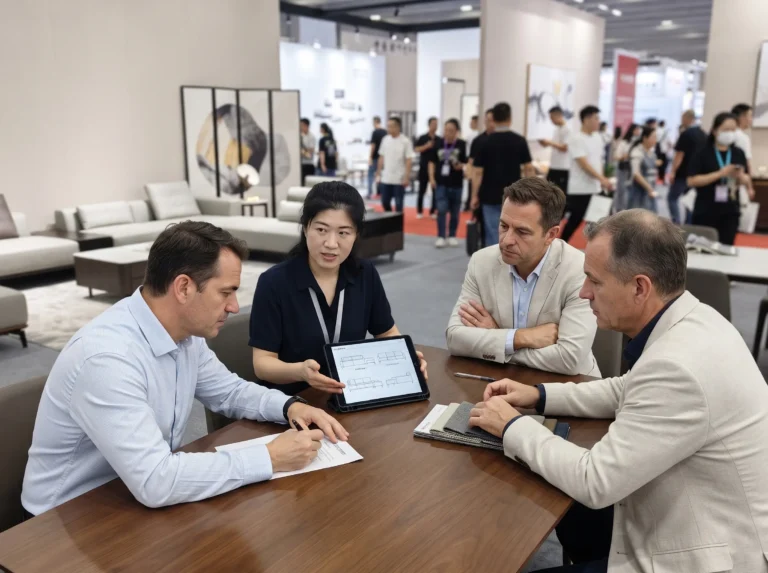
The China Vietnam furniture export landscape isn’t a zero-sum replacement game. It’s a deeply interdependent supply chain partnership. Vietnam captures low-end solid wood assembly and US tariff advantages. China maintains resilience through complete industrial clusters, high-end customization capabilities, and diversified market portfolios. Betting exclusively on either country exposes you to tariff, capacity, and delivery risks across all dimensions. This isn’t alarmism—it’s what we concluded after spending three months running factories across the Pearl River Delta and Vietnam’s Binh Duong province.
B2B Enterprises + C-End Personal Buyers: Dual-Perspective Supply Chain Pain Points
B2B: The Hidden Costs Nobody Tells You About
Tariff uncertainty is the top headache. The US maintains high tariffs on Chinese furniture while actively investigating Vietnam through Section 232 probes and anti-dumping/countervailing duty cases. Will Vietnam face tariff hikes in 2026? Nobody can guarantee. When we visited a factory in Binh Duong supplying Wayfair, the owner’s exact words were: “American buyers are still placing orders aggressively, but everyone’s got a knot in their stomach. If tariffs hit, this order’s profit goes straight to zero.”
Delivery cycle volatility is the second trap. Vietnamese factories rely heavily on imported raw materials—panels, hardware, fabrics—much of which comes from China. Peak-season lead times stretching to 45-60 days are standard. Chinese factories have ample capacity, but direct US exports face prohibitive tariff costs. Many buyers are forced to play “transit games”—shipping goods to Vietnam first to swap origin labels, doubling logistics complexity.
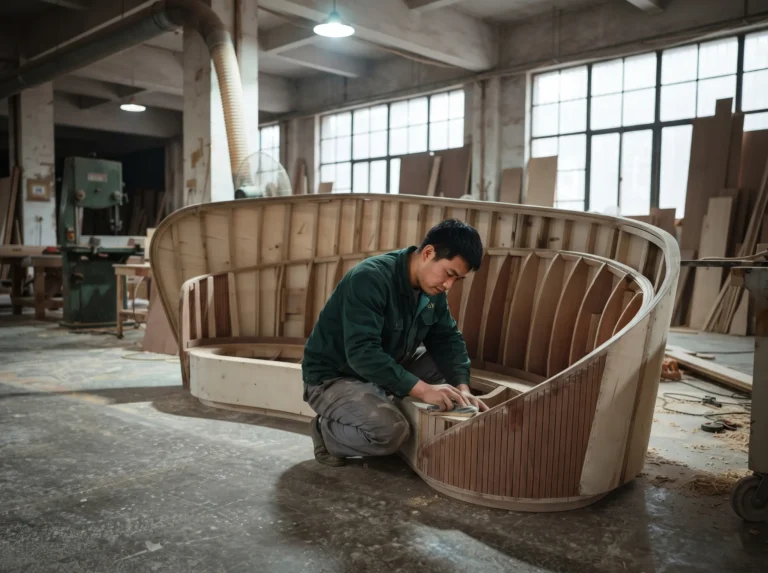
The customization capability gap is more subtle. Vietnamese factories excel at standard product assembly. Hand them an IKEA drawing, and they’ll deliver fast and cheap. But high-end hotel customization or upholstered furniture prototyping? Last year we visited a factory in Dongguan’s Houjie district producing guest room furniture for Four Seasons Hotels. From order to sample: 3 days. Full delivery: 15 days. You won’t find that speed benchmark in Vietnam yet. Not because Vietnamese workers aren’t capable, but because the supply chain ecosystem is a tier behind.
Supply chain completeness is the underlying issue. Vietnam’s hardware, panels, and fabrics rely on imports. Any disruption in Chinese supply chains—like the COVID lockdowns in Foshan—immediately leaves Vietnamese factories facing “no rice to cook.” In 2025, Vietnam imported approximately $21.32 billion in machinery and equipment from China, accounting for roughly 64% of total imports. What does this number tell us? It tells us that most machines running in Vietnamese factories were made in China.
C-End Personal Buyers: The Real Thresholds for Small Orders
Personal buyers face more practical problems. Vietnamese factories typically require 20-piece MOQs. You want one dining table with four chairs? You won’t meet the minimum. Chinese factories enable single-piece procurement through 1688 and Taobao channels. Unit prices are higher, but flexibility is completely different.
Total landed cost is a murky calculation. Many personal buyers can’t figure out the true cost after layering tariffs, ocean freight, and inland logistics. We’ve seen too many cases where buyers thought they saved 30% ordering from Vietnam, only to find the actual savings were 5%—once ocean freight surcharges, destination port demurrage, and inland trucking fees were all factored in.
Design freedom is another constraint. Vietnamese factories specialize in American and Nordic minimalist styles with narrow selection. China covers the full style spectrum—from French luxury to Neo-Chinese, even custom designs from drawings. After-sales differences are equally real: Chinese factories support small-batch reorders and spare parts replenishment. Vietnamese factories generally have longer after-sales response cycles—not because they don’t want to help, but because logistics and communication chains are too long.
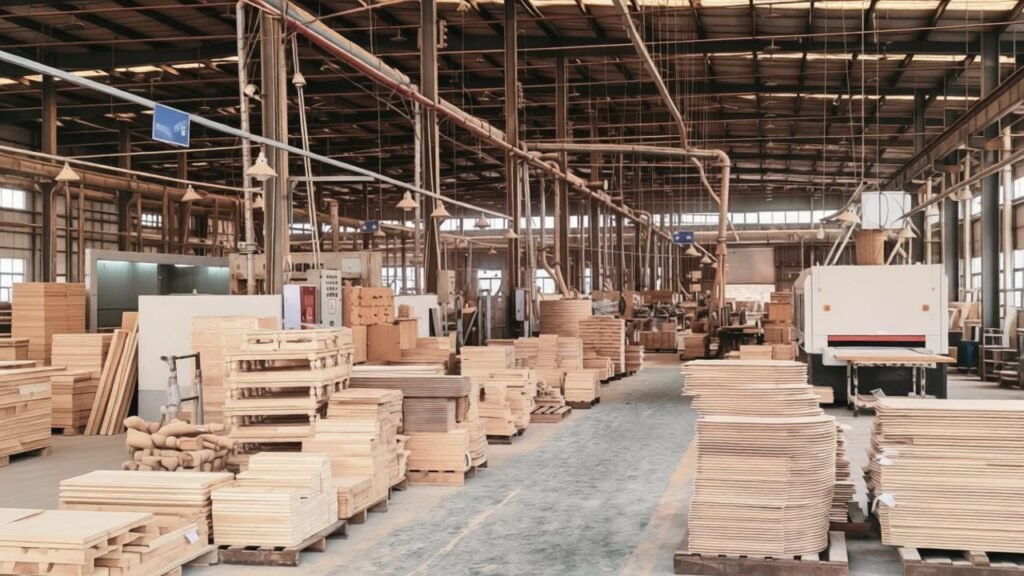
Debunking the “Vietnam Replacing China” Narrative—Data Doesn’t Lie, But It Can Mislead
Global Furniture Export Landscape: The Volume Gap Is 8x, Not 8%
| Metric | China | Vietnam | Data Source |
| 2025 Total Home Furnishing Export Value (broad category) | ~$64 billion (including furniture and parts, home decor, lighting, etc.) | HS9403: ~$8.0-9.0 billion (industry estimate range) | GACC/CNFA; Vietnam Customs composite estimate |
| Global Market Share | 30.8% | ~6% | OEC/Statista 2025 |
| Jan-Feb 2026 Export Value | 87.61 billion RMB (+22.1% YoY) | — | GACC |
| Production Output Value | ~2.8 trillion RMB | ~$9.76 billion | National Bureau of Statistics; Mordor Intelligence |
| Global Production Ranking | #1 | #6 | CSIL 2025 |
| Global Export Ranking | #1 | #2 | CSIL 2025 |
Vietnam’s growth rate is genuinely impressive. 2024 exports surged 24.5% year-on-year to $13.436 billion. 2025 HS9403 furniture exports are estimated in the $8.0-9.0 billion range, with wood and forest product exports surpassing $18 billion. But compared to China’s home furnishing industry $64 billion volume, Vietnam remains at less than 13% of China’s scale.
More critically, look at market concentration. Vietnamese exports are heavily concentrated in the US—77.2% share. What does this mean? It means if the US imposes tariffs on Vietnam in 2026, Vietnamese furniture exports could hemorrhage instantly. China’s export markets are diversified: Asia accounts for 33.1%, multiple European countries are growing positively, and RCEP regional share has risen to 33.1%. This dispersed portfolio is the result of decades of accumulation—not something Vietnam can replicate in three to five years.
Vietnam’s Three Growth Engines: Low Wages, FTAs, Foreign Investment
Vietnamese manufacturing wages average 60-70% of Chinese levels, with a median age of just 32 years and abundant labor supply. Skilled carpenters in Binh Duong and Dong Nai earn $300-400 monthly, while equivalent positions in China’s Pearl River Delta command $500-700. This gap is especially pronounced in labor-intensive solid wood assembly segments—a solid wood dining table from a Vietnamese factory can have 15-20% lower labor costs than its Chinese counterpart.
FTA tariff benefits are a genuine accelerator. Vietnam has signed 17-20 free trade agreements, with CPTPP, EVFTA, UKVFTA, and RCEP covering 60+ trading partners. The EU applies 0% duty on Vietnamese plywood imports, and the US market continues diverting orders under the “China+1” strategy. In 2025, Vietnam’s wood and forest product exports to the US reached approximately $10 billion, accounting for 55% of total export value.
Foreign investment-driven capacity expansion is a double-edged sword. Ashley, IKEA, Wayfair, and Home Depot have deeply embedded operations in Vietnam, with foreign-invested enterprises contributing approximately 40% of export value. In H1 2025, wood and forest product exports reached $8.2 billion, up 9% year-on-year. Industrial clusters in Binh Duong and Quang Ngai continue expanding, with bonded warehousing and logistics infrastructure upgrading in parallel.
China’s Five Resilience Pillars: Not Luck, But Structural Moats
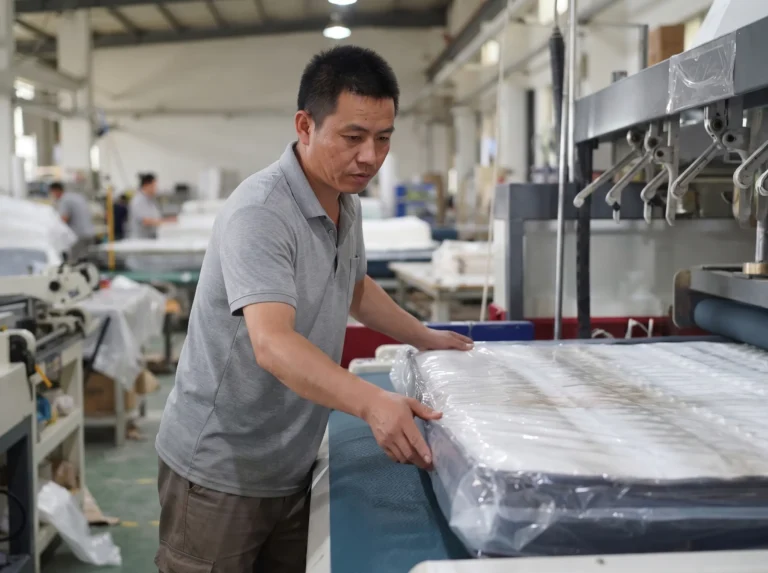
Full-Category Coverage—Sofa exports accounted for 45% of global total (per CSIL 2020 statistics). Mattress exports represent a significant global share. In 2025, mattress exports to the US grew 322.57% year-on-year. That 322% isn’t accidental—it’s the result of years of Chinese mattress companies investing in materials, processes, and certifications.
High-End Customization Moat—Whole-house customization output exceeds 1 trillion RMB; flexible production lines support 100-piece minimums with 3-day sampling and 15-day delivery. We visited a factory in Foshan’s Longjiang town where a client sent a Pinterest mood board, and the factory produced a physical sample within 7 days. That responsiveness benchmark doesn’t exist in Vietnam yet.
Intelligent Product Penetration—Smart home penetration reaches 65%; intelligent furniture penetration is projected to rise from 12.6% in 2025 to 14.8% in 2026. This isn’t conceptual hype—it’s tangible production line upgrades. A soft furniture factory in Dongguan installed fully automatic fabric cutting machines and CNC sewing lines in 2024, boosting per-worker output efficiency by 40%.
Green Certification Leadership—OEKO-TEX/REACH/SGS certification coverage exceeds 95%; formaldehyde-free panel application rate is 37%; green and low-carbon certified product sales share exceeds 38.5%. The EU’s EUDR and CBAM take effect in 2026. Leading Chinese factories have already cleared traceability systems, while most Vietnamese factories are still catching up.
Market Diversification Hedge—Exports to the US declined 16.4% year-on-year to 106.6 billion RMB, but RCEP regional share rose to 33.1%, with positive growth in the UK, Germany, and the Netherlands. This isn’t passive dispersion—it’s active portfolio management. At the Canton Fair, we asked over a dozen exporters, and more than half said: “US orders are down, but new clients from the Middle East, Southeast Asia, and Africa are increasing.”
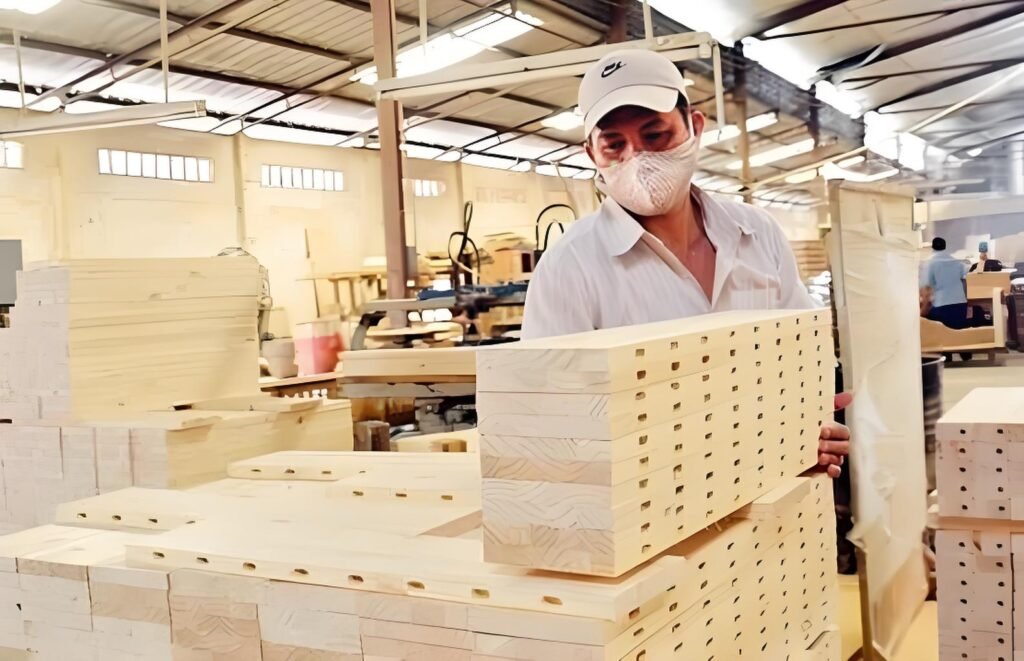
Vietnam’s Advantages Are Real, But So Are Its Weaknesses
Vietnam’s Three Advantages: Low Cost, Tariffs, Foreign Capital
Low labor costs speak for themselves. But here’s a detail many overlook: how long can Vietnam maintain this cost advantage? During our Binh Duong visits, local factory owners universally reported one trend—skilled worker wages rising 8-10% annually, and increasingly difficult to recruit. China walked the same path a decade ago. Vietnam is now where China was in 2010.
FTA tariff benefits are concrete. EVFTA grants Vietnamese furniture exports 0% duty to the EU; CPTPP covers Japan, Canada, Australia, and Mexico. But FTAs aren’t magic pills—Rules of Origin (ROO) require sufficient local value-added, and many Vietnamese factories fail to meet ROO thresholds because of raw material import dependence, ending up paying partial duties anyway.
Foreign investment-driven capacity expansion is a double-edged sword. Ashley, IKEA, and Wayfair’s orders keep Vietnamese factories busy, but also suppress domestic brand development. At the Ho Chi Minh City Furniture Fair, 90% of booths were foreign-invested or joint ventures. Pure Vietnamese domestic design-capable factories were rare.
China’s Five Barriers: Not Built in a Day
Complete Upstream-Downstream Industrial Clustering—Foshan upholstered furniture (fabric/sponge/hardware/frame with 15-25 day delivery cycles), Zhongshan/Chengdu solid wood furniture, Changzhou/Jiaxing fabrics (corduroy output of 3.2 billion meters accounting for 60% of global total), and Zhejiang Anji chair manufacturing. This “one-hour supporting circle” isn’t a metaphor—it’s physical reality. In Foshan’s Lecong town, we drove 15 minutes and found fabric, sponge, hardware, and packaging suppliers all within reach. Vietnamese factories must import panels from Guangdong, fabrics from Zhejiang, and hardware from Shandong, adding 7-15 days to logistics cycles—and that’s just the China-side transit time. Add customs clearance and port-to-factory delivery in Vietnam, and the gap widens further.
Full-Process Automated Production Lines—Leading Chinese factories achieve over 80% CNC equipment penetration, with connected production lines for automatic panel saws, edge banding machines, and six-sided drilling. Vietnamese SMEs have approximately 30% CNC adoption. We visited a panel furniture factory in Dongguan’s Dalingshan district where one automated line produces 500 cabinet sets daily. An equivalent-scale Vietnamese factory needs twice the manpower and twice the time. The efficiency gap isn’t a technology problem—it’s an industrial ecosystem maturity problem.
Mature Design and Prototyping Capabilities—Chinese furniture design and prototyping cycles run 3-7 days, supporting full-style customization. Vietnamese factories primarily operate on OEM basis with weak independent design capabilities. This gap is most evident in high-end hotel projects: Four Seasons, Marriott, and InterContinental guest room furniture customization orders land 99% with Chinese factories. Not because Vietnamese factories don’t want the business, but because their design teams, prototyping capabilities, and material libraries don’t match.
Multi-Regional Market Diversification—Chinese furniture exports reach 200+ countries; Vietnamese exports concentrate 90% in five markets (US, Japan, China, South Korea, EU). This concentration risk is especially acute in 2026. The US has launched Section 232 investigations and anti-dumping/countervailing duty probes against Vietnam. If tariffs are imposed, Vietnamese exports could hemorrhage instantly. China’s market dispersion means single-market fluctuations have limited overall impact.
Chinese Enterprises’ Dual-Track Overseas Expansion—Chinese furniture enterprises have established a dual-track model: retaining high-end customization and R&D design domestically while deploying basic assembly and US-export operations in Vietnam. The brilliance of this model is that Chinese enterprises simultaneously capture Vietnam’s tariff benefits and China’s industrial chain advantages. In 2025, Vietnam’s imports of Chinese woodworking machinery and accessories reached approximately $420 million (up 18% year-on-year), with high-end equipment (automatic panel saws, edge banding machines, CNC) growing over 25%. Bottom line: the machines running in Vietnamese factories are Chinese-made, the technology was Chinese-transferred, and many orders are actually captured by Chinese enterprises’ Vietnam-based factories.
Supply Chain Interdependence: Not Replacement, But Symbiosis
Vietnam’s Heavy Dependence on China: The Truth Behind the Numbers
| Dependence Dimension | Data | Source |
| Machinery Imports from China (Share) | ~$21.32 billion, ~64% of total | Vietnam Customs 2025 |
| Woodworking Machinery & Accessories from China | $420 million (+18% YoY) | ITTO 2026 |
| High-End Equipment Growth | Automatic panel saws, edge banding machines, CNC growing >25% | ITTO 2026 |
| Total Machinery Imports | $33.49 billion | Vietnam Customs 2025 |
| Domestic Equipment Self-Sufficiency | Under 30% | Industry estimate |
| Panel Import Dependence | Large volumes of MDF, melamine panels imported from China | Industry research |
| Hardware Import Dependence | Hinges, slides, connectors primarily from Foshan/Dongguan, China | Industry research |
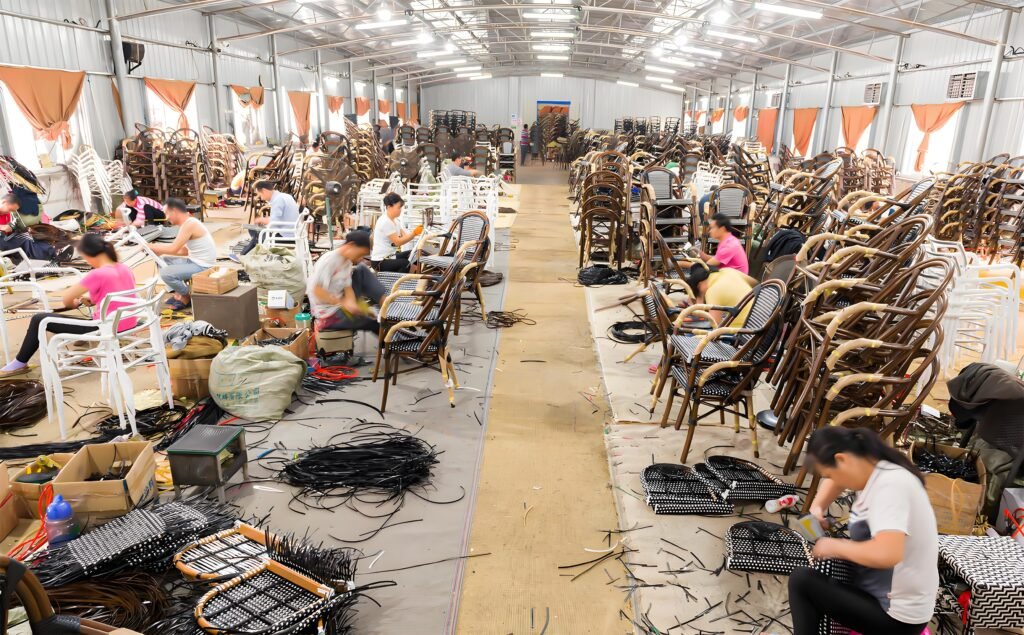
What do these numbers tell us? They tell us that Vietnam’s furniture industry “rise” is largely an extension of China’s industrial chain. Vietnamese factories are fundamentally “assembly terminals” for Chinese panels, machinery, and hardware. At a Binh Duong factory supplying Ashley, we saw edge banding machines from Guangdong Nanxing, panels from Guangxi Fenglin, and hardware from Foshan Hettich. Without upstream supply from China, Vietnam’s capacity expansion would immediately face bottlenecks.
China’s Reverse Dependence on Vietnam: Tariff Evasion’s “Indirect Approach”
Chinese furniture enterprises establish operations in Vietnam to circumvent US tariffs and maintain US export share. In 2025, Chinese OEM orders for furniture and components to Vietnam increased significantly, with RCEP regional export share rising to 33.1%. This “China R&D + Vietnam production + Global sales” regional value chain creates deep binding between the two countries. In essence: Vietnam earns assembly fees, China earns technology and material fees, and American buyers pay a “premium” for tariff evasion—every party gets what they need.
Single-Country Sourcing Risks: Traps on Both Sides
Risks of Betting Exclusively on Vietnam: Tariff Blowback, Supply Chain Breaks, Capacity Bottlenecks
Tariff blowback risk is the most urgent. The US has launched Section 232 investigations and anti-dumping/countervailing duty probes against Vietnam, with significant potential tariff hike risks in 2026. At an industry forum in Ho Chi Minh City, a Vietnamese factory owner supplying major US retailers put it bluntly: “If the US imposes tariffs, our price advantage could disappear overnight. Current profit margins are only 8-10%—we can’t absorb tariff shocks.”
Raw material supply chain breaks are a structural problem. Vietnam’s domestic panel and hardware self-sufficiency is insufficient. Any disruption in Chinese supply chains—like logistics interruptions during COVID lockdowns or capacity contractions from power rationing—immediately leaves Vietnamese factories facing “no rice to cook.” During the 2021 Foshan lockdown, multiple Vietnamese factories were forced to halt production for two weeks because they couldn’t receive Chinese panels. Industry insiders still remember this lesson.
Capacity bottlenecks are especially acute during peak seasons. Skilled carpenter shortages are severe, with peak-season lead times extending beyond 60 days. During our October 2025 visit (pre-Christmas season), multiple Binh Duong factories told us they “didn’t dare accept new orders anymore—existing orders were already backed up to December.” This capacity saturation isn’t accidental; it’s a symptom of Vietnam’s industrial belt immaturity.
Compliance risks are also approaching. EUDR (EU Deforestation Regulation) and CBAM (Carbon Border Adjustment Mechanism) take effect in 2026. Vietnamese factories’ traceability systems are incomplete, facing certification barriers. At the Canton Fair, we asked several Vietnamese exhibitors about EUDR readiness. Most were still at the “heard of it” stage, while leading Chinese factories had already secured FSC Chain of Custody and carbon footprint certifications.
Risks of Sole Dependence on China: Tariff Barriers, Logistics Costs, Currency Volatility
US tariff barriers are a chronic problem. Chinese furniture exports to the US still face high tariffs, compressing profit margins. But Chinese enterprises have already mapped out response paths: the “Vietnam assembly + Chinese core components” model circumvents partial tariffs; or pivoting to high-value-added categories like high-end customization, hotel projects, and upholstered furniture, using design premiums to offset tariff costs. In 2025, Chinese mattress exports to the US grew 322.57%, proving that high-value-added categories still enjoy strong demand. The key is shifting from “competing on price” to “competing on value.”
Rising logistics costs are another variable. Ocean freight volatility, port congestion, and inland transportation cost increases all erode profits. During the 2024 Red Sea crisis, China-to-Europe shipping rates tripled, forcing many factories to absorb extra costs or pass them to buyers.
Currency risk significantly impacts export orders settled in USD. In 2025, the RMB fluctuated between 7.0-7.3 against the dollar. A one-percentage-point swing matters enormously for furniture exporters operating on 5-8% profit margins.
Capacity concentration risk is also worth noting. Over-concentration in Pearl River Delta and Yangtze River Delta industrial clusters means regional risks—typhoons, power rationing, environmental inspections—can affect delivery. During the summer 2024 power rationing in Guangdong, multiple Foshan factories were forced to cut production by 30%, delaying order deliveries by two weeks.
Personal Buyer China-vs-Vietnam Sourcing Quick Comparison
| Comparison Dimension | China | Vietnam | Recommendation |
| MOQ Minimum Order | Single-piece available (1688/Taobao) | Typically 20 pieces | Small orders: choose China |
| Total Landed Cost | Tariffs + ocean freight + inland logistics; comprehensive calculation required | Same as left, but lower US tariffs | Use end-of-article tool to calculate |
| Design Customization Freedom | Full style coverage; supports custom designs from drawings | Primarily American and Nordic minimalist | Personalized needs: choose China |
| Delivery Cycle | 15-30 days (standard products) | 30-45 days (standard products) | Urgent orders: choose China |
| After-Sales Support | Supports reorders and spare parts replenishment | Longer after-sales response cycles | Long-term partnerships: choose China |
| Quality Stability | Leading factories stable; factory audits required | Foreign-invested factories stable; local factories vary significantly | Prioritize foreign-invested background factories |
| Environmental Certifications | High OEKO-TEX/REACH/SGS coverage | Growing FSC/PEFC certifications | EU orders: prioritize Vietnam FSC factories |
Personal buyer action recommendations are practical:
– Procurement value <$5,000: Purchase directly through Chinese e-commerce platforms or trading companies. Higher flexibility, lower risk.
– Procurement value $5,000-$20,000: Contact Chinese factories for small-batch customization, or source standard products from Vietnamese foreign-invested factories. This range is the most awkward—Vietnamese MOQs are hard to meet, while Chinese customization unit prices are relatively high. We recommend getting quotes from multiple factories.
– Procurement value >$20,000: Consider dual-track procurement. We saw an Australian boutique hotel owner’s case: nightstands and wardrobes customized in China (strong design sense), dining chairs and tables sourced from Vietnam (standardized, lower cost). Overall cost was 12% lower than all-China sourcing, with quality one tier higher than all-Vietnam sourcing.

FAQ—Questions Buyers Ask Most Frequently
Q1: Are Vietnam’s furniture exports really replacing China’s?
A: Not replacing, but dividing labor. Vietnam is gaining share in low-end solid wood assembly and standard US-export products. But China maintains absolute advantages in high-end customization, upholstered furniture, full-category coverage, and diversified markets. In 2025, China’s home furnishing industry broad-category exports reached approximately $64 billion vs Vietnam’s HS9403 category estimated at $8.0-9.0 billion—an approximately 8x volume gap. Moreover, Vietnam’s industry is heavily dependent on Chinese panels, machinery, and hardware. At the Binh Duong factories we visited, edge banding machines were from Guangdong, panels from Guangxi, hardware from Foshan. The two are symbiotic partners, not predator and prey.
Q2: As an Amazon/Temu small seller, should I source from China or Vietnam?
A: Depends on what you sell and where you sell it. Upholstered furniture, custom designs, small-batch multi-SKU: choose China. Standard solid wood dining sets, large-batch single-SKU, US-focused: consider Vietnam. But note Vietnamese MOQs typically start at 20 pieces. Small sellers may face inventory pressure. We saw a Temu seller who ordered 200 dining sets from Vietnam, then watched US store sales underperform, leaving inventory stuck for six months. We recommend using the cost calculation tool at the end of the article for quantified comparison, starting with small-batch trial orders before scaling.
Q3: For hotel group procurement of large-scale projects, how should I allocate China-Vietnam sourcing ratios?
A: Recommended “70% China + 30% Vietnam” mix. Custom guest room furniture (nightstands, wardrobes, dressing tables) from Chinese factories ensures design consistency and quality. Standard public area seating and dining tables from Vietnamese factories reduce tariff costs. The critical element is establishing dual-track factory audit systems and unified quality standards. We saw a failed case in a Southeast Asian hotel project: color mismatch between Vietnam-made dining chairs and China-made dining tables resulted in complete rework—all the tariff savings evaporated into rework costs.
Q4: How will US tariff policy changes impact Vietnamese furniture exports?
A: The impact could be substantial. The US has launched Section 232 investigations and anti-dumping/countervailing duty probes against Vietnam, with significant potential tariff hike risks in 2026. If the US imposes additional tariffs, Vietnam’s price advantage will be substantially eroded. We recommend proactively establishing “China + Vietnam + third country (Malaysia, Indonesia)” three-track procurement to disperse tariff risks. At the 2025 Canton Fair, we noticed buyers already inquiring about Indonesian and Malaysian factory resources—that’s a leading indicator.
Q5: How can personal buyers verify the authenticity of Vietnamese factories’ FSC/PEFC certifications?
A: Three-step verification: ① Request the factory’s FSC Chain of Custody certificate number and verify on the FSC website (info.fsc.org); ② Request the PEFC certificate number and verify on the PEFC website; ③ Request the factory’s wood traceability documentation (complete chain from forest to finished product). Many Vietnamese factories will brush you off with “application in progress.” Don’t compromise on this—EUDR takes effect in 2026, and goods without complete traceability may be detained by EU customs.
Q6: Why are Vietnamese factories’ delivery cycles longer than China’s?
A: Three overlapping reasons: ① Raw materials (panels, hardware, fabrics) must be imported from China, adding 7-15 days to logistics cycles; ② Vietnamese port throughput is limited, with difficult booking during peak seasons; ③ Skilled worker shortages are severe, with peak-season capacity saturation. We recommend placing orders 60 days in advance, avoiding peak periods during Lunar New Year (January-February) and Christmas season (October-December). During our October 2025 visit, multiple Binh Duong factories had already stopped accepting new orders.
Q7: Is there still profit margin for Chinese furniture exports to the US?
A: Yes, but the playbook has changed. Direct exports to the US face high tariffs, compressing profit margins. But Chinese enterprises have mapped out two paths: first, the “Vietnam assembly + Chinese core components” model circumvents partial tariffs; second, pivoting to high-value-added categories like high-end customization, hotel projects, and upholstered furniture, using design premiums to offset tariff costs. In 2025, Chinese mattress exports to the US grew 322.57%, proving that high-value-added categories still enjoy strong demand. The key is shifting from “competing on price” to “competing on value.”
Q8: How do I evaluate the reliability of a Vietnamese furniture factory?
A: Five-step verification: ① Verify export qualifications (customs codes, VAT numbers)—many small workshops don’t even have proper tax numbers; ② Conduct factory audits (production environment, equipment lists, worker counts)—we’ve seen “two-faced” factories with luxurious showrooms and shabby workshops; ③ Request recent export customs declarations (verify real export records); ④ Request US/EU client recommendation letters; ⑤ Small-batch trial orders (50-100 pieces) to test quality and delivery stability. Don’t skip step five—showroom samples and mass-produced quality can be worlds apart.
Recommended Resource
Interi Furniture specializes in custom furniture manufacturing for residential, hospitality, and commercial projects. Their experience in materials, craftsmanship, and project realization makes them a valuable resource for designers and buyers seeking tailored furniture solutions from China.