








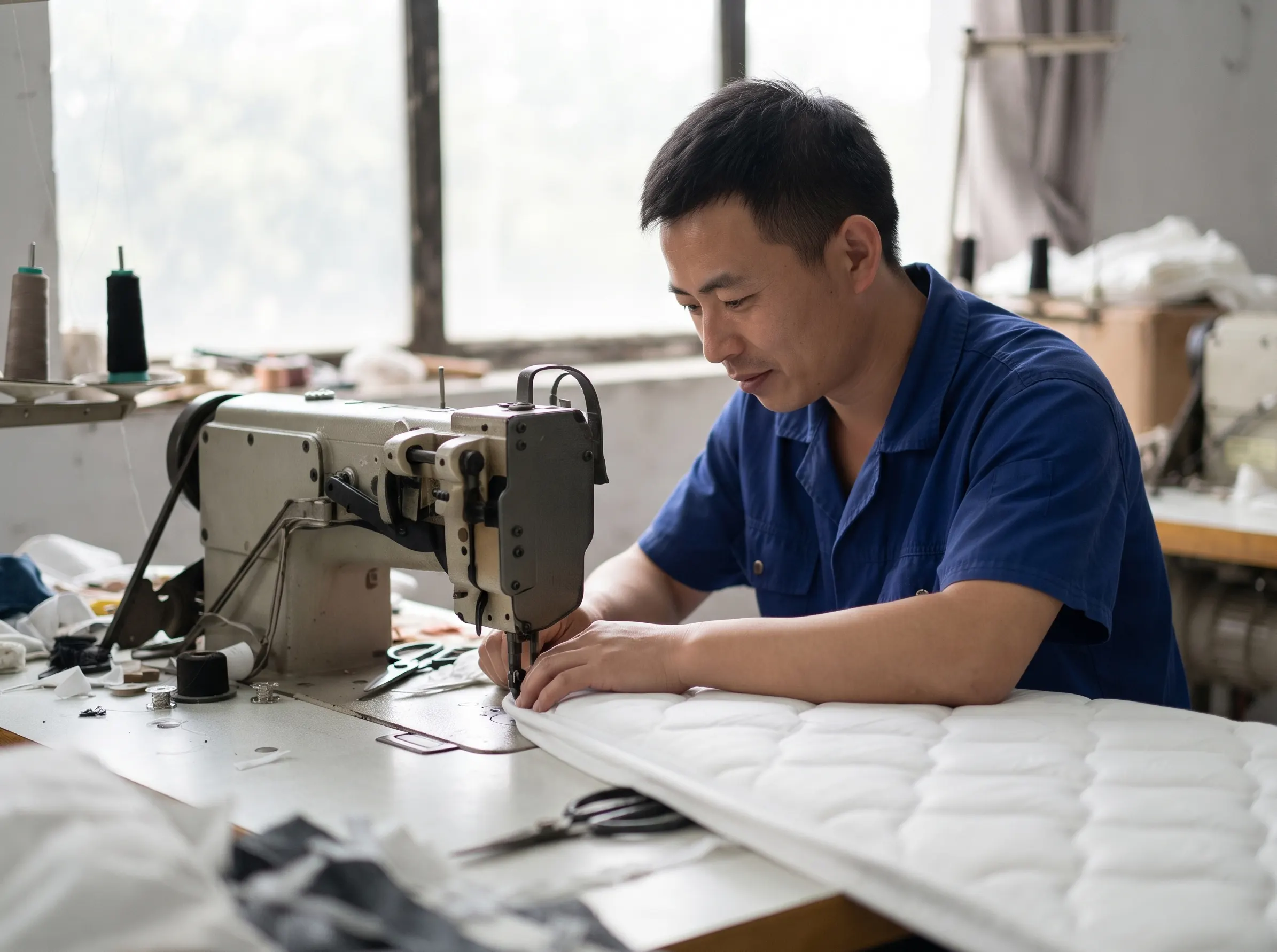
You placed your first order and the quality was excellent. The second shipment was acceptable. By the third container, the color is off, the joints are loose, and your customer is asking for a refund. You call the factory. They say maybe the wood was a little different this month. You know something is wrong, but you cannot pinpoint it. This is China quality inconsistency in action, and it is the most under-diagnosed problem in furniture sourcing.
We have spent years tracing batch variation furniture across production cycles in Jiangxi Nankang and Zhejiang Anji. The pattern is always the same. Batch one is good, batch two is acceptable, and batch three is where the drift shows up. By batch five the product is barely recognizable. Buyers blame the factory. Factories blame the materials. Everyone loses money, and nobody fixes the system.
What production drift really looks like
The term sounds technical, but it is simple. Production drift happens when the conditions that produced your first batch slowly change and nobody resets the process to the original standard. The skilled worker moves on, the material lot changes, the machine calibration slips, the humidity on gluing day is different. None of those alone looks like a problem.
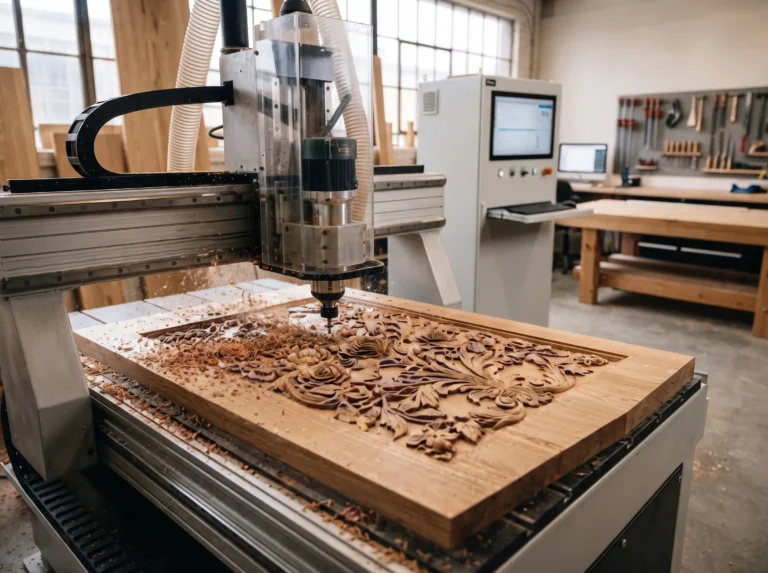
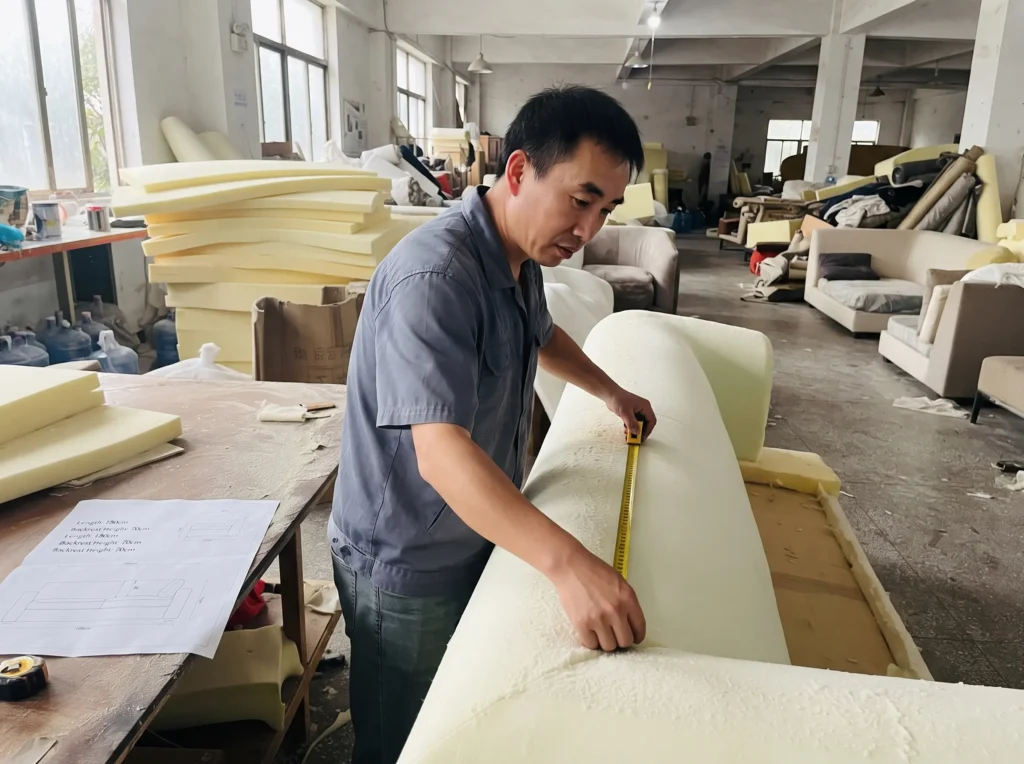
Here is what drift looks like on a real production line. Color shift is the easy one to spot after the fact. A senior technician calibrated the stain mix for batch one, but by batch three that technician is on leave and a junior employee is eyeballing the proportions, so the walnut finish starts looking like cherry. Dimension creep is quieter. A sofa frame measured 202cm in batch one and 198cm in batch three after the foam supplier changed grades without telling anyone, and the cover no longer fits. Joint weakness shows up when the CNC machine that drilled the dowel holes in batch one has gone three weeks past its calibration date, leaving loose holes the glue cannot hold. Hardware tolerance fails when the purchasing manager finds a cheaper hinge source for batch three and the screws no longer line up, so the drawer fronts stick.
Each of these is invisible on its own. Together they turn a reliable product into a customer service problem, and they all point to the same failure. The factory has no process control system that locks in the batch one standard.
The root causes nobody talks about
Buyers like to simplify this. The factory cut corners. Sometimes that is true. More often the real causes are structural and dull, which is exactly why they get ignored until the damage is done.
Seasonal material variation
Wood is not plastic. The same species cut in June and in November can differ in moisture, density, and color. A factory that does not adjust its drying schedule, glue open time, or stain formula to the incoming material will get visibly different results. We have seen oak from one supplier, bought three months apart, come out in two completely different shades with the same stain formula. The factory never realized the supplier had changed sawmills.
Worker rotation
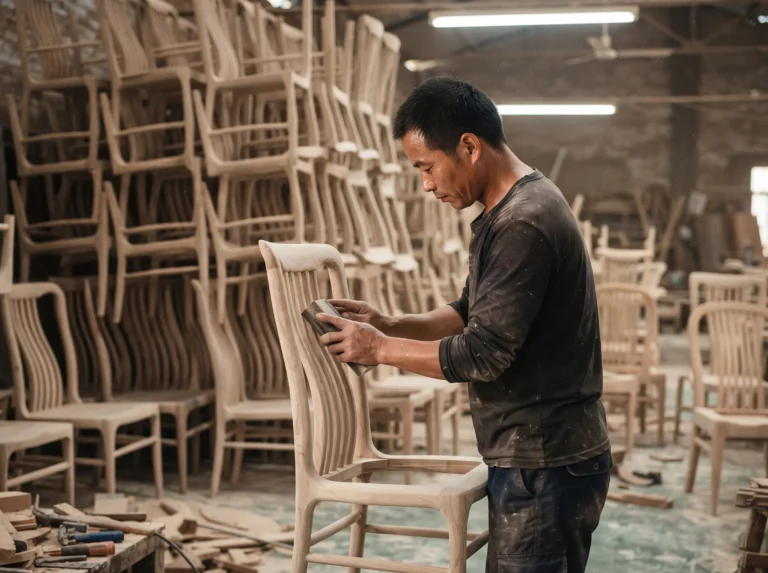
Furniture making is still heavily manual. The worker who built your batch one frames knows exactly how much pressure to use on a corner wrap, how long the glue needs to dwell, and the visual cue that says the stain is saturated. When that worker leaves, or gets shifted to someone else’s rush order, the knowledge leaves with them. The replacement follows the same printed instructions, but those instructions never captured the tacit skill that made batch one good. This is the human side of production drift, and most factories will not fix it without a training investment you have to force.
Supplier switching
The factory you audited is not the one making every part. Foam, fabric, hardware, veneer, lacquer almost always come from subcontractors. When the factory switches subcontractors to save 5%, or when a subcontractor runs out and swaps in a similar grade without telling you, the drift starts. Most factories do not inspect incoming material tightly enough to catch the swap. They assume the supplier is honest, and in our experience that assumption costs buyers around $12,000 per container in hidden quality loss.
The silent failures we tracked
We once tracked a dining chair order across four batches for a US-based retailer. Batch one had a 4.2% defect rate. Batch four had a 31% defect rate. The factory could not explain why. We investigated. The wood supplier had switched from kiln-dried to air-dried lumber to save on energy costs. The factory did not know. The moisture meters in the workshop had not been calibrated in eight months. The QC manager had been promoted to production supervisor and was no longer doing incoming checks. Three silent failures, one catastrophic result. The factory was not evil. The system had rotted while nobody was watching.
The early warning signs you can spot before shipment
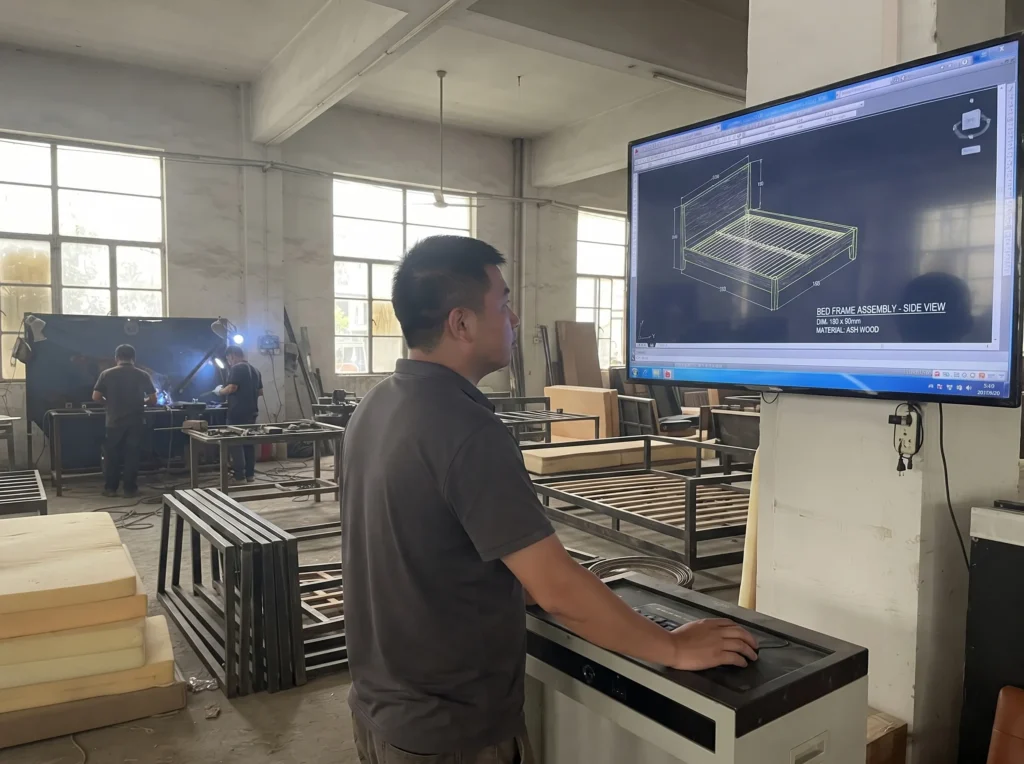
You do not need to wait for the container to arrive to detect batch variation furniture. There are signals that show up weeks before production ends, if you know where to look.
Pre-production samples start looking rushed. If the factory used to send a clean pre-production piece and now sends one with glue squeeze-out or uneven stain, the drift has already begun. QC photos start avoiding close-ups. When your third-party inspector sends shots from three meters away instead of detail, ask why. It usually means the details are no longer worth showing. Packaging changes without explanation. A sudden switch from white foam to yellow, or from one carton supplier to another, often means a material swap upstream. Delivery dates slip by small increments. Drift and chaos travel together. When a factory loses control of the process, delivery slips first and quality slips second. Answers to specific questions get evasive. If you ask what moisture content they are targeting for this batch and they say “standard, as usual,” that is not an answer. It is a warning.
The lock-in protocol: how to stop drift before it starts
After years of fighting China quality inconsistency, we developed a simple protocol that we now attach to every repeat order. It is not complex. It is specific. And it works because it removes the ambiguity that allows drift to hide.
Start with a golden sample and a golden BOM. The golden sample is the physical reference. The golden BOM lists every material, supplier, grade code, and finish formula, and both get signed, dated, and photographed with a ruler in frame for scale. No production batch may deviate from either without written approval. Next, lock the subcontractor list. Your contract should name the specific suppliers for foam, fabric, hardware, veneer, and finish. Any switch needs 14 days’ notice and a new sample approval cycle, and that single clause stops about 60% of the drift we see. Require batch-level pre-production samples, not just for batch one but for every batch. The factory builds one unit with the current material lot, team, and machine setup, then compares it to the golden sample. If it deviates, fix it before the main run. Mandate incoming material inspection reports on every batch, covering moisture content, foam density, fabric color match against a standard swatch, and hardware tolerance, shared with you before production starts. No report, no start. Finally, run a mid-production audit on batch two. Most buyers only inspect the final shipment, by which point the drift is baked in. A mid-production audit on batch two catches process failures before they compound. It costs $300 and saves $30,000.
Why factories resist this (and how to overcome it)
When we propose this protocol to factories, about 30% push back immediately. They say it is too bureaucratic, too time-consuming, or “not how we do things here.” That pushback is valuable. It tells you something about the factory’s internal discipline.
Factories that already have decent process control see the protocol as a minor addition. They nod, adjust, and comply. Factories that have been drifting for years see it as a threat to their flexibility, which is just a code word for their ability to swap materials, change subcontractors, and cut corners without telling you.
Our advice is to not negotiate the protocol away. Negotiate the timeline. A good factory will accept the standards if you give them two weeks to set up the documentation and train the QC team. A bad factory will find another excuse. That is your signal to walk.

FAQ
Why does batch quality drift even when I use the same factory?
China quality inconsistency is rarely intentional sabotage. It is caused by material changes, worker rotation, supplier switches, and process decay that accumulate silently across batches. The factory often does not notice the drift until you point it out.
How much does a mid-production audit typically cost?
A third-party mid-production audit costs $200 to $400 depending on location and scope. For a $25,000 furniture order, this is under 1.5% of order value and typically catches 70% of drift issues before they enter the main run.
Can I prevent production drift by switching to a bigger factory?
Not necessarily. Larger factories often have more formal systems, but they also have more subcontractor layers and less flexibility to lock in your specific material stream. We have seen drift in 50-worker workshops and 500-worker factories. The key is process control, not size.
What is the most common material switch that causes batch variation?
Foam and fabric are the most frequent silent switches. Both are commodity products with multiple grades that look identical to the eye but perform differently over time. A foam density drop from 40D to 32D is invisible on day one and obvious after six months of use. Always specify grade codes in your contract.
Should I accept a small price increase to lock in batch consistency?
Yes. In our experience, a 3% to 5% price premium to secure locked material suppliers, consistent labor assignment, and rigorous incoming inspection is almost always cheaper than the cost of handling defective returns, negative reviews, and lost customers from batch variation furniture.

Recommended Resource
Interi Furniture specializes in custom furniture manufacturing for residential, hospitality, and commercial projects. Their experience in materials, craftsmanship, and project realization makes them a valuable resource for designers and buyers seeking tailored furniture solutions from China.