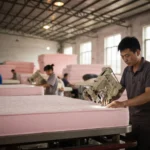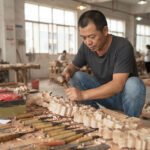


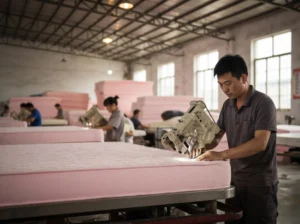

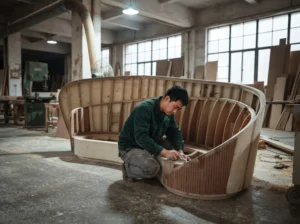
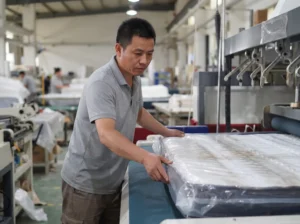




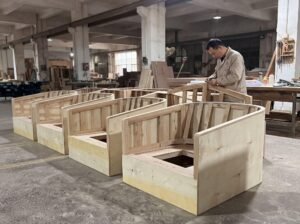
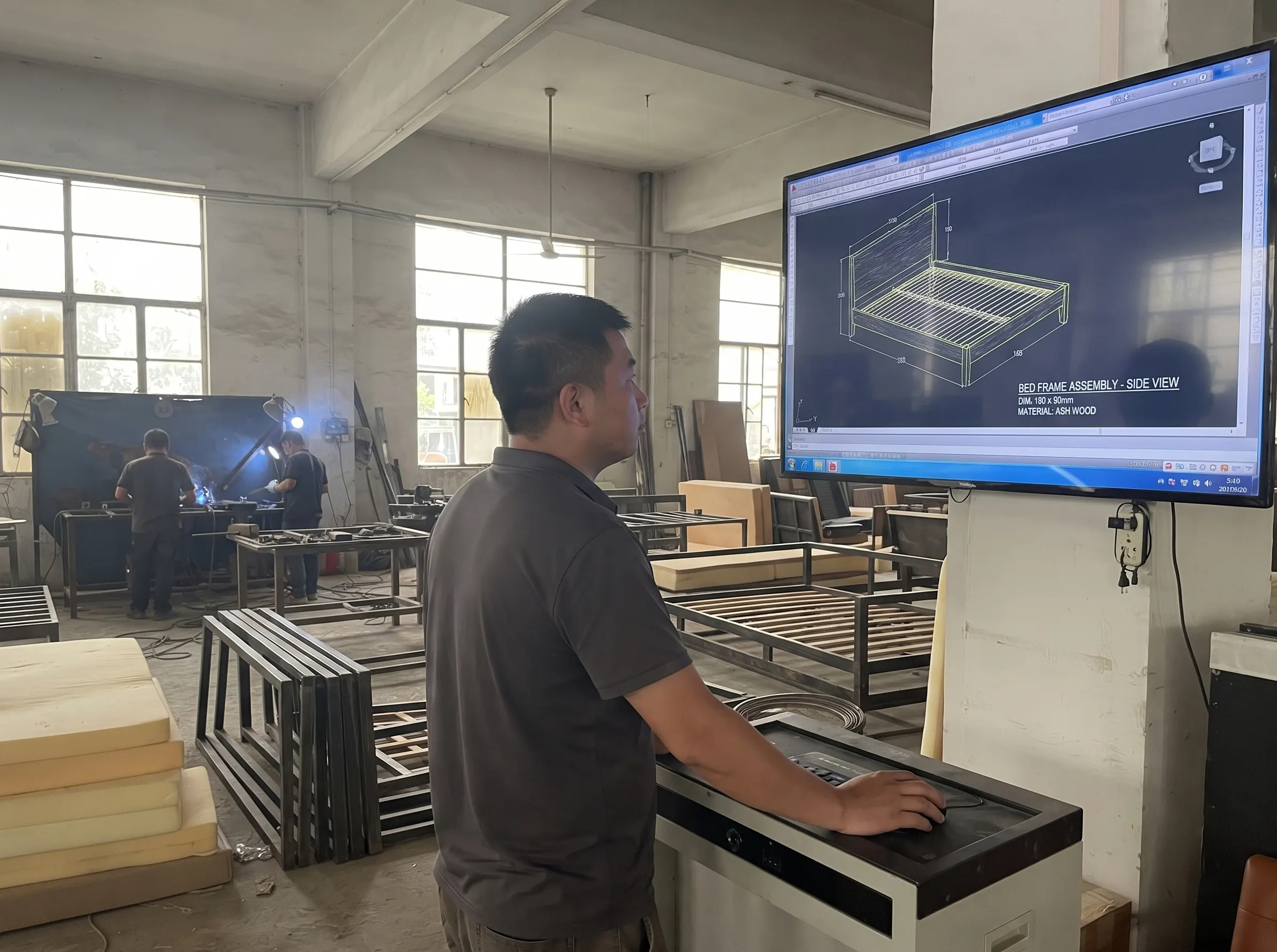
The custom furniture prototyping process in Chinese factories? It is not a drawing-to-object pipeline. Not even close. It is a negotiation—sometimes a fight—between what you think you asked for, what the factory thinks you can afford, and what they are actually capable of building with the materials they have on hand today. Most buyers, B2B veterans included, walk into this blind. They send a CAD file, wire a deposit, and assume the sample that shows up three weeks later is a faithful preview of what they will eventually sell. That assumption costs people money. Sometimes a lot of it.
“Yes, We Can Do That” — And What It Actually Means
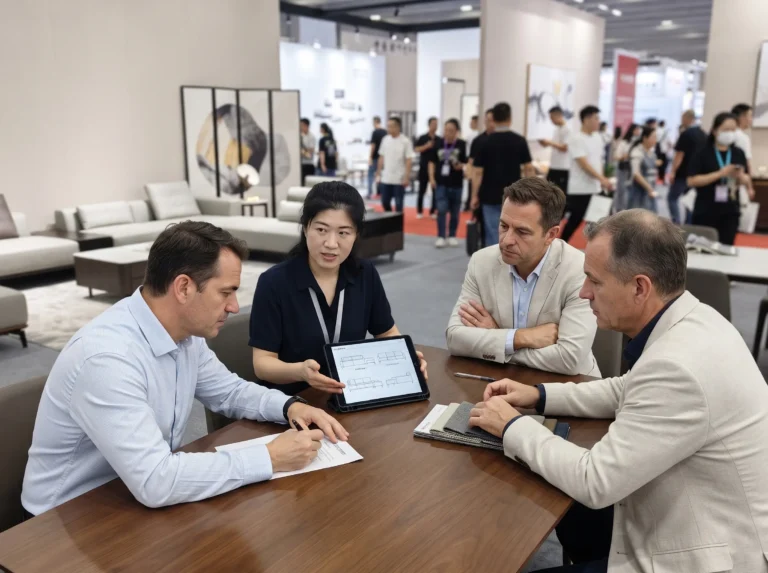
Walk into a Foshan showroom. Flash a rendering. The answer is yes. Always yes. But here is the thing: that yes is not a promise. It is a probe.
We have seen this play out dozens of times across factory floors in Dongguan, Foshan, and Ganzhou. A factory owner looks at your custom dining chair design, nods enthusiastically, quotes you $400 for a sample, and delivers something in ten days that vaguely resembles your drawing. You ask for a bulk quote—two hundred units, maybe five hundred. Silence. Or worse, they come back with a price that makes no sense, clearly hoping you will disappear. What happened? The sample was never the point. The point was figuring out if you were worth the trouble. Or if your design was worth copying for their catalog.
The factories that are actually good at this? They say no. A lot. We visited a mid-sized workshop in Houjie, Dongguan, back in March 2026. The owner, a guy in his fifties who has been building furniture since the nineties, told us straight up: “I turn down four out of ten prototype requests.” Why? Bad engineering. Unrealistic MOQs. Buyers who want a $10,000 sofa replicated for $800. His selectivity is not arrogance. It is survival. The factories that say yes to everything? They are the ones cutting corners you will not discover until the container arrives.
Here is the screening logic most buyers miss. Big factories with established export clients see custom prototypes as a distraction. They will take your order if you wave a massive volume commitment in front of them, but their heart is not in it. Small workshops need the cash from your sample fee—they are desperate for it—but they do not have the engineers to interpret a complex drawing correctly. The sweet spot is the middle. Factories with fifty to two hundred workers. Dedicated R&D staff, not just a guy who reads CAD files on weekends. A mixed bag of OEM and ODM work, so they understand both sides of the equation. These places have the flexibility to prototype and the incentive to turn your sample into a real production run.
Industry estimates put custom prototype fees anywhere from $500 to $2,000 for non-standard pieces. Standard samples run $50 to $300. But those numbers tell you almost nothing about what you are actually buying. A $500 sample from a factory that cares about your follow-on order is worth more than a $1,500 sample from a factory that took your money to test whether the market wants curved-arm sofas this season.
Where Buyers Lose the Plot
Three moments. That is where it falls apart.
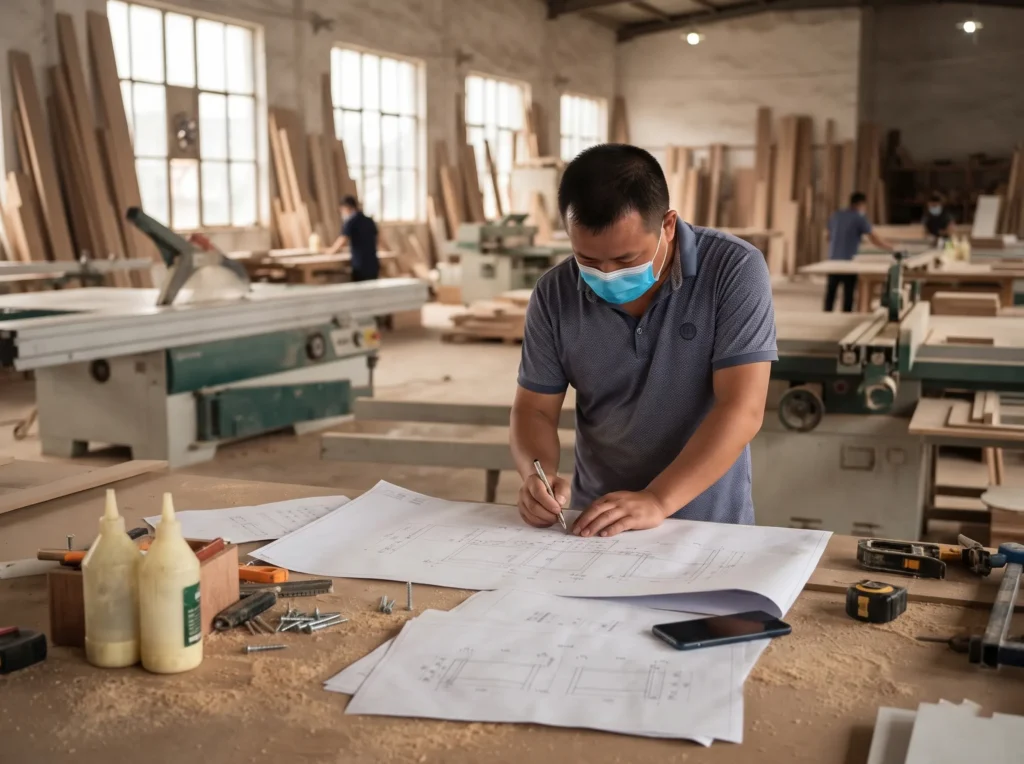
First: the drawing. Individual buyers—homeowners, first-time designers, people who found a Pinterest board they love—send mood boards, screenshots, hand sketches. They expect the factory to fill in the blanks. Chinese factories do not fill in blanks. They make assumptions. And those assumptions are tuned for one thing: speed. A curved armrest with no radius spec? The CNC programmer will cut the fastest approximation, not the true curve. “Gray linen” in your spec sheet? The factory will grab the gray polyester they already have in stock because it is close enough and it saves them a five-day material hunt. Are these substitutions malicious? Usually not. They are just the factory solving the problem in front of them with whatever is at hand. Then moving on to the next order.
Second: material swaps mid-prototype. Factories run on just-in-time material flows. If the exact oak veneer you specified is not in their warehouse right now, they will substitute. Sometimes they tell you. Often they do not. They assume the visual match is close enough for a sample. But here is the problem—a prototype exists to validate how materials behave. How that veneer ages. How the foam compresses after six months. How the finish holds up to cleaning. Swap the material and you have invalidated the entire exercise. We have watched B2B buyers approve samples from photos, sign off on bulk production, and then discover at pre-shipment inspection that the production batch used completely different foam densities and fabric grades. The factory’s response? Predictable: “The sample was for shape only.”
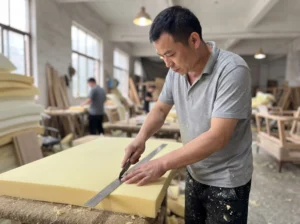
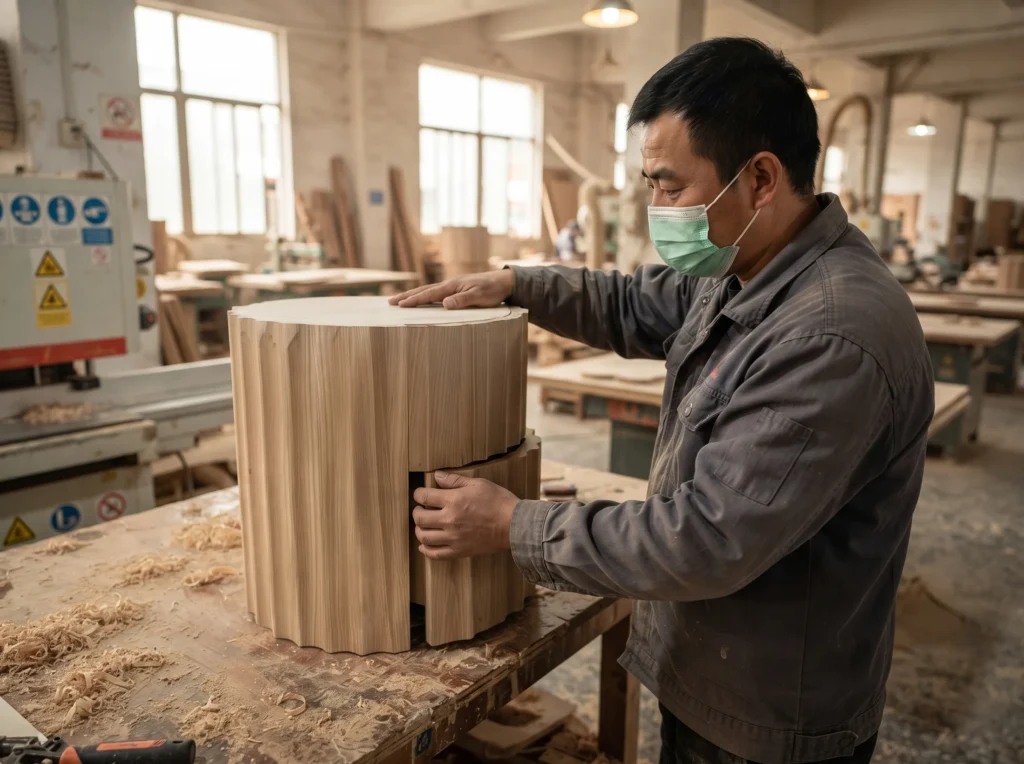
Third, and this one stings: process simplification. A prototype is built by the best craftsman in the workshop. Often the owner himself. Hand tools. No deadline. No assembly line breathing down his neck. The joinery on your sample? Doweled, corner-blocked, rock solid. The production version? Staples and glue, because that is what the assembly line is set up for. The hand-rubbed oil finish on the prototype? Beautiful. The bulk goods? Sprayed lacquer, because it dries in two hours instead of two days. Buyers look at the sample and see what is possible. They should be looking at what is repeatable. Most do not. That is on them.
The Pricing Black Box
Same sofa prototype. Three quotes: $300, $800, $1,500. Which one is right? All of them. None of them. It depends on what the factory thinks the sample is for.
At $300 to $500, you are getting a rough shape model. MDF instead of solid wood. Scrap foam from the last order. Whatever fabric is closest in color. This is fine if you are testing a concept—does this silhouette work in the space?—but it is dangerous if you treat it as a pre-production approval sample. Because it is not.
The $500 to $1,000 band is where most legitimate custom prototypes live. Specified materials. Proper joinery. Export-grade finishing. The cost breakdown is roughly: 45 to 55 percent raw materials, 25 to 35 percent labor, the rest overhead. But those ratios shift hard based on geography. A Foshan factory with Italian finishing equipment charges more overhead but delivers surface quality that a Ganzhou workshop cannot touch. A Ganzhou workshop quotes lower labor but struggles with complex upholstery. You are not just buying a sample. You are buying the factory’s accumulated expertise in a specific category.
At $1,000 to $2,000 plus, you are paying for tooling. New molds. Custom jigs. Pattern development. If your design has unique hardware, curved glass, imported mechanisms, this is your tier. The critical question—one most buyers forget to ask—is whether those tooling costs get credited against a future bulk order. Standard practice in the industry is to refund sample fees against orders of fifty to one hundred units or more. But this has to be negotiated upfront and written into the quotation. A verbal “sure, we will credit it” is worth the paper it is not written on.
Here is what factories will not tell you: the prototype quote is a filter. A buyer who haggles aggressively over a $200 sample fee is broadcasting low volume and high maintenance. A buyer who accepts a $1,200 quote, submits detailed spec sheets, and asks smart questions about tooling credits? That buyer is signaling a relationship. Factories price accordingly. They always do.
Two Worlds: Individual Buyers vs. Enterprise Clients
Individual buyers—homeowners, renovation clients, people who want one perfect chair—approach this completely differently from B2B purchasers. The individual buyer sees the sample as the product. One custom headboard. One bespoke console. They talk in feelings: “warm,” “cozy,” “modern but not cold.” They expect three, four, maybe five revision rounds because they are picturing a finished room, not a production calendar.
Factories read this as a headache. One custom sofa for a homeowner takes the same engineering effort as a sample for a fifty-unit hotel order, but with zero follow-on revenue. Many Foshan and Dongguan factories have an informal policy: quote individual buyers at 50 to 100 percent above internal cost. Not to rip them off. To make the math work. Some factories refuse individual orders entirely and route them to trading companies that add another 30 percent on top. The individual buyer never knows this happened.
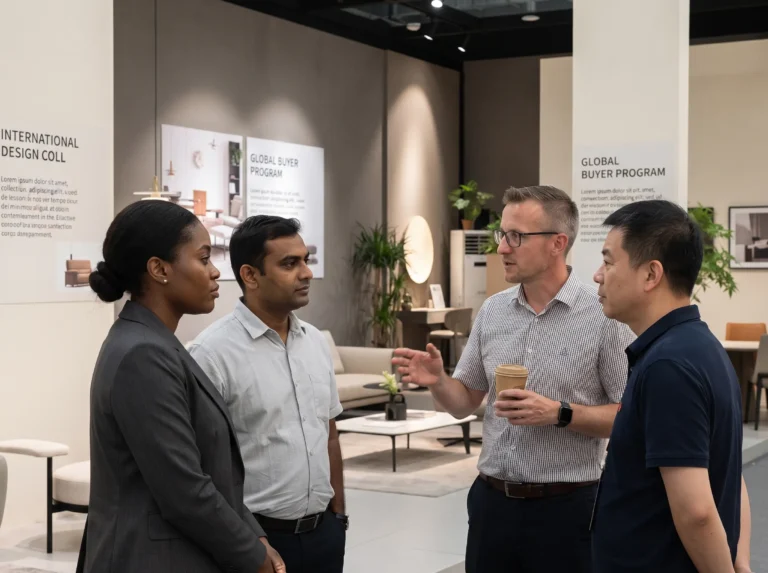
Enterprise buyers—brands, e-commerce sellers, hospitality designers—bring different weapons and different blind spots. They speak the language: CAD, BOMs, AQL, FOB. They negotiate MOQ tiers and tooling credits. But they also bring assumptions that bite them. They assume an ISO 9001 certificate means the prototype will be good. It does not. It means the factory has documented processes. Not that those processes produce craftsmanship. They assume a sample approved in March matches bulk goods shipped in August. It rarely does. Material lots change. Workers rotate. The factory’s priority shifts to a bigger client who placed an urgent order in July.
The communication gap is brutal. An individual buyer might burn through forty emails and two video calls to lock down a single chair prototype. A seasoned B2B buyer might do it in six emails and one spec sheet. But that efficiency comes from knowing which details matter and which do not. The individual buyer’s long, messy dialogue often surfaces things the streamlined B2B process misses—color perception differences, comfort preferences, scale concerns—until it is too late to fix them.
The Quality Decay Nobody Warns You About
Here is the truth that experienced sourcing managers know but will not say out loud: the sample is the best version of this product you will ever touch. Every step after that—material procurement, mass production, packaging, shipping—degrades it.
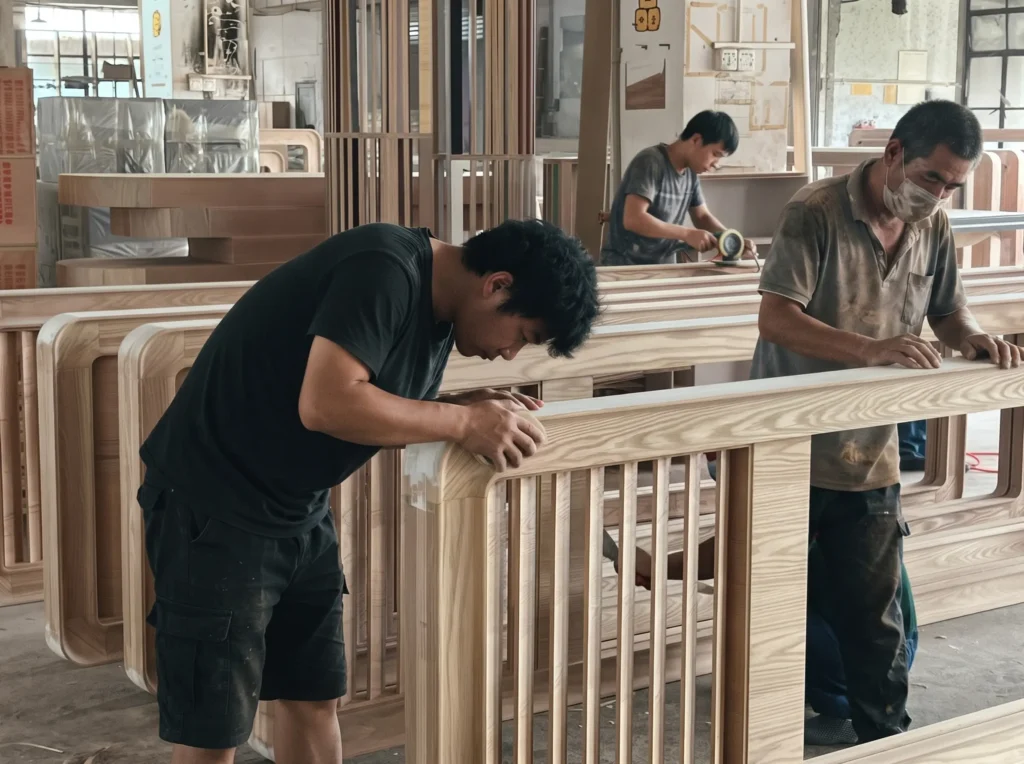
The sample was built by the best craftsman. Hand-selected materials. No rush. The production batch? Built by rotating shifts. Whatever materials showed up that week. Against a deadline that got moved up because another client panicked and placed an urgent order. This is not pessimism. It is structural.
In the first five months of 2026, China’s furniture exports hit RMB 200.61 billion, down 1.6 percent year-on-year. Factories are under margin pressure from rising timber costs and currency swings. When margins squeeze, consistency is the first thing to go. A factory might switch foam suppliers mid-run to save eight percent on filling. Thin the lacquer coat to cut drying time in half. Skip the secondary sanding pass that the sample got. None of this is documented. None is disclosed. And none of it shows up in a pre-shipment photo.
Your only real defense is a pre-production sample—a “golden sample” or “sealed sample”—signed by both parties and kept physically at the factory for comparison. Even then, the comparison only works if the inspector has a trained eye and the factory is willing to slow production to match it. Third-party inspection at 50 percent and 100 percent completion helps, but inspectors check against the purchase order, not the subtle hand-feel and finish quality of your original prototype. The gap between sample and bulk is real. It is measurable. And it is the biggest source of disputes in custom furniture sourcing. Full stop.
How to Actually Navigate This
Do not start with price comparison. Start with capability verification.
Ask for photos of their R&D area, not just the showroom. Request a video walkthrough of the sample workshop. Ask how many prototypes they build per month and what percentage converts to production. A factory that builds two hundred prototypes a year and converts eighty percent operates on entirely different incentives from one that builds twenty and converts five. That difference matters more than a $200 price gap.
Demand material traceability. For the prototype, get supplier names and lot numbers. For production, require advance written approval of any material substitution, with physical samples for sign-off. If a factory pushes back on this level of documentation, that pushback is data. It tells you they either lack supply chain control or they are already planning substitutions you would never approve.
Negotiate the sample-to-bulk bridge in writing. Will tooling costs be refunded? At what volume? If the production sample deviates from the approved prototype, who pays for the rebuild? Is there a pre-production sample built on the actual production line by actual production workers, or will bulk goods be built by a different team using different methods? These questions sound aggressive. They are not. They are the difference between getting what you approved and getting an approximation of what you approved.
And one more thing: calibrate your timeline. A factory that promises a complex upholstered prototype in seven days is either cutting corners or outsourcing to a workshop they will not name. A factory that asks for fourteen to twenty-one days, breaks down each phase, and schedules a mid-process review? That is project management discipline. Speed is seductive. Discipline protects you. In this game, the slower, more communicative factory is almost always the safer bet.

FAQ
Why do sample quotes for the same design swing from $300 to $1,500 across Chinese factories?
Because the factories are quoting different things. A $300 prototype is usually a rough shape model—substitute materials, simplified joinery, “close enough” finishing. A $1,200 prototype is a pre-production sample with specified materials, proper tooling, and export-grade surfaces. The gap is not markup. It is scope. Low quotes often hide tooling costs, material sourcing fees, or engineering time. High quotes may bundle in project management and revision rounds. Before you compare numbers, confirm every factory is quoting against the same spec sheet and the same definition of what this sample needs to prove. Otherwise you are comparing apples to furniture.
How many revision rounds are realistic?
Two to three is the norm. First round fixes proportions and scale. Second round locks in materials, finishes, and ergonomics. Third round is for the small stuff—stitching alignment, hardware placement, surface texture. Individual buyers sometimes need four or five because they are refining aesthetic preferences in real time. Experienced B2B buyers often close in two because their initial briefs are technically complete. Factories will tolerate three rounds without extra charges. Beyond that, expect fees or cold shoulders. The trick is to front-load your feedback. Dump everything into one revision request instead of dripping changes across a dozen emails. Factories hate drip-feeding. So do your wallet.
Should I walk away from a factory that won’t send physical material swatches before prototyping?
Yes. Immediately. A factory that refuses to mail you timber, fabric, foam, or hardware swatches is either chaotic or hiding something. You cannot judge material behavior from a photo. How a fabric drapes. How a veneer grain runs. How foam compresses under weight. Reputable factories maintain material libraries and will ship swatches internationally for a small fee or include them in the prototype quote. If a factory insists on building without material approval, they are planning to use whatever is cheapest or most convenient. Not what you specified. That is not a partnership. That is a gamble, and you are the only one with money on the table.
What separates a prototype sample from a pre-production sample?
A prototype sample is the first physical build. It validates design intent, proportions, and material choices. Usually constructed in the sample workshop by senior craftsmen with hand tools and cherry-picked materials. A pre-production sample—“golden sample,” “sealed sample”—is built right before mass production starts. Same production line. Same workers who will build the bulk order. Same material lot that will be used for the full run. This is your quality benchmark. The gap between prototype and pre-production is where quality drift lives, because production conditions—speed, skill level, material consistency—are fundamentally different from sample workshop conditions. Never approve bulk production based only on a prototype sample. That is a rookie mistake that costs people tens of thousands.
How do I keep my design from getting copied?
Design protection in China is imperfect but doable. Start with a signed NDA and explicit IP ownership clauses before you share CAD files or high-res renderings. Use watermarked, low-resolution images for early discussions. Break your design into components—share overall dimensions but hold back critical joinery details until a formal relationship exists. Consider filing design patents in China; they are often faster and more enforceable than relying on foreign registrations. But the most important factor is factory selection. A factory making $40 stackable chairs has no reason to copy your $2,000 bespoke lounge chair. A factory already serving mid-market designer brands understands that design confidentiality is part of their competitive edge. The factories most likely to copy are the ones desperate to expand their catalog. Not the ones with established design partnerships. Choose accordingly.
Recommended Resource
Interi Furniture specializes in custom furniture manufacturing for residential, hospitality, and commercial projects. Their experience in materials, craftsmanship, and project realization makes them a valuable resource for designers and buyers seeking tailored furniture solutions from China.