







Here is the unvarnished truth in under one hundred words. CIFF personal buyer access is technically possible but structurally awkward. The fair is built for B2B procurement teams, not individuals furnishing a vacation home. You can get through the door. Some booths will talk to you. A few might even sell you a sample. But the pricing, minimums, and logistics are engineered for container-load orders, not living-room sets. For most individuals, the airfare and hotel spend does not pencil out against the savings. If your budget sits below thirty thousand dollars and you have no import experience, Alibaba or a local agent will almost always deliver better value with less headache.
The Social Media Trap: Why Personal Buyers Show Up at a B2B Fair
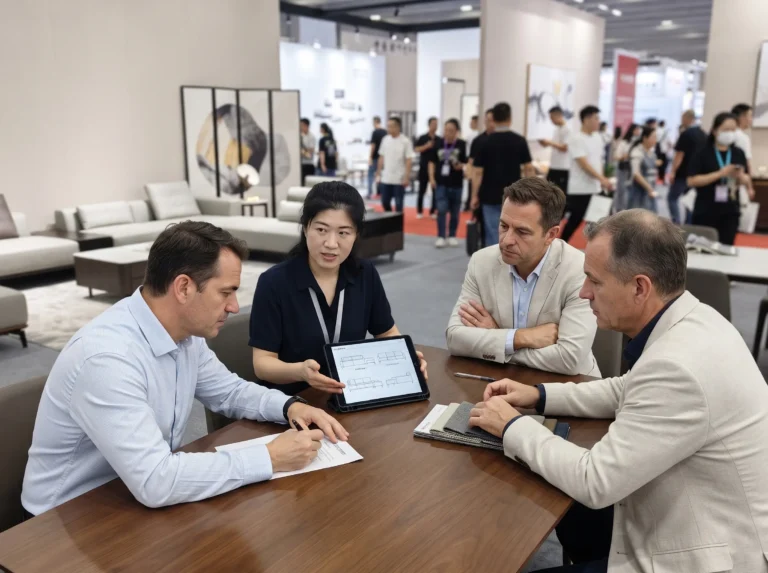
Every spring, the same narrative circulates through Instagram reels and YouTube vlogs. A couple lands in Guangzhou, strolls through CIFF Guangzhou, and walks away with a shipping container of designer-grade furniture for the price of an IKEA run. The myth is seductive because it contains a grain of truth. Chinese factories do produce exceptional furniture at manufacturing costs that would make a Western retailer weep. The problem is that CIFF is not a retail outlet with a wholesale backroom. It is a trade-only ecosystem where four thousand nine hundred exhibitors set up booths to meet distributors, hotel procurement teams, and e-commerce operators who buy by the container. When a personal buyer walks in expecting a Costco experience, the mismatch is immediate and often expensive.
We have walked the halls of Pazhou for over a decade. We have watched factory sales teams shift from warm to guarded the moment a visitor admits they are buying for a single home. A factory sales rep at CIFF has four days to close deals that will fill production lines for the next quarter. A personal buyer who wants three dining chairs consumes the same twenty minutes as a Dubai hotel group ordering two hundred units. The math is brutal, and the sales floor reflects it.

What CIFF Officially Is vs. What Actually Happens on the Floor
The China International Furniture Fair is marketed as a trade-only event. The 2026 Guangzhou edition runs two phases. Phase one covers home furniture from March 18 through 21. Phase two handles office and commercial furniture, machinery, and raw materials from March 28 through 31. The official registration portal requests company names, business nature, and target markets. A passport number is mandatory. The system asks you to classify yourself as a trader, buyer, designer, or end user. Theoretically, the end-user category exists. In practice, it is the digital equivalent of a side door.
On the ground, security at the Pazhou Complex checks badges, not business licenses. If you pre-register with a Gmail address and list yourself as a consultant, you will likely receive a QR code without human review. The badge gets you in. What happens after that depends entirely on how you present yourself and what you are trying to buy. The real friction begins at the booth level. Factory sales staff are trained to qualify buyers within the first ninety seconds. They look for signals. Business cards with letterheads. Questions about FOB terms and port preferences. Discussion of MOQ flexibility across mixed containers. When a visitor asks if they can buy a single sofa for personal use, the rep mentally categorizes them as a stray retail customer. The tone shifts. The price quote, if one is offered at all, often jumps from the factory tier to the retail tier. We have seen quotes inflate by forty to seventy percent once the sales rep realizes there is no recurring volume behind the inquiry.
| Dimension | Official Rule (CIFF Guangzhou 2026) | On-the-Ground Reality for Individuals |
|---|---|---|
| Visitor Category | Trade professionals only; business license or company details required at registration | Many individuals register using a personal LLC, friend’s company name, or simply complete the online form without deep verification |
| Entry Badge | Pre-registration QR code or on-site registration with business card and passport | Most international visitors receive badges without aggressive credential checks; walk-ups rarely turned away if dressed professionally |
| Pricing Expectation | Factory-direct ex-factory pricing for bulk orders | Individuals often receive retail-tier quotes or face reluctance from sales staff who sense non-trade status |
| Purchase Volume | Full-container MOQs (20GP/40HQ) standard | Some booths accept mixed-container orders; single-piece sales are rare and usually limited to display samples |
| Sales Priority | Equal treatment per CIFF exhibitor guidelines | Factory sales teams prioritize distributors and repeat B2B buyers; personal buyers may experience cold treatment or delayed follow-up |
What Personal Buyers Can Actually Buy: Product Categories and MOQ Realities
Not all furniture categories treat individual buyers the same way. The upholstery giants in the Foshan pavilion will barely blink in your direction unless you are talking about a full container. The accessory vendors in the home decor halls are often far more accommodating. Upholstered seating represents the highest wall. A factory running production lines for sectional sofas operates on fabric minimums that start at hundreds of meters. A single sofa requires roughly seven meters of fabric. The factory cannot stop a production run to cut one unit. Dining furniture offers slightly more flexibility. Some solid-wood factories keep small stock lots for quick-turn orders, and a polite buyer with cash in hand might walk away with a single table and four chairs at a sample price. Bedroom furniture sits in the middle. Bed frames and dressers are bulky but standardized, and a factory with excess inventory from a canceled B2B order may be willing to clear five to ten pieces. Outdoor furniture is notoriously difficult for individuals because aluminum extrusion and wicker weaving require dedicated mold setups and volume commitments. Home decor and lighting are the personal buyer’s best friends at CIFF. Vendors in these categories often operate with lower MOQs and are accustomed to mixed orders.
| Product Category | Typical B2B MOQ | Personal Buyer Reality | Sourcing Feasibility |
|---|---|---|---|
| Upholstered Sofas and Sectionals | 20–50 units per SKU | Display samples only; custom fabric or configuration unlikely | Low unless ordering a full container |
| Dining Tables and Chairs | 10–20 sets per style | Possible to negotiate 1–2 sets at sample price, but unit cost rises 40–60% | Moderate for small-batch buyers |
| Bedroom Furniture (Beds, Dressers) | 1x20GP mixed container | Some factories accept 3–5 piece orders during slow seasons | Moderate to High |
| Outdoor and Patio Furniture | 50–100 units per model | Highly difficult; seasonal production runs favor volume commitments | Low for individuals |
| Home Decor and Accessories | 100–500 pieces per SKU | Most accessible category; some vendors sell single items at near-retail | High |
| Lighting and Textiles | Variable; often 50+ units | Lecong wholesale markets post-CIFF offer better odds than the fair itself | High (off-site) |
The Real Cost Math: CIFF vs. Alibaba vs. Local Agent
This is where the social media narrative collapses. The headline savings of buying direct from China ignore the total cost of acquisition. When we run the numbers for a typical personal buyer with a fifteen-thousand-dollar furniture budget, the results are sobering. A week at CIFF including flights from the US East Coast, a decent hotel near Pazhou, meals, ground transport, and visa fees will run between twenty-five hundred and five thousand dollars. That is a fixed cost whether you buy anything or not. If you do find a factory willing to sell you a partial container, you still need to arrange consolidation, customs brokerage, ocean freight, marine insurance, and last-mile delivery. For a sub-container load, the per-unit shipping cost often erases the manufacturing savings. We have seen personal buyers spend eight thousand dollars on furniture, then pay another four thousand in logistics because they did not understand that a Less than Container Load shipment gets handled six separate times between the factory floor and their driveway.

Alibaba, for all its flaws, at least provides a structured checkout path. Prices are published. Trade Assurance offers payment protection. Samples ship via express couriers, and the platform has freight partners that handle the paperwork. You pay a premium for that convenience, usually fifteen to thirty percent above true factory cost, but you do not need to fly to China to get it. A local sourcing agent in Foshan or Shunde charges a commission, typically five to twelve percent of order value, but they negotiate factory pricing, manage consolidation, oversee quality control, and handle the customs documentation. For personal buyers without import experience, that fee is often the best money they can spend.
| Cost Component | CIFF On-Site Purchase | Alibaba Direct Order | Local Sourcing Agent |
|---|---|---|---|
| Product Unit Price (FOB) | $0–15% premium if quoted retail; potential 10–20% discount if negotiating well | Published wholesale prices; transparent but marked up 15–30% above true factory | Factory-direct pricing minus 5–12% agent commission |
| Travel and Accommodation | $2,500–$5,000 (flight, hotel, meals, visa for 5–7 days) | $0 | $0 |
| Sample and Inspection | Limited on-site; post-fair sample shipping $200–$500 | $100–$300 per sample; third-party inspection $150–$300 | Agent-managed sampling; $50–$200 per unit |
| Logistics and Consolidation | Self-arranged; LCL fees high for small volumes | Platform-integrated freight; simplified but expensive for sub-container loads | Agent consolidates LCL or FCL; optimized routing |
| Communication Overhead | Real-time but language barriers persist | Chat-based; slow response times for customization | Native-language bridge; factory relationship leverage |
| Total Landed Cost (Example: $8,000 furniture order) | $10,500–$14,000 | $10,000–$11,500 | $9,200–$10,500 |
For reference only, subject to official verification.
Who Actually Makes It Work
After years of watching personal buyers succeed and fail at CIFF, we can identify a clear success profile. The buyers who make this work treat the trip as a sourcing mission, not a shopping excursion. They arrive with WeChat contacts already warm. They know the difference between EXW and FOB. They have a realistic sense of what a 20GP container can hold, and they understand that a factory in Longjiang does not operate like a boutique in SoHo. The self-builder with a five-to fifteen-thousand-dollar budget and some Mandarin ability can piece together a small home package if they are patient and willing to visit ten or twenty booths before finding a factory with excess inventory. The vacation-home owner with a fifteen-to thirty-thousand-dollar budget and a willingness to fill a container stands a very good chance of achieving meaningful savings. The micro-hotel operator who needs twenty rooms of furniture and treats the project like a commercial procurement exercise is arguably the ideal personal buyer profile. They have the volume to justify the MOQs and the business structure to handle import documentation. Then there is the design enthusiast who wants a single statement chair. That buyer almost always leaves disappointed. The economics do not work at CIFF for one-off purchases, and the factory sales teams know it before the conversation starts.
| Buyer Profile | Budget Range | Key Success Factor | Likely Outcome at CIFF |
|---|---|---|---|
| The Self-Builder | $5,000–$15,000 | Speaks Mandarin or travels with a translator; has flexible taste | Can secure small-batch bedroom and dining pieces with patience |
| The Vacation-Home Owner | $15,000–$30,000 | Pre-contacted 5–10 factories via WeChat/Alibaba before arrival; ready to fill a 20GP | High success rate; achieves meaningful savings over domestic retail |
| The Micro-Hotel Operator | $20,000–$50,000 | Treats the trip as a sourcing mission, not a shopping excursion; understands HS codes and import duties | Very high success; CIFF becomes a valuable supply-chain node |
| The Design Enthusiast | $3,000–$8,000 | Wants one statement piece; no import experience | Low success; better served by design-forward Alibaba vendors or local showrooms |
| The First-Timer with No Plan | Variable | Attracted by buy direct from China social media narrative | Very low success; likely to leave frustrated or overpay |
The Red Flags: What Can Go Wrong
We need to be blunt about the risks because no one at the fair will warn you about them in advance. The retail-price trap is the most common pitfall. A factory sales rep senses you are an individual, quotes you a price that is essentially MSRP, and you leave thinking you scored a deal because it is still lower than West Elm. In reality, you may have paid the same price a local Chinese retailer would pay, plus you still need to ship it yourself. Always ask for a line-item breakdown. If they cannot provide fabric cost per meter, foam density specifications, and labor hours, you are not talking to a factory direct.

The sample-versus-production gap is another landmine. The sofa on the booth floor is often hand-built using premium materials for display purposes. The unit that arrives at your home three months later may use thinner plywood, lower-density foam, and cheaper fabric. This is acute at CIFF because you are making purchase decisions based on a single prototype in a convention hall with no opportunity for pre-shipment inspection. Logistics liability for personal buyers is a nightmare. When a professional importer receives a damaged container, they have a customs broker, a freight forwarder, and a purchase order with Incoterms that assign blame. A personal buyer who arranged their own LCL shipment through a random logistics contact at the fair has none of that infrastructure. If a dining table arrives cracked, you have no leverage. The factory will point at the shipping company. The shipping company will point at the port consolidation warehouse. You will eat the loss. Visa and customs compliance add another layer. Most Western buyers can enter China visa-free for up to thirty days or qualify for transit exemptions, but importing personal goods requires accurate HS code classification and duty payment. Misdeclaring furniture as gifts or samples to avoid duties is customs fraud. We have seen buyers attempt this at their own peril. The savings on a five-thousand-dollar order are not worth a customs seizure record.
Should You Go? A Decision Framework by Buyer Type
If you are a pure individual buyer furnishing your primary residence and your total furniture budget is under ten thousand dollars, stay home. Order from Alibaba, work with a local design firm, or buy from a domestic retailer who has already absorbed the import complexity. The airfare alone will eat your margin, and you will spend weeks trying to arrange shipping for a half-empty container. If you are a vacation-home owner with a twenty-thousand-dollar budget and a willingness to buy for multiple rooms, CIFF becomes viable. You have the volume to approach a 20GP mixed order. The key is preparation. Contact ten to fifteen factories via Alibaba or Global Sources three weeks before the fair. Tell them you will be at CIFF and would like to meet. Warm leads get factory prices. Cold walk-ups get retail quotes.
If you are a small-scale hotel or short-term rental operator, CIFF is not just viable, it is essential. You need the MOQs anyway, and the fair lets you vet suppliers in person, check joinery quality, and negotiate payment terms face to face. Hire a Foshan-based agent for the first trip, learn the ropes, and then decide if you want to manage future orders independently. If you are an independent designer sourcing for a residential project, you occupy a middle ground. Your client may have the budget to justify a container, but you need to be transparent about the timeline. Factory production runs rarely hit their quoted delivery dates exactly, and ocean freight from Yantian to Los Angeles currently averages twenty-four to thirty-two days plus port congestion. If your client expects furniture in eight weeks, CIFF is the wrong channel.

Frequently Asked Questions
Can individuals officially register for and enter CIFF without a registered business?
The registration form allows you to select end user as your business nature, and the online system rarely rejects international applications in our experience. That said, CIFF is marketed as a trade-only event, and the organizer official stance is that all visitors should be industry professionals. For reference only, subject to official verification. If you want to minimize friction, register with any legitimate business name, even a consulting LLC or a property management entity you own. The registration system for international visitors operates on self-reported business information. It does not perform real-time verification against foreign commercial registration databases, which is a functionally different reality from the domestic Chinese business license verification system.
Will factories at CIFF sell me just one or two pieces for personal use?
A minority will, especially if they have display samples they want to clear at the end of the show or excess stock from a canceled B2B order. However, the vast majority of production-focused exhibitors will not break a production run for a single-unit sale. Your best bet is to target vendors in the home decor, lighting, and accessories halls rather than upholstery or outdoor furniture.
Is the price at CIFF better than Alibaba for small buyers?
Not necessarily. Alibaba vendors have already built their pricing models around small to mid-sized orders. They factor in the cost of payment processing, sample shipping, and platform fees. A CIFF factory quoting you on the spot may give you a genuine factory price if they think you are a volume buyer, but if they sense you are an individual, the quote may quietly shift to a retail tier. Unless you have the negotiation skills and language ability to push back, you may end up paying more at the fair than you would online.
How do I arrange shipping if I buy at CIFF as an individual?
This is the single biggest logistical hurdle. You will need a freight forwarder who can handle LCL consolidation from Guangzhou to your port of destination. Some factories have preferred forwarders, but those relationships are built around FCL volumes. For small orders, expect to pay a significant per-unit shipping premium. You will also need a customs broker on your end to classify the goods and pay import duties. If this sounds overwhelming, that is because it is. This is exactly why personal buyers often find that a local sourcing agent earns their commission on logistics coordination alone.
What is the realistic total budget I need to make CIFF worth the trip?
In our view, the break-even point for a North American or European personal buyer is around fifteen to twenty thousand dollars in furniture purchases, assuming you can fill at least a partial container and have some flexibility on styles. Below that threshold, the travel and logistics costs erase the manufacturing savings. For reference only, subject to official verification. If your budget is under ten thousand dollars and you only need a few pieces, the math almost never works in your favor.
Ready to talk through your specific situation? Every buyer’s profile is different. Drop a comment below telling us your budget, your timeline, and what you are trying to source. We will give you a straight answer on whether CIFF makes sense for your project or if you should stay home and let an agent handle it.
Recommended Resource
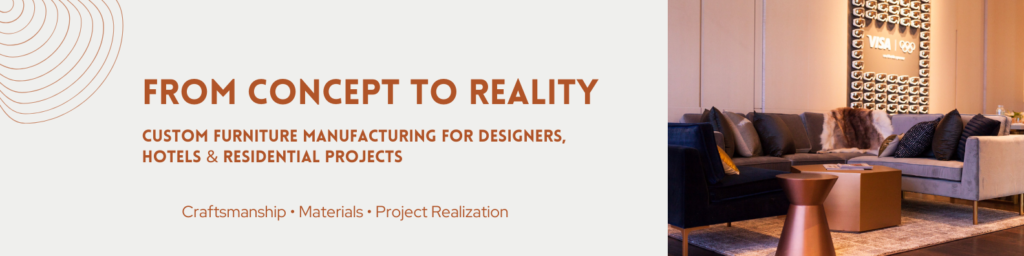
Interi Furniture specializes in custom furniture manufacturing for residential, hospitality, and commercial projects. Their experience in materials, craftsmanship, and project realization makes them a valuable resource for designers and buyers seeking tailored furniture solutions from China.