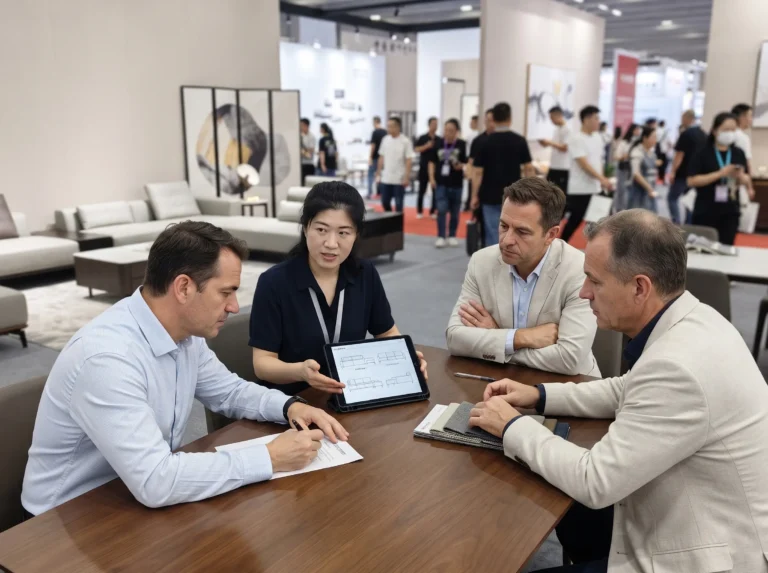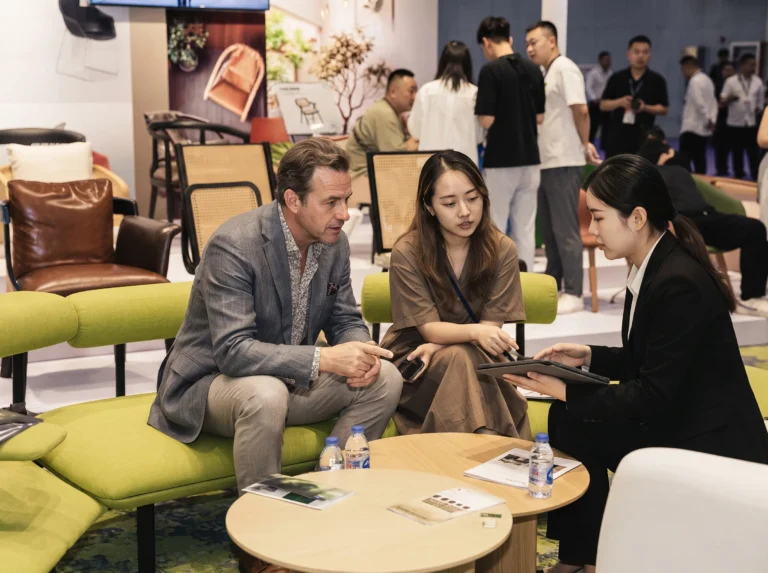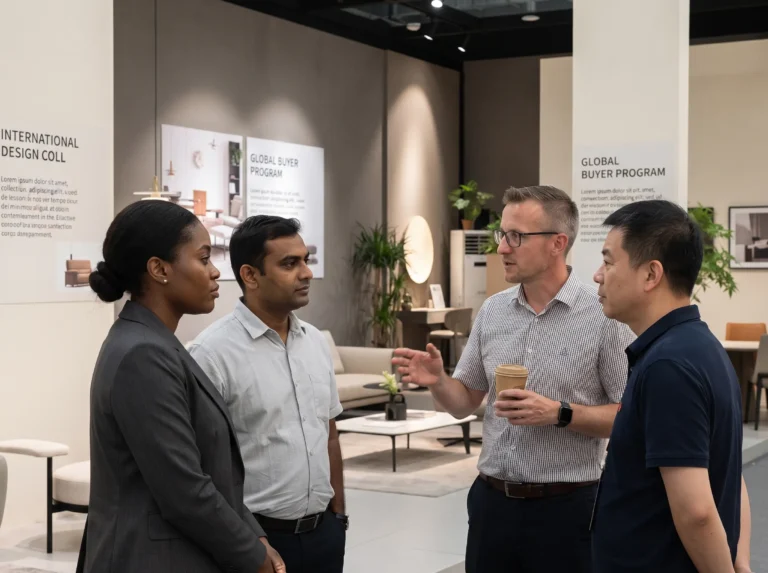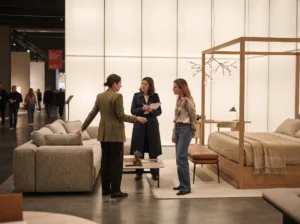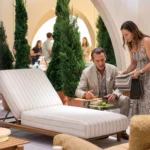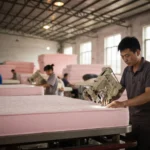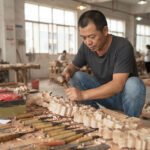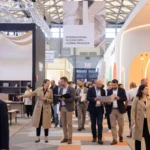





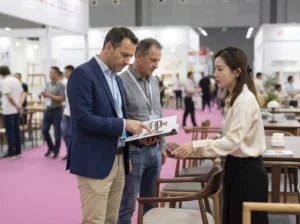

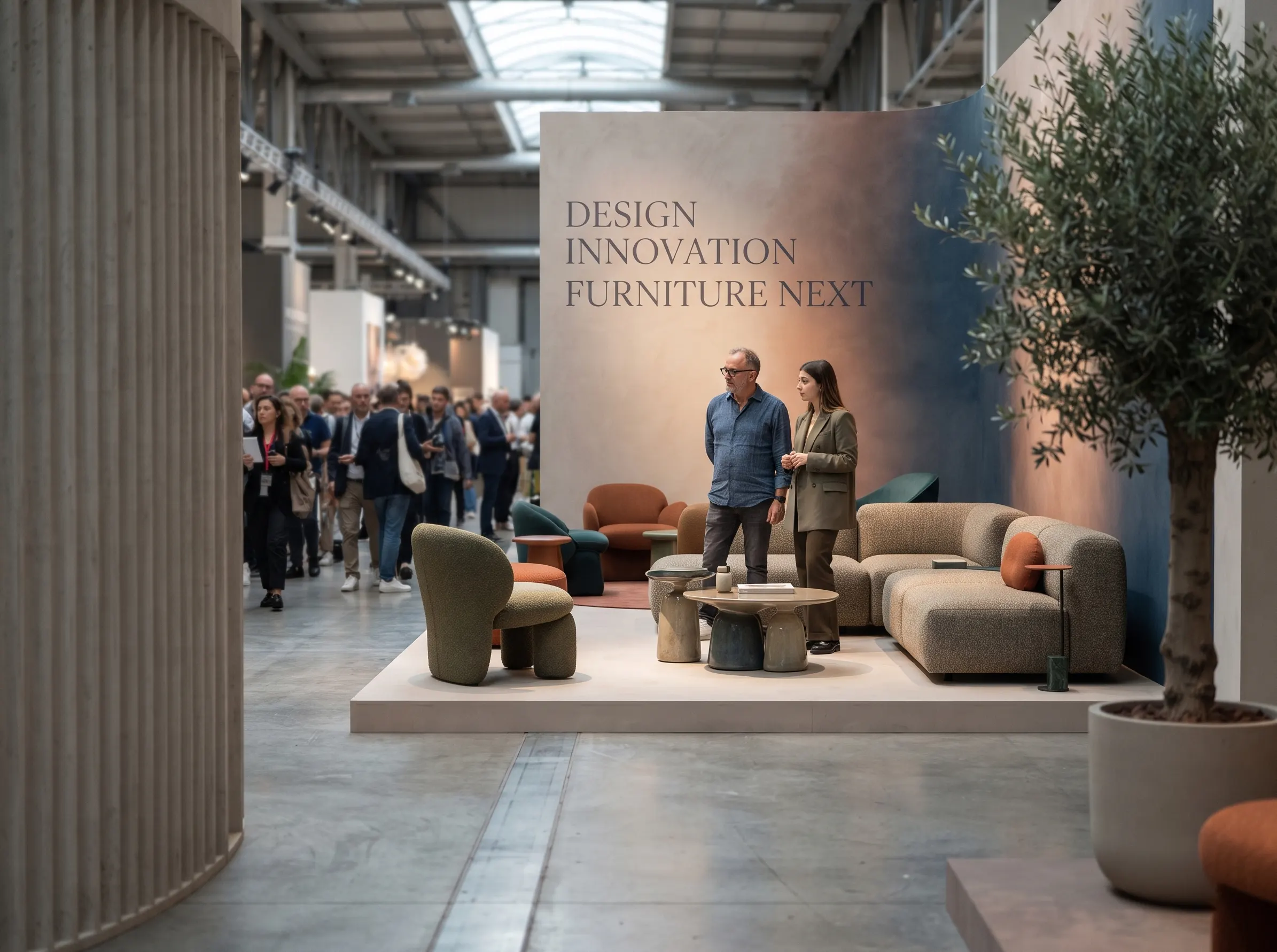
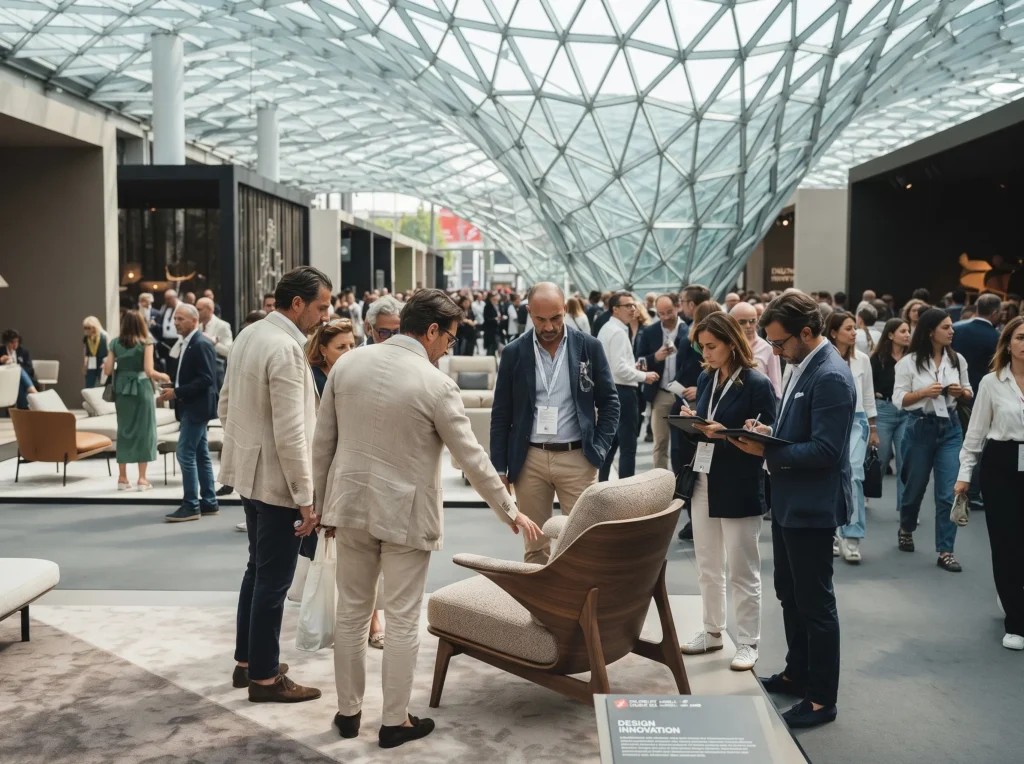
Here is the uncomfortable truth we have tracked for over a decade in Milan, Shanghai, and Dongguan. China design Milan Salone presence is growing, but lopsided. Chinese manufacturers and state-backed brands are stepping onto the Rho Fiera floor in greater numbers. What remains scarce is independent designer work judged on its own conceptual terms. The scarcity is structural—curation gatekeeping, asymmetric media ecosystems, funding gaps, and a persistent Orientalism filter. Visibility at Milan is not a reliable benchmark for Chinese design capability. It is a benchmark for who controls the global design narrative and who can afford the entry fee.
The Buyer’s Frustration: Searching for China in Milan
We have walked the Milan fairgrounds with North American retailers, European hotel procurement teams, and Australian interior designers. In 2026, they see Studio Ololoo from Ningbo at Alcova, Yuanban’s collection with Hong Kong designer Steve Leung, Tsinghua postdoctoral work in Salone Satellite, and corporate pavilions from SOGAL, Kuka, Morgan, and Qiannianzhou. What they still do not see is independent studio work from Shenzhen, Hangzhou, or Ningbo—the material experiments and modernist joinery reinterpretations that compete with Italian studios without a corporate logo. Buyers assume that if it is not in Milan, it does not exist. That assumption is wrong.
The Exceptions That Prove the Rule: Reading the 2025–2026 Breakthroughs
In 2025, NOUHAUS became the first Chinese brand in the main exhibition halls. In 2026, Yuanban collaborated with Steve Leung, Studio Ololoo debuted at Alcova, a Tsinghua researcher earned a Salone Satellite slot, and SOGAL and Kuka brought showroom production to brand pavilions. These are real achievements. They are also revealing. NOUHAUS,SOGAL, Kuka, Morgan, and Qiannianzhou are established brands with millions in domestic marketing budgets. Their Milan entry is a brand exercise, not an independent studio breakthrough. Yuanban’s collection was co-credited to a Hong Kong designer with European name recognition—a pattern where Chinese brands borrow international pedigree to gain legitimacy. The Tsinghua entry was academic research, not a commercial studio debut. Studio Ololoo’s Alcova appearance, while independent, happened in a satellite venue with lower barriers than Rho Fiera. For reference only, subject to official verification: our field count suggests that in 2026, fewer than ten independent Chinese furniture studios without corporate backing or state subsidy held a self-funded presence in Milan’s official fair zones or major Fuorisalone venues.
Milan admits Chinese design only through pre-approved channels: corporate budgets, academic backing, or hybrid collaborations with non-mainland designers. The independent studio—the designer who left a Foshan factory job at thirty-two to build an original practice—remains outside the gate.
Dismantling the Myth: It Is Not About Design Quality
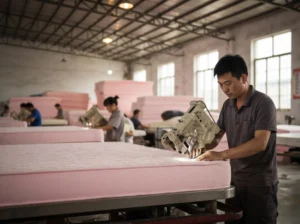
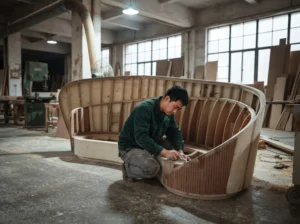
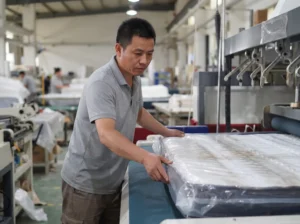
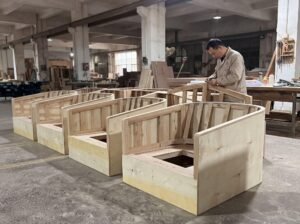
The notion that Chinese furniture design lags behind European contemporaries is lazy. We have sat in Foshan workshops where designers re-engineer bent bamboo laminates with CNC tolerances that would make a Vitra engineer pause. We have seen stone composite experiments in Quanzhou that push material boundaries further than many Salone Satellite alumni. The craft is there. What is missing is the design pedigree and media ecosystem that translates studio work into fair-floor legitimacy. Milan evaluates not just the chair, but the story around it, the gallery backing, the press kit, and the cultural capital of the designer’s nationality.
The Curation Gate: How Milan’s Selection Mechanisms Lock Out Chinese Talent
Milan’s entry architecture is not a neutral meritocracy. Salone Satellite enforces an age ceiling—designers must be under 35 at application. That eliminates a generation who spent their twenties in manufacturing before pivoting to independent practice in their thirties. The main exhibition halls require brand registration, EU-compliant product liability documentation, and booth fees starting in the high five figures in euros. Fuorisalone demands venue rental in districts like Brera or Tortona, plus freight, installation labor, and PR support. For a Chinese studio without European gallery representation, total cost can exceed €80,000 for a single week. For reference only, subject to official verification: our industry contacts estimate that fewer than five independent Chinese designer studios self-fund a Fuorisalone presence annually.
Milan Salone Selection Mechanisms vs. Chinese Designer Access
| Mechanism | Milan Requirement | Typical Chinese Independent Designer Reality |
|---|---|---|
| Salone Satellite age limit | Under 35 at application | Many establish practice in their 30s after manufacturing experience |
| Main exhibition hall entry | Registered brand, EU liability compliance, €30,000+ booth cost | Most lack EU entity registration; booth cost equals 1–2 years of Shenzhen studio rent |
| Fuorisalone off-site | Venue rental €15,000–€40,000; freight, install, PR additional | No local gallery proxy; language barrier in lease negotiation; no existing press list |
| Curatorial review | Portfolio judged by Western-dominated committee with implicit aesthetic lineage expectations | Portfolio may reference vernacular craft unfamiliar to European jurors |
The Narrative Deficit: Western Design Media and the “Made in China” Shadow
Design fairs are nodes in a media ecosystem that manufactures legitimacy. Western design journalism operates with a geographic bias so normalized it becomes invisible. When a Milan-based editor looks for “emerging design,” the default scan covers Berlin, Eindhoven, London, and Stockholm. Beijing or Chengdu rarely trigger the same alert. This is network inertia, not conspiracy. Editors source from galleries they know. Galleries represent designers they discovered at fairs they attend. The loop is closed.
The result is narrative asymmetry. A Dutch designer working with recycled plastic gets a Dezeen feature and a Salone Satellite invitation. A Chinese designer spending three years redeveloping traditional mortise-and-tenon joinery for flat-pack assembly gets a WeChat article and a domestic trade show booth. Both are valid investigations. Only one accumulates the cultural capital required for Milan entry. Chinese furniture design international recognition requires more than good work. It requires translation into a visual and textual language that Western tastemakers can slot into existing editorial frameworks.
Western Design Media Narrative vs. Chinese Design Reality
| Western Media Frame | Chinese Design Reality |
|---|---|
| “Emerging design” defaults to European/North American geography | China’s design scene is mature in manufacturing-adjacent innovation but invisible in Western indices |
| Sustainability stories privilege material experimentation with explicit eco-branding | Chinese studios embed sustainability in supply-chain efficiency, not marketing narratives |
| “Craft revival” stories require visible hand-wrapping or artisan portraits | Precision manufacturing and re-engineered traditional joinery do not fit the romantic craft photo essay |
| Design coverage follows gallery representation | Chinese designers rarely have international gallery contracts; domestic sales channels bypass gallery model |
The Funding Gap: Why China’s Design Ecosystem Cannot Sustain Milan Presence
Italian design houses treat Milan as a non-negotiable annual operating cost. Chinese independent designers do not have that line item. China’s design funding architecture is tilted toward manufacturing scale-up, not conceptual design export. Government cultural funds flow toward state-curated group pavilions that select designers based on political criteria as much as aesthetic ones. Private capital chases consumer brands with domestic e-commerce traction, not furniture studios with no SKU velocity.
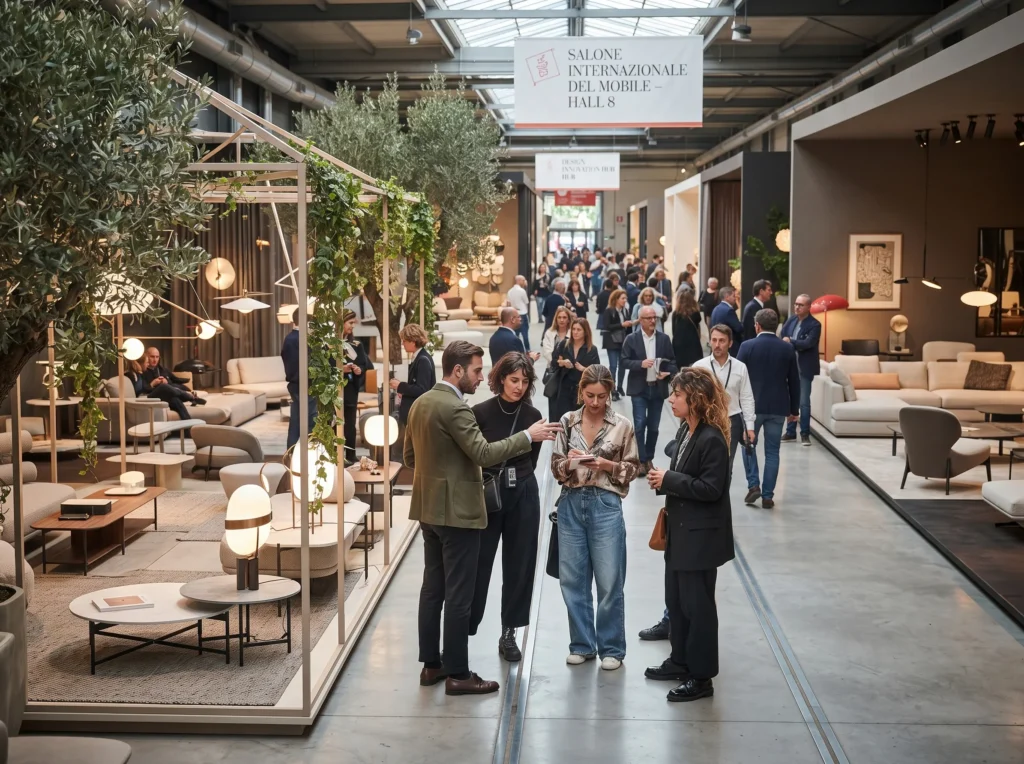
The gallery system compounds the problem. In Milan, a designer might be spotted by Rossana Orlandi alumni, then funneled into representation that covers fair costs. In China, the equivalent design brokers are fragmented—some are furniture dealers with no fair expertise, others are cultural centers with no sales infrastructure. There is no mature intermediary class bridging Chinese studio practice and the European fair economy. For reference only, subject to official verification: based on our conversations with Shanghai-based designers, the typical independent studio annual budget for international promotion ranges from zero to RMB 80,000—roughly enough for one person’s economy flights and a shared hostel room in Milan, not a booth.
Funding and Ecosystem: Milan vs. China Design Support
| Support Category | Milan/European Ecosystem | Chinese Independent Designer Ecosystem |
|---|---|---|
| Fair cost assumption | Gallery or brand absorbs €50,000–€150,000 annual fair budget as marketing | Designer pays out of pocket; no institutional fair subsidy for independent studios |
| Representation model | Design gallery takes 40–50% commission but funds fair presence, PR, and collector access | Dealer networks focus on bulk sales; no standard gallery commission model for conceptual furniture |
| Media relations | PR agency or gallery maintains active press lists; editors expect pitched stories | Designers self-promote on Instagram/Xiaohongshu; no dedicated design PR agency category |
| Government support | Regional Italian design councils and EU creative funds provide grants with clear application criteria | National cultural funds favor group pavilions and “soft power” image projects over individual studio support |
The Orientalism Trap: When Chinese Design Gets Curated by Western Tastemakers
Here is the cruelest filter. When Chinese design does break through to Milan, it is rarely on its own terms. Western curators and buyers carry an Orientalist visual vocabulary they expect Chinese designers to perform. Lacquer. Bamboo. Calligraphic lines. Red and gold. The moment a Chinese designer shows a powder-coated aluminum chair with no cultural signifiers, the Western gaze loses its anchor. “But where is the Chinese element?” we have heard buyers ask at satellite exhibitions. That question reveals the trap. The design hegemony demands that Chinese creators supply exotica to justify their presence. A minimalist concrete stool from a Hangzhou studio is judged as “derivative European.” The same stool with a lotus motif laser-cut into the seat is judged as “authentic Chinese design.” This is not curation. It is taxonomy based on cultural stereotype.
The “Orientalism Trap”: How Chinese Design Gets Filtered
| Western Curatorial Expectation | Actual Contemporary Chinese Design Practice | Resulting Milan Representation |
|---|---|---|
| Visible “Chinese aesthetic” signifiers (bamboo, lacquer, calligraphic form) | Most young Chinese designers work with global material palettes: steel, glass, recycled plastic, engineered stone | Designers who perform Chinoiserie get selected; those working in international modernist idiom get overlooked |
| Narrative of ancient craft revival | Innovation often happens at intersection of industrial manufacturing and re-engineered vernacular technique | Western media prefers story of “saving dying craft” over “optimizing craft with robotics” |
| Single-author “star designer” myth | Chinese studios often operate within collective, factory-adjacent, or academically networked models | Collective practice does not fit Western design journalism’s individual-hero profile |
| Design as cultural diplomacy | Designers intend work as functional furniture for contemporary living | Curators frame accepted work as “China’s soft power” or “East meets West” narrative |
The Domestic Success Paradox: Why China’s Best Designers Do Not Need Milan
There is another structural reason for the China design Milan Salone gap, and it is counterintuitive. Many of China’s most inventive furniture studios are commercially successful at home. They sell through Tmall, Design Shanghai, and direct-to-consumer WeChat channels. They have waiting lists from domestic boutique hotels and co-working chains. They do not need Milan to survive. The opportunity cost of Milan is punishing. A week in Milan means a week not managing production during China’s pre-holiday rush. It means RMB 200,000 spent on a fair that generates zero direct sales, versus the same amount spent on a Xiaohongshu campaign that moves inventory.
This creates a self-selection bias. The Chinese designers who show up in Milan are often those with state backing or those desperate for international validation because domestic channels failed. The truly thriving studios are simply not there. They are in Guangzhou or Suzhou, filling orders. Milan’s absence is, perversely, a signal of domestic market health for some of China’s best practitioners.
What This Means for Buyers: Reading the Milan Gap Correctly
If you are a buyer evaluating Chinese suppliers, the Milan gap is a data point you must interpret carefully. Do not equate design fair representation with design capability. A brand’s absence from Salone del Mobile says nothing about its engineering quality, material innovation, or conceptual depth. It may say everything about its PR budget and gallery connections. If you are evaluating Chinese suppliers, our guide to why premium Chinese furniture matches Italian quality at half the price offers a different lens on China’s design capabilities.
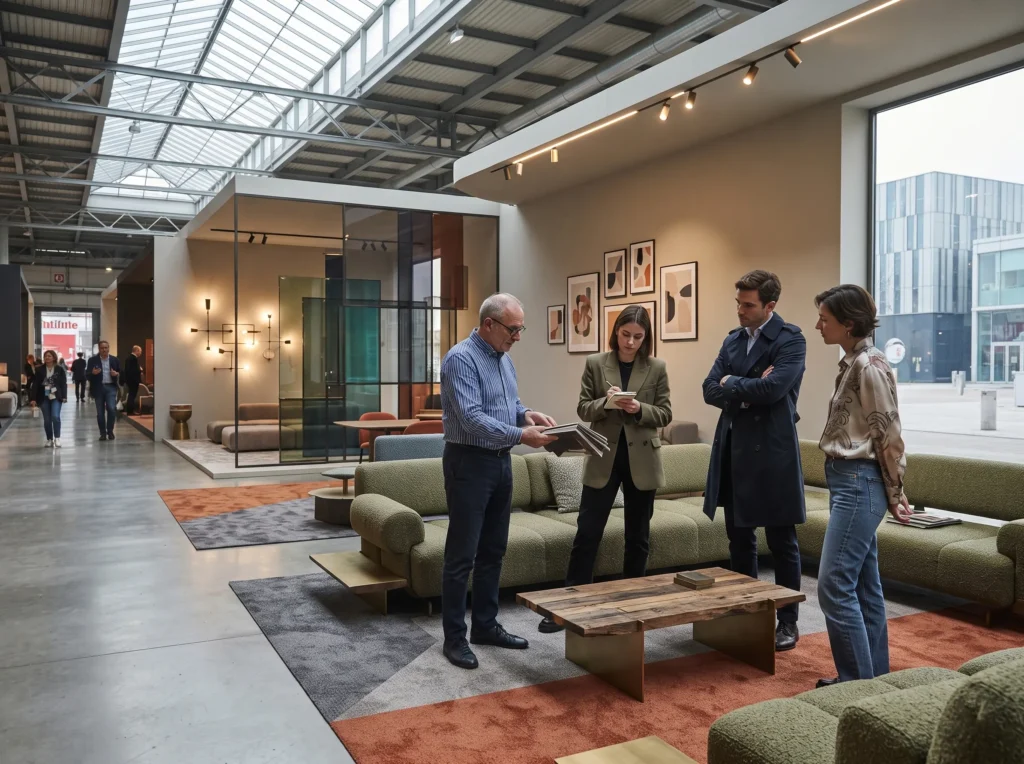
Watch for the red flags. If a Chinese brand appears in Milan with a pavilion that feels like a tourism bureau brochure—dragon motifs, silk backdrops, no functional furniture—that is likely a subsidized image project, not a design-driven market entry. The real signal is quieter. Look for Chinese designers showing at Dutch Design Week, at Stockholm Furniture Fair’s greenhouse section, or at satellite events in Tokyo. These alternative circuits often host the work that Milan’s gatekeepers miss, at lower cost and with less cultural performance pressure. For context on the fair ecosystem itself, see our analysis of why Chinese furniture fairs lag behind Milan in internationalization.
Actionable Playbooks by Audience
For Chinese Design Brands and Designers
Stop treating Milan as the only validation metric. Build presence in secondary fairs where the barrier is lower and the audience is more procurement-oriented. Invest in bilingual press kits that lead with function and material innovation, not cultural identity. Find a European design PR freelancer who understands manufacturing, not just styling. Your domestic success is not a liability. Use it as proof of market viability when you approach international galleries.
For Overseas Buyers and Retailers
When sourcing in China, ask to see the studio’s domestic exhibition history. Design Shanghai, CIFF’s design wing, and West Bund Art & Design are better indicators of a Chinese studio’s real standing than a Milan presence that may have been bought, not earned. Request process documentation—material samples, joinery tests, prototype iterations. The designers who cannot afford Milan often have the most rigorous development archives because they have been iterating with factory engineers for years.
For Design Media and Curators
Expand your source network beyond the Milan-Paris-London axis. Assign stories from Chinese design beats with the same editorial rigor you apply to Dutch or Italian scenes. Stop asking “Where is the Chinese element?” and start asking “What problem is this piece solving?” The shift from exoticism to functional critique is the only way to break the Orientalism trap.

Frequently Asked Questions
Why do so few Chinese independent designers appear at Salone del Mobile?
The scarcity is structural. Milan’s entry mechanisms—age limits for Salone Satellite, high booth costs, EU compliance requirements, and Western-dominated curatorial review—create barriers that independent Chinese designers struggle to clear without gallery representation or state subsidy. The designers with the most interesting work often lack the €80,000–€150,000 annual fair budget and the European press network required for entry.
Does absence from Milan mean Chinese furniture design is lower quality?
Absolutely not. We have documented studios in Shenzhen, Hangzhou, and Foshan producing work that matches or exceeds Salone Satellite alumni in material innovation and finish precision. Milan visibility correlates with funding and media access, not design merit. The gap is in cultural capital and ecosystem support, not craft capability.
What is the “Orientalism trap” in design curation?
It is the pressure on Chinese designers to perform recognizable “Chineseness”—bamboo, lacquer, calligraphic forms—to satisfy Western curatorial expectations. Designers working in a global modernist idiom, with steel, concrete, or engineered plastics, often get overlooked because their work does not fit the exotic narrative that Western tastemakers expect from Chinese creators. The trap punishes contemporary expression and rewards cultural stereotype.
Are Chinese government subsidies helping designers get into Milan?
Subsidies exist, but they primarily fund state-curated group pavilions with image-project priorities. These pavilions rarely showcase the most conceptually advanced independent work. For reference only, subject to official verification: our field observations suggest that a significant portion of Chinese-design presence at Milan’s national pavilions and some Fuorisalone venues is government-backed, with selection criteria that mix cultural diplomacy goals and aesthetic merit. Independent designers without political connections rarely access these funds.
Where should buyers look for innovative Chinese furniture design if not Milan?
Start with Design Shanghai and the design wing of CIFF Guangzhou. These are where China’s strongest independent studios actually show their annual collections. For international exposure, check Dutch Design Week Eindhoven, Tokyo Design Week’s satellite programs, and Stockholm Furniture Fair’s Greenhouse section. Chinese designers are increasingly active in these lower-cost, less gatekept environments. Also, follow Chinese studios directly on Instagram and Xiaohongshu; their process posts often reveal more about capability than a fair booth ever could.
Does China’s domestic market success hurt designers’ international ambitions?
In many cases, yes. Studios with healthy domestic e-commerce and contract sales face a high opportunity cost when allocating budget and time to European fairs. The rational business decision is often to skip Milan and invest in domestic growth. This creates a paradox: the designers most capable of funding an international presence are the least motivated to do so, while the designers who need international validation most urgently may lack the work quality or business stability to sustain it.
What Are You Seeing?
We have shared our field notes from Milan, Shanghai, and the factory floors. Now we want your perspective. If you are a buyer who has sourced from Chinese design studios, what signals do you use to assess originality? If you are a designer who has navigated the Milan application process, what barriers did we miss? Drop your observations or specific sourcing questions below. We read every comment, and we use them to sharpen our next dispatch from the floor.
Recommended Resource
Interi Furniture specializes in custom furniture manufacturing for residential, hospitality, and commercial projects. Their experience in materials, craftsmanship, and project realization makes them a valuable resource for designers and buyers seeking tailored furniture solutions from China.