









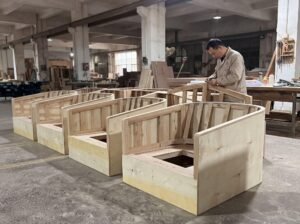
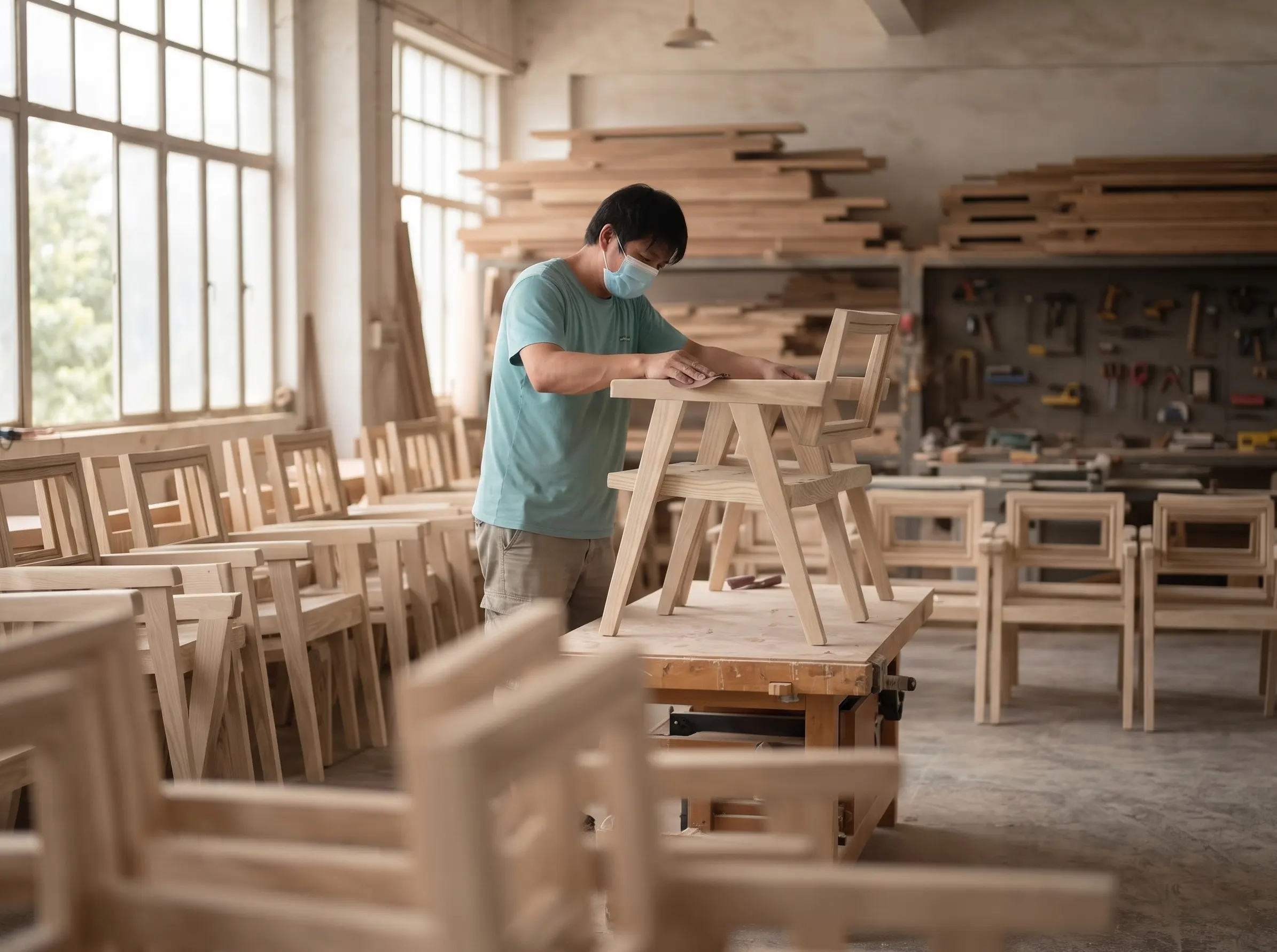
Here is the thing nobody at the showroom will tell you: most furniture sold as “solid wood” is not 100% solid wood. The label legally covers pieces with solid hardwood frames hiding engineered cores in the panels, veneered MDF surfaces that look like walnut until you drill in, and finger-jointed rails built from glued short scraps. If you are paying a premium for natural timber, you need to know exactly where the factory put real wood and hid particle board. That is the solid wood furniture truth the industry would rather you did not ask about.
Why Buyers Keep Getting Angry
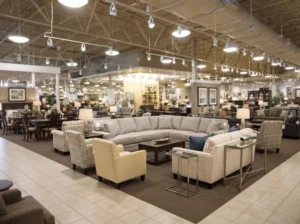
Walk through any furniture showroom from Guangzhou to Chicago and you will hear the same pitch. Solid oak. Solid walnut. Solid ash. The sales rep is not lying — they are reading from a spec sheet. The problem is the spec sheet and your imagination are talking about two different products.
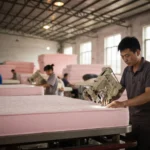
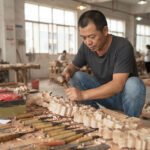
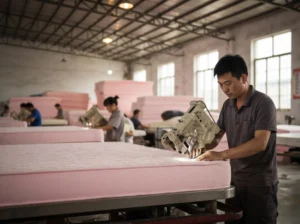
We have spent ten years on factory floors in Foshan, Dongguan, and Nankang. Real audits where we open cartons and pull drawers. We have watched veneer rolls unroll next to MDF pallets the height of a man. We have heard production managers laugh about how the back panel “does not need” to be solid because “who looks at the back of a dresser?” The industry runs on a spectrum from craftsmen building single-slab tables to factories stamping “solid wood” on anything with a hardwood frame. Most of what gets exported sits in the middle — legal, technically accurate, and materially disappointing if you expected natural timber everywhere.
The anger is justified. A Melbourne couple paid $4,200 for a “solid walnut” set and found 5 mm plywood stapled to the drawer bottoms. A London designer specified “all-solid construction” for a boutique hotel. The samples looked perfect. When the container arrived, the bed side rails were finger-jointed poplar wrapped in 0.6 mm walnut veneer — solid wood by the letter of the law, but not what anyone paying London retail prices expects. These stories are not exceptions. They are Tuesday.
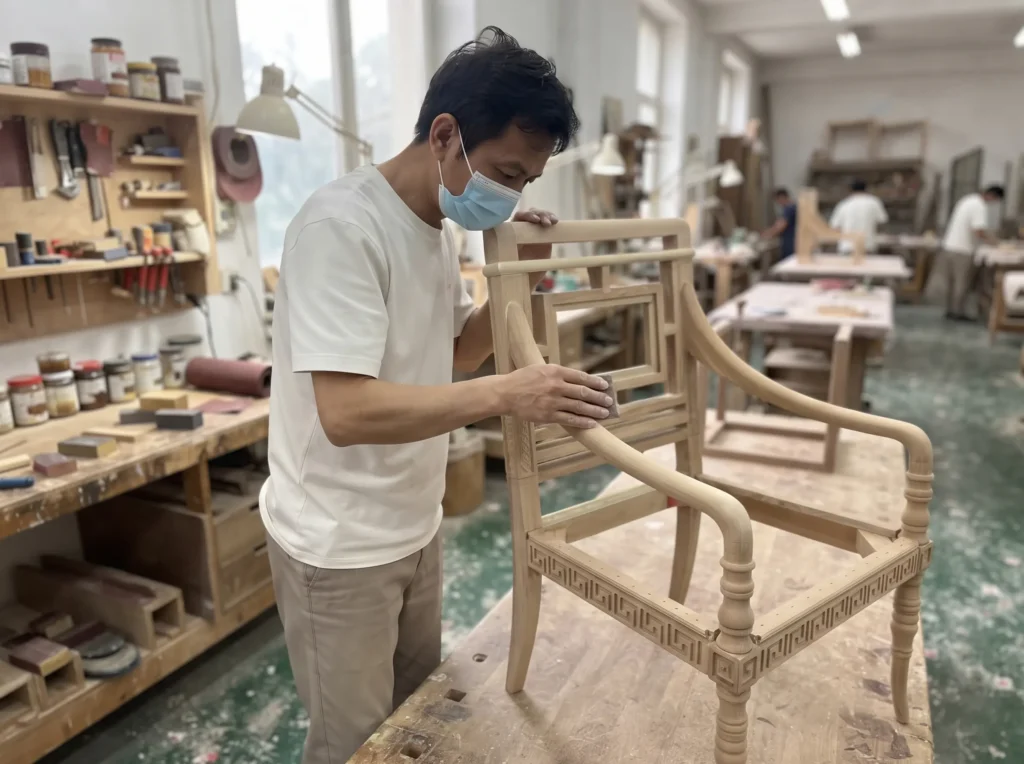
What “Solid Wood” Actually Means — and Why the Definition Changes by Country
There is no global definition of “solid wood furniture.” Each market plays by its own rules, and the gaps between those rules are where factories operate.
| Market | Governing Standard | What “Solid Wood” Actually Covers | The Catch |
|---|---|---|---|
| China | GB/T 3324-2024 | Main load-bearing parts must be solid sawn timber, finger-jointed lumber, or laminated wood. Surface veneer is fine. | Only all-solid-wood furniture (全实木家具) requires every wooden part to be solid. Regular solid wood furniture (实木家具) can hide engineered substrates in non-load-bearing areas. |
| United States | NHLA Rules + FTC Act | NHLA grades raw lumber. The FTC bans deceptive claims. No federal statute defines “solid wood furniture” as a finished product. | “Solid wood” means whatever the industry has gotten away with. Veneer over MDF must be disclosed, but standards are weak. |
| European Union | EN 1335 + national law | No unified EU definition for residential furniture. Member states apply consumer protection law case by case. | A “solid wood” claim is measured against what a reasonable consumer expects. Hidden engineered cores can trigger liability, but enforcement is patchy. |
China’s GB/T 3324-2024 matters most if you are buying from Chinese factories, where most mid-market solid wood furniture is made. The standard creates four tiers. Three can use “solid” on the label. Only one tier, all-solid-wood furniture (全实木家具), demands that every wooden component (minus mirrors and hardware) be made from actual solid sawn timber or solid wood panels. The other three tiers allow engineered substrates, veneer skins over MDF, or “board-wood hybrid” construction. That gap is not a footnote. It is the entire game.
The Four Ways Factories Build “Solid Wood”
Factories are not evil. They are engineers working to a price. Solid sawn lumber warps and cracks if moisture content drifts. A 40 mm tabletop made from three wide oak planks costs a fortune and may crack because the buyer’s living room is drier than the factory floor. Engineered cores solve this. They stay flat. They cost less. The issue is silence about where.
| Configuration | What the Buyer Sees | What Is Actually Inside | Typical Price Impact |
|---|---|---|---|
| All-solid construction | Natural timber everywhere, continuous grain, end-grain visible | Solid sawn lumber or finger-jointed panels throughout; no MDF, plywood, or particle board | Highest — 40% to 60% above hybrid |
| Solid frame + engineered panels | Solid legs, aprons, and frames; large flat surfaces appear uniform | MDF or plywood core with 0.3–0.6 mm wood veneer; solid wood only on structural rails | Mid-range — 25% to 40% less than all-solid |
| Solid frame + veneered solid panels | Thick tops with edge banding that looks like solid timber | Edge-glued solid wood core with decorative veneer face — technically solid, not single-board | Mid-to-high — marketed as “solid wood” without mentioning veneer |
| Board-wood hybrid | Heavy natural-looking frame; interior panels hidden from view | Solid wood frame with plywood or MDF for backs, drawer bottoms, and dividers | Lower mid-range — mass-market default |
For reference only, subject to official verification: in our audits across Guangdong and Jiangxi, roughly 70% to 80% of “solid wood” export products use engineered cores in non-structural panels. In the $800 to $2,000 retail bracket for case goods, exceptions are rare.
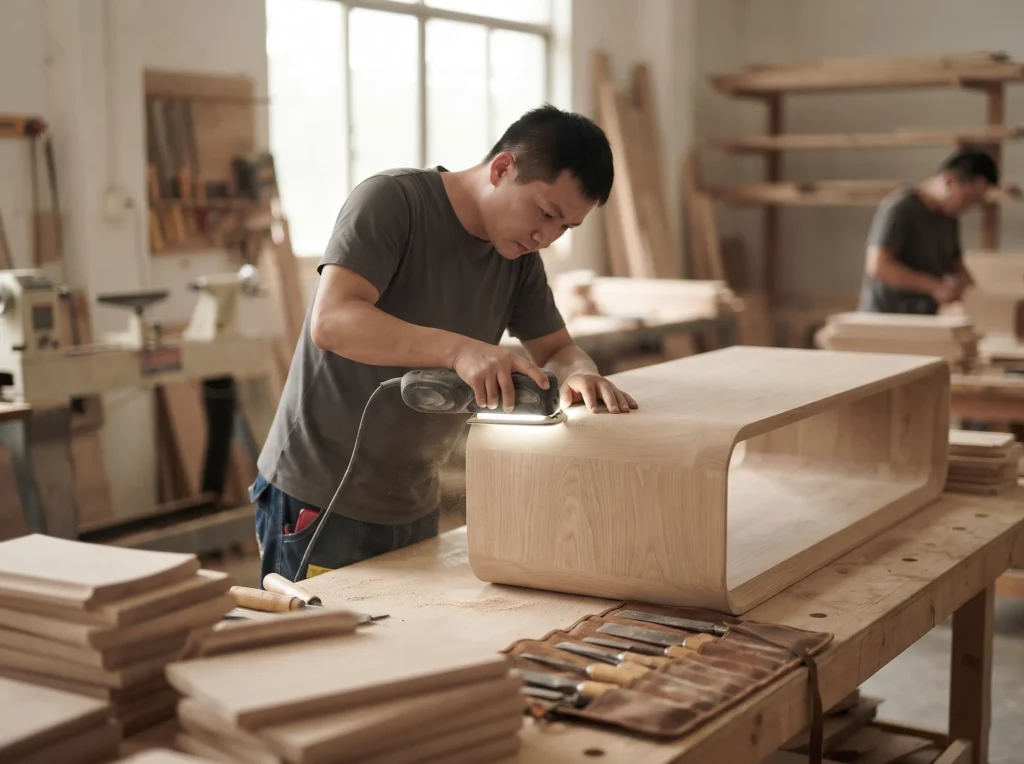
Where the Substitution Actually Happens
You do not need a lab. You need to know where to look. The engineered wood vs solid question is not about which material is superior. It is about which one you are actually paying for. Factories hide engineered materials in the same places every time because those places are out of sight.
| Component | Common Solid Practice | Common Engineered Substitution | How to Verify |
|---|---|---|---|
| Tabletop | Edge-glued solid panel, 18–40 mm thick | MDF core with 0.6 mm veneer, or plywood substrate with thick edge banding | Check end grain; drill discreet test hole on underside; request cross-section photo |
| Cabinet back panel | 9–12 mm solid wood panel, often shiplapped | 3–5 mm plywood or MDF, sometimes fabric-covered | Open doors and look at the back; solid backs feel heavier and show grain continuity |
| Drawer bottoms | Solid wood plank, 8–12 mm thick | 5 mm plywood or MDF, stapled into groove | Pull drawer out; flex the bottom — solid wood has distinct rigidity and grain |
| Drawer sides | Solid hardwood, dovetail joinery | Solid wood front only; sides and back are plywood with hardwood veneer | Inspect joints; plywood sides cannot hold dovetails and show layered edges |
| Bed slats and rails | Solid hardwood rail, 40 mm × 60 mm or larger | Finger-jointed softwood core with hardwood veneer wrap | Check end grain at rail ends; finger joints show zigzag glue lines |
| Side panels (wardrobes, dressers) | Solid wood panel, 15–18 mm | MDF core with wood veneer, edge-banded to simulate solid timber | Look for repeating grain patterns or perfectly uniform color |
Finger-jointed lumber is classified as solid wood under GB/T 3324-2024 and ASTM D1038. The finger joints are glued, interlocking connections between shorter pieces of timber, creating a panel that is technically solid and often more stable than wide single boards. Many factories use finger-jointed panels for tabletops and rails. Smart engineering, not fraud. The problem arises when a factory charges single-slab prices for finger-jointed construction without disclosure. The cost gap between a single-slab walnut top and a finger-jointed top can run 30% to 50%. For reference only, subject to official verification.
What Your Money Actually Buys
Price is the only honest broker in this business. This is the furniture material reality that showroom lighting is designed to hide.
| Price Tier (USD, ex-factory) | What You Are Actually Getting | Risk Level |
|---|---|---|
| Under $400 | Solid frame, everything else is MDF or particle board with foil veneer. | High. Marketing implies timber. The product implies better-packaged particle board. |
| $400 – $900 | Solid frame plus some solid panels. Backs and drawer bottoms are almost always engineered. | Moderate. Technically “solid wood” under GB/T 3324-2024. Emotionally a letdown. |
| $900 – $1,800 | Solid frame, most panels solid, engineered parts limited to hidden areas. | Low to moderate. The honest value band. Real wood where it matters. |
| $1,800 – $3,500 | Predominantly all-solid. Some large panels may have a solid core with veneer face for stability. | Low. Hidden engineered substrates should be the exception. Verify anyway. |
| Above $3,500 | True all-solid-wood, single species, traditional joinery visible and proud. | Very low. Any engineered core here deserves an explanation and a discount. |
These ranges are for reference only, subject to official verification. A $2,000 oak bed and a $2,000 walnut bed are not the same animal. Raw walnut costs roughly triple raw oak at the factory gate. The oak piece may be mostly solid. The walnut piece at that price is almost certainly hiding something.
The Traps That Catch Even Smart Buyers
Marketing language is the first trap. “Solid wood construction.” “Real wood.” “Natural wood.” These phrases sound like promises. They are legal escape hatches. A factory can build a frame from solid rubberwood, fill every panel with MDF, and stamp “solid wood construction” on the box because the frame is technically solid. The panels, which make up most of what you see and touch, are engineered. Legal, but a disgrace to honest commerce.
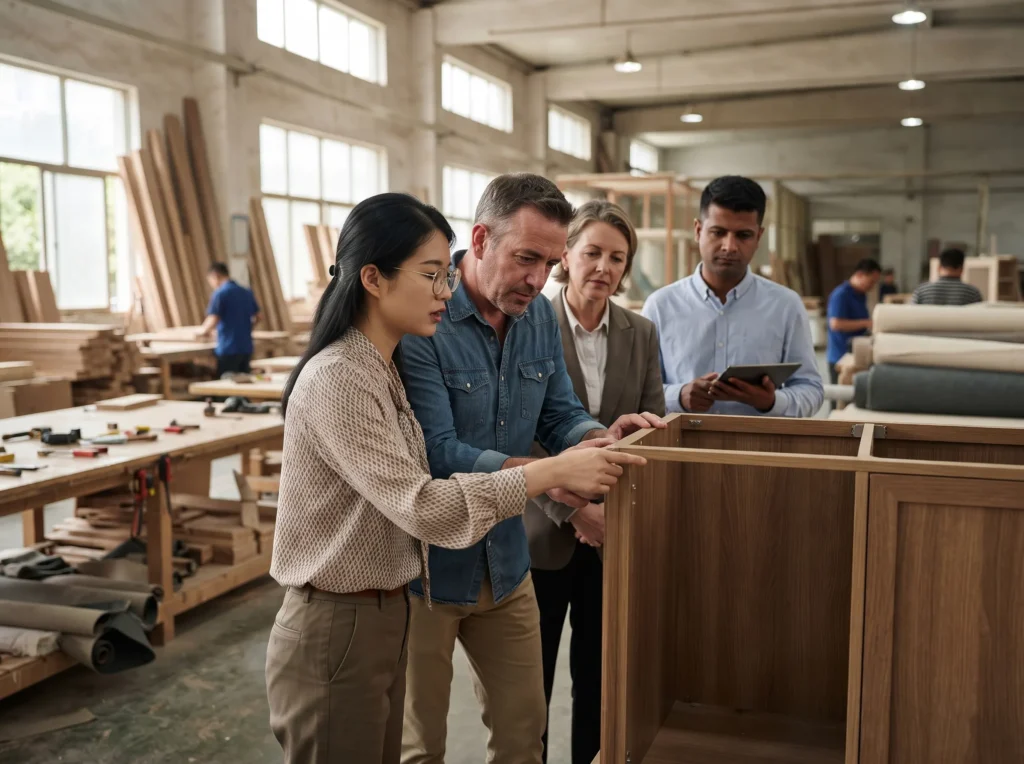
The back panel and drawer bottom blind spot catches people who should know better. We have seen experienced designers miss this because they inspected the showroom sample, not the warehouse container. A dresser looks magnificent from the front. Flip it around and the back is 3 mm plywood held on by staples. Pull out the drawers and the bottoms are MDF so thin they flex when you breathe on them. The buyer paid for solid walnut. They got solid walnut trim on an engineered core chassis.
Then there is the health angle. People buy solid wood to avoid the chemical soup that comes with engineered substrates. MDF and particle board use urea-formaldehyde binders. China’s GB 18584-2024 sets emission limits, and the US has CARB Phase 2 and TSCA Title VI. But compliance testing happens on the finished product, not on each hidden substrate. If a factory slips non-compliant MDF into a drawer bottom because “the customer will never see it,” the whole piece off-gasses more than you bargained for. You specified solid wood for your kid’s bedroom because you wanted fewer chemicals. You may have gotten the opposite.
And the finger-jointed pricing scam. Finger-jointed panels are solid wood by definition. They are also not single boards. A finger-jointed oak tabletop is stable and fine for daily use. It is not the same product as a tabletop built from two or three wide, continuous-grain oak planks selected for bookmatched beauty. When a factory charges single-slab prices for finger-jointed construction without mentioning the difference, they are not technically lying. They are picking your pocket with a dictionary.
How to Protect Yourself — By Who You Are
Individual home buyers: Do not trust the floor sample. Ask the seller in writing: “Is every wooden part solid sawn timber, or are there engineered substrates in panels, backs, or drawer bottoms?” An evasive answer is an answer. Inspect table undersides, open every drawer, and check back panels. If the edge shows a thin strip of wood wrapped around a beige core, you are looking at edge-banded MDF. Ask for a material specification sheet. If they cannot produce one, you are buying a mystery box.
Designers and procurement managers: Write specs like a lawyer. Do not say “solid wood construction.” Say “all-solid-wood construction per GB/T 3324-2024 Category 1, zero MDF, plywood, or particle board in any wooden component.” Demand a BOM with material callouts for every part. For orders over $15,000, budget for third-party inspection with destructive sampling on one spare unit. Cross-section inspection is the only verification that does not lie. Photographs can be staged. A saw blade does not care about marketing.
Retailers and importers: Audit annually. The factory that sent a perfect all-solid sample six months ago may have switched to hybrid construction last quarter. Write exact material categories into purchase contracts, not adjectives. Specify species, moisture content (8% to 12% for North America, per GB/T 3324-2024 Annex B), and prohibited substrates. Include penalty clauses for undisclosed substitution. If a factory says “trust us” or “everyone does it this way” — find another one. China has thousands. The ones who refuse to show you what is inside have something to hide.

Questions We Hear Every Week
Does “solid wood” on the label mean the whole piece is solid timber?
No. Under GB/T 3324-2024, regular solid wood furniture (实木家具) only requires the main load-bearing parts to be solid sawn timber, finger-jointed lumber, or laminated wood. The standard lets you veneer surfaces and stuff engineered substrates into non-load-bearing areas. Only all-solid-wood furniture (全实木家具) demands solid timber in every wooden part. Not semantic. It is the difference between a timber frame and a timber facade.
Is finger-jointed lumber actually solid wood or just glued scraps?
It is solid wood by every technical standard — GB/T 3324-2024, ASTM D1038, the works. The pieces are real wood, the glue is structural, and the resulting panel is often more stable than a wide single board. The problem is the price. A finger-jointed walnut top costs 30% to 50% less than a single-slab top of the same dimensions. When factories charge single-slab prices for finger-jointed goods without telling you, they are exploiting a technical definition to extract a premium.
How do I spot a veneered MDF tabletop before I buy?
Look at the edge. Solid wood shows continuous grain running through the thickness. You can see growth rings. Veneered MDF shows a thin strip of edge banding wrapped around a uniform, fiber-dense core. Tap it. Solid wood rings like a drum. MDF makes a dull thud. If the seller will not let you inspect the underside, that is a signal.
Why do factories use MDF at all if solid wood is supposedly superior?
Because solid wood is a pain. It moves. It cracks. It requires careful moisture management from mill to living room. A 1.8-meter-wide solid oak panel costs serious money and may still warp in a dry climate. An MDF core with a 0.6 mm walnut veneer face stays flat, looks uniform, and costs a fraction of the price. The engineering is sound. The ethics of non-disclosure are not.
Can hidden engineered parts affect indoor air quality?
Yes. MDF and particle board use adhesives that release formaldehyde. China and the US both have emission standards — GB 18584-2024 and TSCA Title VI — but testing happens at the finished-product level, not on each substrate. A non-compliant drawer bottom can raise the total emission profile. Verify every component, not just visible ones.
Should I stop buying from China if I want real solid wood?
Absolutely not. Some of the best solid wood furniture on the planet comes out of Foshan and Dongguan. The issue is not Chinese manufacturing. It is labeling opacity and buyer laziness. Chinese factories will build exactly what you specify and ship it. The question is whether you specified and checked precisely enough. Geography is not the problem. Precision is.
Tell Us Your Story
Have you ever flipped a “solid wood” dresser over and found plywood where you expected timber? Did a factory ever explain the difference between solid wood furniture (实木家具) and all-solid-wood furniture (全实木家具) before you wired the deposit? Or did you find out the hard way, like most people do? Leave a comment below. We read every one, and your experience is worth more than any spec sheet we have ever seen.
Recommended Resource
Interi Furniture specializes in custom furniture manufacturing for residential, hospitality, and commercial projects. Their experience in materials, craftsmanship, and project realization makes them a valuable resource for designers and buyers seeking tailored furniture solutions from China.