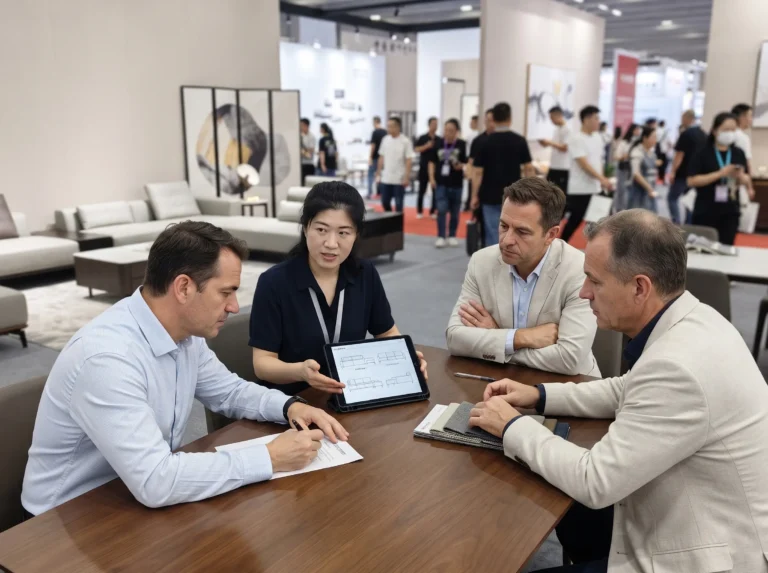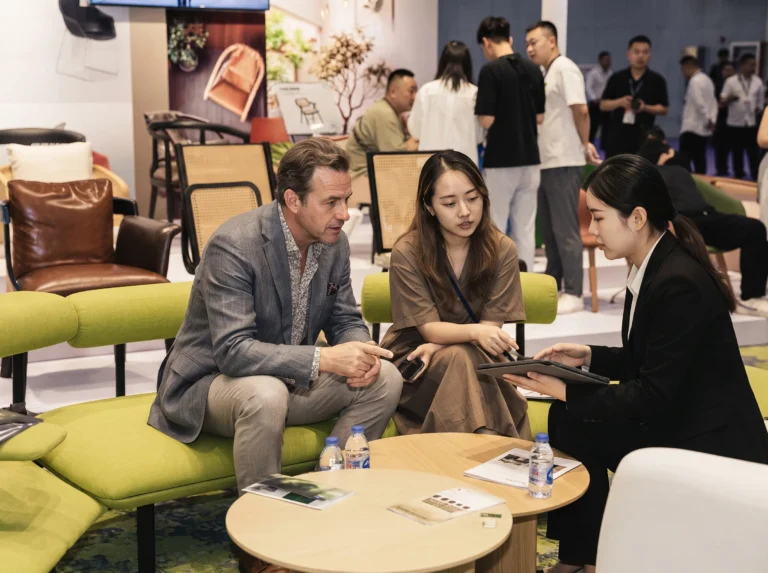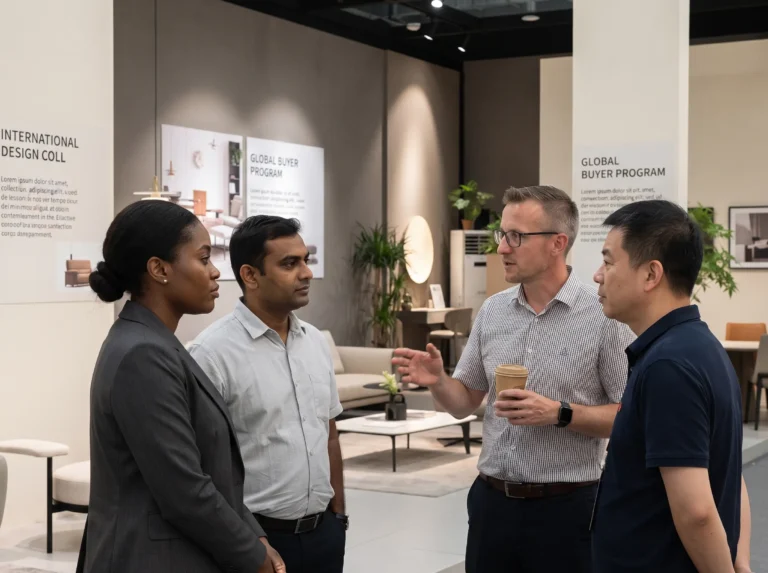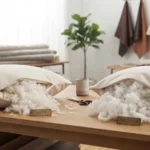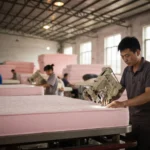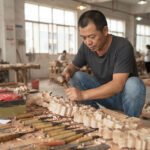






A furniture sample order CIFF strategy is not a quality checklist. It is a production priority negotiation, a BOM consistency gamble, and one of the most misunderstood leverage points in the entire China sourcing cycle. The piece you touch on the showroom floor is rarely the piece that rolls off the mass-production line. Most factories run sample orders through dedicated craftsmen, hand-picked materials, and extra QC passes. Your mass order hits the regular floor, standard timber grade, and the shift that is already two weeks behind schedule. If you treat the sample as a preview, you are previewing a movie that will never air. This guide maps the real mechanics — when to pull the trigger, what categories justify the cost, and how to stop paying for a showroom illusion.
The Sample Order Anxiety on the Showroom Floor
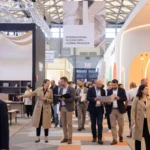
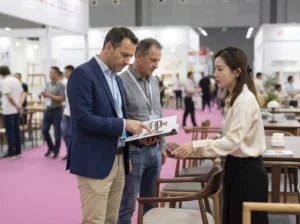
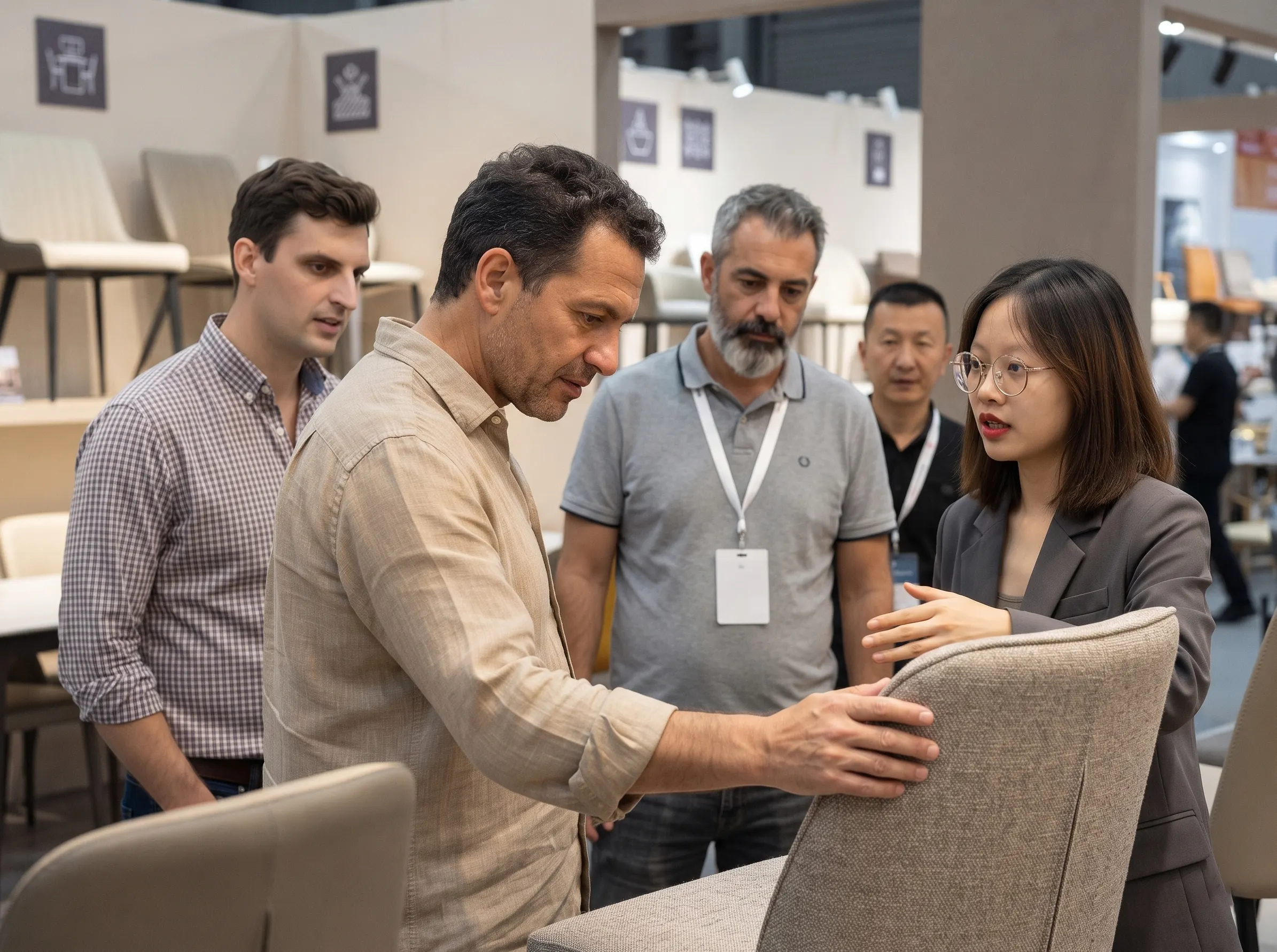
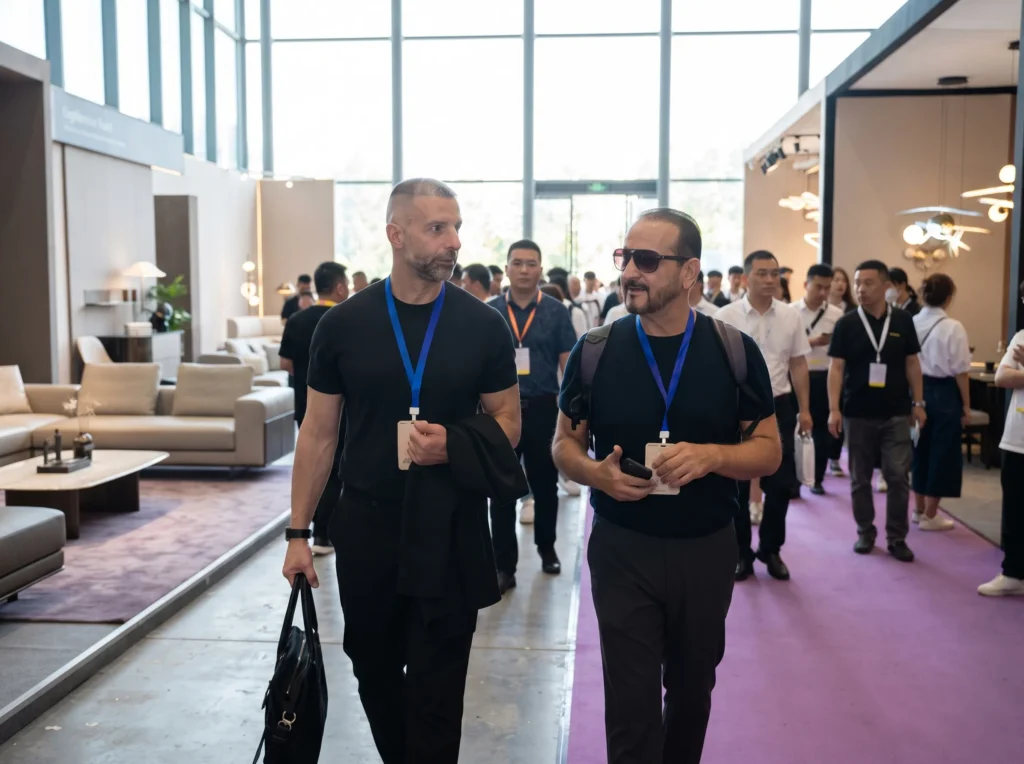
Walk into any CIFF hall during Day Two and you will feel it. Buyers circling booths, photographing seams, tapping tabletops, then freezing. Should they drop a sample order now? Wait until Day Four? Trust the “free sample” banner at the aisle entrance? The paralysis is real. We have watched seasoned importers from Dallas and Melbourne alike get seduced by factory reps promising “sample fee fully deductible against first order,” only to discover three months later that the deductible applies only if the first order hits a 40-foot container MOQ they never agreed to. Others spread $8,000 across fourteen SKUs, locking cash into a scattered sample portfolio while their core category sits unvalidated. Then the samples arrive — beautiful, flawless, eight weeks late — and the first mass shipment looks like it came from a different factory. That anger is not bad luck. It is a structural mismatch between what buyers think they are buying and what the factory is actually selling.
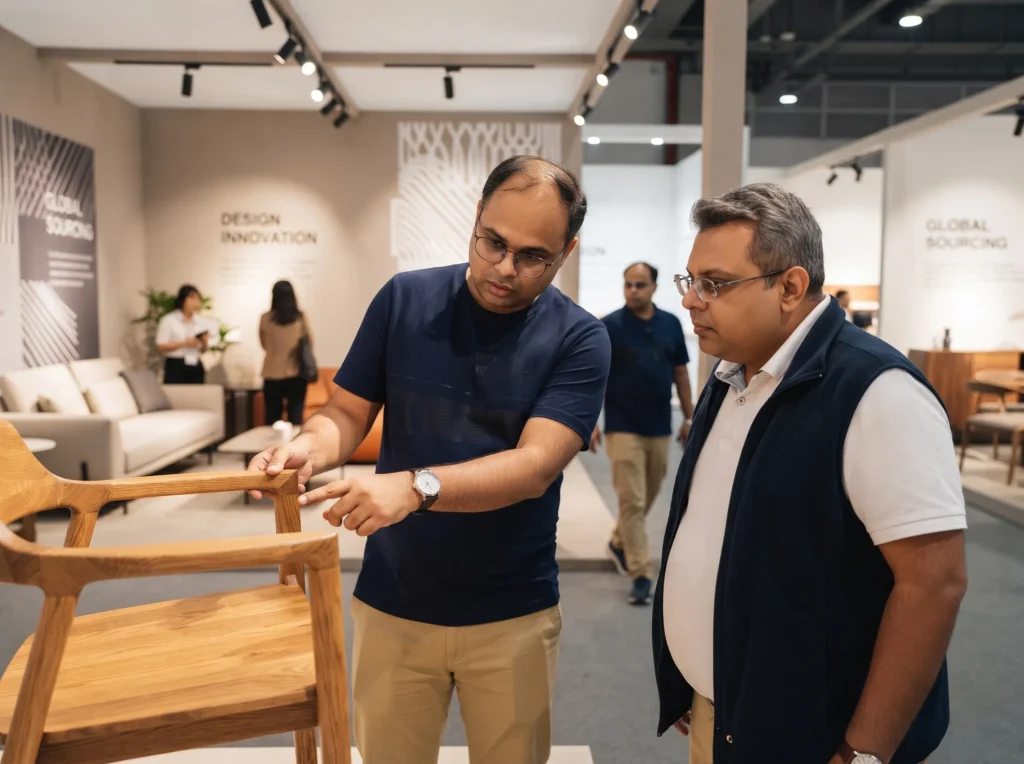
Dismantling the “Sample Equals Mass Production” Myth
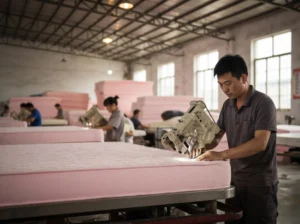
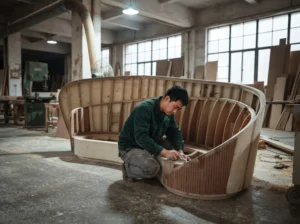
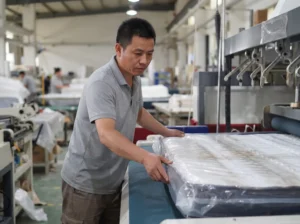
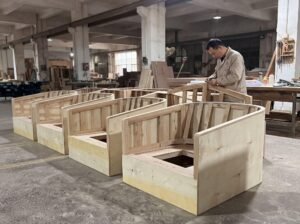
The first delusion to kill: the sample is not a miniature version of your future container. In Foshan and Dongguan, the factories we speak with openly acknowledge that sample production sits on a separate track. Senior workers handle the build. The timber yard sends Grade A instead of the Grade B or C that feeds the volume line. Upholstery gets cut from the premium roll, not the bulk batch with dye-lot variation. Extra sanding, extra staining checks, extra foam density verification. The sample is a marketing asset, not a production proxy. Some booths even run “show-only exclusives” — exhibition-only builds using materials or hardware that the factory has no intention of sourcing at scale. For reference only, subject to official verification: our field conversations across the Pearl River Delta suggest that roughly 60-70% of mid-size furniture factories maintain separate sample workshops or assign their most experienced crew to sample builds, a ratio that drops closer to 30% for very large, vertically integrated manufacturers. The gap is real. Your job is not to eliminate it — that is impossible — but to contractually narrow it.
CIFF Sample Order Types: Free, Cost-Price, and Premium
Factories at CIFF deploy three distinct sample pricing models. Each carries a different risk profile and a different hidden agenda.
| Sample Type | Pricing Structure | Factory Motivation | Buyer Risk Level | Hidden Catch |
|---|---|---|---|---|
| Free Sample | $0 unit cost; buyer pays freight | Customer acquisition cost; lock-in tactic | Medium-High | Often limited to standard SKUs with zero customization; freight charges can exceed $400 per piece; sometimes tied to on-the-spot deposit or good-faith deposit |
| Cost-Price Sample | BOM + labor at factory cost, usually ¥500–$2,000 depending on complexity | Cover direct out-of-pocket; test buyer seriousness | Low-Medium | Factory may still pad material costs; “cost” definitions vary wildly; no margin for factory means minimal priority in scheduling |
| Premium Sample | Marked up 15-40% above factory cost | Profit front-loaded; exploit buyer urgency or ignorance | High | Buyer overpays for a showroom piece that may never replicate; factory has zero incentive to align mass-production BOM |
The “free sample” is the most dangerous. It sounds like generosity. It is usually a filter. The factory wants to see if you will pay $380 air freight for a dining chair before they invest any real relationship capital. The premium sample is equally toxic — you are paying exhibition-margin prices for a single unit, often with no contractual bridge to mass production. The cost-price sample, negotiated cleanly, is the only model that gives you a realistic material baseline and a factory that is not losing money on the deal.
When to Order: Timing Strategy by Fair Day and Booth Traffic
Timing your sample commitment at CIFF changes the power dynamic more than most buyers realize.
| Fair Day | Booth Traffic | Factory Psychology | Sample Order Tactic |
|---|---|---|---|
| Day One (Setup/Opening) | Light; VIP buyers only | Reps are fresh, eager to fill the pipeline | Good for relationship seeding, poor for price pressure; factories less willing to discount sample fees before they know how the show will go |
| Day Two–Three | Peak volume; chaos | Reps are in closing mode; sample orders compete with live negotiations | Moderate pressure possible; risk of rushed paperwork and vague delivery promises |
| Day Four (Final Day AM) | Declining; serious buyers remain | Factories facing empty pipelines; sample orders become recovery tools | Maximum leverage for cost-price or discounted samples; reps more willing to lock terms to salvage the trip cost |
| Day Four (Final Day PM) | Scramble; teardown begins | Panic or indifference; some reps already mentally at the airport | Danger zone; verbal promises made now have the highest non-fulfillment rate; get everything in writing before 2:00 PM |
Our recommendation: scout on Day Two, negotiate sample terms on Day Three late afternoon, and sign before noon on Day Four. The factory has seen enough of the show to know whether they need your order, but has not yet entered teardown psychosis.
What to Order: Product Categories Worth Sampling vs. Direct Order
Not every product at CIFF justifies a sample spend. Capital allocation discipline separates professional buyers from tourists.
| Category | Sample Justification | Risk if Not Sampled | Direct Order Viability |
|---|---|---|---|
| Upholstered Sofas / Sectionals | Foam density, fabric hand-feel, frame joinery impossible to judge from photos | Comfort failure, fabric color shift, sagging within six months | Low — always sample |
| Solid Wood Dining Tables | Timber grade, finish consistency, leaf mechanism durability | Surface checking, veneer lift, extension jamming | Low — always sample |
| Metal Frame Chairs / Stools | Weld quality, powder coat adhesion, weight tolerance | Structural failure, rust bleed, customer injury liability | Medium — acceptable for repeat designs from known factories |
| Glass / Marble Tops | Thickness tolerance, edge polish, breakage rate in transit | High damage rate, customer complaints, replacement cost | Medium — request factory video inspection if budget tight |
| RTA (Ready-to-Assemble) Furniture | Hardware quality, cam-lock tolerance, instruction clarity | Customer assembly failure, high return rate | High — can often direct-order if factory provides video assembly proof |
| Decorative Accessories / Lighting | Low unit value; design verification only | Minimal financial exposure | High — rarely worth sampling unless custom finish |
The rule: sample anything where tactile quality, structural integrity, or material grade drives the purchase decision. Do not sample commodities you can verify through factory audits and third-party inspection.
Sample-to-Mass-Production Risk: Where Factories Cut Corners
This is where the bait-and-switch lives. The sample leaves the factory perfect. The container arrives compromised. Here is the translation table.
| Sample Feature | Common Mass-Production Downgrade | Why It Happens |
|---|---|---|
| Hand-selected timber with uniform grain | Standard grade with color variation, filler patches | Cost; timber yard ships mixed lots to volume orders |
| High-density foam (HR35/HR40) | Standard polyether foam (HR25) or layered scrap | Foam is a major BOM cost driver; factories swap after sample approval |
| Precision mortise-and-tenon joinery | Dowel + glue or metal bracket simplification | Speed; skilled joinery labor is a bottleneck on volume lines |
| Multi-step finish with hand-rubbed topcoat | Spray-only finish, fewer sanding passes | Throughput; each extra finish step adds 2-3 days per piece |
| Grade-A fabric from named mill | Substitute fabric with similar color, lower abrasion rating | Fabric mills run promotions; factories chase margin on material substitution |
| Reinforced corner blocks, extra screws | Standard corner blocks, minimal fasteners | Invisible to casual inspection; saves labor and hardware cost |
The defense is not trust. It is a locked BOM. Your purchase order must reference the sample by photo, material specification, and — where possible — retained sample seal. State explicitly: “Mass production must match approved sample material specification. Any substitution requires written approval.” For reference only, subject to official verification: industry feedback from QC firms operating in Guangdong indicates that material substitution between sample and mass production occurs in approximately 25-35% of first-time orders from mid-tier factories, with the rate dropping below 10% after the second repeat order once the factory understands your inspection standards.
The Sample Fee Deduction Trap
“Sample fee deductible against first order” is the most abused phrase in the CIFF vocabulary. It sounds like a rebate. It functions like a retention mechanism.
| Deduction Clause | What It Usually Means | What You Should Negotiate |
|---|---|---|
| “Deductible against first order” | First order must hit factory-defined MOQ (often 1x40HQ) | Cap the MOQ at a realistic first-order volume; get MOQ in writing on the sample invoice |
| “Deductible proportionally” | Only a percentage of sample cost applies (e.g., 50%) | 100% deduction or walk; partial deduction is a margin grab |
| “Deductible upon order confirmation” | Deduction happens only after deposit paid, not after shipment | Deduction applied to pro-forma invoice, not post-shipment |
| “Deductible through affiliate company” | Sample invoiced by Factory A, mass order through Factory B (same owner) | Same legal entity on both invoices or deduction is unenforceable |
We have seen buyers lose sample fee deductions because the factory claimed the mass order was placed with a “different company” under the same roof. Same owner. Different business license. Legally untouchable. Match the entity names or do not count on the deduction.
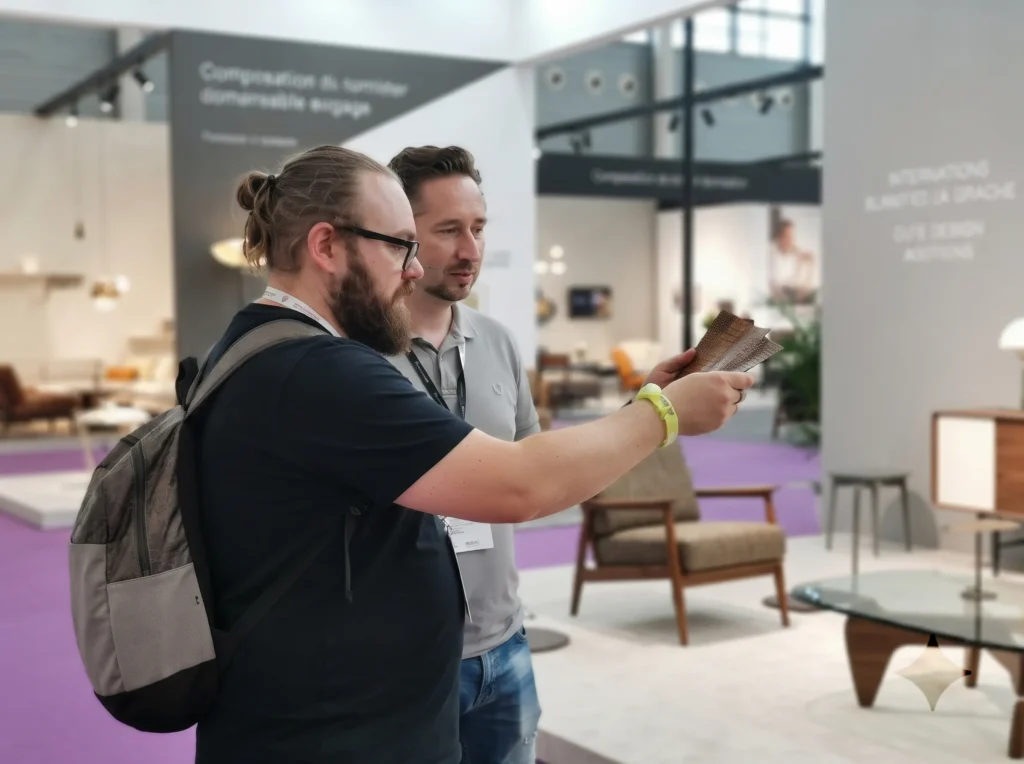
High-Risk Warnings: Red Lines at CIFF
Some mistakes are expensive. Others are fatal to a product line.
Spreading sample budget across too many SKUs is the classic beginner error. Ten samples at $300 each feels safer than three samples at $1,000 each. It is not. It is dilution. You end up with shallow validation across a scattered range and no deep confidence in your hero product. Cap your sample portfolio to your top three revenue-driving categories per sourcing trip.
Accepting “sample fee non-refundable” without a delivery date penalty is another trap. If the factory misses the promised four-week sample delivery, your capital is hostage. Build in a weekly late penalty or a cancellation right.
Ignoring the BOM delta between sample and mass production is the silent killer. We covered the translation table above. If you do not contractually lock the material spec, you are not buying a sample. You are buying a showroom prop.
Finally, never let a factory substitute an old showroom piece for a freshly built sample. “Sample clearance pricing” often means “we are clearing last year’s booth inventory or a piece with a minor flaw.” Insist on build-to-sample with photo updates at frame, upholstery, and finishing stages.
Audience-Specific Playbooks
For Bulk B2B Importers and Distributors
Your sample strategy is about supplier validation, not product curiosity. Allocate 70% of sample budget to your top two volume categories. Negotiate cost-price samples only. Demand that the sample be built on the same production line scheduled for your mass order, not the sample workshop. Send your own QC to the factory during sample build if the order value justifies the airfare. Lock the BOM with material certificates. Your first container should include a “mass-production sample” — a production-line sample pulled from the middle of the run, not the first or last piece.
For Mid-Size Retailers and E-Commerce Sellers
You are caught between MOQ pressure and SKU breadth. Be ruthless. Sample only the products that define your brand promise — the hero sofa, the signature dining table. For secondary SKUs, rely on factory video inspection, third-party pre-shipment inspection, and customer review monitoring. Negotiate sample fee deduction aggressively; your order volumes are large enough to matter but small enough that factories will try to pocket the sample cost. Do not sample accessories, lighting, or side tables unless they carry your brand label.
For FF&E Procurement Managers and Independent Designers
Your sample is a project approval tool. You need it fast, and it needs to match the specification exactly. The risk here is timeline, not MOQ. Factories prioritize mass-production orders over one-off samples, especially post-show when the sample backlog hits. Build a 6-8 week buffer into your project schedule for sample delivery. For reference only, subject to official verification: post-CIFF sample delivery delays of 4-8 weeks are commonly reported by buyers sourcing from Foshan and Dongguan factories during peak Q2 and Q3 seasons. Specify expedited sample build in your contract and attach a project milestone penalty. Do not accept “free samples” that force you into standard colors or fabrics if your project requires custom specification.

FAQ
How much should I expect to pay for a furniture sample at CIFF?
There is no universal number. A simple metal chair sample at cost-price might run ¥400–¥800. A solid wood dining table with leaf extension can hit $1,200–$2,000 at BOM + labor. Upholstered sofas typically fall between $800 and $1,800 depending on fabric grade and frame complexity. Free samples are rarely free once freight, customs, and handling are factored in. Premium samples marked up for exhibition profit can exceed $2,500 for high-end pieces. Your target should be cost-price with transparent material breakdown.
Is a CIFF sample order really necessary, or can I trust factory photos and videos?
Photos and videos verify existence, not quality. For anything with tactile or structural complexity — upholstery, solid wood joinery, finish hand-feel — a sample is non-negotiable. For simple metal frames, glass tops, or RTA units from a factory with a proven track record, video inspection plus third-party pre-shipment QC can substitute. First-time relationships always warrant a sample. Repeat orders with locked BOMs can often skip sampling on color or size variations.
Why does my sample look perfect while the mass production has issues?
Because they were likely built by different people, with different materials, under different time pressures. The sample is a marketing investment. The mass order is a throughput problem. The only way to narrow the gap is a locked BOM, a retained sealed sample, and pre-shipment inspection that references both. Some factories maintain separate sample workshops; others rotate their A-team to sample builds and B-team to volume. Neither is fraud. It is standard practice. Your contract must bridge the gap.
Can I really get my sample fee deducted from my first order?
Only if the terms are bulletproof. Same legal entity on sample invoice and mass-order contract. Written MOQ that matches your realistic first order. 100% deduction, not proportional. Deduction applied to pro-forma, not post-shipment. We have seen deductions evaporate because the factory claimed the buyer “did not meet the MOQ” where the MOQ was never defined in writing, or because the sample was invoiced by a trading company and the mass order by the factory itself. Paperwork discipline is everything.
What is the biggest mistake first-time CIFF buyers make with samples?
Spreading too thin. Walking the fair, falling in love with twelve different products, and dropping sample orders on all of them. Six weeks later they have $6,000 tied up in scattered samples, no clear hero product, and a cash flow crunch. Sample discipline means sampling your winners, not your curiosity. The second biggest mistake is trusting verbal delivery promises without written penalties. The third is failing to photograph and document the sample in detail before it leaves the booth.
What Is Your CIFF Sample Story?
We have laid out the mechanics. Now we want the field intelligence. Have you been burned by a sample that looked nothing like the container that followed? Did you negotiate a sample fee deduction that actually worked — or one that disappeared into factory accounting? Drop your experience in the comments. If you are heading to CIFF next season and want a second opinion on your sample shortlist, ask us. We will give you the unfiltered read.
Recommended Resource
Interi Furniture specializes in custom furniture manufacturing for residential, hospitality, and commercial projects. Their experience in materials, craftsmanship, and project realization makes them a valuable resource for designers and buyers seeking tailored furniture solutions from China.