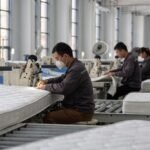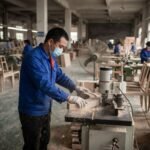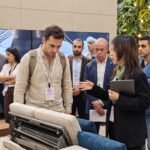

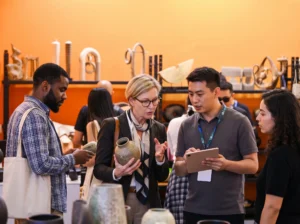





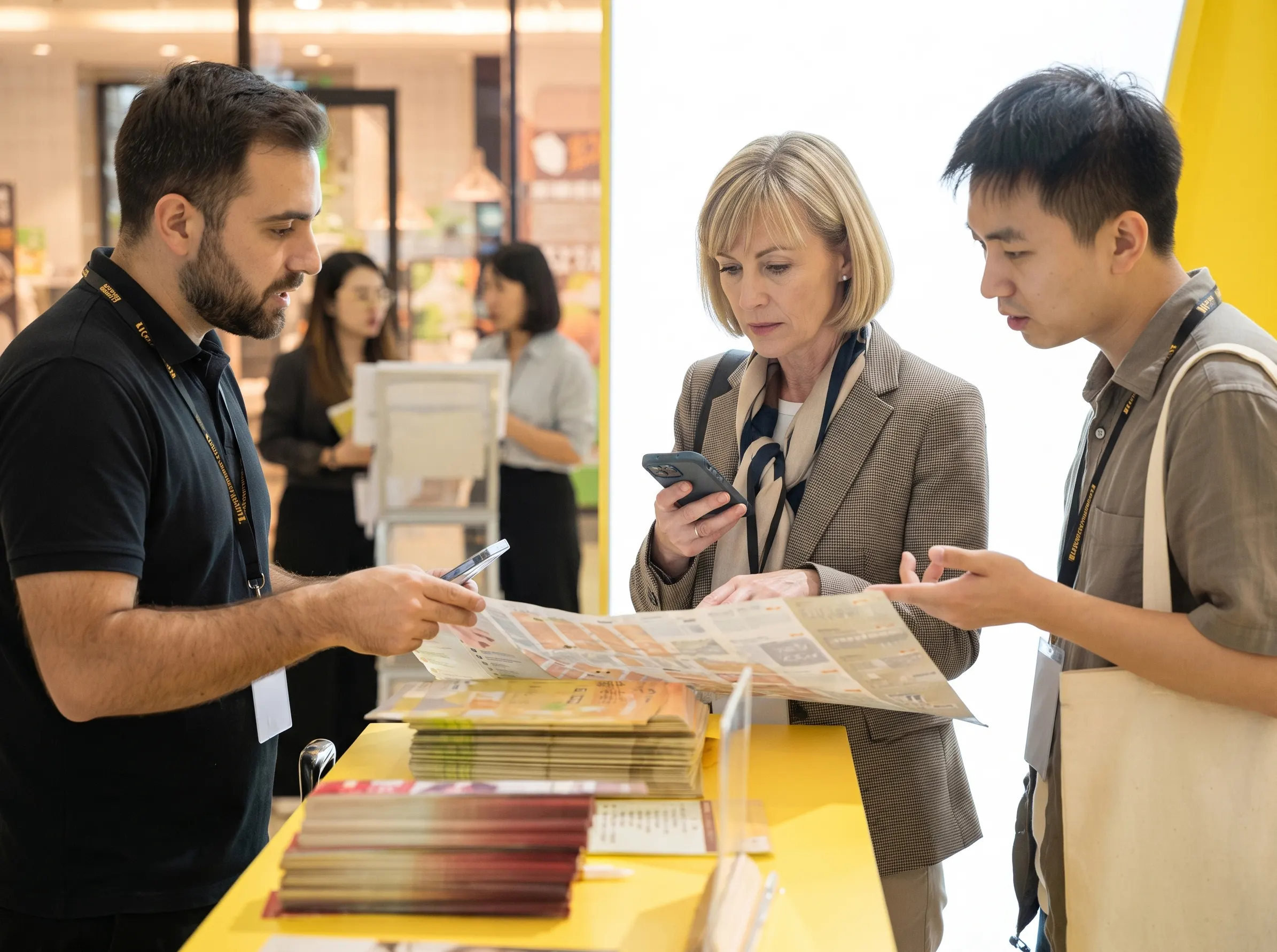
Here is the short version most buyers learn too late: at Furniture China 2026, the E1 International Brand Hall is not automatically the luxury tier, and the E6/E7 design halls are not automatically the budget tier. Roughly a portion of the “international brands” in E1 operate through China master distributors or licensed OEM arrangements, which means you are negotiating with a middle layer, not the factory. Meanwhile, a small cluster of Chinese factories in Foshan Longjiang and Dongguan Houjie runs production lines that have supplied Italian and European luxury houses for years — often from the same tanneries and coating suppliers. The skill is telling which is which, on the show floor, in one afternoon. That is what this guide covers.
The Buyer’s Dilemma in the Aisles of SNIEC
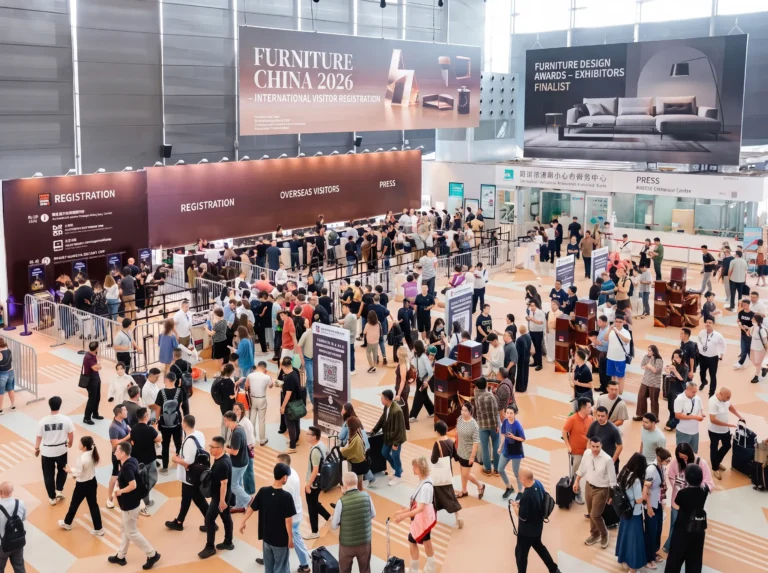
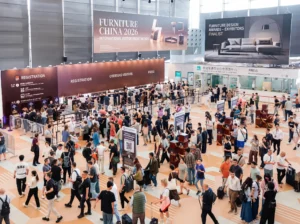
Walk into SNIEC during Furniture China 2026 (September 8–11, 3,200+ exhibitors across roughly 350,000 sqm) and you feel the split immediately. E1 glows with brand logos from 25 countries — HTL, Ashley, Amini — plus four international pavilions with curated, almost gallery-like booths.
A few halls over, E6 and E7 carry the Brand & Design label, with Design Eden and the Italian Lounge staging what the fair itself calls a “Milanization” of the presentation. For a high-end importer, an FF&E buyer for a boutique hotel group, or a private client furnishing a residence, the anxiety is the same three questions: Am I paying for leather and joinery, or for signage? Is “Made in China” still a risk at the top end, or has that era ended? And how do I avoid the factories that rent a beautiful booth and a vocabulary of Italian words without owning the underlying capability?
Why the Simple Story Is Wrong
The trade-show narrative says E1 equals international luxury and E6/E7 equals ambitious domestic design. Reality is messier. Some E1 exhibitors are brand-direct subsidiaries; others are China general agents who must route quotes through overseas headquarters for approval, which is why their on-site flexibility is often close to zero. For reference only, subject to official verification — the split between brand-direct, agent-operated, and licensed OEM booths varies significantly by brand and year, and the fair directory alone will not tell you which model you are talking to. You have to ask.
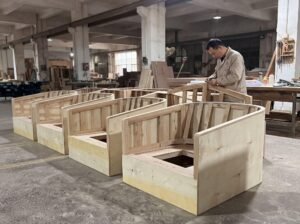
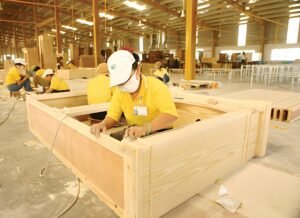
On the other side, the E6/E7 halls hide what we would call the silent tier: factories whose own labels are young, but whose production lines have been building for European luxury clients for a decade or more. They buy from the same Mastrotto-grade tanneries in Italy, spray the same Sayerlack coating systems, and run FAS-grade North American black walnut through the same German beam saws. The difference is not capability. The difference is who owns the design narrative and the brand-controlled MSRP.
The Booth Premium, Defined
Before the tables, two concepts worth pinning down, because they drive most of the price gap you will see at this luxury furniture China fair.
Booth Premium
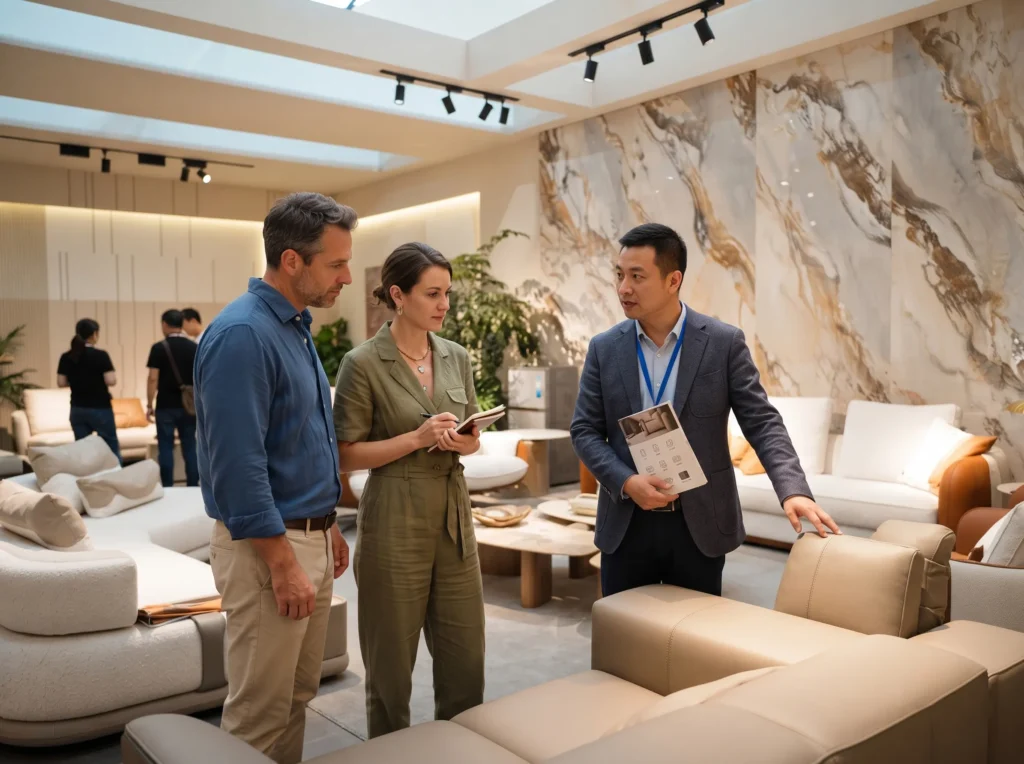
The booth premium is the portion of a quoted price that pays for the exhibition presence itself — corner positions in E1, the Italian Lounge fit-out, the Milan veneer on the walls, the espresso machine — amortized into unit pricing. It ships nothing. For reference only, subject to official verification, but industry experience suggests a flagship fair booth with design-firm staging can run well into six figures in USD; someone pays for it, and at the MOQs typical of high-end B2B, that someone is the buyer.
Brand-Controlled MSRP vs. FOB Factory Price
Brand-controlled MSRP is the retail price architecture set by the brand owner, protecting channel margin across distributor, retailer, and visual merchandising layers. FOB factory price is what the goods cost when the container doors close at the Chinese port. The distance between the two is where the “luxury” number lives — and it is routinely several multiples of the manufacturing cost, not a modest markup.
E1 International Brand Hall: Who Is Actually Behind the Booth
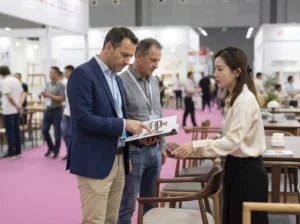
The first question at any E1 booth is not “what is the price.” It is “who am I actually talking to.” The answer changes your negotiating position entirely.
| Booth operator model | What it looks like on the floor | Pricing behavior | Your leverage |
|---|---|---|---|
| Brand-direct subsidiary | Foreign account managers, global price lists, regional territory rules | Firm quotes, limited on-site discounting | Volume commitments, multi-year programs |
| China master agent | Fluent Mandarin/English team, deep local relationships, authority claims that feel vague | Quotes “sent to HQ for approval,” slow turnaround | Low on price; better on local logistics and after-sales |
| Licensed OEM operator | Brand label, Chinese business license, factories they can actually take you to | Flexible, factory-linked pricing | High — you are near the FOB floor |
| Agent-assembled portfolio | Multiple brands in one booth, catalog-driven | Aggressive bundling, inconsistent spec sheets | Moderate; verify spec ownership per item |
Our experience across multiple editions: ask directly, “Are you the brand’s own subsidiary, the China agent, or a licensed manufacturer?” Reputable booths answer clearly. Evasive answers are data.

E1 vs. E6/E7: Material and Craftsmanship Standards
Strip the labels away and compare what is inside the frame, on the cushion, and on the surface. This is where the gap between perception and reality gets interesting.
| Specification layer | Typical E1 international brand standard | Capable E6/E7 Chinese factory standard | What to inspect on site |
|---|---|---|---|
| Frame | Kiln-dried hardwood, documented moisture content | Identical spec achievable; verify actual MC readings | Ask for the meter, not the brochure |
| Leather | Italian full-grain from named tanneries (e.g., Mastrotto) | Same tannery leather available; some use corrected grain quietly | Check the hide backstamp, feel the cut edge |
| Foam & cushioning | High-resilience formulations, density disclosed | Comparable densities common in top lines; wide variance below that | Sit for ten minutes; ask density in kg/m³ |
| Coatings & finishes | Sayerlack-class systems, open-pore or closed-pore by design | Same coating chemistry available at top Foshan/Dongguan lines | Smell the curing rack area; check color batch cards |
| Joinery & upholstery craft | Consistent (upholstery handwork), tight pattern matching | Elite lines match this; average lines do not | Look at seam lines under raking light, inside the base cloth |
| Design originality | Original collections, protected designs | Fast follow common; a minority of design-driven brands genuinely original | Reverse-image search the hero pieces |
The honest summary: at the top of the Chinese supply base, the materials and process are the same. The distribution of quality, however, is far wider than in a European hall, and the burden of verification sits with you.
Price Decomposition: Where the Luxury Markup Actually Lives
When a sofa retails at $12,000 in Milan or Manhattan, here is roughly where the money goes. For reference only, subject to official verification — ranges below reflect industry experience rather than audited figures.
| Cost layer | Typical share of terminal retail price | Notes |
|---|---|---|
| Raw materials & core components | 10–18% | Leather, timber, foam, hardware |
| Factory labor & manufacturing overhead | 8–12% | Includes upholstery handwork and finishing |
| Factory margin (FOB level) | 5–10% | Compressed in competitive years |
| Ocean freight, duty, insurance | 4–8% | Varies sharply with lane and tariff environment |
| Brand royalty & design amortization | 5–15% | Design narrative has a price |
| Distributor / importer margin | 15–25% | The channel markup layer |
| Retailer margin & visual merchandising | 30–40% | The biggest single block |
| Booth premium & marketing allocation | 3–8% | Fair booths, catalogs, showrooms |
Do the arithmetic and a pattern emerges: the physical object is often a quarter or less of what you pay at terminal retail. A Chinese factory selling a comparable product under its own label at 30–50% of the Italian terminal price is not discounting quality — it is simply skipping the last four rows of the table.
Factory Profiles: Who in China Can Actually Compete with Milan
Here is the part that requires candor in both directions. Truly Milan-competitive Chinese factories exist, but they are a narrow slice of the market. For reference only, subject to official verification — our industry estimate is that genuinely Italy-grade capability in upholstered and case goods sits with a limited number of production clusters and specific high-end lines concentrated in Foshan Longjiang and Dongguan Houjie, with pockets elsewhere; the vast majority of booths claiming “Italian standard” do not meet it.
| Factory archetype | Location pattern | Hall behavior | Signature evidence | Risk level for buyers |
|---|---|---|---|---|
| The silent luxury OEM | Guangzhou Panyu,, Foshan Longjiang, Dongguan Houjie; mature export compliance | Modest booth, real samples of European client work (anonymized), engineers on staff | Tannery certificates, Sayerlack purchasing records, moisture-control logs | Low — if you verify |
| The design-driven original | E6/E7 regulars; Golden Creation Award participants | Strong design narrative, own IP, Milan veneer on the walls | Patent filings, original sketch archives | Low-moderate |
| The fast-follow specialist | Mixed | Trend-driven collections, aggressive pricing | Catalog breadth outruns development depth | Moderate — spec drift |
| The veneer vendor | Booth-heavy, content-light | Beautiful staging, thin product engineering | Cannot discuss BOM below the surface | High |
Risk Warnings: Where Buyers Get Burned
The marketing vocabulary of this show has inflated faster than the underlying capability. Four red flags deserve emphasis.
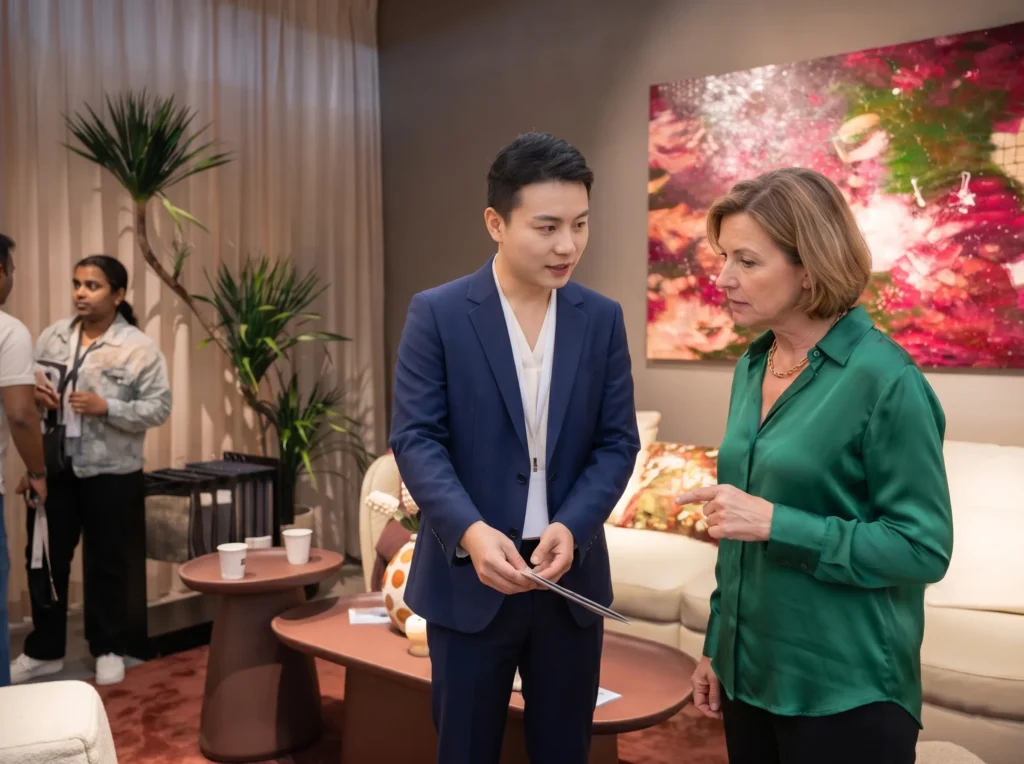
Claiming “Italian design” or “Milan style” while sourcing materials two tiers down is the most common gap. The phrase describes an aesthetic reference, not a supply chain. If the leather is not from a named tannery and the finish chemistry is not disclosed, the words are décor.
Confusing代工 know-how with own-brand capability is the second trap. A factory that executes someone else’s drawings brilliantly may design poorly. Ask to see their original development process, not just their client list.
The third gap is honest and structural: after-sales architecture. A European luxury house offers global service networks, spare-part programs, and warranty enforcement that even excellent Chinese factories rarely match. If your project needs decade-long support in-market, price that in.
Fourth, beware paying premium for show-floor theater alone. Some E6/E7 booths out-stage E1, and if budget flowed into the booth instead of the R&D lab, you are being asked to fund the curtain.
Playbooks by Buyer Type
| Buyer type | Supplier screen | Factory audit focus | Value strategy |
|---|---|---|---|
| High-end residential owner (private import) | Factories with small-batch programs and English-speaking project managers | Material certificates, single-piece QC tolerance | Buy the silent OEM’s own label; hire a third-party QC on container day |
| Boutique hotel / FF&E procurement | Export compliance track record, fire-certification documentation, capacity for phased delivery | Batch consistency records, finishing-line capacity, coating cure documentation | Negotiate at FOB level; spec the tannery and chemistry by brand name in the contract |
| Independent interior designer | Flexible MOQs, customization depth, responsive sampling | Prototype iteration speed, veneer matching skill, color-matching discipline | Use the factory’s development shop as your atelier; avoid agent layers entirely |
| Luxury retail buyer | Design originality, IP cleanliness, packaging and unboxing standards | IP filings, photography assets, display unit quality | Split the program: hero pieces from design-driven brands, volume from silent OEMs |

Frequently Asked Questions
Is Furniture China 2026 worth visiting if I only buy European luxury brands?
Yes, but for a different reason than most buyers expect. Even if your program stays European, understanding what the Chinese top tier now delivers changes your negotiating position with European houses and helps you evaluate where a dual-source strategy makes sense.
How can I tell on the show floor whether an E1 booth is brand-direct or agent-operated?
Ask three questions: who signs the contract, who approves pricing, and where production is located. Brand-direct subsidiaries answer immediately. Agents redirect to “our headquarters” — which tells you the decision sits offshore and your room to negotiate is limited.
Can Chinese furniture really match Italian quality at 30–50% of the price?
At the top of the supply base, yes — on materials and manufacturing. The discount comes from skipping brand royalty, importer margin, and retail markup, not from cutting leather grade. Our deeper breakdown of why premium Chinese furniture matches Italian quality at half the price covers the mechanics. The caveat: only a narrow tier of factories delivers this, and identifying them requires verification, not trust.
Should I worry about design originality when buying from E6/E7 brands?
For design-driven E6/E7 brands with filed IP, no. For unnamed factories with suspiciously familiar silhouettes, yes — you carry the infringement exposure in your market. Reverse-image search hero pieces before you sign anything.
What should I verify after the fair, before paying a deposit?
The bill of materials with named suppliers, moisture-content logs for timber, coating system documentation, a reference client in your region, and — for volume orders — a third-party production audit. If you are new to sourcing in this market, our Furniture China Shanghai 2026 export-oriented fair guide maps the full verification sequence.
One Last Thing
We have stood in the curing-rack areas of factories whose names most Western buyers have never heard, and walked E1 booths where the price list answers to a headquarters on another continent. The gap between those two experiences is exactly where a smart buyer’s margin lives. Have you sourced premium furniture at Furniture China — and did the goods that arrived match the booth that sold them? Tell us what you found, or bring us a specific material or craftsmanship comparison you want stress-tested.
Recommended Resource
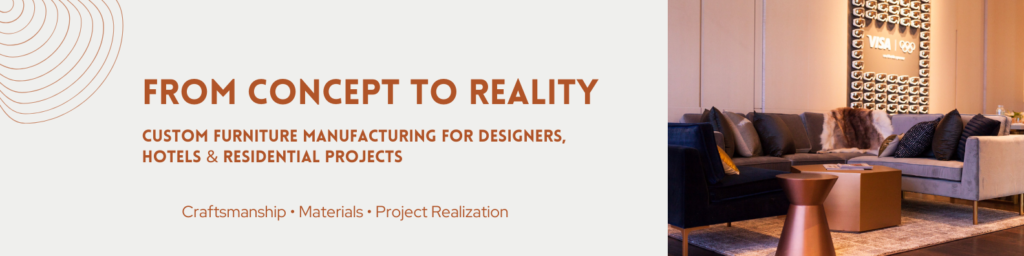
Interi Furniture specializes in custom furniture manufacturing for residential, hospitality, and commercial projects. Their experience in materials, craftsmanship, and project realization makes them a valuable resource for designers and buyers seeking tailored furniture solutions from China.