









Here is the core conclusion in one paragraph. For 2026, the Canton Fair furniture category — spread across Phase 1 (outdoor and commercial furniture, April 15–19) and Phase 2 (residential furniture, April 23–27) — has seen booth redistribution across the Pazhou complex’s Area B halls and stricter on-site rules covering badges, booth standards, and intellectual property complaints. For buyers, the biggest practical impact is not the new floor plan itself but the supplier migration behind it: factories that held prime positions for a decade have moved, some have not returned, and the booth map your muscle memory relies on is now wrong. The opportunity is a classic one that repeats every time the fair reorganizes a zone — the first two weeks after a layout change are a buyer’s window, when foot traffic is misrouted, quiet corners hide strong factories, and quotes from repositioned suppliers are unusually pragmatic. This article gives you the new layout logic, the rule changes that actually matter, and a route plan for each buyer type. Everything is subject to official confirmation against the official directory.
Why Veteran Buyers Are Anxious This Year
If you have walked the furniture halls five or ten times, you did not plan your route — you remembered it. The sofa cluster here, the outdoor section there, your three reliable factories within a twenty-minute loop. That memory is the asset the 2026 reset quietly destroys.
The anxiety we hear from importing partners in the US, EU, Middle East, and Latin America clusters around three questions. Where did my suppliers go? Will the new rules slow down my badge or my orders? And is the chaos going to cost me more or save me money? Fragmented information makes it worse: every trading company WeChat group claims a different version of the new map.

The Industry Truth Behind Every Zone Reset
Definition: What a Zone Adjustment Actually Is
A zone adjustment is the fair organizer’s periodic reallocation of product categories and exhibitors across halls, driven by category growth, fire-safety capacity, buyer traffic data, and the commercial logic of booth pricing tiers. It is not random, and it is never announced as a favor to buyers. It is inventory management for exhibition space — and you are the traffic being managed.
The Official Logic, Stated Plainly
The stated logic of recent Canton Fair zone management, consistent with China Foreign Trade Center communications, is to cluster complementary categories, separate high-footfall from high-sample-volume zones, and push premium categories toward premium-priced halls. When a category like furniture outgrows its footprint — and furniture demand from Belt and Road and Middle Eastern buyers has grown — something has to move. What moves is decided by booth revenue, not by your walking convenience.
The Supplier Domino Effect
A hall reallocation is not a relocation of furniture — it is a re-sorting of the supplier pyramid. Factories with export scale and margin absorb the move and pay the premium hall prices. Mid-tier factories take whatever is left, often in lower-traffic positions. And a meaningful slice of small factories and pure trading companies simply exit, because their economics cannot survive a booth-price reset plus new decoration standards.
This is the furniture hall changes cycle most buyers never analyze: the visible map changes, and the invisible supplier base changes with it.
The Underlying Law: Change Creates a Window
Every serious zone reset in trade-show history follows the same pattern. Year one is disorientation — buyers walk old routes, suppliers sit in new halls with thin traffic, and deals happen quietly in corners where negotiation leverage tilts toward the buyer. By year two, the new map is learned and the window closes. The buyers who profit are the ones who treat the reset as a sourcing event, not an inconvenience.
What Changed: The 2026 Layout, Honestly Reported
Definition: Canton Fair Phase Structure for Furniture
The Canton Fair runs in three phases, twice a year. Furniture appears in Phase 1 (April 15–19 / October 15–19), which covers outdoor, office, and hotel-commercial furniture alongside machinery and building materials, and in Phase 2 (April 23–27 / October 23–27), which hosts residential furniture, upholstery, dining, and home décor. The 139th spring session ran April 15–May 5, 2026; the 140th autumn session is scheduled for October 15–November 4, 2026. Phase 3 is irrelevant for furniture buyers — do not let anyone sell you a ticket for it.
Old Logic vs. New Logic
Exhibitor announcements from the 2026 spring session — for example, kitchen-cabinet makers publicizing booths in Hall 13.2 and outdoor-furniture makers in Hall 9.3 of Area B — indicate furniture remains concentrated in Area B with refined sub-clustering, while the adjacent Area D and the Phase IV facilities continue absorbing overflow and adjacent categories. The precise boundaries are subject to official confirmation.
| Dimension | Pre-2026 Logic (Veteran Memory) | 2026 Logic (Compiled Reports) |
|---|---|---|
| Furniture concentration | Broad spread across Area B halls 9–13, categories loosely mixed | Tighter sub-clustering: outdoor, office/hotel, and residential groups more separated |
| New product launches | Scattered across individual booths | Consolidated launch zones and brand showcases per exhibitor announcements |
| Trading company presence | Dense, hard to distinguish from factories | Thinned in premium halls by cost pressure and rule enforcement |
| Overflow categories | Forced into distant corners | Absorbed by expanded facilities, easing main-hall crowding |
| Premium positioning | Inherited, decade-old booths | Re-auctioned, factories with margin win the prime floor |
How the Redistribution Affects Factories vs. Trading Companies
The redistribution is a filter. It selects for balance sheets. A genuine factory in Foshan or Ganzhou with 80% export revenue can amortize a booth-price increase across containers; a trading company renting a booth to intercept walk-in buyers cannot. The 2026 shake-up, per our industry-channel conversations, pushed more of the latter group out of the premium halls — which is why the new map is not just different geography but different supplier quality by zone.

The New Rules and What They Mean for Your Money
These are the China trade show new rules themes that carry real buyer impact. Each has been cross-checked against exhibitor reports and organizer communications, and each remains subject to official confirmation in its final form.
| Rule Area | What Changed (Per Compiled Reports) | What It Means for Buyers |
|---|---|---|
| Buyer badge verification | Tighter identity and business-credentials checks at registration and on-site pickup | Register through the official buyer system weeks ahead; bring matching documents or you queue twice |
| Booth construction standards | Higher mandatory decoration and safety standards in premium halls | Higher exhibitor costs that subtly flow into quoted prices — recalibrate your target-price math |
| IP complaint mechanism | Faster on-site complaint processing; booths can be sealed pending review | Fewer copycat displays; more incentive to note original designs, but disputes can also freeze orders mid-negotiation |
| Online-platform linkage | Deeper integration between physical booths and the fair’s digital exhibitor system | Track your old suppliers online before the fair; many publish their new booth numbers there first |
| On-site order documentation | More standardized contract templates encouraged at booths | Useful for first-timers; veterans should still run their own paper |
The badge rule deserves emphasis because it is where buyers actually get hurt. The fix is boring and free: complete online pre-registration early, carry your passport and business proof, and collect the badge before the first exhibition morning.
The Buyer’s Window: Where the Real Deals Are
Definition: The Adjustment Window Period
The adjustment window is the interval — typically the first one or two sessions after a zone reset — during which traffic patterns are unsettled, repositioned suppliers face thin walk-in volume, and negotiation leverage temporarily favors prepared buyers. It is the only time at a mature trade fair when information asymmetry works for you instead of the exhibitor.
| Opportunity | Rating | Why | Who Should Chase It |
|---|---|---|---|
| Repositioned quality factories in low-traffic halls | High | Real factories with weak foot traffic quote pragmatically and answer technical questions patiently | Volume importers, program buyers |
| Exited suppliers now bookable at their factories | High | Booth economics pushed good factories out of the fair entirely; they welcome visits in Foshan, Longjiang, or Nankang | Buyers with China travel flexibility |
| Launch zones for trend scanning | Medium | Concentrated new collections, but prices carry launch premium | E-commerce sellers, trend-driven retailers |
| Premium-hall prime booths | Low | You pay the new-map tax; everyone else also found them | Only if the specific factory is strategic |
| Hot new halls on day one | Low | Crowded, sellers confident, discounts thin | Avoid |
The contrarian read, from a decade of watching resets: chasing the hot new hall is how you overpay. The quiet hall with a real factory, a thin day-three crowd, and an owner who moved booths twice in two years — that is where the Guangzhou fair 2026 update pays out.

Risk Warnings: Where Buyers Lose Money
Planning by the old map is the fastest way to waste two days. Route from the current official directory, not from memory, and reconfirm each target booth number the week before the phase opens.
Misreading the badge rules costs a morning at minimum. If your documentation differs from your registration details, fix it before you fly, not at the counter.
Assuming the reset lowered prices is the opposite error. Booth and build costs moved up, and a portion lands in your quote. Recalibrate targets roughly by expecting polished sellers to defend margin harder in year one of a new layout — then watch for the quieter booths that did not get the memo.
Route Plans by Buyer Type
| Buyer Type | Phase Focus | Route Logic | Priority |
|---|---|---|---|
| Veteran buyer resetting routes | Phase 1 + Phase 2 | Day one: locate every old supplier’s new booth number online first; walk Area B by sub-cluster, not by old memory | Confirm supplier continuity before chasing new leads |
| First-time attendee | Phase 2 only | Residential cluster first morning, outdoor/hotel second day; use official app navigation; two focused days beat five drifting ones | Badge and documents sorted before arrival |
| E-commerce / private label | Phase 2 launch zones | Scan launch zones early, then backfill with mid-tier booths for MOQ flexibility | Small-lot willingness, not showroom gloss |
| Individual / small-quantity buyer | Phase 2, days 3–4 | Visit after peak crowds; target factories visibly under-trafficked; negotiate mixed-container terms on the spot | Patience and cash-ready terms |

FAQ
What exactly changed in the 2026 Canton Fair furniture zone?
Furniture remains in Phase 1 (outdoor, office, hotel) and Phase 2 (residential), with reported sub-clustering refinements inside Area B and adjacent facilities absorbing overflow. Exact hall boundaries are subject to official confirmation via cantonfair.org.cn before each phase.
How do I find where my old supplier moved?
Check the official online exhibitor directory and the fair’s digital platform first — most factories publish new booth numbers there before the phase opens. If the factory is absent, it likely skipped the session; contact them directly and propose a factory visit in Foshan, Longjiang, Dongguan, or Nankang instead.
Do the new rules affect my buyer badge?
Badge verification has reportedly tightened, with stricter identity and business-credential checks. Complete online pre-registration early, ensure documents match your registration, and expect busier pickup counters on the first morning.
I am attending for the first time in 2026 — how should I plan around the new layout?
Attend Phase 2 only, pre-book meetings with twenty target exhibitors online, and split your time: residential cluster first, launch zones second, quiet halls third. Two prepared days outperform five improvised ones.
Is it cheaper to order during the adjustment period?
For quiet, repositioned factories, yes — thin traffic creates real negotiating room. For premium-hall headline booths, no — higher booth costs flow into quotes. The reset is a selective discount, not a blanket one.
What About You?
Which supplier are you most worried about losing track of in the 2026 reshuffle — and which category are you hoping to lock down early? Tell us in the comments; your route questions shape our next fair-season field report.
Recommended Resource
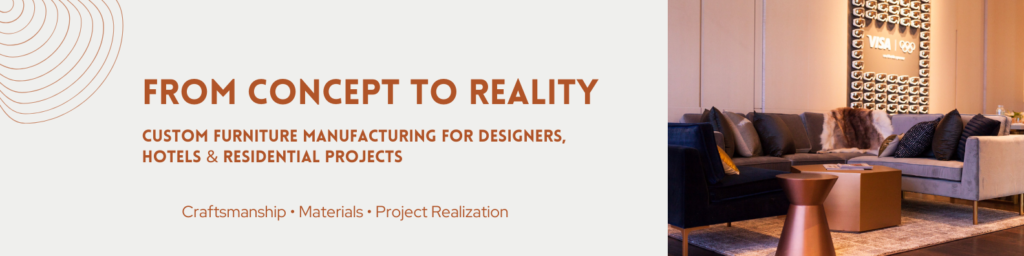
Interi Furniture specializes in custom furniture manufacturing for residential, hospitality, and commercial projects. Their experience in materials, craftsmanship, and project realization makes them a valuable resource for designers and buyers seeking tailored furniture solutions from China.