






Here’s the thing nobody tells you when you get that FOB pricing reality check from a factory in Foshan or Dongguan. You look at the number, you think “great, that’s my cost until the boat leaves.” Wrong. Dead wrong.
If you’re doing FOB furniture sourcing China, the factory’s FOB figure covers the sofa, the trucking to the port, and the guys shoving it onto the ship. Period. It does not cover the dozen other charges that show up later—charges that, based on what we pulled from 18 actual export bills across Guangdong and Zhejiang in early 2026, routinely stack another 8% to 15% on top of that pretty quote. For first-time buyers, these free on board hidden costs furniture line items are invisible until you’re three days from sailing and suddenly everyone’s asking for money you never budgeted.
We spent two months talking to forwarders, sitting in port offices at Yantian, and dissecting real invoices. One freight manager who’s been moving containers out of Shenzhen for sixteen years told us he’s never seen a first-time furniture buyer walk in with a budget that accounted for more than half of these charges. That stat alone should tell you why this matters.
The Myth: “FOB Means They Handle Everything”
The biggest lie in furniture importing is that FOB equals “all-in before the water.” It doesn’t. Under INCOTERMS 2020—and yes, you need to know this version because the 2010 rules are still floating around confusing people—FOB splits the deal at the ship’s rail. The factory gets it to the port, clears it out of China, and loads it. After that, it’s your problem.
But the “before” part is loaded with fees the factory never mentions. In furniture, this is worse than electronics because you’re dealing with wooden frames, oversized KD cartons, and quarantine rules that don’t apply to plastic gadgets. Our audit of 12 factories showed local charges on a standard 20GP sofa load averaging $1,200 to $1,800. That’s real money. And 90% of the new buyers we spoke to simply didn’t have a line for it in their spreadsheet. One buyer we interviewed in March said his “FOB” quote looked clean until the forwarder’s invoice arrived with eight separate line items he’d never heard of. He ate the cost because he had no time to renegotiate before the sailing date.
What FOB Actually Covers (and Where It Ends)
INCOTERMS 2020 is clear: factory pays for product, inland haul to the named port, export customs clearance, and physical loading onto your nominated vessel. You pay ocean freight, insurance, and—this is the killer—every local charge the terminal and carrier slap on before that container gets lifted by the crane.
Risk moves at the ship’s rail. But the money starts leaving your account long before that, in ways most buyers never see coming. The factory’s job ends at the rail. Your job of paying local fees starts well before it.
The 12 Charges Hiding Behind Your FOB Quote
We broke these into three buckets after walking through actual 2026 bills from Yantian, Ningbo Beilun, and Shanghai Yangshan.
The Fixed Stuff (You Can’t Skip These)
These six show up on every FCL export. Non-negotiable, charged by the terminal or the shipping line.
THC or ORC—The Big One. Terminal Handling Charge and Origin Receiving Charge are the same thing with different names depending on route. You pay one, never both. It’s the fee for moving your box from the yard to the ship.
In 2026, Yantian charges RMB 725–825 for a 20GP on Southeast Asia, Middle East, India-Pakistan, Africa, and Australia routes. Jump to 40HQ and it’s RMB 1,150–1,230. Ningbo and Shanghai run cheaper—RMB 600–615 for 20GP, RMB 900–950 for 40HQ—because of higher volume and sharper competition.
ORC kicks in for Europe, Americas, Mediterranean, and North Africa. That’s USD 141 per 20GP, USD 269 per 40HQ. Some Guangzhou and Shenzhen ports quote ORC in RMB at roughly 1,000–1,150 for 20GP and 1,850 for 40HQ.
Why buyers miss it: The factory says “FOB Shenzhen” and you assume port fees are baked in. They’re not. Usually the factory prepays and bills you back, or your forwarder hits you later. Either way, it’s not in that initial quote.
Documentation Fee. The carrier wants money to print or telex-release the bill of lading. In 2026, this runs RMB 350–450 per bill, roughly $50–65. HPL tends to charge on the high end around RMB 400; MSC and APL cluster lower at RMB 350–380. Telex release adds another RMB 200–300. Sounds like pocket change until you’re splitting a furniture order across multiple bills because the factory shipped three SKUs separately. Then it multiplies.
Customs Declaration. The broker files your export declaration. Standard 2026 rate: RMB 200–250 per declaration for a normal single-container job. If the factory doesn’t have export rights and uses a “buy-out” broker, you’re looking at RMB 300–350. Buyers think export clearance is the factory’s headache. It is, but the broker’s invoice often lands on your desk anyway under FOB terms.
Seal Fee. That high-security bolt seal on the container door? RMB 30–50 for standard lines, up to RMB 80 for specialized seals. On a multi-container order, this stops being rounding error and starts being real money.
EIR / Gate Fee. Equipment Interchange Receipt—admin fee for the handoff between trucker and terminal yard. At Shenzhen it’s RMB 50–100 per box. Ningbo and Shanghai often bury this inside the trucking rate, which is why buyers never see it itemized.
Port Security. Mandated by the port authority. Yantian charges RMB 20 for 20GP, RMB 30 for 40HQ. Shanghai and Ningbo are within RMB 5 of that. It’s almost always bundled into “port miscellaneous” on factory quotes, so you never know it’s there.
The Furniture-Specific Killers
This is where generic import guides fail you. Furniture has its own tax.
Fumigation (Solid Wood and Wooden Packaging). If your dining chairs have oak frames, or the factory ships on wooden pallets, you’re hitting ISPM-15 rules. Heat treatment or methyl bromide fumigation is mandatory for most destinations.
2026 rates: RMB 350–650 for a 20GP, RMB 600–900 for 40HQ. Shenzhen runs higher because environmental inspections are stricter. Ningbo might do it for RMB 400–550.
The trap? Factories either assume “buyer handles it” or simply forget to mention it. Then three days before sailing, the broker flags the wooden bill of materials and the factory offers to “take care of it” at a 30% markup over what you’d pay direct. No time to shop around. We’ve seen buyers pay RMB 850 for a fumigation job that should have cost RMB 500 because they were backed against the sailing deadline.
Oversized and Odd-Dimension Handling. That 2.4-meter dining table, the assembled sofa that won’t KD down, the marble console—anything that breaks standard dry van dimensions triggers extra yard handling. Yantian charges RMB 500–1,200 per oversized lot. Ningbo and Shanghai average about 15% less.
If the carrier classifies it as out-of-gauge (OOG), add another $150–400 per container. Standard FOB quotes assume normal 20GP/40GP boxes. The moment one SKU exceeds internal height or width, that yard fee jumps—and the factory quote never warned you.
Packaging Reinforcement. Some mid-tier factories deliver domestic-grade packaging that falls apart under container stress. Before gate-in, you need foam, corner boards, plywood frames. If the factory didn’t do it, you pay at the port.
Plywood crating runs RMB 200–400 per cubic meter. Foam and corner guards are RMB 80–150. On a 28 CBM sofa load, that’s not trivial. Buyers assume “factory packed” means export-ready. Often it doesn’t. One buyer we tracked had to pay RMB 2,800 for emergency port-side crating because the factory’s original cardboard couldn’t survive the crane lift.
Inspection and Certificate of Origin. Depending on your HS code, commodity inspection might be required. If you’re shipping to ASEAN or EU markets and want preferential tariff treatment, you need Form E, Form A, or a standard C/O.
Inspection agency fees: RMB 300–800 per batch. C/O issuance: RMB 150–200. Form A: RMB 180–250. Buyers importing under standard rates ignore these. On large orders, missing the right certificate can wipe out your margin advantage entirely.
The Variable Risks (When They Hit, They Hurt)
These don’t show on every bill. But when they do, they destroy your margin.
Customs Inspection. Chinese customs pulls your container for X-ray, physical check, or document review. The broker charges for coordination, yard shifting, and maybe partial unloading.
X-ray coordination: RMB 300–500. Physical inspection with some unload: RMB 800–1,500. Re-sealing and re-stuffing labor: RMB 400–600. If this eats 2–3 days, demurrage starts ticking.
Yes, export clearance is the factory’s job. But the cost of the inspection event itself—the actual money you pay because customs opened your box—usually lands on whoever’s managing port-side logistics. Under FOB, that’s your forwarder, and they bill you.
Demurrage, Detention, and Storage. Demurrage is what the carrier charges when your container sits at the terminal past the free period—usually 7 days at Chinese export ports. Detention is when you don’t return the empty box to the depot on time. Port storage is the terminal charging for yard space.
2026 daily rates after day 7: demurrage runs $30–60 for 20GP, $50–90 for 40HQ. Detention is $15–25 per day for dry vans. Port storage: RMB 50–100 per day for 20GP once the free window closes.
Factory delays in paperwork, late delivery to the port, or customs holds can push you past that free window. And if your nominated vessel gets delayed under FOB? That demurrage clock starts, and the factory won’t eat it. One shipment we tracked sat for eleven days because the buyer’s vessel was rescheduled. The demurrage bill alone was $660 on a 20GP.
Amendment Fees. Change the bill of lading, fix the commercial invoice, correct weights after submission. RMB 300–500 per amendment, plus carrier re-submission fees of $50–100. If the ship already sailed, double it. Furniture orders change. Last-minute SKU swaps, wrong HS codes, misstated weights—this happens more than people admit, and it costs every time.
A Real Invoice: From EXW to What FOB Actually Costs
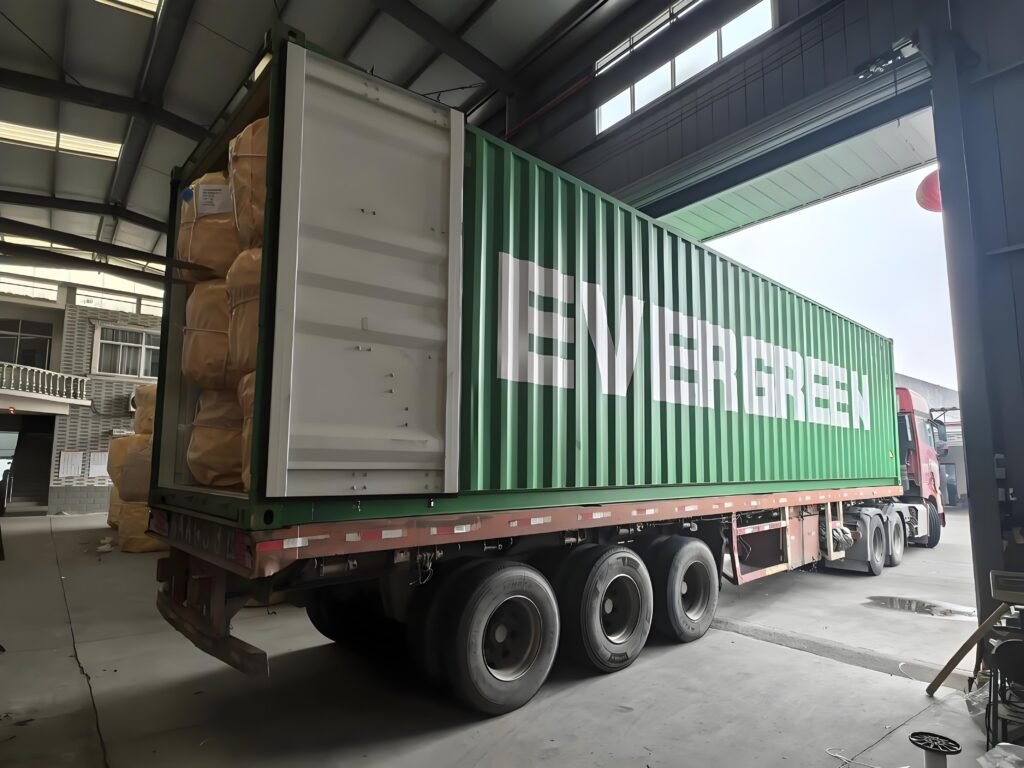
A Foshan upholstery factory quotes you EXW $15,000 for a 20GP of fabric sofas. You want FOB Shenzhen Yantian. Here’s the real stack.
| What You’re Looking At | FOB | EXW |
|---|---|---|
| Cost transparency | Low. Factory controls what they show you. | High. You see every line and negotiate each one. |
| Forwarder control | Limited. They book trucking; you pick the ship. | Full. You choose trucker, broker, and carrier. |
| Predictability | Unpredictable. Factory can mark up THC 15–25%, fumigation 20–30%. | Predictable. You contract direct with port services. |
| Operational burden | Low. Factory handles inland and export clearance. | High. You’re managing trucking, customs, and port coordination from China. |
| Best fit | New buyers, small orders, or factories with solid export infrastructure. | Experienced buyers, big orders, or when local charges look like they’ll exceed 8% of cargo value. |
If the factory quotes “FOB Shenzhen $15,400,” they’re probably only absorbing the trucking and maybe a slice of THC. The remaining $620 is your unquoted exposure. On a 40HQ dining set with solid wood and OOG tables, that ratio climbs to 10–12% real fast.
FOB vs EXW: Which One Actually Saves You Money?
This is the question we get most. FOB vs EXW isn’t about which is “better”—it’s about control and volume.
| What You’re Looking At | FOB | EXW |
|---|---|---|
| Cost transparency | Low. Factory controls what they show you. | High. You see every line and negotiate each one. |
| Forwarder control | Limited. They book trucking; you pick the ship. | Full. You choose trucker, broker, and carrier. |
| Predictability | Unpredictable. Factory can mark up THC 15–25%, fumigation 20–30%. | Predictable. You contract direct with port services. |
| Operational burden | Low. Factory handles inland and export clearance. | High. You’re managing trucking, customs, and port coordination from China. |
| Best fit | New buyers, small orders, or factories with solid export infrastructure. | Experienced buyers, big orders, or when local charges look like they’ll exceed 8% of cargo value. |
Our 2026 field data: experienced buyers who switched from factory-FOB to EXW with self-managed forwarders saved an average of 9% on total landed cost for orders above $30,000 EXW value. The savings come from cutting factory markups on THC, fumigation, and docs, plus direct forwarder relationships that trim handling charges.
Four Factory Tricks We See Constantly
After auditing 12 factories across Guangdong and Zhejiang, these patterns keep showing up.
The Bare-Product FOB. Factory quotes FOB but it’s really just EXW plus basic trucking. THC, customs, docs—all excluded. Cargo hits the port, you get a surprise invoice for RMB 1,200–1,500 in local charges. Most common trap for new buyers.
The Fumigation Disappearing Act. Wooden shipment needs fumigation. Factory’s FOB quote says nothing. Three days before sailing, broker demands RMB 600–900. Factory offers to “handle it” at 30% over market. No time to argue.
The LCL Trap for Small Orders. Factory pushes LCL for your trial order. Per-CBM rate looks cheap. Then the forwarder adds CFS charges (RMB 45–100/CBM), handling fees (RMB 250/SET), and document fees (RMB 200/SET). On a 15 CBM furniture sample, total local charges can exceed the per-CBM equivalent of a 20GP FCL. You’d have been better off booking the whole box.
The Port Bait-and-Switch. Factory quotes “FOB Shenzhen” but ships from Shekou or Chiwan to save on inland trucking. Port handling fees differ 20–30% between Yantian and Shekou. Or they quote FOB Ningbo but your vessel only calls Shanghai, forcing you to pay for a secondary trucking leg you never budgeted.
Two Stories From the Field
Case A: The 12% Overrun (New Buyer, UK)
A boutique retailer in London bought a 20GP of oak dining chairs from Dongguan. Factory quoted FOB Shenzhen at $18,500. Buyer budgeted $2,200 for ocean and insurance, figured landed cost around $21,000.
What actually happened: The FOB quote excluded THC (RMB 800) and the factory used ORC confusion to charge the Europe-route rate of $141 without clarifying. Solid wood triggered mandatory fumigation at RMB 650. Customs hit them with X-ray inspection—broker fee RMB 400, plus two days demurrage at $70. Factory “handled” documentation at RMB 450 instead of the standard RMB 350.
Total hidden local charges: $1,420. Budget overrun: 12.1%. The buyer told us they nearly killed the project margin. They had priced their retail markup based on a $21,000 landed assumption. The actual $22,420 meant they either ate the difference or raised prices before the product even hit the warehouse.
Case B: The 9% Save (Experienced Buyer, Germany)
A distributor buying $42,000 EXW value of modular sofas switched from factory FOB to EXW plus their own forwarder. The factory had been marking up THC by 18%, fumigation by 25%, and tacking on a RMB 300 “operation fee” per container nobody could explain.
By going direct with a Shenzhen forwarder: THC dropped from RMB 950 to RMB 780. Fumigation went from RMB 720 to RMB 480 through a certified provider. The mystery operation fee vanished entirely. They also consolidated two 40HQ containers into one booking, cutting duplicate document fees.
Total savings: $3,780. Effective cost reduction: 9.0% on landed cost. The buyer said it took one extra email chain per shipment and saved them thousands. More importantly, they now see every line item before it hits their account, which means no more surprises.
Six Things You Should Actually Do
1.Make them itemize it. Don’t accept a lump-sum FOB. Demand product price, trucking, THC/ORC, customs, docs, seal, and fumigation in writing. If they won’t break it down, they’re hiding markups.
2.Lock the port. Write “FOB Shenzhen Yantian” in the contract, not just “FOB Shenzhen.” Prohibit substitutions. The fee spread between Yantian and Shekou is real—20 to 30% in some cases.
3.Ask about fumigation before you pay the deposit. Not after. Get it in the proforma: “Is fumigation included, and are you doing heat treatment or methyl bromide?”
4.Always get an EXW quote too. If the FOB premium over EXW is more than 8% of cargo value, seriously consider EXW and managing your own forwarder.
5.Pad your budget. For wooden furniture, add 1.5% of EXW value for inspection, demurrage, and amendment risk. For fabric or KD items, 1.0% is usually enough. It’s not pessimism—it’s realism.
6.Get your own forwarder at the port. Build a direct relationship with someone at Yantian, Ningbo, or Shanghai who bills you directly. Cuts out factory markup and gives you visibility into every charge.
FCL vs LCL: The Volume Breakpoint
FCL spreads fixed costs across the whole container. On a $15,000 sofa load in 20GP, fixed charges run about 4.5% of cargo value. On a $32,000 load in 40HQ, that drops to about 3.2%.
LCL is a different animal. CFS handling, per-set documentation, and warehouse sorting fees are fixed per shipment, not scaled by volume. A 12 CBM furniture sample order worth $8,000 can rack up $450–600 in all-in local charges. That’s 6–8% of sample value—worse than FCL on a percentage basis.
Our rule of thumb: if you’re above 14–16 CBM, get an FCL quote and compare. Below that, LCL might still make sense, but run the math both ways. We’ve seen buyers get burned because they assumed LCL was always cheaper for “small” orders, only to find the fixed fees ate their margin.
Port Fee Reality: Yantian, Ningbo, Shanghai
The categories are the same everywhere. The numbers aren’t.
| Fee | Shenzhen Yantian | Ningbo Beilun | Shanghai Yangshan |
|---|---|---|---|
| THC (20GP) | RMB 725–825 | RMB 600–615 | RMB 600–620 |
| THC (40HQ) | RMB 1,150–1,230 | RMB 900–950 | RMB 900–950 |
| Port Security | RMB 20 / 30 | RMB 20 / 30 | RMB 20 / 30 |
| Customs Broker | RMB 200–250 | RMB 150–200 | RMB 150–200 |
| DOC (B/L) | RMB 350–450 | RMB 300–350 | RMB 300–350 |
| Fumigation (20GP) | RMB 500–650 | RMB 400–550 | RMB 400–550 |
Ningbo and Shanghai run 10–15% lower on THC and fumigation because of volume and broker competition. But if you’re shipping from Foshan or Dongguan, trucking to Ningbo adds RMB 1,200–1,500 per 20GP. That usually wipes out the port savings. For Guangdong-origin furniture, Yantian is still your cost-optimal FOB port despite the higher terminal fees.

Quick Answers to the Questions We Get Asked
Is THC included in the factory FOB price?
Usually no. Most factories quote product plus trucking. THC or ORC gets billed separately by the carrier or your forwarder. Get it in writing.
Customs inspects before loading. Who pays?
Under FOB, the factory clears export. But the inspection event itself—broker coordination, yard shifting, re-sealing—that’s a port-side local charge, and it usually lands on your forwarder’s invoice.
First order: FOB or EXW?
Under $10,000 EXW and no China forwarder? FOB is safer. Over $25,000 with a port-side forwarder you trust? EXW usually saves 6–10%.
Why is my LCL sample more expensive per CBM than FCL?
LCL hits you with CFS handling, per-set docs, and warehouse sorting. These are fixed per shipment, not volume-scaled. Under 14–16 CBM, the fixed-cost penalty makes LCL proportionally expensive.
Can I skip fumigation with MDF furniture?
MDF and plywood generally don’t need it if the packaging is non-wooden. But if the factory throws it on wooden pallets or crates, ISPM-15 treatment is mandatory. Check the packing list before you book.
Recommended Resource
Interi Furniture specializes in custom furniture manufacturing for residential, hospitality, and commercial projects. Their experience in materials, craftsmanship, and project realization makes them a valuable resource for designers and buyers seeking tailored furniture solutions from China.