





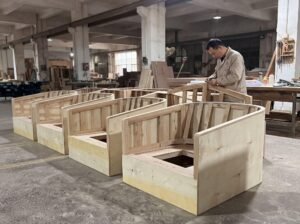
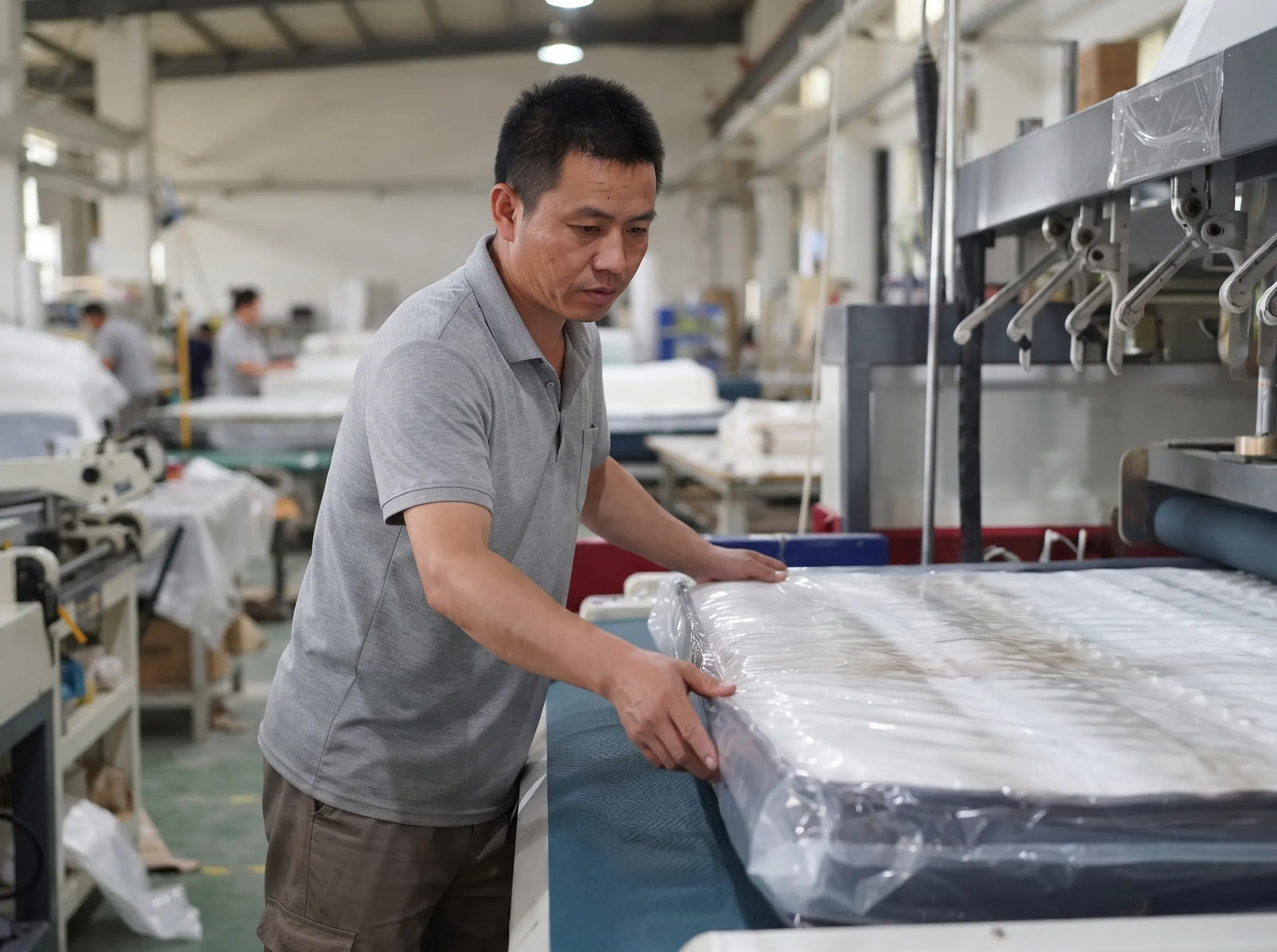
At the 2026 autumn Canton Fair, mattresses are among the highest-tariff-risk products on the floor, while sofas are covered by no U.S. anti-dumping or countervailing order at all. The famous 1,732% figure is not a blanket mattress duty China factories all pay. It is the China-wide rate in the December 2019 anti-dumping order, reserved for producers that refused to respond to the U.S. investigation; cooperating factories received final margins as low as 57.03%. If you buy from an unvetted supplier and enter the goods yourself, you — the importer of record — owe that duty at the border, not the factory. Sofas live in a different chapter entirely. Verify every number against official sources, and treat any “we handle customs for you” promise with suspicion.
Why Mattress Duty Is the Loudest Topic on the Show Floor
Walk ten booths in the furniture hall this October and you will hear the same three numbers passed between buyers like rumors at a poker table: 1,732%, 97.78%, and “my agent says it is fine.” WeChat groups, short-video explainers, and a few booth posters have turned the U.S. mattress trade-remedy orders into the single most misunderstood furniture tariff Canton Fair headline of 2026. The anxiety is rational — mattresses are genuinely the most heavily remedied furniture category in the U.S. market. The confusion is not. Half of what circulates on the fair floor conflates dumping duties with Section 301 tariffs, U.S. orders with Canadian ones, and company-specific rates with national ones. This article fixes that, because the difference between 57% and 1,732% is not a rounding error. It is the difference between a viable product line and a container you abandon at the port.
What the 1,732% Number Actually Means
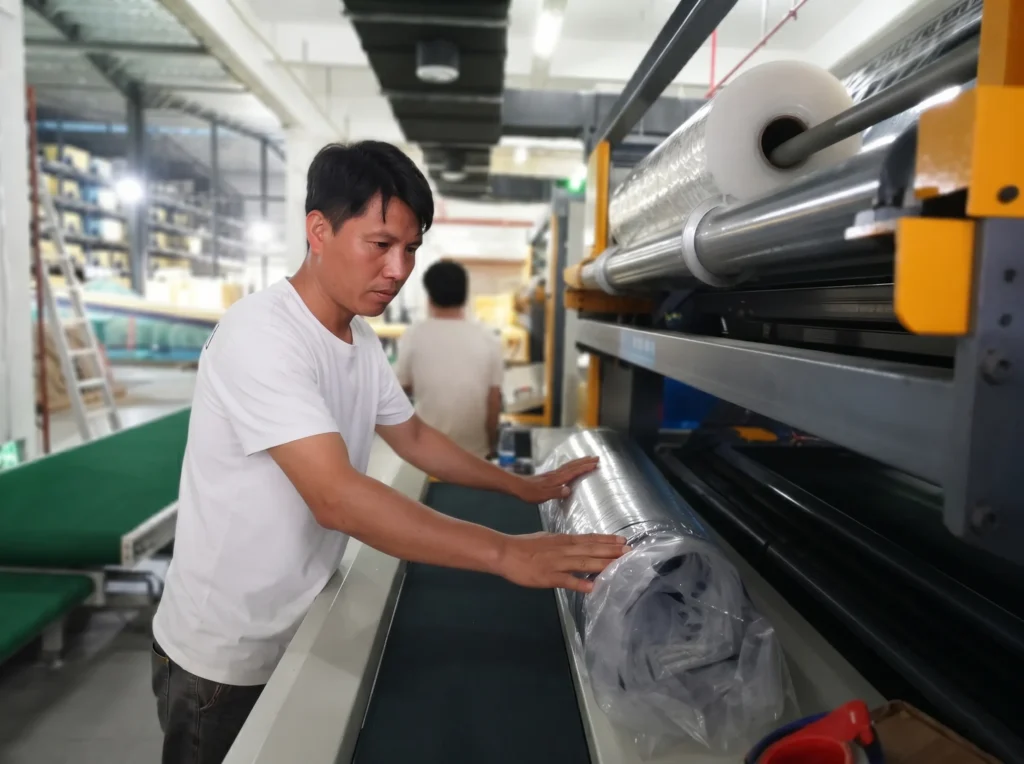
On December 16, 2019, the U.S. Department of Commerce issued the antidumping duty order on mattresses from China (case A-570-092, published at 84 FR 68395). Final weighted-average dumping margins ranged from 57.03% to 1,731.75%. That top figure is the China-wide rate: a punitive default assigned to producers and exporters that did not cooperate with the investigation. Companies that answered Commerce’s questionnaires received separate rates spread between the two poles. In May 2021, Commerce added a countervailing duty order on Chinese mattresses (case C-570-093) with a China-wide subsidy rate of 97.78%, again with company-specific rates for respondents. Add the two worst-case layers and an unvetted supplier’s combined exposure approaches 1,830% of customs value — before the base tariff and Section 301. Media rounds this to “1,732%.” The number is real. What it applies to is far narrower than the headline suggests.
| Duty layer | Rate | Applies to | Source to verify |
|---|---|---|---|
| Base MFN duty | Typically low single digits by 10-digit HTS line | All entries | hts.usitc.gov |
| Section 301 China tariff | +25% on the covered furniture lines | China-origin goods | USTR / CBP |
| Anti-dumping cash deposit | 57.03% – 1,731.75% | Producer-specific | A-570-092 at access.trade.gov |
| Countervailing cash deposit | Up to 97.78% | Producer-specific | C-570-093 at access.trade.gov |
One nuance kills more importers than the rate itself: the cash deposit collected at entry is not the final liability. Administrative reviews retroactively adjust what you owe, entries liquidate months or years later, and CBP can look back five years. A cheap container today can become a six-figure bill after your customer has already sold the stock.
Which Mattresses Fall Inside the Order — and Which Escape It
The order’s scope turns on the product’s written description, not on what a factory calls it. Adult and youth mattresses of essentially every construction are inside: open-coil innerspring, pocket spring, memory foam, latex, hybrid, pillow-top, euro-top. Compress it, roll it, vacuum-seal it into a box for e-commerce and it is still a mattress. The exclusions are narrower than most salespeople claim — toppers and pads that are not mattresses in their own right, pillows, cushions — and the scope language, not the booth pitch, is the authority. Buyers sourcing components are not safe either: uncovered innerspring units from China carry their own antidumping order dating to 2009 with a triple-digit China-wide rate, subject to official verification.
| Product | Typical HTS | Inside the China mattress AD/CVD orders? | What to check |
|---|---|---|---|
| Memory foam / latex mattress | 9404.21 | Yes | Producer’s case-registry rate |
| Innerspring / hybrid mattress | 9404.29 | Yes | Producer’s case-registry rate |
| Bed-in-a-box, compressed | 9404.21 / 9404.29 | Yes | Same order, same exposure |
| Mattress topper / pad | 9404.90 | Generally outside | Verify against scope text |
| Pillow, cushion | 9404.90 | Outside | Confirm classification |
| Sofa, sectional, recliner | 9401.xx | No U.S. order | See section below |
| Sleeper sofa with mattress | 9401.xx | Gray zone | Get a scope/classification ruling |
| Wooden bed frame | 9403.50 | Not the mattress order — but the wooden bedroom furniture AD order (A-570-890) applies, with a China-wide rate above 200% | Verify at access.trade.gov |
That last row matters more than it looks. A “bed set” order that feels sofa-adjacent can quietly contain wooden bedroom furniture inside its own antidumping order — a separate trap with separate case numbers.
Four Terms That Decide Your Landed Cost
Anti-Dumping Duty
A trade-remedy duty imposed when the U.S. government determines a product is sold in the United States below fair value and injures a domestic industry. Rates are set per producer, not per country of origin in general — the “China-wide rate” exists only because non-responsive producers forfeited their right to an individualized calculation.
Countervailing Duty
A parallel remedy targeting subsidies — grants, cheap land, below-market loans, tax breaks — received by foreign producers. It stacks on top of antidumping duty. For Chinese mattresses, the CVD order arrived in May 2021, eighteen months after the AD order, which is why older forum posts claiming “only” 1,732% are doubly wrong.
HTS Code
The Harmonized Tariff Schedule code determines your base duty rate and which additional tariff programs apply. Mattresses split mainly between 9404.21 (cellular rubber or plastics, i.e., foam) and 9404.29 (other materials, i.e., spring and hybrid constructions). Critical point: AD/CVD scope is defined by the order’s product description, not by the HTS line — but the HTS code is your fastest first screen, and the 10-digit statistical suffix is where misclassification risk lives.
Circumvention
Under 19 U.S.C. §1677j, goods assembled or transshipped through a third country to dodge an AD/CVD order can be hit with the same duties, plus penalties, when Commerce finds no substantial transformation occurred. Origin is a legal conclusion, not a shipping label.
Mattresses vs. Sofas: Two Completely Different Risk Pictures
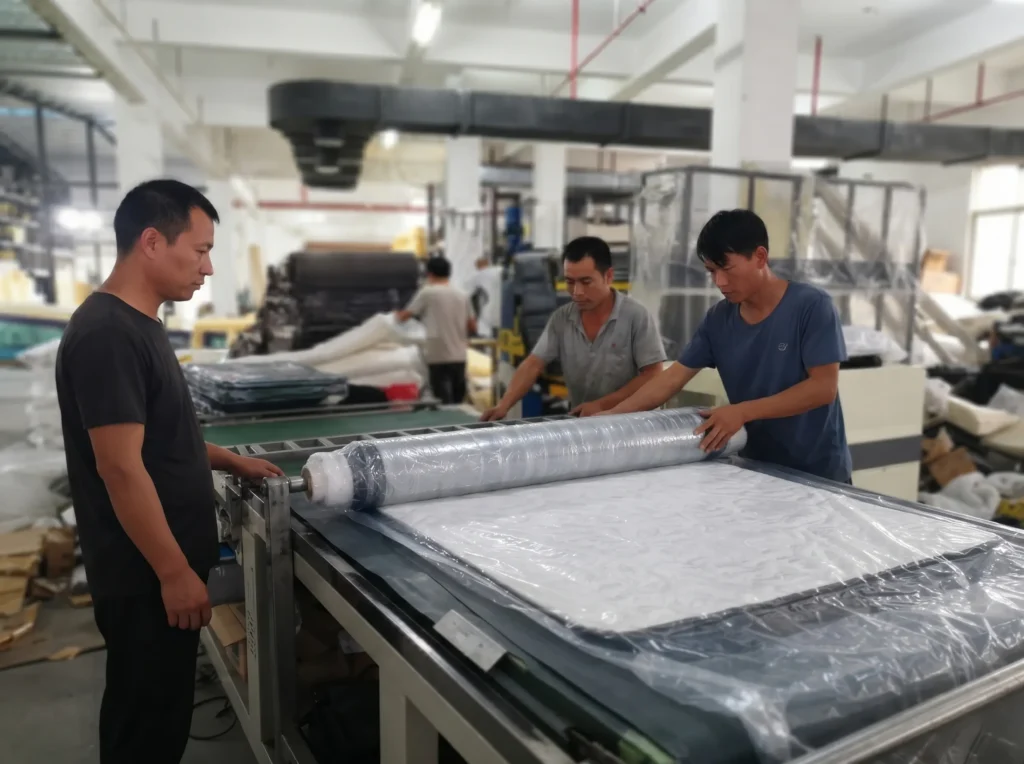
If you searched “mattress anti-dumping duty China 1731 percent” after seeing a booth poster and now assume your sofa order is radioactive, breathe out. There is no U.S. antidumping or countervailing order on upholstered seating from China. The well-known “upholstered domestic seating” case — sofas, recliners, sectionals — with duties up to roughly 188% antidumping and 81% countervailing, is a Canadian CBSA proceeding, not an American one. Jurisdiction confusion is the single most common error we see on the fair floor. Your U.S. sofa exposure is real but mundane by comparison: a base MFN rate that is often Free, plus Section 301 duties on the China-origin lines, plus whatever additional measures are in force on your entry date — all subject to official verification. One caution for Canada-bound buyers: Chinese sofas and mattresses entering Canada face their own SIMA measures. Know which border your container is actually crossing.
| Factor | Mattresses from China | Sofas from China |
|---|---|---|
| U.S. AD/CVD order | Yes — A-570-092 and C-570-093 | None |
| Maximum producer exposure | ≈1,731.75% AD + 97.78% CVD | AD/CVD: zero |
| Typical base MFN duty | Low single digits | Often Free |
| Section 301 | +25% on covered lines | +25% on covered lines |
| Canada exposure | Separate SIMA measures | CBSA upholstered domestic seating AD/CVD (up to ~188% + ~81%) |
| 2026 buyer posture | Vetting-intensive, verify everything | Standard tariff math, no AD panic |
What to Ask the Factory on the Show Floor
You have perhaps twenty minutes per booth. Spend them on questions that produce documents, not reassurances.
| Ask | A credible answer sounds like | A red flag sounds like |
|---|---|---|
| Which legal entity manufactures and which exports? | Two company names, matching licenses, ready to write down | “My cousin’s trading company handles it” |
| What is your AD margin in A-570-092? | A specific percentage, plus the last administrative review outcome | “Same low rate as everyone, do not worry” |
| What is your CVD rate in C-570-093? | A specific company rate or acknowledgement of the China-wide rate | “Only the dumping one applies to us” |
| Which HTS line do you ship under? | The 10-digit code, with classification logic | “The broker decides, it is flexible” |
| Will you support a binding ruling or scope inquiry? | Yes, with documents | “Too slow, just ship first” |
| Who is the importer of record on your DDP quote? | An explanation of shared responsibility | “We have a special channel, duty included” |
Get the answers in writing, with the company chop, then match the exporting entity’s English name against the case registry at access.trade.gov before you transfer a deposit.
Three Traps That Quietly Bankrupt Importers
The first trap is the verbal duty-included deal. “We handle customs, all duties in the price” usually means undervalued invoices or misclassified goods arranged by a broker you have never met. When CBP audits — and the five-year lookback is standard — the importer of record pays the difference, interest, and penalties. Your broker is your agent, not your shield, and the factory is on the other side of an ocean.
The second trap is the model-change myth. Swapping foam density, changing fabric, or adding two springs does not move a mattress out of scope, because scope follows the product description. “Just change the model and it doesn’t count” is how buyers graduate into fraud referrals.
The third trap is third-country transshipment. Route a Chinese mattress through a bonded warehouse in a neighbor country, swap the paperwork, and you have committed circumvention, not transformation. The proof that this playbook is closed: mattresses from Cambodia, Indonesia, Malaysia, Serbia, Thailand, Turkey, and Vietnam already carry their own U.S. antidumping orders from May 2021, with margins running from low double digits to roughly 763% depending on the company. The escape routes were investigated and ordered. The compliant move is knowing your producer’s actual rate, not moving the pin on the map.
Who Is Legally on the Hook — and Your Compliance Paths
The importer of record is the legal debtor. That is usually you, the buyer, not the factory, not the freight forwarder, and not the sales agent who promised it would be “easy.”
| Path | How it works | Duty exposure | Legal risk | Best for |
|---|---|---|---|---|
| Direct import, vetted responsive producer | Buy from a company on the separate-rate list; pay cash deposits; monitor reviews | Moderate and predictable | Low | Established B2B importers |
| Direct import, unresponsive producer | Full China-wide rates at entry | ≈1,830%+ of value | Low if declared, commercially fatal | Nobody |
| Genuine origin shift | Real production relocation with substantial transformation | Destination country’s normal stack | Low if genuine | Long-range supply-chain planners |
| Third-country relabeling | Paperwork rerouting, no real transformation | Full AD/CVD plus penalties | Extreme | Avoid entirely |
| Compliance-first entry | Licensed broker, CBP binding ruling, documented classification | Verified before shipment | Lowest | First-time buyers, e-commerce sellers |
Playbooks by Buyer Type
B2B importers and wholesalers should treat the case registry as part of supplier onboarding, price cash deposits into unit economics, and calendar administrative review outcomes the way you calendar freight deadlines. E-commerce sellers shipping compressed mattresses must add U.S. flammability compliance (16 CFR 1633) to the duty question — a $400 mattress with a 1,731.75% deposit is not a business model. Hotel and FF&E buyers running mixed bed-and-seating packages should split the bill of quantities by order exposure, because wooden bedroom furniture rides its own AD case. Individual buyers tempted by a bargain container should know that one mattress order at China-wide rates can exceed the value of the goods several times over; a sofa, by contrast, is ordinary customs math.

FAQ
Does the 1,732% rate apply to every Chinese mattress?
No. It is the China-wide rate for producers that did not respond to the investigation. Cooperating producers received separate rates starting at 57.03%, and the countervailing order runs on a separate track with its own company-specific rates. Your supplier’s legal name in the Commerce case registry — not the country of origin — determines your deposit.
How do I check at the fair whether a mattress falls under the order?
Match the product against the order’s written scope, get the factory’s full legal name, and look it up in cases A-570-092 and C-570-093 at access.trade.gov. Ask for the margin and the latest administrative review result in writing. If the answer is a shrug, walk.
Is transshipping through a third country safe?
Only if genuine substantial transformation occurs — real manufacturing, not relabeling. Otherwise you are exposed to circumvention findings, retroactive duties, and penalties. Seven third countries already have mattress orders precisely because this route was abused.
Do sofas from China carry U.S. anti-dumping duties?
No. There is no U.S. AD/CVD order on upholstered seating from China. The sofa case everyone cites is Canadian. U.S. sofas still carry base duty and Section 301-type layers, so run the numbers — just do not run them against a four-digit rate that does not exist.
Can I trust a factory that promises to include all duties in the price?
Treat DDP mattress deals as a red flag. Undervaluation and misclassification schemes leave the importer of record holding the liability years later. If a quote looks magically immune to a 1,731.75% order, the magic is fraud.
One Question Before You Fly Home
Which product are you inspecting at this fair — mattress, sofa, or a mixed container? Tell us in the comments, and we will reply with the exact case numbers and verification steps for your category.
Recommended Resource
Interi Furniture specializes in custom furniture manufacturing for residential, hospitality, and commercial projects. Their experience in materials, craftsmanship, and project realization makes them a valuable resource for designers and buyers seeking tailored furniture solutions from China.