






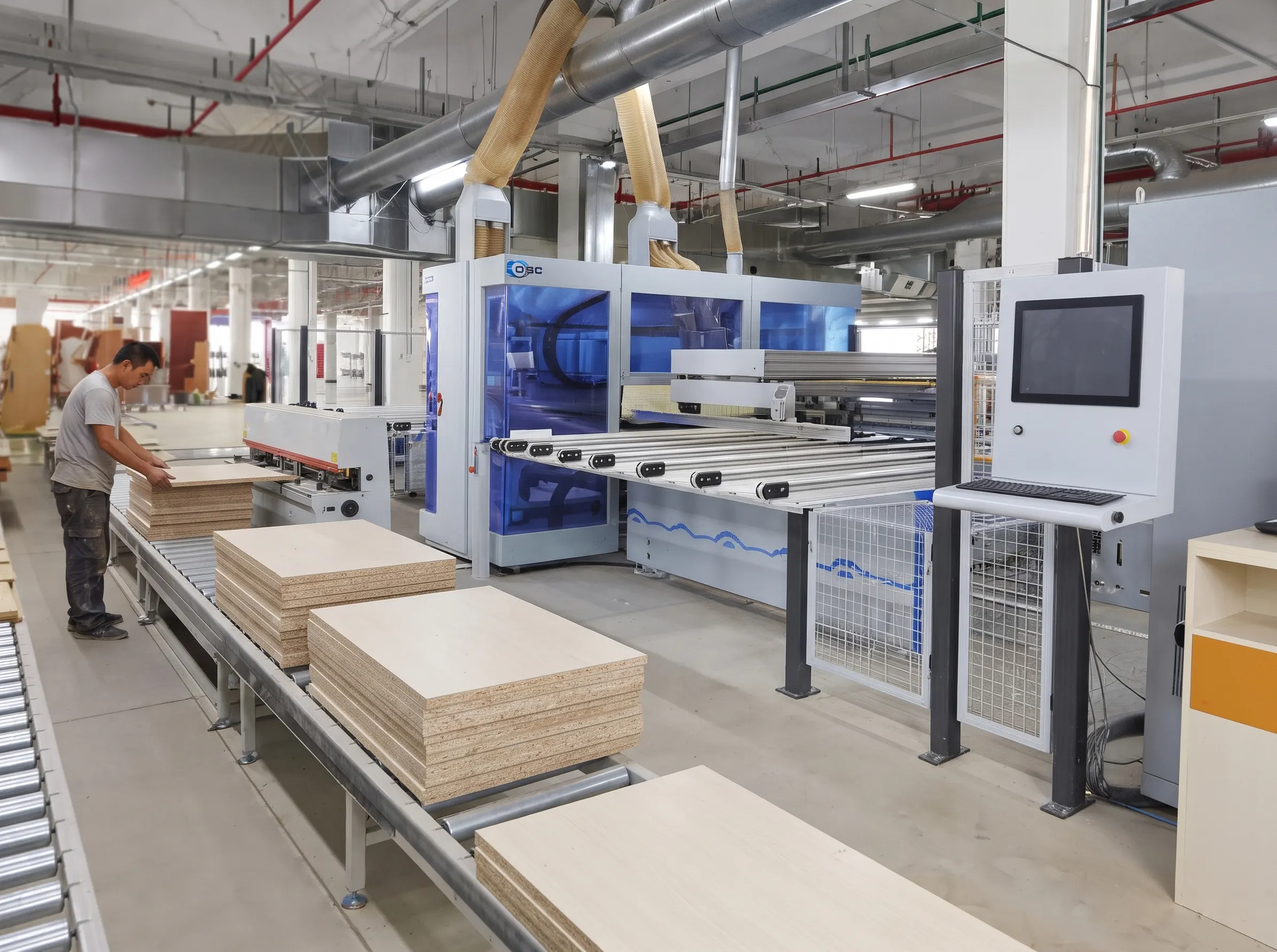
RTA (ready to assemble), custom, and modular cabinets from Foshan Shunde are not three quality levels of the same product. They are three different business models running on three different production logics, often inside the very same factory. RTA typically lands in the USD 30–80 per unit retail-equivalent band, modular in the USD 80–250 band, and true custom from USD 250 upward, depending on materials and hardware. And hotels? Chain hotels overwhelmingly buy modular — not the cheapest RTA, and rarely full custom — because procurement scores batch consistency, fire compliance, hardware durability, and installation speed, not showroom beauty. Everything below explains why.
Why Buyers Keep Confusing the Three Tiers
If you have spent any time in Shunde or scrolling Alibaba, you have seen the chaos. A factory quotes “custom kitchen china” pricing, but what ships is a modular carcass with altered dimensions. Another lists itself as an RTA specialist, yet its edge banding would pass a German TÜV audit. A third advertises “full custom hotel furniture” while running 80% modular panels on the same floor.
The confusion is structural, not accidental. Shunde’s cabinet industry grew out of a dense cluster where Lecong’s trade market handles display and deal-making while Longjiang and the wider Shunde manufacturing zone handle production. Many factories serve three channels simultaneously — European retail DIY chains, domestic and overseas project contractors, and hotel FF&E programs — and their salespeople quote whichever vocabulary the buyer uses. If you ask for “custom,” you often get a quote with a custom label on a modular product.
The cost of this confusion is real. Buyers overpay for rebranded modularity, or under-specify and watch a hotel project fail its punch list in month two.
The Core Definitions (Read This Before Any Quotation)
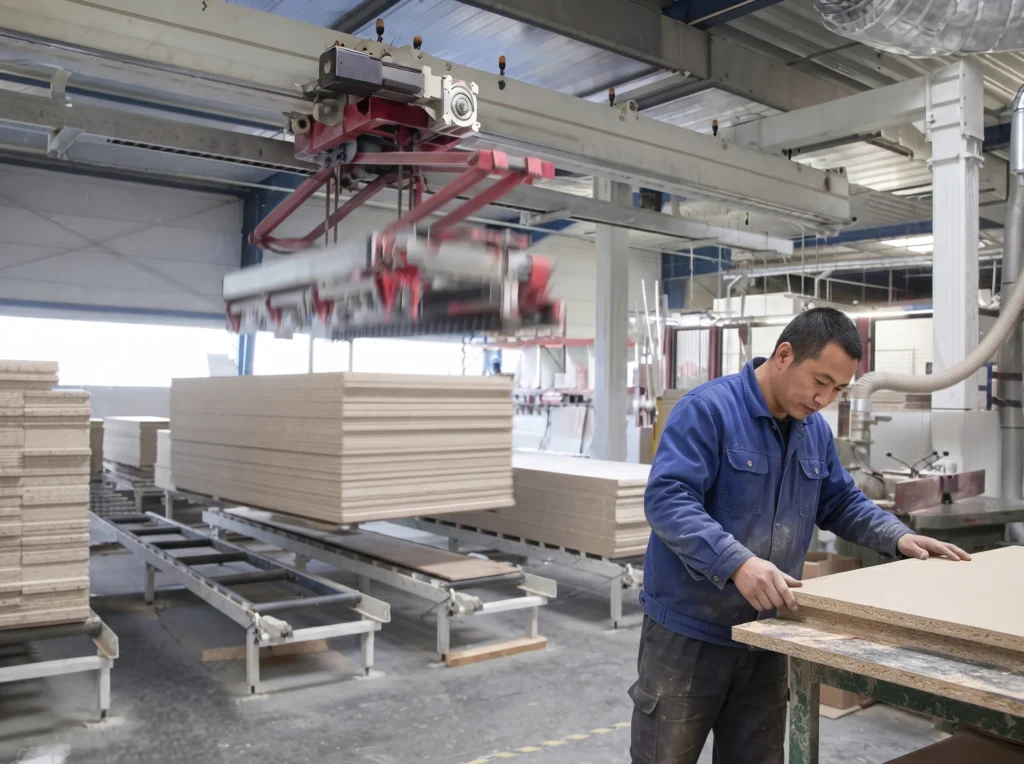
RTA (Ready to Assemble) cabinet refers to flat-packed cabinets designed for end-user assembly, dominant in European and North American retail DIY channels. Contrary to the “cheap and flimsy” stereotype, European-channel RTA demands extremely tight tolerances — often cam-lock and dowel systems engineered to 0.1mm precision, because a frustrated DIY customer returns the product, and returns kill retail programs.
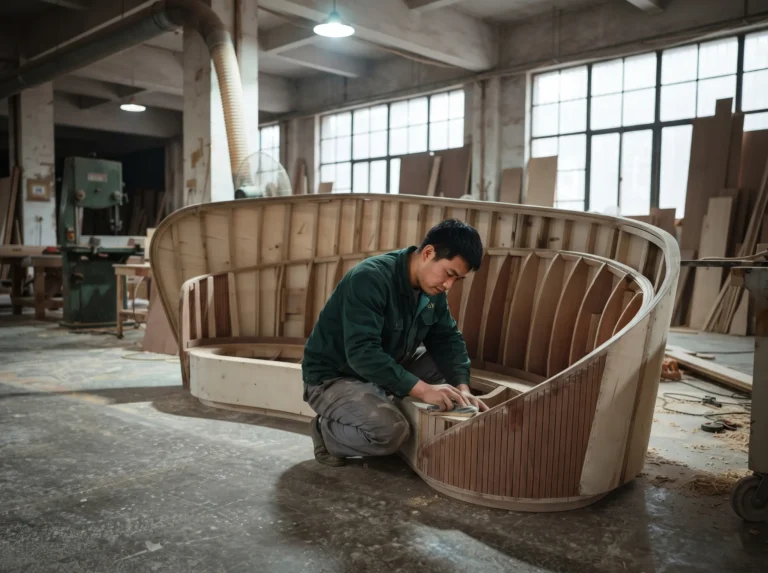
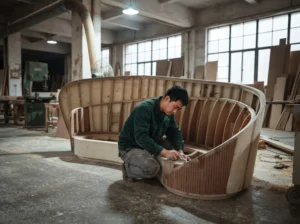
Custom cabinetry means every dimension, panel, and internal configuration is engineered to order, typically for a specific architectural drawing. True custom requires separate cutting files per component, non-standard hardware, and dedicated QC. In Shunde, genuine full-custom capacity is concentrated in a relatively small number of engineering-oriented factories.
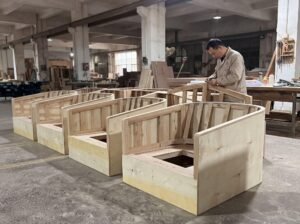
Modular cabinetry sits between the two: standardized carcass modules (widths in 300/400/450/600mm increments and similar conventions) combined flexibly to fit a space, with custom-sized filler panels where needed. This is the quiet workhorse of global project procurement — and, as we will see, the tier hotels actually buy.
Three Tiers, Side by Side
| Dimension | RTA Tier | Modular Tier | True Custom Tier |
|---|---|---|---|
| Product logic | Flat-pack, end-user assembly | Standard modules, installer assembly | Fully engineered to drawing |
| Typical board | 16mm MFC/Particleboard | 16–18mm MFC, plywood options | 18mm plywood, MDF lacquer, veneer |
| Edge banding | EVA hot-melt, 0.4–1mm PVC | PUR or EVA, 1–2mm PVC | PUR, laser or hand-finished, 2mm+ |
| Hardware | Cam-lock/dowel systems, branded hinges | Branded slide rails, hinges, standard connectors | Project-specified, soft-close standard |
| Tolerance expectation | High (DIY assembly must work) | Very high (batch consistency) | High but per-drawing |
| MOQ behavior | Container-friendly, any mix | Per-project, often 50–100+ units | Per-project, negotiable |
| Lead time | 25–40 days | 35–60 days | 60–120 days |
What Each Tier Actually Costs
Price bands below reflect FOB Shunde conventions for melamine-finished carcass products as of 2026 and are subject to verification per project, but the ratios hold remarkably steady.
| Tier | Typical FOB Band (base cabinet) | Where the Money Goes |
|---|---|---|
| RTA | USD 30–80/unit | Board cost, edge banding volume efficiency, packaging engineering |
| Modular | USD 80–250/unit | Hardware brands, thicker board options, module engineering, QC overhead |
| Custom | USD 250–600+/unit | Engineering hours, non-standard cutting, premium finishes, lower line efficiency |
The critical insight is cost structure, not sticker price. RTA factories make money on packaging density and line speed — a 40HQ stuffed with flat packs is the whole game. Modular factories earn on hardware specification and batch management. Custom factories bill engineering time, and their margins live in the gap between your drawing and what their machines can actually repeat.
This is also where the “custom kitchen china” rhetoric trap lives. Many Shunde quotes described as custom are modular carcasses with resized doors and filler panels. You may be paying a 30–60% premium over modular for a genuine but limited upgrade. Whether that premium is justified depends entirely on your project — ask for the cutting file list to verify.
Craftsmanship Signals That Actually Matter
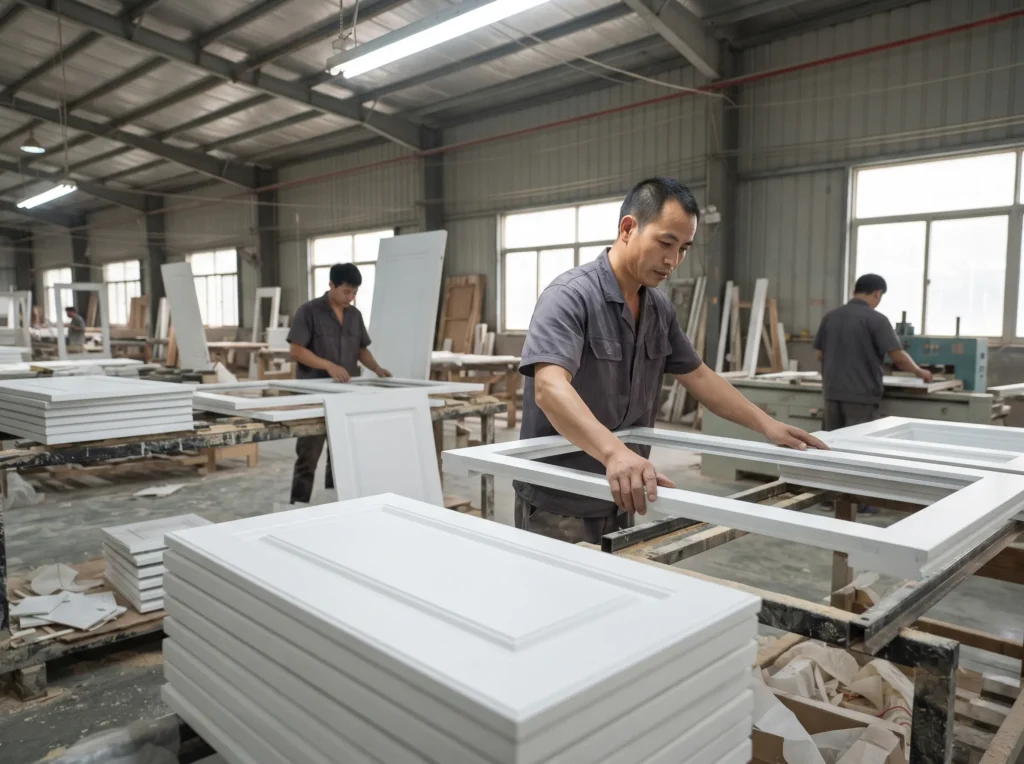
When you inspect a Shunde factory, ignore the showroom. Showrooms are built to impress, often with hardware and boards that never enter mass production. Instead, pull these levers:
| Inspection Point | What Good Looks Like | Red Flag |
|---|---|---|
| Edge banding | PUR glue line, zero visible seam, corners trimmed flush | EVA everywhere, dark glue lines, lifting corners |
| Hinges/slides | Blum, Hettich, DTC or named equivalents, stamped and verifiable | “Same quality as Blum” with unmarked hardware |
| Panel flatness | Diagonal measurements within tolerance across a batch | Visible warp on stacked panels |
| Batch consistency | Random 3 units from different pallets measure identically | “Sample line” pieces that differ from floor stock |
| Drilling accuracy | Dowel holes align without force during test assembly | Assembly requires muscling panels into place |
Why Hotels Rarely Buy the Most Expensive Tier
Here is the counterintuitive part that most sourcing blogs miss: hotel chains, even upscale ones, predominantly procure modular. The reasoning is procurement logic, not budget logic.
A hotel group’s purchasing department scores bids on a weighted matrix that typically emphasizes fire-rating compliance (BS 476 / EN 13501 conventions for international projects), surface wear resistance (abrasion cycles on melamine or lacquer), batch consistency across hundreds of rooms, hardware cycle durability, and installation speed per room-night. A fully custom cabinet scores near zero extra points on most of these criteria while adding 60–120 days of lead time and real risk of room-to-room variation.
Full custom survives in hotels only where architecture demands it: irregular heritage buildings, ultra-luxury suites, vanity units chasing a specific design language. The guest room tower, the wardrobe wall behind every door in a 300-room block — that is modular territory, specified tightly, inspected brutally.
| Procurement Criterion | How Each Tier Performs |
|---|---|
| Fire compliance documentation | Modular strong (standardized test reports); RTA varies; Custom must be re-tested per spec |
| Batch consistency | Modular engineered for it; RTA good; Custom hardest to hold |
| Hardware durability (cycle tests) | Modular typically spec’d at 40k–80k cycles; Custom per project; RTA retail-grade but surprisingly robust in EU channels |
| Installation speed | Modular fastest (trained crews, standardized sequencing); RTA slow in project context; Custom slowest |
| Cost per key | Modular optimal; RTA lowest unit cost but higher labor/assembly risk at scale; Custom premium rarely justified |
These are convention-level observations, subject to verification against your specific group’s FF&E standards and tender documents. We do not speak for any hotel chain’s internal procurement rules.
How Shunde’s Production Lines Actually Divide
Understanding the cluster explains the quoting chaos:
| Zone | Primary Role | Typical Output |
|---|---|---|
| Lecong (trade market) | Display, deal-making, small-order mixing | Samples, small wholesale, buyer services |
| Longjiang | Large-scale upholstered and case goods manufacturing | RTA and modular volume lines |
| Shunde manufacturing belt (incl. Lunjiao, Xingtan) | Panel processing, hardware supply, engineering factories | Modular project lines, true custom shops, component supply |
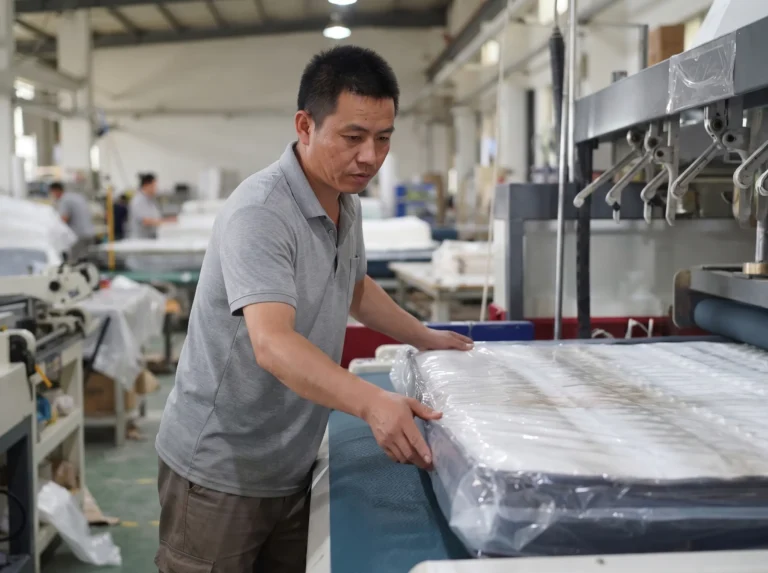
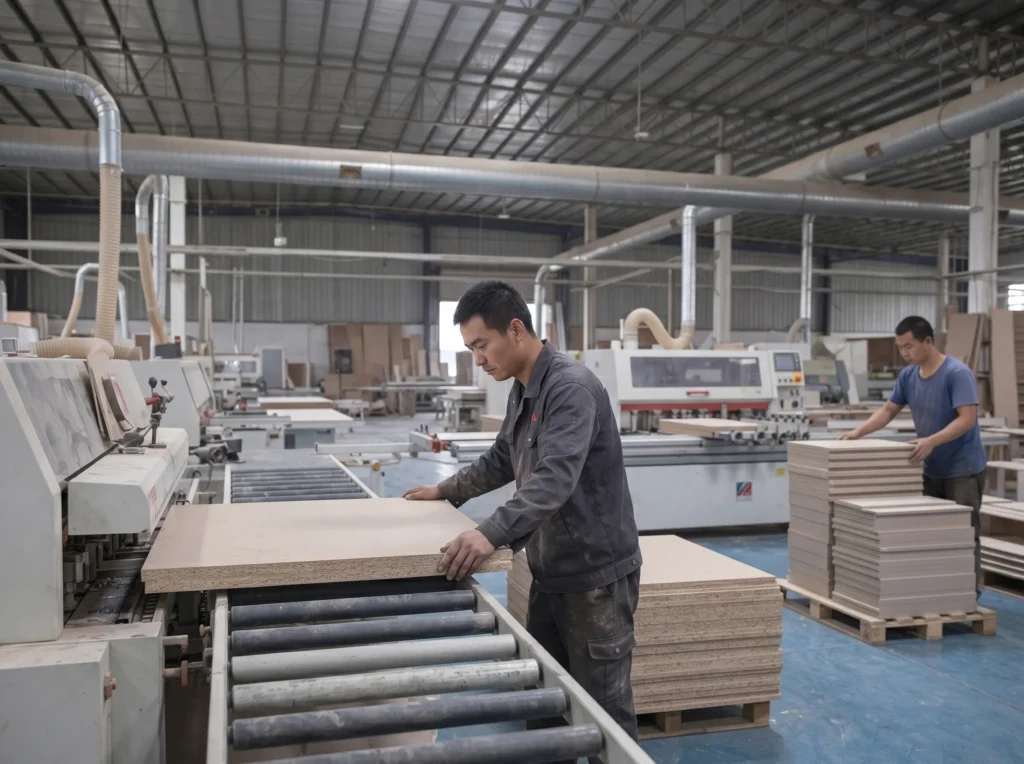
The same factory compound running an RTA line for a European DIY chain, a modular line for a Middle East hotel contractor, and a custom sample shop for design-driven clients is completely normal. When a salesperson quotes you, they are routing your inquiry to whichever line matches your vocabulary — not necessarily whichever tier matches your project.
Danger Zones: Where Buyers Get Burned
The custom rhetoric trap. Covered above — demand cutting files, hardware brand names in writing, and a production-line declaration in the contract. If the factory cannot state which line produces your order, the quote is marketing, not engineering.
Sample versus mass production. The polished sample with PUR edging and Blum hinges arrives; container number three shows EVA banding and unmarked slides. Mitigation: specify in the purchase contract that bulk goods must match the confirmed sample’s materials and hardware list, with a third-party inspection (SGS, TÜV, QIMA) at mid-production and pre-shipment. Inspection standards should be agreed in writing, subject to verification per project.
Missing acceptance criteria on project orders. Engineering orders fail when “good quality” is the only written standard. Attach a spec sheet covering board brand and thickness, glue type, hardware brands and cycle ratings, finish abrasion class, tolerance ranges, and a defect allowance table. Verbal assurances from a friendly sales manager are not a quality standard.
Which Tier for Which Buyer
Overseas importers and wholesalers: RTA is your natural tier, but audit the factory’s European channel experience — tolerance discipline learned from DIY retail programs is the real differentiator, not the price list. For mixed container programs, modular carcasses give you better margin room and fewer after-sales complaints.
Project contractors and fit-out firms: Modular, specified tightly. Build your spec sheet before you request quotes, and force every bidder to quote against identical criteria. This is the single most effective move to cut through Shunde’s vocabulary chaos.
Hotel FF&E buyers: Modular for guestroom standards; custom only where the architecture forces it. Score bids on compliance documentation and batch consistency evidence, not showroom polish. Ask factories for previous hotel project references and, where possible, contact the FF&E consultant who managed acceptance.
Cross-border e-commerce sellers: RTA with ruthless packaging engineering — drop-test performance matters more than panel pedigree for your channel. Verify the factory’s experience with your destination market’s assembly-skill level; a cam-lock system that frustrates your reviewers will destroy your listing.

Frequently Asked Questions
Is RTA furniture always cheap and low quality?
No. European retail-channel RTA is among the most tolerance-demanding cabinet production on earth, because end-user assembly failures translate directly into returns and delisted programs. Cheap RTA exists — badly banded, warped, with mystery hardware — but the tier itself carries no quality verdict. The factory’s channel history tells you far more than the three letters in the product name.
What standards do hotel FF&E projects actually evaluate?
Conventionally, international hotel projects weigh fire-rating documentation, surface abrasion class, hardware cycle-test ratings, dimensional tolerance across batches, and installation logistics. Exact weightings and thresholds vary by group, brand tier, and region, and are subject to verification against the project’s actual tender documents. Never quote a generic “hotel standard” back to a factory — pull the criteria from your project’s spec sheet.
How do I verify a factory’s real capability during a visit?
Skip the showroom and walk the floor: check edge banding glue lines on actual work-in-progress, open hinge cartons to verify stamped brands, measure diagonal tolerance across randomly selected panels from different pallets, and ask which physical line will produce your order. Then confirm the same details in the written contract with inspection rights attached.
How should an engineering (project) quotation be broken down?
Insist on a split showing board material and thickness per component, hardware brands and quantities, edge banding specification, finish class, packaging spec, and tooling/engineering charges separated from unit prices. A lump-sum quote hides the levers you need to negotiate — and hides where a factory plans to quietly downgrade.
How do Shunde cabinets compare with Nankang’s?
Both are major Chinese cabinet clusters with very different centers of gravity. Shunde (with its Longjiang manufacturing base and Lecong trade infrastructure) skews toward export-oriented RTA, modular project supply, and design-adjacent custom work, supported by deep hardware and component supply chains. Nankang in Jiangxi has historically concentrated on solid wood and domestic-market value segments. For export project procurement, Shunde’s ecosystem offers more integrated sourcing, though individual factory quality still decides everything.
What’s Your Project?
Are you sourcing for a retail program, a fit-out contract, or a hotel block? Tell us the tier you are being quoted and the destination market — we read every comment, and the patterns we see on the ground shape our next factory-level reports from Shunde.
Recommended Resource
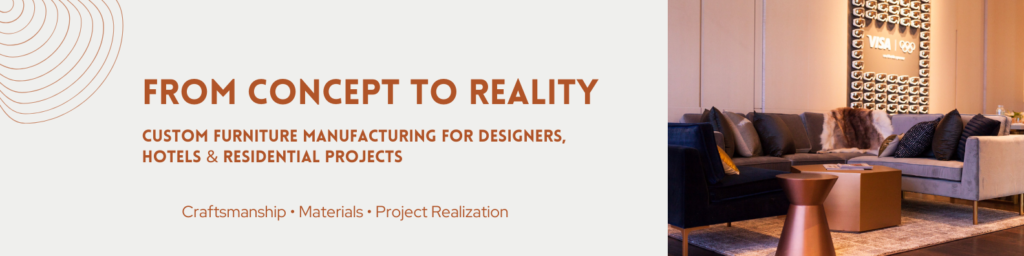
Interi Furniture specializes in custom furniture manufacturing for residential, hospitality, and commercial projects. Their experience in materials, craftsmanship, and project realization makes them a valuable resource for designers and buyers seeking tailored furniture solutions from China.