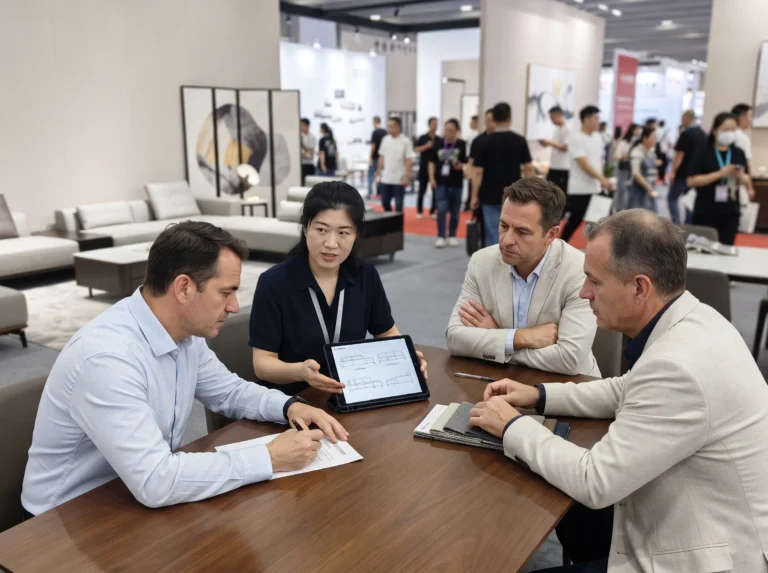


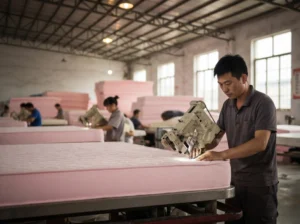





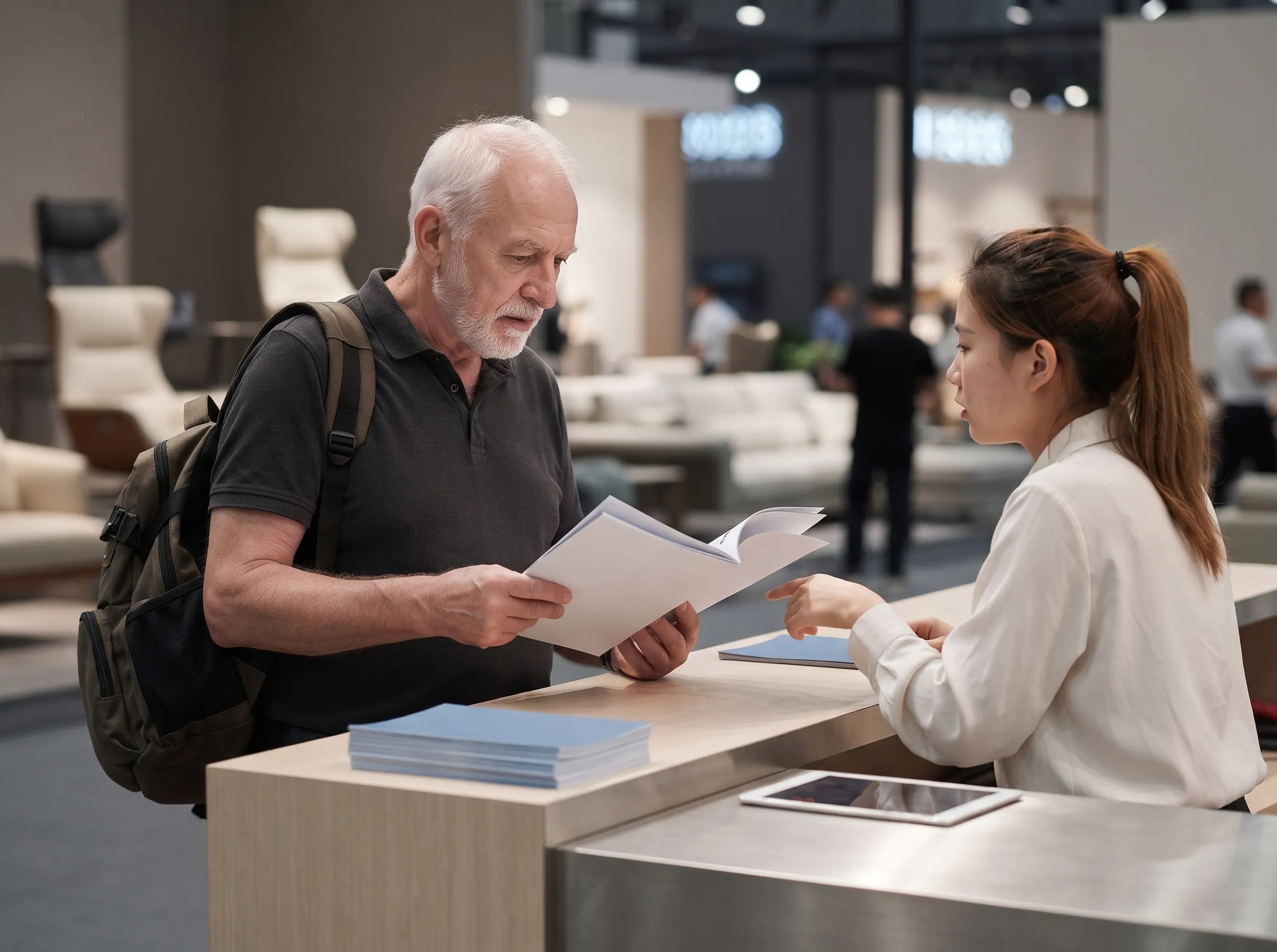
I’ve spent enough hours walking furniture exhibition areas at Canton Fair to know how this usually goes. A seller lands with a list of booth numbers scraped from a third-party directory, gets pulled in by a roll-pack machine hissing in the corner, and leaves with a WeChat contact, a glossy catalog, and a quote that falls apart three weeks later. Mattress sourcing Canton Fair can absolutely work — I’ve seen it work — but it works for buyers who walk in suspicious. Not cynical. Suspicious. You verify the plant exists, the certificate matches the SKU, the compressed sample you watched deflate was actually built for ocean freight, and the duty math was done by someone who reads scope rulings for a living.
One thing before anything else: I’m not going to call it a “mattress hall,” because I can’t confirm the current session has one, and neither can you without the official exhibitor list for this phase. Mattress suppliers show up across the furniture exhibition areas. Some sessions cluster them, some don’t. Treat the layout as subject to official confirmation and plan your route from the current directory, not from last year’s floor map.
What you’re actually buying
Here’s the reframe that saves people money. You’re not buying comfort. Comfort is what your marketing page sells. What you’re buying is a box that survives a container, a compressed core that opens flat on a customer’s bedroom floor instead of leaving a crease down the middle, and a folder of documents that stays boring under pressure.
That third item is where cross border mattress sourcing quietly kills otherwise good businesses. The mattress gets five-star reviews for eight months. Then a state regulator, a marketplace compliance team, or a freight audit asks a question, and the folder turns out to hold a foam certificate from 2023, a factory photo from a different plant, and a test report for a ticking your production run stopped using in spring.

Foam certification is not mattress compliance — say it twice
This distinction gets blurred at almost every booth I’ve stood at, sometimes innocently, sometimes not.
CertiPUR-US certifies flexible polyurethane foam. That’s it. Not the cover. Not the adhesive. Not the finished mattress, and definitely not the company. It’s a legitimate and useful signal for foam quality — emissions, content, durability — and plenty of buyers and retailers ask for it. But if a salesperson tells you “we have CertiPUR so the mattress is compliant,” that sentence tells you more about their compliance literacy than about your risk.
For general-use mattresses sold into the U.S., 16 CFR Part 1632 (smoldering ignition) and Part 1633 (open-flame performance for mattress sets) are the federal floor, where they apply. And this is the part a lot of sourcing guides skip: depending on the product and who the responsible party is, you’re also dealing with conformity certification — the GCC — plus tracking labels, testing support, and recordkeeping. CPSC lays all of this out on its mattress FAQ page. Read it before you read anything a factory sends you. Regulatory specifics here are subject to official verification, and I mean that as an instruction, not a disclaimer.
Reading a booth in five minutes
I don’t trust banners. I’ve watched a trading company rent a factory’s showroom and staff it with the factory’s own salespeople on a revenue-share, and every visitor walked away believing they’d met the manufacturer. It happens.
What I look at instead:
| Signal | What it might mean | What I check | When I walk away |
|---|---|---|---|
| “Direct factory” on the backdrop | Could be real, could be rented credibility | Business license scope, plant address, whether a factory visit is possible this week or politely deferred forever | Deferral with no alternative evidence — no dated line photos, no utility bill, no named QC manager |
| An OEM/ODM program pitch | Real customization capacity | Who owns the BOM, who signs off on spec changes, whether retained samples are kept per batch | “Our engineers will confirm” with no engineer introduced |
| A factory’s own brand on display | Dual-track operation | How they keep brand orders and OEM orders from contaminating each other | They can’t describe separate QC for the two tracks |
| A sourcing company booth | Portfolio coordination | Whether they’ll name their factories, own defects, and let you inspect | Named-factory refusal, defect responsibility passed to “the plant” |
| A roll-pack equipment display | Logistics capability | Validation data for your construction — roll diameter, film system, carton spec, storage window | “No quality risk from compression,” said with a straight face |
The single most revealing question I ask is boring: “Tell me about a shipment that went wrong.” A supplier who can walk through a failed lot — what happened, who caught it, what changed in the process — is a supplier with a working quality system. A supplier who says “never happened” is either lying or hasn’t shipped enough to know.

Picking the supply model
When buyers type oem mattress China into a search bar, they usually want one thing: someone who’ll build their mattress without forcing them to order a container of someone else’s design. Fair. But the acronym matters less than the responsibility map. I’ve put the comparison below — with the caveat that MOQ figures move constantly and anything a booth tells you is a negotiating position, not an industry standard.
| Model | Who really controls what | MOQ reality | When it’s the right call | The trap |
|---|---|---|---|---|
| White-label OEM | Factory builds your chosen construction under your label | Tied to material slots and line time; negotiable for a clean, simple SKU | First controlled market test | You get a me-too product and compete on price from day one |
| Custom ODM | Factory engineers around your feel targets and cover design | Higher — sampling rounds, revisions, approval loops | A brand with real differentiation planned | Six months of sampling while your competitor ships |
| Factory stock program | Their existing export SKUs, fast | Lowest friction, fastest ship | Hotel pilots, emergency replenishment | You’re selling their catalog with your sticker |
| Hybrid | OEM core plus factory-validated comfort modules | Staged; grows with your SKUs | Scaling after one product proves demand | Spec drift between batches nobody flags |
And a note on the phrase itself: “a private label mattress manufacturer China” reads the way buyers search, not the way anyone speaks. On the ground you’d say you’re looking for a Chinese private-label mattress manufacturer. Same intent, and the natural phrasing is what your page should sound like — Google has been fluent in searcher intent for a long time.
Compression: the machine is a demo, the data is the product
Every mattress booth with a roll-packer puts on the same show. Queen mattress, big machine, satisfying vacuum sound, neat little carton. It’s genuinely impressive the first time. By your fourth booth it’s wallpaper.
What the show doesn’t tell you: whether your specific construction — your foam densities, your border rail, your quilted cover — can survive being compressed for the length of an ocean shipment plus warehouse dwell time and still open flat in a customer’s bedroom. Those limits aren’t universal. They’re product- and process-dependent, and anyone who quotes you a generic “maximum compression days” number without testing your build is quoting folklore.
| Variable | Why it matters | What I ask for | The folklore answer |
|---|---|---|---|
| Foam spec per layer | Recovery speed and support come from the build, not the film | Documented density/spec per layer, test method, tolerance, sample location | “High density foam” with no document owner |
| Border construction | Edge collapse is a top return driver for boxed mattresses | Border rail spec, seam strength target, dimensional tolerance | “Strong edge” as a complete technical answer |
| Film and bag system | Moisture protection and shape memory | Validation for the actual film/bag combo and vacuum process, not a spec sheet for a different one | One film thickness number offered as proof |
| Carton and pallet plan | This is what actually meets the courier | Packaging test plan matched to parcel, LTL, or FCL flow — drop, vibration, stack | A raw ECT number with no test logic attached |
| Compressed storage window | Set-in damage happens before the customer opens the box | Supplier-stated limit tied to your construction, climate, and transit time | “Keep it compressed as long as you want” |
| Opening recovery acceptance | The first 30 seconds decide the review | Agreed measurement time, recovery range, visible-defect criteria | “It’ll be fine after a day” with no agreed range |
My working rule: the sample compressed at the booth proves the machine exists. Your pre-shipment inspection, with an agreed recovery protocol on units from the actual production run, proves your product exists.
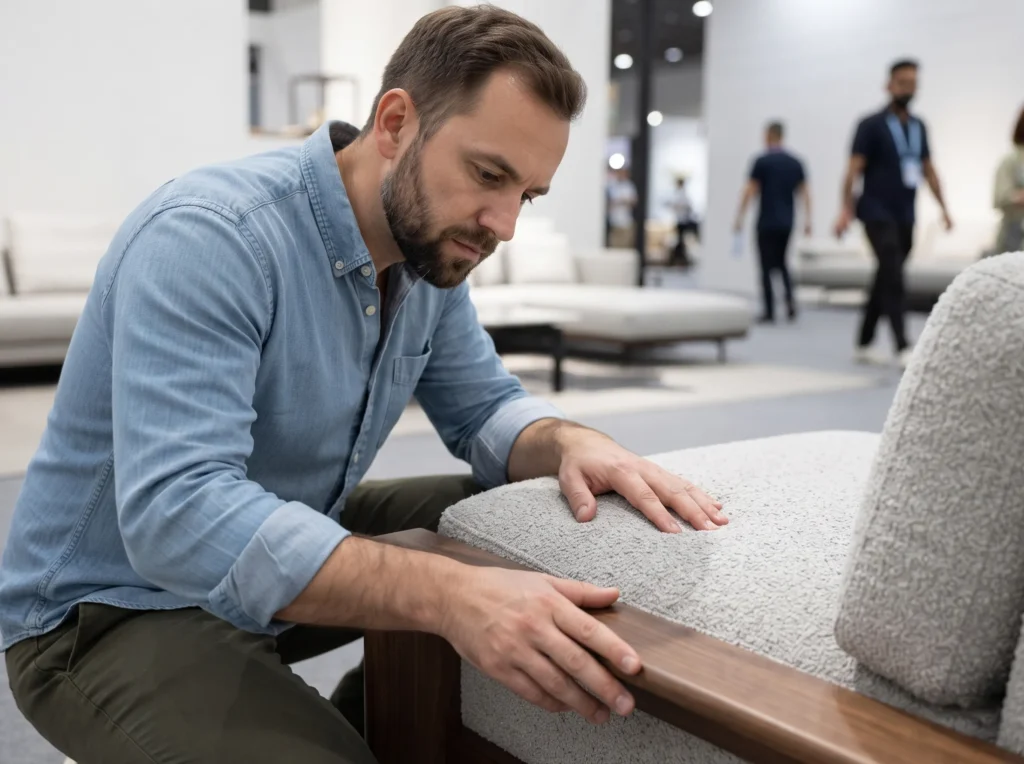
The tariff conversation nobody wants to have
I’ll be straight with you: I’m not going to quote you a duty rate, and you should be suspicious of any article that does without a live case number. What I can tell you is where mattresses get buyers into trouble.
The failure pattern looks like this. A seller approves a construction, pays a deposit, designs packaging around a landed cost that assumed a favorable classification — and then a broker or, worse, a customs review says the product as imported falls inside an antidumping or countervilling order’s scope. Suddenly the margin wasn’t a margin. I’ve watched this end partnerships. Furniture Discover’s antidumping early-warning article exists because this category punishes late homework more than most.
So before design approval, not after:
| Gate | The question | Who answers it |
|---|---|---|
| Classification | What HTS does this exact construction land in, and why? | Your broker, in writing |
| Order scope | Is there a current AD/CVD order covering this product, from this origin, as imported? | Federal Register and Commerce scope materials, current version |
| Origin logic | Do the production steps and material origins support the origin story you’re telling? | The factory’s records, audited, not narrated |
| Landed cost | What does the math look like under a conservative duty scenario, not the happy one? | Your own spreadsheet, with returns and inspection in it |
| Evidence file | If challenged, what documentation connects BOM to invoice to entry? | Your records discipline, built before shipment |
One more myth worth killing: moving final assembly to a third country does not automatically rewrite origin. The rules look at substantive transformation, and “screwdriver assembly” has been losing that argument for decades. Get a written origin position before you engineer around a problem that might not be solved that way.
Europe and the UK: fewer myths, more homework
The EU and UK questions I get are usually some version of “do I need CE on a mattress?” The honest answer: don’t assume it either way. CE marking only applies where a specific CE legislation covers the product — it’s not a general seal of product safety. GPSR has been in force in the EU since December 13, 2024 and pushes general product-safety duties, REACH governs chemicals, and various EN standards give you test methods and performance references. Those are different instruments doing different jobs. Verify what applies to your SKU, your market, and your sales model, and stop when a factory bundles them into one certificate folder with a CE logo on the cover.
Negotiating MOQ when you’re not a container-load buyer
Some factories genuinely can’t take small orders — line setup and material minimums are real. But more often, the “no small orders” answer is a risk filter, and you can pass it by lowering the factory’s perceived risk instead of begging.
What actually moves the conversation:
- One hero SKU with clean artwork and a frozen spec, not five maybes
- A written inspection plan you’re paying for, so quality work isn’t charity
- Defect definitions agreed before deposit, so “dispute” has a meaning
- A dated ramp: pilot batch, validation batch, quarterly bands — on paper, not promised in a corridor
If a factory won’t document a deviation on a 200-unit pilot, do not expect them to manage a 2,000-unit reorder. That test is the whole point of the pilot.

FAQ
How big should my first order be?
Big enough to run your real process end to end — actual BOM, actual cover, actual compression cycle, actual carton, actual inspection. For most first-time sellers that’s smaller than the order they want to brag about. I’d rather see 150 units with full documentation than 600 units and a prayer.
Does roll packing actually save money?
Sometimes, and less than the booth math suggests. The volume savings are real; so are the film, the slower line, the damaged edges, and the returns from customers whose mattress opened with a crease. Run the comparison on landed cost plus expected returns, not on container cartoon math.
What do I need to sell mattresses on Amazon in the U.S.?
Start with the federal side: whether your SKU falls under 1632 and 1633, what testing backs your construction, and who the responsible party is for GCC, labels, and records. Then check Amazon’s current documentation requirements, which change more often than the statute does. CertiPUR-US may be part of your foam story. It is not the compliance story.
How do I check whether AD/CVD hits my product?
Exact finished product, exact components, exact origin story, broker’s written classification — in that order. Then current Commerce and Federal Register scope materials. A factory saying “many customers ship like this” is a rumor, and customs doesn’t grade on rumors.
How do I get a bigger factory to take my small order?
Stop selling your smallness. Sell your control: one frozen SKU, prepaid inspection, agreed defect terms, and a dated ramp with real volume behind it. Factories don’t fear small orders. They fear chaotic ones.

The last thing before the deposit
You’ll be tempted to wire money in the glow of a good booth conversation. Don’t. Go home, send the supplier a list: license, plant evidence, BOM with named sources, finished-SKU test files, GCC and traceability support where applicable, packaging validation for your exact build, origin documentation, and the inspection protocol you’ll be paying for. The factory that answers that email completely and without theater is your factory.
Which piece of that list would sink your current supplier if you sent it today?
Recommended Resource
Interi Furniture specializes in custom furniture manufacturing for residential, hospitality, and commercial projects. Their experience in materials, craftsmanship, and project realization makes them a valuable resource for designers and buyers seeking tailored furniture solutions from China.