







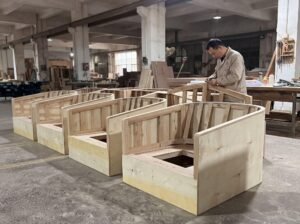
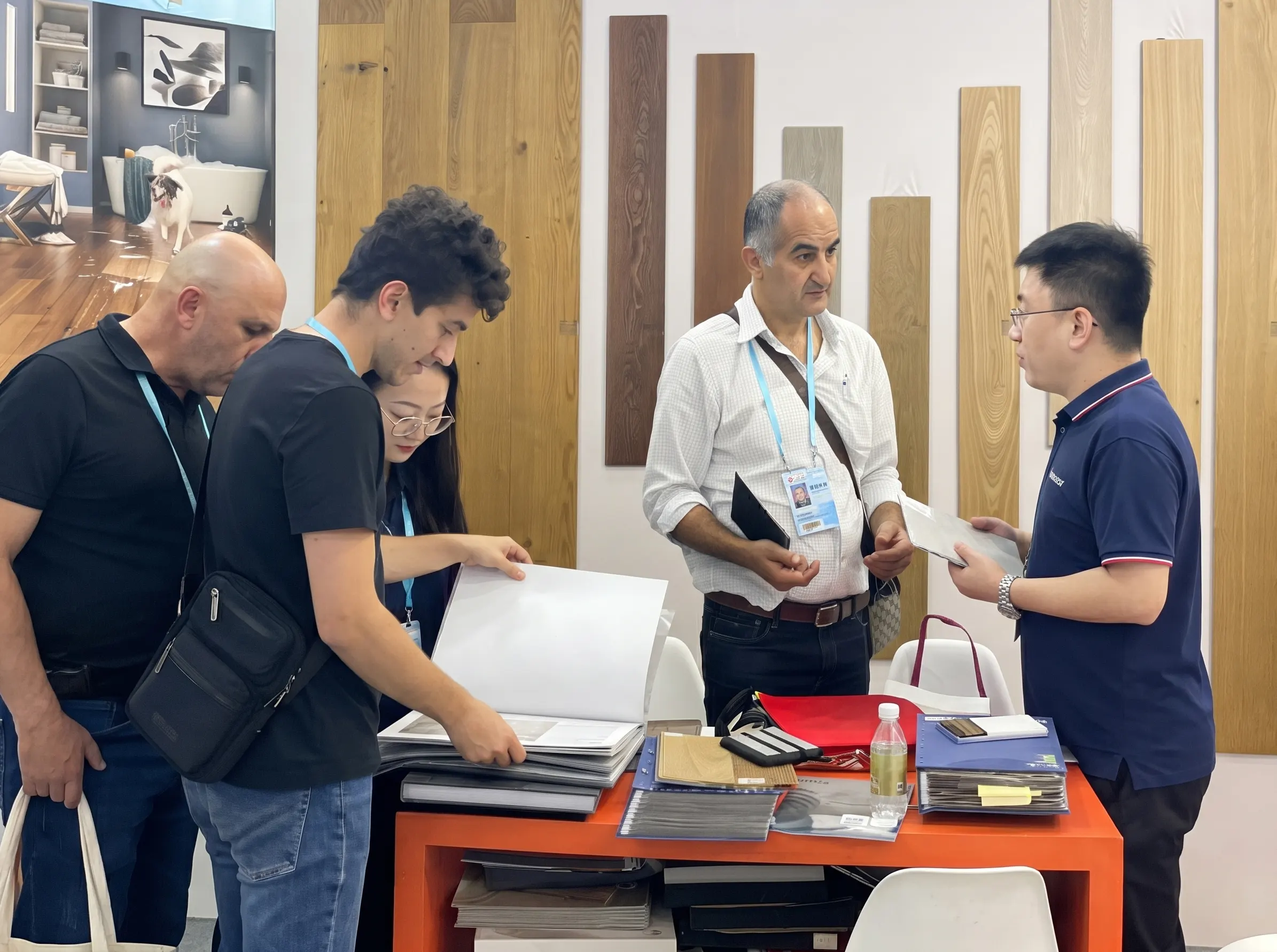
Most buyers land at Canton Fair with a sofa list. Living room, bedroom, dining. Outdoor never made the spreadsheet, so it never made the schedule.
That’s a miss if your market has any real patio demand. This category rewards homework and punishes improvisation. And the word “outdoor” on a hang tag? It certifies nothing. The distance between a program that holds up and a container of warranty claims comes down to three things: specs someone verified, a supply chain someone checked, and timing counted backward from the shelf. This guide covers all three, starting with how to find patio furniture Canton Fair suppliers actually worth your jet lag.
The Section That Never Makes the Itinerary
Spend twenty minutes near the main furniture aisles during peak hours and you’ll see it. The crowd goes where the lists point. Outdoor gets walked past, usually without a second thought, and most buyers never feel the loss.
Sometimes that’s the right call. If your customers live where a balcony is for drying laundry, keep walking. But if you sell into the US, most of Europe, or Australia — places where patios and garden dining are genuine habits — skipping this category hands assortment space to whoever strolls it properly.
There’s a second reason to give it hours: outdoor is brutal on specifications. The product lives outside. Months of UV. Rain whenever it feels like raining. Heat that cooks cheap resin soft. A buyer who can talk resin formulation or coating systems gets treated like a professional inside five minutes. Everyone else gets a smile and a catalog. That technical conversation is the entry fee for garden furniture Guangzhou programs just as much as for a small private-label launch — and it’s a lot cheaper to pay it on the plane than at the booth.

The Profit Story, Checked at the Door
Somewhere along the way, “outdoor pays better” turned into trade folklore. Sometimes true. Sometimes the opposite. There is no blanket premium, so keep that skepticism handy when a booth trots the claim out.
Where real margin actually shows up: design, first of all. A collection with a real identity — coherent look, decent proportions, hardware that doesn’t scream budget — holds pricing for a season or two. Generic six-piece dining sets never did and never will.
Then there’s the spec gap itself. Two wicker strands can photograph identically and live entirely different summers. Read that gap fluently and you’ll know whether a 30% price difference is honest material cost or a margin grab. Stay blind and you pay one way or the other — at the table now, or through claims and one-star reviews a year from now.
Freight deserves two minutes of cube math, not an assumption. Knock-down frames and stackable chairs often buy real efficiency in a 40HQ. Then again, some sets ship with legs pre-assembled and eat the whole advantage. The packing list settles it. Look before you assume.
None of this is automatic. That’s the point. It goes to buyers who walk in with requirements written down and landed cost already modeled — not the ones sketching strategy over hotel breakfast.
Who You’ll Actually Meet Out There
Outdoor exhibitors spread across the furniture and garden-related zones of the relevant phase, and the map changes edition to edition. What follows matches recent fairs — subject to official confirmation, like every location in this piece.
| Exhibitor Type | What the Booth Looks Like | Typical Markets | Verify On Site | Where Trouble Usually Starts |
|---|---|---|---|---|
| Direct factory | Deep range in one material; tooling numbers and MOQs roll off the tongue | US, EU, Australia | License, factory address, production records | Inflated capacity; overflow quietly subcontracted in peak season |
| Trading company | Wide catalog, thin answers on production | Varied | Which factory actually builds your quoted items | Nobody clearly owns a quality failure |
| Metal/frame specialist | Welding and coating talk comes easy; tour footage ready | EU, Middle East | Coating in-house or not; thickness records | Weak grip on outside coaters |
| Cushion/fabric shop | Swatch walls; OEM offers arrive with spec documents | US, EU | Fabric origin paperwork; stitching samples | Color drifting between batches |
| Garden generalist | Furniture sharing space with décor, lighting, small goods | Price-driven markets | Is furniture the business or a side bet | No spares, no after-sales setup |
Forget the factory-versus-trader debate. Neither label predicts reliability. Ask every supplier the same question: show me evidence. Production records. Incoming inspection logs. Material traceability. Paper answers beat smooth talk, whatever the business card says.
What “Outdoor Grade” Is Really Worth
The label won’t tell you this part. “Outdoor” is a marketing word. No lab certifies the adjective; no standard enforces it. What exists underneath is a stack of specifications — the resin system in the wicker, dry-film thickness on the powder coat, colorfastness ratings on the fabric, the corrosion class of the fasteners.
Get the stack right and the furniture survives its climate. Get it wrong and you already know the ending: showroom beauty, first August turns it chalk-white. That outcome was decided months earlier, at the specification stage, long before anyone discussed shipping marks.

Materials, One at a Time
Universal grade rankings don’t exist here. A-grade wicker criteria mean nothing applied to aluminum. What exists per material is a spec set, plus documents that either support it or fold under pressure. Work from this.
| Material | Check at the Booth | What Matters Underneath | The Question That Catches Thin Files |
|---|---|---|---|
| PE wicker / synthetic rattan | Resin type, virgin vs. recycled share, UV package | Recycled content isn’t a defect by default — performance standards permit it where specs hold. Judge formulation, strand section, weathering data. | “Weathering report for this exact strand, please.” |
| Cast aluminum | Dry-film thickness records, pretreatment, adhesion | One thickness number proves nothing. The chain — substrate, prep, coat, cure — does the work. | “What’s specified for this program, and how is it measured?” |
| Teslin / textilene | Fabric construction, tensile figures, test methods | “High tensile” is an adjective, not a result. Methods and numbers only. | “Which standard, what result?” |
| WPC / plastic wood | Water absorption, dimensional stability, weathering | A 24-hour soak tells you a fraction. The full profile is what counts. | “Dimensional stability data for this formulation?” |
| Teak / hardwood | Species ID, legality papers, moisture range and how measured | Docs must match your market’s timber rules; kiln claims need a number plus a method | “Moisture content for this batch — measured how?” |
| Outdoor fabric | Fiber, dye method, colorfastness, water behavior | Solution-dyed acrylic is one strong option, not the law. Buy the performance your use case needs. | “Colorfastness by which method?” |
Wicker trips people up constantly, so one clarification. Virgin versus recycled is one variable among several, not a verdict. Standards covering outdoor plastic seating allow recycled content when performance requirements are still met. The professional move is specifying performance — weathering resistance, strand integrity, color stability — and demanding test evidence on the exact strand in your order. That filters the bad actors regardless of which resin they run.
Fabric With a Famous Name
This is where label games get expensive. Branded outdoor textile moves through several channels. Some factories buy via authorized distribution and keep the paperwork. Some buy genuine surplus with no authorization documents attached. Some print a logo onto plain polyester and bet the fade arrives after the final payment.
The counter is unglamorous. Ask for original purchasing documents, fabric identification, batch records. Where the order justifies it, confirm the source through the brand’s official support or authorized channels. A swatch plus a generic certificate proves nothing — judge any certificate on authenticity, scope, and whether it matches the material in the box. And weigh the honest alternative: unbranded fabric with documented equivalent performance costs less and may fit the program fine. Branding needs, warranty exposure, budget. Weigh all three, not just the logo.
Timing, Counted Backward From the Shelf
Northern Hemisphere spring is the beat most buyers know. It isn’t the only one. Australia flips the calendar. Tropical markets don’t have one big season at all — they run on rain, humidity, and hotel project cycles. Build your clock around your market, not someone else’s.
| Destination Market | Selling Season | Planning Consequence | The Usual Casualty |
|---|---|---|---|
| North America / Northern Europe | March–August roughly, resets landing early spring | Count back from warehouse arrival through transit, inspection, production | Late orders catch half a season, maybe |
| Australia / Southern Hemisphere | Peak around October–March | A separate cycle that collides with NH peak on shared lines | Capacity fights with NH programs |
| Tropical / year-round | Demand follows rain, humidity, hospitality | Moisture performance outranks sun ratings | Dry-season specs dying in wet climates |
| Hospitality / projects | Pinned to opening dates and contracts | Milestone planning, penalty awareness | Delayed projects compressing QC windows |
For a seasonal run, the sequence goes like this. Supplier evaluation, samples, material sign-off, packaging validation — each gets real calendar, not leftover calendar. Then the production talk: raw material availability, line capacity, customization load, and the Chinese New Year shutdown that quietly removes five to six weeks from Q1 every year. Many Foshan and Shunde factories close entirely; the good ones will tell you exactly which weeks. Book pre-shipment inspection before dispatch, and pad transit because customs keeps its own schedule. An autumn fair visit works as a checkpoint for next spring — shortlist ahead, confirm specs on the floor, approve orders after. The fair is a milestone, not the deadline. Your in-store date is the deadline, and either the whole chain reaches it with specs intact, or it doesn’t.
Reading Test Reports the Skeptical Way
Every supplier says UV resistant. Every one says waterproof. Words are free at the fair; reports are where money and trust live.
| Test Area | What It Measures | Method Reference | What to Demand |
|---|---|---|---|
| Accelerated UV weathering | Degradation, color shift under simulated sun | Fluorescent UV methods such as ASTM G154 — hours alone mean little without cycle conditions and evaluation criteria | Full report: equipment, conditions, hours, ratings |
| Water behavior | Rain and pooling response on fabric and cushions — distinct properties | Spray and hydrostatic methods matched to the actual component | Method, test object, pass grade |
| Salt spray | Coating and hardware corrosion behavior | Controlled environments such as ASTM B117 — standalone results don’t predict field corrosion | Standard, specimen condition, duration, defect criteria |
| Colorfastness | Rubbing and light stability | Graded crocking and lightfastness methods | Cycles, ratings, cited standard |
| Strength and stability | Load-bearing, structural stability | Destination-market structural standards for the category | Standard, load values, results |
Two habits do the protecting. Match every report to the shipment — model, formulation, batch — because last year’s catalog paper certifies nothing in this container. And run your own pre-shipment inspection on the first order, keeping physical samples. Thick supplier paperwork doesn’t replace that.
The Audit Questions That Matter
Standard audits cover labor and the basics. For outdoor, dig into process. Powder coating — in-house or outsourced, and where do the records live either way? Wicker extrusion — owned or purchased, and what checks incoming material? UV testing — every batch, every program, or once for the catalog?
Own equipment can mean tighter control. It doesn’t guarantee quality, just like outsourcing doesn’t guarantee trouble. What separates them is documentation: QC procedures, inspection logs, supplier qualification files, traceability. A factory assembling bought-in parts with disciplined incoming inspection beats one with its own extrusion line and empty test folders. Put quality responsibilities in the contract. Booth-level clarity has a shorter shelf life than your lead time.
Reading the Booth
Come technical, come patient. That’s the posture. The rest is reading what’s in front of you.
| What You See | What It Might Mean | Your Move |
|---|---|---|
| Engineer or owner holding the booth | Real process knowledge, onsite decision speed | Ask process questions; specificity is the tell |
| Samples arrive with spec sheets and test references | This supplier prepares for professionals | Drill into formulation, methods, report scope |
| Vague on resin or fabric origin | A documentation gap somewhere upstream | Written specs first, pricing talk second |
| Next-season prototypes on display | Design investment, appetite for programs | Float a two-season framework; watch what it unlocks |
| Quiet booth, crowded neighbors | Time you’d never get elsewhere | Spend it on the detailed questions — without reading silence as pricing generosity |
On quotes, compare like with like: specification, construction, packaging, included services, landed cost. A number sitting well below the pack isn’t a gift and isn’t a red flag yet. It’s a question. Find the answer — then negotiate the specification sheet itself, not just the discount line.

Three Failure Modes Worth Contracting Against
Wicker that fails quietly. Cheap quotes trace somewhere — different resin, thinner strand, lighter construction. Find the trail before celebrating. Then write the verified spec, resin content and any approved recycled percentage and required weathering performance included, into the PO. Material drift surfaces a year out, inside claims and reviews, and a brittle container has no cheap cure.
Fabric wearing a name it didn’t earn. Paying brand money without verifying supply documentation is a real and routine loss. Confirm origins through official channels where stakes justify it, and specify what identification rides with every shipment.
Claims with no paper behind them. No weathering, water, or corrosion reports for the exact quoted product? Hold approval for the intended outdoor use until verification lands. Documentation first, deposit second. That order never changes.
Different Buyers, Different Angles
Container-program importers should think in seasons, not orders. A credible repeat forecast buys negotiating room on price and capacity, and turns material consistency from a hope into a contract term.
E-commerce sellers testing the category: start narrow. One seating group, one dining set, existing molds, your fabric, your brand. Custom tooling ahead of proven demand is how small sellers end up warehousing products nobody ordered twice.
Garden center buyers live on the calendar. Back-plan production, inspection, freight, and delivery from the reset date, and tie a replenishment clause to actual sell-through. The reset won’t wait for a late container, and no discount covers missing it.

FAQ
Is the outdoor section worth real fair time?
If your market buys outdoor living, go walk it properly — and give it more than twenty minutes between sofa appointments. If your market doesn’t, don’t. Decide from your own assortment plan, not from folklore about the category.
How do I judge wicker quality from a booth?
You don’t judge it by looking. Ask for the formulation, the recycled content, the UV package, and weathering reports tied to the exact strand in your quote. Recycled resin is acceptable when performance specs hold, so specify performance rather than just where the resin came from.
What’s the actual deadline for spring orders?
Take your required arrival date and subtract transit, customs, inspection, and production. Subtract Chinese New Year too if it lands inside your window — that’s five or six weeks gone from Q1, every year, no exceptions from the calendar itself. Orders placed late in the cycle risk the season. There is no universal ordering month; there’s only your arithmetic.
How do I verify UV and weather resistance?
Get the third-party report covering the actual model, formulation, or batch, and read the hours next to method, conditions, and pass criteria — hours by themselves don’t convert to years of service life. Add first-order pre-shipment inspection with retained samples. No evidence, no approval for outdoor use. Simple as that.
Is outdoor more profitable than indoor?
Some pieces carry differentiated pricing. Whether you keep any of it depends on sourcing cost, freight, distribution, returns, and warranty exposure. Where a premium exists, it goes to buyers who verified materials and controlled total cost — not to buyers who assumed it was waiting on the shelf for them.

Your Turn
Which market are you buying outdoor furniture for, and what actually decides your supplier — durability, price, lead time, customization? Tell us your situation in the comments. The next guide Furniture Discover writes may start with your question.
Recommended Resource
Interi Furniture specializes in custom furniture manufacturing for residential, hospitality, and commercial projects. Their experience in materials, craftsmanship, and project realization makes them a valuable resource for designers and buyers seeking tailored furniture solutions from China.