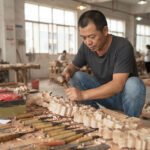



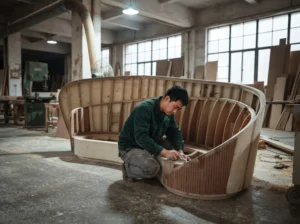


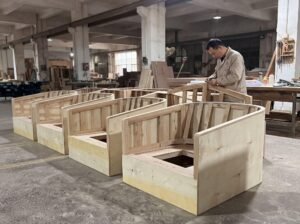
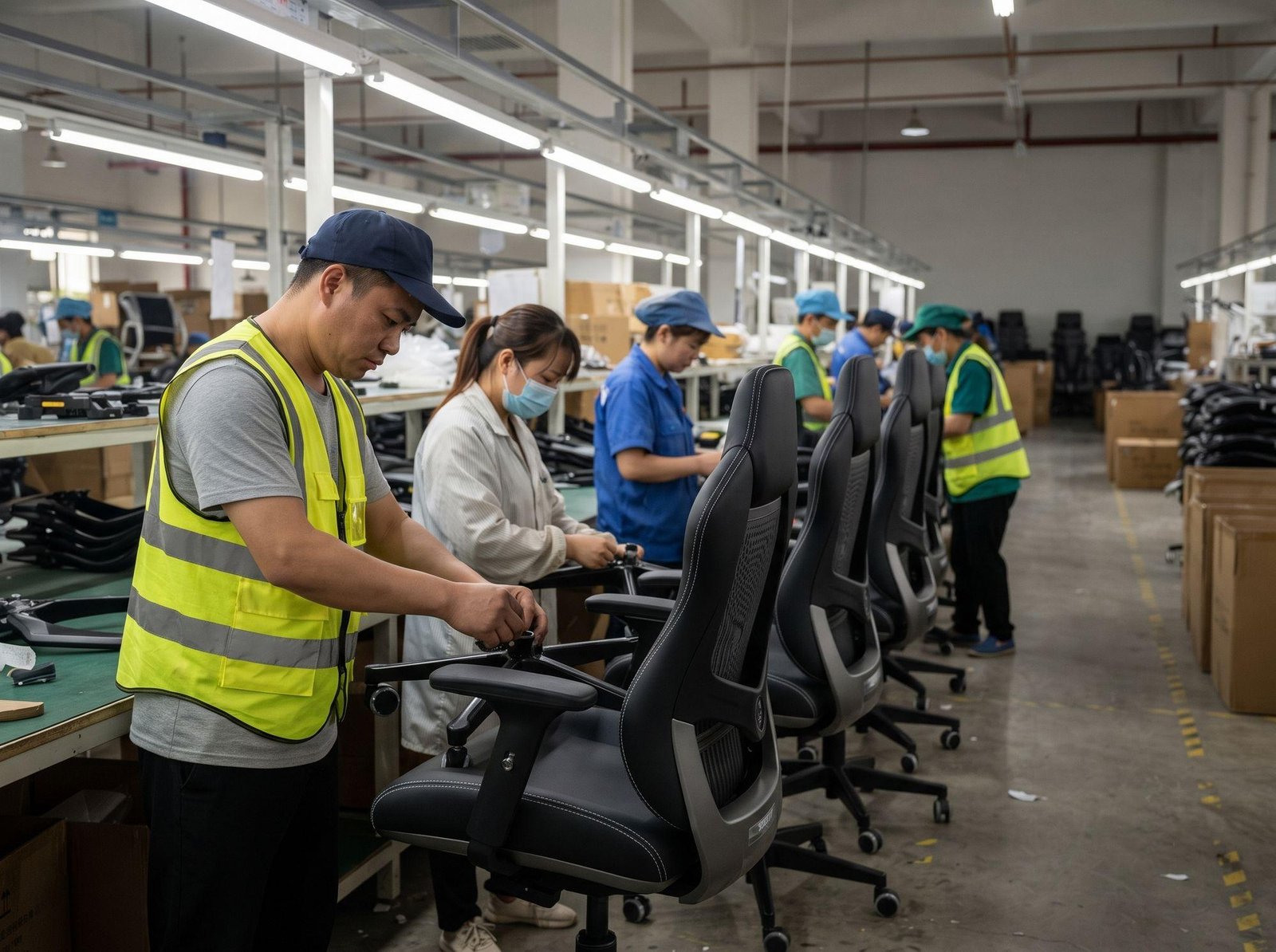
Sit in any office chair right now. The gas lift beneath you, the mesh pressing against your back, maybe even the entire frame—odds are about one in three that some piece of it left a factory in Anji. Never heard of it? Most people haven’t. Anji is a county in Zhejiang Province, barely 600,000 people, tucked into the bamboo hills of eastern China. And yet in 2025 alone, this place pumped out 31.15 billion RMB worth of chairs. Shipped 21.75 billion RMB abroad. To over 80 countries.
Let that sink in. A county smaller than most American suburbs is the Anji office chair capital of the planet.
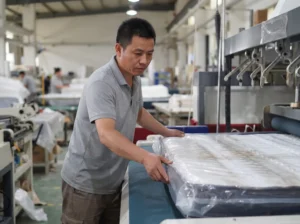
Most buyers we talk to picture Chinese furniture production as this vague, scattered thing. A factory here, a workshop there, all spread across some giant map they can’t quite pin down. That’s not how Anji works. Anji isn’t scattered. It’s dense. Tight. Almost claustrophobic in how interconnected everything is. You can stand in the middle of a chair assembly plant and literally see the mold shop, the mesh weaver, and the carton supplier from the window. Fifteen minutes. That’s the radius. This article is about how that happened, what it looks like when you actually walk the floors, and—more importantly—when Anji is the right call for your money and when it isn’t.
Bamboo Baskets to Swivel Chairs: The Weird Origin Story
Anji’s chair story doesn’t start with engineers or export agents. It starts with bamboo. For centuries, this county was the bamboo capital of China. Baskets, stools, woven furniture—generations of families knew how tension worked, how a seat carries weight, how materials bend and hold. That sounds romantic, but it mattered. When a local farm-tool factory cobbled together China’s first five-wheel swivel chair in 1981, the workers weren’t inventing seating from scratch. They were translating craft knowledge their grandfathers had into plastic and steel.
That first chair? Ugly. Wobbly. But it spun. And in a country where office culture was just beginning to explode, that was enough.
By the mid-90s, workshops were multiplying like weeds. Copy the mechanism, tweak it, sell it. The local government smelled opportunity and poured concrete—roads, logistics parks, export zones. What started as one weird experiment became a full-blown China chair manufacturing cluster.
Here’s the part Western buyers always miss: Anji didn’t win on cheap labor. Labor in Zhejiang hasn’t been “cheap” for twenty years. What keeps buyers flying back—what keeps them choosing Anji over Vietnam, over Mexico—is the ecosystem. You can’t ship that ecosystem anywhere. It’s glued to the geography.
The 15-Minute Miracle: How This Cluster Actually Functions
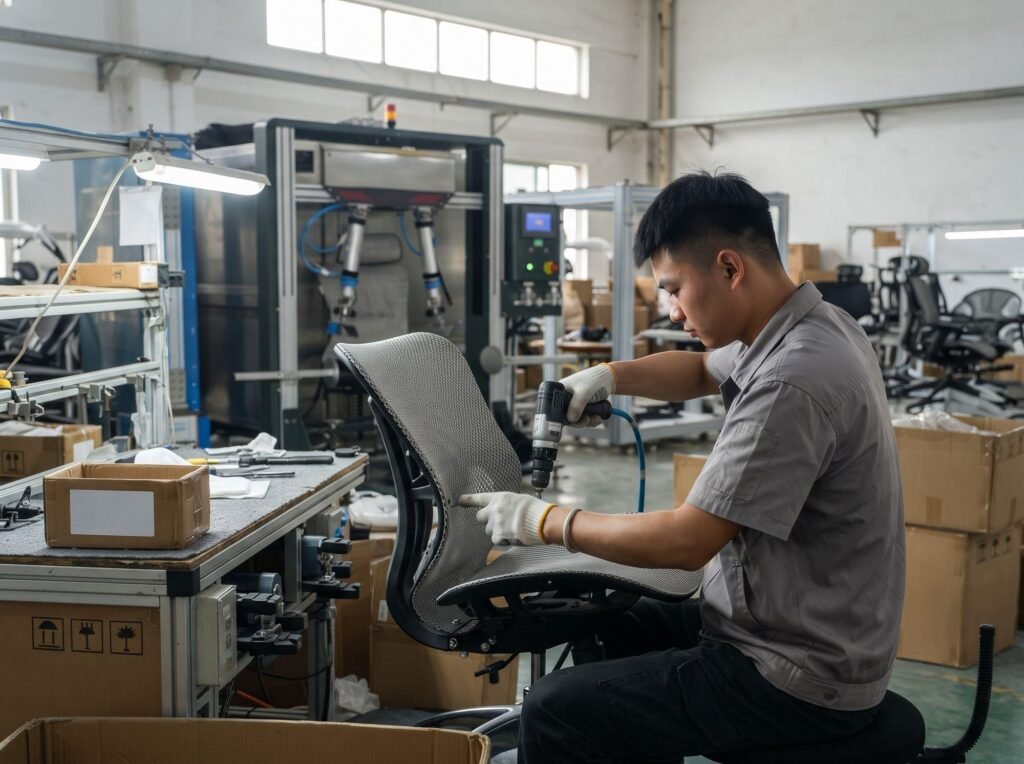
Ask any mid-sized Anji factory owner why he’s still in business. He won’t mention wages. He’ll walk you to a wall map and point. Mold guy here. Gas-lift supplier there. Mesh partner around the corner. Carton factory at the end of the road. All within a 15-minute drive. That density? That’s the real engine of the Anji chair industry.
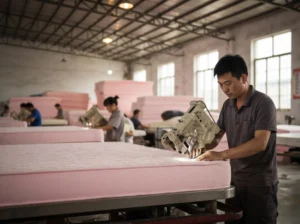
The place runs in layers. At the bottom, you’ve got hundreds of tiny component shops—plastic molders, steel benders, mesh weavers, gas-lift makers. Above them, mid-tier workshops doing sub-assembly: welding bases, attaching mechanisms, snapping on armrests. Then the bigger assembly plants putting it all together, boxing it, slapping on shipping labels. And finally the logistics web—trucks to Ningbo port, bonded warehouses, cross-border e-commerce fulfillment centers.
Local managers have a name for this: “shared capacity.” A 40-worker shop that only makes chair bases doesn’t need its own assembly line. It feeds five or six final assembly factories, keeps its machines humming at 90% utilization, and everyone wins.
Now here’s where it gets interesting. An overseas buyer calls up wanting 100 chairs. A hundred. In Guangdong, a big sofa factory would hang up on you. In Anji? The assembler says yes. Why? Because that order gets broken into pieces and fed into the shared-capacity network. The base shop does the bases. The mesh guy does the backs. Someone else handles packaging. Eighteen days from deposit to container. We’ve seen it happen. Eighty custom gaming chairs, designed, produced, loaded. Try pulling that timeline at a brand-name OEM in Dongguan. Good luck.
The counterintuitive truth? Anji’s small-batch speed is often better than what the giants offer. The giants need volume to justify their overhead. Anji’s network doesn’t.
The Numbers Nobody Wants to Believe
Let’s talk scale. Industry association data and local government figures put Anji at roughly one-third of China’s total chair production. Over half the country’s chair exports. More than 1,700 furniture-related enterprises crammed into this county, with 337 counted as core chair manufacturers. In 2025, they shipped over 21.75 billion RMB worth of product overseas.
Global office chair market in 2024? About $14.25 billion. Do the rough math. Anji probably touches somewhere between a quarter and a third of global volume by unit count. Maybe more if you count component exports—gas lifts, casters, mechanisms that get assembled into “Italian” or “German” chairs elsewhere.
The headlines go to the listed giants. Yongyi. Henglin. Yongyi’s Flow550 lumbar chair carries 16 patents. Henglin dumped 206 million RMB into R&D last year and rolled out an AI chair with pressure sensors. Impressive stuff. But here’s what the stock filings don’t show: for every Yongyi, there are two hundred anonymous factories you’ve never heard of. They’re making perfectly decent chairs for Amazon private-label sellers, European wholesalers, Middle Eastern traders. That’s where the real volume lives. That’s where your chair probably came from.
Industry Truth: What Anji Does Well, and Where It Falls Flat
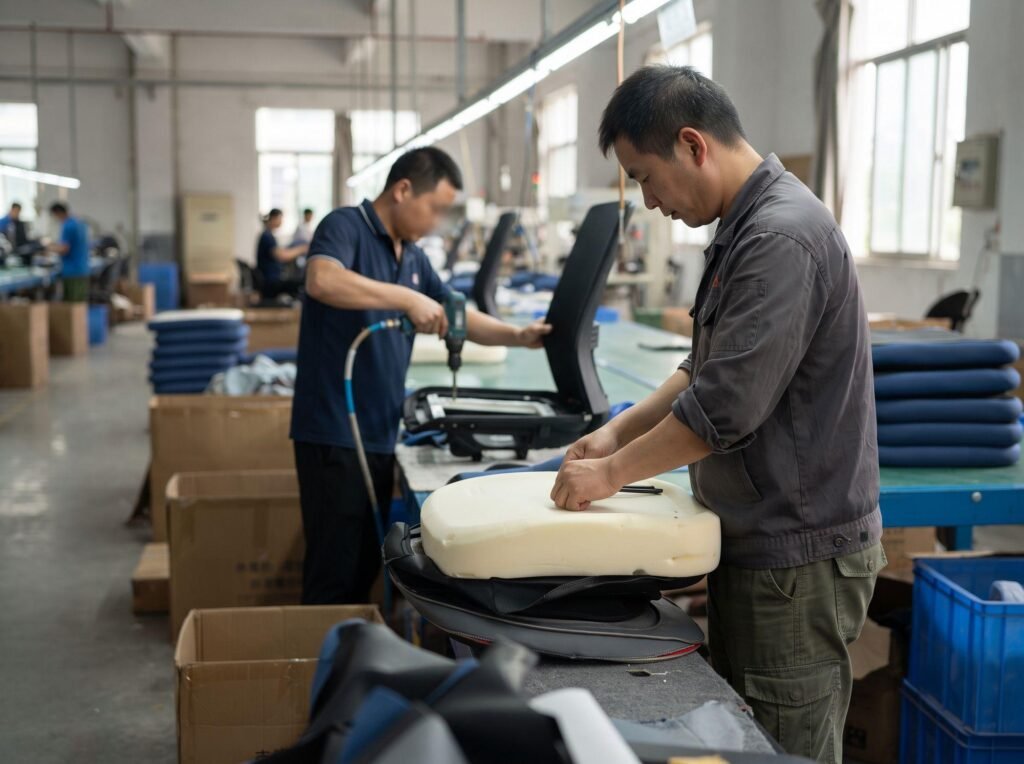
Let’s not sugarcoat this. Anji didn’t become world chair capital by winning design competitions. It got there by being brutally efficient at making functional, standardized seating in huge numbers. That’s a superpower. It’s also a ceiling.
What Anji absolutely nails: mesh task chairs by the containerload. Gaming chairs that ship to Twitch streamers in Texas. Basic ergonomic models that land on Amazon at $89. Turnaround on 50-to-500-unit orders that would make a German factory weep. Pricing on standardized parts—gas lifts, casters, nylon bases—that’s hard to beat anywhere. And export infrastructure that knows exactly how to get a container from a Zhejiang warehouse to Long Beach or Rotterdam without drama.
Where it struggles? Original design. Most factories still lean on external design houses, or they copy whatever Herman Miller, Steelcase, or Secretlab launched last season. The premium ergonomic chairs selling for $800 to $1,500 in the West? Anji probably made the frame, maybe the whole chair. But the design IP, the brand markup, the story—that’s captured overseas. Anji factories see pennies on that dollar.
Complex custom upholstery? Hand-stitched leather? Tufted detailing? Mixed-material frames? Anji is the wrong place. Call Foshan. Call Dongguan. And while Yongyi and Henglin have invested heavily in green production, plenty of smaller workshops are still figuring out formaldehyde-free adhesives and water-based coatings. If you need GREENGUARD or CARB compliance from a random mid-tier factory, verify it. Don’t assume.
Bottom line: Anji is for functional, scalable seating. It is not for design statements. It is not for luxury positioning. Know what you’re buying.
Anji, Foshan, or Dongguan: Where Should Your Money Go?
We get this question weekly. Buyers hear “China” and picture one giant factory floor. Reality is messier. Different regions, completely different products, price points, and production philosophies. Here’s how the three big clusters actually compare if you’re buying chairs:
| Factor | Anji (Zhejiang) | Foshan (Guangdong) | Dongguan (Guangdong) |
|---|---|---|---|
| Core Strength | Volume office chairs, gaming chairs, functional seating | Custom sofas, upholstered pieces, design-forward work | High-end contract furniture, certified case goods |
| Typical MOQ | 50–200 units | 300–500+ units | 500+ units |
| Price Tier | $25–$120 FOB per chair | $80–$300+ FOB per piece | $150–$500+ FOB per piece |
| Design Capability | Functional, standardized; limited original design | Strong custom design, showroom-driven | Premium design, international brand partnerships |
| Supply Chain | Ultra-dense chair-specific ecosystem | Broad upholstery and materials ecosystem | Export compliance and certification expertise |
| Best For | E-commerce sellers, bulk procurement, private-label brands | Boutique designers, hotel FF&E, mixed-category buyers | Corporate contracts, premium residential, brand OEMs |
Amazon seller launching a private-label ergonomic chair at $89 retail? Anji. Boutique hotel designer who needs 40 custom lounge chairs with hand-picked fabric? Foshan. Fortune 500 company sourcing 2,000 executive chairs with full BIFMA paperwork and white-glove delivery? Dongguan might be worth the premium.
The clusters exist for different jobs. Use the right tool.
Insider Tip: The Factories You Will Never Find on Google
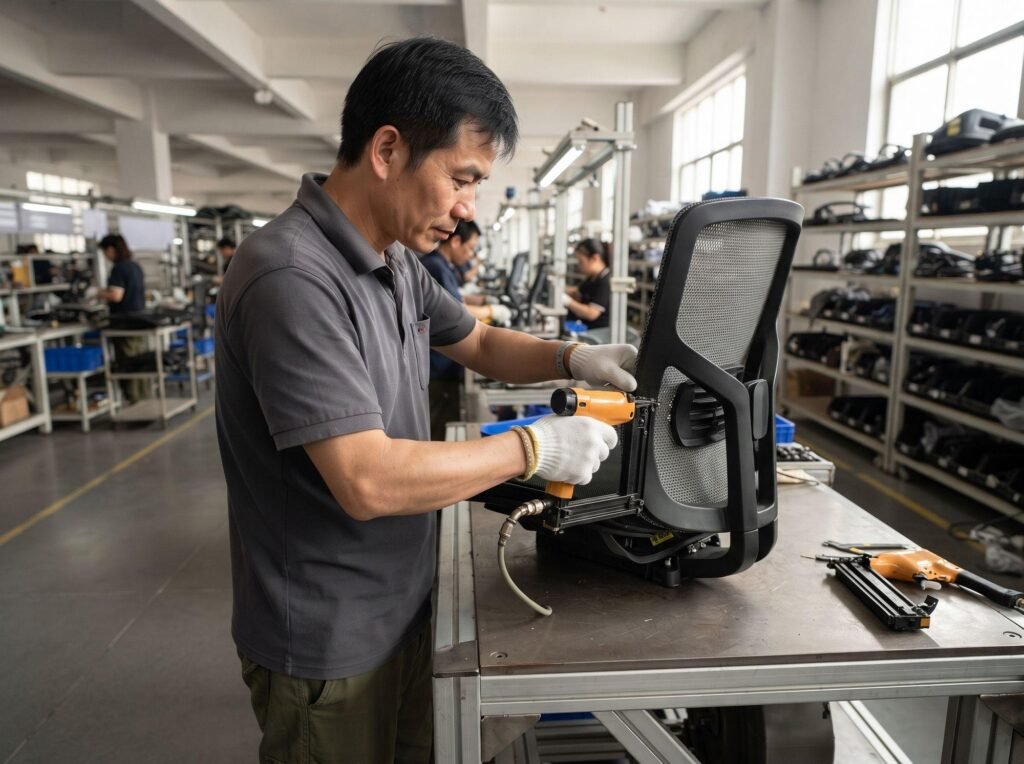
Years of walking these streets taught us something: the best deals in Anji aren’t at the big names with polished English websites and CIFF booths. They’re at the second- and third-tier workshops that don’t do trade shows. Don’t hire English-speaking sales staff. Don’t even have websites.
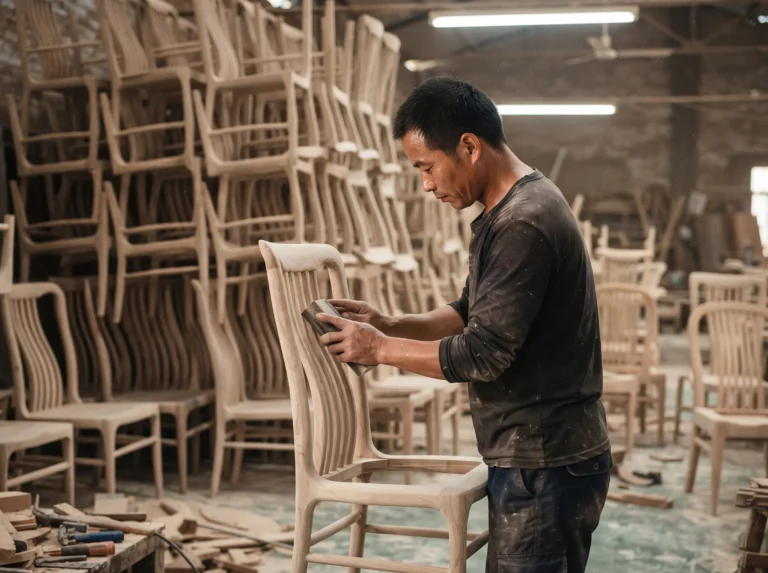
These places—30 to 80 workers, often family-run—are the real backbone of Anji’s shared-capacity system. They make the bases. The mechanisms. The armrests. Some have quietly started doing full assembly for direct export, but they have zero clue how to find overseas buyers. That’s where a solid sourcing agent or a deep factory network pays for itself.
We’ve watched buyers shave 15 to 20 percent off unit costs by going direct to these hidden workshops. The catch? You’re managing communication gaps yourself. You’re doing your own quality oversight. There’s no sales rep holding your hand. Lower price, higher coordination. That’s the trade. No free lunch.
Three Mistakes We See Buyers Make Over and Over
Hundreds of buyers. Same errors. Repeatedly.
Mistake one: thinking “Made in Anji” means uniform quality.
Anji has 1,700-plus furniture operations. The gap between a top-tier ISO-certified plant and a 20-person workshop running out of a converted warehouse is massive. We’ve seen chairs from the same county priced at $28 FOB and $120 FOB, product photos nearly identical. What’s the difference? Gas-lift grade. Mesh density. Foam density. Weld quality. Never judge an Anji factory by its catalog.
Mistake two: ignoring where the components actually come from.
Most Anji assemblers don’t manufacture their own gas lifts, casters, or tilt mechanisms. They buy them from nearby component shops. If you don’t specify—Class 3 versus Class 4 gas lift, 60kg versus 100kg caster rating—you get whatever’s cheapest that week. Six months later, your “same” chair feels completely different. Because it is different.
Mistake three: expecting Anji to design for you.
Bring a complex ergonomic concept to Anji and ask the factory to refine it? You’re in for pain. Anji factories execute specs. They don’t typically innovate on ergonomics or aesthetics. If your product needs real design development, budget for an external designer. Or prepare for months of back-and-forth that goes nowhere.
Where Anji Is Heading: Smart Chairs, Green Pressure, and the Branding Wall
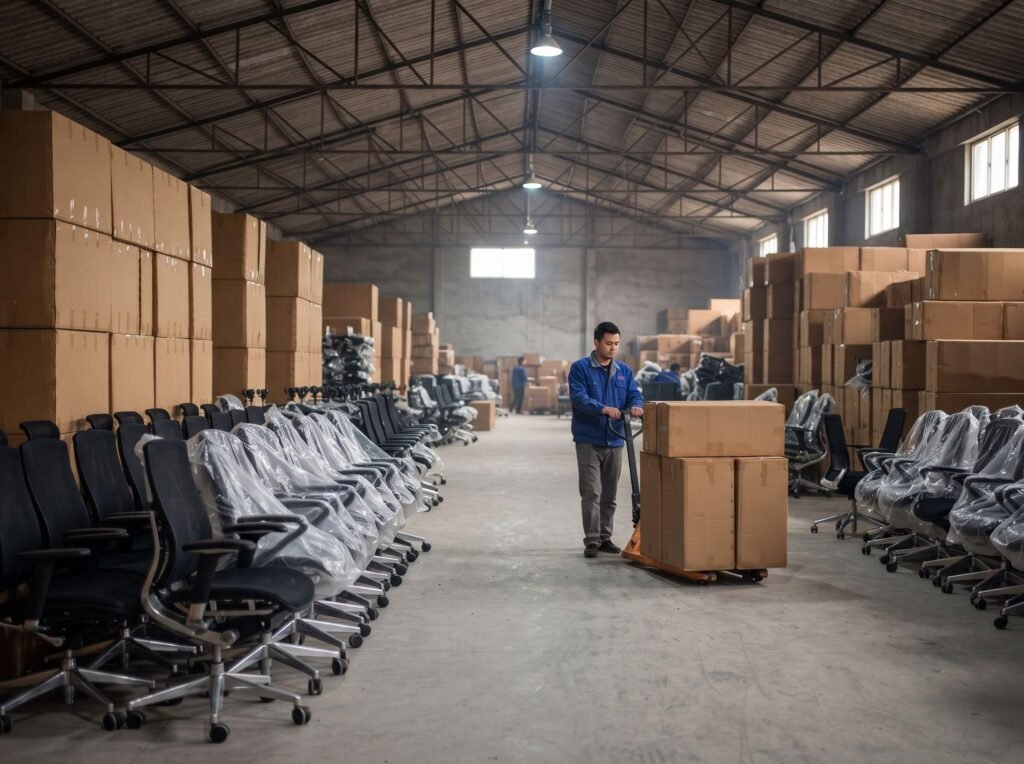
Anji isn’t frozen in time. The top players are pouring money into automation, AI-integrated features, and cleaner manufacturing. Henglin’s AI chair with pressure sensors isn’t a gimmick—it’s a signal. Yongyi’s 16-patent lumbar system shows some players are trying to grab design value, not just manufacturing margin.
But the wider cluster faces real pressure. Zhejiang’s environmental regulations are tightening. Smaller workshops are being pushed toward water-based paints and formaldehyde-free adhesives. Good for the planet. Good for buyers who need certification. Bad for the ultra-low-cost segment where margins were already paper-thin.
The deeper problem is branding. Anji builds the chairs. Foreign companies slap logos on them and sell at 4x markup. Until more Anji factories build internationally recognized brands—and Yongyi and Henglin are trying, but haven’t fully cracked it—this county will keep making the value while someone else captures the premium.
Our Honest Take: Should You Source from Anji?
If you need functional, scalable office seating at a sharp price, and you’re willing to manage quality oversight yourself, Anji belongs at the top of your list. The supply-chain density, the small-batch flexibility, the export experience—genuinely hard to replicate anywhere else on the planet.
If you need design-forward statement pieces, complex custom upholstery, or a partner who’ll co-develop your next product from a sketch? Look elsewhere. Foshan and Dongguan exist for a reason. Anji’s brilliance is execution. Not invention.
We’ve sourced from Anji for over ten years. The factories that survive long-term are transparent about what they make, honest about what they can’t do, and consistent on delivery. The ones that overpromise on design or quietly swap components? They fade. Your job is telling the difference before the wire transfer goes through.

FAQ
Is Anji really the largest office chair manufacturing cluster in the world?
Yes. Industry association data and local government reports put Anji at roughly one-third of China’s chair production and over half of national chair exports. With 1,700-plus related enterprises and 311.5 billion RMB in annual output, no other single geographic cluster comes close for concentrated office chair volume.
How does Anji compare to Foshan for chair sourcing?
Anji dominates standardized, functional office and gaming chairs with low MOQs and fast turnaround. Foshan owns custom upholstered seating, sofas, and design-forward pieces with higher minimums and stronger design capabilities. Bulk office chairs? Anji. Bespoke lounge seating? Foshan.
What’s the typical MOQ for Anji chair factories?
Most Anji factories take 50 to 200 units for standardized models, thanks to the shared-capacity network. Fully custom designs or new molds usually run 300 to 500 units. Some smaller workshops will handle 30 to 50 units for simple modifications.
Can Anji factories make ergonomic chairs that meet international standards?
Top-tier factories like Yongyi and Henglin hold BIFMA, EN 1335, and other international certifications. Many smaller workshops do not. Always request product-specific test reports for your exact model—not a generic factory certificate. ISO 9001 on the wall doesn’t prove your chair passed durability testing.
What are the main risks of sourcing office chairs from Anji?
Quality inconsistency across factories. Component substitution without notice. Limited original design capability. Buyers who skip component specs or third-party inspections often receive chairs that look like the sample but perform differently at scale. Due diligence isn’t optional.
Recommended Resource
Interi Furniture specializes in custom furniture manufacturing for residential, hospitality, and commercial projects. Their experience in materials, craftsmanship, and project realization makes them a valuable resource for designers and buyers seeking tailored furniture solutions from China.