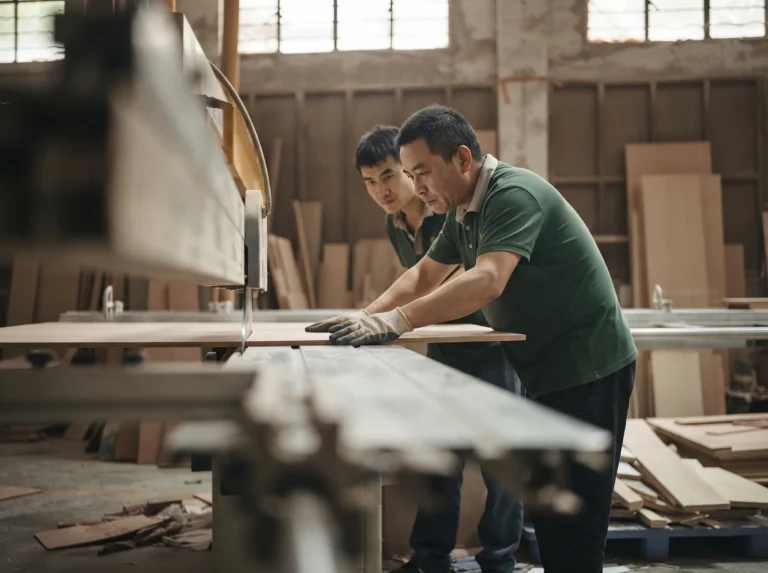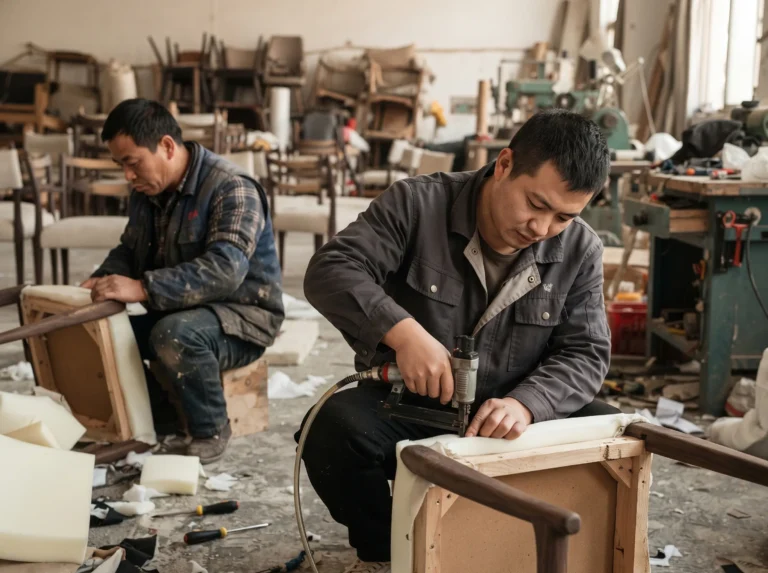


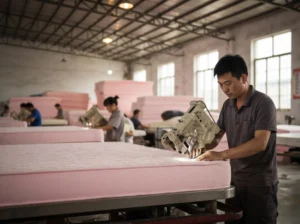

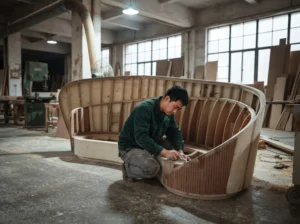
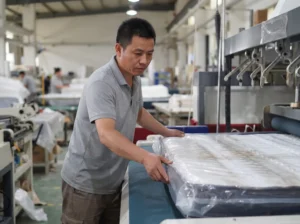



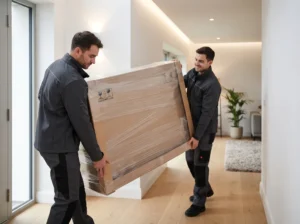

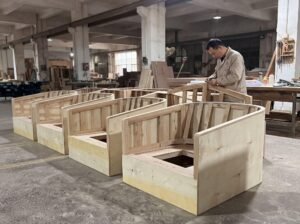
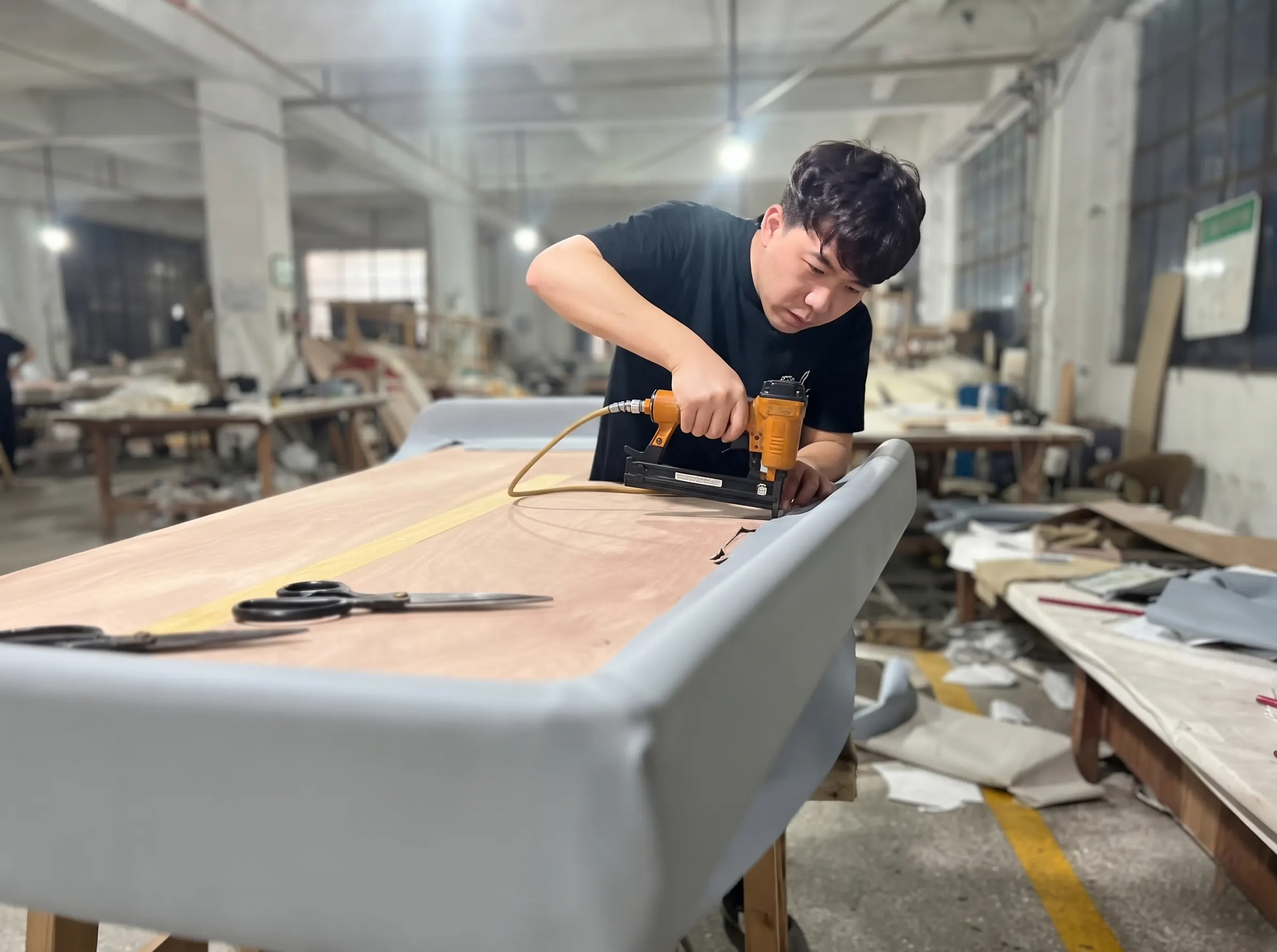
That quote 40% below market rate is not magic. It is a spreadsheet decision. Chinese furniture factories do not possess a secret well of free labor or hidden efficiency that Western competitors missed. The discount comes from deliberate, line-item reductions in material grades, process steps, inspection rigor, and compliance coverage. Most buyers never see the cuts until the container lands and the frames start splitting, the foam collapses, or the fabric pills within a single season. Cheap chinese furniture cost cutting is not about one big trick. It is about twenty small tricks, each invisible on a glossy product photo, each adding up to that tempting low number on the invoice.
The Myth That Will Not Die
Walk into any furniture showroom in Foshan or Dongguan and you will hear the same story from rookie buyers: Chinese furniture is cheap because labor is cheap. That narrative has been shrinking since roughly 2018. Wages for skilled woodworkers in the Pearl River Delta have risen steadily, and a master carpenter in Shunde now earns a monthly package that narrows — but does not erase — the gap with Eastern European factory rates. Labor is no longer the primary driver of the price delta, yet it would be misleading to claim the advantage has vanished entirely. The real delta in 2026 is specification arbitrage. The same CNC machine cuts both the $400 sofa and the $280 sofa. The difference lives in the BOM — the bill of materials — and in which process steps the factory decides to skip after the shift supervisor clocks out.
We have watched this play out on assembly lines in Nankang, Ganzhou, and the Houjie furniture corridor. One factory manager, producing nearly identical dining chairs for two different export clients, showed us the two BOM sheets side by side. Same silhouette. Same veneer pattern. Different plywood core grade. Different sponge density. Different number of screws versus dowels. The “efficiency” was not lean manufacturing. It was engineered downgrade.
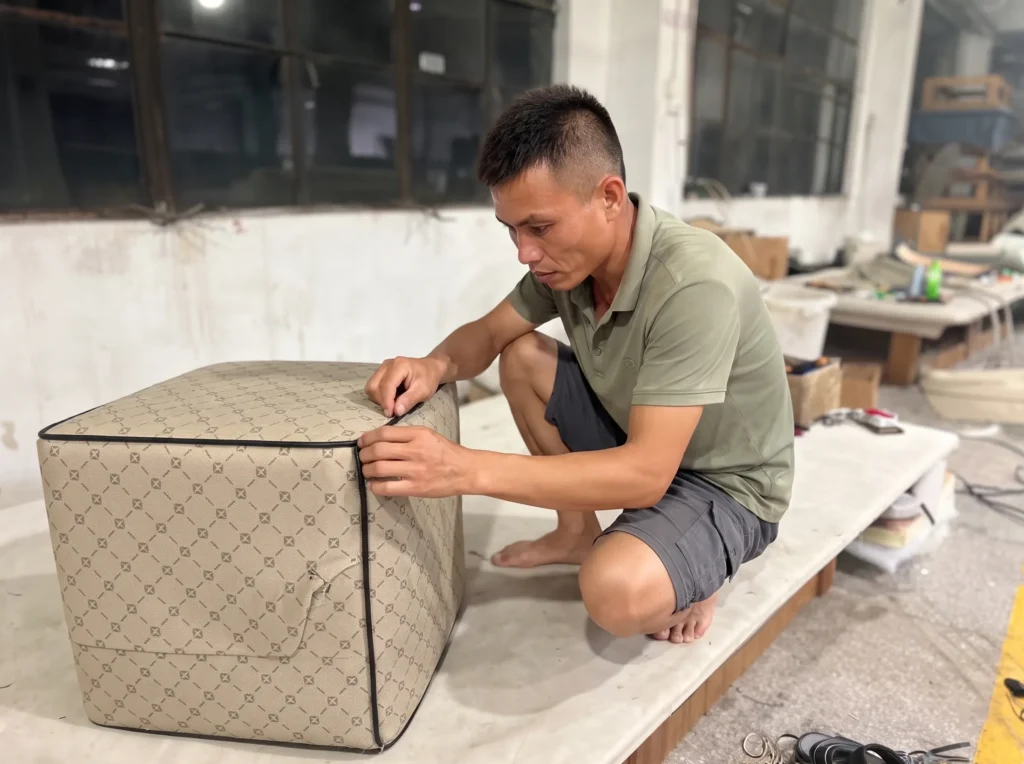
Material Cost Cutting: Wood, Foam, Fabric, and Hardware
This is where the bulk of the savings hide. Raw materials typically account for 55–70% of a furniture piece’s ex-factory cost. Shave 15% off the material stack and you hit that 30% headline discount without touching a single worker’s paycheck.
Wood and Engineered Panels
Solid wood grades move on a spectrum from FAS (Firsts and Seconds) down to rustic or “paint grade.” A factory quoting 30% below market on an oak dining table is likely using #1 Common instead of FAS, or slipping in rubberwood where the spec calls for white oak. In upholstered frames, the switch from E1-grade CARB P2-compliant plywood to lower-density recycled-core plywood, non-compliant alternatives, or outdated E2-grade stock — which under current Chinese national standards requires surface finishing before indoor use and is actively being phased out — can drop core material cost by 20–25% while adding formaldehyde emission risks.
Upholstery Foam
Foam is a silent killer of sofa longevity. High-resilience foam for seat cushions should hit 35–40D density with a 50–60% resilience rating. The budget version? 25D density, 35% resilience. It feels fine in the showroom. Six months of daily use later, it is a pancake. The cost gap between 35D and 25D block foam runs roughly $8–12 per meter, which translates to $15–25 per sofa unit. Multiply by a 40-foot container load and you are looking at real money.
Fabric and Leather
Genuine full-grain leather versus corrected grain or bonded leather represents an obvious gap. In fabrics, the cuts are subtler. A commercial-grade upholstery fabric should carry 30,000+ Martindale abrasion cycles (ISO 12947). The budget substitute? 15,000 cycles or less, often with reduced yarn density and lighter PU coating. The fabric looks identical on day one. It pills, fades, or tears under stress within the first year.
Hardware
Drawer slides rated for 50,000 cycles get swapped for 20,000-cycle zinc-plated rails. Screws downgrade from 8.8-grade carbon steel to generic iron with thin chrome plating. Hinges lose their soft-close dampers. None of this shows up in a render.
| Cost-Cutting Lever | Standard-Spec Material | Downgraded Alternative | Typical Cost Impact Per Unit | Quality Risk |
|---|---|---|---|---|
| Solid wood grade | FAS white oak / ash | #1 Common, rubberwood, or finger-jointed core | $18–35 | Visible grain defects, structural weakness, warping |
| Plywood / particleboard | E1-grade, CARB P2 certified | Lower-density recycled-core plywood, non-compliant alternative, or outdated E2-grade stock (phasing out, requires finishing before indoor use per current GB standards) | $12–22 | Elevated formaldehyde emissions, delamination |
| Upholstery foam density | 35–40D HR foam, 50–60% resilience | 25D standard foam, ~35% resilience | $15–25 | Permanent deformation, loss of support within 6–12 months |
| Upholstery fabric | 30,000+ Martindale cycles, 300+ gsm | 15,000 cycles, 180–220 gsm | $8–18 | Pilling, tearing, rapid color fading |
| Leather type | Full-grain or top-grain | Bonded leather or PU split | $40–90 | Peeling, cracking, delamination |
| Hardware cycles | 50,000-cycle ball-bearing slides | 20,000-cycle basic zinc slides | $4–8 | Drawer sag, noise, failure under load |
For reference only, subject to official verification.
Process Cost Cutting: Joinery, Finishing, and Assemble
Materials are only half the story. The other half is what the factory does — or does not do — with them.
Joinery and Structural Integrity
Traditional mortise-and-tenon or dowel-and-glue joints take time. They require skilled setup, drying cycles, and jigs. A factory under cost pressure switches to screw-and-plate construction or staples driven into particleboard. The chair holds together for the photo. It loosens after 90 days of real use. We have seen dining chair frames in the “run-price” tier held together by nothing more than corner brackets and 3cm screws driven into end grain.
Surface Finishing
A proper multi-step finish on wood furniture involves sanding (often 120-grit to 220-grit progression), staining, sealer coat, sanding sealer, base coat, and topcoat. Each step adds labor and material cost. The shortcut version? Single-pass machine sanding at 80-grit, one stain coat, one sealer, one topcoat. The surface looks fine under showroom lighting. It scratches easily, absorbs moisture, and loses color uniformity within a year. Budget finishes often rely on thinner coating systems with lower resin loading, meaning less actual protective film on the substrate.
Edge Banding and Veneer Work
On melamine-faced or veneered panels, standard practice uses 1.5–2mm PVC edge banding with hot-melt adhesive application and end-trimming. Budget production drops to 0.4–0.6mm paper edge banding, applied faster with less adhesive coverage. The edge looks sealed. It peels within months, especially near humidity or heat sources.
| Process Step | Standard Practice | Cost-Cut Version | Typical Cost Impact Per Unit | Quality Risk |
|---|---|---|---|---|
| Frame joinery | Mortise-and-tenon, dowel-and-glue | Screw brackets, staples into particleboard | $6–12 | Joint loosening, frame failure, safety hazard |
| Wood sanding | 120-grit to 220-grit progression | Single-pass 80-grit machine sanding | $3–5 | Rough surface, poor finish adhesion, visible scratches |
| Finish coats | Stain + sealer + base + topcoat (4+ layers) | Stain + single sealer/topcoat (2 layers) | $8–15 | Poor moisture resistance, easy scratching, color inconsistency |
| Paint film build / solids loading | Full catalyzed conversion varnish system | Thinner nitrocellulose or basic acrylic with lower resin loading | $5–10 | Thin film build, poor durability, faster yellowing |
| Edge banding | 1.5–2mm PVC, full hot-melt glue coverage | 0.4–0.6mm paper banding, partial glue | $2–4 | Peeling, moisture ingress, delamination |
| Assembly time | 45–60 minutes per piece, proper alignment | 20–25 minutes per piece, rush fit | $4–8 | Misaligned doors, uneven gaps, premature wear |
For reference only, subject to official verification.
QC and Packaging: The Invisible Cuts
Quality control and packaging are the first departments to bleed when a factory chases a rock-bottom FOB price. These cuts do not show up in the product photo. They show up in the damage report at your warehouse.
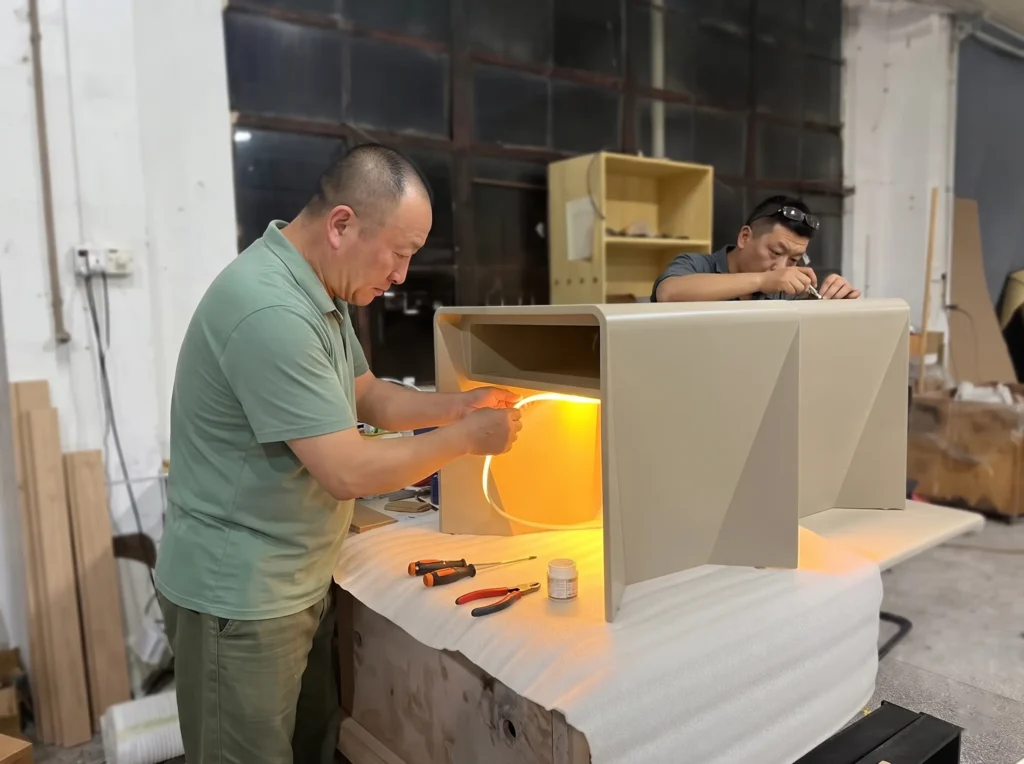
Quality Control Shortcuts
A standard export-grade QC protocol involves pre-production material inspection, in-process spot checks at 10–15% frequency, and a final random inspection per AQL 2.5. The budget protocol? Skip incoming material verification. Reduce in-process checks to visual-only. Final inspection becomes a 2% quick scan. Defects that should trigger rework — color mismatch, dimensional tolerance drift, loose hardware — sail through. The factory saves $3–5 per unit in labor. You inherit the rejects.
Packaging Downgrades
Proper export packaging for furniture means 5-layer corrugated cartons (BC-flute or better), corner protectors, PE foam wrap, and structural foam or wood-frame crating for fragile items. The cost-cut version? 3-layer C-flute cartons, thin bubble wrap, no corner guards, no crate. Container loading density goes up because pieces stack tighter without protective spacing. Damage rates climb accordingly. We have seen container unloading photos where 15–20% of dining chair legs arrived cracked because the factory eliminated the corner foam blocks to save $1.20 per unit.
| QC / Packaging Element | Standard Export Practice | Cost-Cut Version | Typical Cost Impact Per Unit | Risk to Buyer |
|---|---|---|---|---|
| Incoming material QC | Certificate verification, moisture meter checks | Visual-only, no certificate cross-check | $1–2 | Substandard materials entering production undetected |
| In-process inspection | 10–15% spot check, dimensional verification | 2–3% visual scan only | $2–3 | Systematic defects propagated through full batch |
| Final random inspection | AQL 2.5, full functional test | 2% quick look, no functional test | $2–3 | Defective units shipped, no rework trigger |
| Carton construction | 5-layer BC-flute, 200+ lb test | 3-layer C-flute, 150 lb test | $3–5 | Carton collapse, in-transit abrasion |
| Internal protection | PE foam wrap, corner protectors, edge guards | Thin bubble wrap, no corner protection | $2–4 | Impact damage, edge chipping, veneer cracks |
| Outer crating | Wood frame or structural foam crate for fragile items | None, loose load in container | $8–15 | Severe transit damage, total loss on high pieces |
For reference only, subject to official verification.
Compliance and After-Sales: Where Corners Hurt Most
This is the category that can turn a cheap buy into an expensive lawsuit.
Regulatory and Safety Compliance
California Proposition 65 labeling, TB 117-2013 flame-retardant standards, and CARB Phase 2 formaldehyde limits are not optional for US-bound furniture. Yet we continue to see factories omit Prop 65 warnings, substitute non-compliant foam to avoid flame-retardant chemical costs, or use urea-formaldehyde resins in board products to save $4–6 per unit. The product clears customs because spot checks are statistical. The liability lands on the importer when a consumer tests the piece or files a claim.
After-Sales and Warranty
Standard practice among reputable Chinese export factories includes a 12–24 month structural warranty, spare parts provision, and English-language assembly instructions. The rock-bottom quote? No warranty. No spare parts. An instruction sheet translated by Google Translate that leaves your customer with a half-assembled bed frame and a bag of mystery screws. When something breaks, the factory’s position is simple: you bought the “run-price” version. What did you expect?
| Compliance / Service Element | Standard Practice | Cost-Cut Version | Typical Cost Impact Per Unit | Risk to Buyer |
|---|---|---|---|---|
| Formaldehyde compliance | E1 / CARB P2 certified, test reports available | E2 or uncertified, no test documentation | $4–6 | Regulatory violation, consumer health risk, recall liability |
| Flame retardancy (US) | TB 117-2013 compliant foam and fabric | Non-compliant materials, no testing | $6–12 | Fire safety liability, marketplace delisting |
| Prop 65 labeling | Proper warning labels on applicable components | Omitted or generic “may contain” sticker | $0.50–1 | California litigation exposure, marketplace fines |
| Product warranty | 12–24 month structural warranty | No warranty, “as-is” sale | $3–5 | Full replacement cost borne by importer/retailer |
| Spare parts / hardware kit | Extra screws, bolts, touch-up markers included | Exact count only, no extras | $1–2 | Customer unable to complete assembly, negative reviews |
| Instruction quality | Professional illustrated manual, multi-language | Poor translation, no illustrations | N/A labor | High return rate, customer service burden, brand damage |
For reference only, subject to official verification.
The Same Line, Two Different Products
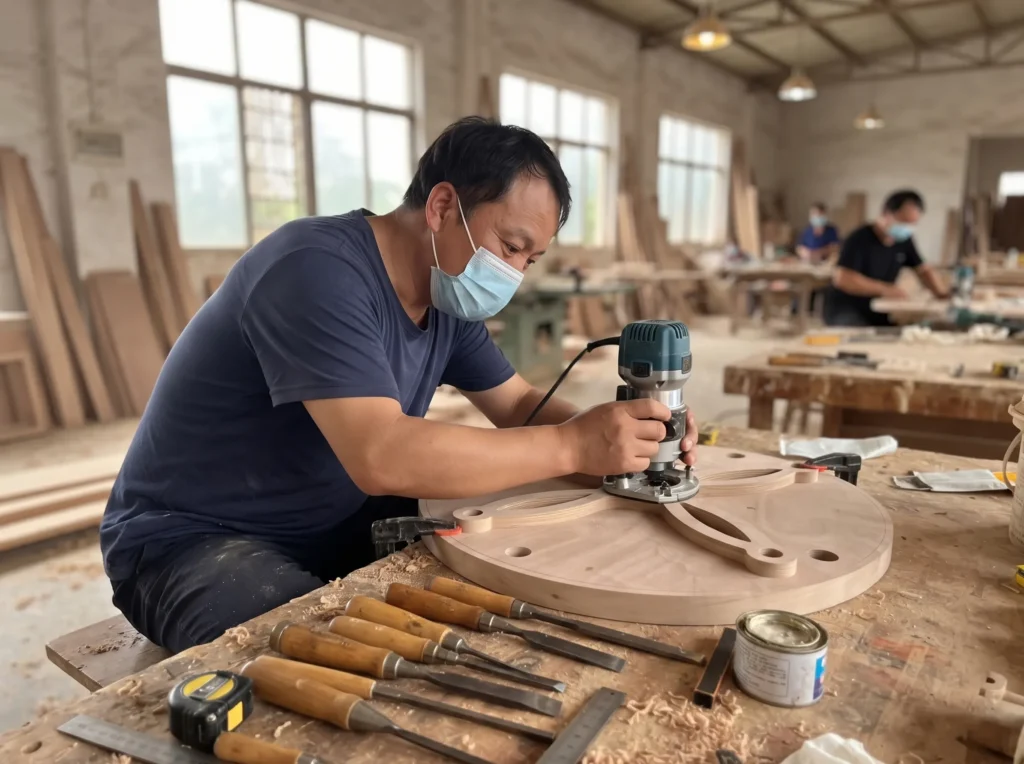
Here is the part that catches even experienced buyers off guard. The factory does not always build cheap furniture on a separate, shabbier line. Often, the same workers, same machines, and same workshop produce both versions. The difference is purely in the production order and the BOM loaded into the system that morning. One day the order calls for 35D foam and mortise joints. The next day, a different PO calls for 25D foam and screw brackets. The frame looks identical. The cost is not. This is why sample approval is only as good as the batch production audit. A perfect sample means nothing if the factory swaps the BOM on the sly.
Red Flags: When a Quote Signals Real Danger
Not every low quote is a trap. Some factories genuinely run leaner operations, better material sourcing, or lower overhead. But certain patterns should trigger immediate scrutiny.
A quote that is 35% or more below the next closest bid without a clear volume justification warrants a second look. If the factory refuses to provide material certificates or test reports, that is not negotiation posture. It is a warning. If the lead time is suspiciously short — say, 15 days for a 500-piece sofa order when the industry average is 35–45 days — ask yourself what steps are being skipped to hit that calendar. And if the factory representative uses vague terms like “same quality, different price” without explaining the BOM delta, you are likely staring at a specification downgrade dressed up as a discount.
How Different Buyers Should Respond
For B2B Importers and Large Retailers
You have the leverage to demand transparency. Insist on a locked BOM with the quote. Specify material grades by standard reference — not “good quality plywood” but “E1-grade multi-layer birch plywood, CARB P2 certified.” Build random batch testing into your purchase agreement. The $400 you spend on third-party lab testing per container is cheaper than one product recall.
For E-Commerce Sellers and Small Retailers
Your margin is thin and your brand is fragile. You cannot afford a wave of one-star reviews because the sofa foam flattened in three months. Focus on the foam, fabric, and hardware specs. These are the failure points that generate returns. Request a video walkthrough of the production line, not just polished showroom photos. If the factory refuses, find one that will not.
For Individual Buyers and Designers
You are buying one piece, not a container. Your protection is information. Ask the seller for the foam density, the fabric abrasion rating, and the wood grade. If they do not know, they are not close enough to the factory to guarantee anything. Buy from sellers who can answer those questions in specifics, not superlatives.

FAQ
Why do two factories quote such different prices for the same-looking chair?
Because “same-looking” is not “same-making.” The visual silhouette is the cheapest part to copy. The cost lives in the materials inside the frame, the foam inside the cushion, and the processes that hold it together. One factory builds to a 5-year use cycle. The other builds to survive the container voyage. The price reflects that difference.
Is it ever safe to buy the cheaper version?
Yes, if you know exactly what was cut and you have priced in the consequence. If you are furnishing a short-term rental, a staging property, or a student housing unit with a 2-year replacement cycle, a lower-spec piece can make economic sense. The danger is not the downgrade. The danger is the undisclosed downgrade.
Can I trust factory certificates and test reports?
Only if you verify them. We have seen photocopied certificates with altered dates, reports for material batches never used in production, and “test reports” generated by non-accredited labs. Cross-check certificate numbers with the issuing body. Request batch-specific test data. If the factory hesitates, treat the certificate as decorative.
How can I tell if the production batch matches my approved sample?
You cannot tell from photos. You need a production-line audit or a pre-shipment inspection by a third-party agency. The critical checkpoints are foam density verification (simple weight/volume calculation), fabric abrasion rating cross-check against the submitted swatch, and joint construction inspection on a randomly selected unit. Samples are marketing. Audits are insurance.
What is the one spec I should never compromise on?
Frame structural integrity. A sagging cushion can be replaced. A cracked frame is total loss. If the factory will not confirm solid hardwood or high-grade plywood construction with proper joinery, walk away. Everything else is negotiable. The skeleton is not.

What Is Your Experience?
Have you received a container that looked right in photos but fell apart in reality? Did a factory ever explain a price gap with vague assurances instead of a clear BOM breakdown? Drop your story or your specific cost-cutting question below. We read every comment, and if your situation reveals a pattern we have not covered, we will dig into it in a follow-up piece.
Recommended Resource
Interi Furniture specializes in custom furniture manufacturing for residential, hospitality, and commercial projects. Their experience in materials, craftsmanship, and project realization makes them a valuable resource for designers and buyers seeking tailored furniture solutions from China.