



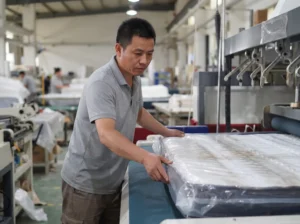



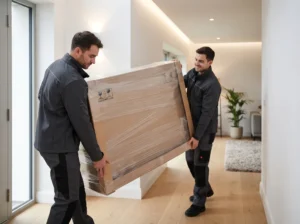

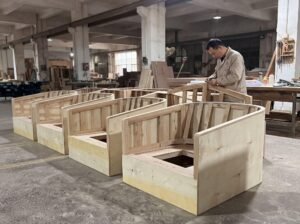
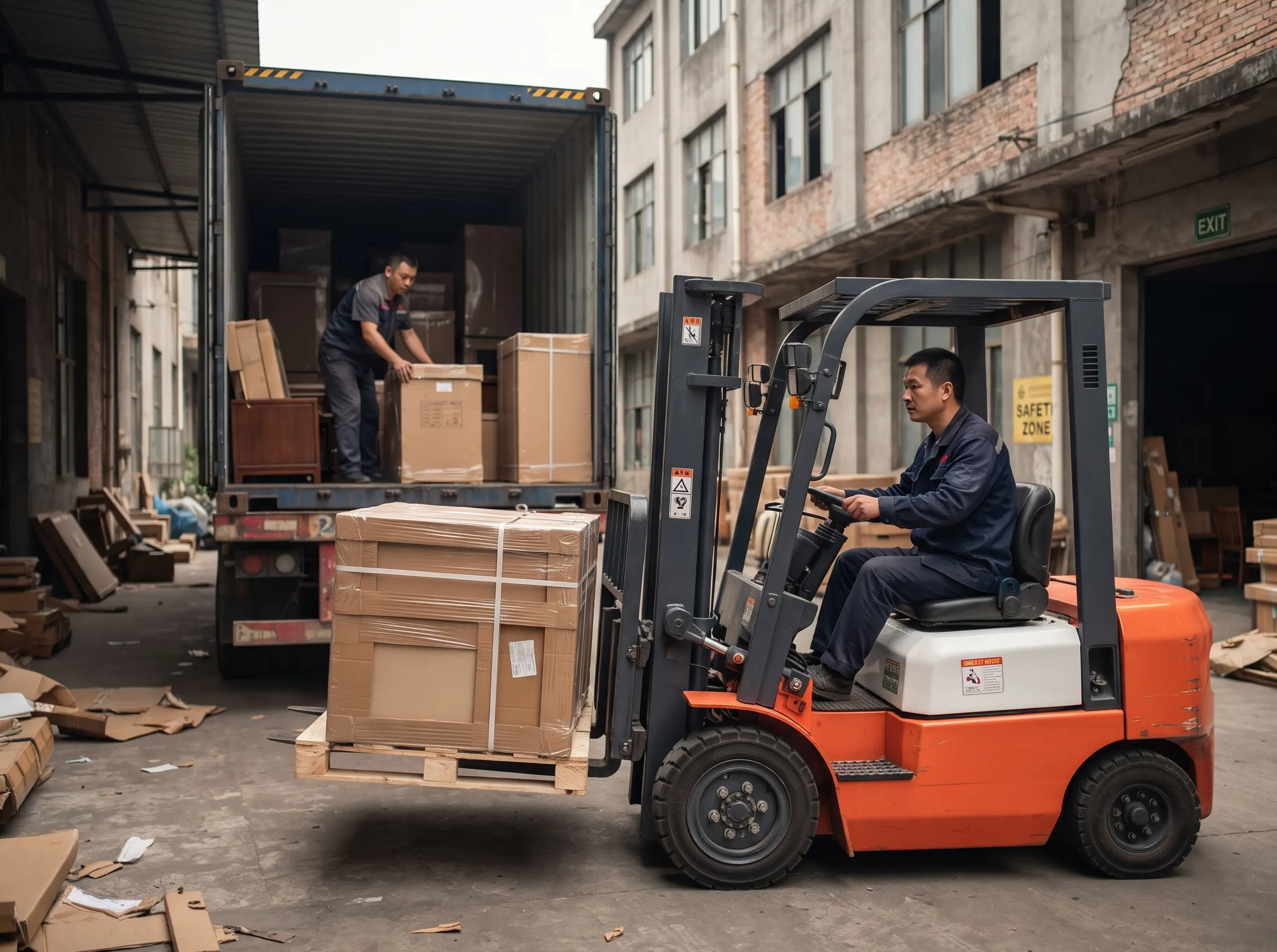
Here is a number that keeps logistics managers awake at night: roughly four in every ten furniture containers arriving at US or European ports show some form of product damage. The first instinct is to blame the shipping line. We have tracked too many shipments from Jiangmen to Rotterdam to let that myth stand. The real furniture shipping damage causes live in the factory yard, the loading bay, and the packaging station, long before the vessel ever leaves Shenzhen port.
The Blame Game Nobody Wins
When a container arrives and the dining table legs are cracked, or the sofa fabric is stained with seawater, the buyer calls the freight forwarder. The forwarder calls the shipping line. The shipping line points to the Bill of Lading clause that says “shipper’s load and count.” Everyone points at everyone. Nobody fixes the root cause.
We have sat in dozens of post-damage meetings. In our experience, over 70% of furniture damage is preventable at origin. The problem is not the ocean. It is what happens in the 48 hours before the container seal clicks shut. That is where container loading mistakes turn a $40,000 purchase into an insurance claim nightmare.
The Two Pre-Load Killers
Before we talk about the ocean voyage, we need to look at the factory loading bay. There are three failures that repeat across almost every damaged shipment we investigate.
1. The Weight Distribution Mistake
Furniture is bulky but not always heavy. A factory loader sees a container with thirty cubic meters of space and thinks, “Fill it.” They stack dining tables flat on the floor, then pile sofas on top. Then they wedge chairs into the gaps. The result is that the heaviest items sit at the bottom, which is good, but the center of gravity is off-center and nothing is strapped to the walls.
During a routine container ride from Ningbo to Hamburg, the ship rolls. The unsecured sofa slides. The dining table takes the impact. By the time the customs officer opens the doors, you have a pile of expensive scrap wood. This is the most common container loading mistake we see, and it is entirely fixable with proper lashing and load planning.
2. The Packaging Corner-Cut
Ask a factory manager in Zhongshan Sanxiang what separates a $5 packaging cost from a $12 packaging cost. They will tell you: foam density, corner protectors, and whether the carton is double-wall or single-wall. Most buyers do not know the difference. They see a white box and assume it is fine.
Here is the truth we have learned the hard way: export packaging failures are the silent killer of furniture margins. A single-wall carton saves $1.50 per unit. If three units arrive damaged, the savings evaporate and then some. We have seen solid oak tables shipped in cartons so thin they buckle under their own weight. The factory saved $8 on packaging. The buyer lost $800 on replacements.
| Packaging Element | Cost-Grade (Risky) | Export-Grade (Safe) | Failure Rate Difference |
|---|---|---|---|
| Outer carton | Single-wall 3-layer | Double-wall 5-layer | +18% corner crush damage |
| Foam wrap | 10mm polyethylene | 20mm EPE + corner blocks | +24% edge chip damage |
| Pallet / base | No pallet, floor loading | ISPM-15 treated plywood base | +31% moisture + impact damage |
| Internal bracing | None, loose packing | Plastic strapping + cardboard braces | +12% in-transit shifting damage |
| Moisture barrier | None | VCI bag + desiccant packs | +9% mold / water stain damage |
The numbers are clear. Cheap packaging is the most expensive decision you can make.
A Real Case
We once opened a container in Rotterdam where every single chair had a cracked back leg. The factory had used 10mm foam. The shipping line had handled the container normally. The damage was not from impact. It was from vibration. Over 28 days at sea, the chairs rubbed against each other with enough frequency to fatigue the wood. The factory had never done a vibration test. Most do not. They pack for the warehouse, not for the ocean.
The Ocean Voyage Reality (And Why It Is Not the Main Villain)
Let us be honest about shipping. Ocean freight is rough. Containers experience vertical acceleration, rolling, pitching, and condensation cycles. But shipping lines are not in the business of destroying cargo. Their containers are steel boxes designed to take punishment. The real question is: did your product survive the conditions inside that steel box?
Condensation is one of the most misunderstood furniture shipping damage causes. When a container moves from tropical humidity in Shenzhen to cold European air, the interior temperature drops. Moisture forms on the ceiling and walls. If your furniture is wrapped in breathable materials, it dries. If it is wrapped in plastic with no desiccant, the moisture pools. We have seen mold bloom on velvet sofas that were perfectly dry when they left the factory. The ocean did not do that. The microclimate inside the container did.
The Factory Side of the Story
We spend a lot of time in factories, and we have sympathy for the packaging teams. They are under enormous pressure. The buyer wants lower prices. The logistics team wants faster loading. The warehouse manager wants the container out before the truck detention clock runs out. In that pressure cooker, packaging is the easiest place to shave minutes and pennies.
But here is what experienced buyers know: export packaging failures are not the factory’s fault alone. They are a shared failure of specification. If your purchase order says “standard export packaging,” you are giving the factory permission to define “standard” as cheaply as they want. The word means nothing. It is a blank check.
What a Proper Export Packaging Spec Looks Like
We have refined a specification over years that, when enforced, reduces damage rates from roughly forty percent to under eight percent. It is not magic. It is specificity. The carton is double-wall corrugated, minimum 200lb test or 32ECT, with corner protectors on all eight corners. The foam is at least 20mm EPE, with extra corner blocks on every stress point, and we never allow recycled foam because it degrades in humidity. Securing means plastic strapping every 60cm with cardboard braces between stacked items, and no wood touches wood directly. Moisture control uses VCI anti-corrosion film on metal hardware plus desiccant packs calculated at 1.5x the container volume, and for tropical-origin shipments we add a container rain tarp. Finally, the load plan is a pre-approved diagram showing item placement, weight distribution, and lashing points, with no ad-hoc loading. When we send this spec to a factory, the professional ones nod and price it accurately. The sloppy ones push back, and that pushback is useful. It tells you who actually controls their packaging line.
Loading Supervision: The Step Most Buyers Skip
You can have the perfect packaging spec and still fail if the loading team does not follow it. In our view, third-party loading supervision is non-negotiable for furniture orders above $20,000. Not because the factory is evil, but because loading is a low-skill, high-pressure job where shortcuts are routine.
A good supervisor checks four things: weight distribution, strap tension, gap filling, and moisture protection. They photograph every wall of the container before the doors close. They verify the seal number. This costs around $200 to $300 per container. Compare that to the cost of even one damaged dining set.

FAQ
Is shipping damage really the carrier’s responsibility?
Legally, it depends on the Incoterm and Bill of Lading terms. Practically, most furniture damage originates from packaging and loading failures, not carrier negligence. Proving carrier fault is difficult and slow.
How much should export packaging cost as a percentage of product value?
For furniture, safe export packaging typically ranges from 4% to 8% of the product FOB value. Below 3% is a red flag. Above 10% suggests over-engineering or inflated pricing.
What is the most common loading mistake factories make?
Improper weight distribution and lack of internal securing. Factories often prioritize maximizing cube utilization over stability, leading to load shifts during transit.
Can I use my own packaging supplier instead of the factory’s?
Yes, but you need to coordinate logistics carefully. The factory must agree to receive your packaging materials and apply them correctly. Miscommunication between your packaging supplier and the factory is a common failure point.
Does insurance cover all types of shipping damage?
Not necessarily. Many policies exclude damage caused by “inadequate packaging” or “improper stowage.” If your claim falls under these exclusions, you are uncovered. Prevention is far more reliable than insurance.

Recommended Resource
Interi Furniture specializes in custom furniture manufacturing for residential, hospitality, and commercial projects. Their experience in materials, craftsmanship, and project realization makes them a valuable resource for designers and buyers seeking tailored furniture solutions from China.