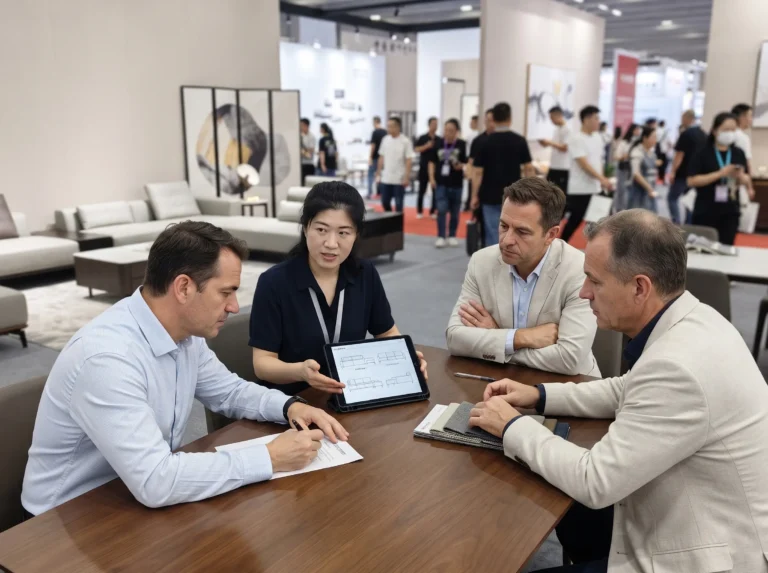





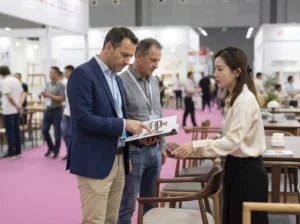

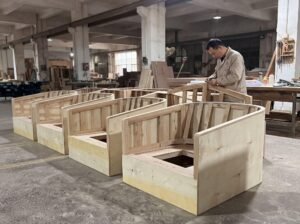
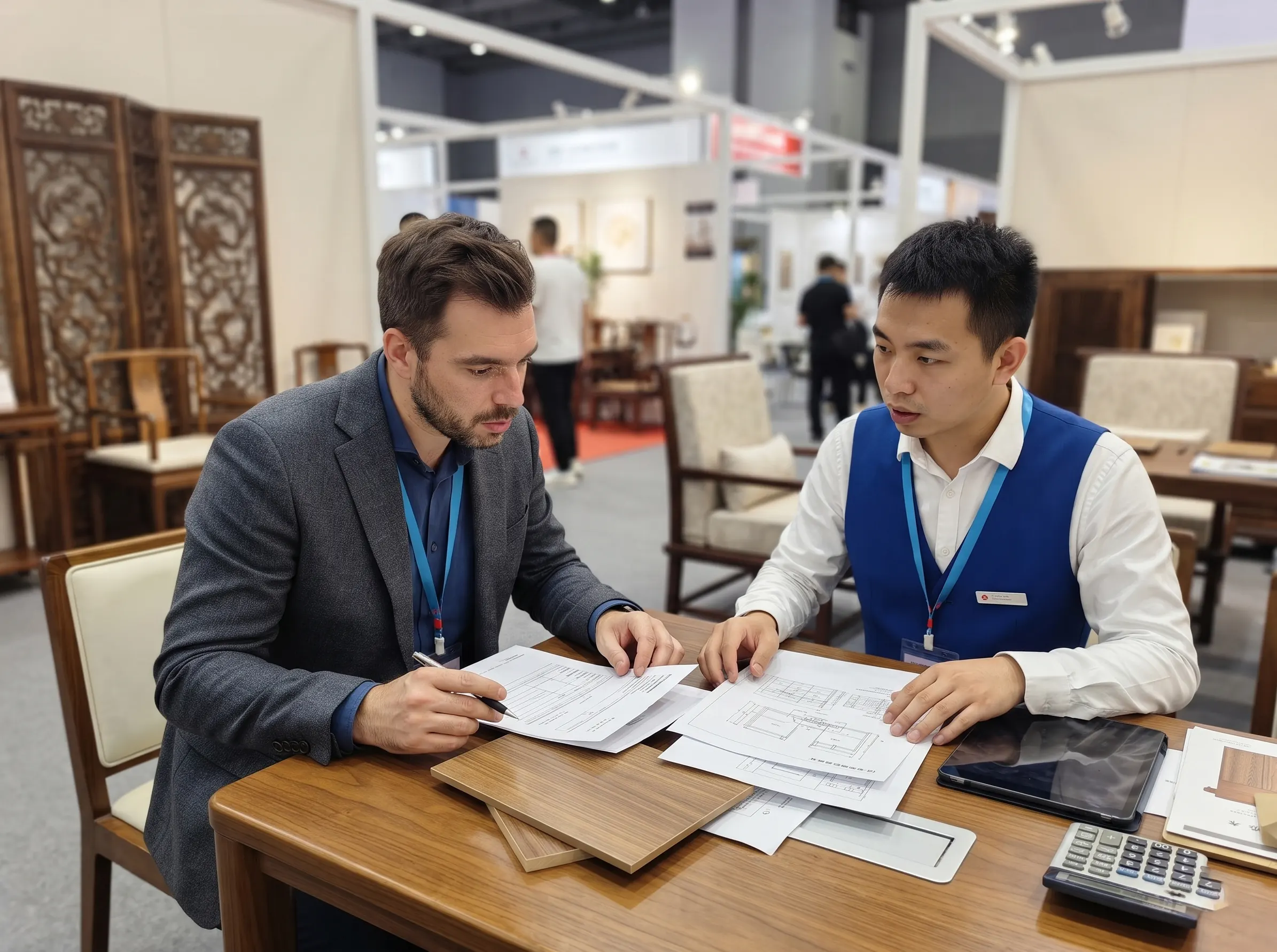
Signing an exclusive agency agreement with a Chinese furniture factory feels like securing a competitive moat. For most distributors, it is not. This article exposes the structural traps in China’s furniture industry exclusive agency model — from factory workarounds and e-commerce leakage to contract clauses that sound strong but mean little in practice. If you are still evaluating suppliers, our guide to spotting fake factory certificates will help you filter out dishonest partners early. For a broader look at supplier negotiation strategy, see our honest cost-benefit analysis of sourcing agents for personal buyers.
The Exclusive Agency Illusion: Why Chinese Factory Contracts Rarely Protect Distributors
Most distributors signing exclusive agency deals with Chinese furniture factories believe they are building a competitive moat. They are not. In China’s furniture belt—from Foshan to Dongguan to Ningbo—exclusive distribution furniture agreements function more as sales hooks than enforceable contracts. The factory’s team will shake your hand, stamp the contract, and smile for the photo. Then they will sell your SKU to three other distributors in your region, list it on 1688 at factory price, and claim their “affiliated company” was never covered. This is not an exception. For reference only, subject to official verification, it is the norm.
The Real Cost of a “Protected” Territory
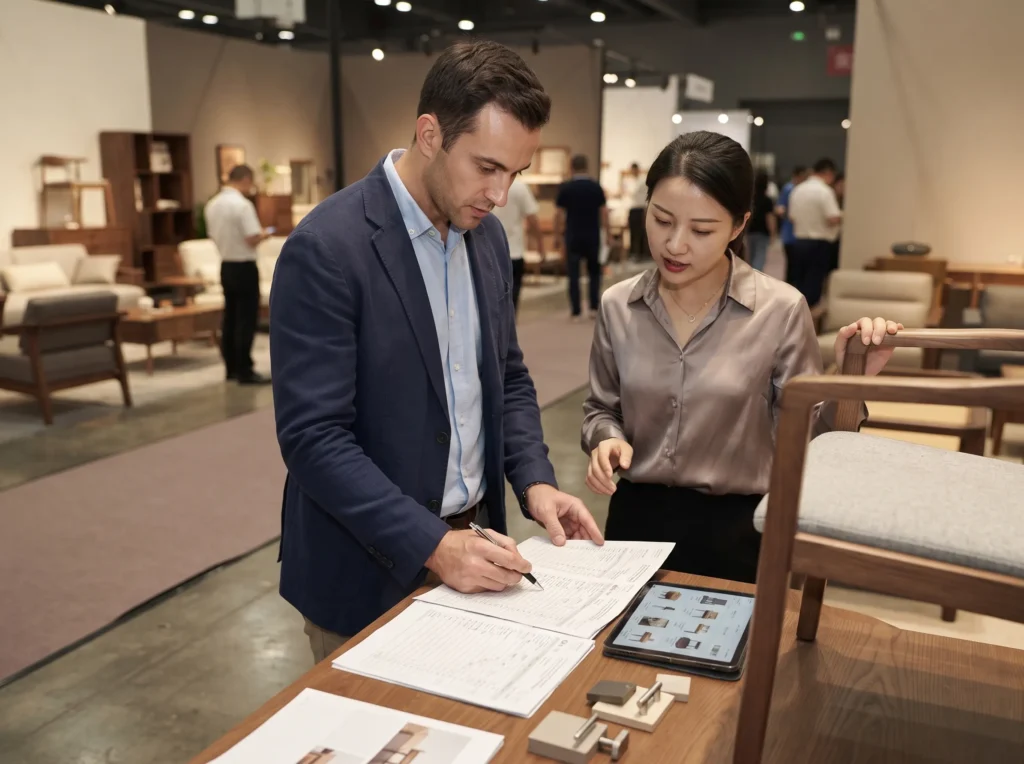
We have sat across from too many angry distributors in Frankfurt, Sydney, and São Paulo who tell the same story. They spent eighteen months building brand awareness, training local sales teams, and absorbing MOQ commitments that strained cash flow. Then they spotted their “exclusive” dining set on a competitor’s floor at 30% below their landed cost. The factory’s response? A shrug, a vague reference to “industry practice,” and a reminder that the annual purchase minimum was not met—conveniently, because the factory never shipped on time. The betrayal stings, but the financial damage is worse: sunk marketing costs, eroded margins, and a customer base that now sees you as just another middleman.
What “Exclusive” Actually Means in China’s Furniture Belt
The word “exclusive” in a Chinese furniture factory’s vocabulary does not carry the same weight it does in Western commercial law. To most factory owners—particularly in the mid-tier upholstered furniture and solid-wood clusters around Foshan Shunde and Dongguan Houjie—an exclusive agency agreement is a customer acquisition tool, not a binding territorial commitment. They view it as a way to lock in a motivated foreign partner who will front the cost of market development. Once that partner proves the product sells, the factory’s incentive to honor exclusivity evaporates. The math is simple: why give one distributor 25% margin when they can sell direct-to-retail on Alibaba International, Temu, or through a shell company that technically never signed your contract?
Defining the “Exclusive Agency” Model in Chinese Furniture Trade
An exclusive agency agreement in this context grants a foreign distributor sole rights to sell specific product lines within defined geographic boundaries. The distributor typically commits to annual purchase volumes, marketing spend, and brand representation standards. In exchange, the factory promises not to appoint other agents, not to sell directly to end-users in that territory, and not to authorize competing channels. On paper, this creates a symbiotic partnership. On the ground in China’s furniture belt, the power asymmetry is structural. The factory controls production, knows the true cost down to the screw, and can spin up new corporate entities faster than most distributors can review a contract.
Exclusive Agreement Types vs. Factory Reality
| Agreement Type on Paper | What the Factory Actually Does | Your Actual Protection Level |
|---|---|---|
| Regional exclusive for dining furniture | Same product sold via 1688 with minor spec changes | Minimal; factory claims “different SKU” |
| Exclusive by product line (e.g., outdoor rattan) | Sub-brand launched under relative’s company name selling identical rattan | None; “affiliated company” exclusion clause |
| Exclusive with annual MOQ threshold | Factory delays shipments, then claims you missed the minimum | Zero; clause designed as escape hatch |
| Exclusive with territorial exclusivity | Direct sales on Amazon/Temu to your region via third-party store | Low; e-commerce channels rarely covered |
| Exclusive with non-compete for similar products | Factory sells “OEM neutral” versions to your competitors | Minimal; neutral goods not defined in contract |
We have reviewed dozens of these agreements pulled from briefcases at the Canton Fair. The pattern is unmistakable. Factories craft exclusivity language that sounds comprehensive while embedding exit mechanisms they control entirely. The annual MOQ trap is especially common: the factory sets a volume target that requires perfect cash flow and logistics coordination, then subtly disrupts production schedules. When you miss the number—through no fault of your own—they declare the exclusivity void. It is not bad luck. It is a designed release valve.
Factory Workarounds: How Exclusivity Gets Broken
| Workaround Tactic | How It Works | Why It Is Hard to Stop |
|---|---|---|
| 关联公司/马甲工厂 (Shell company maneuver) | Factory owner’s relative registers a new company; sells identical products | Legal entity is different; your contract does not bind them |
| 子品牌策略 (Sub-brand bypass) | Same production line, new logo, sold as “different brand” | Contract defines products by name, not by manufacturing specs |
| 1688/Alibaba同款 (E-commerce leakage) | Factory lists product on domestic B2B platforms at lower MOQ | Platform sales often excluded from “territorial” definitions |
| 客户撬单/直供绕过 (Direct supply poaching) | Factory contacts your large retail client after you introduced them | Hard to prove; factory claims client approached them |
| 规格微调 (Specification micro-change) | Changes veneer grade by 0.2mm or cushion density by 5% | Factory claims it is a “different product” not covered by exclusivity |
| 年度返点陷阱 (Rebate trap) | Ties exclusivity to annual rebate tiers you cannot realistically hit | Creates “legitimate” grounds to terminate or dilute exclusivity |
The shell company maneuver is so common in Foshan that local business registration agents advertise it as a standard service. A factory owner can have a new entity licensed, banked, and exporting within two weeks—complete with a fresh Alibaba Gold Supplier badge and no legal connection to your contract. We have seen distributors spend months tracing ownership structures through layers of relatives, offshore holdings, and nominee directors, only to discover the factory transferred core assets months before the dispute began. For reference only, subject to official verification, this asset-hollowing pattern precedes roughly sixty to seventy percent of exclusivity breaches that reach the complaint stage.
Territorial Exclusivity in the E-Commerce Age: Why Geography No Longer Protects You
| Traditional Protection Assumption | Digital Reality | Impact on Your Exclusivity |
|---|---|---|
| “My country is my territory” | Temu/Shein/Amazon ship direct from China to your customers | Geography is irrelevant when the factory sells DTC globally |
| “I control the local retail channel” | Your end customers browse 1688, Alibaba, and TikTok Shop | Price transparency destroys your margin before you open the container |
| “The factory promised no online sales” | Third-party traders buy from factory and list everywhere | Factory claims they did not authorize it; enforcement impossible |
| “My brand registration protects me” | Factory sells unbranded OEM versions identical to your line | No brand infringement if there is no brand on the product |
| “I have the exclusive for Europe” | Factory sells to a Middle East distributor who re-exports to EU | Parallel trade routes bypass your territorial clause entirely |
Here is the uncomfortable truth about territorial exclusivity in 2026: the internet does not respect borders, and Chinese factory sales teams know this better than anyone. When a factory lists your “exclusive” sofa on 1688 at factory price plus 8% margin, a trader in Yiwu can buy it, photograph it, and have it on Amazon US within seventy-two hours. You might hold the exclusive for Germany. That does not stop a Polish e-commerce operator from drop-shipping the same item to Berlin from a warehouse in Shenzhen. The factory will claim innocence. Maybe they are innocent. It does not matter. Your market is flooded anyway.
Contract Red Flags: Clauses That Sound Strong but Mean Nothing
| Clause Wording | Why It Sounds Protective | Why It Fails in Practice |
|---|---|---|
| “Factory grants Distributor exclusive rights for Territory X” | Clear, affirmative language | No definition of “Territory” boundaries; no enforcement mechanism specified |
| “Factory shall not appoint other agents in the Territory” | Direct prohibition | “Agents” undefined; factory sells direct, uses brokers, or sells to traders |
| “This agreement is governed by the laws of China” | Suggests legal recourse | Cross-border litigation costs $50K–$200K+; factory may have no attachable assets |
| “Annual minimum purchase: $500,000” | Creates mutual commitment | Factory controls production timing; can force you to miss the threshold |
| “Affiliated companies are excluded from this agreement” | Seems like narrow exception | Allows factory to route all competing sales through relatives’ entities |
| “Disputes resolved through friendly negotiation” | Sounds reasonable | Factory uses this to stall until you run out of money or patience |
| “Either party may terminate with 90 days’ notice” | Appears balanced | Factory holds inventory leverage; you hold nothing |
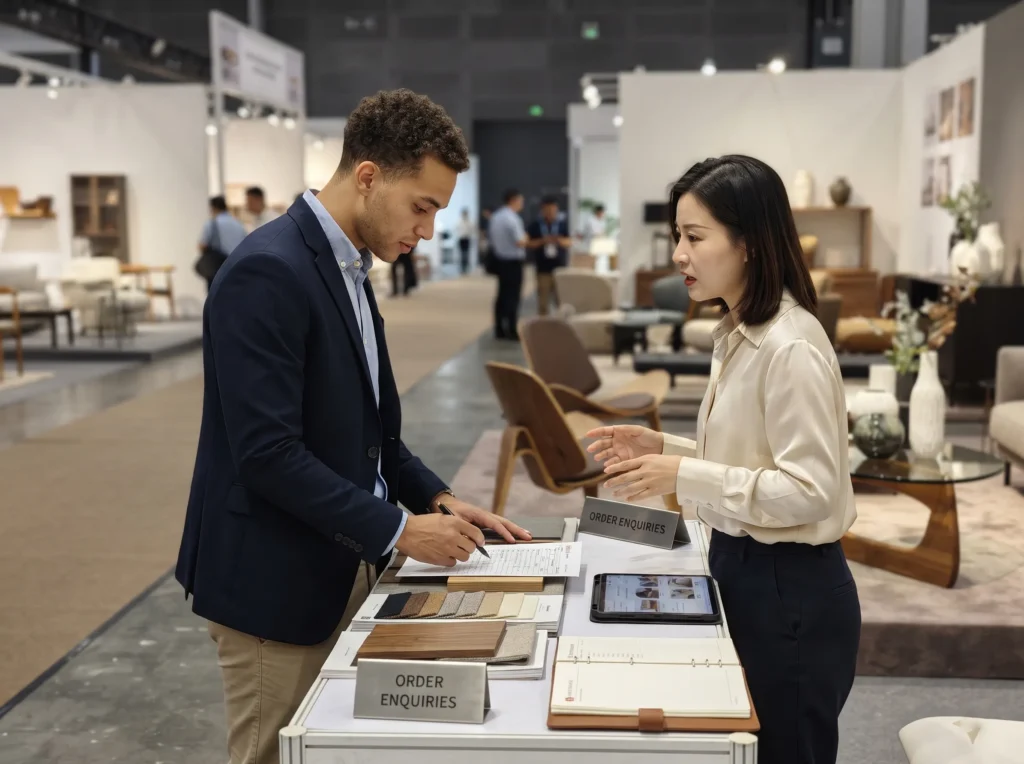
These clauses are not accidents. They are precision-engineered to give the factory maximum flexibility while giving you maximum illusion of security. The “affiliated companies excluded” line is particularly lethal. We have seen contracts where this exception covers any entity sharing a director, shareholder, or even a registered address within a five-kilometer radius of the main factory. That describes roughly eighty percent of the furniture ecosystem in Shunde. The “friendly negotiation” clause is equally destructive: it sounds like good business practice, but in practice it means the factory can ignore your lawyer’s letters for months while continuing to sell into your market.
The Legal Reality: Why Suing a Chinese Factory Is Usually a Dead End
Chinese contract law—specifically the Civil Code of the People’s Republic of China—does recognize and enforce valid agency agreements. The problem is not the statute. The problem is the structure. To sue a factory in China, you need a contract with a legally binding Chinese version, evidence of breach that meets Chinese evidentiary standards, and a defendant with attachable assets. Most distributors have none of these. They signed an English-only contract that the factory never properly chopped. They have screenshots of Alibaba listings, not notarized purchase records. And the factory has already transferred its machinery to a new entity, leaving the original shell with rented premises and minimal registered capital.
The cost calculus is brutal. A basic commercial dispute through a Chinese court or arbitration commission runs $30,000 to $150,000 in legal fees, translation, and travel. Even if you win, collecting on the judgment requires locating assets—which may have been moved to a cousin’s factory across town. For reference only, subject to official verification, fewer than fifteen percent of foreign distributors who pursue formal legal action against Chinese furniture factories recover meaningful damages. Most settle for a fraction or abandon the case entirely.
Red Lines: What Not to Do When Negotiating Exclusivity
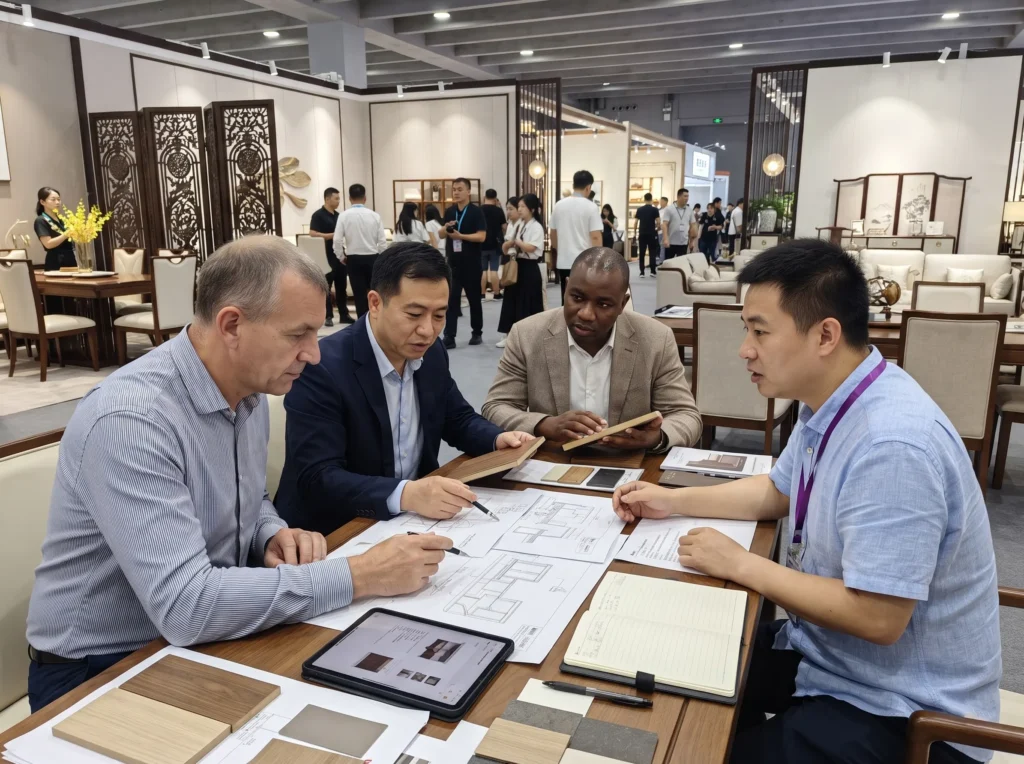
There are four mistakes we see repeated so often they deserve their own warning. First, never accept an English-only contract with no legally binding Chinese counterpart. Chinese courts will not enforce a contract they cannot read in their official language. Second, never ignore the “affiliated companies excluded” clause. If the factory insists on this language, walk away or demand a comprehensive list of every excluded entity with a non-compete covenant. Third, never sign an agreement without a substantive penalty clause that hits the factory’s pocketbook for breach—not just your right to terminate. Termination is not a penalty; it is an escape hatch for the factory. Fourth, never assume digital channels are covered by a geographic exclusivity clause. If the contract does not explicitly name Alibaba, 1688, Temu, Shein, Amazon, and TikTok Shop as restricted platforms, the factory will claim those channels are fair game.
Audience-Specific Playbooks
For Regional Distributors
Do not sign exclusivity without a verified asset check. Before you commit marketing dollars, engage a Chinese law firm to run a basic corporate search on the factory’s registered capital, litigation history, and ownership structure. Demand the contract be bilingual, with the Chinese version controlling. Set the annual MOQ at a level you can hit even if the factory ships two months late—and write in liquidated damages for their delivery failures, not just your purchase shortfalls. Most importantly, secure a personal guarantee from the factory owner. Corporate shells can vanish; personal assets are harder to hide.
For Retailers and Brand Operators
Your leverage is brand control, not territory. Instead of fighting for geographic exclusivity on the factory’s existing catalog, negotiate exclusive rights to co-developed designs with registered design patents in your target markets. This shifts the battleground from “who can sell where” to “who owns the IP.” A factory can spin up a shell company, but they cannot legally copy your registered design in jurisdictions where you hold protection. Also, build direct-to-consumer data: if you own the customer relationship, the factory’s channel-stealing hurts less.
For Cross-Border E-Commerce Sellers
You are already playing on the factory’s home turf. The agency agreement risk here is not territorial—it is pricing and listing control. Negotiate for cost stability clauses with defined periods, not territorial blocks. Focus on exclusive packaging, bundled configurations, or value-added services that the factory cannot easily replicate. And never, ever assume that because you have an exclusive for Amazon US, the factory will not sell the identical item on Temu at half your price. They will. Plan your margin accordingly.

Frequently Asked Questions
Is an exclusive agency agreement with a Chinese furniture factory legally enforceable?
Technically, yes. Under China’s Civil Code, a properly executed agency agreement with clear terms, mutual consideration, and a legally competent Chinese party is enforceable in Chinese courts. The practical problem is that most agreements signed by foreign distributors fail on execution details: English-only contracts, vague territorial definitions, no asset verification, and clauses that heavily favor the factory. Enforceability on paper means very little when the factory has already moved its production equipment to a new legal entity.
Can I sue a Chinese factory for breaching our exclusive territory agreement?
You can, but you probably should not—at least not as a first move. Litigation in China requires substantial upfront investment in legal fees, evidence collection, and court costs. Even with a strong case, the factory may have no attachable assets, may have structured its operations across multiple shell entities, or may simply delay proceedings until you exhaust your budget. For reference only, subject to official verification, the success rate for foreign plaintiffs in furniture industry contract disputes is low, and the recovery rate is even lower. Your first call should be to a Chinese lawyer for an asset check, not a lawsuit.
What does “affiliated companies excluded” really mean in these contracts?
It means the factory can sell competing products through any entity that is not the exact legal signatory to your contract. In China’s furniture belt, this covers the owner’s brother’s factory, his wife’s trading company, his son’s e-commerce storefront, and any number of nominee-registered shells. When we review contracts for distributors, this clause is an automatic red flag. If the factory insists on keeping it, demand a comprehensive list of excluded entities and a negative covenant preventing the owner from holding interests in competing businesses. They will refuse. That refusal tells you everything.
How do I verify if a factory is already selling to other distributors in my region?
Start with digital detective work, not legal threats. Search 1688, Alibaba, Amazon, and Temu for your product images and specifications. Use reverse image search on product photos the factory gave you. Check import records through services like Panjiva or ImportGenius to see if the same HS codes and product descriptions are landing from the same factory to other importers in your country. Visit local furniture fairs in your region and photograph anything that looks like your line. Then confront the factory with evidence, not accusations. Their reaction—defensive, evasive, or dismissive—will confirm what the data already suggested.
What practical steps can I take to protect my market investment without relying on factory promises?
Stop treating the contract as your shield and start treating your business model as your armor. Diversify your supplier base so no single factory can sink your catalog. Build brand equity that transcends any single product line. Invest in customer relationships and after-sales service that factories cannot replicate. If you must have exclusivity, pay for it with purchase commitments that are staged and conditional, not lump-sum upfront. And always—always—keep a backup supplier qualified and ready. The distributors who survive exclusivity breaches are the ones who never bet the farm on a single factory’s word.
Your Move
We have shared what we have seen in the trenches. Now we want to hear from you. Have you signed an exclusive agency deal with a Chinese furniture factory that turned out to be worthless? Did you spot a workaround tactic we missed? Or are you currently reviewing a contract and need a second pair of eyes on a specific clause? Drop your story or your question below. The more we pool our field intelligence, the fewer distributors walk into these traps blind.
Recommended Resource
Interi Furniture specializes in custom furniture manufacturing for residential, hospitality, and commercial projects. Their experience in materials, craftsmanship, and project realization makes them a valuable resource for designers and buyers seeking tailored furniture solutions from China.