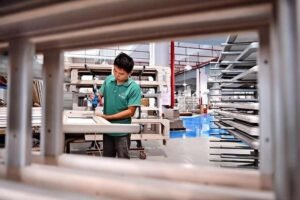


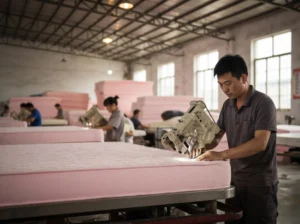


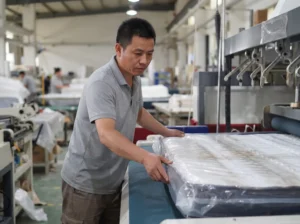





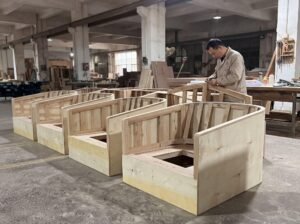
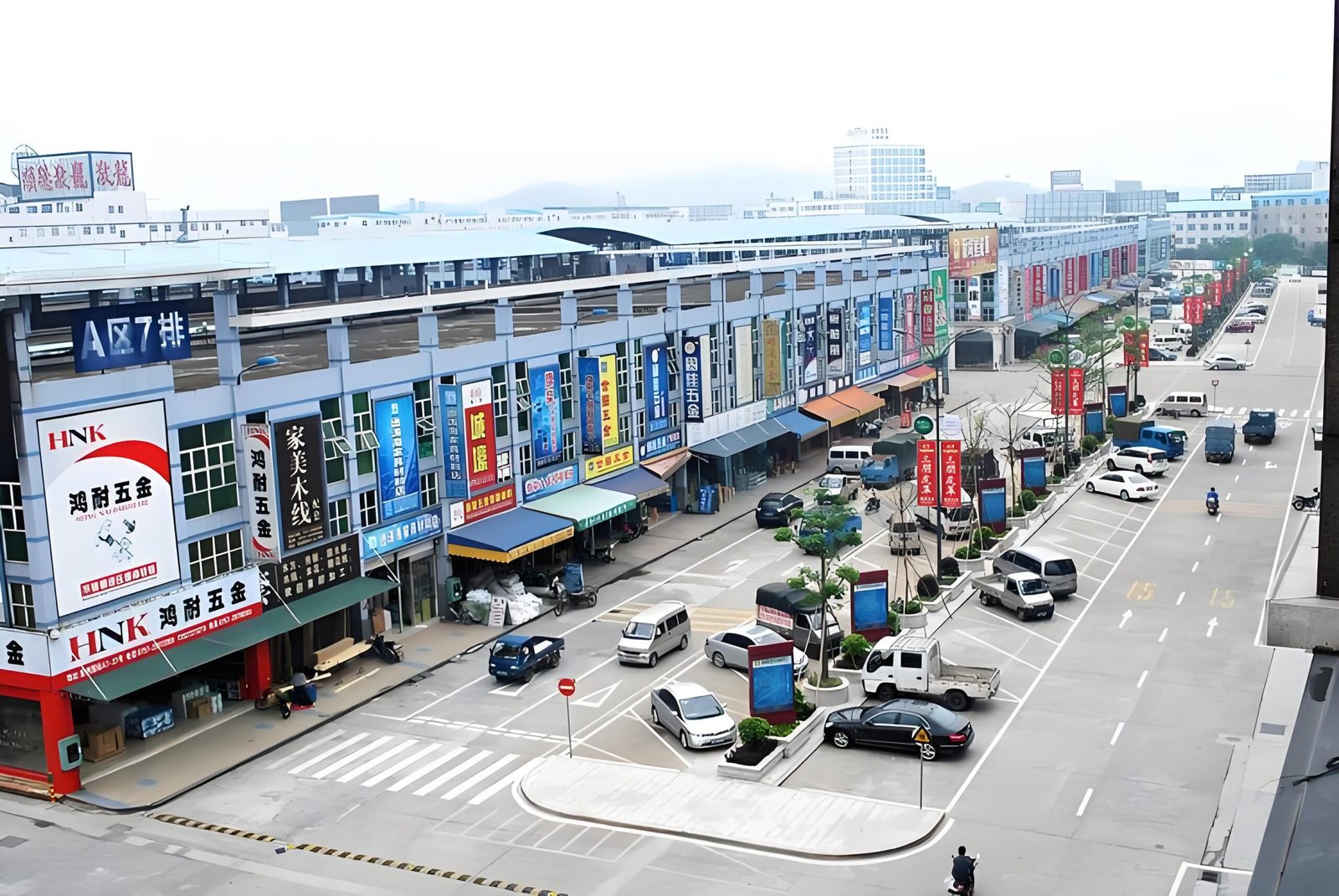
Let me be straight with you. If you think solid wood furniture China all comes from one place, you are setting yourself up for an expensive lesson. China’s solid wood furniture industry is spread across four completely different regional clusters. South China (Guangdong and Fujian), East China (Zhejiang, Jiangsu, Shandong, and Jiangxi), North China (Hebei and the Bohai Rim), and Southwest China (Sichuan) — these are not just dots on a map. They are entirely different worlds when it comes to what they make, how much they charge, and what can go wrong.
Wood furniture makes up about 56% of China’s total furniture market by revenue. In 2025, China shipped roughly $67.8 billion worth of furniture overseas. The buyers who lose money are the ones who fly to Guangzhou, hop in a taxi, and assume every furniture factory in the country is within a 30-minute drive. They are not.
South China: Guangdong and Fujian
Most international buyers land here first. That is fine, but it is also where a lot of bad assumptions start.

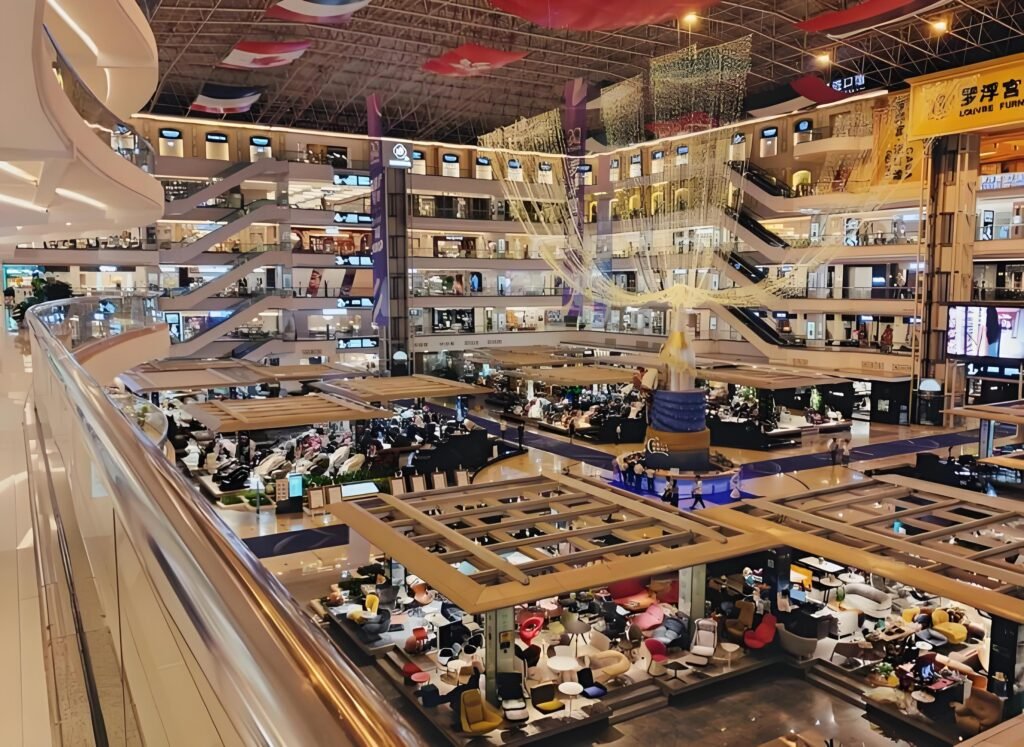
Foshan (Shunde District) — everyone calls it the “Furniture Capital of China.” Lecong has the world’s largest furniture wholesale market: over 10 miles long, more than 3 million square meters of showrooms. Longjiang, next door, is where the actual manufacturing happens. But here is what most buyers miss: Foshan’s real money is in upholstered pieces, hotel FF&E, and high-end custom residential work. Not your run-of-the-mill solid wood furniture. Sure, there are thousands of solid wood and panel furniture enterprises in the district. But they chase the mid-to-high-end domestic market or do custom export orders. If you want a bespoke oak dining table for a boutique hotel, Foshan is your place. If you need 500 identical rubberwood bed frames for Amazon, you are barking up the wrong tree. The MOQs for custom work are steep, and factory-direct pricing almost always means a full container load (FCL).
Dongguan — specifically Houjie Town — is a different animal. These factories live and breathe modern design and export work. They know Western safety standards inside out. The local expo park runs international furniture fairs year-round, so if you want to see what a factory can actually design before you commit, this is where you go.
Fujian (Xiamen and Zhangzhou) plays a completely different game. Xiamen uses its port to pull in hardwoods for high-end solid wood furniture and flooring. The designs are modern and internationally appealing — frankly better suited to Western buyers than a lot of what you see in Guangdong. Zhangzhou, meanwhile, has carved out a niche in steel-wood hybrid pieces — computer desks, storage racks, school furniture — and ships serious volume every year. If FSC certification matters to you, Fujian is ahead of the curve. Certified wood sources are often sitting within 30 kilometers of the factory zones.
East China: The Full Spectrum
If South China is where buyers start, East China is where they should probably spend more time. This cluster is not one city. It is a network of specialized towns that cover almost every category of solid wood furniture you can think of.
Qingdao (Shandong) is China’s biggest solid wood furniture export base, full stop. The city and surrounding Jiaozhou area pump out oak, ash, pine, and beech pieces. Children’s bedroom sets and dining room collections are their bread and butter. Qingdao’s port moves over 30 million TEU containers a year, and wooden furniture has been a signature export for decades. These factories ship to North America, Europe, and Japan. They already know CARB Phase 2, EPA TSCA Title VI, and EN71 compliance. If you need export-grade solid wood furniture with actual documentation, Qingdao is your starting point.
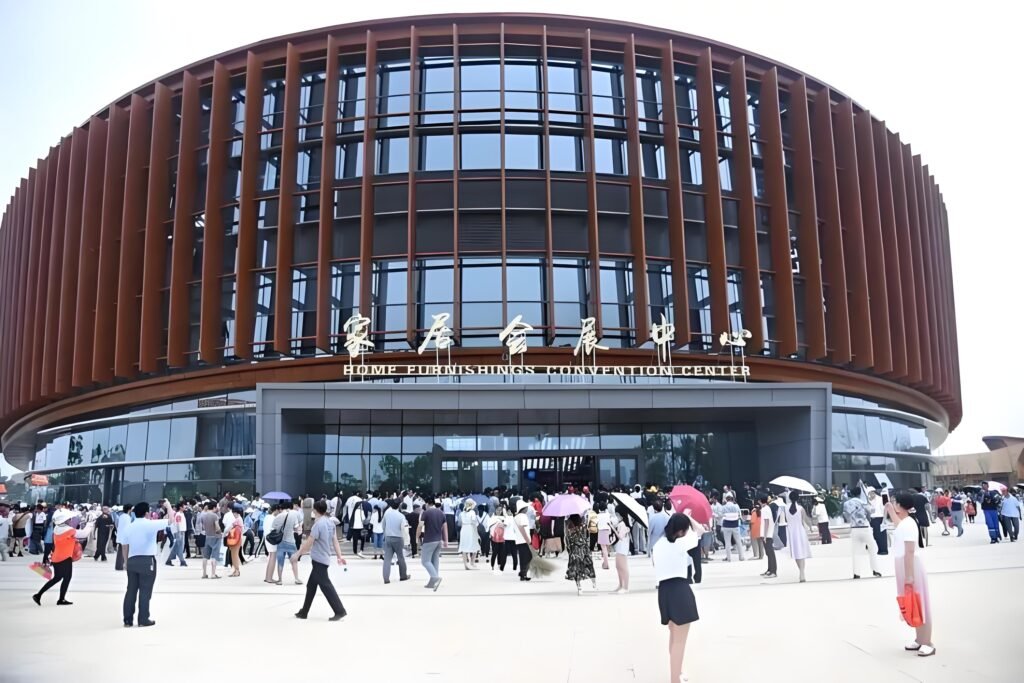
Nankang (Ganzhou, Jiangxi) — this is the one that too many buyers completely ignore. Over 8,000 furniture enterprises operate here, with a cluster output value north of 270 billion RMB. That makes Nankang the largest solid wood furniture manufacturing base in China by volume. Pine, rubberwood, red oak — beds, dining tables, wardrobes, RTA flat-pack units. The math is brutal and simple: Nankang is fast and cheap. A 40HQ container of flat-pack solid wood furniture can be ready in 21 days. But speed and low prices come with a catch. Quality varies. A lot. Budget an extra 3–5% for third-party inspection, or you will regret it. Some e-commerce sellers can negotiate trial orders starting at 50 sets, but real factory-direct pricing only kicks in at FCL volumes.
Suzhou (Jiangsu) blends old-school craftsmanship with modern production lines. The Likou International Furniture City is the largest furniture wholesale market in Eastern China. Suzhou’s own factories lean toward mid-to-high-end solid wood and whole-home customization. In 2025, online sales made up over 42% of their total revenue. That tells you these guys are not stuck in the past.
Anji (Zhejiang) is the world’s office chair factory. Over 160 million chairs roll out of this place every year. If you are sourcing solid wood dining chairs or office seating with wood frames, you will probably end up splitting your order: Nankang or Qingdao for the wood frames, Anji for the seating hardware and upholstery.
North China: Hebei and the Bohai Rim
This cluster is built for China’s domestic market. Exports to Russia, Mongolia, Korea, and Southeast Asia happen, but they are not the main event.
Xianghe (Hebei) is the biggest furniture wholesale center in northern China. Three million square meters, over 7,000 shops, more than 10,000 brands. But here is the thing: Xianghe is a trading hub, not a pure manufacturing cluster. The products come from Fujian, Zhejiang, Beijing, Tianjin, and local Hebei factories. You can get fast customization and relatively low MOQs, which is great for small-to-medium retailers. But factory-direct pricing? Forget about it. You are buying through trading companies or showroom operators, and they are taking their cut.

Bazhou (Shengfang Town, Hebei) has the official title of “China Distinctive Custom Furniture Industry Base” from the China National Furniture Association. Thousands of manufacturers here focus on metal and glass furniture, but solid wood dining and office pieces are also produced. The draw is cost-effective, large-scale manufacturing with access to northern timber resources.
Dalian (Liaoning) is Northeast China’s contribution to the solid wood furniture map. Zhuanghe City hosts the “China Solid Wood Furniture Industry Base,” and Pulandian District is known as “China Cabinet City.” Both have significant solid wood cabinet production. The catch? This cluster is far from the main export ports, so it is more relevant for buyers targeting Japan and Korea than anyone shipping across the Atlantic.
Southwest: Sichuan
Chengdu runs western China’s furniture manufacturing scene, with output expected to hit $5.9 billion in 2025. Xindu and Chongzhou districts handle solid wood furniture, panel furniture, and whole-home customization. But here is the number that matters: over 85% of what they make stays in China. Domestic sales dominate.
The real strategic advantage for international buyers is the Chengdu-Europe Railway Express. Goods reach Lodz, Poland in 12 days. That is nearly three weeks faster than ocean freight. If you are targeting Belt and Road markets or just need European delivery faster than a container ship can manage, Chengdu is worth a look. But be warned: export experience is thinner here than in Guangdong or Shandong, and finding English-speaking sales support is hit or miss.
Core Regional Comparison
| Cluster | Key Cities | Core Solid Wood Categories | Grade Positioning | Best For | Key Strength | Primary Risk |
|---|---|---|---|---|---|---|
| South China | Foshan, Dongguan, Xiamen | Custom dining, hotel FF&E, high-end residential, mahogany | Mid-to-high-end | Boutique projects, design-forward brands | Mature supply chain, design talent, port access | High MOQs for custom work; not ideal for commodity RTA |
| East China | Qingdao, Nankang, Huzhou, Suzhou | Oak/pine dining sets, children’s furniture, RTA flat-pack, flooring-integrated pieces | Full spectrum (low to high) | Volume buyers, e-commerce sellers, certification-heavy markets | Diverse specialization, raw material port access, scalable automation | Quality variance in Nankang; fragmented supplier landscape |
| North China | Xianghe, Bazhou, Dalian | Domestic-market solid wood, cabinets, office furniture | Mid-range | Northern China domestic market, Russia/Korea routes | Low MOQs at trading hubs, large wholesale markets | Limited export experience; language barriers outside trading companies |
| Southwest | Chengdu, Xindu | Domestic solid wood, custom home packages | Mid-range | Belt and Road markets, speed-to-Europe via rail | Rail logistics advantage, government-backed industrial parks | Thin export experience; primarily Mandarin-speaking sales teams |
Sourcing by Need: Which Cluster Fits Your Order
Export-certified solid wood for the US or EU?
Start with Qingdao (Shandong) or Dongguan (Guangdong). These factories already have compliance frameworks in place. Nankang can deliver certified products too, but you will need to verify everything yourself. Do not take their word for it.
Amazon or Wayfair RTA flat-pack?
Nankang was basically built for this. The shared CNC machining centers let factories switch SKUs fast. Trial orders from 50 sets are possible, but factory-direct pricing only makes sense at FCL volumes. That is just how the math works.
Bespoke solid wood for hotels or high-end residential?
Foshan (Guangdong) and Xiamen (Fujian) are your targets. Foshan’s design ecosystem has thousands of showrooms. Point at a style, tell them what to change, and they will do it. Xiamen’s factories are excellent at modern, internationally appealing hardwood designs using imported American and European timber.
Solid wood dining chairs or office seating with wood frames?
Split the order. Nankang or Qingdao for the frames, Anji (Zhejiang) for the seating mechanisms and upholstery. Their modular chair production lines fit wood frame orders well.
Personal buyers or small importers?
Direct factory access in Foshan is tough because of high MOQs. Dongguan’s expo-oriented model makes it nearly impossible for small buyers. Nankang offers the lowest practical MOQs for solid wood, but you will need a sourcing agent or quality inspector. Xianghe’s trading-friendly structure lets you buy smaller quantities, but you are paying a markup for the convenience. That is the trade-off.
Risks, Traps, and Verification Tactics
The veneer masquerade.
I have seen this too many times. A factory in Nankang or a lower-tier East China shop slaps a “solid wood” label on a dining table that has solid oak legs and a veneered MDF top. It is technically not a lie, but it is not what you think you are buying. Always ask for cross-section photos. You want to see continuous wood grain running through the full thickness. And write “100% solid hardwood construction” into your contract. Not “solid wood.” Not “real wood.” One hundred percent solid hardwood. Anything less leaves the door open for games.
MOQ bait-and-switch.
Some Nankang suppliers list low MOQs on trade platforms to get you on the phone. Then the conversation shifts, and suddenly the real minimum is much higher. Get MOQ, sample pricing, and trial order terms in writing before you book a flight. Not after. Before.
Photography fraud.
Lecong and Xianghe showrooms are full of beautiful products. Here is the problem: the factory showing you that gorgeous oak table might not actually make it. They are displaying pieces from dozens of different manufacturers. Ask to see the production line for your specific SKU. Verify that the workshop handles the wood species you are ordering. If they hesitate, walk away.
Environmental compliance gaps.
Qingdao and Fujian factories are generally solid on international standards. Nankang and Xianghe? Not always. Some suppliers hand you domestic test reports and hope you do not know the difference. They are not SGS. They are not Intertek. For reference only, subject to actual verification: always cross-check certificate numbers directly with the issuing body. Do not trust a PDF screenshot.

Frequently Asked Questions
Is Foshan the only place to source solid wood furniture in China?
Absolutely not. Foshan dominates upholstered and high-end custom work, but for commodity solid wood, RTA flat-pack, and export-certified oak pieces, Nankang (Jiangxi), Qingdao (Shandong), and Chengdu (Sichuan) are just as important. For volume buyers, they are often cheaper too.
What is the typical MOQ difference between Nankang and Foshan?
Nankang factories will often take trial orders starting at 50 sets for RTA solid wood furniture, though FCL pricing is the real factory-direct rate. Foshan custom solid wood manufacturers usually want a full 40HQ container or equivalent value per SKU. Some high-end workshops will not even talk to you for less than 100 pieces per design.
How do I know a factory is using real solid wood, not veneer over MDF?
Demand edge-cross-section photos. Look for continuous grain through the thickness. Put “100% solid hardwood construction” in the contract. For large orders, pay for a third-party inspector to do random saw-cut sampling at the factory. Be extra careful in mid-range hubs where cost pressure pushes suppliers to cut corners on materials.
Can small buyers or individual importers buy directly from these clusters?
Direct factory access is hard in Foshan and Dongguan because of high MOQs. Nankang is the most accessible entry point for small buyers, but language barriers and quality variance mean a local agent or inspector is not optional — it is essential. Xianghe lets you buy smaller quantities through its trading-hub structure, but the per-unit price reflects that convenience.
Which cluster is best for FSC-certified or eco-friendly solid wood?
Fujian (Xiamen/Zhangzhou) and Qingdao (Shandong) are ahead of the pack on FSC-certified supply chains. Certified raw materials are often available within 30 kilometers of factory zones. Nankang is getting better, but you need explicit certification verification. Many factories there use sustainably sourced timber without formal chain-of-custody documentation. That gap matters if your market requires proof.
What is the realistic lead time for solid wood furniture from China?
Stocked or RTA designs from Nankang: 21 to 30 days to container readiness. Custom solid wood from Foshan or Qingdao: 45 to 75 days, depending on how complex the finishing is and whether the wood species is in stock. And here is something a lot of buyers forget: if you are ordering during humid summer months, add 7 to 10 days for drying and acclimatization. Wood moves. Respect that, or your pieces will warp after delivery.
Final Word
Solid wood furniture China is not a single pin on Google Maps. It is four completely different ecosystems, each with its own pricing logic, lead times, and ways to trip you up. The buyers who get burned are the ones who treat it like a single destination. The buyers who win do their homework before they ever book a flight. They match their product type, order volume, and certification requirements to the right cluster. That is the difference between a profitable container and an expensive mistake.
Recommended Resource
Interi Furniture specializes in custom furniture manufacturing for residential, hospitality, and commercial projects. Their experience in materials, craftsmanship, and project realization makes them a valuable resource for designers and buyers seeking tailored furniture solutions from China.