









“Two years. Same question. Same answer.”
That’s what the buyer from Texas said last month. Guangzhou. July. Humid as a sauna. We’re in a hotel conference room that smells like instant coffee and air conditioning. He slides a photo across the table. $899 sofa. Made in China. Sells like crazy in Dallas. “Anyone stateside build this at volume?”
I tell him no. Not at the price he needs. Not at the scale his business runs on.
He leans back. Sighs. “Two years,” he repeats. “I’ve been asking that same damn question for two years.”
And that right there? That’s the whole story. US furniture imports aren’t just a trend. They’re the air American retailers breathe. You can’t escape it. You can’t tariff your way out of it. The dependency is baked in. Hard-coded. Structural. Call it whatever you want. It’s not changing in your lifetime.
The Numbers Don’t Lie (Even When Politicians Do)
In 2025, America imported roughly $52 billion in furniture. Let that sink in. Fifty-two billion. Vietnam shipped $14.48 billion of it. Mexico sent $10.01 billion. And China—yeah, China, the country every headline says we’re “decoupling” from—still landed $9.75 billion on American docks. BEA and Census Bureau data. Public record. Go look it up.
Domestic production? Not zero. BLS tracks NAICS 337. 2024 output clocked around $76.2 billion per FRED. So imports aren’t crushing us ten-to-one. But here’s the thing: they don’t need to. $52 billion against $76 billion. Do the math. Imports are eating a massive chunk of what Americans actually buy. Real analysts—the ones who crunch numbers instead of tweeting them—consistently get well over fifty percent by value. Could be 55. Could be 60. Depends if you’re weighing dollars, cubic meters, or bedroom sets versus office chairs. Point is: it’s a lot. A whole lot.
America swallows over 42 percent of global furniture imports by value. Nobody else is even in the same zip code. For every dollar of upholstered wooden furniture we export, we import fifteen. Trade economists tracked that ratio through 2024. Read it again. Fifteen to one. We buy furniture. We don’t sell it. That’s not an opinion. That’s arithmetic.
North Carolina Used to Be the Center of the Universe
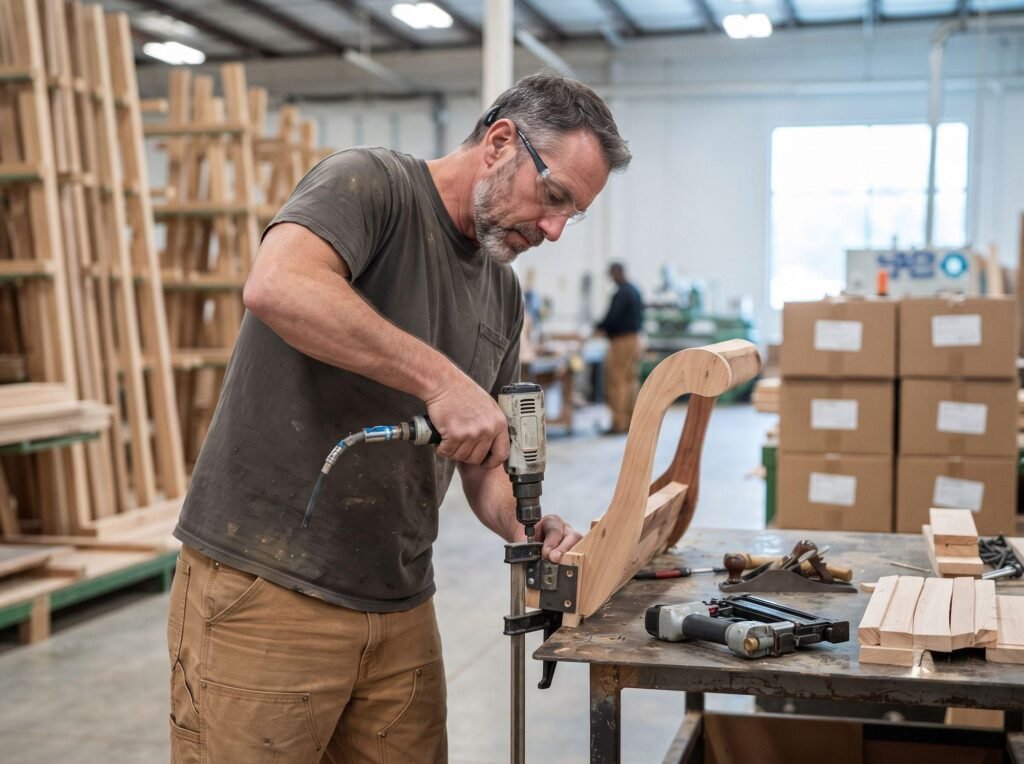
Late 1800s. High Point, North Carolina. Hardwood forests everywhere. Rail lines running through like veins. Cheap farm labor. The Piedmont region became a furniture cluster almost by accident—timber, transport, workers, all stacked on top of each other. By 1955, about 60 percent of American furniture came from within 150 miles of High Point. The Southern Furniture Exposition pulled in buyers from coast to coast. Thomasville. Hickory. Lenoir. You walked down Main Street and you smelled varnish and sawdust. That smell meant paychecks. That smell meant towns that worked.
Then it all went to hell.
1990 to 2019. Michigan—Grand Rapids, the actual “Furniture City”—shed 41 percent of its furniture manufacturing jobs. In the furniture sector specifically, NAICS 337, Illinois and Ohio together lost 15,700 positions. That’s 36 percent, gone. BLS published that in 2021. North Carolina’s household furniture employment? Tanked from 64,528 workers in 1992 down to 25,235 in 2012. Sixty-one percent. Poof. Like it never happened.
Nationwide, wood products and furniture bled roughly half a million jobs after peaking in April 2000. Sixty percent of that workforce—vanished. Not because Americans stopped buying sofas. Because Americans bought MORE sofas. Bigger ones. Sectionals. Recliners. The jobs disappeared because a sofa isn’t just a factory building. It’s a web. A living, breathing web.
Fabric mills. Foam producers. Spring makers. Hardware forgers. Veneer shops. Finishing houses. When the big brands—La-Z-Boy, Ethan Allen, Bassett—shifted production to China in the 1990s and early 2000s, they didn’t move alone. Their suppliers followed. Why wouldn’t they? The orders were in Dongguan now. You go where the orders are. That’s business. That’s always been business.
Once the suppliers left, the skilled labor evaporated. Upholsterers who could hand-tie eight-way springs retired without apprentices. Frame carpenters who could read grain patterns like a book found nobody to teach. Cut-and-sew operators—workers who cut fabric and sew covers—moved on to other trades. Community colleges in North Carolina and Mississippi stopped running furniture programs. Why run them? No jobs at the end of the line. The knowledge didn’t just leave town. It aged out. It died. And dead knowledge doesn’t come back because you waved a tariff at it. Tariffs don’t resurrect skills. They don’t rebuild ecosystems. They just make stuff more expensive.
Why Tariffs Are a Band-Aid on a Broken Leg
Since 2018, Chinese furniture has carried Section 301 tariffs of 25 percent on top of normal duties. 2025? Reciprocal tariffs pushed some Chinese goods past 125 percent effective rate. Then in March 2026, USTR opened a Section 301 investigation into structural excess capacity across sixteen economies. Vietnam’s on that list. The probe covers aluminum, steel, chemicals, electronics—broad manufacturing sectors. Furniture wasn’t explicitly targeted, but trust me, the signal’s loud and clear. Vietnam’s rapid expansion is being watched. Closely.
So what happened? Vietnam overtook China as the top furniture source in 2025. Total US furniture imports? Still hovering near $52 billion. Buyers didn’t stop importing. They didn’t even slow down. They just changed the return address on the shipping label. Same container. Different port.
Why don’t tariffs bring production home? Three reasons. None of them have anything to do with red states or blue states or whatever cable news is screaming about tonight.
One. The supplier base is gone. Kearney’s 2025 reshoring report found only 5 percent of manufacturers could source raw materials locally in 2024. For furniture, Appalachian hardwood might still be around. But specialized plywood? High-density foam? Polyester fill? Custom recliner mechanisms? Most of it crosses an ocean. A sofa has dozens of parts. If even five critical inputs are imported, “Made in USA” is an assembly sticker. Not a manufacturing reality. You’re screwing together imported parts and calling it domestic. That’s not manufacturing. That’s Lego with a flag on the box.
Two. Labor’s scarce. Mid-2026, NAICS 337 employment sits around 331,000 nationwide. That’s every segment—household, office, institutional, mattresses. Aging workforce. Young people? They’re not entering the trade. Production workers earn about $24.50 per hour. Sounds decent until you realize how few skilled upholsterers or frame makers are left to actually hire. You can’t find them. They don’t exist anymore. They retired. They died. They became real estate agents.
Three. Capital isn’t interested. The Reshoring Initiative projected furniture industry reshoring job announcements would drop 70 percent in 2025. From 1,970 down to roughly 600. One of the steepest declines of any sector they track. Batteries and semiconductors grab the headlines and the federal money. CHIPS Act cash goes to chips. IRA incentives go to clean tech. Furniture? It’s low-tech. Labor-heavy. Thin-margin. No boardroom in their right mind greenlights a $100 million sofa plant when tariff policy might flip before the concrete dries. That’s not pessimism. That’s math. That’s rational self-interest.
What America Actually Still Builds (Spoiler: Not Much You Can Afford)
This isn’t a funeral. American furniture making didn’t die. It retreated into corners where it still wins. And wins big.
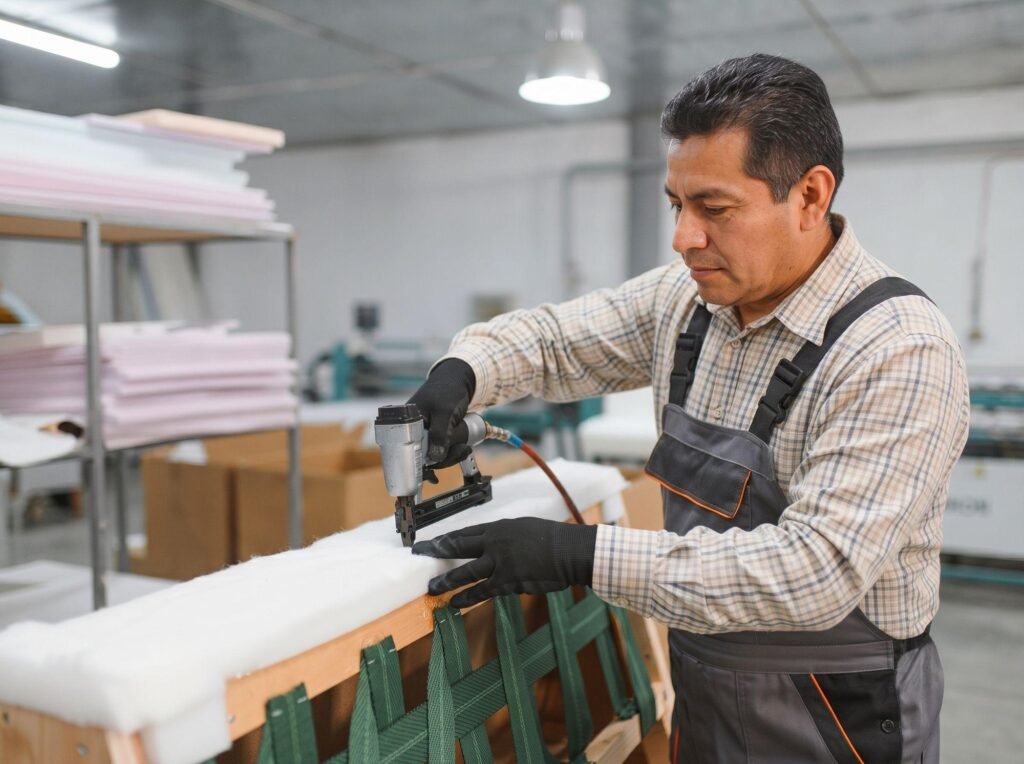
High-end custom upholstery survives in North Carolina and Mississippi. Hickory Chair. Century Furniture. They serve designers and wealthy clients who want bespoke finishes and eight-week delivery. These pieces depend on skilled handwork, not some robot on an assembly line. Price points? $3,000 to $8,000 per sofa. At that level, US labor costs don’t even register. The client doesn’t care. They care that nobody else has that sofa. That their neighbor can’t buy the same one at Costco.
Office and contract furniture holds ground too. Steelcase. Herman Miller. Knoll. Domestic plants for corporate and government clients who need Buy American Act compliance or rapid replacement parts. Smaller volumes than consumer retail, but the margins work. Government contracts are steady. Boring, but steady. Predictable.
Mattresses are a weird outlier. Memory foam and hybrid beds roll up and ship efficiently. Several US producers added domestic capacity since 2020. Even here, though, specialty foams and fabrics often come from abroad. So it’s not a pure win. It’s a partial win. A qualified win.
The pattern? Domestic manufacturing lives where speed, customization, or regulation creates a premium that justifies higher costs. It doesn’t live in mass-market upholstered sofas, wooden bedroom sets, or dining tables—the stuff that fills Costco aisles and Amazon warehouses. That’s imported. All of it. Every single piece.
The Supply Web Gap (Or: Why Your $699 Sofa Will Never Be Made in America)
You want to see the problem? Look at this.
| What Mass Production Actually Needs | What the US Has Left |
|---|---|
| 500+ SKU upholstery fabrics, prints, fire-retardant treatments | Limited domestic mills; most fabric imported from China, Vietnam, India |
| Multiple foam densities—polyurethane, memory foam, polyester fill | Some domestic foam, but specialty grades imported; mattresses partially covered |
| Engineered plywood, hardwood, metal tubing, corner blocks | Appalachian hardwood yes; engineered plywood and metal frames partly imported |
| Recliner mechanisms, sofa-bed hinges, leg fasteners, springs | Limited domestic forging; most hardware from Asia |
| Skilled upholsterers, cut-and-sew operators, frame carpenters, finishers | Aging workforce; ~331,000 total across all furniture (BLS); niche custom shops only |
| Staining, lacquering, powder-coating at scale | Small-batch finishing viable; mass coating largely offshored |
| All of the above within 50 miles for rapid prototyping | Dispersed remnants; nothing like Dongguan or Foshan density |
That’s why a US factory can build a $4,000 custom sofa for a Manhattan designer but can’t touch a $699 retail price point. The inputs either don’t exist here or cost too much to assemble into something competitive. It’s not rocket science. It’s just… missing. Gone. And nobody’s bringing it back.
What Buyers Should Actually Do
If you’re a US retailer, e-commerce operator, or hospitality buyer, listen up. Import dependency is baked in. Hard-coded. No tariff wall changes that within your planning cycle. The question isn’t whether to import. It’s how to import without lighting your money on fire.
Vietnam leads US furniture imports now, but its growth has attracted attention. That March 2026 USTR investigation puts Vietnam under a microscope. Mexico offers proximity and USMCA tariff advantages, though its furniture exports lean heavily on parts and metal frames, not finished upholstery. China still has unmatched ecosystem depth—fabric, foam, hardware, finishing, all in one region—but carries the heaviest tariff load.
The smart buyers I know don’t bet the farm on one country. China portfolio for complex custom work. Vietnam portfolio for standard wooden frames. Mexico portfolio for quick-turn metal or RTA (ready-to-assemble) items. And they visit factories. Personally. With their own eyes. A country label tells you almost nothing about quality consistency, environmental compliance, or whether the supplier’s still solvent next year. A supplier audit tells you that. The plane ticket is cheaper than a container of garbage. Way cheaper.
Why Ecosystems Crush Tariffs Every Single Time
America’s import dependency in furniture isn’t a policy failure. It’s a demonstration of how industrial ecosystems actually work. And ecosystems don’t care about your tariff schedule. They don’t read the news. They just… are.
China didn’t win these jobs by undercutting on wages alone. It built a vertically integrated cluster where a designer in Dongguan can pull 200 fabric swatches, sample three foam densities, and test five spring gauges—all within fifty miles. Frame prototype comes back in forty-eight hours. That density creates capabilities no tariff can replicate. None. Zero. Zip.
Development cycles compress. Micro-adjustments to cushion firmness or leg height happen without shipping samples across the Pacific. Workers learn by doing, at scale, every single day. The ecosystem is the competitive advantage. The factory is just the building that houses it. The building doesn’t matter. The network matters.
For Chinese suppliers reading this: cheap labor isn’t your edge anymore. Vietnam and Indonesia beat you there. Your edge is ecosystem completeness. The buyers who survive the next tariff round will be the ones who can engineer, sample, and revise inside that ecosystem. Double down. Build design studios. Stock material libraries. Invest in digital mock-up capabilities. The factory that wins the next decade acts like a product development partner, not a cut-rate assembler. Because cut-rate assemblers are a dime a dozen. Partners are rare. Partners are gold.
The Long View (Bring Coffee, This Takes a While)
Will the US ever rebuild a mass-market furniture base? Maybe. But “maybe” spans generations, not election cycles. Reviving the ecosystem means bringing back upstream suppliers, training tens of thousands of new workers, and persuading investors to fund low-margin factories in a high-interest-rate environment. Even the most optimistic reshoring advocates admit furniture isn’t a priority for federal subsidies. Washington writes checks for semiconductors and batteries. Nobody writes them for sofa plants. Nobody. Not now. Not next year. Probably not next decade.
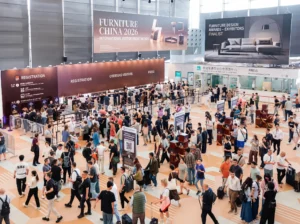
The more probable future looks exactly like now. America stays a design and retail hub consuming furniture made elsewhere. High Point still runs the world’s largest home furnishings market twice a year. Showrooms are packed. Buyers fly in from everywhere. Factories within a hundred miles? Not so much. The showrooms are full. The factories are ghosts. And that’s not changing anytime soon.

You Keep Asking Me This Stuff, So Here Are the Answers
Does any US factory still make upholstered sofas at scale?
A few, but almost exclusively for premium or contract markets. Mass-market sofas under $1,500? Effectively all imported. Domestic producers handle custom orders, quick-turn hospitality projects, and government contracts where Buy American rules apply. That’s it. That’s the list.
How much of US furniture consumption is imported?
Exact percentages shift by category and measurement method. But by value, imports represent a substantial majority. Analysts combining Census import data with BEA domestic production estimates consistently find imported furniture accounts for well over half of apparent consumption. Well over. Like, way over.
Can tariffs bring furniture manufacturing back?
Tariffs moved the geography—Vietnam and Mexico now rank above China—but didn’t cut total import volume. Restoring domestic production requires rebuilding an entire supplier ecosystem, not just raising border costs. Most industry observers treat that as a multi-decade project, not something a tariff cycle fixes. So no. Not in your business lifetime. Not in mine either.
What furniture is still made in the USA?
High-end custom upholstery, contract office furniture, and some mattresses retain significant domestic production. Mass-market wooden bedroom sets, dining furniture, and standard upholstered sofas are predominantly imported. The stuff you actually buy at the store? Imported. All of it. Every time.
Is Vietnam a safe long-term alternative to China?
Vietnam grew fast and now leads US furniture imports, but faces trade risks. In March 2026, USTR included Vietnam in a broad Section 301 investigation into structural excess capacity across sixteen economies. Furniture wasn’t among explicitly listed target sectors, but the investigation signals Vietnam’s rapid expansion is under increased scrutiny. Treat Vietnam as one node in a diversified portfolio, not a permanent safe harbor. Diversify. Always diversify. Never put all your eggs in one basket. Especially when that basket might get tariffed next year.
What should buyers look for in a supplier?
Country of origin matters less than capability. Look for factories with in-house engineering, transparent material sourcing, and a track record in your product category. Visit if you can. The best suppliers in China, Vietnam, or Mexico share one trait: they solve problems before the container leaves the dock. The bad ones? They create problems you don’t find until the container arrives. And then it’s too late. Way too late.

Recommended Resource
Interi Furniture specializes in custom furniture manufacturing for residential, hospitality, and commercial projects. Their experience in materials, craftsmanship, and project realization makes them a valuable resource for designers and buyers seeking tailored furniture solutions from China.