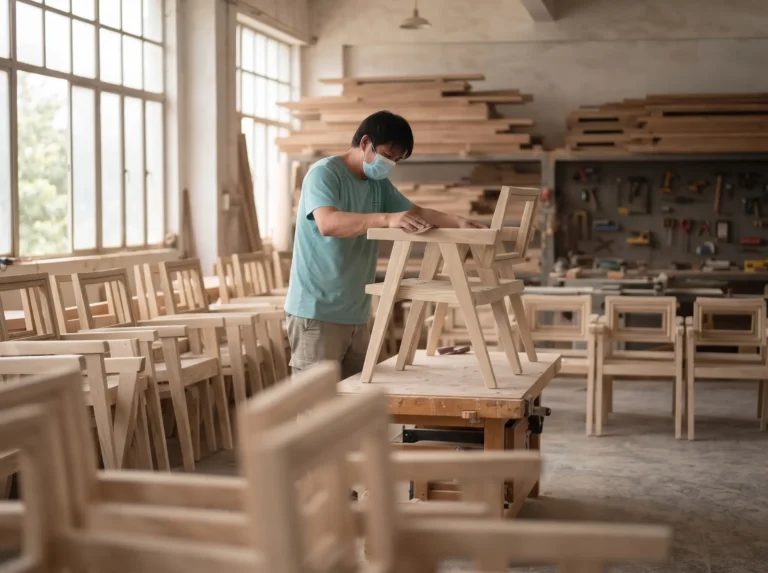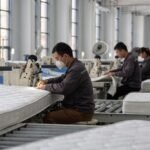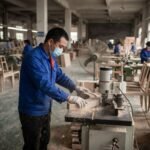



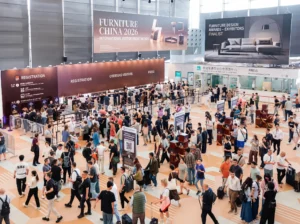





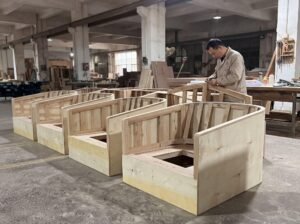
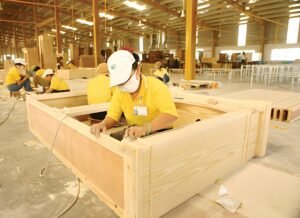


Okay so I was in this factory in Foshan last March, right? And the owner—this guy’s been making dining sets for twenty years—pulls out this spreadsheet that smells like cigarettes and fresh lacquer. Points at a cell. “$180 in 2021. $215 now.” Shrugs. “Not everything went up the same. But everything went up.”
That’s when it hit me. Chinese furniture export prices have been climbing for three straight years. And nobody’s walking away. RMB 483 billion in exports for 2024. Up 7%. Mattresses and bedding? Up 8.8%. First four months of 2024 alone hit RMB 168.55 billion—a 20.4% spike over the same window in 2023. Record territory. You’d think buyers would be sprinting for the exits. They’re not. Not even close.
So what gives?
The spreadsheet that changed my mind
That factory owner in Foshan didn’t give me a pitch deck. No fancy presentation. Just raw numbers. His six-piece solid wood dining set went from $180 per unit in 2021 to $215 now. His neighbor’s upholstered sofa plant? Similar bump. “Spring mattresses went absolutely crazy last year,” he said, tapping the screen. “Up 28% in export value. Bedroom furniture? 22%.”
He leaned back. “It’s not one big shock. It’s death by a thousand price increases. Hardware up $8. Foam up $12. Wood up $15. By the time you add it all up, that $180 set is $215 and the buyer—who’s been sourcing from me for eight years—doesn’t even blink. Because where else is he gonna go?”
That last part. That’s the whole story.

The Vietnam mirage
Everyone thinks Vietnam is the answer. Cheaper labor. No Section 301 tariffs. On paper, for a mid-volume program—three to eight containers a month—Vietnamese furniture lands 18–28% cheaper than equivalent Chinese product after duty, freight, and handling. On paper.
I had coffee with a procurement manager in Shenzhen last October. Two years of dual-sourcing between Foshan and Binh Duong. “We saved twelve percent on the FOB quote moving to Vietnam,” he said, stirring his coffee. “Then we lost nine percent on rework, air freight for late components, and a customer return spike.” He looked at me. “The net was barely worth the headache. And that was for a simple solid wood program. I wouldn’t even try a mixed-material custom job over there.”
Here’s the import pricing reality nobody puts in their pitch deck.
Labor: Vietnam wins on direct hourly cost. No question. A worker in Binh Duong costs maybe 60% of what you’d pay in Dongguan. But furniture isn’t pure assembly. Automated cutting, CNC routing, UV finishing—these reduce the labor share of total cost. The gap narrows fast.
Components: This is where China crushes it. Need custom metal brackets turned around in five days? In Foshan, that’s a Tuesday afternoon phone call. In Vietnam, those brackets might need to be sourced from China anyway, adding two to three weeks and a layer of customs risk. That same procurement manager told me his Vietnamese supplier once missed a hotel delivery because the foam core—imported from Guangdong—got stuck at the border for eleven days. “We saved money on the quote,” he said. “We lost the client on the timeline.”
Tariffs: Yes, Section 301 adds 25% to Chinese furniture bound for the U.S. But Vietnam isn’t tariff-free. Its MFN rate plus reciprocal duties land around 20% for furniture. The advantage is real, but it’s five percentage points. Not twenty-five.
Shipping: Shenzhen to Los Angeles takes 14–18 days. Hai Phong? 18–22 days, and the sailing schedule is less frequent. For a retailer restocking before holiday season, those extra four days can mean selling out versus sitting on dead inventory.
QC: SGS, Bureau Veritas, Intertek—they’ve got offices all over Guangdong and Zhejiang. In Vietnam, coverage is concentrated around Ho Chi Minh City and Hanoi. Factory in a secondary province? Getting an inspector on-site adds cost and delay.
Customization: China handles complexity. A mixed-material hotel guestroom set with metal accents, upholstered headboards, and custom lacquer? That’s a Tuesday in Foshan. Vietnam does solid wood, upholstery, and rattan well. But metal-wood hybrids, intricate mixed finishes, rapid design pivots? The infrastructure isn’t there yet.
Reorder speed: China’s supply chain density means you can turn a rush reorder in two to three weeks. In Vietnam, component availability can stretch that to six or eight weeks. For a catalog business that needs to restock fast movers, that’s a dealbreaker.
The math isn’t close for complex programs. For simple, high-volume, labor-heavy SKUs—think rattan chairs, basic solid wood tables—Vietnam makes sense. But for anything with mixed materials, tight deadlines, or custom specs? The hidden costs eat the labor savings alive.
Why the ecosystem matters more than the wage
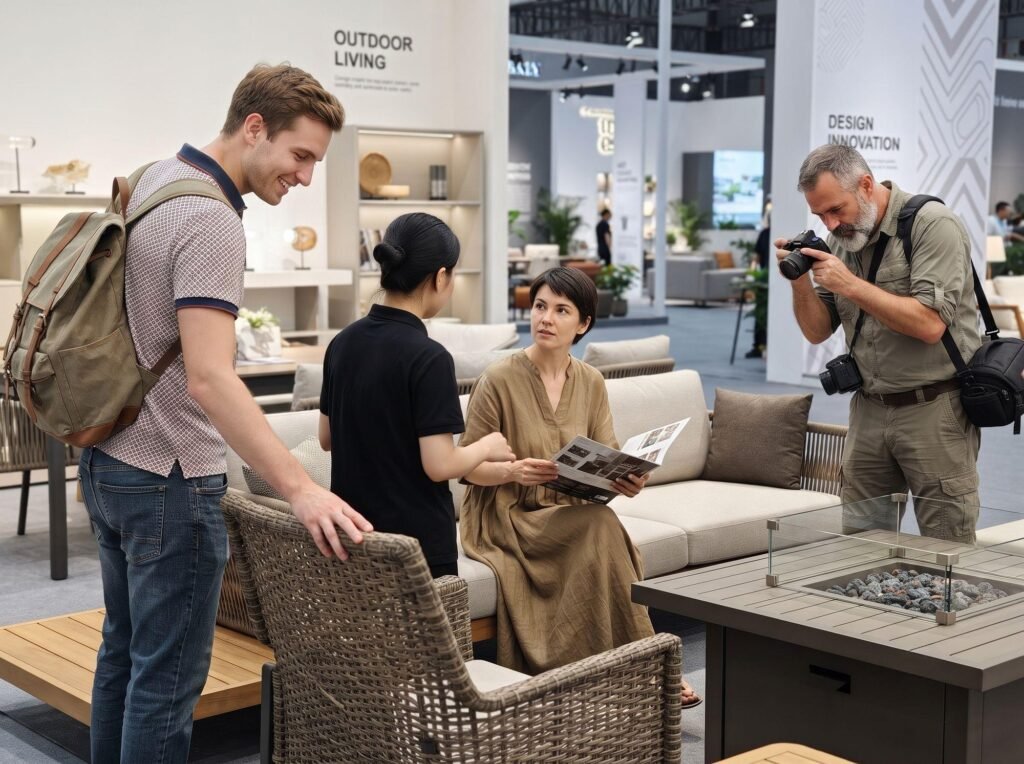
Picture Foshan. Within a two-hour drive, a manufacturer can grab metal fittings from one district, drawer slides from another, foam in ten densities from a third, performance fabrics from a fourth, tempered glass from a fifth, and CNC tooling from a sixth. Need a custom lacquer that matches a Pantone chip? There’s a shop that’s been perfecting that finish for two decades. Running low on walnut because a shipment got held up at the port? Three phone calls, and ash from a domestic supplier hits your loading dock in forty-eight hours.
Vietnam doesn’t have this. Its localization rate for furniture components sits at roughly 15–20% for most categories. Hardware, foam, fabric—much of it still comes from China. So Vietnamese factories end up in a strange spot: they compete with Chinese manufacturers while buying Chinese inputs. When the RMB wobbles or China tightens an export restriction, production schedules in Binh Duong feel it within a month or two.
The workforce depth matters too. China’s furniture belt has been at this for forty years. A technician in Dongguan who spent fifteen years calibrating UV lacquer lines can spot a finish defect in three seconds. That kind of knowledge doesn’t transfer to a new plant in Vietnam overnight. Vietnamese workers are younger, hungrier, growing fast. But for complex joinery, multi-material assembly, and high-gloss finishing, the experience gap is real. You can feel it in the rework rates.
The four forces pushing costs up (and they’re not going away)
China manufacturing costs didn’t just wake up one day and decide to rise. Four things are pushing them, and they’re all structural.
Raw materials got tighter. In the first five months of 2025, China imported 24.146 million cubic meters of wood—down 13.3% from the same stretch in 2024, with the import bill falling 14.3%. Domestic construction is in the dumps, but export factories still fight over the same supply pool. One analyst in Guangzhou told me the squeeze added maybe 0.5–1% to production costs for manufacturers in Guangdong and Zhejiang. Not catastrophic. But not nothing.
Labor keeps climbing. Guangzhou’s minimum wage is RMB 2,300 a month. Shenzhen sits at RMB 2,360. Load in social insurance, housing funds, and overtime, and a production worker in Guangdong costs $6.00–$8.50 per hour fully loaded. Five years ago? About $4.50–$5.50. Vietnam pays $3.50–$5.00 for comparable assembly work. The gap is real. And it’s getting wider.
Currency pressure doesn’t help. The RMB traded around 7.17 to the dollar as of mid-July 2025. The IMF, in its February 2026 Article IV consultation, noted China’s real effective exchange rate has depreciated roughly 14% since 2021. In theory, a weaker yuan makes exports cheaper in dollar terms. But timber, foam chemicals, and hardware are also priced in dollars. When those inputs spike, the currency advantage gets eaten alive. Net effect? Close to zero. Sometimes slightly negative.
Compliance is the silent killer. China’s GB 18584-2024 standard on harmful substances in furniture kicked in July 2025, replacing older rules with stricter limits across every product category. Extra testing, extra documentation, sometimes reformulation. The EU’s Deforestation Regulation (EUDR) and U.S. carbon-footprint tracing are layering on top. One Foshan sofa factory lost a $2 million Walmart order because it couldn’t produce the carbon docs. These aren’t outliers. They’re the new floor.
The product mix shift nobody noticed
Even in 2025, when U.S.-bound wooden furniture exports dipped 5% in Q1 and total furniture shipments to America fell 13.8% in the first half, the overall export volume didn’t crater. Some orders got rerouted, sure. Vietnam picked up a slice. Mexico got a look. But the mass exodus everyone predicted? Never showed up.
Part of the reason is hiding in plain sight: China isn’t shipping $80 particle-board TV stands anymore. It’s shipping $400 electric sofas with USB ports and memory-foam mechanisms. The average FOB on an OEM electric sofa used to sit around $180–$250. In ODM trim? Now $280–$400. Brands with their own designs retail them at $800–$1,200 in Europe and North America. The value moved up the chain, and the buyers moved with it.

What different buyers should actually do
Importers and distributors moving standardized product in volume should already be dual-sourcing. Keep the complex, high-margin SKUs in China. Shift the simple, high-volume, labor-heavy stuff to Vietnam or Mexico if the numbers work. Just don’t expect a Vietnamese consolidator to handle a 40-SKU mixed container with the same ease as a Foshan broker.
Hotel and hospitality buyers need to think in timelines, not just unit cost. A resort opening in eighteen months can’t absorb a six-week delay because a Vietnamese foam supplier missed a shipment. China’s supply chain density isn’t just a cost factor—it’s insurance. Lock in longer-term contracts for custom furniture packages. The cost trajectory is up, but so is the predictability.
E-commerce and private-label sellers have the hardest call. Margins are thin. Section 301 tariffs bite. For U.S.-bound goods, Vietnam’s tariff edge is real. But the MOQ and flexibility gap is real too. Chinese factories routinely take 200–500 unit MOQs for custom designs. Vietnamese factories often start at 50–200 units, which sounds better until you realize their component sourcing constraints make small-batch customization slower and less reliable. Test both markets. Track total landed cost, not just FOB. And budget for more QC oversight in Vietnam.
Designers and architects specifying custom pieces should lean into China’s ODM and OBM capabilities. The design premium is now baked into the value chain. Chinese factories aren’t just executing drawings anymore. They’re proposing material swaps, engineering workarounds, and finish optimizations that cut cost without cutting quality. That consultative layer doesn’t exist in newer manufacturing hubs.
Where this is headed (my read, not a forecast)
I’m not in the forecasting business. But the structural trends are visible enough to sketch a direction.
Chinese furniture export prices will likely keep rising in nominal terms. Labor costs aren’t reversing. Compliance requirements will only tighten as EUDR enforcement ramps up and the U.S. adds carbon-tracing layers. Raw material volatility is baked into the global timber market. The manufacturers that survive won’t be the ones squeezing margins thinner. They’ll be the ones moving up the value chain—absorbing cost into better product.
Vietnam will keep growing. It’s now among the world’s largest furniture producers and the second-biggest exporter. According to the General Department of Vietnam Customs, its wood and wood products exports hit a record $16.25 billion in 2024, up 20.3% year-over-year, beating the previous high of $15.8 billion from 2022. Wooden furniture alone made up roughly $6.44 billion of that total. But Vietnam’s growth will be concentrated in categories where its advantages—lower labor, tariff access, simpler product profiles—outweigh its supply-chain gaps. It won’t replace China as a comprehensive sourcing hub in the next five years.
What we’re watching isn’t a mass exodus. It’s a sorting. Simple, standardized, labor-intensive furniture is drifting to lower-cost markets. Complex, customized, time-sensitive furniture is staying in China—and commanding higher prices because buyers finally understand what they’re paying for.
That’s the quiet shift. It isn’t greed. It isn’t inflation. It’s the market pricing in what China’s furniture ecosystem actually delivers.

FAQ
Why haven’t buyers switched to Vietnam if Chinese prices are rising?
Some have, but only for specific product types. Vietnam works for simple, standardized, labor-heavy pieces. For complex custom programs, the hidden costs—component sourcing delays, longer lead times, quality inconsistencies on rushed orders—usually erase the labor savings. Buyers sort by product type. They don’t flee.
How much have Chinese furniture export prices actually increased?
Depends on the category. Overall export value growth has outpaced volume growth for a decade, which means unit prices are climbing. Spring mattresses jumped 28.27% in export value in 2024. Wooden bedroom furniture rose 22.88%. For mid-range solid wood and upholstered pieces, FOB quotes have climbed roughly 8–15% since 2022.
What is the biggest hidden cost of sourcing from Vietnam?
Component dependency. Vietnam’s localization rate for furniture inputs is estimated at only 15–20%. Many factories import hardware, foam, and fabric from China. When Chinese input costs shift or export restrictions tighten, Vietnamese production feels the ripple within one to two cycles.
Are U.S. tariffs the main reason Chinese furniture is more expensive?
For U.S.-bound goods, Section 301 tariffs add 25%. That’s a big hit. But even without tariffs, Chinese manufacturing costs have risen because of labor, raw materials, currency pressure, and compliance. The tariff amplifies an existing trend. It didn’t create it.
Should I lock in long-term pricing with my Chinese supplier?
For complex custom programs with long lead times, yes. China’s cost trajectory is upward, and supply-chain density is a scarce resource. Locking in 12–18 month pricing on confirmed designs protects you from raw-material volatility. For commodity items, shorter contracts with volume flexibility might work better.
Is Chinese furniture quality improving or just getting more expensive?
Both. Prices rise partly because the product mix upgrades—more smart furniture, electric mechanisms, high-end custom work. Compliance standards like GB 18584-2024 and EUDR also force manufacturers to invest in better materials and processes. The low end still exists, but it’s shrinking as a share of exports.
Recommended Resource
Interi Furniture specializes in custom furniture manufacturing for residential, hospitality, and commercial projects. Their experience in materials, craftsmanship, and project realization makes them a valuable resource for designers and buyers seeking tailored furniture solutions from China.