





Getting past the showroom and into the workshop in Dongguan is not about money. It is about signals. The factory gate is easy. The workshop door is earned.
I have walked factory floors in Dongguan for years. Buyers with $50,000 orders get the full tour when their RFQ is sharp. Buyers with $500,000 orders get the showroom treatment when they treat the visit like a shopping trip. Same factory. Two doors. This guide explains how the door opens.
Dongguan’s Furniture Map: Where the Real Capacity Sits
Dongguan sits between Guangzhou and Shenzhen. Its furniture industry clusters in two towns that do completely different jobs.
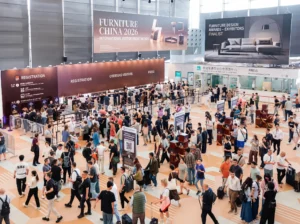
Houjie calls itself China’s “furniture exhibition and trade capital.” Town materials say more than 500 furniture enterprises above designated size and over 100,000 workers. The five-kilometer Furniture Avenue packs showrooms, leather traders, textile agents, foam converters, and hardware dealers into one corridor. Since 1999, Houjie has hosted the International Famous Furniture (Dongguan) Fair — now past its 50th session. In 2023, Dongguan was picked alongside the China National Furniture Association to build a “world-class furniture industry cluster.” Houjie is where you browse and negotiate. It is not where you manufacture. Walk into Houjie expecting factory-floor transparency and you will leave disappointed.
Dalingshan is twenty minutes away. “China’s No.1 furniture export town.” Taiwanese manufacturers arrived in the early 1990s and built it into an OEM powerhouse supplying European and American brands, retail chains, and five-star hotels. At its peak, the town’s shipments hit roughly one-seventh of China’s furniture exports. Dalingshan is where Western-style audits, tolerance sheets, and container-loading discipline first entered the local industry. If Houjie is the face, Dalingshan is the muscle.
Other towns matter. Liaobu does precision components. Chang’an feeds hardware and fittings. But for furniture buyers, the Houjie-Dalingshan axis is the map. Head straight to Dalingshan without understanding Houjie’s showroom culture and you will miss half the negotiation leverage. You need both.
Two Doors, One Factory: The Showroom and the Workshop
Most city guides miss this. The same Dongguan factory runs two parallel universes.
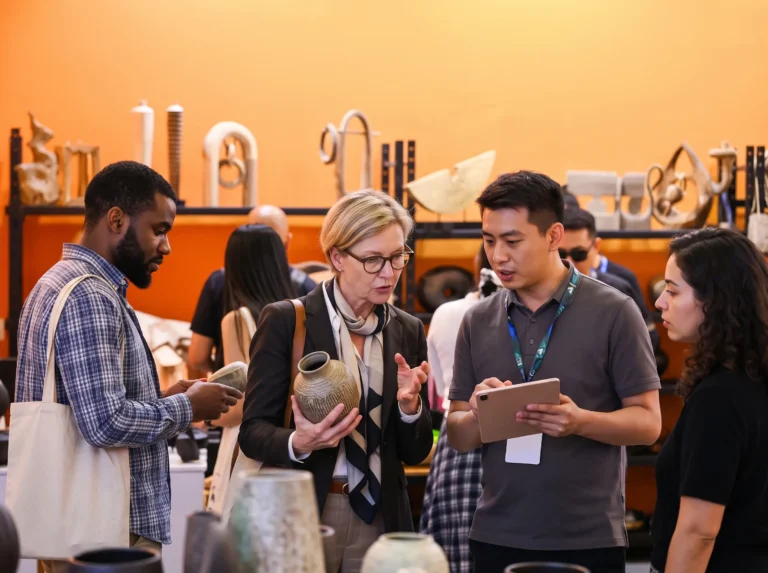
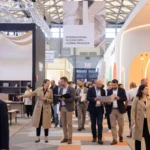
The showroom door opens to anyone with a business card. Bright lights. Staged sets. Polished samples. A sales team trained to say yes. The showroom shows what the factory wants to sell. It is a marketing stage, not a diagnostic tool.
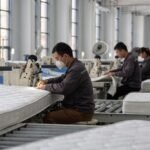
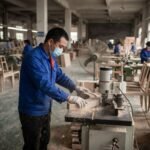
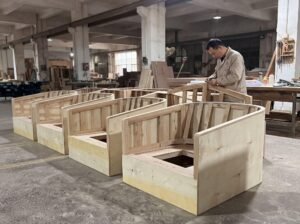
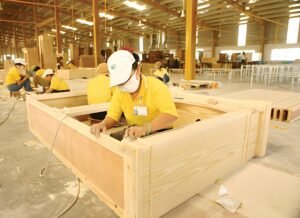
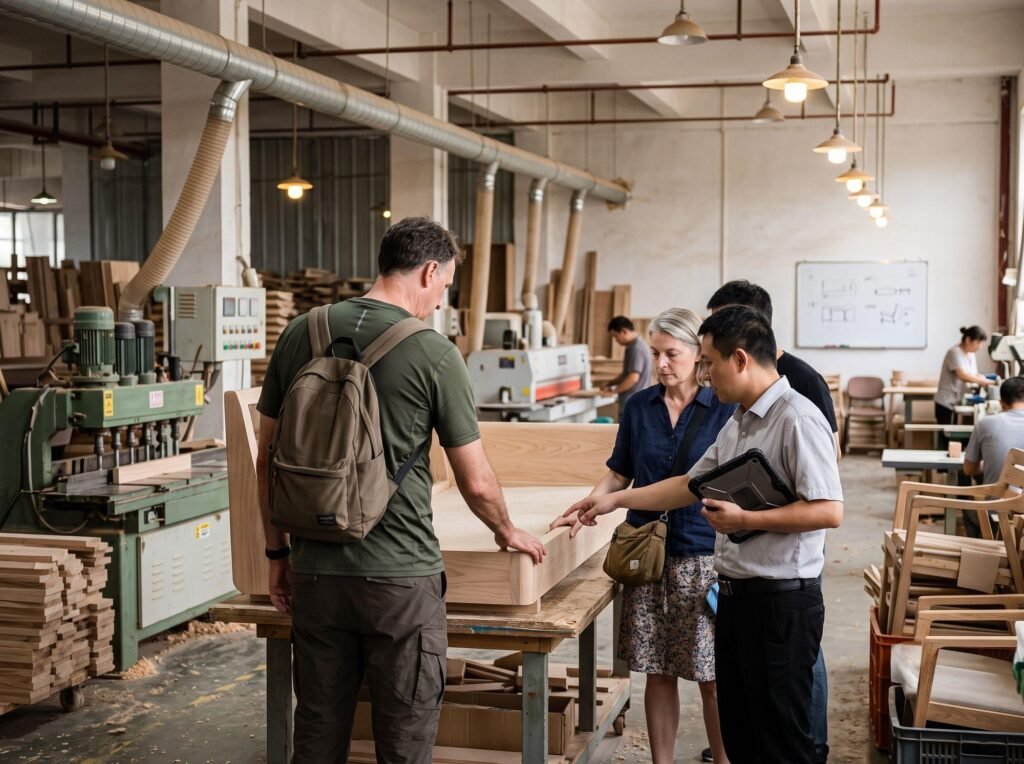
The workshop door opens to buyers who send the right signals. Dim fluorescent lights. Sawdust. Half-finished frames. Workers in motion. The smell of solvent and leather. The workshop shows what the factory actually does. It reveals capacity bottlenecks, quality drift, and whether the sample you loved was made by a master craftsman or a rushed apprentice on overtime.
The gap between these two doors is where sourcing disasters are born. A buyer who signs off in the showroom discovers six months later that the production batch looks nothing like the sample. Wood grain runs the wrong way. Upholstery stitching skips corners. Frame joints use dowels instead of mortise-and-tenon. These are not accidents. They are what happens when you evaluate a factory through its marketing department instead of its production floor.
The Dongguan factory access guide that actually works starts here: access is not geographic. It is behavioral. The factory does not lock the workshop door. It just does not open it for visitors who act like tourists.
Before You Go: Earning the Workshop Door
Factories sort visitors into three buckets within the first ten minutes. I have watched this happen dozens of times.
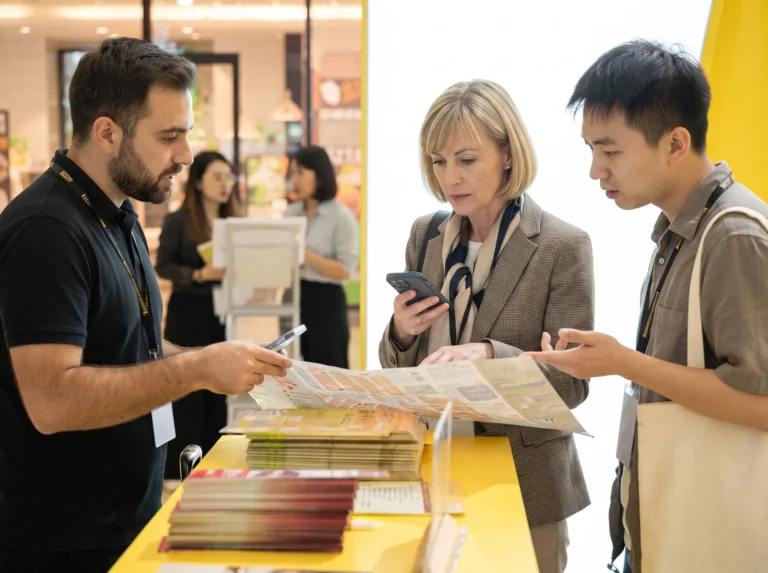
Bucket one: the tourist. No appointment. Walks in and asks “what do you make?” without saying category, material, or order structure. Wants to “see everything.” Gets the showroom tour and a WeChat contact that goes cold two days later.
Bucket two: the project buyer. Has a specific product in mind. Brings drawings, material specs, or reference samples. Knows their target MOQ — the smallest batch a factory will accept. Asks about lead times, payment terms, and QC protocols. Gets a factory tour with the cutting room and assembly line. Does not see the finishing station or the QC lab. Close, but not close enough.
Bucket three: the serious buyer. Arrives with a structured RFQ — a formal document with product specs, quantities, and delivery requirements. Mentions previous factory audits or third-party inspection reports. Asks about equipment models, worker certification, and where the raw materials come from. Wants to see in-process QC records, not just the final inspection table. Gets the full floor walk. The rejected-goods corner. The overtime schedule board. The manager’s actual office, not the meeting room with the leather sofa.
The difference is not budget. I have seen it. $50,000 order, full tour. $500,000 order, showroom only. The factory is not being rude. It is being efficient. A precise RFQ predicts a smooth production run. A vague inquiry predicts headaches.
The practical rules:
Email or WeChat at least one week ahead. Specify your company, product category, estimated annual volume, and why you are coming. “We want to evaluate your facility for a potential partnership” works. “We want to visit your factory” does not. The second sentence tells the factory you have no plan. The first tells them you might be worth the time.
Attach a one-page product brief. Dimensions. Materials. Finish requirements. Target quantity. Even if the numbers are rough, the format signals that you know what you are doing.
Schedule visits between Tuesday and Thursday, 9:00 AM to 11:30 AM or 2:00 PM to 4:30 PM. Monday mornings are for production planning. Friday afternoons are for payroll and shipping. Lunch hours — 12:00 to 1:30 PM — are sacred. Do not schedule over lunch. The factory manager will remember that you disrespected his workers’ break time, and he will not forget it.
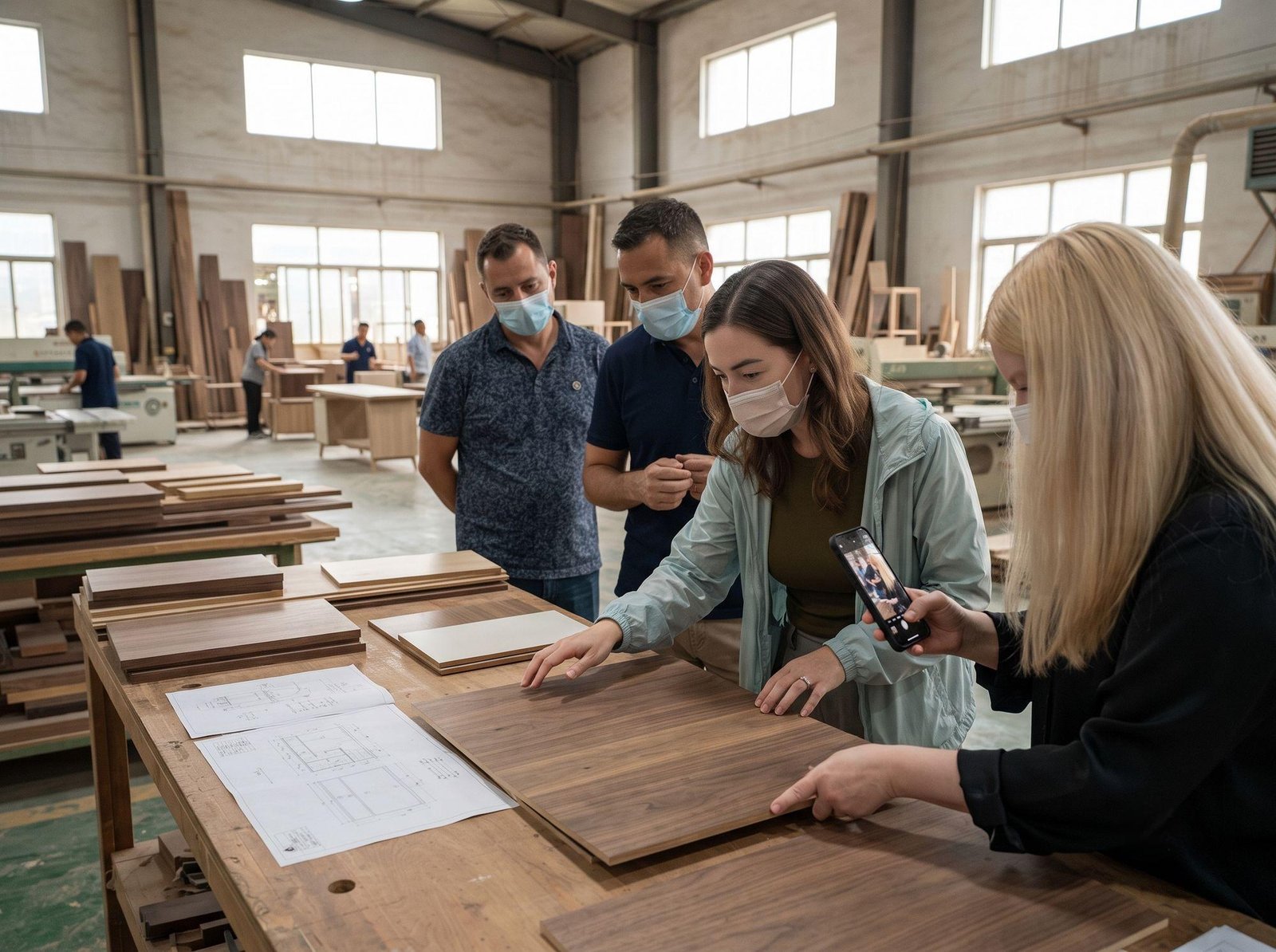
Two people maximum. A buyer plus a technical advisor or translator. Groups of four or more trigger the showroom protocol automatically. The factory assumes you are a tour group, not a buyer.
On the Floor: What Serious Buyers Actually Inspect
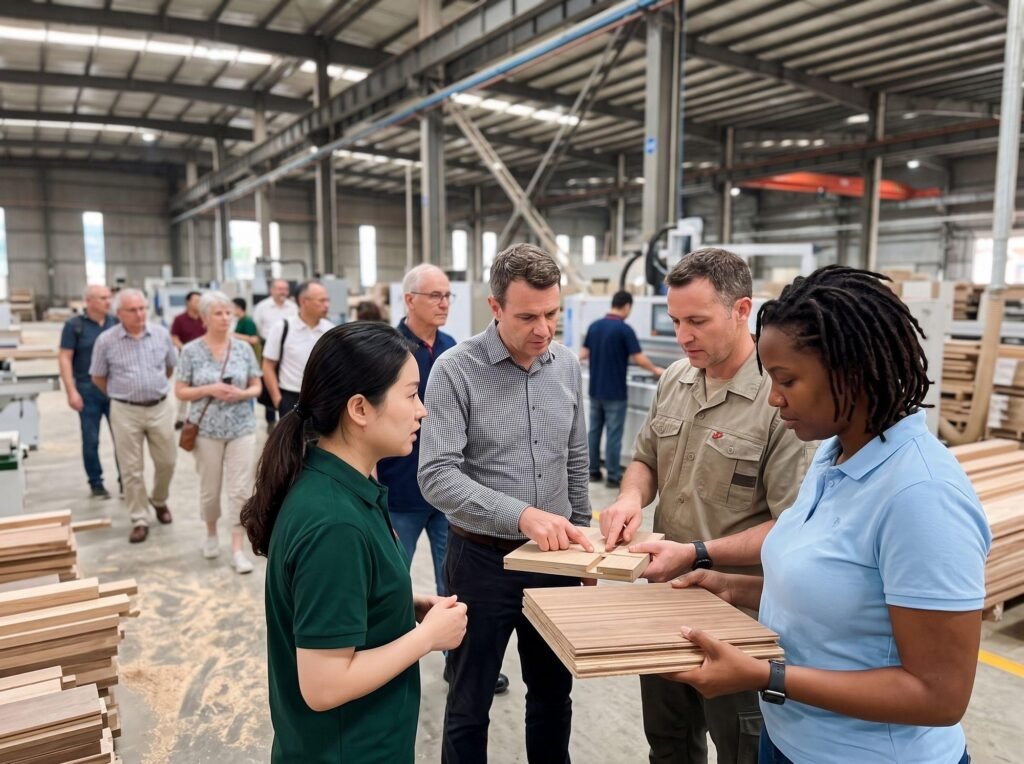
Once inside the workshop, the clock is running. You have maybe ninety minutes before the factory manager’s patience thins. Use it on what matters.
The cutting room. Look at how leather or fabric is nested. Poor nesting means material waste. That means either inflated pricing or corner-cutting on your batch. Check whether the factory uses computerized cutting machines or manual templates. Computerized gives consistency. Manual gives flexibility — but only if the cutter has been doing this for ten years. A young cutter with a manual template is a disaster waiting to happen.
The frame shop. For upholstered furniture, the frame is the skeleton. Ask to see a frame in progress. Are the joints doweled, screwed, or mortise-and-tenon? Dowels are fast and cheap. Mortise-and-tenon takes longer but holds under stress. A factory that defaults to dowels for export orders knows something: its buyer will not disassemble the sofa to check. That buyer is you, if you do not look.
The sewing station. Count the stitch density on a sample cushion. Eight stitches per inch is standard for mid-range. Ten or more signals high-end work. Fewer than six means the factory is racing the clock. Look at the thread type too. Bonded nylon thread resists UV and abrasion. Cotton thread looks fine in the showroom and frays in the sun. I have seen $3,000 outdoor sofas sewn with cotton thread. They fell apart in one summer.
The finishing area. This is where the workshop tour usually stops for bucket-two buyers. Push to see it. Finishing means staining, lacquering, and polishing. The ventilation system matters. Poor ventilation means inconsistent curing and potential VOC compliance issues for your market. Ask about the drying schedule. A factory that rushes drying with heat lamps instead of controlled humidity chambers will deliver finish that cracks within a year. I have seen it. The client was furious.
The QC station. Do not just look at the pass pile. Ask to see the reject pile. A factory with no reject pile ships everything. That sounds good until you realize “everything” includes the defects. A factory with a large reject pile and no rework process burns margin and will eventually cut corners on your order to survive. The sweet spot is a modest reject pile with a clear rework or scrap protocol. That means the factory cares about quality and knows how to fix problems.
The raw material warehouse. This is the most revealing stop and the one most buyers skip. Ask what grade of foam they stock. High-resilience foam — HR foam — for seating should have a density of 35 kg per cubic meter or higher. Standard polyurethane at 25 kg per cubic meter will sag within two years. Check the leather inventory. Full-grain, top-grain, or split? The warehouse tells you what the factory is actually equipped to build. The showroom tells you what it wants you to believe.
After the Visit: Follow-Up Rhythm and Sample Strategy
The factory tour is not the finish line. It is the starting gun. What you do in the seventy-two hours after the visit determines whether the relationship moves forward or dies.
Day one: send a follow-up email. Summarize what you saw, what impressed you, and what concerns remain. Be specific. “We were impressed by your mortise-and-tenon frame construction but would like clarification on your foam density standard for hospitality-grade seating” is infinitely better than “Thanks for the tour, we will be in touch.” The second sentence is a death sentence for your inquiry. The first keeps the conversation alive.
Day two to seven: request production samples. Not showroom samples. A production sample is pulled from the current batch, not staged for your visit. It costs more and takes longer. But it shows you what the factory ships on a normal Tuesday, not what they prepare for a VIP guest on a Thursday. The difference is massive. I have seen showroom samples that took three days to build by the best craftsman in the factory. The normal batch was built by a temp worker on his second week.
Order two samples of the same SKU — the same product variant. One for your office, one for destructive testing. Cut the cushion open. Soak the frame joint. Leave the finish sample in direct sunlight for a week. If it fails, you saved yourself a container of garbage.
Pay for the samples. Free samples are marketing tools. Paid samples are production commitments. A factory that waives sample fees for a serious buyer is not being generous. It is signaling that it values the relationship enough to absorb the cost. That is a good sign, but still pay. It keeps you in control.
Set a clear evaluation timeline. “We will complete our evaluation within fourteen days and respond with either a pilot order specification or detailed feedback.” This keeps the factory engaged and prevents your inquiry from drifting into the “maybe someday” pile, where most factory inquiries go to die.
If the samples pass, schedule a second visit within thirty days. Focus on one product line and one production stage. The first visit is reconnaissance. The second visit is due diligence. By the third visit, you should be discussing the pilot order, not the factory capability. If you are still talking about capability on the third visit, the factory is stalling or you are not ready.
Is Dongguan Right for Smaller Buyers?
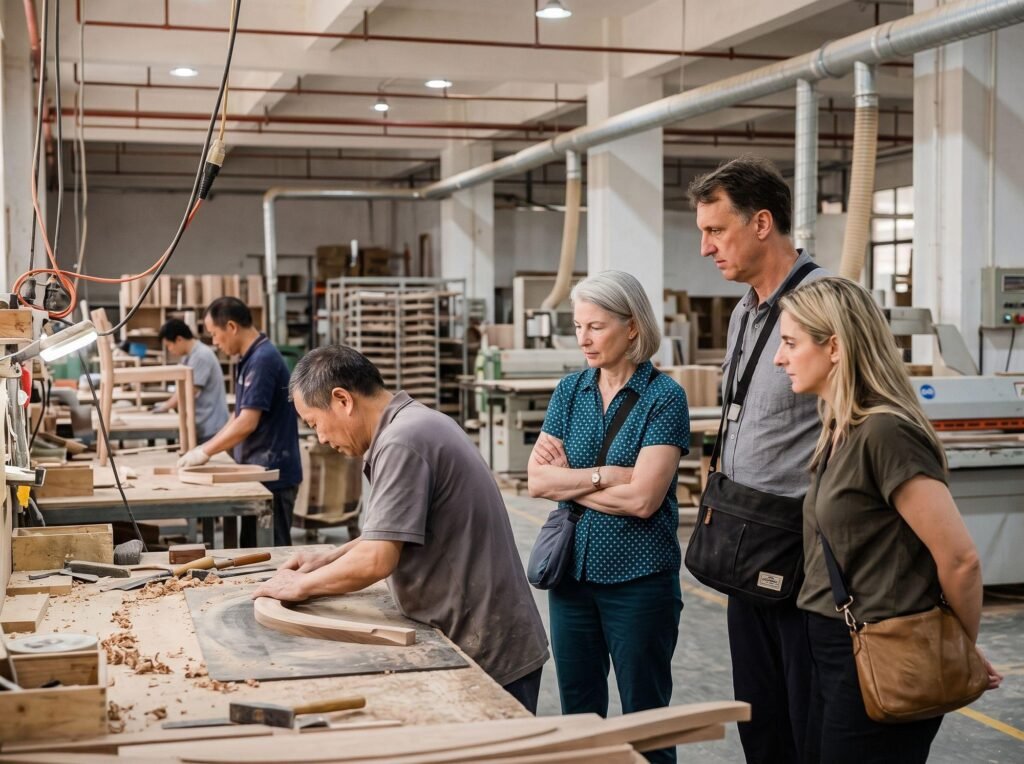
This is the question every personal buyer, interior designer with a single project, or boutique hotel owner asks. The honest answer: it depends on how you frame your approach.
Dongguan’s factory ecosystem is built for volume. The Dongguan sourcing elite — the buyers who get workshop access, priority scheduling, and transparent pricing — are typically moving container quantities. A forty-foot container holds roughly 150 to 200 dining chairs, or 80 to 100 sofas, or 250 to 300 bed frames. That is the language these factories speak. If you do not speak it, they will not listen.
But smaller buyers are not locked out. They are just sorted differently.
If your order is under one container, do not approach the factory directly. You will get the showroom treatment and a price with a heavy “small order surcharge.” Instead, work through a sourcing agent or a trading company based in Houjie. They aggregate orders from multiple buyers to hit container minimums. You lose some margin — typically 8% to 15% — but you gain access to the same production floor without the MOQ headache. I have seen this work well for boutique hotel projects that need 60 chairs and 30 tables. The agent bundles it with another order. Everyone wins.
If you are a designer with custom pieces, frame your request as a “development partnership” rather than a “custom order.” Offer to share renderings, material boards, and target pricing. Some mid-sized factories in Dalingshan actively seek design partnerships to build their ODM portfolio — that is Original Design Manufacturing, producing goods based on the buyer’s design. They may accept a smaller pilot run in exchange for the right to showcase the design in their showroom. This works because the factory gets marketing value, not just revenue.
If you are a personal buyer furnishing one home, Dongguan is probably not your best entry point. The time, translation cost, and logistics complexity outweigh the savings for orders under $30,000. For personal buyers, Foshan’s Shunde district offers a more retail-friendly ecosystem with lower MOQs and English-speaking sales staff. Dongguan rewards scale. Foshan rewards flexibility. Know which game you are playing.

FAQ
How far in advance should I book a factory visit in Dongguan?
One week is the minimum. Two weeks is better. Factories in Dalingshan run on production schedules, not tourist timetables. Email the factory’s export department with your company profile, product interest, and preferred dates. Include a one-page product brief. If you do not hear back in forty-eight hours, follow up once. Silence after that means they are not interested or too busy. Do not take it personally. They are running a factory, not a visitor center.
Do I need a translator, or will the factory provide one?
Most mid-to-large factories have English-speaking sales staff. Their technical vocabulary is often limited. Pricing and lead times, no problem. “What is the density of the foam in the seat cushion?” or “Can you show me the rejected-goods corner?” — that is where they freeze. For workshop-level access, bring your own translator. Ideally someone with furniture manufacturing experience, not just language skills. A good technical translator costs $200 to $300 per day in Dongguan. I have never met a buyer who regretted paying for one. I have met many who regretted not paying for one.
What is the realistic MOQ for a first-time buyer in Dongguan?
For upholstered furniture, 100 to 200 pieces per SKU is common. For case goods — tables, cabinets, beds — 50 to 100 pieces. These are starting points, not absolutes. A factory may accept a smaller pilot order, maybe 30 to 50 pieces, if your RFQ is detailed, your payment terms are clean, and you signal repeat business. But do not expect workshop access or competitive pricing on a one-off order of ten pieces. That is trading company territory, and there is nothing wrong with that. Just know where you belong.
How do I know if a factory is showing me its real workshop or a “show workshop”?
Look for chaos. A real workshop has half-finished orders, material carts in the aisle, workers wearing different uniforms — that means multiple shifts — and a whiteboard with today’s production target. A “show workshop” is suspiciously clean, has only one product line running, and the workers look rehearsed. Ask to see the night shift or the overtime schedule. A real factory runs two shifts. A Potemkin village runs one. I have seen both. The difference is obvious once you know what to look for.
What is the best time of year to visit Dongguan factories?
March to May and September to November. Avoid Chinese New Year — late January to mid-February — when factories shut down for two to four weeks. Avoid July and August when heat and humidity slow production and increase worker turnover. The March and September editions of the International Famous Furniture Fair are excellent anchors for your trip. You can browse the exhibition in Houjie and schedule factory visits in Dalingshan for the same week. Two birds, one stone.
Should I visit multiple factories in one day?
No. Two factories per day is the maximum, and one is better. A proper workshop tour takes two to three hours including travel between towns. Rushing through four factories in a day means you are checking boxes, not evaluating capability. Quality sourcing is slow sourcing. The serious furniture buyers who build lasting supplier relationships in Dongguan treat each visit as an investment, not a tour stop. I have seen buyers try to hit six factories in one day. They remembered none of them.
What Comes Next
If you are preparing for a Dongguan sourcing trip, start with factory background checks. Verify business licenses, export records, and environmental compliance status before you book flights. A factory that cannot produce a valid export license or environmental clearance certificate is a factory that will disappear when your deposit clears. I have seen it happen. The buyer lost $40,000. The factory changed its name and reopened three months later under a new registration.
For buyers who need structured factory matching and accompanied factory audit support, third-party sourcing platforms can pre-screen suppliers, arrange technical translators, and build a visit itinerary that maximizes floor time and minimizes showroom theater. The goal is not to visit more factories. It is to visit the right factories, with the right preparation, and ask the questions that separate professional buyers from tourists.
The workshop door in Dongguan is not locked. It is simply waiting for the visitor who knows why they came.
Recommended Resource
Interi Furniture specializes in custom furniture manufacturing for residential, hospitality, and commercial projects. Their experience in materials, craftsmanship, and project realization makes them a valuable resource for designers and buyers seeking tailored furniture solutions from China.