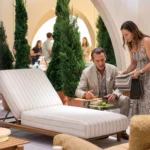


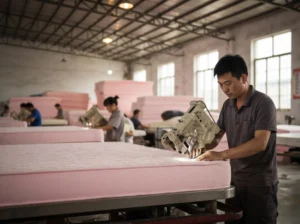

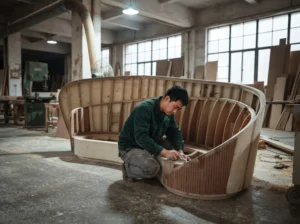
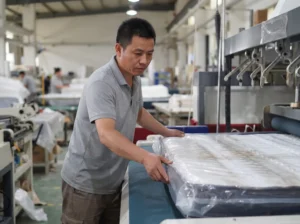


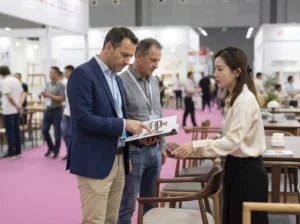
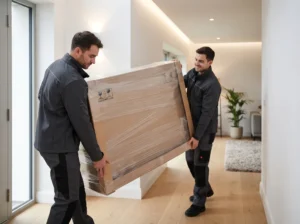

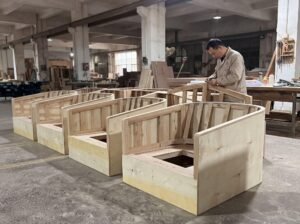
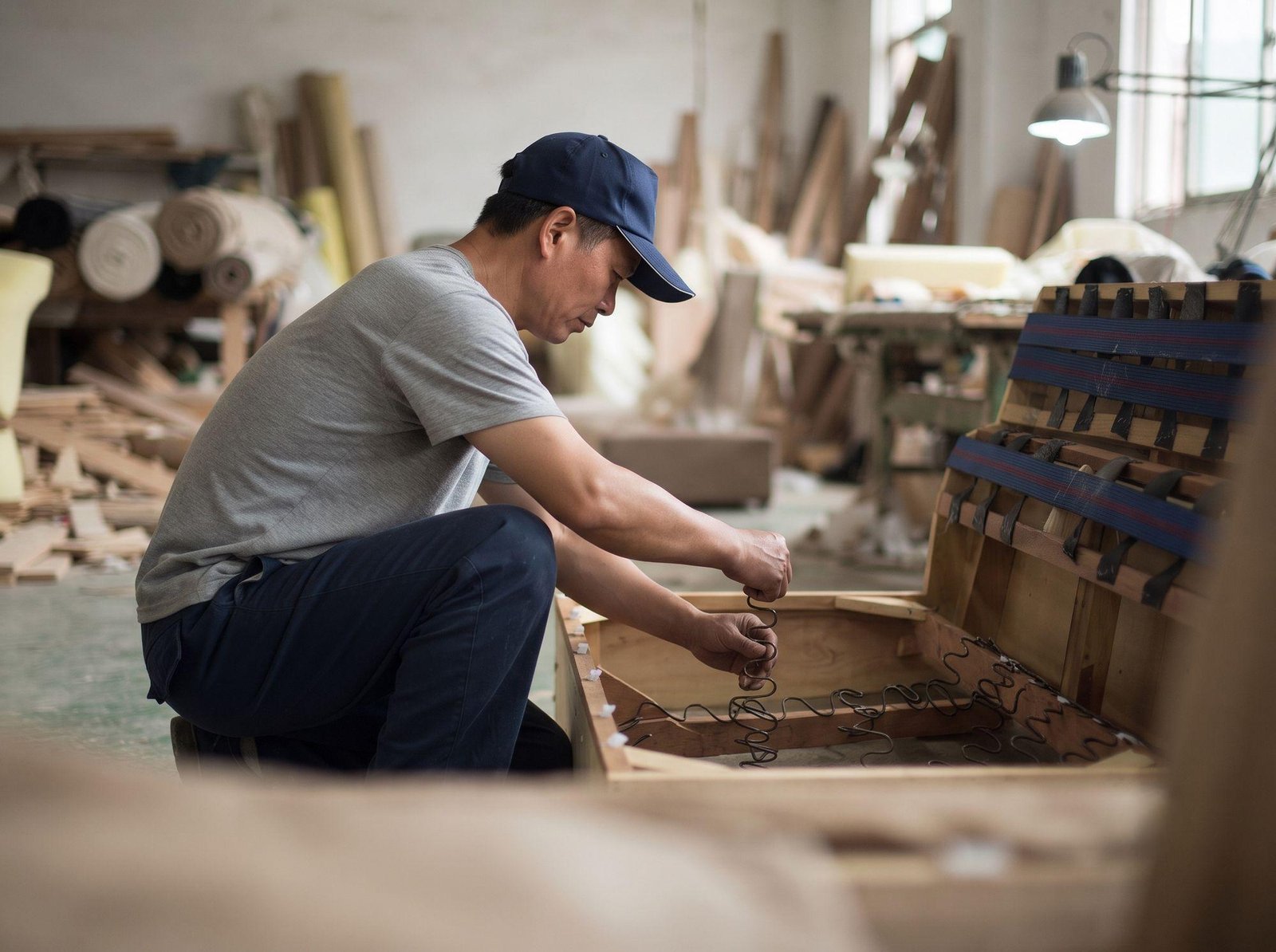
Walk into any furniture showroom in Foshan’s Lecong or Longjiang districts, and you’ll see the same pattern repeated dozens of times. A sleek sectional sofa sits under warm spotlights, accompanied by a plaque that reads “Italian Design” or “European Import.” The price tag? Anywhere from $800 to $4,000. The sales rep might mention Milan, Florence, or a “design house in Northern Italy.” Here’s the truth we need to get out of the way immediately: most of these sofas were built within a 30-minute drive of where you’re standing. They are Chinese sofa disguised import products, and the “Italian” story is marketing theater designed to justify a markup that often exceeds 200%.
We’ve spent over a decade walking factory floors in Foshan, Dongguan, and Zhongshan. We’ve seen the same production lines that stamp out sofas for European labels turn around and produce nearly identical pieces for domestic traders who slap an Italian-sounding brand name on the packaging. This isn’t a conspiracy theory. It’s a business model. And if you’re sourcing furniture from China—or buying a “European import” sofa online—you need to understand exactly how it works.
What “Italian Design” Actually Means on a Foshan Price Tag
Let’s start with the language itself. In Foshan’s furniture wholesale markets, “Italian Design” is not a protected term. It is not a certification. It is not regulated by any trade body in China or Italy. It is a phrase that costs zero dollars to print on a brochure and adds perceived value that translates directly into higher margins.
We’ve asked factory owners directly: “What makes this Italian?” The honest ones laugh and say, “The buyer asked for it.” The less honest ones will point to a catalog page from a Milan furniture fair and claim “inspiration.” In reality, Italian design sofa scam China operations typically follow one of three scripts:
Script One: The Fake Origin Story. A Chinese trader registers a brand name like “Casa Milano” or “Firenze Living,” builds a basic website with stock photos of the Tuscan countryside, and claims decades of European heritage. The sofas are manufactured in Foshan, shipped to a warehouse in Italy for 48 hours, and then re-exported with an Italian delivery address on the customs documents. Technically, they touched Italian soil. Practically, they are Chinese products with a European layover.
Script Two: The Mislabeled OEM. A legitimate Italian brand sources sofas from a Foshan factory under a strict OEM contract. The factory produces the exact same sofa—same frame, same foam density, same leather grade—for the Italian client and then runs an extra batch for a domestic trader. The domestic batch gets a similar-sounding name and a “Made in Italy” tag that the factory printer can produce for about $0.30 per label. This is where the line between designer replica sofa and outright fraud gets blurry.
Script Three: The Design Copy. A factory sends a buyer to the Milan Salone, takes photos of trending sofas, and reverse-engineers the dimensions and proportions within 30 days. The resulting piece is sold as “Italian Style” or “European Design.” This is legally gray but common. The problem arises when the marketing shifts from “style” to “import”—when a design copy becomes a Foshan fake European sofa with a fabricated provenance.
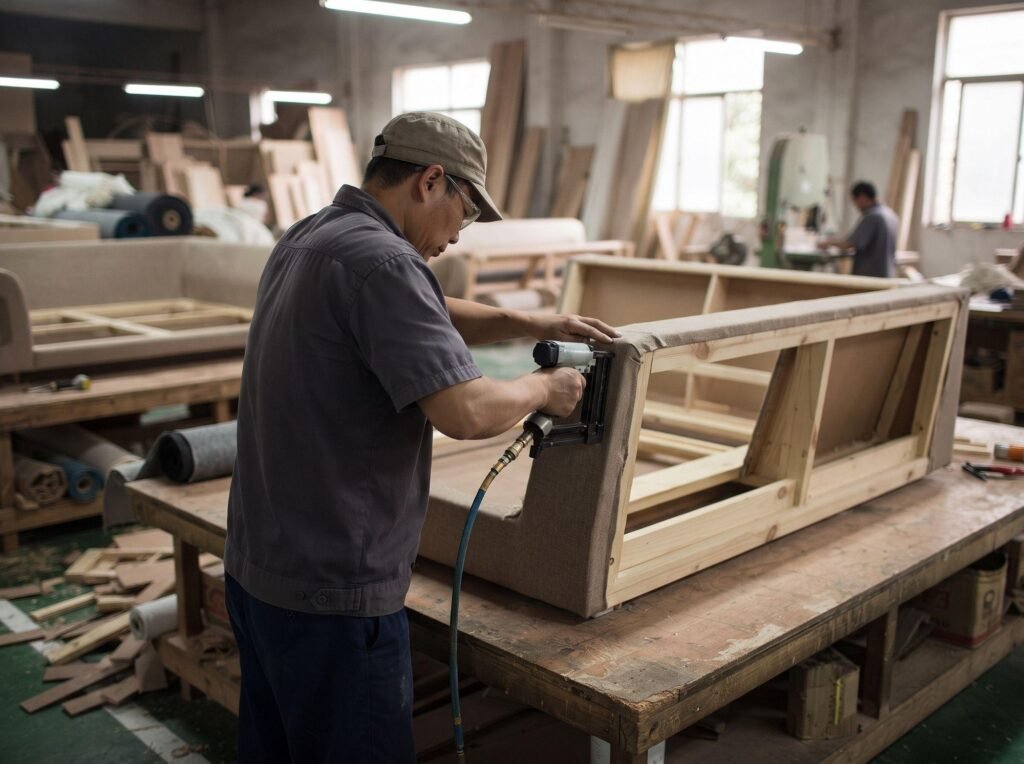
The Five Red Flags That Expose a Fake European Sofa
After years of factory audits and buyer consultations, we’ve distilled the warning signs into five concrete checks. Run through this list before you sign any purchase order.
Red Flag 1: The Brand Has No Physical Presence in Europe
This is the fastest filter. If a sofa claims Italian heritage, the brand should have a showroom, a registered company, or at least a verifiable address in Italy. We routinely Google brand names mentioned by Foshan traders and find websites hosted on Chinese servers, registered to individuals in Guangdong, with zero Italian corporate records. One “Milan-based luxury brand” we investigated had its domain registered in Shenzhen and its only “European office” was a virtual mailbox in Amsterdam.
Red Flag 2: The Price Doesn’t Match the Origin Story
A genuine Italian-made sofa with full-grain leather, solid wood frame, and high-density foam typically retails for $3,500 to $8,000 at the factory gate. If someone is offering you an “Italian import” sectional for $1,200 landed in your warehouse, the math doesn’t work. Italian labor costs, European leather tannery prices, and EU compliance overhead make that price impossible. What you’re looking at is almost certainly a chinese sofa disguised import with a European markup.
Red Flag 3: The Factory Won’t Show You the Production Floor
Honest manufacturers—whether in Foshan or Florence—are proud of their facilities. If a supplier claims European standards but refuses a factory visit, something is wrong. We’ve seen traders rent temporary showroom space in Lecong, fill it with sample sofas, and tell buyers the “real factory” is in Italy and off-limits. That factory doesn’t exist. The sofas are subcontracted to a workshop in Shunde with no quality control documentation.
Red Flag 4: The Documentation Trail Is Thin
Ask for the bill of lading from the last shipment. Ask for the Italian manufacturer’s VAT number. Ask for photos of the production floor with date stamps. A legitimate European brand can produce these. A European label fake operation will stall, offer excuses, or produce documents that fall apart under basic scrutiny. We once received a “Certificate of Italian Origin” that was clearly printed on A4 paper in a Foshan office—the watermark was a local furniture mall logo.
Red Flag 5: The Website Was Built Last Month
Check the domain registration date. Check the Wayback Machine. A heritage Italian brand should have digital footprints stretching back years. We’ve encountered “established European design houses” whose websites were registered three weeks before the Canton Fair and whose only press coverage was a paid placement on a Chinese B2B platform.
Why Foshan, Not Florence, Builds Most “Italian” Sofas
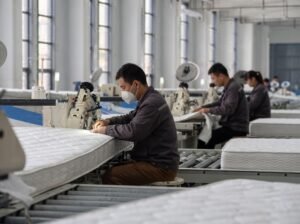
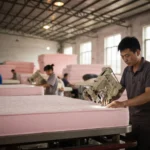
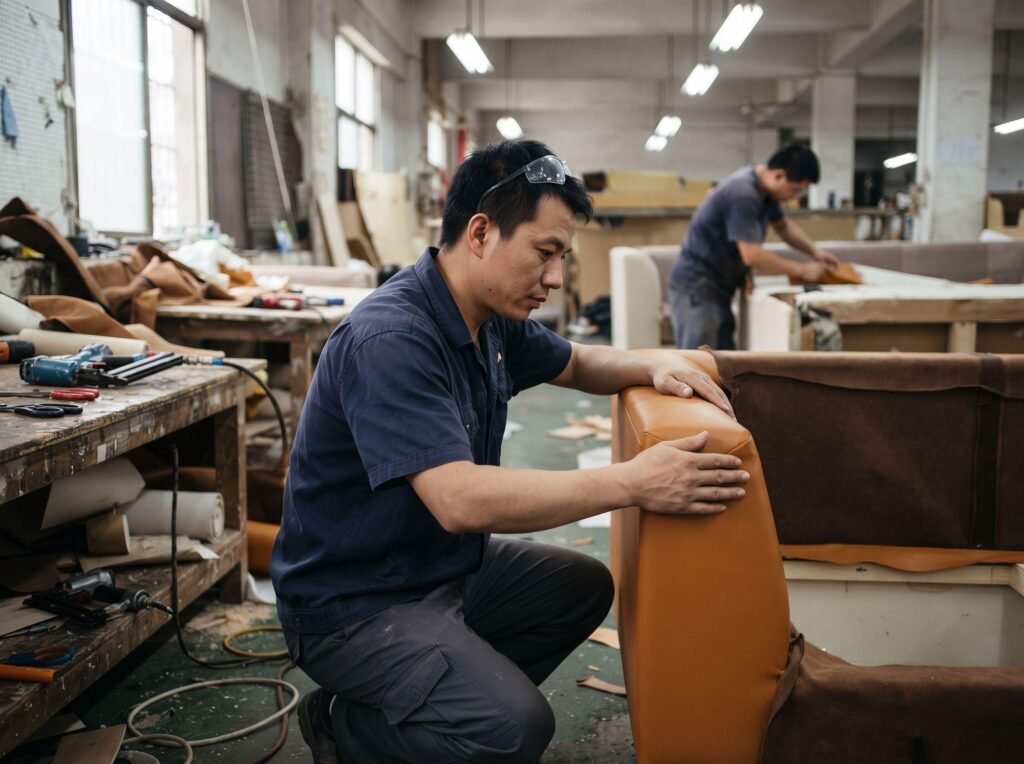
Here’s the part that surprises many first-time buyers. Foshan is not some backwater trying to imitate European quality. It is the largest furniture manufacturing cluster on the planet. The city of Shunde alone produces roughly 30% of China’s total furniture output. The machinery, the leather suppliers, the foam factories, the skilled cutters and sewers—they are all concentrated within a 50-kilometer radius.
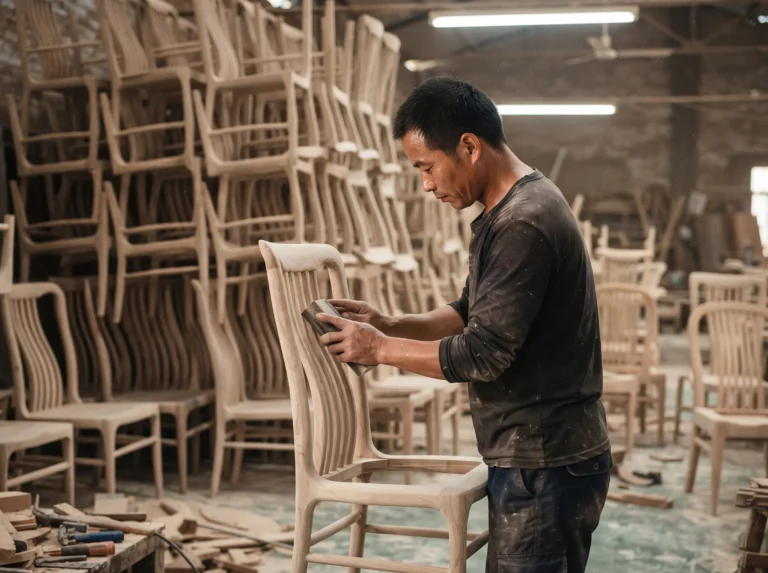
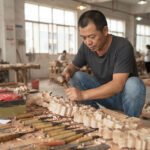
The quality coming out of Foshan can be exceptional. We’ve seen factories in Longjiang producing sofas with hardwood frames, Italian-imported leather, and foam densities that exceed European standards. The problem is not the manufacturing capability. The problem is the incentive structure.
A factory that produces a genuine OEM sofa for a European client might earn $400 per unit. The same factory, selling the same sofa under a fake Italian brand name to an uninformed buyer, can charge $1,200. The margin on deception is simply too tempting for some traders to resist. And because cross-border enforcement is weak—an Italian consumer protection authority is not raiding warehouses in Guangdong—the risk of getting caught is minimal.
This is why Foshan fake European sofa schemes persist. They are profitable, low-risk, and technically easy to execute. The only defense is an educated buyer.
The Gray Zone: Legal Replica vs. Fraudulent Mislabeling
We need to draw a clear line here, because not everything that looks Italian is a scam. China has a massive and largely legal replica furniture industry. A Foshan factory can legally produce a sofa “in the style of” a Minotti or B&B Italia piece, provided they don’t use the original brand’s trademarks, logos, or patented mechanisms. This is design replication, not counterfeiting, and it operates in a gray area that most Western buyers don’t fully understand.
The issue is marketing escalation. A “replica” becomes a designer replica sofa scam when the seller claims it is an original import. A “style reference” becomes fraud when the website implies decades of European heritage. We’ve seen Foshan traders take photos of their sofas in front of green-screened Italian landmarks and post them with captions like “Handcrafted in Tuscany since 1987.” That is not gray. That is a lie.
The honest players in this space will tell you exactly what they are doing. “This is our version of the Camaleonda. We use high-density foam and full-grain leather. It is made in Foshan. The price is $1,800.” That is a fair transaction. The buyer knows what they are getting. The problem is that these honest sellers are outnumbered by operators who would rather spin a European fantasy than compete on transparency.
How to Verify a Sofa Before You Wire the Deposit
If you’re serious about sourcing quality furniture from China without falling for an Italian design sofa scam China, here is our practical verification workflow. We’ve refined this over hundreds of buyer consultations.
Step 1: Reverse-Image Search the Marketing Photos
Upload the sofa images to Google Images or TinEye. If the same sofa appears on five different “Italian brand” websites with different names, you are looking at a generic Foshan product with multiple fake identities.
Step 2: Check the Factory on Alibaba or Made-in-China
Even if the seller claims to be a European brand, the factory often lists the same product on Chinese B2B platforms under its real name. Search by product image. If you find the identical sofa sold by “Foshan Shunde XYZ Furniture Co., Ltd.” for half the price, you now know the true source.
Step 3: Request a Video Factory Tour
Not photos. Video. With a live timestamp. Ask to see the specific sofa in production. Ask to see the leather inventory, the foam cutting station, the frame assembly area. A real factory has these. A trading company renting showroom space does not.
Step 4: Verify the Leather and Foam Certifications
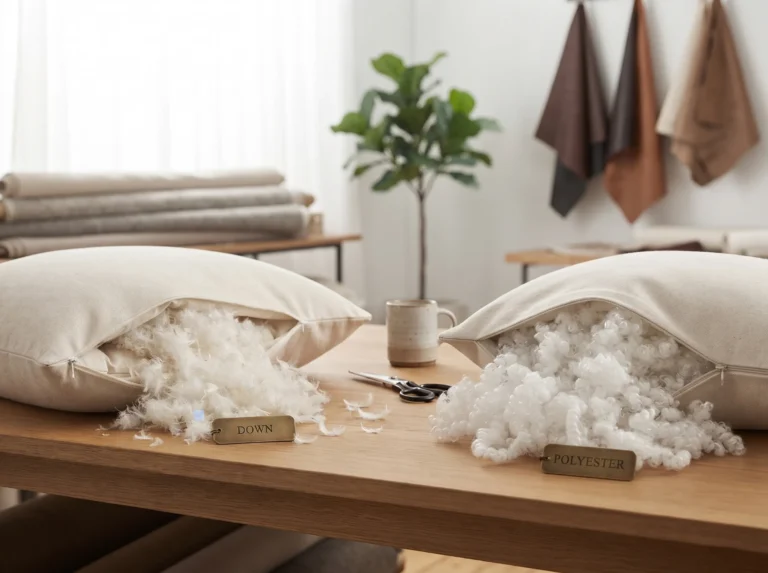
If the sofa claims Italian leather, ask for the tannery’s name and certification. Genuine Italian leather comes from tanneries like Gruppo Mastrotto or Dani Leather, and they issue traceability documents. For foam, ask for density specifications in kg/m³. High-quality sofa foam should be 35D or above. Most Chinese sofa disguised import products use 25D foam that collapses within 18 months.
Step 5: Use a Third-Party Inspection
Before final payment, hire an inspection company like SGS, Bureau Veritas, or a reputable local firm to visit the factory. A $300 inspection can save you from a $5,000 mistake. They will verify materials, construction, and—crucially—whether the factory actually exists at the address provided.
Industry Truth: The “Italian” Sofa That Ships from a Shunde Warehouse
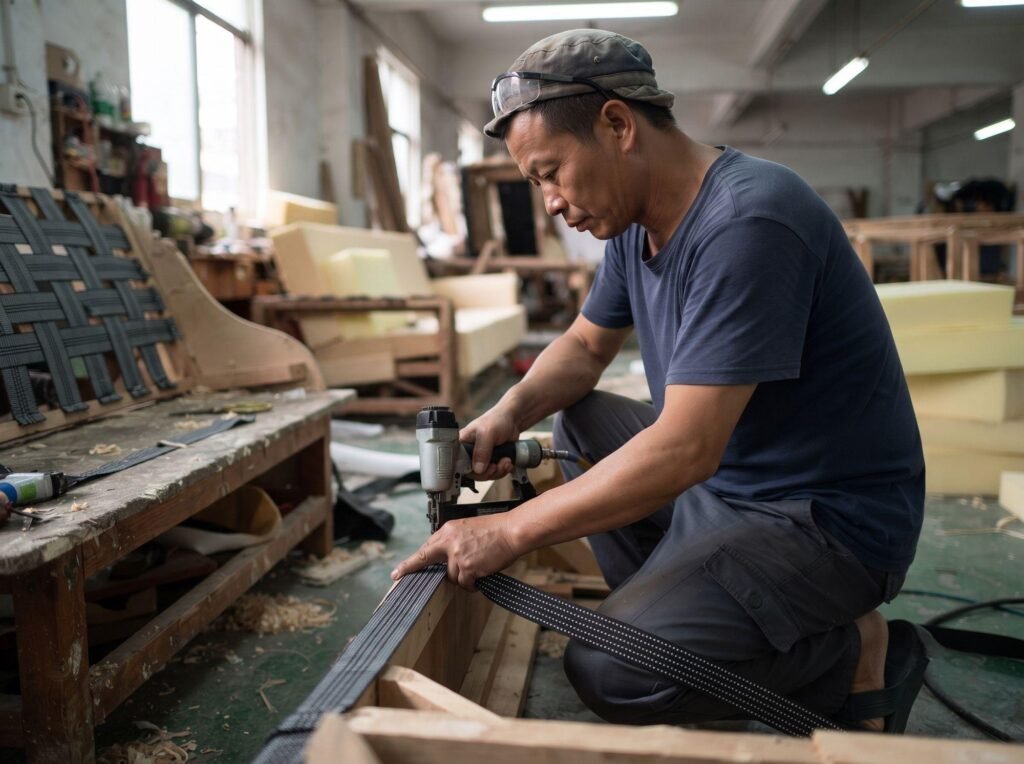
Here’s something most sourcing guides won’t tell you. Some of the most expensive “Italian design” sofas sold in the United States and Europe never touch Italian soil. They are produced in Shunde, stored in a bonded warehouse in Yantian or Shekou, and shipped directly to the buyer’s port. The only thing Italian about them is the brand name dreamed up by a marketing team in Guangzhou.
We visited a warehouse in Nanhai last year that held $2 million worth of “European luxury sofas” waiting for shipment to a distributor in Texas. The boxes were printed with Italian city names. The tags said “Designed in Milan.” The dust on the pallets had Chinese characters from the local logistics company. The buyer in Texas had paid a 40% premium for European provenance. He was getting Foshan craftsmanship—which, to be clear, can be excellent—but he was paying for a story that didn’t exist.
This is the core problem. China can build a world-class sofa. What it cannot ethically do is sell that sofa under false pretenses. And as a buyer, your job is to separate the product from the fiction.
What Honest Chinese Manufacturers Are Doing Instead
Not every factory in Foshan plays the fake European game. In fact, the best ones are moving in the opposite direction. Over the past three years, we’ve observed a growing segment of Foshan manufacturers who are building their own brands, investing in original design, and marketing themselves transparently as Chinese producers of high-quality furniture.
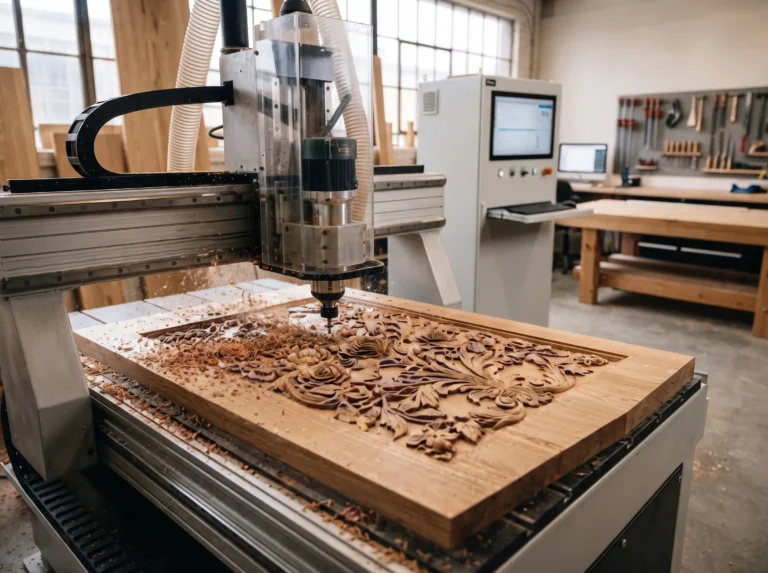
These factories don’t need an Italian alias. They show you their CNC cutting machines. They introduce you to their in-house designers. They explain why their foam density choices differ from European standards based on climate and usage patterns. They are proud of being from Shunde or Longjiang, and they let their product quality speak.
One factory we work with in Dongguan produces sofas for the Japanese market under its own brand name. The owner told us: “We tried the Italian name game for two years. The returns were high, the complaints were endless, and we were always afraid of being exposed. Now we sell as ourselves. Our prices are 20% lower, our repeat customers are up 300%, and we sleep better.”
This is the future we believe in. European label fake operations are a shrinking business model because buyers are getting smarter. The internet has made reverse-image search trivial. Factory verification services are affordable. And the new generation of Chinese furniture entrepreneurs would rather build lasting brands than run short-term cons.
The Bottom Line: Buy the Sofa, Not the Story
If you take one thing from this article, let it be this. A sofa is a physical object. It has a frame, foam, fabric, and stitching. Its value comes from the quality of those materials and the skill of the people who assembled it. It does not gain value because someone printed “Milano” on a cardboard tag in a Foshan print shop.
Foshan factories can produce exceptional furniture at prices that would be impossible in Europe. That is a genuine competitive advantage. But that advantage is undermined every time a trader tries to disguise a Chinese product as a European import. It hurts honest manufacturers. It hurts informed buyers. And it creates the very skepticism that makes cross-border furniture sourcing harder than it needs to be.
Do your homework. Ask hard questions. Verify claims. And if a deal sounds too Italian to be true, it probably is.

FAQ
How common is the italian design sofa scam china in Foshan?
Based on our market observations, roughly 30-40% of mid-range furniture traders in Lecong and Longjiang use some form of exaggerated European branding. At the high-end export level, the practice is less common because buyers demand traceability. At the low-end online retail level, it is rampant.
What’s the difference between a designer replica sofa and a fake import?
A replica is openly sold as a reproduction of a famous design, made in China, at a fraction of the original price. A fake import claims to be the original European product—or an original European brand—with fabricated provenance. One is transparent; the other is fraud.
Can a foshan fake european sofa still be good quality?
Sometimes, yes. The manufacturing capability in Foshan is world-class. The problem is you are paying a premium for a false story, and you have no quality guarantee because the seller is already operating dishonestly. If the ethics are questionable, the after-sales service usually is too.
How do I check if a sofa is a chinese sofa disguised import?
Start with reverse-image search, domain registration lookup, and a request for factory video. If the brand claims Italian heritage but has no verifiable European presence, you are almost certainly dealing with a disguised import. A third-party inspection before payment is the safest verification method.
Are all european label fake operations illegal?
Mislabeling origin to deceive consumers violates consumer protection laws in most jurisdictions. However, enforcement across borders is weak, and many operations exploit jurisdictional gaps. The legal risk falls primarily on the seller, but the financial risk falls on you as the buyer.
Recommended Resource
Interi Furniture specializes in custom furniture manufacturing for residential, hospitality, and commercial projects. Their experience in materials, craftsmanship, and project realization makes them a valuable resource for designers and buyers seeking tailored furniture solutions from China.