









Shenzhen’s tech furniture can last — but only if you evaluate it as two different products welded together. The frame and upholstery often hold up for a decade. The motor, controller, and power supply inside it? Designed on a consumer-electronics timeline. Shenzhen tech furniture durability isn’t about whether the whole piece breaks. It’s about whether the electronic layer dies first and leaves you with a beautiful, useless shell. The fix is simple: stop asking “Is it durable?” and start auditing the structure, the electromechanics, and the electronics as three separate bets.
The Showroom Effect: Why Smart Furniture Wins the First Minute
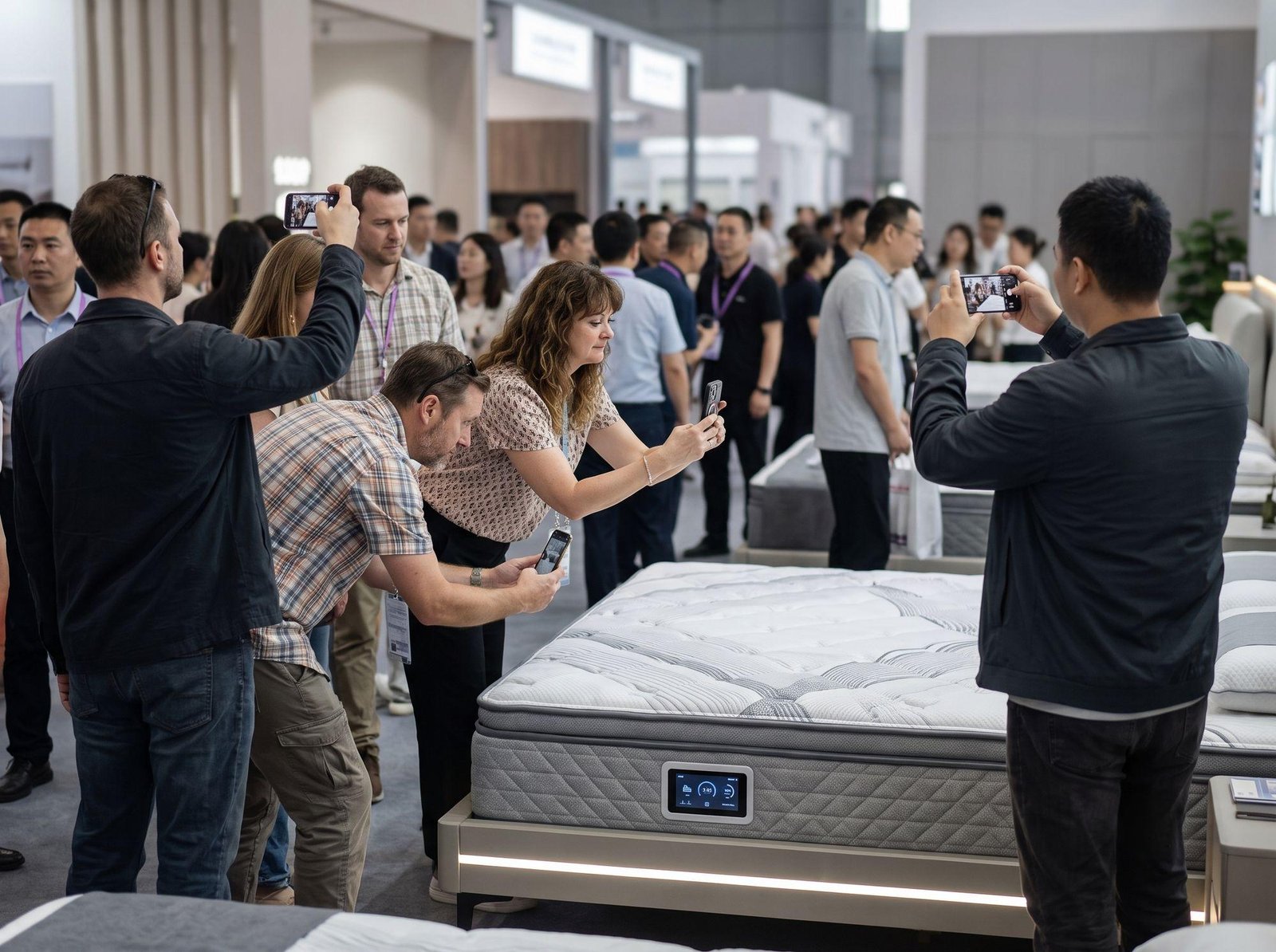
Walk into any major furniture exhibition in Shenzhen and the first thing that hits you is motion. A desk glides up at the touch of a button. A sofa reclines into zero-gravity position without a sound. Bed frames adjust independently for each sleeper. The tactile feedback is immediate, the engineering looks clean, and the price point undercuts European equivalents by a margin that makes buyers pause.
That first minute is carefully engineered. Manufacturers know they have thirty seconds to impress a walking buyer. Motors are tuned for quiet operation at low loads. Touch surfaces are calibrated for responsiveness. The demo cycle is short. What you don’t see in that minute is what happens at cycle 5,000, or what the control board looks like after two summers of humidity, or whether the firmware will still talk to the app in three years when the original development team has moved on to the next SKU.
This isn’t deception. It’s selection pressure. Showroom furniture is built to win the first interaction because that’s what closes the deal. Long-term smart furniture quality only reveals itself in environments the showroom can’t simulate: continuous load, voltage fluctuation, user error, and the slow degradation of capacitors and motor brushes that no spec sheet advertises.
The Real Problem Is Not “Cheap” — It’s a Design Mismatch
The durability debate around Shenzhen tech furniture usually devolves into “cheap Chinese electronics” versus “solid European craftsmanship.” That framing misses the actual engineering problem.
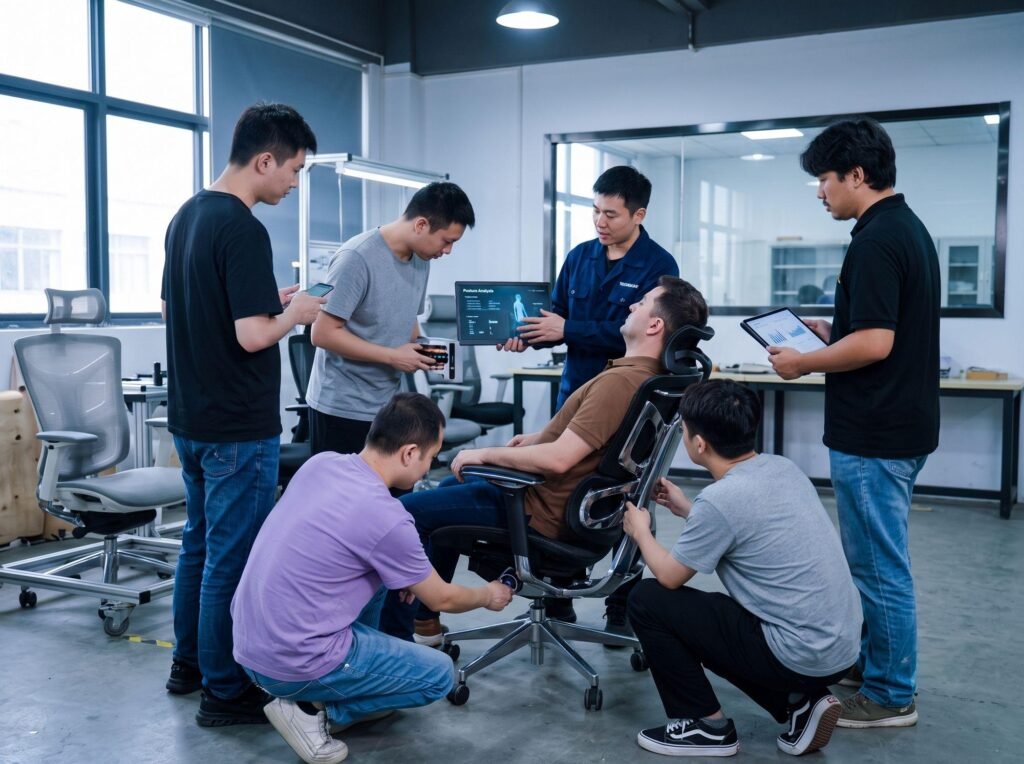
Consumer electronics are designed for obsolescence cycles of two to five years. Your phone, your laptop, your smart speaker — the internal expectation is that you’ll replace the whole unit when the battery dies or the OS stops updating. Furniture, by contrast, is purchased on a ten-to-twenty-year horizon. A solid wood desk frame doesn’t care about iOS versions. But the linear actuator inside that same desk? It has a duty cycle rating, a brush wear curve, and a control box running firmware that may not be supported past the third production run.
When these two design philosophies occupy the same product, you get a mismatch. The frame is fine. The motor seizes. The control box fails. And because the supplier has already moved to a new controller chipset for the next model year, the replacement part you need no longer exists in their warehouse. The result isn’t a broken desk. It’s a desk that works perfectly except for the one component that makes it “smart,” and that component is now a paperweight.
This is why China tech furniture review discussions that focus only on materials miss the point. A smart standing desk can have a steel frame rated for 150 kg and still become unusable because the Hall sensor in the leg column drifts out of calibration and there’s no recalibration procedure published. The weakness isn’t in the wood or the weld. It’s in the interface between mechanical longevity and electronic fragility.
The Three-Layer Durability Audit
If you can’t evaluate smart furniture as a single object, evaluate it as three layers with three different lifespans. Here’s the framework we use when walking factories or vetting samples.
| Layer | Components | Typical Design Lifespan | What Fails First | Can You Fix It? |
|---|---|---|---|---|
| Structural | Frame, joints, upholstery, surface finish | 10–20 years | Joint loosening, fabric wear, veneer delamination | Usually — standard woodworking or upholstery repair |
| Electromechanical | Motors, actuators, lifting columns, gears, belts | 3–8 years (varies by duty cycle) | Brush wear, gear fatigue, column misalignment, lubricant degradation | Sometimes — if parts are standardized and available |
| Electronic | Control boxes, PCBs, sensors, power supplies, firmware, app connectivity | 2–5 years | Capacitor failure, firmware bugs, app deprecation, Bluetooth chipset obsolescence | Rarely — proprietary boards, encrypted firmware, no update path |
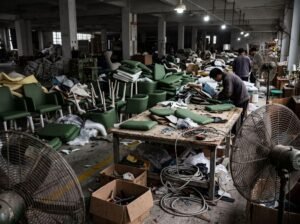
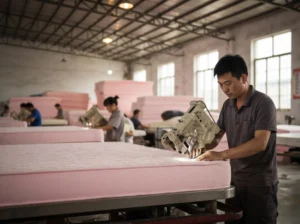
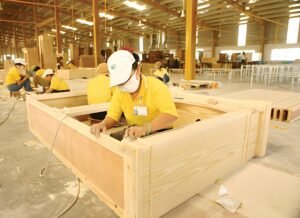
Layer 1: Structural. This is the part Shenzhen tech furniture often gets right. Steel frames are welded on the same lines that produce office furniture for domestic banks and government tenders. Upholstery workshops in Dongguan supply the same foam densities to export markets. The weak points here are usually connection joints where metal meets wood, or the routing of cable channels that wear against moving parts. Check: Are the cable runs protected by grommets or drag chains? Do the joints use metal fasteners or plastic clips? Is the upholstery removable for cleaning, or glued down?
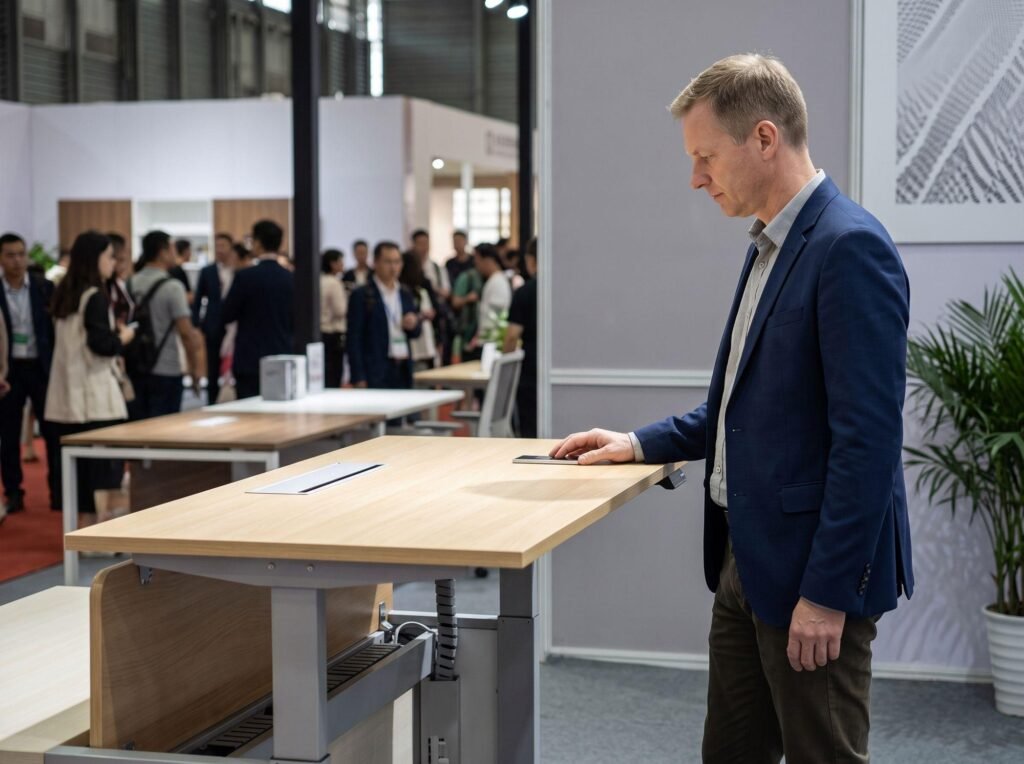
Layer 2: Electromechanical. This is where the money goes and where the risk lives. A single-leg lifting column for a standing desk contains a brushed or brushless DC motor, a gearbox, a spindle drive, and position feedback sensors. Ask for the duty cycle rating — how many cycles per hour, and at what load percentage? A motor rated for 10% duty cycle at 80 kg will not survive in a busy co-working space. Ask whether the columns use Hall sensors or mechanical limit switches. Hall sensors drift; mechanical switches wear. Neither is perfect, but one is easier to diagnose. Ask for the IP rating if the furniture will live near moisture — IP20 electronics in a bathroom vanity are a claim waiting to happen.
Layer 3: Electronic. The control box is the brain, and it’s the most disposable part. Most run on proprietary PCBs with firmware that the factory may or may not have source code for. Ask: Is the firmware updatable? Is there a manual override if the control board fails? Does the product still function as basic furniture if you disconnect the smart layer? A standing desk that can’t remember presets without the app is annoying. A bed that won’t flatten without the app is a safety issue. Check whether the power supply is external (replaceable) or internal (requires disassembly). External brick-style adapters are ugly but swap-able. Internal sealed units look clean but turn the whole piece into e-waste when they fail.

Shenzhen’s Double Edge: Fast Iteration Cuts Both Ways
Shenzhen sits on top of the world’s densest electronics supply chain. A smart furniture factory here can prototype a new control board in two weeks, source actuators from three competing vendors within a subway ride, and iterate firmware based on feedback from beta users. That speed is a genuine advantage. European smart furniture brands often source their motors from the exact same Chinese suppliers; they just add six months of margin and a brand name.
But that same velocity creates a parts-availability problem. When a factory can swap motor vendors every quarter to chase a 3% cost reduction, the buyer who purchased last quarter’s model is left holding a product with orphaned components. I’ve seen control boxes change pin configurations between production lots with no external model number change. The factory calls it “continuous improvement.” The importer calls it “unsupportable.”
The flip side is that Shenzhen’s repair ecosystem is unmatched. If a motor fails and the original supplier has vanished, there’s a decent chance a technician can reverse-engineer a replacement or flash generic firmware onto a compatible board. That doesn’t help a hotel in Miami or a retailer in Stockholm. It means Shenzhen tech furniture durability for export buyers depends heavily on whether the supplier commits to a frozen BOM (bill of materials) for a defined period and stocks critical spare parts.
Ask potential suppliers directly: Will you guarantee component consistency for 24 months after my last shipment? Do you stock spare control boards and motors, or do you assemble to order? Can you provide schematic-level documentation for third-party repair? The answers separate trading companies from manufacturers who plan to be in business when your warranty claims start arriving.
Buying for a Hotel, a Store, or Your Home: Different Risk Exposure
The same smart sofa carries radically different risk profiles depending on who buys it.
Hotels and commercial spaces face the highest exposure. A 200-room property with motorized beds or adjustable desks multiplies any failure rate by two hundred. One failed control board is an inconvenience. A hundred failed control boards in year three is a capital expenditure that wasn’t budgeted. Commercial buyers should demand higher-duty-cycle motors, redundant manual overrides, and contractual spare-part availability for five years minimum. They should also avoid first-generation products — let someone else debug the firmware.
Retailers and e-commerce sellers carry reputation risk. If you import fifty smart standing desks and three fail within the return window, you’re eating the cost plus the negative review. Worse, if the supplier has already moved to a new model, you can’t even source replacements for warranty swaps. Retailers should prioritize suppliers with stable product lines and documented repair procedures over those with the flashiest app features.
Individual buyers and residential projects have the lowest per-unit risk but the least leverage. You can’t negotiate a custom warranty for one desk. What you can do is choose products where the smart layer is modular and detachable. A standing desk with a standard frame and a bolt-on control unit is fixable. A standing desk with the control board embedded in the leg column and no access panel is not. For personal use, simplicity beats sophistication. One reliable motor with a mechanical switch outlasts three motors with app integration and voice control.
The Warranty and Parts Clauses Worth Fighting For
Standard furniture warranties cover structural defects for one to three years. Standard electronics warranties cover manufacturing defects for twelve months. Smart furniture needs a hybrid approach, and most supplier proformas don’t reflect that.
Push for these specific terms:
Split the warranty. The frame should carry a structural warranty of five years or more. The motor and control system should carry a separate electromechanical warranty of at least two years. Don’t accept a blanket one-year warranty on the whole unit — it effectively caps your motor coverage at twelve months while letting the supplier hide behind the furniture portion.
Lock in parts availability. The contract should state that critical spare parts — control boards, motors, power supplies, handset controllers — will remain available for a defined period after the final shipment. Twenty-four months is a minimum; thirty-six is better. Without this clause, your warranty is theoretical.
Define “repairable.” Ask whether the supplier will provide disassembly instructions, wiring diagrams, or firmware flash files to authorized repair technicians. Most won’t. But asking forces the supplier to admit whether they designed the product to be fixed or designed it to be replaced.
Clarify firmware and app obligations. If the product requires a mobile app, who maintains the server backend? What happens if the supplier discontinues the app? A bed that needs an app to adjust is a bed that becomes a brick when the startup pivots to kitchen appliances. Demand a manual override that works without connectivity.

FAQ
How long do the motors in Shenzhen smart furniture typically last?
There’s no single answer because lifespan depends on duty cycle, load, and environment. A desk motor rated for 10% duty cycle and used twice daily in a home office may last eight years. The same motor in a hot warehouse running twenty cycles daily may fail in eighteen months. Ask for the duty cycle rating and calculate against your use case. Don’t trust vague claims like “heavy duty” without numbers.
Are UL or CE certifications enough to guarantee durability?
No. UL listing and CE marking verify electrical safety — that the product won’t shock you or catch fire under normal conditions. They do not verify motor lifespan, firmware stability, or long-term mechanical wear. A product can be perfectly safe and still unusable after two years. Treat certifications as a baseline, not a durability promise.
Can I replace the electronics if the supplier stops making them?
Sometimes. If the product uses standard actuator columns from a major manufacturer, third-party control boxes may be compatible. If the supplier uses a custom PCB with proprietary firmware, you’re likely out of luck. Before buying, ask: Is the motor control protocol standard or proprietary? Can the handset be swapped for a generic unit? The more standard the interface, the more repairable the product.
Is Shenzhen tech furniture a bad investment for hotels?
Not inherently. But hotels should treat smart furniture as a capital asset with a defined service life, not a one-time purchase. Budget for replacement electronics at year four or five. Choose suppliers with frozen BOMs and local service partners. And always specify manual overrides — a guest at 2 a.m. doesn’t care about your app integration if the bed is stuck in sitting position.
What’s the most common failure point buyers overlook?
The power supply. Buyers obsess over motor torque and frame steel gauge, but the external power brick or internal PSU is often the first thing to die. It’s also the cheapest component, which means suppliers sometimes source it from the lowest bidder with the shortest lifespan. Ask for the PSU’s MTBF (mean time between failures) rating and whether it’s a standard form factor that can be swapped without tools.
Should I avoid app-connected furniture entirely?
Not necessarily. But treat app connectivity as a bonus feature with an expiration date, not a core function. The furniture should work perfectly as furniture if the app disappears tomorrow. If a product requires an app to perform basic adjustments, that’s a dependency you can’t control. Buy for the hardware. Tolerate the software.

Recommended Resource
Interi Furniture specializes in custom furniture manufacturing for residential, hospitality, and commercial projects. Their experience in materials, craftsmanship, and project realization makes them a valuable resource for designers and buyers seeking tailored furniture solutions from China.