

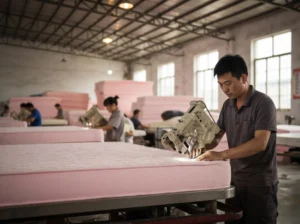

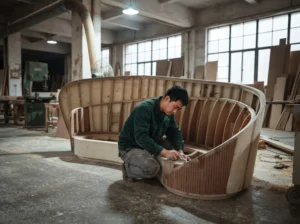
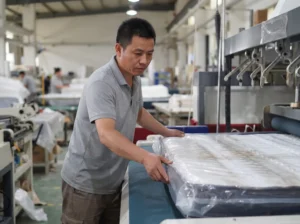




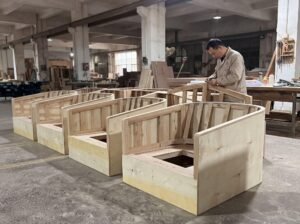
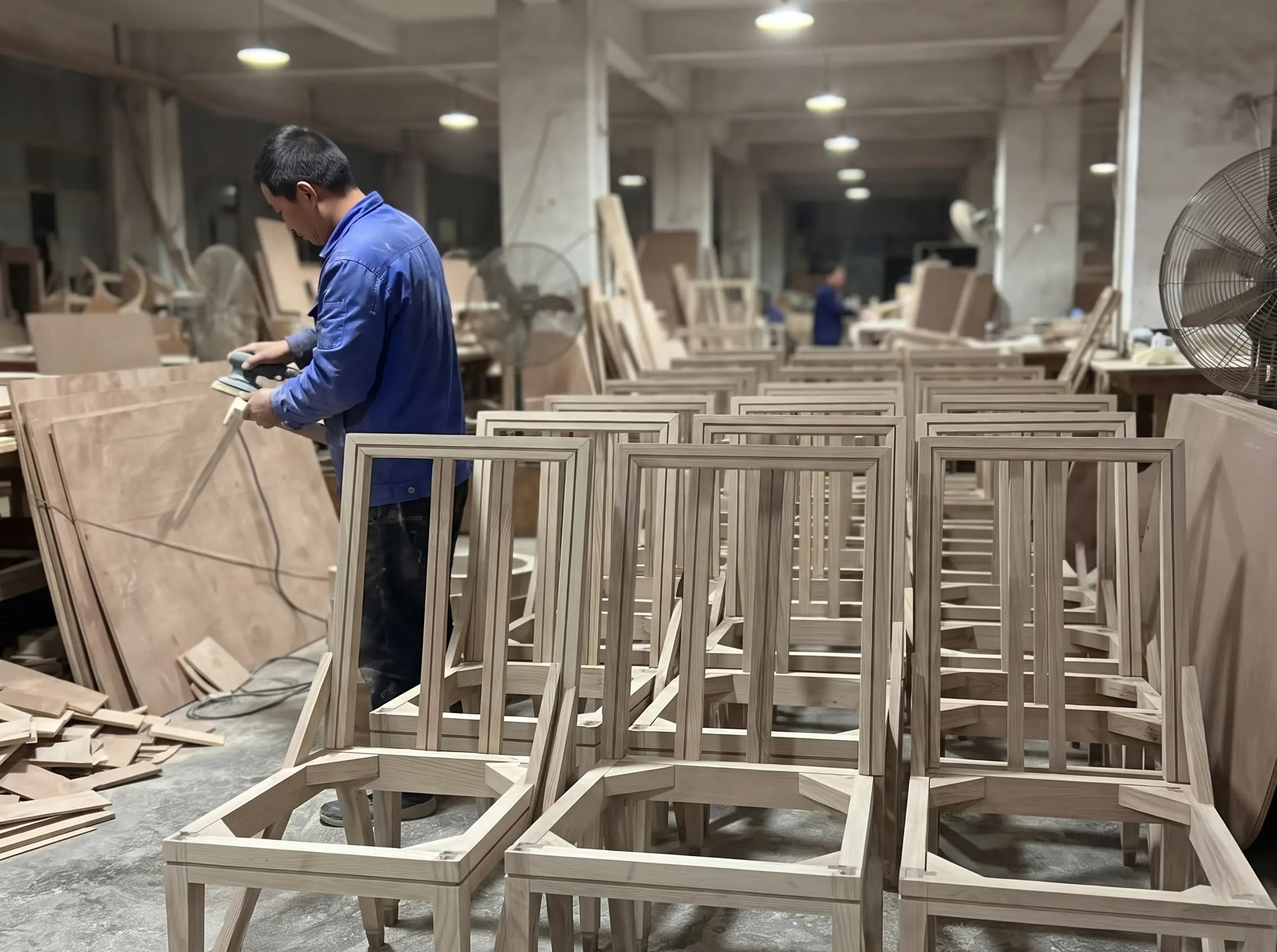
Most buyers think a flawless sample means a flawless container. We have walked enough factory floors in Foshan Longjiang and Dongguan Houjie to tell you: China sample vs production quality is the single most expensive illusion in furniture sourcing. The sample room is a stage. Mass production is reality. And the gap between them? It is where your margin dies.
What the Sample Room Really Is
Walk into a typical showroom in Shunde District. Everything gleams. The leather sofa smells like a luxury car interior. The dining table has edge banding so perfect you could use it as a ruler. You take photos, you smile, you sign the deposit.
Here is what most buyers never see: that sample was built by the factory’s senior technician, on a dedicated bench, with hand-selected materials, over three to four days. It is not a preview. It is a movie trailer that contains only the best shots. When we ask factory managers off the record, they admit it freely: “The sample is for the eyes. Mass production is for the margin.”
This is the heart of furniture sample fraud. It is not always intentional deception, but a structural mismatch between what you saw and what the production line is actually set up to deliver. The same design, the same drawings, but executed by different people, under different time pressure, with different cost targets.
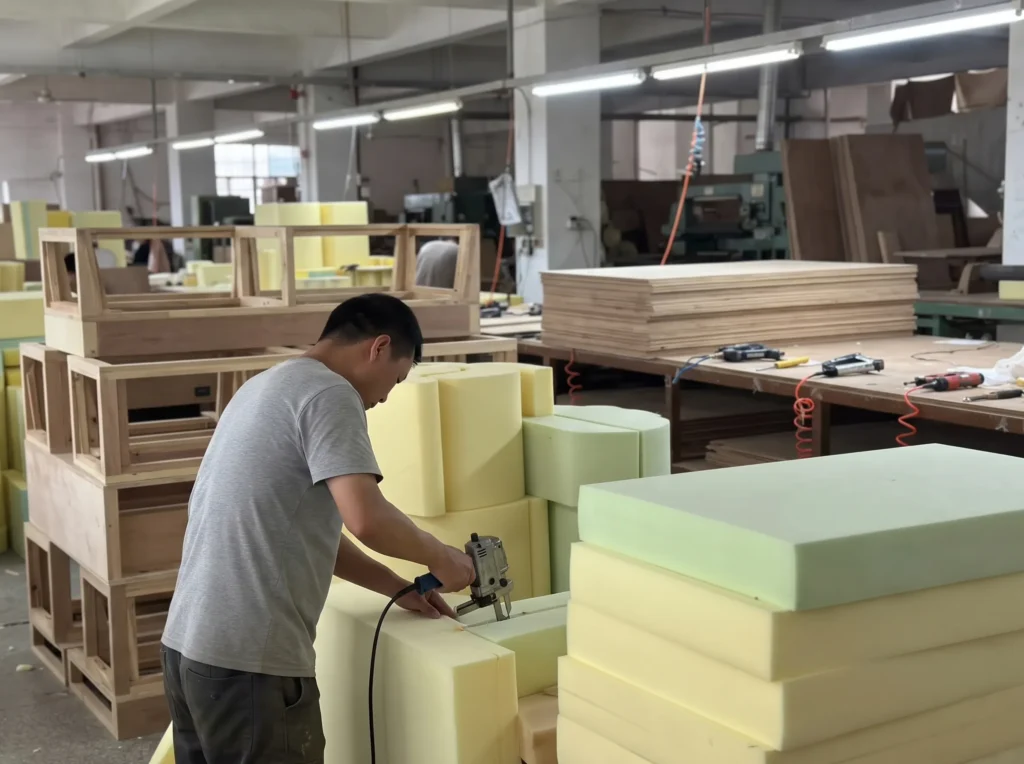
The Five Most Common Switcheroos
We have compiled a list of the specific tricks, or call them process shortcuts, that turn your perfect prototype into a disappointment.
| Switcheroo | What You Saw | What You Often Get | Impact |
|---|---|---|---|
| Foam density downgrade | 45D high-resilience foam | 35D standard foam | Cushions sag within 6 months |
| Leather substitution | Full-grain Italian leather | Split leather with heavy coating | Peeling, cracking, odor issues |
| Wood frame thinning | 4cm solid rubberwood frame | 3cm frame with more knots | Structural weakness, squeaking |
| Hardware swap | Brand-name hinges/sliders | Unbranded local hardware | Drawer misalignment, breakage |
| Finish corner-cutting | 7-step hand-rubbed finish | 4-step spray finish | Color inconsistency, thin coating |
Every one of these changes is small enough to miss in a rushed final inspection. Cumulative? They are the difference between a five-star review and a chargeback.
A Real Case
We once watched a sofa sample being built in a Longjiang workshop. The master upholsterer, a man with 22 years of experience, spent six hours on the corner stitching alone. In mass production, that same corner gets 18 minutes on the line. The factory is not being evil. They are being economic. But your customer does not care about economics. They care about whether the armrest looks like the photo on your website.
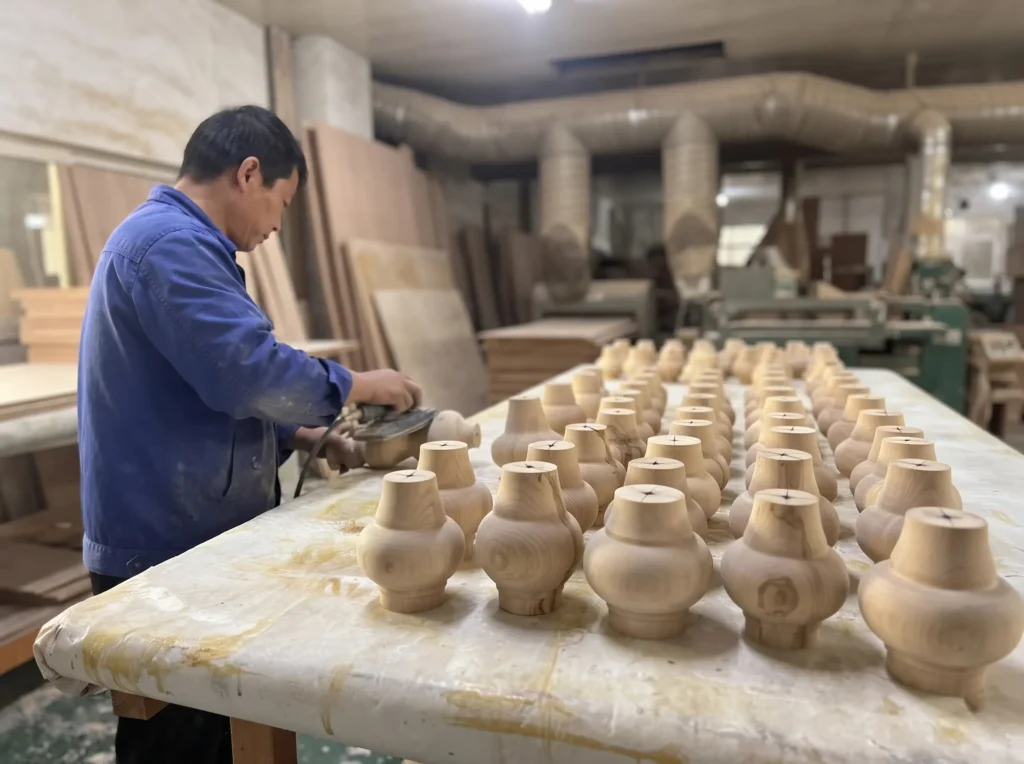
Why Factories Do This (It Is Not Just Greed)
Buyers love to blame Chinese factories for being dishonest. The truth is more complicated. When a factory quotes you a price, they are competing against thirty other workshops in the same town. If you negotiate hard, and you should, something has to give. The factory manager has a choice: lose the order, or quietly adjust the internal specification to hit the number.
This is the prototype bait and switch dynamic. The sample is built to win your business. The production run is built to make the math work. In our experience, about 60% of quality drift is driven by the buyer’s own price pressure, not factory malice. The other 40%? That is where the real bad actors live, the ones who intentionally build a golden sample knowing they will never replicate it.
The Red Flags You Can Spot in Person
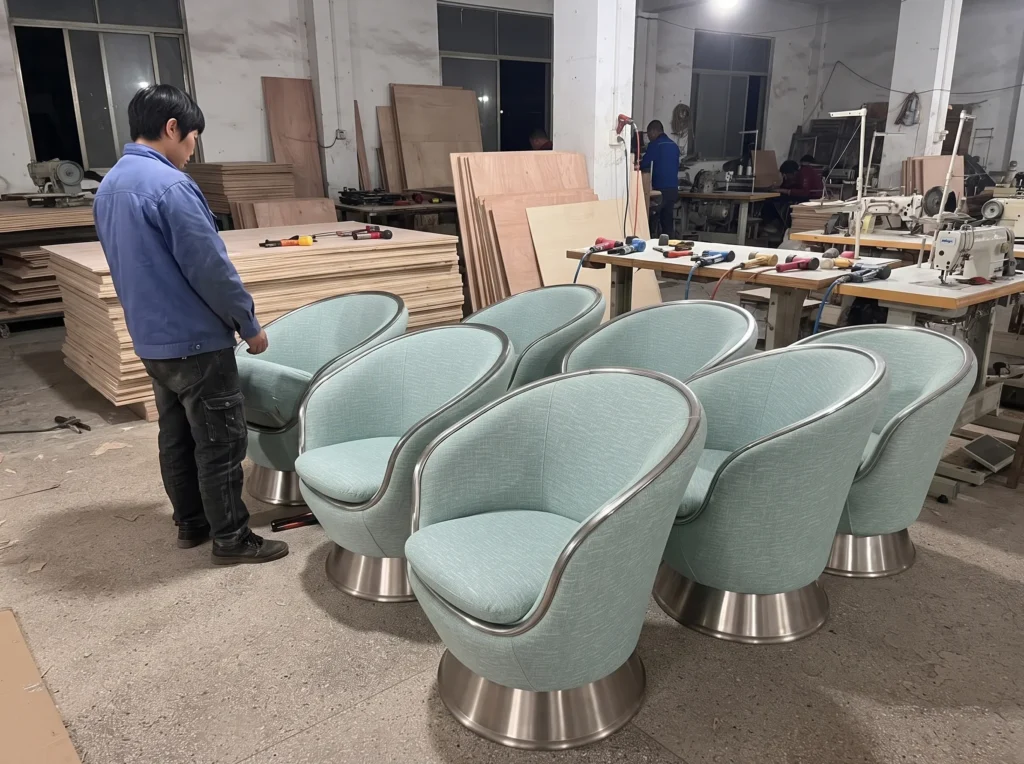
If you are visiting factories, a few warning signs tell you the sample-to-production gap will be wide. Start with the air conditioning: the sample room has it, the workshop often does not, and that temperature and humidity control matters enormously for wood and upholstery curing. Then look for the brass plaque. If the sample carries a small plaque with a serial number but the production pieces do not, the sample was likely outsourced to a specialty workshop. Ask to see a production piece from the same line and the same month. If they can only show you the golden sample and vague photos of “previous shipments,” that is a problem. And when you ask about the BOM, the Bill of Materials, watch for the stall. If they hesitate or hand you a generic list with no supplier names and no grade codes, you are looking at opacity. Opacity is where quality problems breed.
How to Protect Your Order (Practical Steps)
We have developed a simple protocol over the years that cuts furniture sample fraud risk by roughly seventy percent. It is not bulletproof, but it is far better than blind trust. First, seal the sample physically: do not just take photos, wrap it in plastic, mark it with both your signatures, and lock it in the factory’s storage so it becomes your reference for comparison. Second, demand a pre-production piece built on the actual production line, by the actual team, with the actual materials, before the main run starts. That is your real sample. Third, specify the BOM in the contract. Do not write “solid wood frame.” Write “rubberwood frame, minimum 4cm thickness, grade A, from [named supplier].” Specificity is your only shield. Fourth, insert a penalty clause for material deviation: if the foam is not 45D as specified, the factory pays to re-upholster, which changes their incentive math. Fifth, hire a third-party inspector to check against the sealed sample rather than relying on the factory’s own QC team, because independence matters more than expertise here.
The Real Cost of Getting It Wrong
Here is a number most buyers do not calculate: the cost of a defective container is not just the refund. It is the refund, plus the return shipping, which often exceeds the product value, plus the lost customer lifetime value, plus the platform penalty, plus the time you spend firefighting instead of growing.
We know a US-based e-commerce seller who lost $340,000 in a single quarter because one sofa line had a frame switch they did not catch until the reviews arrived. The China sample vs production quality gap can destroy a business faster than almost any other sourcing risk.

FAQ
Why does my sample always look better than mass production?
Samples are built by senior craftspeople with unlimited time and hand-picked materials. Production runs use standard workers under time pressure with bulk materials. The structural conditions are completely different.
Can I legally prevent a factory from switching materials?
Yes, but only with a detailed contract that specifies exact materials, grades, and suppliers, plus an inspection clause and penalty for deviation. Generic contracts are nearly unenforceable in practice.
How much does a third-party inspection actually help?
A competent inspector who compares against a sealed sample catches about 60-70% of major deviations before shipment. It is not perfect, but it is the single most cost-effective protection you can buy.
Are all Chinese factories guilty of sample fraud?
No. Many factories are honest but under pressure. The issue is structural: sample rooms are marketing tools, not production previews. You need to verify, not trust.
What is the biggest warning sign a sample is too good to be true?
If the factory cannot explain, in specific technical terms, how they will replicate the finish or construction detail at scale, the sample was likely built as a one-off. Ask for the process, not just the product.
Recommended Resource
Interi Furniture specializes in custom furniture manufacturing for residential, hospitality, and commercial projects. Their experience in materials, craftsmanship, and project realization makes them a valuable resource for designers and buyers seeking tailored furniture solutions from China.