









Trade assurance personal buyer Alibaba coverage is not a zero-risk procurement shield. It is a platform-mediated escrow and dispute resolution service with structural limitations that disproportionately disadvantage individual consumers. For personal buyers importing furniture—an inherently high-value, bulky, and often customized product category—the mechanism offers meaningful protection in roughly three scenarios, fails outright in five common situations, and leaves buyers in a gray zone for everything else. Industry operators who have guided disputes through Alibaba’s system estimate that personal buyers achieve favorable outcomes in approximately 35 to 45 percent of furniture-related claims, compared with 60 to 70 percent for enterprise buyers with formal import documentation. The gap is not accidental. It reflects the evidence threshold Alibaba’s mediators require, the cost structure of cross-border furniture disputes, and the platform’s institutional incentive to preserve supplier relationships. Understanding these boundaries before you click “Pay Now” can reduce your exposure by more than half.

Why Personal Buyers Trust Trade Assurance (And Why That Trust Is Often Misplaced)
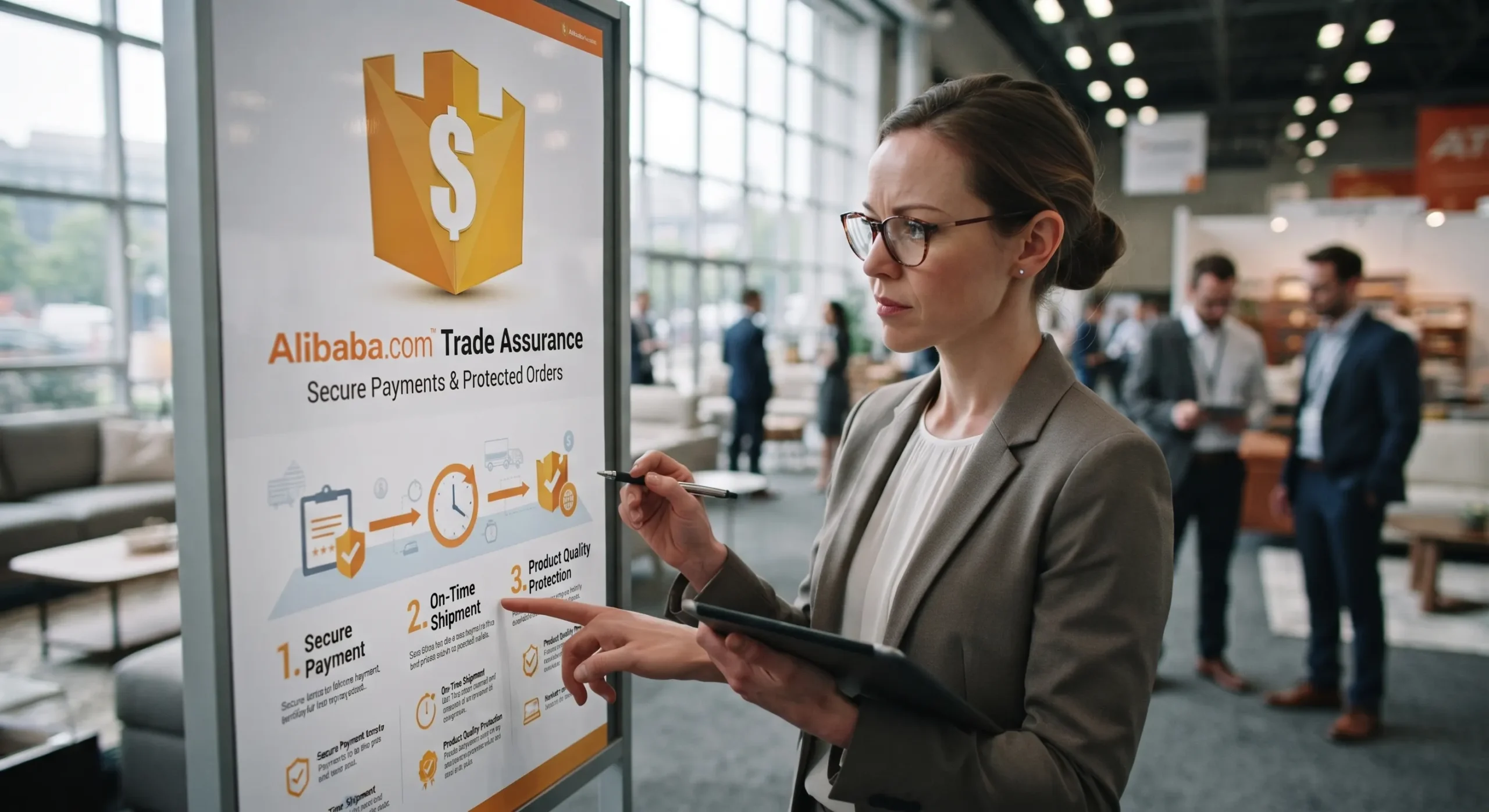
The marketing narrative surrounding Alibaba Trade Assurance is seductive. Alibaba presents it as a buyer protection program that covers order quality, quantity, and on-time shipment. For a North American or European consumer browsing sofa listings at 2:00 AM, this sounds like the missing link between Instagram sourcing inspiration and safe cross-border shopping. The reality is more transactional. Trade Assurance functions as a conditional payment hold. Alibaba releases funds to the supplier only after buyer confirmation, or after a dispute window closes. It does not function as insurance. It does not guarantee product satisfaction. It does not cover subjective quality assessments. Most critically, it does not neutralize the power imbalance between a platform that earns commissions from suppliers and a one-time buyer who may never return. Personal buyers often discover this distinction only after a dining table arrives with veneer peeling at the corners or a sectional sofa ships in a color nowhere near the swatch approved via Alibaba’s messaging system.
What Trade Assurance Actually Covers vs. What Suppliers Claim
The Legal Reality of Trade Assurance
Trade Assurance is not an insurance policy underwritten by a licensed carrier. It is a contractual mediation framework embedded in Alibaba’s terms of service. When a buyer pays through Alibaba’s secure payment channel, the platform holds the funds and acts as a conditional escrow agent. If a dispute arises, Alibaba assigns a case manager who reviews evidence submitted by both parties against the order contract recorded on the platform. The case manager’s authority is limited to releasing, withholding, or partially refunding the escrowed amount. They do not conduct physical inspections. They do not issue binding legal judgments. They do not possess enforcement power beyond the Alibaba ecosystem. For furniture buyers, this means a dispute over structural integrity or material authenticity hinges entirely on whether the supplier’s product page description constitutes a binding contractual representation—a standard that suppliers have learned to manipulate.
The Three Scenarios Where Trade Assurance Works
Alibaba Trade Assurance delivers predictable protection when three conditions align precisely. First, the buyer never pays outside the platform. Second, the supplier’s product description contains explicit, measurable specifications that the delivered goods objectively violate. Third, the buyer maintains complete message records within Alibaba’s native communication tools. In these narrow corridors, the mechanism functions as designed. A supplier who ships a marble table with dimensions 140 cm by 80 cm when the listing specifies 160 cm by 90 cm faces a straightforward liability. A supplier who ships nothing at all triggers an unambiguous non-delivery claim. A supplier who delivers 12 chairs when the order specifies 20 chairs creates a quantifiable short-shipment dispute. These scenarios represent the core competency of Trade Assurance. They are also, unfortunately, the minority of furniture procurement conflicts.
The Five Scenarios Where Trade Assurance Fails Personal Buyers
The majority of furniture disputes fall outside Trade Assurance’s effective perimeter. The following comparison illustrates the divergence between platform marketing and operational reality.
| Scenario | Supplier Promise | Trade Assurance Reality | Why Personal Buyers Lose |
|---|---|---|---|
| Subjective quality dissatisfaction | “High-quality solid wood construction” | Not covered | “High quality” lacks measurable contractual definition; mediators defer to supplier’s interpretation |
| Minor dimensional variance within tolerance | “Custom size per your drawing” | Gray zone | Alibaba tolerates industry-standard deviation ranges that personal buyers find unacceptable |
| Color or finish mismatch | “Same as photo” | Rarely upheld | Screen calibration, lighting variance, and material batch differences create plausible supplier defense |
| Delayed delivery without cancellation | “30-day production time” | Limited recourse | Mediators often approve supplier extensions; personal buyers lack leverage to enforce original terms |
| Post-delivery structural defect | “Durable frame guaranteed” | Evidence barrier | Personal buyers cannot produce third-party inspection reports or laboratory test certificates Alibaba requires |
These five scenarios capture the bulk of personal buyer frustration. A European buyer ordering a velvet upholstered bed frame may find the fabric pile shorter and the color grayer than expected. An Australian purchaser of a rattan dining set may discover the weave pattern differs from the sample photo. These are genuine commercial grievances. They are also, under Trade Assurance’s evidentiary framework, largely unactionable.

The Evidence Gap: Why Personal Buyers Lose Disputes
The Documentation Standard Alibaba Expects
Alibaba’s dispute mediators operate on a documentary standard borrowed from formal B2B trade arbitration. They expect contracts, pre-shipment inspection reports, third-party laboratory test certificates, and photographic evidence with verifiable timestamps. Enterprise buyers routinely produce these documents. They engage QC agencies, draft specification addendums, and commission material testing. Personal buyers do none of this. A personal buyer purchasing a $1,200 living room set from a Foshan factory does not hire SGS to inspect veneer adhesion. They do not draft Incoterms-compliant purchase agreements. They rely on product photos, chat promises, and trust. When the dispute portal requests “official inspection certificates,” the personal buyer has nothing to upload. The supplier, meanwhile, submits the standard factory test report and a signed delivery receipt. The evidentiary asymmetry is structural and decisive.
Why Furniture Quality Disputes Are Nearly Impossible to Win
Furniture occupies a uniquely difficult position within Trade Assurance’s dispute taxonomy. Unlike electronics, where a defective unit either powers on or does not, furniture quality exists on a spectrum. Density of foam padding, grade of leather dye, thickness of powder coating—these are attributes that degrade over time, vary by production batch, and resist photographic proof. A personal buyer claiming that a sofa cushion lacks the promised 35D high-resilience foam cannot prove this without cutting open the cushion and sending samples to a certified lab, a process costing more than the sofa itself. Suppliers know this. They design product descriptions to exploit this ambiguity. Phrases like “premium materials” and “commercial-grade construction” sound specific to untrained ears but carry zero contractual weight. When disputes arise, suppliers argue reasonable interpretation. Mediators, trained to avoid alienating high-GMV vendors, typically accept these arguments.
The Timeline Problem: 30 to 90 Days of Uncertainty
An Alibaba Trade Assurance dispute for a furniture order typically requires 30 to 90 days from initial filing to resolution. For a personal buyer who has emptied a room in anticipation of delivery, this timeline represents a secondary injury. The buyer must store the disputed goods, refrain from using alternative suppliers during the resolution window, and maintain detailed correspondence logs. For micro-B2B buyers—such as an independent interior designer staging a client project—this delay can cascade into contract penalties with their own customers. The platform does not compensate for time value, storage costs, or opportunity loss. Many personal buyers abandon disputes midway because the administrative burden exceeds the order value. This attrition benefits suppliers and the platform alike.
Supplier Loopholes and How to Spot Them Before You Pay
The Offline Payment Trap
The most common and devastating loophole is the offline payment diversion. A supplier offers a 5 to 10 percent discount for paying the deposit, or the entire balance, via wire transfer, Wise, or PayPal Friends and Family outside the Alibaba platform. The buyer, eager to save $150 on a $3,000 order, agrees. The moment funds leave Alibaba’s escrow system, Trade Assurance evaporates. The supplier knows this. Experienced operators in the Foshan and Dongguan clusters openly admit that encouraging offline payment is a standard risk-management strategy for orders with thin margins or high customization risk. Personal buyers should treat any request for off-platform payment as an automatic disqualification, regardless of the discount offered.
The Modified Product Description Trick
Sophisticated suppliers manipulate product listings after order confirmation but before production begins. A buyer orders a “solid oak dining table” based on a detailed listing. The supplier then edits the listing to read “oak veneer over MDF core,” timestamps the revision, and presents this as the governing contract in any future dispute. The original page screenshot on the buyer’s phone carries less weight than the supplier’s archived platform record. To counter this, personal buyers should screenshot the full product page—including specifications, materials, dimensions, and supplier promises—at the moment of order placement. Email these screenshots to yourself to establish an external timestamp. This documentation is not bulletproof, but it shifts the evidentiary balance marginally in your favor.
The “Custom Order” Escape Clause
Custom and made-to-order furniture listings frequently contain clauses stating that “custom products cannot be returned or refunded.” Suppliers invoke these clauses under Trade Assurance to reject virtually any dispute. The platform’s default position treats custom orders as non-standard transactions with elevated supplier protection. Personal buyers should recognize that ordering a sofa in a non-standard length or a table with a modified base design places them outside Trade Assurance’s strongest protections. If customization is unavoidable, negotiate explicit quality benchmarks in the Alibaba message thread before payment. Specify acceptable material grades, dimensional tolerances, and finish standards using objective metrics rather than subjective adjectives.
Real Win Rates: What Industry Data Actually Shows
Platform-Reported Rates vs. Buyer-Reported Experiences
Alibaba publishes aggregate Trade Assurance satisfaction metrics that imply high buyer protection rates. Industry practitioners operating on the ground in China’s furniture export hubs observe a different picture. The following table reconciles these perspectives. All non-official figures are labeled per our verification standard.
| Data Source | Claimed Win Rate / Satisfaction | Context and Limitations | Industry Practitioner Estimate |
|---|---|---|---|
| Alibaba official platform data | High overall buyer satisfaction | Aggregated across all categories; includes B2B bulk orders with professional documentation | Not independently verifiable by third parties |
| Cross-border trade consultants (China-based) | 60–70% for enterprise buyers | Based on managed disputes for clients with QC protocols and legal contracts | For reference only, subject to official verification |
| Industry operator observations for personal buyers | 35–45% for personal / C-end buyers | Based on dispute outcomes for buyers without third-party inspection or formal import structure | For reference only, subject to official verification |
| Furniture-specific dispute outcomes | Lower than platform average | Bulky goods complicate return requirements; quality subjectivity creates mediator ambiguity | For reference only, subject to official verification |
The divergence is not necessarily evidence of platform deception. Enterprise buyers genuinely win more often because they enter disputes with superior documentation. Personal buyers enter the same system with inferior tools and expect equivalent outcomes. The mechanism is not biased against individuals by design; it is biased against individuals by structure.
Why B2B Buyers Win More Often Than Personal Buyers
Enterprise buyers possess four advantages that personal buyers rarely replicate. They maintain formal purchase orders with Incoterms and inspection clauses. They engage third-party QC firms that generate pre-shipment reports with photographic evidence. They structure payments in tranches tied to production milestones, creating multiple escrow trigger points. They often have existing supplier relationships that Alibaba values and therefore leverages during mediation. A personal buyer with a single $2,000 order possesses none of these structural advantages. They are, in the platform’s economic calculus, a low-value, one-time participant whose satisfaction carries minimal supplier-retention leverage.

A Practical Protection Protocol for Personal Buyers
The Pre-Order Checklist for C-End Buyers
Before placing any furniture order on Alibaba as a personal consumer, complete the following verification sequence. Confirm that the product listing contains specific material terminology rather than marketing language. Request that the supplier confirm all specifications, including dimensions, materials, colors, and packaging, within an Alibaba message thread. Screenshot the product page at the time of order. Verify that the entire payment amount, including shipping, processes through Alibaba’s secure payment system. Confirm the supplier’s Trade Assurance limit exceeds your order value. Review the supplier’s dispute history if accessible. Refuse any request to communicate or pay outside the platform. Accept that subjective quality preferences will not be protected and adjust expectations accordingly.
The Pre-Order Checklist for Micro-B2B Buyers
Micro-B2B buyers—such as short-rental operators or boutique hotel owners—operate in a hybrid space between personal consumption and formal import. These buyers should implement additional safeguards. Commission a pre-shipment inspection through an independent agency for orders exceeding $5,000. Insist on a signed specification sheet uploaded to the Alibaba order as an attachment. Structure payment in two tranches: 30 percent deposit and 70 percent balance held until inspection approval, with both tranches processed through Alibaba. Document all color and material approvals with physical samples retained by the buyer, photographed, and referenced in the order messages. For hotel FF&E or multi-unit residential projects, consider engaging a China-based sourcing agent who can conduct factory audits and witness production firsthand.
When to Use Trade Assurance, When to Use PayPal or Credit Card
Different payment channels offer distinct protection profiles. The optimal choice depends on order characteristics and buyer risk tolerance.
| Payment Method | Best For | Protection Strength | Key Limitation | Recommended Use Case |
|---|---|---|---|---|
| Alibaba Trade Assurance | Standard catalog items under $5,000 with clear specifications | Strong for non-delivery and clear specification violations | Weak for subjective quality; slow resolution; furniture return logistics are impractical | First-time orders with established suppliers; low-customization goods |
| PayPal Goods and Services | Orders under $1,500 where supplier accepts PayPal | Strong buyer protection; faster resolution than Alibaba | Limited to PayPal-accepting suppliers; not integrated with Alibaba order flow | Small accessory orders; sample shipments; low-risk trial purchases |
| Credit Card via Alibaba | Orders where buyer wants chargeback option alongside platform escrow | Dual protection layers; chargeback as last resort | Chargeback success varies by issuer; may damage Alibaba account standing | Mid-size orders where buyer values multiple exit options |
| Offline Wire Transfer | Nothing, for personal buyers | None | Zero recourse; highest fraud exposure | Never recommended for personal furniture buyers |
For most personal furniture buyers, the optimal strategy is not choosing one payment method exclusively but layering protections. Use Trade Assurance for the main order. Pay for initial samples via PayPal to test supplier responsiveness and product quality before committing to bulk. Maintain a credit card as the funding source for Alibaba payments to preserve chargeback rights as a final backstop.

FAQ: Alibaba Trade Assurance for Furniture Buyers
Does Trade Assurance cover shipping damage?
Trade Assurance covers shipping damage only when the supplier’s chosen logistics provider is at fault and the supplier accepted responsibility for delivery terms. If the buyer arranged independent freight forwarding, damage claims typically fall outside Trade Assurance and must be pursued through the shipping carrier’s cargo insurance. For furniture, which experiences high damage rates during ocean transit, personal buyers should clarify delivery terms explicitly. DDP (Delivered Duty Paid) terms place liability on the supplier until final delivery. EXW (Ex Works) terms transfer risk at the factory gate. Most disputes over shipping damage fail because the buyer accepted unfavorable delivery terms without understanding the liability transfer point.
Can I get a refund if the furniture quality is poor?
You can file a dispute for poor quality, but winning depends entirely on your ability to prove objective specification violations. Subjective dissatisfaction with craftsmanship, comfort, or aesthetic appeal rarely results in refunds. If the listing specified “kiln-dried solid oak” and you receive particleboard with oak veneer, you have a measurable claim. If the listing promised “luxury comfort” and the sofa feels firmer than expected, you do not. The evidentiary burden falls on the buyer. Personal buyers without material testing capabilities face steep odds. Your practical recourse in subjective quality cases is often limited to partial refunds negotiated directly with the supplier, mediated informally by Alibaba, or accepted as a learning expense.
How long does a Trade Assurance dispute take?
The standard timeline ranges from 30 to 90 days, depending on supplier responsiveness, evidence complexity, and whether the dispute escalates to Alibaba’s mediation team. Simple non-delivery claims may resolve in two to three weeks. Furniture quality disputes involving photographic evidence, supplier counter-evidence, and potential return logistics frequently extend toward the 90-day upper bound. Buyers should prepare for a multi-week process during which funds remain in escrow and the disputed goods occupy storage space. The platform does not expedite cases based on buyer urgency or project deadlines.
What happens if the supplier refuses to accept a return?
This is one of the most intractable problems in furniture Trade Assurance disputes. Alibaba’s dispute framework often requires the buyer to return goods to the supplier for a full refund. For a personal buyer in Germany disputing a $1,800 sofa from a Foshan factory, return shipping costs can exceed $800, with customs complications on both ends. The platform may offer a partial refund without return, but the percentage is typically modest. Suppliers know this logistics asymmetry and strategically refuse returns, effectively forcing buyers into unfavorable partial settlements. Personal buyers should negotiate return liability explicitly in the pre-order message thread, though suppliers rarely agree to bear international return freight.
Is it safe to pay the deposit outside of Alibaba?
It is not safe. Paying deposits or balances outside Alibaba’s secure payment system voids Trade Assurance coverage entirely. Any supplier requesting off-platform payment is either attempting to evade platform fees or preemptively insulating themselves from dispute liability. The small discount offered never justifies the complete elimination of buyer protection. Personal buyers should treat off-platform payment requests as non-negotiable deal-breakers. No legitimate supplier with genuine Trade Assurance backing needs to circumvent the platform’s payment infrastructure for standard transactions.
Recommended Resource
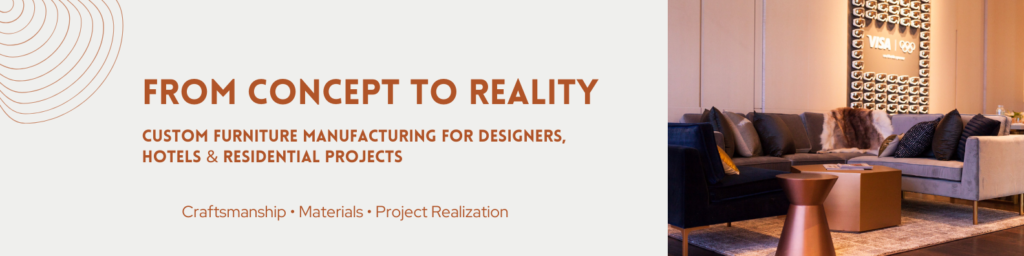
Interi Furniture specializes in custom furniture manufacturing for residential, hospitality, and commercial projects. Their experience in materials, craftsmanship, and project realization makes them a valuable resource for designers and buyers seeking tailored furniture solutions from China.