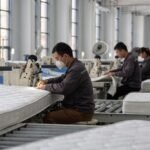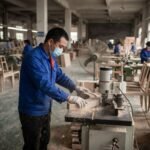



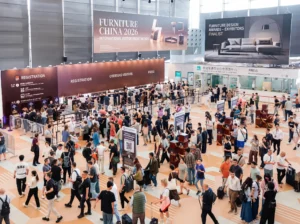


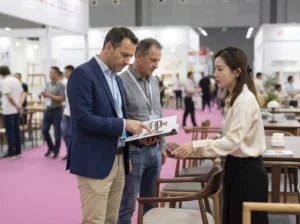

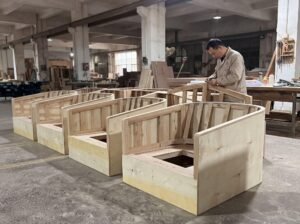
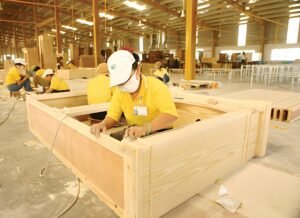


Here is the truth most first-time buyers learn too late: a quote given at a China furniture fair is usually 15-40% above the price the same factory will offer you two weeks later by email, or on a factory floor visit in Foshan or Dongguan. The booth price is not the “fair price” — it is the exhibition price, a number engineered to cover six-figure booth costs, sales team travel, sample logistics, and a healthy margin of negotiation padding. Understanding the China fair price gap is not about distrusting Chinese factories. It is about understanding how exhibition economics work, and refusing to pay the “first-time buyer tax” built into every aisle of CIFF Guangzhou and every hall of Furniture China.
Why This Matters: The Buyer’s Dilemma at the Booth
You flew twelve hours. You have three days, a badge, and a tote bag full of catalogs. A sales manager leans across the sample sofa and tells you this price is a “fair special, valid today only.” Your instinct says sign. Your spreadsheet says wait.
We have walked all six major fairs with buyers from the US, Germany, Australia, and the Middle East for over a decade. The pattern never really changes. Buyers treat the fair as the annual best-buying window, when in reality the exhibition quote is the most complex — and most inflated — price they will receive all year. The gap between the exhibition quote and the factory’s real cost is not an accident. It is a system, and it has four masters: brand display, dealer recruitment, inventory clearance, and relationship maintenance. Each master pays a different price.
One practical note for 2026: the Shenzhen Furniture Fair takes place at the Futian Convention & Exhibition Center, not the newer Shenzhen World venue in Bao’an — the two are roughly 40 kilometers apart, so book your hotel on the correct side of the city before you fly in.
The Myth: “Fair Price Equals Best Price of the Year”
The deepest misconception in this industry is that fair pricing is competitive pricing. Buyers assume that with hundreds of booths under one roof, prices must be squeezed. Competition exists — but it is competition for attention, not for margin.
A standard three-seater fabric sofa that quotes $420 at CIFF Guangzhou often settles at $290-330 after two rounds of email negotiation with the same factory, same fabric, same frame. The factory does not lose money at $310. The $420 was never a market price — it was an anchor, set high so the eventual “discount” feels like winning. For reference only, subject to official verification: across our industry surveys, the typical premium at a major fair ranges from 15% for standardized, high-volume items to 40% for custom or low-volume pieces, depending on the show, the day, and who is asking.
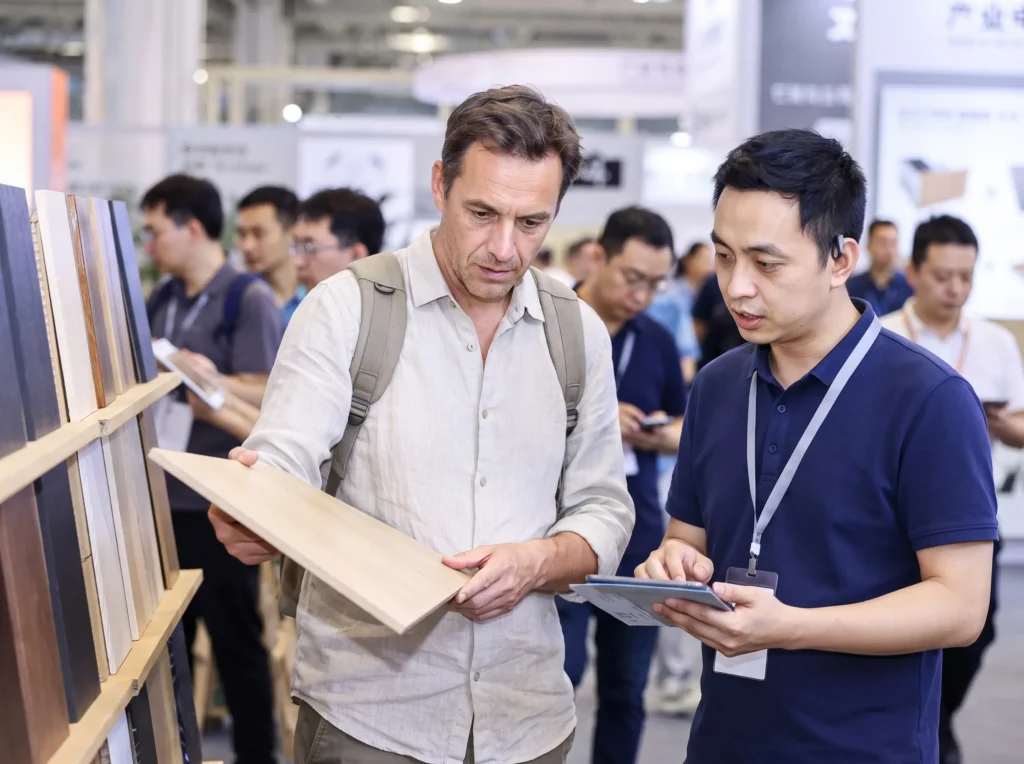
China’s 6 Major Furniture Fairs: Price Premium by Show
Not all fairs are priced equally. Booth cost, buyer mix, and exhibitor strategy differ sharply between venues, and those differences show up directly in your quote. The following reflects our field observations across these shows. For reference only, subject to official verification.
| Fair | Venue / City | Typical Booth Cost Tier | Price Premium vs Factory Price | Premium Driver |
|---|---|---|---|---|
| CIFF Guangzhou | Pazhou, Guangzhou | High | 15-25% | Brand showcase; massive buyer traffic justifies high anchor pricing |
| CIFF Shanghai | NECC, Shanghai | High | 20-30% | Higher operating costs; export-brand positioning |
| Furniture China | SNIEC, Shanghai | High | 20-35% | Strong export focus; buyers arrive with bigger budgets |
| Dongguan Famous Furniture Fair | Houjie, Dongguan | Medium | 15-25% | Factory-dense region; prices more negotiable on-site |
| Shenzhen Furniture Fair | Futian Convention & Exhibition Center, Shenzhen | Medium-High | 15-30% | Design-forward positioning; premium on “original design” |
| Regional professional shows | Various cities | Low-Medium | 10-20% | Lower booth costs; weaker anchoring, more room to deal |
The pattern is consistent: Shanghai premiums run higher than Guangzhou, and regional shows are the softest entry point. But the booth price itself is only the visible iceberg. The table below breaks down where the exhibition premium actually comes from.

Exhibition Price vs. Real Factory Price: Cost Component Breakdown
When a factory quotes you at a fair, you are not just buying a sofa. You are paying a share of everything it took to put that sofa under exhibition lights. For reference only, subject to official verification.
| Cost Component | Typical Share of Exhibition Premium | How It Reaches Your Quote |
|---|---|---|
| Booth rental & construction | 30-40% | Raw space plus custom build-out, amortized across the fair’s expected orders |
| Sales team lodging & travel | 10-15% | Hotels near Pazhou or SNIEC during fair weeks cost 2-3x normal rates |
| Sample production & freight | 10-15% | One-off showroom-grade samples, shipped and insured |
| Sample cost amortization | 5-10% | Sample development costs spread over first orders |
| Logistics recovery | 5-10% | Reverse logistics of displays after the show |
| Psychological negotiation padding | 15-25% | The deliberate cushion so the sales team can “give you a discount” |
That last row deserves its own name. We call it the anchor cushion, and it is the single most profitable line item in exhibition pricing.
The “Fair Special” Psychology: Anchoring Tactics Sales Teams Use
Every seasoned exhibition sales rep runs the same playbook, refined across hundreds of buyer conversations. The tactics are not illegal, and they are not exclusive to China. They are simply very effective on tired, time-pressured buyers. For reference only, subject to official verification.
| Sales Script | What It Actually Means | The Counter-Move |
|---|---|---|
| “This is a fair special, exhibition price only.” | The number is set high enough to absorb your expected discount request | Ask for the standard FOB price list, not the special |
| “If you confirm today, I lock this price for you.” | Locking you at the premium level before you can compare | Take the quote sheet, walk away, compare online |
| “After the show, price goes back to normal.” | The “normal” price is the fictional reference point | Ask what the “normal” price is — then ask why anyone pays it |
| “This booth is packed; we only take serious buyers.” | Manufactured scarcity to trigger loss aversion | Serious buyers compare three factories before paying |
| “Our Alibaba price is higher, this is lower.” | Cross-channel price choreography to validate the anchor | The real reference is the factory’s own FOB floor, not another listed price |
The mechanism underneath all of this is loss aversion. Buyers fear losing a “today-only” deal more than they value the money saved by waiting. Factories know this. The final afternoon of any fair, when sales targets loom, is genuinely the best window to negotiate — but only if you already know the real factory floor. Otherwise, you are just paying the anchor with a smaller smile.
Definition: Exhibition Anchor Pricing
Exhibition anchor pricing is the practice of quoting an initial exhibition price deliberately above the factory’s real cost floor, in order to make subsequent discounts appear generous while still protecting margin. The “original price” shown on the quotation sheet functions as a psychological reference point, not as a number any buyer has ever actually paid.
The High-Price First Move: Why Some Factories Quote Up at Fairs
Here is a counterintuitive behavior we have documented repeatedly: some factories quote higher at the fair than in their own showrooms. It looks irrational. It is not.
The strategy is called high-open-low-close. The exhibition quote exists to create a paper trail of “concession.” When you later visit the factory or negotiate on WeChat, the sales rep drops 20%, you feel like a champion negotiator, and the deal closes above the factory floor anyway. First-time attendees get harvested by this more than anyone, because they have no baseline to measure the discount against. The antidote is boring but bulletproof: never accept a fair quote as your price ceiling or floor. It is neither.
Negotiation Tactics: How to Move from Exhibition Price to Factory Price by Fair
Negotiation power at a fair is uneven, and it shifts by venue. The tactics below reflect what has worked for the buyers we advise. For reference only, subject to official verification.
| Fair | Best Timing | Effective Opening Move | Realistic Reduction Target |
|---|---|---|---|
| CIFF Guangzhou | Days 2-3, afternoon | Cite a comparable Foshan factory FOB quote | 15-20% |
| CIFF Shanghai | Day 3 | Request the MOQ-tiered price list, not the booth price | 15-25% |
| Furniture China | Day 2-3 | Signal repeat-order volume across two seasons | 20-30% |
| Dongguan | Any day | Offer factory-visit commitment same week | 15-25% |
| Shenzhen | Day 2 | Separate design premium from manufacturing cost | 15-20% |
| Regional shows | First day | Bundle multi-SKU inquiry to trigger volume pricing | 10-20% |
Two meta-rules apply everywhere. First, the phrase “send me your standard FOB price list and your MOQ tiers” resets the conversation from retail theater to wholesale reality faster than any counter-offer. Second, your second and third quotes matter more than your first. The buyers who overpay are almost always the ones who negotiate against a single quote instead of a market.
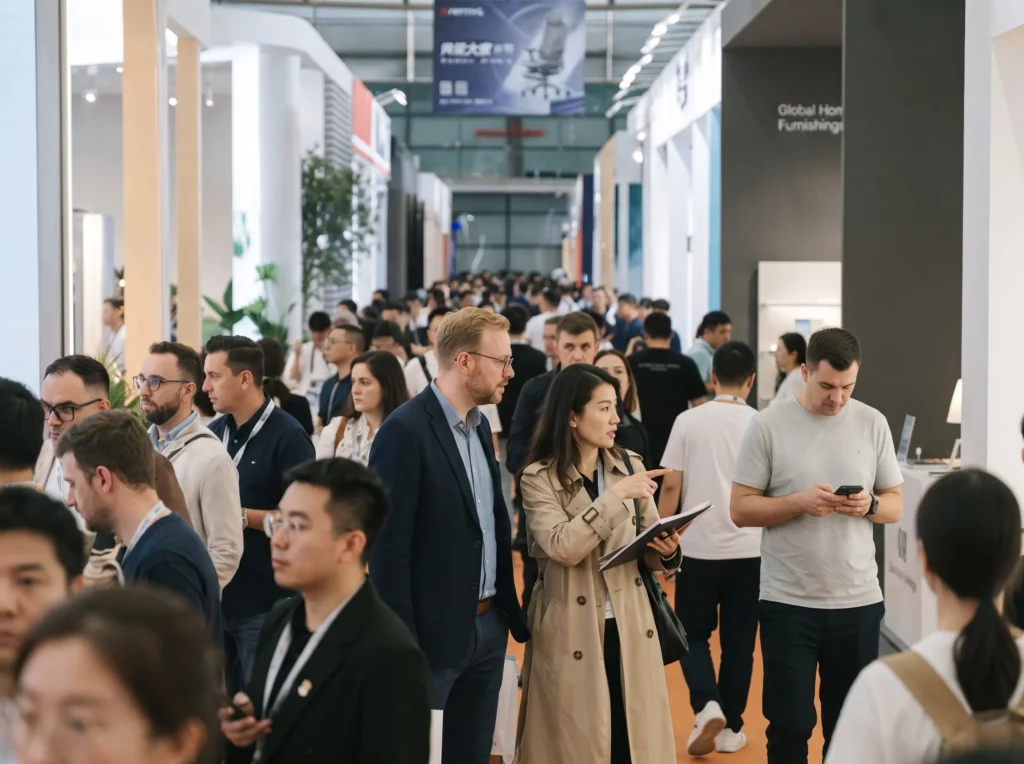
Risk Warnings: The Four Ways Buyers Overpay at Fairs
Some mistakes at fairs are expensive and hard to unwind.
| Risk | What It Looks Like | The Damage |
|---|---|---|
| Fake urgency | “Today only” deposit pressure | You lock the premium price, not the factory price |
| Bundled pricing | One number for mixed SKUs with no line-item detail | High-margin items hide inside the “package deal” |
| No baseline | Negotiating against one quote | You cannot tell a good discount from a decorated bad price |
| Skipping post-fair comparison | Accepting the exhibition quote as final | You forfeit the 15-40% that post-fair negotiation typically recovers |
| Delegating entirely to an agent | Agent quotes you the “fair price” plus commission | You pay the premium and the middleman margin simultaneously |
The “lock price” deposit deserves special attention. A deposit paid at the booth locks the exhibition price by default unless the contract states otherwise. If you pay at the fair, pay against a written term sheet that references the post-fair negotiated price, or hold the deposit conversation until after you have two competing quotes in hand.
Playbooks by Buyer Type
For B2B Importers and Wholesalers
You hold the strongest hand: volume. Do not negotiate SKU by SKU at the booth. Collect catalogs, shortlist five factories, and run a formal RFQ two weeks after the fair, when the sales teams are back at their desks and hungry for orders. Reference the fair meeting explicitly — “we met your team at CIFF, booth 9.3C21” — because it converts your inquiry from cold lead to warm follow-up, which historically unlocks the dealer-tier pricing. For reference only, subject to official verification, buyers running post-fair RFQs against fair quotes typically recover 18-30% on the initial numbers.
For Retailers and E-commerce Sellers
Your constraint is MOQ and cash flow, not leverage. At the fair, focus on standard, high-rotation SKUs rather than custom pieces — the premium on standardized goods is lower and the price benchmarking is easier because identical or near-identical items appear at multiple booths. Ask each supplier for their “cross-border e-commerce price” — a real tier many factories maintain for Amazon and Wayfair sellers. It is usually lower than the exhibition quote and closer to the FOB floor.
For Individual and Small Buyers
You are the most exposed to the first-time buyer tax, because sales teams read your badge, your questions, and your hesitation in about ninety seconds. Your defense is comparison. Photograph nameplates, collect WeChat contacts, and never pay a deposit on the spot. Then do something most individual buyers never do: contact two more factories from the same industry cluster online and ask for the same item. The difference between the fair quote and the cluster’s direct quotes is your personal China fair price gap, measured on your own order.

FAQ
Is the exhibition price at Chinese furniture fairs really higher than the factory price?
In most cases we have observed, yes — typically 15-40% depending on the fair, product type, and timing, for reference only, subject to official verification. The premium covers booth costs, staffing, samples, and negotiation padding. It is a structural feature of exhibition economics, not evidence of bad faith by an individual factory.
Which of the six fairs offers the most competitive pricing?
Regional and factory-cluster shows, such as those around Dongguan and Foshan, tend to carry lower premiums than the flagship Shanghai events. Among the majors, CIFF Guangzhou is generally more price-flexible than Furniture China or CIFF Shanghai, where operating costs and buyer expectations push quotes up.
When is the best time to negotiate at a fair?
Days two and three are usually better than day one, and the final afternoon can produce real movement when sales targets are in play. But timing only helps if you arrive with benchmark prices. Without a baseline, a “last-day deal” is just the anchor price wearing a discount costume.
Should I pay a deposit at the fair to lock the price?
Only if the written terms specify the price you actually negotiated rather than the exhibition quote. A standard deposit locks whatever number is on the quote sheet, and that number is typically the premium price. Most experienced buyers wait until post-fair comparison is complete.
How do I find the real factory price after the fair?
Request the standard FOB price list and MOQ tiers in writing, run the same inquiry with two or three competing factories from the same cluster, and consider a factory visit if your volume justifies it. The FOB floor reveals itself through cross-quotation, not through a single supplier’s honesty.
Does a lower exhibition price mean lower product quality?
Not necessarily, but an unusually low fair quote can signal specification downgrades — thinner foam, lower-grade timber, substituted hardware. Always align quotes against a written specification sheet, because a $40 price gap on paper can be a completely different sofa in a container.
Your Move at the Next Fair
The fair is a filtering tool, a relationship accelerator, and a sensory database — the one place you can touch forty sofas in a day. It is not a checkout counter. Treat every booth quote as the first move in a longer game, and you turn the trade show vs factory price dynamic from a trap into your leverage. We have walked these halls with hundreds of buyers, and the ones who win are never the ones who paid the fastest. Have you been quoted a “fair special” that later turned out to be well above the factory price? Tell us what happened — which fair, which product, and how big the gap turned out to be. Your story might save the next buyer from overpaying.
Recommended Resource
Interi Furniture specializes in custom furniture manufacturing for residential, hospitality, and commercial projects. Their experience in materials, craftsmanship, and project realization makes them a valuable resource for designers and buyers seeking tailored furniture solutions from China.