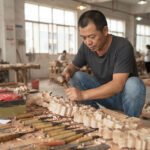

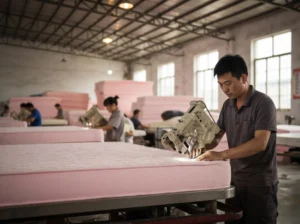




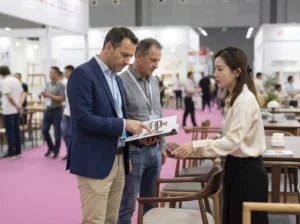


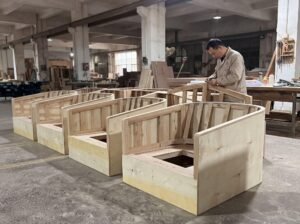
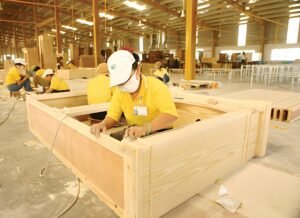

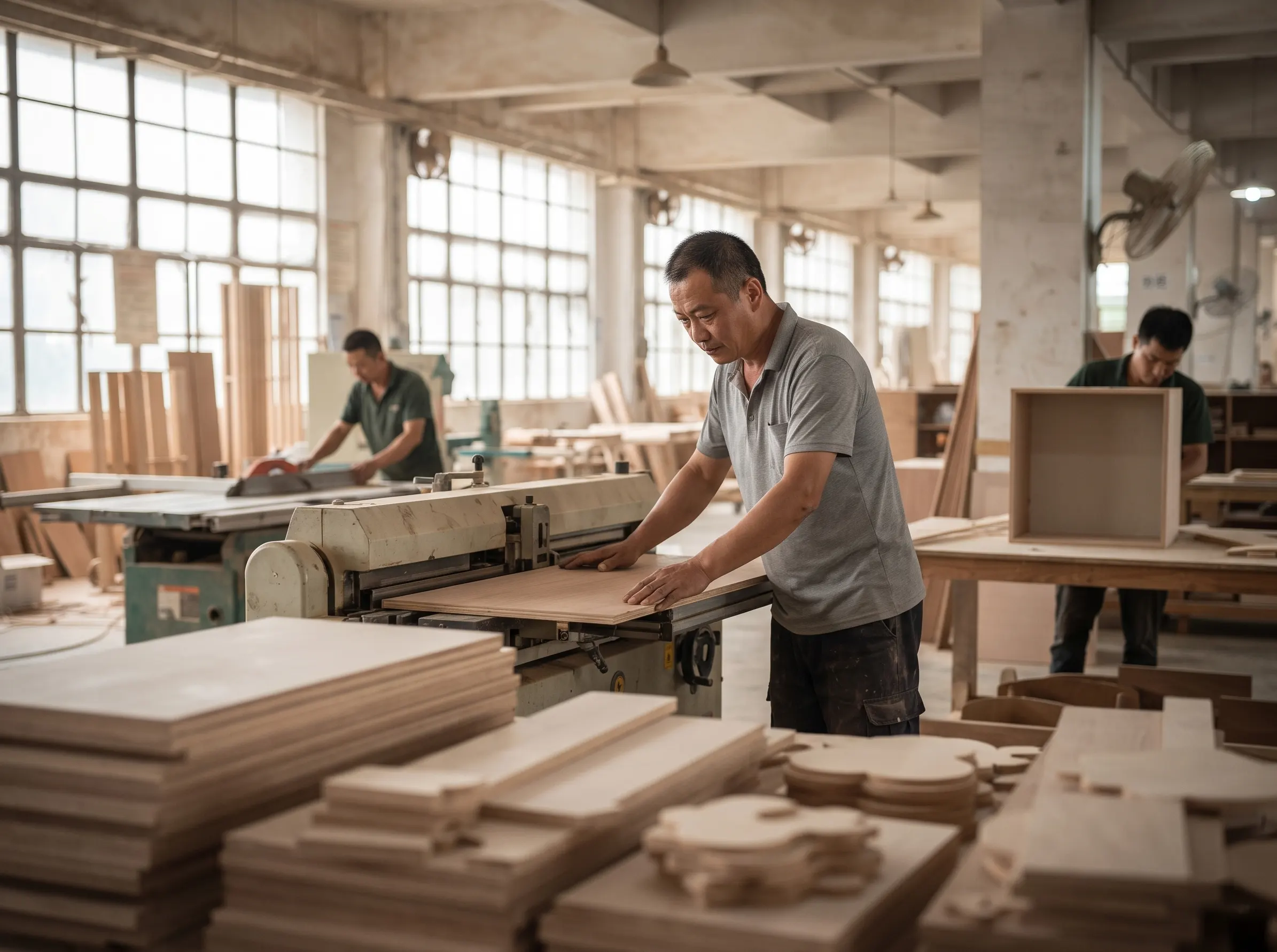
Here is the industry’s worst-kept secret: a remarkable share of the furniture inside Marriott, Hilton and Hyatt properties around the world is designed, engineered and built within a hundred-kilometer triangle in Guangdong Province — Dongguan, Foshan and Guangzhou. The belt works because the three cities divide the labor instead of competing for it: Guangzhou supplies design and specification, Foshan supplies materials, components and volume manufacturing, and Dongguan supplies the engineering discipline that five-star casegoods demand. The brands stay quiet because exclusivity, project confidentiality and pricing opacity all serve their interests. And here is the part that matters for you: the same factories will build for anyone who arrives with a serious project, the right certifications and a realistic budget. This article explains how the belt actually works, why the biggest names in hospitality depend on it, and how buyers outside the brand club can access it.
Why the World’s Biggest Hotel Brands Buy Where They Buy
A 300-room full-service hotel is not a furniture order. It is a small manufacturing program: thousands of casegood pieces, hundreds of upholstery SKUs, loose furniture, outdoor items, millwork coordination and installation logistics — all repeating across dozens of properties a year under strict brand standards.
No single Western factory can deliver that combination of scale, customization and cost. American casegoods plants cannot touch Chinese pricing on volume; European ateliers cannot touch Chinese speed; and no furniture sector anywhere else has built an ecosystem where laminate, veneer, marble, metal, glass, upholstery foam and hardware suppliers sit within a day’s drive of the assembly line. That ecosystem is what luxury hotel sourcing China actually means in practice — not cheap furniture, but a complete industrial machine tuned for hospitality programs.
The brands figured this out decades ago. Most now run approved-supplier lists and FF&E specification offices in the region, often staffed through procurement partners. The factory names never appear in the hotel’s marketing, and that silence is deliberate.
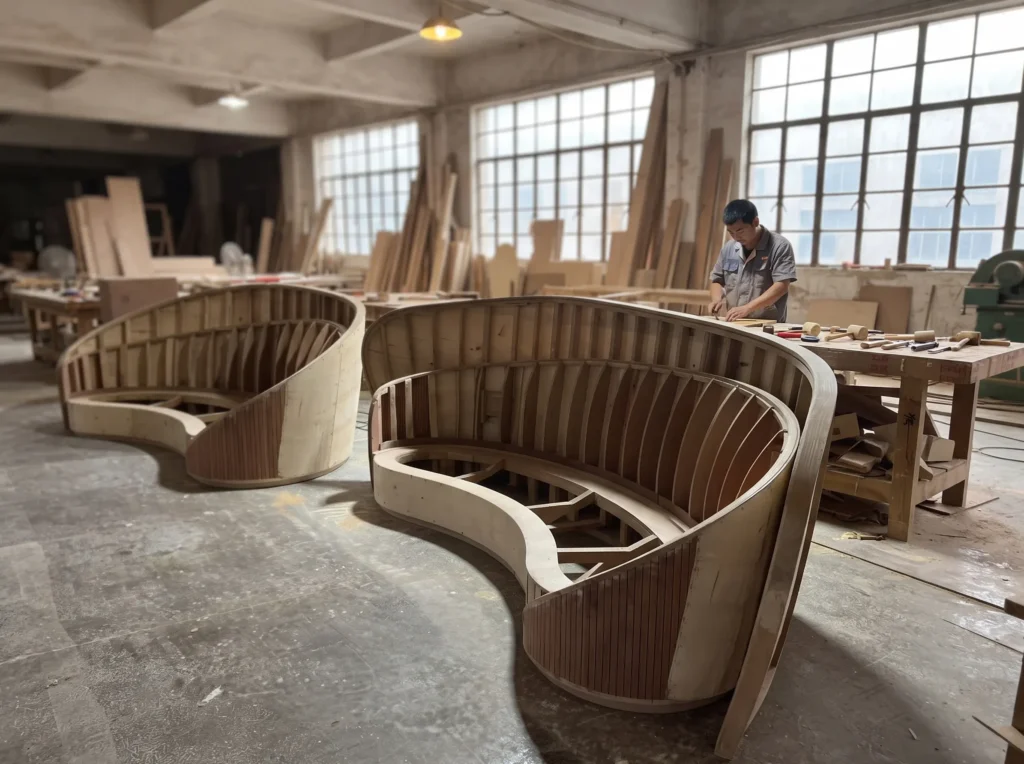
The Three-City Belt and What Each City Actually Does
Outsiders describe “Guangdong furniture” as one thing. Insiders know the belt is a supply chain with a postal code attached to every stage.
| City | Core Role | What It Actually Contributes |
|---|---|---|
| Guangzhou | Design, specification, showrooms | Design studios, brand-standard interpretation, trade-show matchmaking, project management offices |
| Foshan | Materials and volume manufacturing | Wood-based panels, hardware, stone and metal component clusters; massive hospitality production capacity |
| Dongguan | Engineered casegoods and assembly | Precision casegood plants, five-star project veterans, export logistics, compliance documentation |
Guangzhou: Where the Project Gets Interpreted
Brand standards for a Marriott or Hilton are thick, rigid and constantly revised. Translating a hundred-page brand standard package into Chinese shop drawings is a specialist discipline, and much of that work happens in Guangzhou, where design firms and project offices cluster near the Canton Fair complex. When people talk about Guangzhou hotel design, they usually mean this specification-and-interpretation layer — the unglamorous work of turning a brand’s aesthetic bible into something a factory line can actually build, repeat and pass inspection.
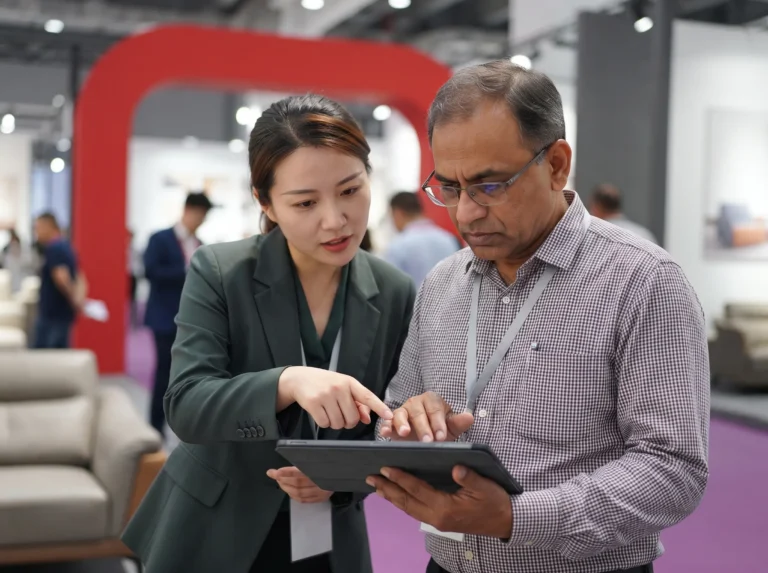
Guangzhou is also where buyers meet the belt. The hospitality halls of the Canton Fair and the year-round showrooms around it function as the industry’s front door.
Foshan: The Materials Engine
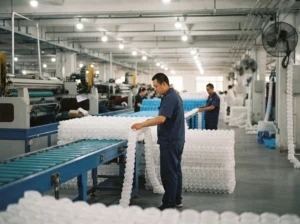
Foshan is the largest furniture manufacturing base in the world by output, and for hospitality projects its most important asset is upstream. The city and its surrounding towns host dense clusters producing everything a casegood needs: melamine and veneer panels, drawer systems, hinges, edge banding, decorative hardware, marble and sintered stone processing, metal frames, upholstery foam and fabric markets. When Foshan hospitality manufacturing hums, a project buyer can re-spec a component in the morning and have samples in hand within days. This compression of the materials pipeline is the belt’s real speed advantage — not faster assembly, but faster everything around assembly.
Dongguan: Where Five-Star Discipline Lives
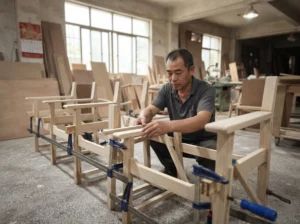
Dongguan’s furniture industry grew up on OEM orders for Japanese, European and American markets, and it shows. Plants here are long accustomed to tight tolerances, formal quality systems, third-party inspection regimes and the documentation burden of export compliance. For hotel programs, this is the critical layer: a guestroom dresser that survives ten years of luggage abuse starts with engineering — veneer layup, drawer runner load ratings, UV-cured finishes, hotel-standard metal edge protection. The phrase Dongguan hotel furniture carries weight among procurement professionals precisely because the city’s best plants have been passing Marriott-standard and Hilton-standard inspections for years, even when the brands involved insist those relationships are confidential.
Why Everyone Stays Quiet About It
The silence around this belt is not accidental, and understanding it protects you as a buyer.
Brands stay quiet because disclosure destroys pricing power. If a hotel guest knew the same factory building Marriott casegoods also builds for regional chains at lower margins, the brand’s FF&E premium would be harder to defend. Project confidentiality is the second reason: owners and procurement companies sign NDAs that forbid factories from publicizing involvement, which is why you will rarely find a plant website naming hotel clients even when its showroom displays unmistakable brand-standard prototypes.
Factories stay quiet for a commercial reason: the same production line cannot serve competing brands openly, and naming one client can cost another. The result is an industry that operates on reputation, referral and trade-show presence rather than public case studies. For a new buyer, this has one practical consequence — a factory’s silence about clients proves nothing, either way, and due diligence must run through verification, not testimonials.
How a Five-Star Furniture Project Actually Moves
A full hotel program typically runs as a staged pipeline, and each stage has a belt address.
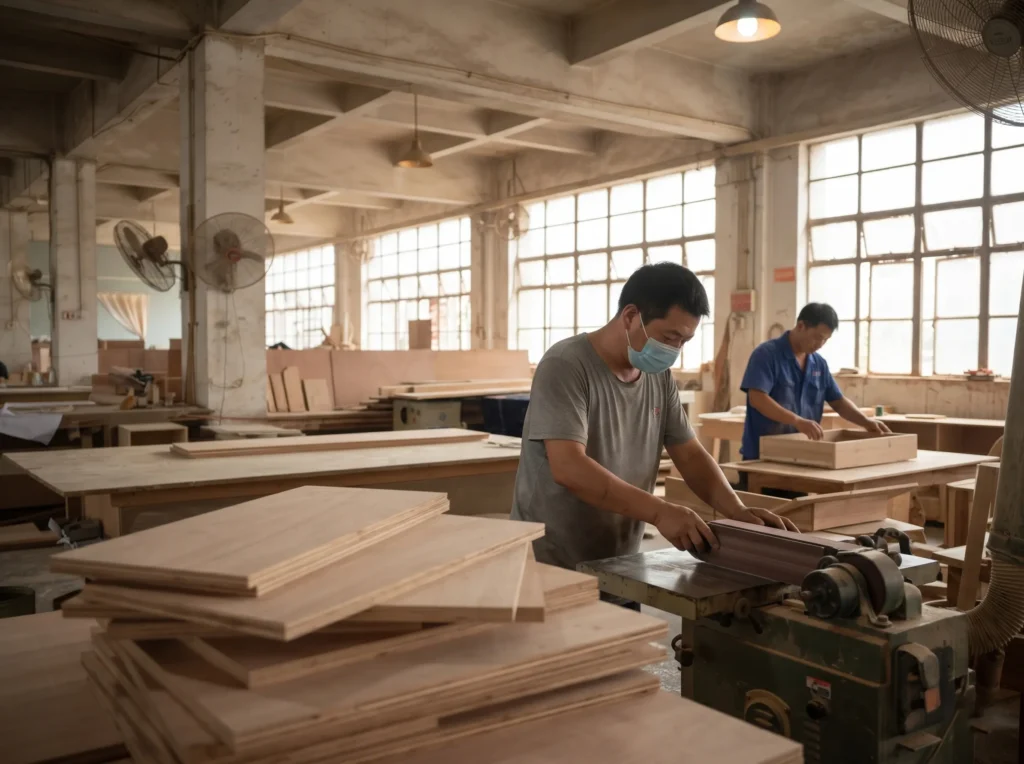
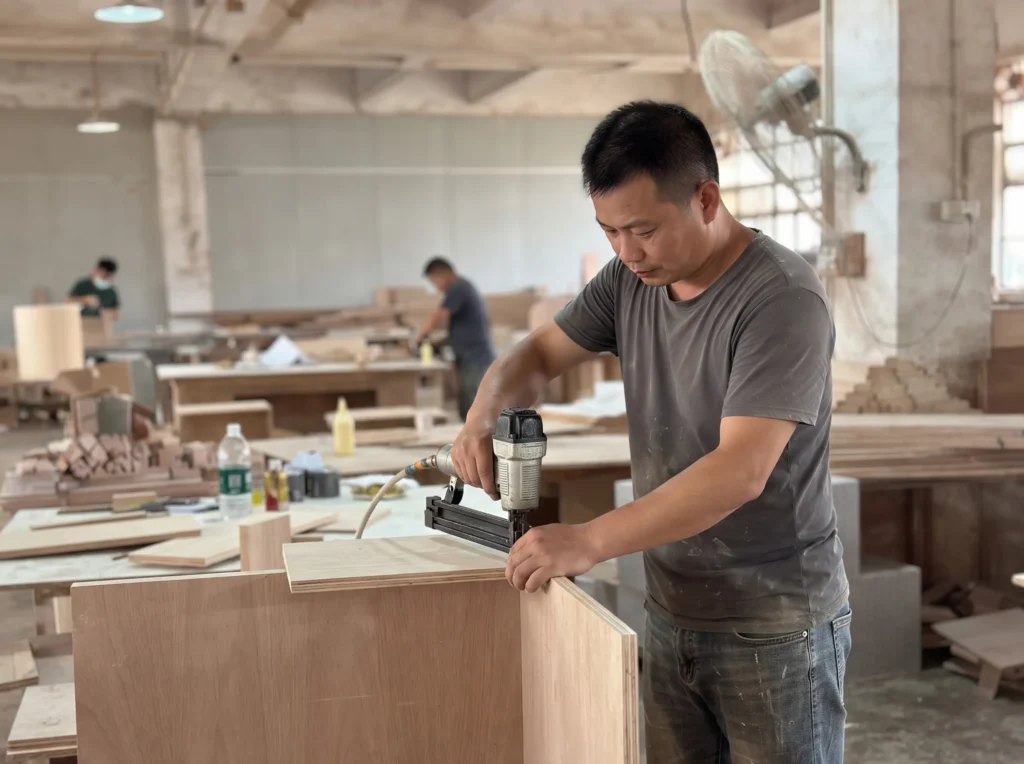
The program begins with a specification package — brand standards, prototyped rooms, finish schedules — interpreted into shop drawings by the Guangzhou layer. Materials are then sourced through the Foshan clusters, with samples and lab dips approved before mass procurement. Production is split across specialist plants: casegoods and wardrobes with the engineered lines, upholstery with frame-and-foam specialists, headboards and wall panels with the soft-goods shops. Assembly, hardware fitting and pre-packing usually consolidate in Dongguan, where export documentation, fumigation, container loading and booking are routine disciplines rather than afterthoughts.
Throughout, third-party inspection gates apply: incoming materials, in-process checks on the line, pre-shipment inspection against AQL standards, and increasingly, third-party lab testing for flammability. A serious program also books a pre-installation mock-up room before mass shipment, because finding a 4-millimeter tolerance error in a mock-up costs hundreds and finding it on floor 23 costs hundreds of thousands.
What This Means for Buyers Outside the Brand Club
The common assumption is that belt access requires brand status. In practice, the gate is not your logo but your project discipline.
Factories that build for global brands will absolutely build for an independent boutique hotel, a serviced-apartment developer or a regional hospitality distributor — provided the order has real volume, clear specifications, approved materials and a payment structure that respects production reality. What they will not do is hand-hold an underprepared buyer. The belt rewards buyers who arrive like a brand’s procurement office: with drawings, schedules, inspection plans and a named decision-maker. Arrive like that, and you are effectively buying through the same machine that furnishes the majors, at a fraction of the brand-club overhead.
Risk Warnings Before You Enter the Belt
The Showroom Is Not the Factory
Guangzhou showrooms are magnificent and, frequently, not factories at all. Trading companies rent impressive display space, collect your deposit, and subcontract production to whichever plant has capacity. There is nothing inherently dishonest about this — trading companies provide real project-management value — but you should know which entity you are contracting with, and price the relationship accordingly. Verification steps include business-license checks, factory-floor video audits, and confirming that the production address matches the exporting entity.
Compliance Is the Price of Entry
Hospitality furniture in Western markets carries flammability obligations — CAL TB 117-2013 in California, NFPA and ASTM standards more broadly, EN 13501-class ratings in Europe, plus formaldehyde emission requirements for panels. A belt factory serving global brands will hold current test reports; one that cannot produce them quickly is telling you something. Never let a project ship on a promise of “we can get the certificate later.”
Lead Times Kill More Projects Than Prices Do
A realistic full-program timeline runs four to eight months from confirmed shop drawings to container loading, subject to verification per project scope, with mock-up approval adding weeks upfront. Buyers who compress this to chase an opening date end up paying for air freight, accepting substitute materials, or inheriting punch lists that never close. The calendar logic from our production guides applies with double force here: a program confirmed in congestion season inherits congestion.
Timing and Access Playbooks by Buyer Type
Procurement Companies and FF&E Consultants
You already understand brand standards; your edge is belt literacy. Maintain two or three verified plant relationships per product category across the three cities, run mock-up discipline without exception, and lock material approvals before deposit. Treat trading companies as project managers to be managed, not factories to be worshipped.
Hotel Owners and Developers
Your leverage is volume and repeat business. Bring a designer or spec consultant who speaks manufacturing language, demand the factory’s compliance file before negotiation begins, and stage payments against inspection gates rather than calendar dates. If this is your first program, pay for an independent QC partner — it is the cheapest insurance in the entire project.
Distributors and Regional Chains
You are the belt’s favorite kind of customer: repeat volume without brand bureaucracy. Build one flagship program with full inspection discipline, then convert the relationship into annual capacity agreements. Order samples in spring, confirm programs before summer congestion, and never let a hospitality contract push you into ordering engineered casegoods in September without written slot guarantees.

Frequently Asked Questions
Do Marriott, Hilton and Hyatt really source furniture from Guangdong?
Industry reporting, trade-show evidence and field observation consistently point to the Dongguan–Foshan–Guangzhou belt as a major manufacturing base for global hospitality brands, including the majors named above. However, brand-supplier contracts are confidential, sourcing arrangements change, and no specific relationship should be treated as confirmed without direct verification. Treat the belt’s role as industry consensus rather than documented fact.
How do I avoid trading companies posing as factories?
Ask for the business license and match the registered address to the production site. Request a live video audit of the factory floor during working hours. Check whether the exporting entity on past shipping documents matches the entity you are paying. A legitimate factory welcomes these steps; a pure intermediary will deflect them.
What certifications should a hotel furniture factory hold?
At minimum: current flammability test reports for upholstery and mattresses relevant to your destination market, formaldehyde emission reports for panels, and a documented quality system. For five-star programs, expect the factory to be comfortable with third-party inspection protocols and able to produce lab reports on request. Absence of paperwork is a disqualifier, not a negotiation point.
How long does a full hotel furniture program take?
Conventionally four to eight months from confirmed shop drawings to loaded containers for a mid-size property, subject to verification against scope — longer for very large or highly customized programs. Mock-up approval, material substitutions and congestion-season ordering all extend this. Plan backward from your installation date with a buffer, never forward from your signing date with optimism.
Can a small boutique hotel access the same factories?
Yes. The gate is project discipline, not brand size. A well-specified 60-room boutique program with clear drawings, approved materials, staged payments and inspection cooperation is a welcome order for the belt’s serious plants. What small buyers cannot access is the brand-club pricing tiers — and often, that is a smaller gap than expected.
What Does Your Next Hospitality Project Look Like?
Are you furnishing a hotel program, chasing a hospitality distribution contract, or trying to verify a factory that claims five-star experience? Tell us in the comments where your project stands — the collective experience of this readership is often the fastest due-diligence tool there is.
Recommended Resource
Interi Furniture specializes in custom furniture manufacturing for residential, hospitality, and commercial projects. Their experience in materials, craftsmanship, and project realization makes them a valuable resource for designers and buyers seeking tailored furniture solutions from China.