






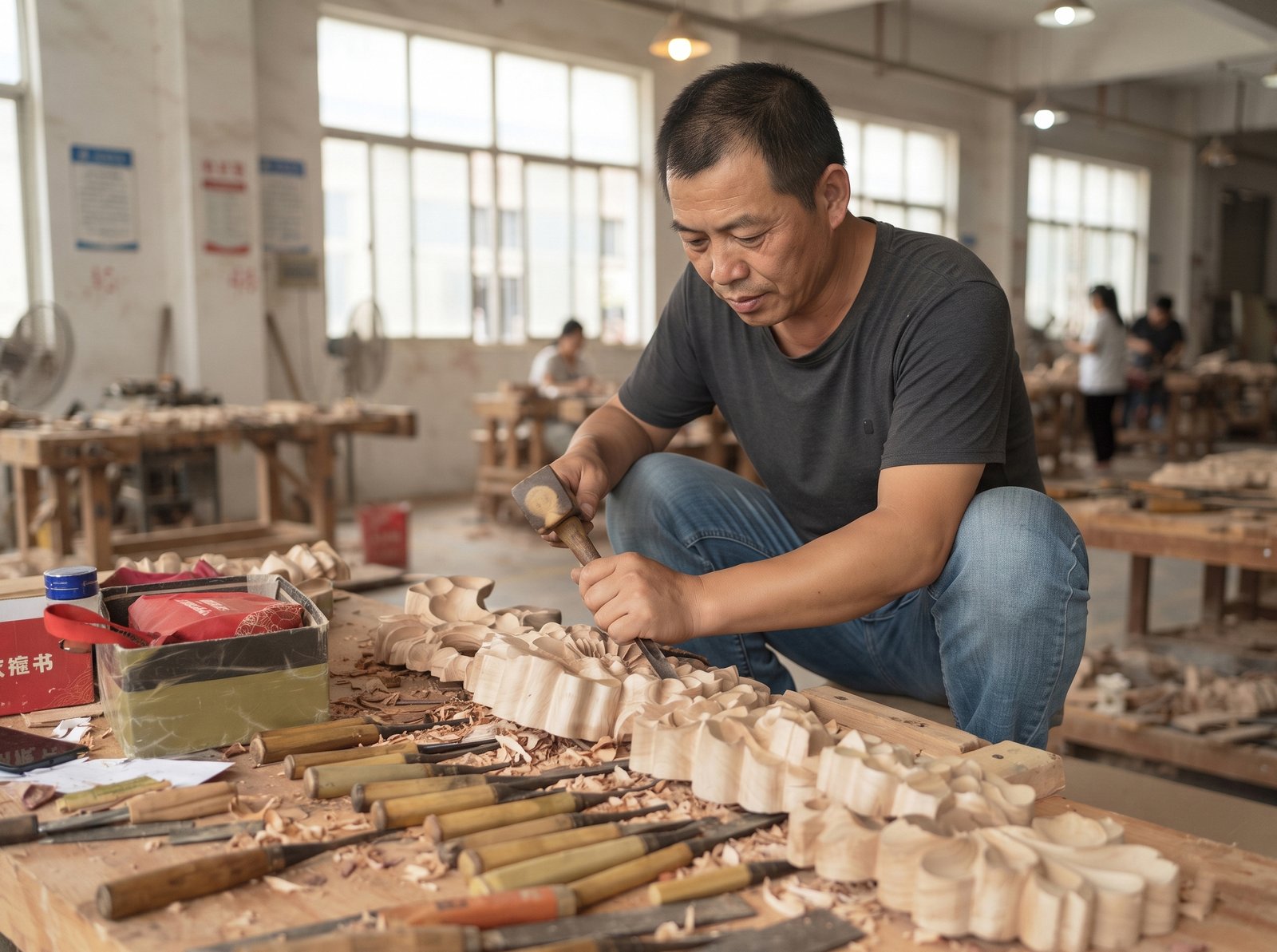
China’s furniture factories are not divided by size, and they are not divided by “good” versus “cheap.” They are divided by customer structure — who they serve, how they schedule production, and what kind of orders they can actually absorb. A 1,000-worker plant may run only low-margin volume orders. A 50-worker shop may be the invisible champion behind a European brand. The China factory tier structure you hear whispered at trade shows is a real, working classification system, and once you learn to read it, quoting chaos, capacity claims, and price gaps of 40% between “similar” factories finally make sense.
Why “Big Equals Good” Fails Almost Every Time
Walk into any Canton Fair hall and you’ll watch buyers do the same thing: judge a factory by booth size, staff headcount, and showroom polish. This mental model comes from Western manufacturing, where scale usually signals capital, automation, and quality systems. China’s furniture industry runs on a different logic — one shaped by fragmented industrial clusters, family-run capital structures, and a habit of subcontracting that is older than most export brands.
The result is a market where surface signals actively mislead. The booth with the LED walls may be a Tier 2 factory renting Tier 1 posture. The cramped 400-square-meter workshop in Longjiang may hold the cutting patterns for three Northern European retail chains. If you source on size signals alone, you will systematically overpay for status and overlook capacity where it actually lives.
The Real Classification Logic: Customer Structure First
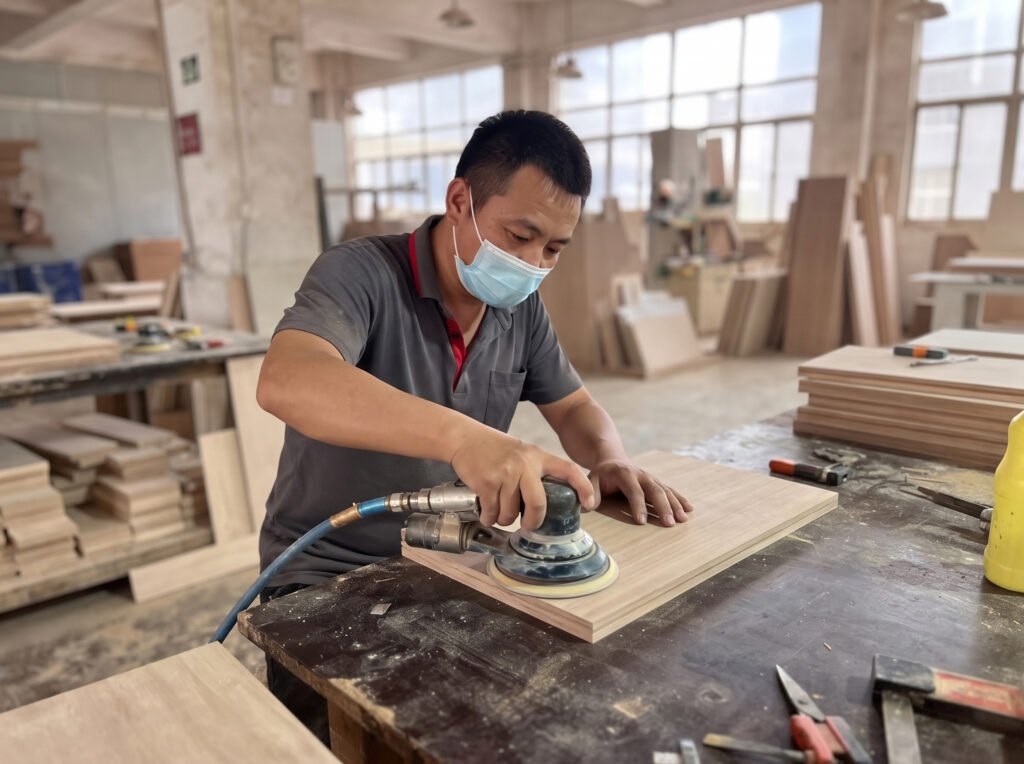
The most important thing to understand is that how factories are classified in China has almost nothing to do with square meters. Industry insiders sort factories by a bundle of operational signals: customer structure, production line completeness, quality control systems, raw material bargaining power, and order-taking logic. Scale is a consequence of some of these, not a cause.
Definition: What “Tier” Actually Means
In Chinese furniture industry convention, a “tier” describes a factory’s position in the order-flow food chain. A Tier 1 factory is one that stably serves first-line customers — international brands, large retail chains, or top-tier project contractors — with direct or near-direct order relationships. It does not mean “the best quality.” It means “the most trusted with the most demanding accounts.” A Tier 3 factory can produce genuinely excellent product within its niche; it simply lacks the systems, certifications, or capital to hold a first-line customer directly.
Definition: The Five Dimensions That Determine a Tier
Customer structure measures who pays the factory — brands, traders, wholesalers, or platforms. Production line completeness measures whether the factory runs the full process in-house or outsources critical steps. Quality control depth measures whether inspection happens at incoming material, in-process, and pre-shipment stages, or only at the end. Raw material power measures whether the factory buys boards, foam, and hardware at factory-gate prices or at trader prices. Order logic measures whether the factory selects orders, chases orders, or survives on overflow.
The Four Tiers, Defined
The furniture manufacturing hierarchy on the ground compresses into four workable layers. They are not official. They are what purchasing managers, export agents, and cluster veterans actually mean when they say “that factory is first-tier” or “that’s a workshop job.”
| Tier | Working Definition | Typical Customers | Order-Taking Logic | Who They Really Are |
|---|---|---|---|---|
| Tier 1 | Stable direct or near-direct relationships with first-line brands, retail chains, or major project contractors | International brands, top retail programs, hotel FF&E general contractors | Selective; they evaluate you as much as you evaluate them | The backbone of export quality, often invisible at trade shows |
| Tier 2 | Full-category export manufacturers with complete lines and real QC, serving mid-to-large overseas buyers | Importers, wholesalers, regional retail chains | Competitive; capacity-driven, hungry but structured | The most accessible “real factory” tier for serious B2B buyers |
| Tier 3 | Specialized smaller factories, usually strong in one category, one material, or one price band | Traders, cross-border sellers, small importers | Flexible; will reconfigure lines, accept mixed containers, customize aggressively | Where niche quality and brutal flexibility coexist |
| Tier 4 | Workshops and job shops, often operating as subcontractors to the tiers above | Other factories, local traders, platform sellers | Passive; lives on overflow, off-season fill-in, and cost-down rescue orders | The industry’s hidden capacity — and its biggest risk zone |
What Each Tier Can and Cannot Do
Capability boundaries matter more than labels. Knowing them prevents the classic failure: asking a Tier 3 factory to behave like a Tier 1, or expecting a Tier 1 to care about your two-container order.
| Capability | Tier 1 | Tier 2 | Tier 3 | Tier 4 |
|---|---|---|---|---|
| Order volume absorption | Program-scale, multi-year | Steady container loads | Single to several containers | Pallets to partial containers |
| Customization depth | Spec-driven, brand-controlled | Broad customization within systems | Deep, fast, often unwritten | Whatever you sketch |
| Certification & compliance | Full: BSCI, FSC, CARB, fire ratings | Partial to full, depends on export market | Basic; often via trader | Minimal |
| QC system | Incoming, in-process, pre-shipment, lab testing | Structured inspection stages | Final inspection, owner-dependent | Eyeball inspection |
| Lead time stability | Contractual, penalty-backed | Generally reliable | Flexible but volatile | Unpredictable |
| Price logic | Cost-plus on systems and risk | Market-competitive | Marginal cost, cash-flow driven | Survival pricing |
Three Counter-Examples That Break the Size Myth
The tier system survives because it explains what size cannot. Consider three patterns any cluster veteran will recognize. A thousand-worker plant running low-margin, high-volume orders for domestic platforms is operationally a Tier 3 with a big payroll. A fifty-worker upholstery shop in Longjiang holding three European retail accounts runs as Tier 1 in everything except headcount. And the same boss frequently owns two plants in different tiers — which is exactly why one company sends you two quotations that seem to come from different planets.
The honest corollary: “Tier 1” inside the industry means “stable first-line order relationships,” not “best product.” Some Tier 1 factories produce mid-quality at scale with flawless consistency. Some Tier 3 factories produce the best sofa frame you’ve ever inspected — once.
Reading the Real Signals: The Workshop Floor Doesn’t Lie
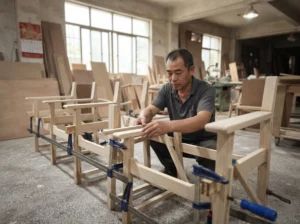
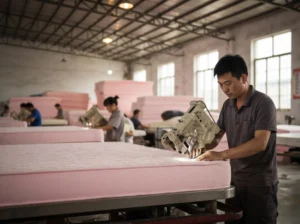
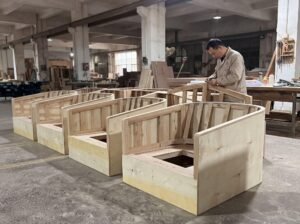
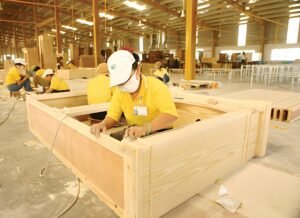
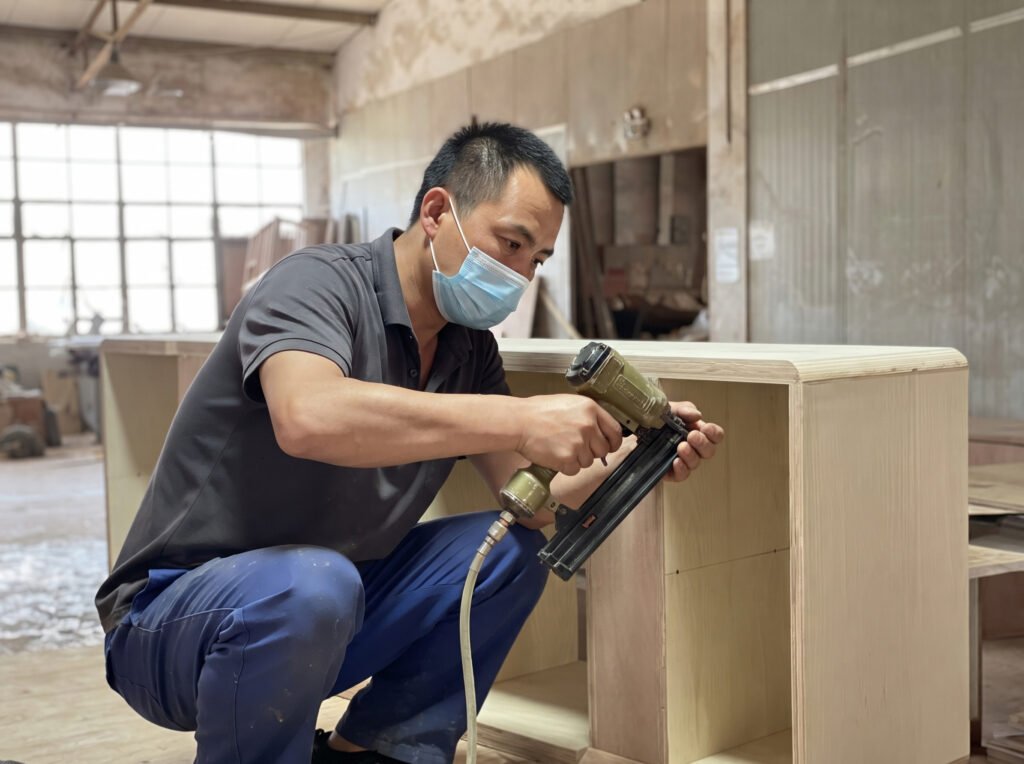
The showroom is marketing. The workshop floor is the factory’s true résumé. When we audit a plant, we spend the first thirty minutes ignoring samples and reading five things instead.
| Signal | What Tier 1 Looks Like | What Lower Tiers Look Like |
|---|---|---|
| Raw material inventory | Deep, rotated, bought at scale; branded boards and hardware in bulk | Thin, bought per-order; material matches the current job only |
| Production scheduling board | Weeks of committed orders, customer codes visible | Short horizon, frequent gaps, “to be confirmed” slots |
| Outsourcing traces | Minimal, or documented subcontractors | Outgoing semi-finished goods, borrowed jigs, third-party cartons |
| QC stations | Multiple staged checkpoints with records | One final check, often by the owner’s relative |
| Workforce pattern | Trained cells, low turnover visible | Small core crew plus day labor during peaks |
A factory that refuses workshop access but offers an impressive showroom is telling you its tier without saying a word.
Trading Companies: The Layer Buyers Misjudge Most
Trading companies occupy no tier of their own — they live between them. A trading company holding genuine Tier 1 factory relationships can deliver more value than a direct approach to a Tier 3 plant: access you’d never unlock alone, consolidated QC across multiple lines, and accountability in your language and time zone. The failure mode is the opposite: a trading company presenting a borrowed Tier 1 workshop as its own, collecting your deposit at Tier 1 pricing, and quietly placing the order with a Tier 4 subcontractor. The company isn’t the tier. Its factory relationships are. Verify those.
Matching Your Volume to the Right Tier
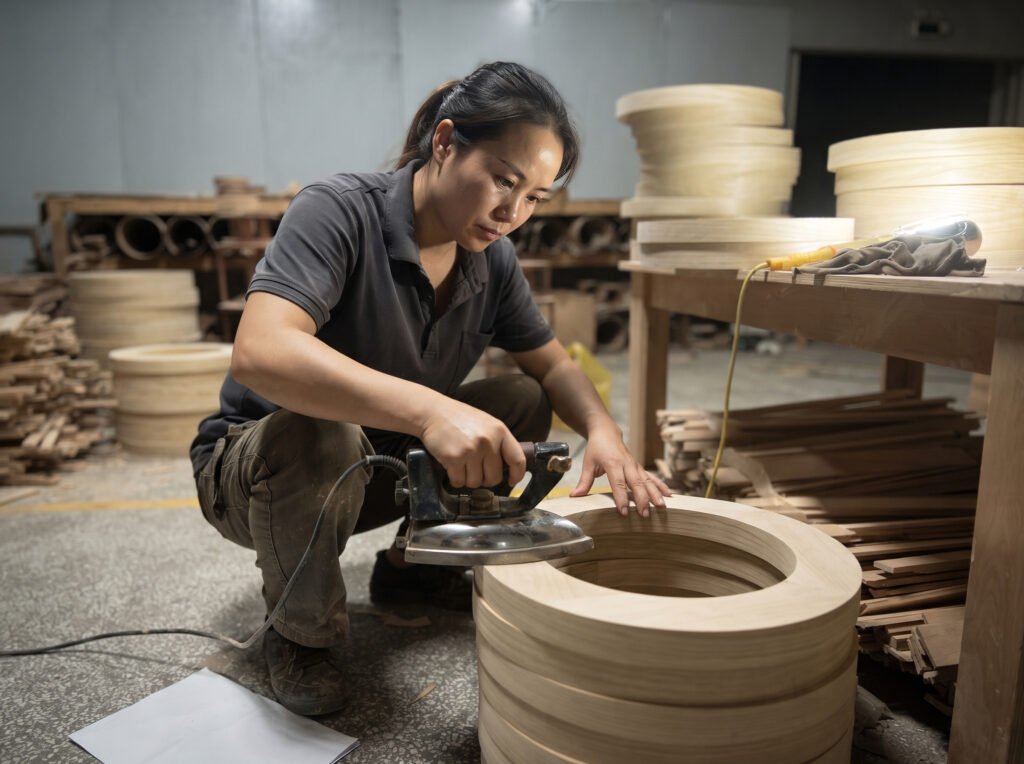
Tier mismatch is the single most expensive sourcing error overseas buyers make. The logic is simple: match your order’s scale and complexity to the tier whose survival depends on orders like yours.
| Buyer Profile | Correct Tier Match | Why | The Mismatch Trap |
|---|---|---|---|
| Large importer / retail program | Tier 1 or strong Tier 2 | Needs compliance, capacity guarantees, penalty-backed lead times | Paying Tier 1 for commodity goods a Tier 2 runs identically |
| Mid-size wholesaler | Tier 2 | Best balance of quality systems and price | Chasing Tier 1 minimums you’ll never fill |
| Cross-border e-commerce seller | Tier 3 | Flexibility, mixed SKUs, fast sampling | Paying a trader’s margin on top of Tier 4 subcontracting |
| Small B / individual buyer | Tier 3 via verified agent, or Tier 4 only with inspection | Direct factory access is possible here | Assuming workshop price means workshop-direct honesty |
| Hotel FF&E procurement | Tier 1 or project-specialist Tier 2 | Documentation, site coordination, liability | Letting a Tier 3 quote against a spec it can’t certify |
The Arbitrage Space — and Where It Bites
Tiers are not static. Factories climb by winning better customers; they slide when accounts migrate or quality systems decay. Between the tiers runs a constant flow of subcontracting, order transfer, and “borrowed factory” theater — and buyers sit in the middle of that flow whether they know it or not.
| Practice | What It Is | Who Benefits | Risk to Buyer |
|---|---|---|---|
| Order overflow | Tier 1/2 pushes peak-season excess to Tier 3/4 | Factory capacity smoothing | Your “Tier 1” order quietly made in a Tier 4 shed |
| Full subcontracting | Factory takes the order, another plant makes it | Paper factory, trader arbitrage | Total loss of QC visibility |
| Borrowed factory reception | Rented workshop used to impress visiting buyers | Middlemen posing as manufacturers | You audit a stage set |
| Tier arbitrage quoting | Same boss, different-tier plants, wildly different quotes | The boss, always | You compare incomparable quotations as if from one factory |
Risk Warnings: Two Failure Modes to Refuse
The first failure mode is tier impersonation — the borrowed workshop, the rented showroom, the “sister factory” that is actually a stranger. The defense is verification discipline: cross-check business registration, utility bills, and worker tenure, and re-visit unannounced. The second failure mode is tier mismatch — expecting Tier 1 documentation from a Tier 3 price, or demanding Tier 3 flexibility from a Tier 1 line. The defense is honest self-assessment of your volume before you negotiate anyone’s.
How Each Buyer Type Should Operate
Large importers and retail programs should build dual-sourcing: one Tier 1 anchor for compliance-critical volume, one Tier 2 shadow supplier to keep pricing honest. Mid-size wholesalers should concentrate on Tier 2 full-line factories and skip the Tier 1 chase — you are a rounding error to them and a priority to Tier 2. E-commerce sellers should partner with one specialized Tier 3 per category and invest in third-party inspection rather than factory size theater. Individual and small-B buyers should access Tier 3 capacity through a verified agent, treat any Tier 4 workshop as a gamble worth inspecting, and never wire full deposits before a loaded-container photo verification.

Frequently Asked Questions
Does a higher factory tier guarantee better quality?
No. A higher tier guarantees more stable systems, stronger compliance, and more reliable delivery at scale — and the consistency itself is a form of quality. But a Tier 3 specialist can out-craft a Tier 1 on a specific product. Match tier to your risk profile, not to an assumption about craftsmanship.
Can a small buyer get access to a Tier 1 factory?
Rarely directly, sometimes indirectly. Tier 1 factories filter hard on volume and program potential, so your two-container order won’t clear the gate. A reputable trading company with genuine Tier 1 relationships can slot smaller orders into existing production runs — that’s one of the few cases where the middleman genuinely earns the margin.
How do I judge a factory’s tier during a visit?
Ignore the showroom. Walk the floor and read raw material depth, the scheduling board’s horizon, outsourcing traces, QC station count, and workforce stability. Then cross-check business licenses and ask who their top three customers are — hesitation or vagueness answers the question.
What tier are those big-booth factories at trade shows?
Any tier, including none. Booth size is a marketing expense, not a capability signal. Some Tier 1 backbone factories skip trade shows entirely for budget or confidentiality reasons; some Tier 4 workshops rent impressive booths. The booth tells you their sales strategy, not their tier.
Is a trading company always worse than going factory-direct?
No — that’s the amateur’s rule. A trading company with verified Tier 1/2 factory relationships adds access, consolidation, and accountability that a small buyer can’t replicate. The dangerous trading company is the one whose “factory” dissolves under verification. Audit the relationships, not the label.
What tier are the factories you’re talking to right now?
Tell us your product category, order volume, and what the factory showed you on the floor — or what it refused to show. We’ll read the signals with you in the comments.
Recommended Resource
Interi Furniture specializes in custom furniture manufacturing for residential, hospitality, and commercial projects. Their experience in materials, craftsmanship, and project realization makes them a valuable resource for designers and buyers seeking tailored furniture solutions from China.